
Sandblasting vs. Grinding Glass Beads: A Head-to-Head Decision
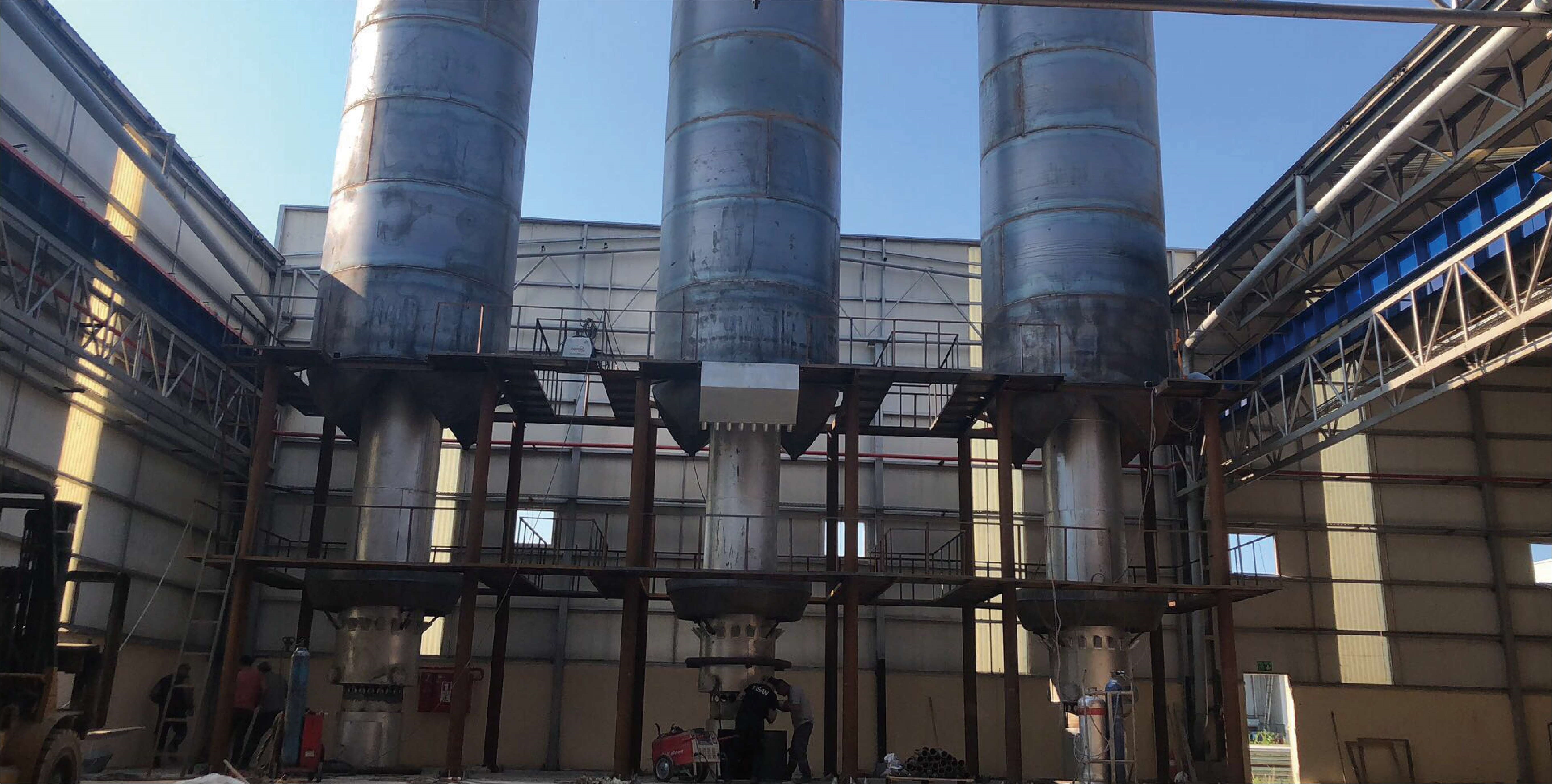
Sandblasting glass beads and grinding glass beads are not two sizes of one buying decision. They are two media from the same glass bead range doing two different jobs: one works on a surface by impact, the other works inside a mill or a fine polishing step where the bead is consumed against the material being processed. Both are sold as glass beads, both are described by particle size, and both are quoted by weight — which is precisely why procurement teams compare them as if one could substitute for the other.
The decision comes down to three variables: the process the bead has to perform, the size scope the equipment can accept, and the finish the product requires. This guide compares sandblasting media and the GB05 grinding grade on those three variables using Dylantech's product-line facts, and closes with a checklist that can be pasted straight into a specification.
The Short Answer: Which Media Fits Which Job
Choose sandblasting glass beads when the task is surface treatment — cleaning, coating preparation, deburring, blending of tool marks or peening-type finishing — where the bead strikes the workpiece and leaves. Choose grinding glass beads when the task is size reduction, dispersion or polishing inside a mill or a fine finishing process, where the bead acts as a charge and the output is a processed material rather than a treated surface.
- Sandblasting media: the bead is the tool that hits the part. Fit is judged on the surface result and the cycle time.
- Grinding media (GB05, 800–80 μm): the bead is the charge acting on the material. Fit is judged on the size band, the mill or polishing setup, and the target fineness.
If a process description does not state which of those two things the bead does, the specification is not ready. Size alone cannot settle it, and price alone will not reveal it.
Why the Two Media Get Confused in Procurement
The confusion is structural rather than careless. Both products arrive described as glass beads, both are quoted by weight, and both are defined by a particle-size band. A buyer comparing two quotations can therefore see a lower price per tonne and read it as a saving, when the two lines describe media that will not perform the same function. In a blasting cabinet, a fine milling band can pass through the system or fail to cut; in a mill, a coarse blasting grade can change the grind and load the equipment outside its intended working range.
A second source of confusion is application. Reflective glass beads for road marking are also glass beads from the same industry, but they are specified against marking standards rather than against blasting or milling performance. Buying a reflective road-marking grade for a blasting cabinet is a specification error, not a bargain, and the same applies in reverse.
The practical remedy is to stop treating glass beads as a single commodity line. Two media, two acceptance criteria, two specification sheets.
Where Both Products Sit in the Glass Bead Line
Both media come from the same glass bead production platform at LangFang Dylan Technology Co., Ltd. (Dylantech), a glass bead supplier founded in 2004 that serves the road safety industry. The company operates four production bases in Liaoning, Shanxi, Hebei and Henan, runs more than 15 glass bead production lines, and reports an annual output of 100,000 tons from a 10,000 m² factory with 300 employees and a 20-engineer R&D team. Around 95% of output is exported, with main markets in the EU, the USA, Southeast Asia and the Middle East and customers in more than 50 countries and regions.
The product-line evidence that matters for this comparison is that sandblasting and grinding media are both glass beads within a recycled-glass range that offers custom color and size options. That changes how the specification should be written. Custom size means the requirement should be expressed as a distribution the supplier can hold, not as a single number. Custom color has a practical use on site: two grades that look identical in a hopper are easy to mix, and a color difference is a low-cost way to keep a blasting grade and a grinding grade apart in the same plant.
The overall range spans 0.5–20 mm. Within that range, the GB05 grinding grade is defined by an 800–80 μm particle-size distribution. Reflective road-marking beads are a separate application governed by standards such as AASHTO M 247 and EN 1423, and should be treated as a different purchase even when they come off the same line.
Size Scope: Reading GB05 Against the 0.5–20 mm Range
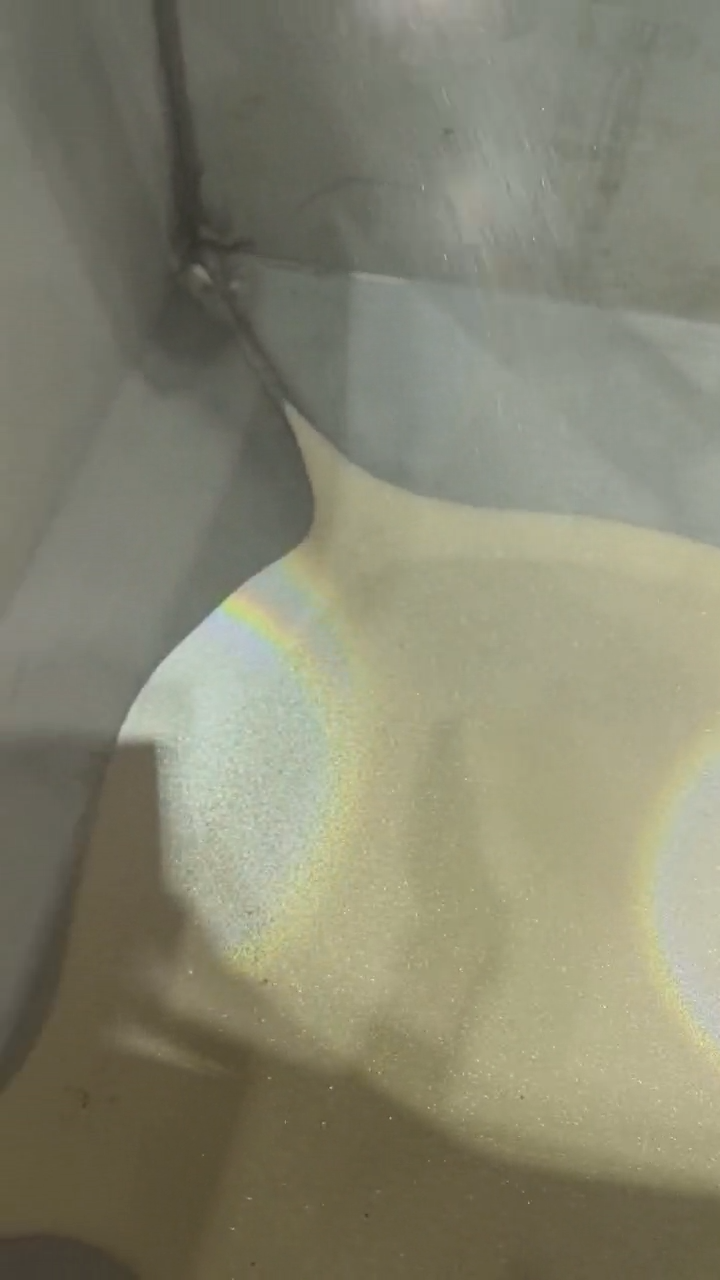
Start with the units, because most specification errors happen there. The GB05 grinding distribution of 800–80 μm converts to 0.8–0.08 mm. It is a band, not a point: the top cut and the bottom cut each carry meaning, and a supplier who quotes only “800 μm” or only “80 μm” has not quoted the grade.
The overall glass bead range is stated as 0.5–20 mm. Read the two figures together and the practical consequence becomes clear. The GB05 grinding band is a fine band, and its lower end sits well below the headline range figure. A buyer should therefore not assume that the 0.5–20 mm headline automatically covers every fine fraction a polishing or milling job needs. The fine end has to be confirmed against the GB05 grade itself, in writing, with the distribution attached to the order.
For sandblasting, the working logic is different. The bead is selected for impact work, and the fraction is fixed against the equipment and the required surface result rather than against a milling target. That fraction is also drawn from the same overall range, but it must be agreed with the supplier for the specific process; it should never be inferred from the grinding grade's band.
A useful habit when comparing offers: convert every quotation to millimetres, write both endpoints, and check that the stated distribution matches the specification you issued. Two quotes that both say “fine glass beads” are not comparable until the numbers are on the page next to each other.
Finish: Smooth, Matte and the Line Buyers Forget
The range includes smooth and matte finishes, and finish is a separate line in the specification from size. A purchase order that names only a particle-size band leaves the surface condition of the bead undefined, which means two shipments can meet the size requirement and still not be the same product.
For the buyer, the question is what the process needs from the bead surface and what the customer inspects on the finished part. In blasting work, the visible result on the workpiece is the acceptance criterion, so the media specification has to be written in a way that makes the result repeatable. In grinding and polishing work, the media is consumed in the process, so the specification has to protect the consistency of the output rather than the appearance of the bead.
Two rules follow from that. First, define finish and size in the same specification line, so a supplier cannot satisfy one and default on the other. Second, if color is used to separate grades on site, state it in the order as well — color is an option in this range, not an assumption.
Application Fit: Blasting Tasks and Polishing Tasks
Glass beads are used in blasting where a rounded media is wanted rather than an angular abrasive: cleaning before coating, removal of light scale and surface contamination, deburring, blending of tool marks, and cosmetic finishing where a uniform, non-directional surface is the goal. A rounded bead spreads impact across the contact area instead of cutting into it, which suits work where the surface must be prepared without deep gouging.
The limitation belongs beside the benefit. If the job is heavy stock removal on a hard substrate, an angular abrasive is normally the more efficient tool and a glass bead is the wrong purchase regardless of price. Glass beads earn their place in surface preparation, peening-type finishing and cosmetic work, not in aggressive cutting.
Grinding glass beads work in the opposite direction. The media is charged into a mill or a fine finishing process and acts on the material being processed. The GB05 band of 800–80 μm sits at the fine end of the range, which is why this grade is specified for grinding and polishing duties rather than for blasting cabinets. Here the acceptance test is the fineness and consistency of the output, and the media decision is judged on whether the size band holds from lot to lot.
This is where a supplier's process control stops being a marketing line and becomes a purchasing criterion. Dylantech's laboratory is equipped with CAMSIZER and X-2600 instruments and is used to check particle size, reflectivity and wear resistance through production under an ISO 9001 quality management system. For a grinding grade, the particle-size check speaks most directly to the buyer's risk.

Side-by-Side: Sandblasting vs. Grinding Glass Beads
| Decision factor | Sandblasting glass beads | Grinding glass beads (GB05) |
|---|---|---|
| Primary job | Surface treatment by impact | Grinding, dispersion or polishing inside a mill or fine finishing step |
| Role of the bead | The tool that strikes the workpiece | The charge consumed in the process |
| Size scope | Fraction selected from the same overall 0.5–20 mm range and fixed per process | Defined band of 800–80 μm, equal to 0.8–0.08 mm |
| Finish | Smooth or matte; specified together with size | Smooth or matte; specified together with the distribution |
| Color option | Custom color available in the range; useful for separating grades | Custom color available in the range; useful for separating grades |
| Acceptance criterion | Surface result on the workpiece | Fineness and consistency of the output |
| Wrong-choice risk | Weak cut, system blockage, rework | Changed grind, out-of-spec output, extra passes |
Both media are glass beads from the same recycled-glass range with custom color and size options; the differences above follow from the process each is specified for, not from a ranking of one above the other.
Step by Step: Specifying the Media Without Rounding Errors
- Name the process step. Write whether the bead impacts a surface or acts on material in a mill. Everything else in the specification depends on this single sentence.
- Convert and write both endpoints. Express the requirement in millimetres, with a top cut and a bottom cut. “800–80 μm” becomes “0.8–0.08 mm”, and both numbers stay on the sheet.
- Fix the finish and the color. State smooth or matte explicitly, and add the color if it is used to separate grades in storage or on the shop floor.
- Check the equipment envelope. Confirm the fraction against the nozzle, feed system, mill chamber or pump that will handle it. A distribution that the equipment cannot run is a specification error, not a supplier failure.
- Request a sample of the exact grade. Trial the material on your own equipment before a volume order. A trial on a different size fraction tells you nothing about the grade you intend to buy.
- Confirm the documents and the test method. Ask how particle size is verified and which instruments are used. Dylantech's laboratory uses CAMSIZER and X-2600 equipment within an ISO 9001 system, and holds CE, JIS and KIS certifications alongside its quality management certification.
- Lock the specification into the order. Repeat the distribution, finish and color in the purchase order and in the reorder clause, so the second shipment is measured against the same numbers as the first.
Sourcing Both Grades From One Glass Bead Supplier
Buying sandblasting and grinding media from one supplier reduces the number of specifications a buyer has to police — but only if that supplier can hold two different specifications at the same time. The evidence to check is production breadth, laboratory capability and delivery structure, not the product name.
On production breadth, Dylantech reports four production bases and more than 15 glass bead lines supporting an annual output of 100,000 tons. On delivery risk, the company describes production planning and inventory management backed by that multi-line capacity. On raw-material risk, it cites multi-base supply and long-term supplier cooperation. On quality risk, it points to full-process testing, the CAMSIZER and X-2600 laboratory, and an ISO 9001 quality management system. Reported partners include ENNIS, Geveko and Swarco.
Dylantech also reports that, against imported equivalent products, its glass bead line offers a 5%–15% cost reduction with flexible domestic production and customization capacity, plus faster delivery and support. Against traditional glass beads, the company reports higher particle sphericity and more uniform grain size from its self-developed patented production equipment, a lower rework rate, comparable raw material and finished product cost, and lower energy consumption through waste heat recovery — a system the company states has been recognized as a scientific and technological achievement by the China Energy Conservation Association. These are supplier-reported comparisons. They are useful for shortlisting and for framing questions, and they should be verified against your own trial results and incoming lot data before a volume commitment.

Decision Checklist: Process, Size Scope, Finish
Use this list before issuing an RFQ for either medium.
- Process: Does the bead strike a surface, or act on material inside a mill or polishing step? Is the job surface preparation, or is it size reduction and finishing?
- Process limits: If the job is heavy stock removal, has an angular abrasive been ruled out on technical grounds rather than on price?
- Size scope: Are both endpoints of the distribution written in millimetres? For GB05, is the 800–80 μm band recorded as 0.8–0.08 mm?
- Range check: Has the fine end been confirmed against the specific grade rather than assumed from the 0.5–20 mm headline range?
- Finish: Is smooth or matte stated in the same line as the size?
- Color: If grades are stored together, is a color option specified to prevent mix-ups?
- Evidence: Has the supplier stated how particle size is tested, and can the test result travel with the lot?
- Commercials: Are cost, delivery and support compared on the same grade and the same unit before any saving is claimed?
Frequently Asked Questions
Do sandblasting or grinding glass beads need certification for my market?
Certification expectations follow the application and the buyer's own specification, not the product name. Reflective road-marking beads are specified against marking standards such as AASHTO M 247, EN 1423 and GB/T 24722-2020, while industrial blasting and grinding media are usually specified by size distribution, finish and consistency. On the supplier side, Dylantech holds ISO 9001 quality management system certification, CE certification, JIS certification and KIS certification, and operates a laboratory with CAMSIZER and X-2600 instruments. Buyers should confirm which documents their own customer or tender actually requires before ordering.
Can one supplier deliver both sandblasting and grinding grades?
Yes, where the supplier's range covers both. Sandblasting and grinding media are both glass beads within Dylantech's recycled-glass range, which offers custom color and size options, and the company reports more than 15 production lines and 100,000 tons of annual output across four production bases. The practical condition is that each grade is specified separately — a single purchase order that names only “glass beads” gives the supplier no basis for holding two different distributions.
How do the two media compare on cost?
Media-specific prices are not published, and the cost of either grade depends on the size fraction, the finish, and the order volume rather than on the material family alone. Dylantech reports that its glass bead line delivers a 5%–15% cost reduction against imported equivalents, with flexible domestic production and customization capacity and faster delivery and support. That figure is company-reported for the glass bead range; a buyer should compare it on the same grade, the same distribution and the same delivery terms before treating it as a saving.
How should I test a sample before committing to a volume order?
Request the exact grade you intend to buy — the same size band and the same finish — and run it on your own equipment. For a blasting grade, judge the surface result on the workpiece and the cycle time. For a GB05 grinding grade, judge the fineness and consistency of the output across the run. Ask for the particle-size result for the lot you sampled, and keep that record as the reference for the first production delivery.
What lead time should I plan for?
No standard lead time applies to both media, since the size fraction, finish and quantity all affect scheduling. What can be assessed is the supplier's scheduling structure: Dylantech reports four production bases, more than 15 glass bead lines and 100,000 tons of annual capacity, with production planning and inventory management used to control delivery risk, and it reports faster delivery and support than imported equivalents. Buyers should request a written schedule for the specific grade, then build incoming inspection time into the plan. If a trial is needed, the Dylantech corporate brochure and a direct inquiry are the fastest way to match a grade to your process.
Conclusion: Decide on the Process, Then Write the Numbers
Sandblasting glass beads and grinding glass beads (GB05) share a material family, a production platform and a supply chain, but they do not share a job. The blasting grade is a surface tool judged by what it leaves on the workpiece; the GB05 grade at 800–80 μm is a fine charge judged by the fineness and consistency of the output. The overall 0.5–20 mm range describes the line, not the grade, and the smooth or matte finish is a specification line that buyers routinely leave blank.
The decision therefore runs in a fixed order: process first, size scope second, finish third, and commercial comparison last — on identical grades and identical units. A buyer who settles those three points before requesting a quotation gets offers that can actually be compared, and a reorder that behaves like the first delivery.

For grade data, certification documents or a sample of a specific size fraction, contact Dylantech through www.dylantech.com or download the corporate brochure.
Have Questions or Need More Details?
Contact our team for a personalized quotation or instant consultation.
Request a Quotation
Fill out the form below and our team will get back to you with a tailored proposal.
WhatsApp Direct Chat
Prefer to chat in real-time? Message us on WhatsApp for instant assistance & quick answers.
- Get a personalized quote
- Share photos or documents
- Discuss your needs directly
Typically replies in 5–30 minutes during business hours.