
The Science of Reflectivity: Explaining Glass Beads in Road Markings
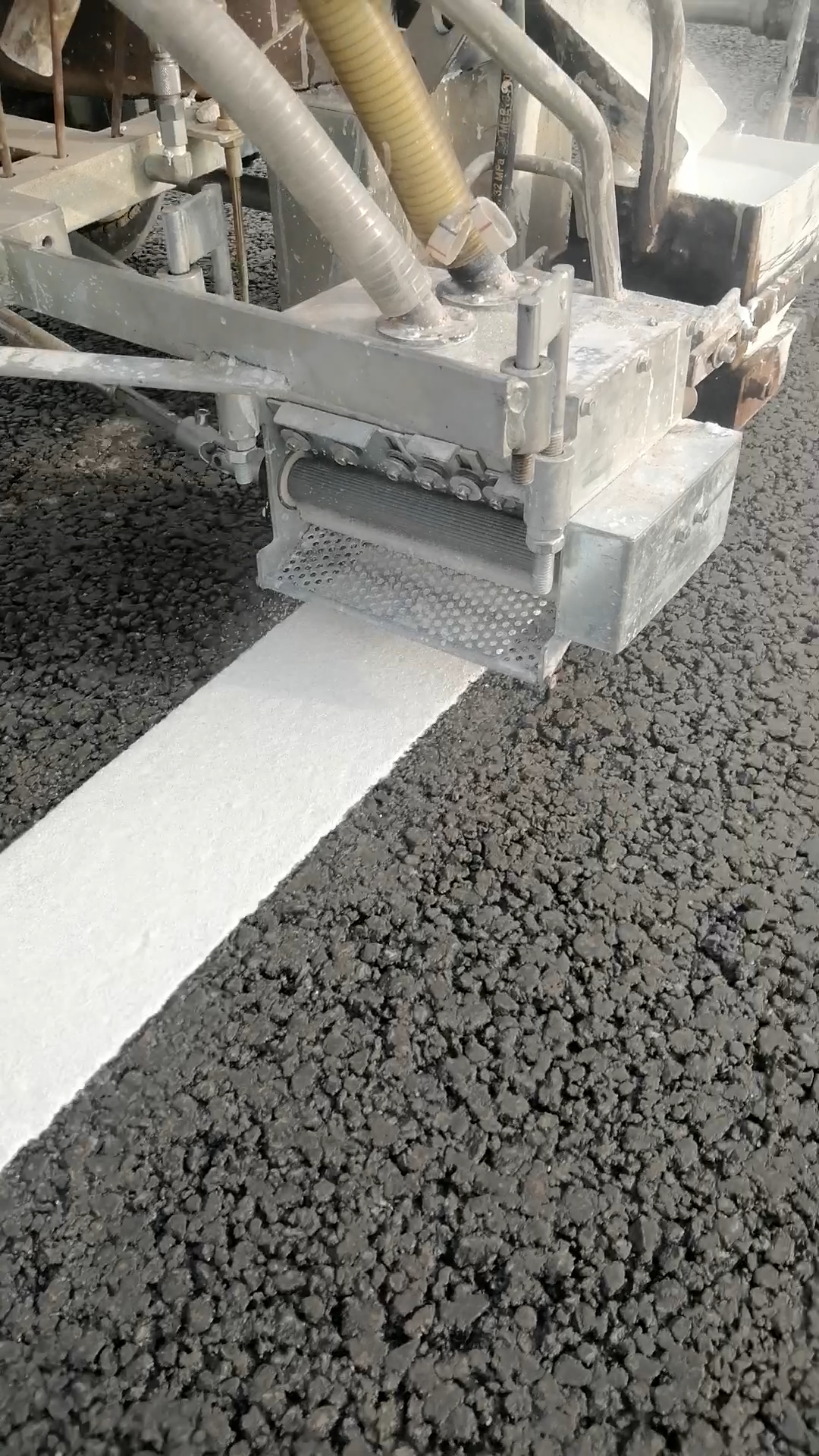
Road markings are only useful when a driver can see them early enough to react. In daylight, that is mostly a question of contrast between the marking and the pavement. At night, in rain, or on an unlit road, it becomes a question of optics rather than paint colour. Glass beads are the light-returning elements embedded in, or scattered across, road marking materials — and they are the reason a lane line appears to glow when headlights reach it. That effect is called retroreflectivity, and it depends on two parameters more than any other: refractive index (RI) and particle size.
This explainer looks at how glass beads produce retroreflectivity, why high refractive index glass beads such as RI 1.6 and RI 1.7 are specified for demanding conditions, and how beads produced across a size range of 0.5 mm to 20 mm are manufactured, graded and applied so that a marking stays visible after dark.
Problem Definition: Why a Road Marking Disappears at Night
A road marking without glass beads is visible mainly under ambient light. It relies on diffuse reflection: light strikes the surface, scatters in many directions, and only a small fraction of it reaches the driver's eye. Under low light, that fraction is not enough to create a dependable contrast against the pavement, and a marking that reads clearly at midday can effectively vanish at night.
Retroreflection solves that problem. The term describes a surface's ability to return light back toward its source — here, toward the headlights and therefore toward the driver. A single glass bead behaves as a miniature optical element that captures incoming light, redirects it internally, and sends a useful share of it back along roughly the path it arrived on.
Three variables decide how well a bead performs this task:
- Refractive index (RI) — how strongly the bead bends light as it passes between air and glass.
- Size, grading and roundness — how the bead sits in the film and how predictably it focuses light.
- Placement and coating — whether the bead is applied as a drop-on layer or pre-mixed into the marking, and whether a coating protects it in service.
When any one of these is wrong, a bead batch can measure well in the factory and still under-perform on the road. That is why retroreflectivity is treated as a system property rather than a single material specification.
Industry Background: Where Glass Beads Sit in Road Safety
Glass bead use in road marking is not a niche practice; it is written into national and regional procurement standards, and the requirement travels with the project. A buyer specifying reflective glass beads for road marking will normally be pointed to one of the following frameworks:
- AASHTO M247 in the United States. The current M247-26 edition defines a set of gradations spanning Type 0 to Type 5, covering uniform as well as modified gradations.
- EN 1423 in Europe, which specifies requirements for glass beads, anti-skid aggregates and mixtures of the two when they are applied as drop-on materials on road markings.
- EN 1424, the European reference applied to pre-mixed glass beads.
- BS 6088 in the United Kingdom, the basis for the BS6088A and BS6088B bead classes.
- AS/NZS classifications used across Australia and New Zealand, which separate bead types for different applications.
- GB/T 24722-2020 in China, the national standard for glass beads used in road markings, published in December 2020 and effective from July 2021.
Many specifications also set a floor value for refractive index. Sample road-marking specifications, for instance, require drop-on glass beads to comply with BS EN 1423 and pre-mixed glass beads to comply with BS EN 1424, with a Class A refractive index of at least n≥1.5. In Texas, bead gradations are further defined under DMS-8290 and verified using the Tex-831-B test method. Dylantech, formally LangFang Dylan Technology Co., Ltd., produces bead series aligned with the BS 6088, EN 1423, EN 1424, AASHTO M247 and AS/NZS families as well as OPSS-type grades.
Demand reflects how widely these frameworks are used. The global glass beads for road marking market was valued at approximately USD 1.18 billion in 2025, and standard 1.5 refractive index beads account for the largest single share of that market at 54.0%, because they align with conventional road-marking specifications. Higher-index beads remain a smaller but strategically important segment, chosen where night and wet-weather visibility is the deciding requirement.
Detailed Solution: The Optical Mechanics of Retroreflection
How a single bead returns light
Retroreflection in a road marking happens in three steps. Light from a headlight enters the front face of the bead and is refracted. It then reaches the back of the bead — or the reflective matrix of pigment and binder behind it — and is returned. Finally it exits the front face and is refracted a second time, bending back toward the driver's viewing angle.
Refractive index governs this behaviour. It describes how much the bead bends light as the light crosses between air and glass. Within the limits set by the surrounding marking system, a higher refractive index allows the bead to concentrate and return a larger proportion of incoming light inside a driver's viewing angle. That is the reason high refractive index glass beads are selected for the roads, tunnels and crossings where night-time visibility is least forgiving.
Two grades are particularly relevant in current procurement:
- RI 1.6 glass beads — a step above the conventional 1.5 baseline, used where improved night visibility is required without moving to the highest-cost grades.
- RI 1.7 beads (1.7 high index glass beads) — a higher-index grade intended for more demanding reflective performance.
Both grades are produced by Dylantech within the size scopes described further below.
Why the 0.5 mm to 20 mm size range matters
Bead size is not a single number; it is a distribution. Across the Dylantech range, glass beads are produced within an overall size range of 0.5 mm to 20 mm, while each individual product specifies a tighter operating window — for example, a 1180–180 µm grade or a 1700–710 µm grade.
The distribution affects two things at once. Finer beads sit lower in the marking film and shape how light is focused within the reflector layer, while coarser beads sit higher and deliver strong initial brightness but can be removed sooner by traffic. A well-graded blend therefore balances immediate reflectivity against durability. It is also why different standards define different gradations: a drop-on bead for a thin thermoplastic line is not the same product as a bead intended for a thicker, high-build marking.
Drop-on beads versus pre-mixed beads
Application method changes which bead is the correct choice for a project:
- Drop-on glass beads are broadcast onto the wet marking film immediately after the marking is applied, so they sit at or near the surface where they can intercept headlight light directly.
- Pre-mixed glass beads are blended into the marking material before application, so they are protected inside the film and continue to contribute reflectivity as the marking wears down.
EN 1423 addresses the drop-on case and EN 1424 addresses the pre-mixed case — a split that reflects how differently the two bead types behave once they are in service. The same edition of EN 1423 also covers anti-skid aggregates and their mixtures with beads, which is why drop-on systems are sometimes specified together with anti-skid glass beads rather than beads alone.
Roundness is the third variable. High roundness glass microspheres focus light more predictably than irregular particles, so sphericity and grading are actively controlled during manufacturing rather than left to the raw material.
Step-by-Step Breakdown: From Furnace to Pavement
Bead quality is decided long before the marking is laid. The sequence below describes how a reflective bead moves from raw material to a finished, spec-ready product.
Step 1 — Raw material and batch preparation
Bead production starts with the selection and blending of glass feedstock. Dylantech uses recycled glass as the base material for a large part of its range, while the RI 1.6 and RI 1.7 reflective grades are produced from glass. Batch composition is controlled because it directly influences the refractive index the finished bead can achieve.
Step 2 — Melting in the glass beads production furnace
The prepared batch is melted in a glass beads production furnace at a controlled temperature and viscosity. Furnace stability matters because inconsistent melting produces bubbles, seeds and irregular droplets that later reduce optical performance. Dylantech operates more than 15 advanced glass bead production lines across four production bases.
Step 3 — Spheronization into high roundness microspheres
The molten glass is formed into droplets that cool into spheres. The goal is a high proportion of high roundness glass microspheres, because a spherical bead focuses and returns light far more predictably than a distorted one. A high sphericity yield is one of the clearest differences between a bead that meets a reflective specification and one that merely meets a size specification.
Step 4 — Cooling and surface finishing
After forming, beads are cooled and finished. Surface finish is available as smooth or matte, and coatings can be applied to improve moisture resistance and adhesion within the marking system. Coating choice is one of the reasons all-weather glass beads behave differently from uncoated beads in wet conditions.
Step 5 — Grading by micron size
Beads are then sieved and separated into defined size scopes. Typical Dylantech product windows include 1180–425 µm for BS6088A, 850–180 µm for BS6088B and EN1423, 1400–355 µm for EN1424, and 1000–180 µm for the RI 1.6 grade. Grading accuracy is what allows a bead batch to be matched to a specific standard rather than to an approximate size band.
Step 6 — Laboratory quality control
Each batch is checked against its specification. Dylantech's laboratory is equipped with professional testing instruments including CAMSIZER and X-2600, which are used to measure particle size, reflectivity and wear resistance through the production process. Quality control is applied as 100% testing rather than sampling alone, and the company holds ISO 9001 certification (certificate 23226Q00027R001, issued under the GB/T 19001-2016 / ISO 9001:2015 standard and valid until 26 June 2029), together with CE, JIS and KIS certification.

Step 7 — Application and embedment on the road
The final step happens on site. Drop-on beads are broadcast at a controlled rate so that a defined proportion remains partly exposed above the film; pre-mixed beads are dosed into the marking material before application. Embedment depth is the practical link between a laboratory specification and real retroreflective performance: a bead that is buried too deep cannot capture light, and a bead left too proud can be ejected by traffic. This is where the choice between drop-on glass beads and pre-mixed glass beads becomes a project decision rather than a purchasing preference.
Use Cases: Matching Beads to the Road in Front of Them
General highway and urban markings
Conventional roads and city streets are typically served by standard refractive index grades that satisfy the local specification baseline. These are the highest-volume applications and the reason standard 1.5 refractive index beads still hold the largest share of the global market.
Glass beads for thermoplastic road marking paint
Thermoplastic markings are applied hot and rely on a well-matched bead gradation for both immediate and retained reflectivity. Because the film is comparatively thick, bead size selection has a measurable effect on how long the marking keeps returning light.
Wet-night and all-weather visibility
When a water film sits on the marking, much of the incoming light is lost before it reaches the bead. Higher-index beads such as RI 1.6 and RI 1.7, and coated all-weather glass beads, are chosen where this condition is common, because the marking has to remain visible when the surface is wet rather than only when it is dry.
Airports and high-specification pavements
Airfield markings and other high-specification pavements place greater weight on consistent retroreflective performance than on unit cost. Tighter grading tolerances and higher-index grades are more common in these projects, and the specification is usually defined by the client rather than selected by the contractor.
Anti-skid drop-on systems
Because EN 1423 covers glass beads together with anti-skid aggregates and their mixtures, drop-on systems are often specified as a combined package. Anti-skid glass beads and aggregate blends are used where friction, as well as visibility, is a requirement.
Decorative and specialty applications
Outside road marking, colored glass beads and decorative grades are used in architectural and decorative finishes, where appearance rather than retroreflectivity is the objective. These products share the same size range of 0.5 mm to 20 mm and the same color and finish options as the road-marking range.
Field results across project scales
Performance claims are easiest to trust when they are tied to real supply history. Across global road marking projects, Dylantech glass beads have been supplied in quantities ranging from 1 ton to 198 tons. Reported outcomes from these projects include low wear and stable performance held for three to four years, including a supply of 108 tons of BS6088A beads used to increase the reflective refractive index of a road marking system and a 198-ton project using the RI 1.7 grade. In a 1-ton validation trial, the night-time reflective effect was described as remarkable, and that trial was followed by larger orders on the same specification — a pattern that illustrates why small-scale validation matters before a project commits to volume.
Comparison Table: Dylantech Glass Bead Series by Standard and Size
The table below compares the main Dylantech series by the standard they are built to and the bead size scope they are graded to.
| Dylantech series | Standard reference | Bead size scope | Base material |
|---|---|---|---|
| BS6088A | BS 6088 | 1180–425 µm | Recycled glass |
| BS6088B | BS 6088 | 850–180 µm | Recycled glass |
| EN1423 | EN 1423 | 850–180 µm | Recycled glass |
| EN1424 | EN 1424 | 1400–355 µm | Recycled glass |
| AASHTO M247 Type 1 | AASHTO M247 | 1180–150 µm | Recycled glass |
| AASHTO M247 Type 2 | AASHTO M247 | 1180–180 µm | Recycled glass |
| AASHTO M247 Type 3 | AASHTO M247 | 1700–710 µm | Recycled glass |
| AASHTO M247 Type 4 | AASHTO M247 | 2000–850 µm | Recycled glass |
| RI 1.6 | Refractive index grade | 1000–180 µm | Glass |
| RI 1.7 | Refractive index grade | 1180–180 µm | Glass |
Across the full range, the overall size range is 0.5 mm to 20 mm. Color options include transparent, opaque and mixed color; surface finish is available as smooth or matte; custom color and size are available.
FAQ: Reflectivity, Specifications and Procurement
Which standards should glass beads for road marking comply with?
Compliance depends on where the road is built. In the United States, road-marking glass beads are governed by AASHTO M247, and the current M247-26 edition defines types from Type 0 to Type 5. In Europe, EN 1423 covers glass beads and mixtures used as drop-on materials, while EN 1424 applies to pre-mixed beads. The United Kingdom works to BS 6088, Australia and New Zealand to AS/NZS classifications, and China to GB/T 24722-2020. Many specifications also set a minimum refractive index, such as a Class A value of n≥1.5. Dylantech produces bead series aligned with BS 6088, EN 1423, EN 1424, AASHTO M247 and AS/NZS requirements, and holds ISO 9001 certification (certificate 23226Q00027R001) valid until 26 June 2029.
Can refractive index and bead size be customized?
Yes, within the defined range. Dylantech supplies refractive index grades including RI 1.6 and RI 1.7, and produces beads across an overall size range of 0.5 mm to 20 mm, with each product graded to a specific scope such as 1180–180 µm or 850–180 µm. Color options cover transparent, opaque and mixed color, surface finish is available as smooth or matte, and custom color and size are offered. The company operates an OEM production model, with a monthly capacity of 10,000 tons and more than 15 production lines across four production bases.
What factors influence the cost of reflective glass beads?
There is no single price for glass beads because specification drives cost. The main variables are the refractive index grade, how tightly the particle size is graded, whether a surface coating is applied, whether recycled glass or glass is used as the base material, and the order volume. Higher-index beads and tightly graded, coated grades generally require more controlled production than standard grades, so they usually carry a higher cost per ton. For that reason, buyers typically compare quotations against the full technical specification rather than against price alone.
Can I request a sample or a small trial order before scaling up?
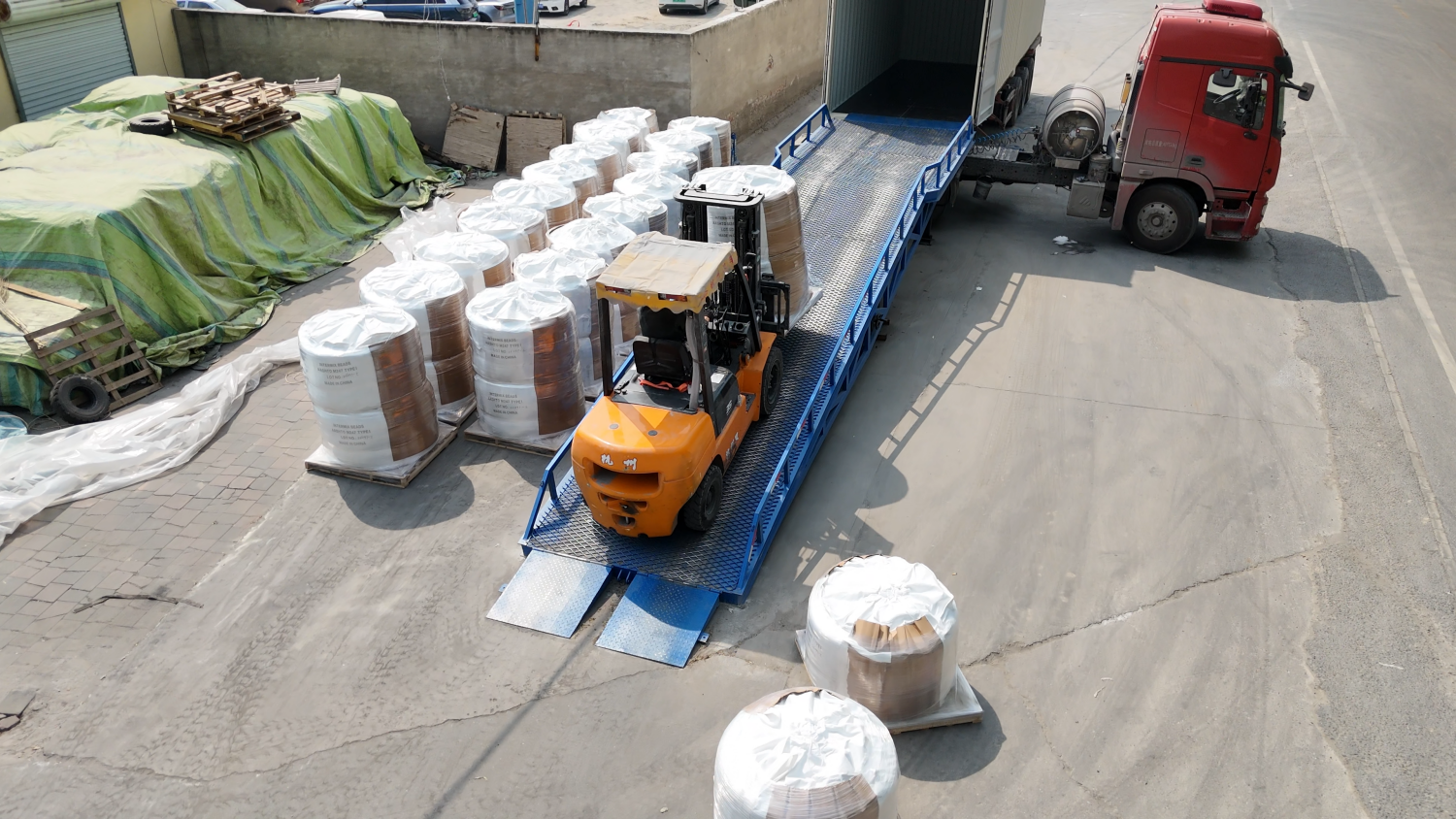
Dylantech works with a minimum order quantity of 1 ton, which allows a buyer to validate bead performance on a real project before committing to larger volumes. This approach has a documented track record: a 1-ton trial reported a remarkable night-time reflective effect, and follow-on projects supplied at 56, 72, 108 and 198 tons maintained low wear and stable performance over three to four years. To arrange a sample or trial quantity, contact the Dylantech team directly.
What is the lead time for a glass bead order?
Standard lead time is 45 to 60 days. That schedule is supported by four production bases in Liaoning, Shanxi, Hebei and Henan, a monthly capacity of 10,000 tons, 100% quality testing on production batches, and remote after-sales support. Because lead time and specification are linked, the fastest way to confirm a delivery schedule is to share the target standard, refractive index grade and bead size with the sales team — you can request a quotation and the corporate brochure through the contact details at the end of this article.
Conclusion: Retroreflectivity Is Engineered, Not Painted On
Visibility at night is not a matter of brighter paint. It is a matter of optics. Glass beads capture headlight light, redirect it internally, and return a share of it to the driver, and the quality of that effect is set by refractive index, particle size, roundness and how the bead is placed and protected in the marking film. RI 1.6 and RI 1.7 grades exist because some roads demand more returned light than a standard grade can provide, and a size range of 0.5 mm to 20 mm exists because the correct bead for a thin drop-on line is not the correct bead for a thick, high-build marking.
LangFang Dylan Technology Co., Ltd. (Dylantech) has supplied glass beads for the road safety industry since 2004, from four production bases in Liaoning, Shanxi, Hebei and Henan, with an annual output of 100,000 tons, a 20-engineer R&D team, exports to more than 50 countries and a field record of low wear and stable performance across three to four years. For buyers evaluating glass beads, the practical next step is to match the bead grade to the governing standard, confirm the refractive index requirement, and validate the specification on a real project before scaling.

Talk to Dylantech About Your Glass Bead Specification
Whether you need RI 1.6, RI 1.7 or a standard-compliant BS 6088, EN 1423, EN 1424 or AASHTO M247 grade, the team can confirm sizes, coatings and availability for your project.
Email: dylan@xgbead.com
Tel / WhatsApp: +86 186-3166-3616
Website: www.dylantech.com
Download the corporate brochure: Dylantech Corporate Brochure (PDF)

Have Questions or Need More Details?
Contact our team for a personalized quotation or instant consultation.
Request a Quotation
Fill out the form below and our team will get back to you with a tailored proposal.
WhatsApp Direct Chat
Prefer to chat in real-time? Message us on WhatsApp for instant assistance & quick answers.
- Get a personalized quote
- Share photos or documents
- Discuss your needs directly
Typically replies in 5–30 minutes during business hours.