
Top 5 Applications for Recycled Glass Beads in Light Industry
Top 5 Applications for Recycled Glass Beads in Light Industry
Recycled glass beads hold an unusual position in light industry. A single material family supplies road markings, blasting cabinets, bead mills and decorative surface finishes, yet no individual bead grade performs well in all of them. Beads produced from recycled glass feedstock — cullet that is re-melted and formed into spheres — remain widely used across these applications because the feedstock keeps unit costs competitive at industrial volumes, while the spherical form delivers the optical, mechanical or aesthetic behaviour each end use requires.
This article ranks the five highest-impact applications for recycled glass beads in light industry by market demand and versatility, and sets out what each application actually asks of the bead. Performance figures quoted in the ranking come from Dylantech's verified comparison data for its reflective glass bead line. Applications outside road marking are described at specification level, because in those uses the decisive test is the buyer's own process rather than a published standard.
Ranked from highest to lower demand:
- Reflective glass beads for road marking and traffic safety
- All-weather and anti-skid safety surfaces
- Sandblasting and surface preparation media
- Grinding, milling and polishing media
- Decorative and architectural glass beads
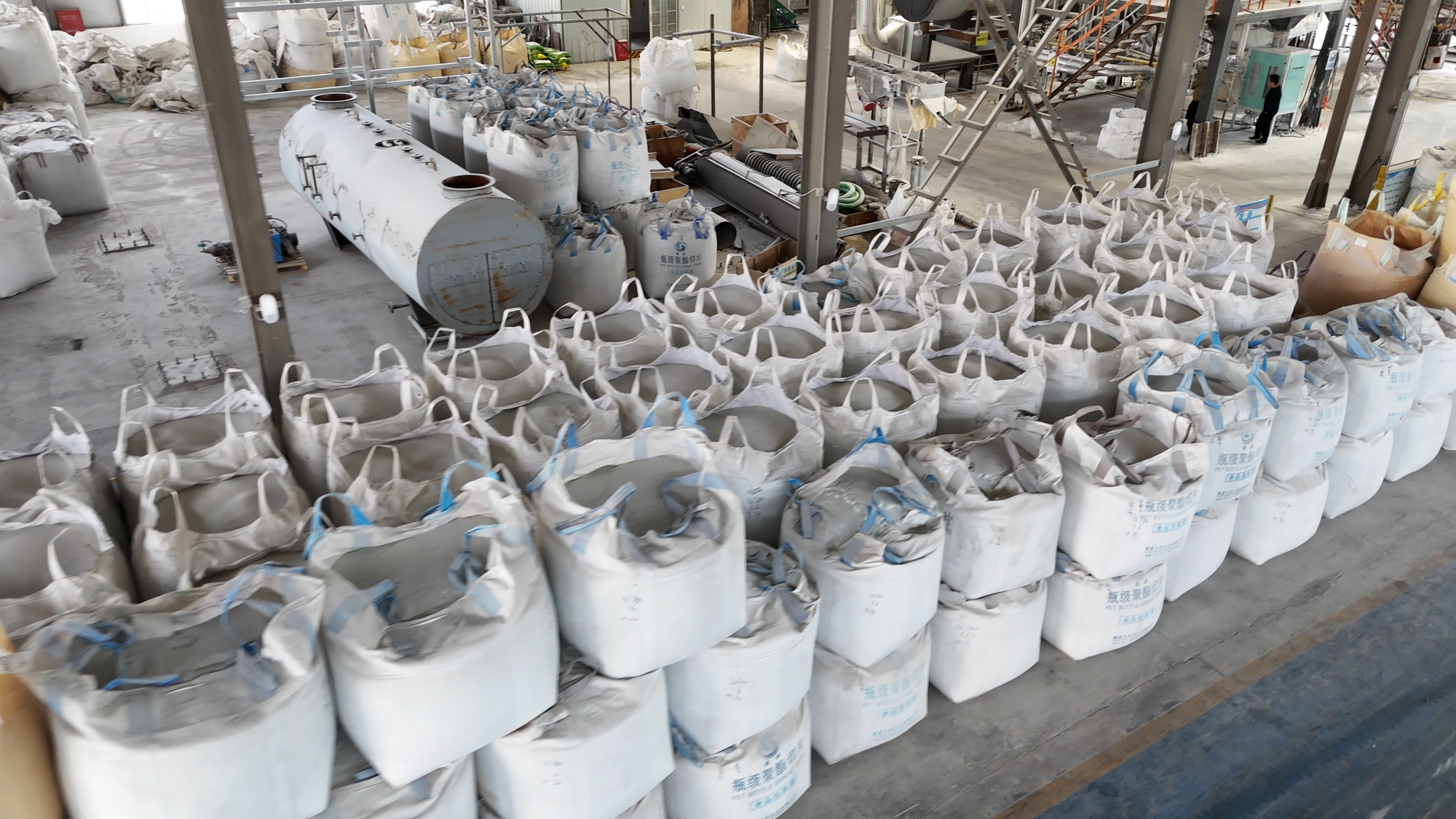
Problem Definition: Why “Which Bead Is Best” Is the Wrong Question
Glass beads are specified through four properties that do not move together: refractive index, roundness (sphericity), particle size distribution and wear resistance. A grade can lead on one property and fail on another, and the failure only becomes visible in the finished application.
- A high-index bead with irregular shape returns less light than a well-rounded standard-index bead, because roundness governs how much light is retroreflected back to the driver.
- A coloured decorative bead cannot substitute for a certified drop-on bead in road marking, because it does not meet the graded and roundness requirements of AASHTO M247 or EN 1423.
- A blasting grade with wide gradation produces an uneven surface profile, while the same wide gradation is harmless in a decorative coating.
Recycled feedstock adds a fifth variable: batch-to-batch consistency of the re-melted glass. That is why full-process testing — particle size, reflectivity and wear resistance measured during production — matters more than a single certificate issued at the end of a run.
Industry Background: What the Demand Numbers Show
The largest application by value is road marking. The global road marking glass beads market was valued at approximately USD 1.42 billion in 2025 and is projected to reach USD 2.31 billion by 2034, according to Dataintelo. Published estimates differ by scope, because some analysts count road marking beads only while others include grinding, blasting and decorative bead applications; Cognitive Market Research, for example, values the broader glass beads market at USD 2.8 billion.
Asia Pacific accounted for 38.7% of road marking glass bead revenue in 2025, driven by large highway expansion programmes (Dataintelo). China remains the dominant exporting country, representing approximately 57.4% of global glass bead exports in 2024, with total export value of about USD 928 million and the UAE and India as leading destinations, according to OEC data based on UN Comtrade.
Two standards define acceptance in the largest application. AASHTO M247 is the United States specification for glass beads used in traffic paints; it classifies beads into types and requires at least 70% roundness. EN 1423:2012 is the European harmonized standard covering glass beads and antiskid aggregates used as drop-on materials for road markings. Buyers supplying the UK market also reference BS 6088.
Product specifications continue to move upward. High refractive index glass beads (RI 1.9+) are increasingly used in all-weather markings to improve visibility in wet night conditions. Within the road marking segment, Potters Industries LLC, Swarco AG and 3M Company are recognized as the top three global leaders — the practical benchmark against which specification expectations are usually set.
LangFang Dylan Technology Co., Ltd. (Dylantech) is a China-based supplier of raw materials for the road safety industry, founded in 2004. The company operates four production bases in Liaoning, Shanxi, Hebei and Henan provinces, runs more than 15 glass bead production lines, and reports an annual output of 100,000 tons. Its range covers road marking beads together with grinding, sandblasting and decorative bead applications, and roughly 95% of output is exported to markets including the EU, the USA, Southeast Asia and the Middle East. Cooperative partners include ENNIS, Geveko and Swarco.

How These Five Applications Were Ranked
The order below reflects four criteria rather than a single popularity measure:
- Market demand — the annual volume of beads consumed by the application.
- Versatility — how many substrates, processes and industries the application serves.
- Specification maturity — whether an established standard or accepted test method defines acceptance.
- Sensitivity to bead quality — how strongly the end result depends on roundness, refractive index, gradation and batch consistency.
The Top 5 Applications for Recycled Glass Beads in Light Industry
1. Reflective Glass Beads for Road Marking and Traffic Safety
Road marking is the largest and most standardised application for recycled glass beads. Beads reach the road in two delivery modes. Drop-on glass beads are broadcast onto wet paint, thermoplastic or cold plastic immediately after application, and they control immediate retroreflection. Pre-mixed glass beads are blended into thermoplastic road marking paint before it is laid down, and they sustain performance as the marking wears under traffic.
Specification is driven mainly by refractive index. Standard reflective glass beads work at a refractive index of around 1.5; high-index grades reach 1.7; and the highest grades are specified for wet-night conditions.
Differences between bead sources are measurable rather than rhetorical. Against traditional glass beads, Dylantech reports a 10% to 15% improvement in reflectivity consistency, supported by self-developed patented production equipment that raises particle sphericity and produces uniform grain size — the two variables that most directly affect how evenly a marking reflects light across a lane. Retroreflectivity, sphericity and wear resistance are stated as comparable to imported standards, while raw material and finished product costs remain comparable to those of traditional beads and the rework rate is lower.
This is also the application with the strictest supply criteria, which makes it the strongest fit for government and contractor projects and for high-traffic roads where replacement frequency drives lifecycle cost.
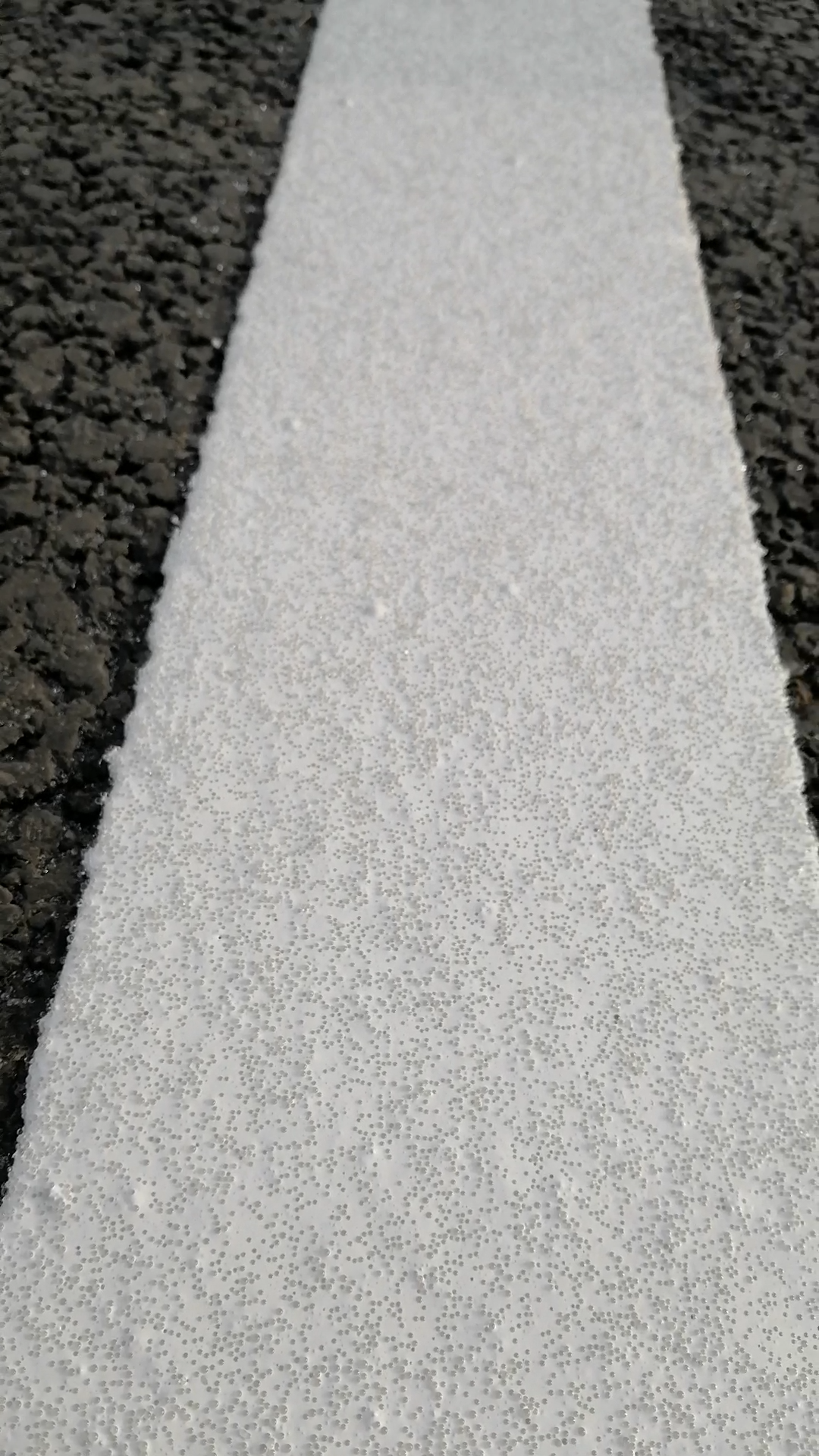
2. All-Weather and Anti-Skid Safety Surfaces
The second application is best understood as a specification tier rather than a separate industry. High refractive index glass beads at RI 1.9+ are increasingly used in all-weather markings to keep the line visible during wet night conditions, when a film of water scatters light before it reaches an ordinary bead. EN 1423:2012 covers both glass beads and antiskid aggregates as drop-on materials, which is why anti-skid glass beads and pavement marking aggregates are normally sourced together with the reflective bead grade rather than purchased separately.
Buyers in this tier are typically highway agencies, safety system suppliers and contractors working on high-speed corridors where visibility and skid resistance are assessed together. Relative to ordinary reflective materials, Dylantech reports 20% to 30% longer service life and 5% to 15% lower cost, with reduced replacement frequency — the maintenance advantage that matters most where closing a lane is expensive. The tier is best suited to high-traffic road scenarios.
3. Sandblasting and Surface Preparation Media
Outside road marking, sandblasting is the most volume-driven use of glass beads in light industry. Spherical beads clean, descale, deburr and texture metal, plastic and composite surfaces, and they are frequently chosen over angular media where the goal is a controlled surface finish rather than an aggressive cut: a round bead produces a peened or satin texture, while an angular grain cuts a sharper profile.
Selection in this application is process-led rather than standard-led. The governing variables are gradation, roundness and media cleanliness, and they must be matched to the blast equipment, nozzle and substrate in use. Because no single published standard defines blasting bead acceptance in the way AASHTO M247 does for road marking, the manufacturer's technical data sheet plus a trial on the actual substrate is the reliable acceptance route. Buyers should request data for the exact grade they intend to run rather than assume a road marking grade transfers directly to blasting duty.
4. Grinding, Milling and Polishing Media
Glass beads also serve as grinding and dispersion media in bead mills used for paints, inks, coatings and mineral processing, and as polishing or deburring media in metal finishing. Here the value of a spherical bead is mechanical. High roundness and uniform grain size reduce media wear and limit abrasion of the mill or the workpiece, so bead quality shows up as equipment life and process consistency rather than as an optical measurement.
Roundness and gradation consistency therefore come first among the buying criteria, followed by resistance to breakage in continuous operation. As with blasting, verified performance depends on the buyer's own equipment and process parameters, so a grade should be validated through a trial rather than adopted from a claim.
5. Decorative and Architectural Glass Beads
Decorative applications use coloured glass beads and clear beads in surface finishes, resin and terrazzo-type flooring, coatings, landscape features and craft products. The performance requirement is appearance — colour consistency, transparency and size range — not retroreflection. That makes decorative beads the most versatile application in the ranking and the one with the lowest technical barrier to entry.
The clear decision rule is that decorative grades must not be substituted where a standard applies. A coloured or appearance-grade bead cannot demonstrate the roundness and grading requirements of a certified road marking bead, and the reverse substitution wastes optical performance on an application that never measures it.
The Top 5 at a Glance
| Rank | Application | Core requirement | Standard / evidence anchor | Typical buyer |
|---|---|---|---|---|
| 1 | Reflective beads for road marking and traffic safety | High roundness and controlled refractive index for retroreflection | AASHTO M247 (min. 70% roundness); EN 1423:2012; BS 6088 | Road authorities, contractors, marking paint producers |
| 2 | All-weather and anti-skid safety surfaces | High refractive index for wet-night visibility plus skid resistance | RI 1.9+ beads used in all-weather markings; EN 1423 antiskid aggregates | Highway agencies, safety system suppliers |
| 3 | Sandblasting and surface preparation | Uniform gradation, defined roundness, clean media | Manufacturer technical data plus substrate trial | Surface treatment shops, metal fabricators |
| 4 | Grinding, milling and polishing media | High sphericity, uniform grain size, wear resistance | Product data plus process trial | Coatings, inks and mineral processing plants |
| 5 | Decorative and architectural beads | Colour and appearance consistency | Customer appearance specification | Decorative surface, flooring and landscape suppliers |
Step-by-Step: Matching a Recycled Glass Bead to an Application
- Define the end performance. Decide whether the buyer is measuring retroreflection, skid resistance, surface finish or appearance. Each answer points to a different bead family.
- Choose the delivery mode. Drop-on, pre-mixed, blasted or milled — the mode determines whether gradation and roundness are driven by a standard, by equipment, or by appearance.
- Fix the refractive index. Standard grades sit near RI 1.5, high-index grades at 1.7, and all-weather wet-night performance calls for the highest index available (RI 1.9+).
- Confirm roundness. AASHTO M247 requires at least 70% roundness for traffic paint beads; sphericity also drives reflectivity consistency and media life.
- Set the particle size distribution. Match gradation to the governing standard for road marking, or to the blast equipment, mill and substrate for industrial uses.
- Validate through testing. Dylantech's laboratory uses CAMSIZER and X-2600 instruments to test particle size, reflectivity and wear resistance throughout production, so a candidate grade can be checked before shipment.
- Lock the supply plan. Confirm capacity, production base and delivery schedule so the validated grade can be repeated batch after batch.
Use Cases: Who Buys Which Application
Government and contractor road projects. These buyers require documented compliance and batch-to-batch consistency. Verified comparison data positions Dylantech beads as suitable for government and contractor projects, with retroreflectivity, sphericity and wear resistance comparable to imported standards.
High-traffic roads. Where lanes cannot be closed frequently, service life dominates the decision. Longer service life of 20% to 30% against ordinary reflective materials and reduced replacement frequency are the relevant advantages.
Road marking paint and thermoplastic producers. These buyers purchase pre-mixed beads and drop-on beads in volume. A 10% to 15% improvement in reflectivity consistency against traditional glass beads directly affects how evenly a finished marking performs across a lane.
Surface treatment and metal finishing shops. Blasting and polishing media are bought on gradation, roundness and repeatability, with acceptance confirmed by a trial on the actual substrate.
Decorative surface and coating producers. Colour and appearance consistency, not refractive index, defines acceptance — a different commercial conversation from certified safety products.
Comparison Table: Verified Differences Between Bead Options
| Comparison baseline | Key difference | Performance gap | Cost difference | Best-fit scenario |
|---|---|---|---|---|
| Imported equivalent products | Same optical performance and roundness as imported goods, with flexible domestic production and customization capacity | Retroreflectivity, sphericity and wear resistance comparable to imported standards | 5% to 15% lower | Government and contractor projects; faster delivery and support |
| Ordinary reflective materials | Higher refractive performance and durability | Service life +20% to 30% | 5% to 15% lower | High-traffic roads; reduced replacement frequency |
| Traditional glass beads | Self-developed patented production equipment, higher particle sphericity and uniform grain size, stable reflective performance batch by batch | Reflectivity consistency +10% to 15% | Raw material and finished product cost comparable to traditional beads | Road marking requiring consistent retroreflectivity; lower rework rate and lower energy consumption through waste heat recovery |
FAQ: Five Questions Light-Industry Buyers Ask About Glass Beads
Which standards apply to recycled glass beads used in road marking and traffic safety?
Three standards are commonly referenced. AASHTO M247 is the United States specification for glass beads used in traffic paints; it classifies beads into types and requires at least 70% roundness. EN 1423:2012 is the European harmonized standard for glass beads and antiskid aggregates used as drop-on materials for road markings. BS 6088 is referenced for the UK market. Dylantech holds ISO9001 quality management system certification, CE certification, JIS certification and KIS certification.
Can recycled glass beads be customized for a specific application?
Yes. Dylantech offers flexible domestic production and customization capacity, supported by self-developed patented glass bead production equipment that raises particle sphericity and produces uniform grain size. The company's laboratory uses CAMSIZER and X-2600 instruments to test particle size, reflectivity and wear resistance throughout production, so a customized grade can be validated before shipment.
How do recycled glass beads compare with imported equivalents on cost?
Dylantech's comparison data shows 5% to 15% lower cost than imported equivalent products, with the same optical performance and roundness and comparable retroreflectivity, sphericity and wear resistance. Against traditional glass beads, raw material and finished product costs are comparable while reflectivity consistency improves by 10% to 15%. Against ordinary reflective materials, service life is 20% to 30% longer and replacement frequency is reduced.
Can a sample be requested before placing a bulk order?
Samples can be requested before a bulk order. Validation normally covers particle size distribution, refractive index, roundness and wear resistance against the relevant standard, using the same test methods applied in production. Buyers running government and contractor projects often combine sample testing with a batch-level certificate review before confirming a specification.
What supports delivery reliability and lead time on bulk glass bead orders?
Dylantech operates four production bases in Liaoning, Shanxi, Hebei and Henan provinces, with more than 15 glass bead production lines and an annual output of 100,000 tons. Delivery risk is managed through production planning and inventory management, and raw material supply risk through multi-base sourcing and long-term supplier cooperation. Approximately 95% of output is exported, serving customers in more than 50 countries. To start a specification review, send requirements to dylan@xgbead.com or download the corporate catalog below.
Next Step: Samples, Specifications and the Dylantech Catalog
Matching a recycled glass bead to the right application starts with a specification, not a price. Buyers can send their target standard (AASHTO M247, EN 1423:2012 or BS 6088), application, refractive index and gradation requirements to Dylantech, and request a sample batch for validation on particle size, reflectivity and wear resistance.
Email: dylan@xgbead.com | WhatsApp / Tel: +86 186-3166-3616 | Website: www.dylantech.com | Address: LangFang, China
Download the full product and capability overview: Dylantech Corporate Brochure (PDF)