Tent Certification Guide: What Importers Must Know for Compliance
Tent Certification Guide: What Importers Must Know for Compliance
Importing a party tent, wedding tent, warehouse tent, or clear tent from China? Without the right certifications, you risk safety failures, customs delays, legal liabilities, and brand damage. This guide explains exactly what certifications a reliable tent manufacturer should hold, why they matter, and how to verify compliance before placing your order.
What is Tent Certification and Why Is It Non-Negotiable?
Tent certification is a formal verification that a tent structure meets specific safety, material, fire resistance, and structural integrity standards. For importers, these certifications are not optional extras—they are legal requirements in most regulated markets (EU, UK, USA, Australia, Middle East).
Key certifications for tents include:
- CE Marking (EU): Mandatory for tents sold in the European Economic Area. Indicates conformity with health, safety, and environmental standards (e.g., EN 13782 for temporary structures).
- British Standards (BS 7837 / BS 5867): Fire resistance certification required in the UK for fabric used in marquee tents and event tents.
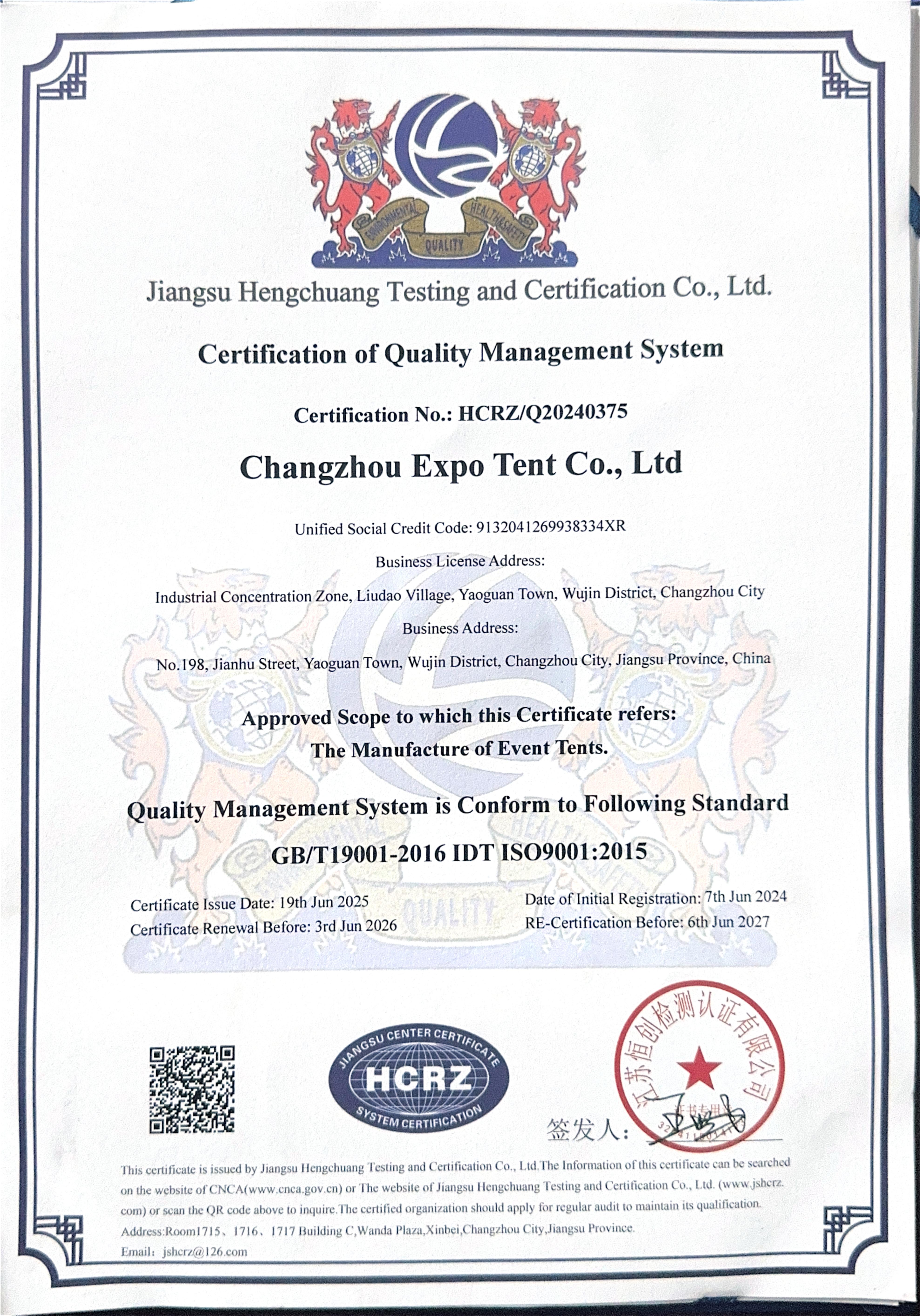
- ISO 9001:2015: Quality management system certification. Demonstrates a manufacturer's ability to consistently produce tents that meet customer and regulatory requirements.
- SGS / TÜV / Intertek Reports: Third-party testing reports for fabric strength, flame retardancy, UV resistance, and wind load.
- Local Building Code Compliance: For warehouse tents and large structures used in logistics or sports, local permits often require engineering calculations and wind/snow load certifications.
Why is this important? Uncertified tents can collapse under wind, catch fire easily, or contain banned chemicals. Insurers and event organizers typically demand proof of certification. Without it, you are financially and legally exposed.
Industry Background: The Global Standards Landscape
The tent industry operates under a patchwork of regional and product-specific standards. Here is a comparison of the most relevant frameworks:
| Standard / Certification | Region | Scope | Typical for |
|---|---|---|---|
| EN 13782 | European Union | Temporary structures (safety, stability) | Event tents, party tents, clear tents |
| BS 7837 / BS 5867 | United Kingdom | Flame retardancy of fabric | Marquee tents, exhibition tents, wedding tents |
| NFPA 701 | USA | Flame propagation of textiles | Event tents, pagoda tents |
| AS 1530.3 | Australia | Flame retardancy | Party tents, warehouse tents |
| ISO 9001:2015 | Global | Quality management system | All tent manufacturing |
| CE (CPR / Construction Products Regulation) | EU/EEA | Performance of construction products | Warehouse tents, big tents |
Who uses these certifications? Importers, event planners, construction contractors, sports venue operators, government procurement departments—anyone who sources tents for commercial or industrial use. End users (hotels, logistics companies, wedding planners) also rely on certification to pass local inspections.
Detailed Solution: How to Ensure Your Tent Supplier Is Truly Compliant
Certifications are only valuable if they are genuine and still valid. Here is a step-by-step process to verify compliance:
Step 1 – Request Current Certificates
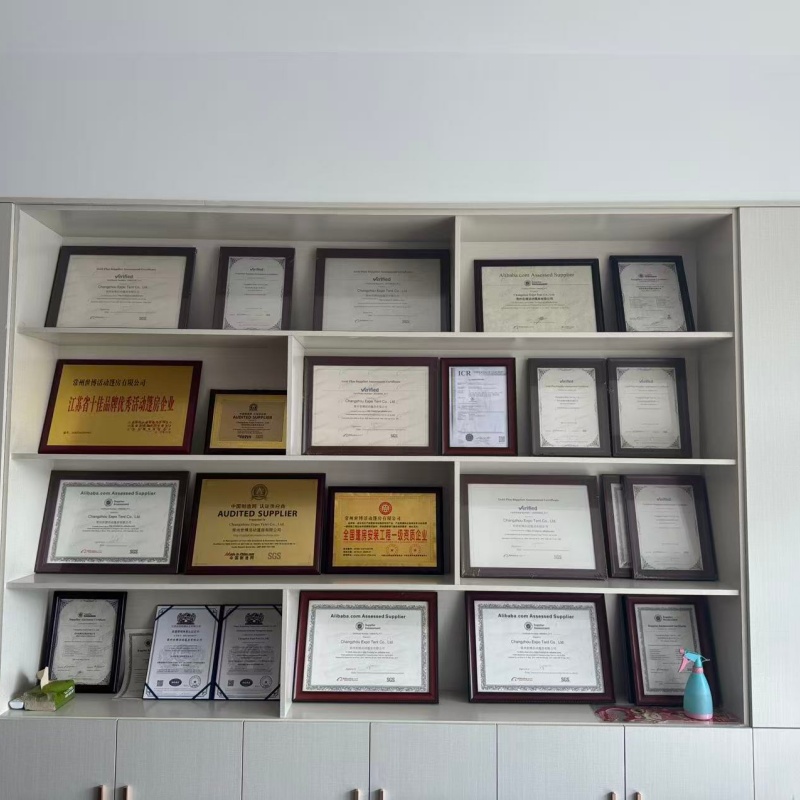
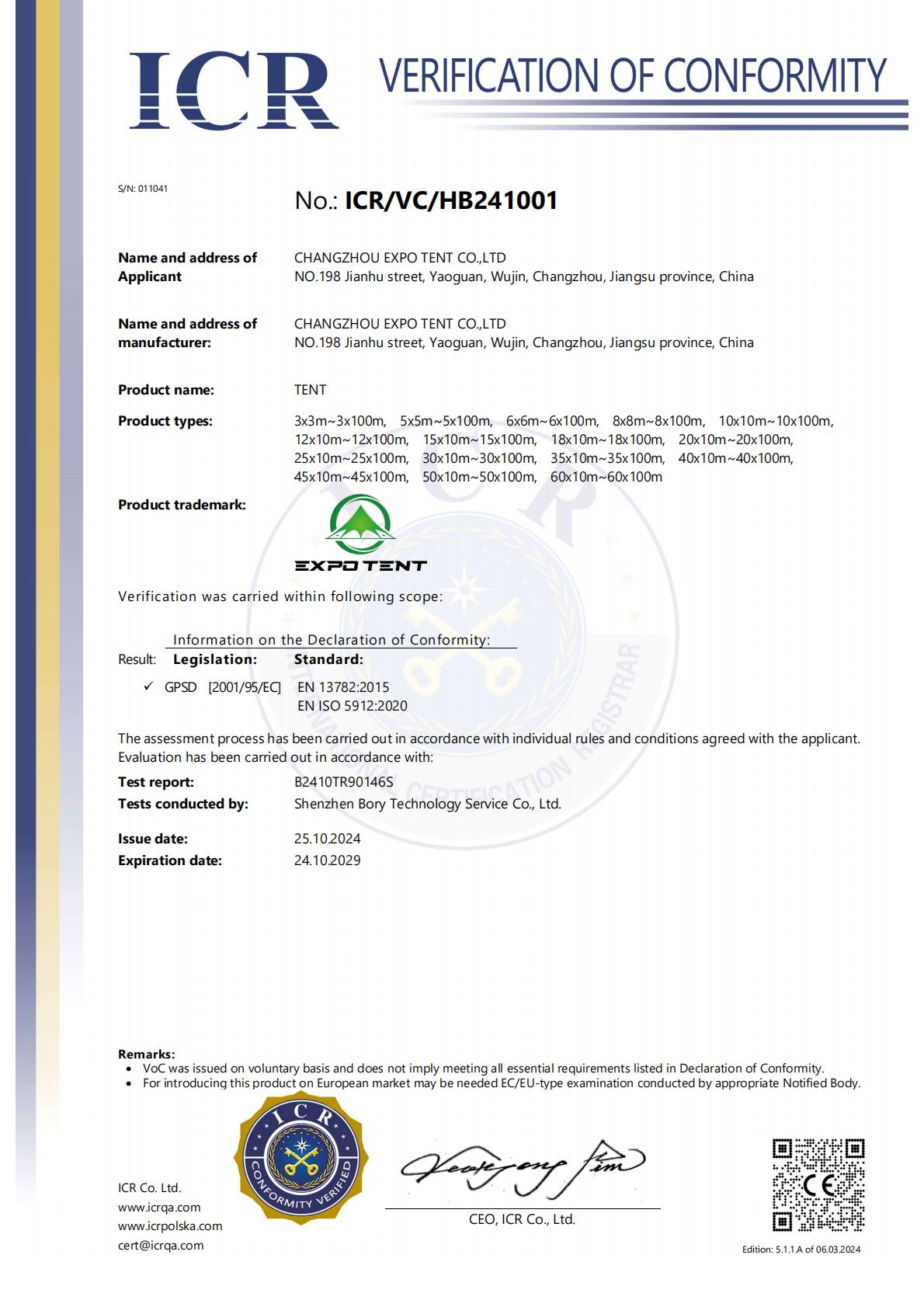
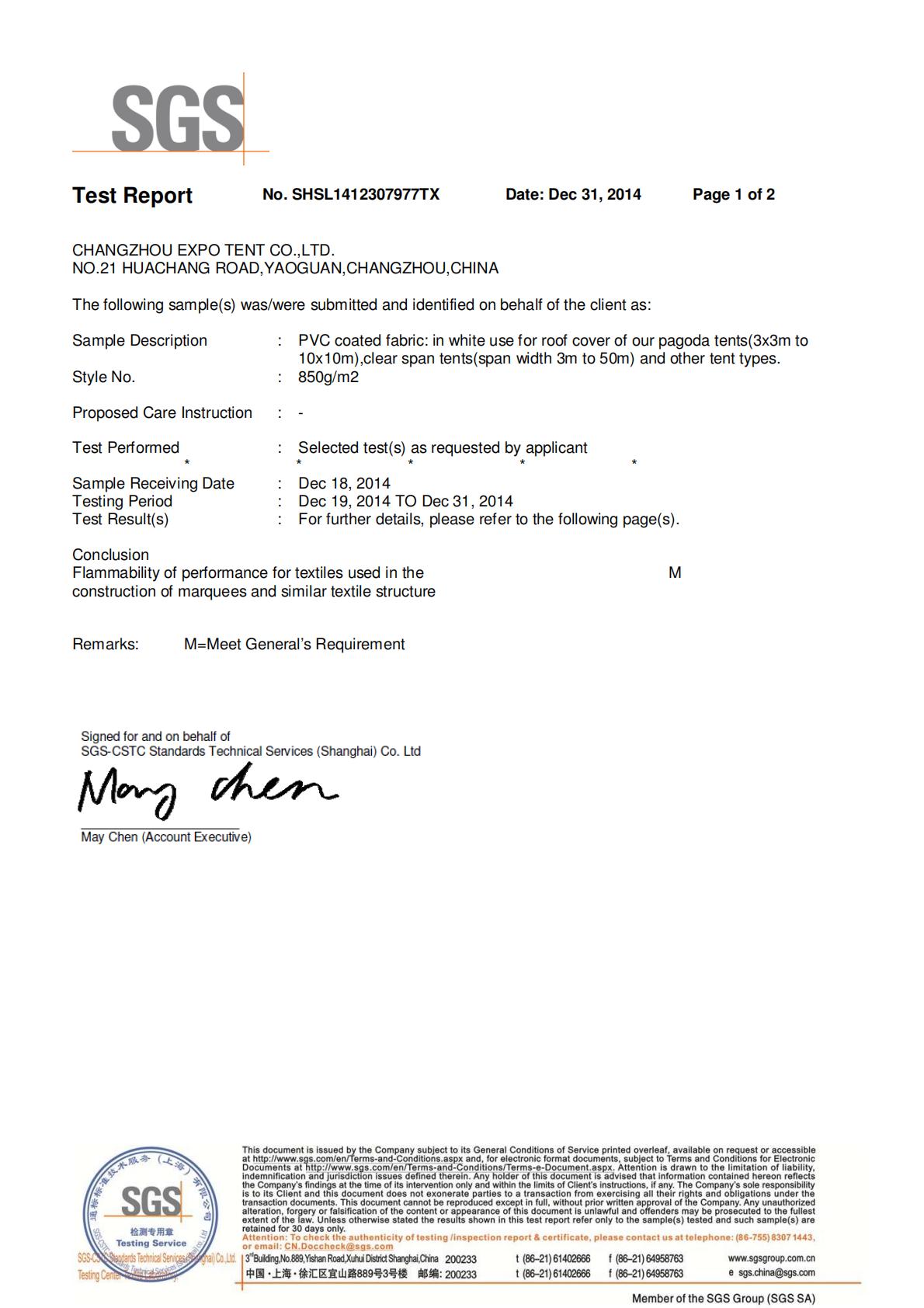
Ask your supplier for copies of all relevant certifications. For ExpoTent, we openly share our certificates including CE, ISO 9001:2015, British Standards for 850g PVC fabric, and third-party SGS reports. The certificates should show the manufacturer's name, product range, standard, and validity date.
Step 2 – Verify with the Issuing Body
Most certification bodies (e.g., SGS, TÜV, BSI) have online verification portals. Enter the certificate number to confirm authenticity. Never rely solely on scanned copies.
Step 3 – Check the “Scope” of Certification
A manufacturer may have ISO 9001, but does it cover your product category? For example, a party tent differs structurally from a warehouse tent. Ensure the certification explicitly includes the type of tent you need (e.g., “design and manufacture of aluminum frame tents and fabric structures”).
Step 4 – Review Test Reports for Your Specific Fabric and Model
Fire resistance and tensile strength vary by PVC weight and coating. Ask for test reports that match the fabric weight (e.g., 850g/m² PVC) and model you intend to buy. ExpoTent provides British Standards test reports for its 850g PVC fabric, ensuring compliance with UK fire regulations.
Step 5 – Confirm Engineering Calculations for Large Structures
For warehouse tents, clear tents, and big tents with spans over 10 meters, ask for structural calculations signed by a licensed engineer. Wind load and snow load values should match your project site’s local climate data.
Step 6 – Audit the Factory (or Request a Virtual Tour)
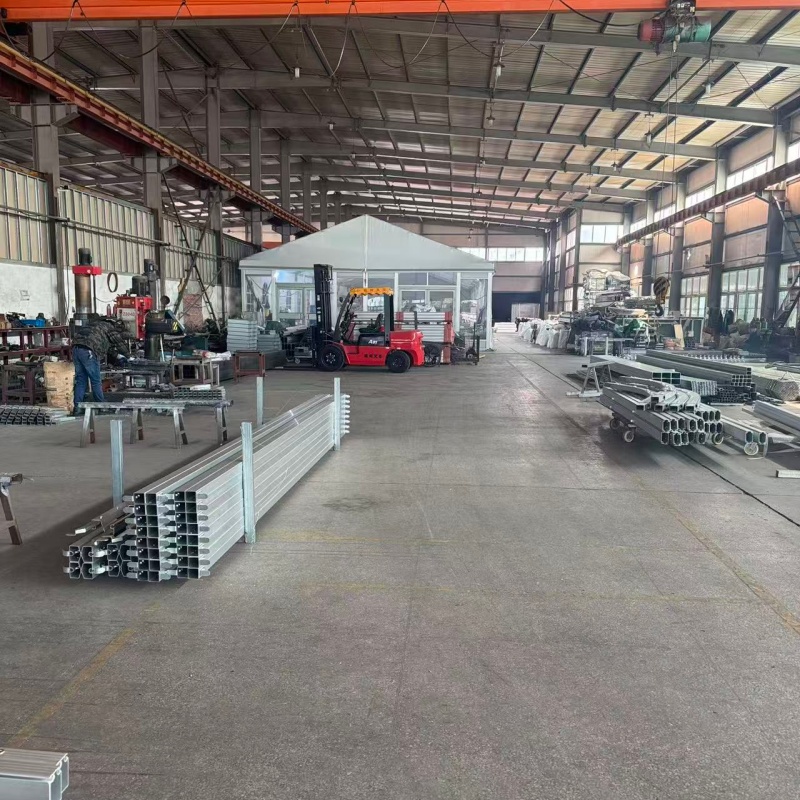
Certifications on paper do not guarantee quality on the production line. Visit the factory or request a live video tour. Look for clean welding stations, calibrated cutting machines, organized inventory, and a dedicated QC team. ExpoTent welcomes buyer audits and offers factory tours showing our cutting, welding, and assembly lines.
Use Case: How ExpoTent Meets Global Compliance Requirements
ExpoTent (Changzhou Expo Tent Co., Ltd), established in 2010, is a leading Chinese tent manufacturer supplying certified structures to over 40 countries. Our product line includes party tents, wedding tents, warehouse tents, marquee tents, event tents, exhibition tents, padel tents, pagoda tents, big tents, and clear tents.
Here are the certifications we hold and how they benefit importers:
| Certification | What It Covers | Benefit for You |
|---|---|---|
| CE Marking | All aluminum frame tents and fabric structures | Free movement in EU/EEA markets |
| BS 7837 & BS 5867 | 850g PVC fabric flame retardancy | Compliance with UK fire safety regulations |
| ISO 9001:2015 | Quality management system for design, production, sales | Consistent product quality and traceability |
| SGS Reports | Fabric tensile strength, tear resistance, UV stability | Independent third-party verification |
| CI-EXPWF-25033 | Fire safety compliance for specific tent models | Pass local fire inspections |
Our factory at No. 198, Jianhu Street, Yaoguan Town, Wujin District, Changzhou City, Jiangsu Province, China covers an area with dedicated cutting, welding, and assembly workshops. We have a professional QC team that inspects every batch before shipment. Certificates are available for download on our website or upon request.
Frequently Asked Questions (FAQ)
Q: What certifications are required for importing a wedding tent into Europe?
A: CE marking under EN 13782 is mandatory. Fire resistance should meet local national regulations (e.g., B1 in Germany, M2 in France). Ensure the fabric has a test report for the specific PVC weight (e.g., 650g or 850g).
Q: How do I know if a certificate is fake?
A: Verify the certificate number with the issuing body. Check that the manufacturer’s name, address, and product scope match. Look for holograms or QR codes. Request a real-time video tour of the factory showing the certificates on the wall.
Q: Does a party tent need different certifications than a warehouse tent?
A: Yes. Party tents and event tents often emphasize fire resistance and ease of assembly. Warehouse tents and big tents require structural engineering certifications for wind/snow loads and anchoring systems. Always match the certification to the intended use.
Q: Can ExpoTent provide custom certifications for my country?
A: We already hold commonly required international certifications. For specific local requirements (e.g., AS 1530.3 for Australia, ASTM E84 for USA), we can arrange additional testing through accredited labs. Contact our sales team to discuss your market needs.
Q: What is the cost of certified tents vs. non-certified tents?
A: Certified tents typically cost 10–20% more due to testing, third-party audits, and higher-grade materials. However, the cost of failure (liability, re-import, legal fines) far exceeds the premium. Certified tents also have better resale value and insurance eligibility.
Conclusion: Don’t Leave Compliance to Chance
Importing tents without proper certification is a high-risk gamble. By understanding the key standards, verifying supplier documents, and choosing a manufacturer like ExpoTent that maintains valid, up-to-date certifications, you protect your business and your customers.
We invite you to request our complete certification package and discuss your project requirements.
Contact ExpoTent today:
Tel/WhatsApp: +86 13775033077
Email: sales@expotentchina.com
Website: https://www.expotentchina.com/
Address: No. 198, Jianhu Street, Yaoguan Town, Wujin District, Changzhou, Jiangsu, China