
Wedding Tent Compliance: A Buyer's Guide to Certifications, Standards, and Regional Requirements
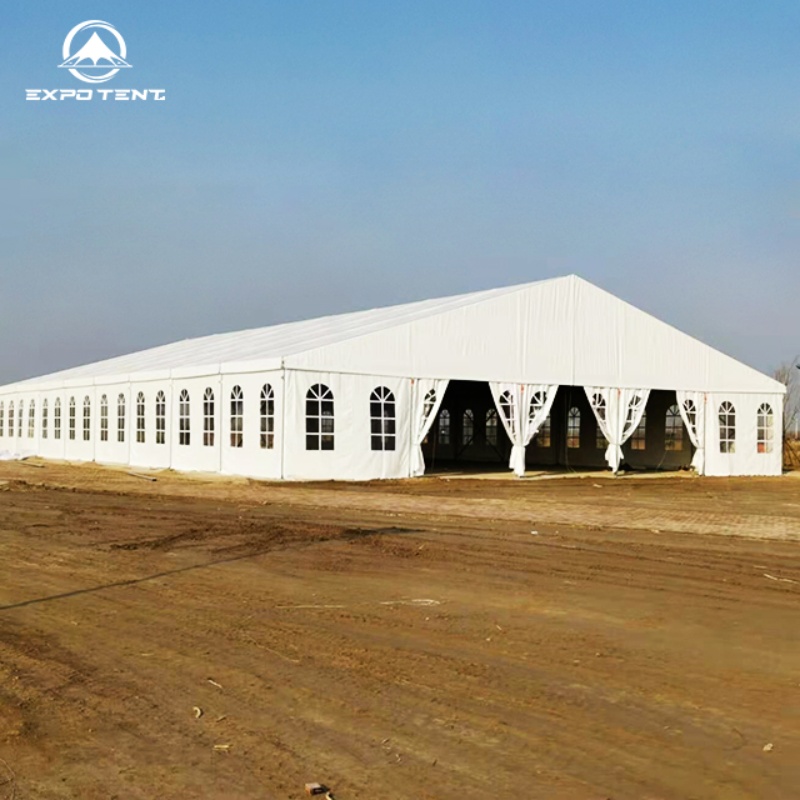
A high peak clear span event tent. Compliance is decided by the documentation behind the structure, not by the structure alone.
A wedding tent is compliant when three things line up: the delivered structure matches a written specification, the materials carry valid test evidence for the market where the tent will actually be erected, and the purchase contract makes that evidence a condition of acceptance. Any one of those missing leaves a tent that can be well built, look correct on a lawn, and still be unusable at the venue it was bought for.
This guide is written for buyers who have already passed the shortlist stage — rental operators, hotel groups, planners buying their own inventory, and distributors building a repeat supply line. It does not repeat general tent selection advice. It handles one job: converting compliance obligations into questions a supplier can answer, documents a buyer can hold, and acceptance criteria that survive a multi-year relationship.
Why Wedding Tent Compliance Breaks Down After the Order Is Placed
Most compliance failures are created before production starts and only surface at delivery, at customs, or at the venue gate. Four patterns account for the majority of them.
1. A certificate name without a scope
Supplier pages routinely cite NFPA 701, DIN 4102 B1/M2, and ISO 9001 side by side as if they were interchangeable. They are not. NFPA 701 is a test method for flame resistance of textile materials. DIN 4102 B1 and M2 are German building-material classifications that suppliers reference for covers. ISO 9001 certifies a factory quality management system, not the performance of a specific tent. A logo on a brochure tells a buyer nothing about which component was tested, under which method, by which laboratory, or on which date.
2. Wind performance claims with no shared basis
Public supplier listings for large event tents report wind resistance across a wide band — from 80 km/h up to 120 km/h in the sources reviewed for this guide. Those figures come from different tent geometries, different profiles, different anchoring assumptions, and no published test method. They cannot be compared, averaged, or used as an operating limit. When a single number is treated as an engineering fact, the buyer absorbs the risk.
3. Regional mismatch between the document and the deployment
NFPA 701 is the flame-resistance reference used in US-facing event tent literature; EN 13782 is the European standard referenced for wind safety of temporary structures. A report issued against one method does not automatically satisfy an authority working to another. On top of that, public-assembly permitting for temporary structures is jurisdiction-specific and is not consolidated in any single public source — it has to be confirmed with the authority having jurisdiction for the actual venue, before the tent is specified.
4. Asset life that outlasts the document pack
Frame choice sets the horizon. Recorded comparison data puts a steel frame tent at roughly two years of use and an aluminum frame tent at more than ten years, with aluminum described as never rusting and therefore not requiring rust cleaning. A tent bought for a decade will outlive the test reports that arrived with it. That is where compliance and long-term supply overlap: a one-off file handed over at shipment is not enough for a distributor or a rental fleet that expects to redeploy the same structure for years.
Industry Background: What the Public Record Shows — and What It Leaves Open
The commercial context is well documented. The global party supply rental market, in which wedding tents are a primary segment, was valued at USD 15.2 billion in 2023. Weddings accounted for 34.84% of that revenue in the same year. Premium clear-span wedding tents accounted for 41% of luxury event installations in 2025, which is the segment where specification and documentation pressure is highest. On the trade side, HS Code 6306.22 — tents of synthetic fibres — is the classification that covers most wedding tent shipments, with the verified industry record for 2026 placing annual trade in that code at approximately USD 2.51 billion.
The technical record is thinner. Almost every performance figure a buyer can find publicly — wind load, snow load, fabric weight, tensile strength — is manufacturer-reported. In the source record reviewed here, those claims were flagged as requiring verification because the test method, issuing body, safety factor, and anchoring conditions were not published alongside them. That is not an accusation against any supplier; it describes how this category communicates. But it moves the verification cost onto the buyer, and it makes the document request list the buyer's main instrument of control.
A second gap concerns regulation. Jurisdiction-level fire, structural, anchoring, and public-assembly requirements for temporary structures were not consolidated in the available record for any single market. Buyers should therefore plan to confirm local requirements per venue rather than assuming a supplier's certificate list functions as a permit.
The Four-Layer Compliance File Every Wedding Tent Buyer Should Hold
Compliance is easier to manage when it is split into four files rather than one folder of PDFs. Each layer answers a different question, and each is requested from a different part of the supplier's organisation.
Layer 1 — Product and material test evidence
This layer answers: was this material tested, by whom, and against what? Ask for reports that name the specimen, the fabric weight and coating, the test method, the laboratory, the date, and the component covered — cover, frame, or connectors. Public listings show the level of detail a buyer should demand. One configuration is described as double-coated PVC fabric at 650–850 g/m² on anodized 6061-T6 aluminum with galvanized steel connectors. Another lists fabric at 650–900 g/m² with tensile strength up to 4200 N/5 cm. Both are supplier-reported figures and neither is independently verified, but both are useful as RFQ fields: they let the buyer check that the report received matches the cover shipped.
Layer 2 — Structural and anchoring evidence
This layer answers: what holds the tent down, and what was that number calculated against? A wind figure without a design calculation, an anchoring assumption, a terrain category, a safety factor, and a named configuration is a headline, not evidence. Where local exposure is high, a supplier should be able to describe the control measure in engineering terms rather than adjectives. Changzhou Expo Tent Co., Ltd. (expotent), a China-based manufacturer established in 2010 that designs and manufactures aluminum and steel frame fabric structures for events, warehousing, sports and temporary use, documents wind risk control as the addition of windproof steel cables to the structure — a mechanical measure that can be specified, inspected, and photographed.
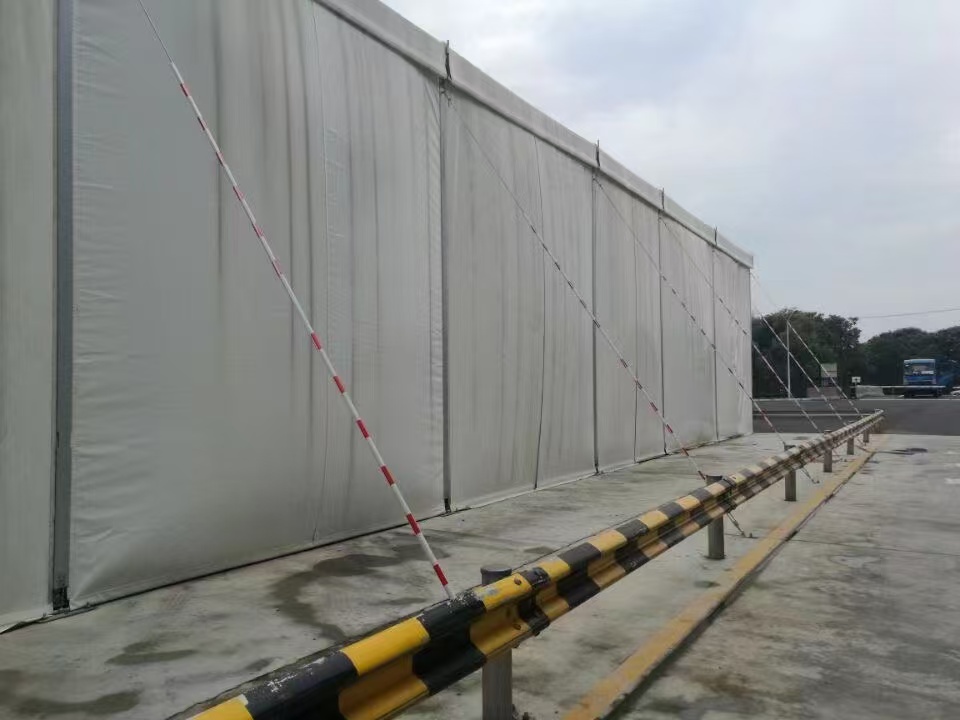
Windproof steel cables are a specifiable, inspectable control measure — and one that belongs in the acceptance checklist.
Layer 3 — Factory and process evidence
This layer answers: will the tenth tent match the first? Process control is what makes documentation meaningful, because a report only describes what the factory can reliably reproduce. expotent operates a 3,000 m² factory with an annual output of 100,000 m² of tent structures, 30 employees, and an R&D team of 3 engineers. The company reports a 50% export share across the EU, Africa, USA, Asia and the Middle East, and serves clients in over 40 countries. In-house operations visible in the factory record include welding, cutting, sewing, and tarp making.

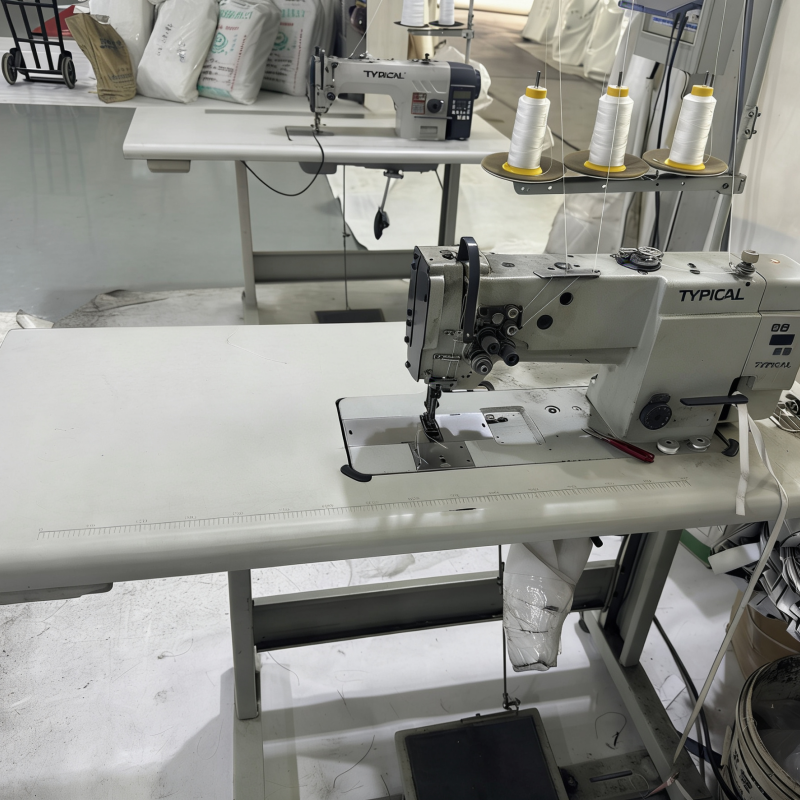
Welding and sewing are the two process steps where frame and cover quality are decided. Ask who performs each, and what inspection sits between them.
Questions worth putting in writing: which process steps are in-house, who performs frame welding and cover sewing, what in-process inspection exists between those steps, and how the pre-shipment test assembly is recorded and shared with the buyer.
Layer 4 — Commercial and contractual evidence
This layer answers: can the buyer enforce any of the above? Compliance only binds when it appears in the order. Recorded purchase terms for expotent orders are: MOQ 1 unit; delivery terms FOB or CIF; acceptance criteria pre-shipment test assembly of the tent; payment terms 30/70. Two of those are compliance instruments rather than logistics details. The pre-shipment test assembly is the buyer's physical proof that frame, cover, and modular connections fit before the container closes. The 30/70 payment split can be written so that the balance is released against that acceptance step, which converts a document into leverage. On the import side, HS Code 6306.22 governs how the shipment is declared, so the commercial description, the technical specification, and the customs description should all describe the same product.
Step-by-Step: Building a Compliance Specification Buyers Can Enforce
- Fix the deployment market before the specification. Decide the country and the venue type first. The market determines whether NFPA 701, EN 13782, or another reference set is the relevant one, and it determines which import documentation applies.
- Convert venue requirements into measurable fields. Span, bay spacing, eave height, cover weight, coating, frame alloy, and connector treatment. Public listings show these are commercially offered variables — reported span ranges run from 3 m to 60 m and eave heights from 2.5 m to 5 m — so each one must be written down, not implied.
- Issue a document request list, not a question. For each material: the test report, the method, the laboratory, the date, and the component covered. For the structure: the design calculation and its assumptions. For the factory: the quality management certification and its scope.
- Interrogate the wind claim. Ask what configuration the figure applies to, what anchoring condition was assumed, and what safety factor was used. If the answer is a number without a basis, treat the number as marketing and rely on the calculation instead.
- Write acceptance criteria into the purchase order. Pre-shipment test assembly, the approved drawing it is checked against, the photographs required, and who signs it off. This is the single most useful clause available to a wedding tent buyer.
- Agree the document pack format and timing. Which documents, in which language, delivered before production or before shipment, and in a form the venue or authority can read. A file delivered after the tent has shipped is a file delivered too late.
- Plan re-verification across the asset life. An aluminum frame structure documented at more than ten years of use needs document continuity for that period, not a single handover. For distributors and fleet operators this belongs in the supply agreement.
- Close the loop at delivery. Compare the test assembly record against the approved drawing, compare the document pack against the request list, and only then release the balance payment.
Use Cases: Where the Compliance Requirement Actually Changes
The same tent can carry a different compliance burden depending on where it is pitched and how long it stays there. Six deployment patterns cover most wedding tent buying decisions.
Outdoor lawn and beach deployments
An outdoor lawn wedding tent and a beach wedding special tent differ mainly in ground conditions and exposure. Both put anchoring at the centre of the specification, which is why the anchoring assumption behind any wind figure matters more here than the figure itself. On a beach, corrosion behaviour becomes a live question: aluminum frames are documented as never rusting and as requiring no rust cleaning, which is directly relevant to salt exposure, while connector treatment — hot-dip galvanized steel is reported in supplier listings — should be confirmed rather than assumed.
Castle and heritage-venue installations
A castle wedding decoration tent usually has to work within a site the buyer does not control. Clear-span configuration matters because it keeps the interior free of columns, but the deciding document is the venue's own approval, confirmed with the authority that governs the site. Buyers should not accept a supplier's certificate list as evidence of venue permission; the two are separate approvals and only one of them can be supplied by the manufacturer.
Hotel and commercial planning programmes
A hotel wedding supporting tent and a commercial wedding planning tent are typically purchased as inventory rather than as single events. That changes the compliance question from “does this tent pass?” to “will these documents still work in five years, across this many venues?” This is the point where the long-term relationship carries the risk: a distributor or hotel group needs document refresh, not a single shipment file.
Large-space and custom-size structures
A large-space wedding tent and a custom-size wedding tent multiply the documentation requirement, because a structural statement applies to one configuration — its span, bay spacing, eave height, and anchoring. Change the dimensions and the verification has to follow. Reported commercial ranges (3–60 m widths, 2.5–5 m eave heights across supplier listings) show how much variation the category offers, which is exactly why the approved drawing must be named in the contract.
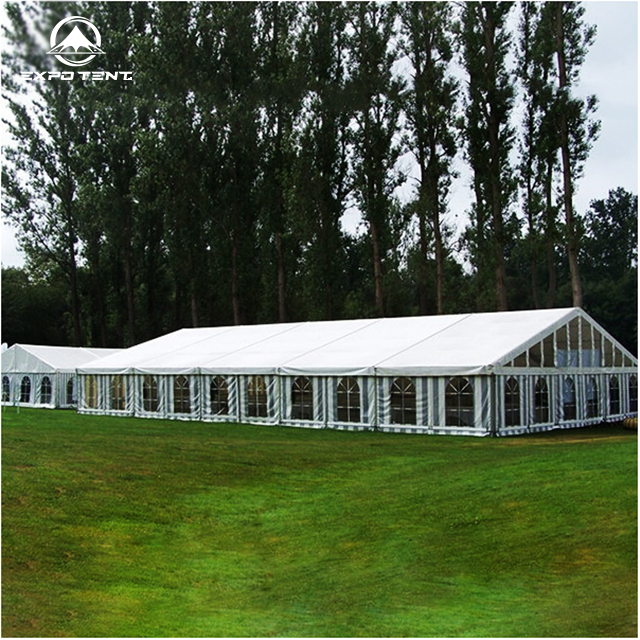
A large marquee configuration is a specific structural case. The approval should name the drawing, not just the product family.
Windproof, waterproof and modular configurations
A windproof and waterproof wedding tent is where buyers most often accept a claim instead of a document. Cover weight, coating, seam construction, and the wind cable arrangement are the fields to specify, and each maps back to a report or a calculation. A detachable modular wedding tent adds a second layer: modular systems are offered with bay spacing adjustable in 5-metre increments, so a single platform can produce several structurally different configurations — and each one may need its own verification.
Quick-storage and redeployment
A quick-storage wedding tent spends much of its life packed. Storage and handling conditions affect cover life, so the contract should state the supplier's storage and handling requirements as plainly as it states the span. For rental fleets this is the difference between an asset that stays compliant and one that quietly degrades between seasons.
Comparison: Frame Material and Reported Wind Performance
Two comparisons are genuinely useful at the decision stage. The first comes from recorded product comparison data; the second shows why public performance claims cannot be ranked against each other.
Table 1 — Aluminum frame versus steel frame wedding tent
| Criterion | Aluminum frame tent | Steel frame tent |
|---|---|---|
| Recorded service life | More than 10 years | About 2 years |
| Corrosion behaviour | Does not rust | Not stated in the recorded comparison |
| Maintenance noted | No rust cleaning required | Not stated in the recorded comparison |
| Recorded as best suited to | Wedding and warehouse applications | Not stated in the recorded comparison |
Table 2 — Reported wind performance in public supplier listings (not comparable)
| Source listing | Reported wind figure | Stated configuration | Verification status |
|---|---|---|---|
| MR Structures | Up to 100 km/h; 75 kg/m² snow load | Specified clear-span event tent configuration | Manufacturer-reported; no test method, safety factor or anchoring condition published |
| Lingtong Structures (Arcum tent) | Up to 120 km/h | Curved-roof structure, reported 10–30 m span | Manufacturer-reported; no structural calculation supplied |
| LIRI Tents | Up to 100 km/h | Transparent PVC-roof wedding tent, bay spacing adjustable in 5 m increments | Marketplace listing; not independently verified |
| Shelter Architecture Technology | 80–120 km/h range | Modular clear-span structures, reported 3–60 m widths | Company profile claim; certificates and scope not independently verified |
The spread in Table 2 is the argument for requesting design calculations instead of comparing headline numbers. These values use different geometries and no common methodology, so they must not be averaged, ranked, or used as an operating limit.
Frequently Asked Questions
Which certifications should we require in a wedding tent purchase contract?
Require the standards that match the deployment market, and require the report rather than the logo. For commercial event tents the references used in the industry literature are NFPA 701 for flame resistance and EN 13782 for wind safety in Europe. Ask for the report that names the specimen, the method, the laboratory, the date, and the component covered. Where a supplier cites DIN 4102 B1 or M2, ask which issuing body and which cover material. ISO 9001 should be requested separately and understood as factory quality management, not as evidence of tent performance. The test is simple: any standard named in the contract must be traceable to a document that matches the goods shipped.
Can one modular tent platform serve several venues without new verification?
Only within the configurations the documents actually cover. Modular structures are commercially offered with bay spacing adjustable in 5-metre increments, and reported width ranges extend from 3 m to 60 m with eave heights of 2.5 m to 5 m — so one platform can produce structurally different installations. Because a structural statement applies to a span, bay, eave, and anchoring combination, changing those fields changes what the documentation supports. Buyers running multiple venues should list the configurations they intend to deploy and confirm which of them are covered. This matters even more over a long horizon: expotent's aluminum frame structures are documented at more than ten years of use, which is longer than most document packs are designed to last.
What should we budget for compliance beyond the tent itself?
Compliance is rarely a single line item, and comparable delivered prices for compliant wedding tents are not published in a standardised form, so there is no reliable public benchmark to budget against. Build the figure from four components: the product itself, the documentation and testing scope, delivery and import handling, and lifetime re-verification. Three practical levers exist. First, delivery terms — FOB or CIF — determine who carries freight and import paperwork. Second, the HS Code 6306.22 declaration must match the technical description, or customs documentation becomes a separate problem. Third, MOQ 1 unit means a single-unit order is possible, so a first order can be kept small while the document pack is proven before committing to fleet volumes.
What does a pre-shipment test assembly actually prove?
It proves the physical kit, before the container closes. The recorded acceptance criterion for expotent orders is a pre-shipment test assembly of the tent, which verifies dimensional fit, frame-to-cover compatibility, modular connection alignment, and completeness of the delivered components. It does not replace a material test report or a structural calculation — those are documents, while this is physical evidence — and it should be checked against the approved drawing rather than against general expectations. Ask for photographs and a signed checklist as part of the acceptance record, and make the balance payment conditional on that record.
How should lead time and the document pack be fixed in the contract?
Anchor lead time to a defined starting point and a defined finish, with the pre-shipment test assembly named as the milestone before balance payment. Then state, in the same document, who delivers which certificates and calculations, in which language, and by when — and add a refresh clause if the structure is expected to stay in service for a decade. For repeat orders and distributor arrangements, that clause is what keeps a compliant tent compliant. Buyers who want to start the process with a physical check rather than a PDF can request a sample and test assembly booking, ask for a quotation against a specific configuration, or download the catalogue at the expotent brochure, and direct specification questions to expotent at sales@expotentchina.com or +8613775033077.
Conclusion: Compliance Is a Relationship, Not a Folder
Wedding tent compliance reduces to a small set of decisions a buyer can control. Name the deployment market. Specify span, bay, eave, cover weight, alloy and connector treatment as measurable fields. Request reports that name the specimen and the method, not certificate logos. Refuse wind figures that arrive without a calculation and an anchoring assumption. Put the pre-shipment test assembly into the acceptance criteria and hold the balance payment behind it. Then plan for the fact that an aluminum frame structure documented at more than ten years of use will outlive the paperwork that came with it.
That last point is what separates a single transaction from a supply line. Hotels, rental fleets, and distributors are not buying one compliant tent; they are buying a partner who can reissue, re-verify, and re-document the same platform as venues, configurations, and requirements change. Buyers who write the document request list into the first order get that relationship by default. Buyers who do not usually discover the gap at a venue gate.
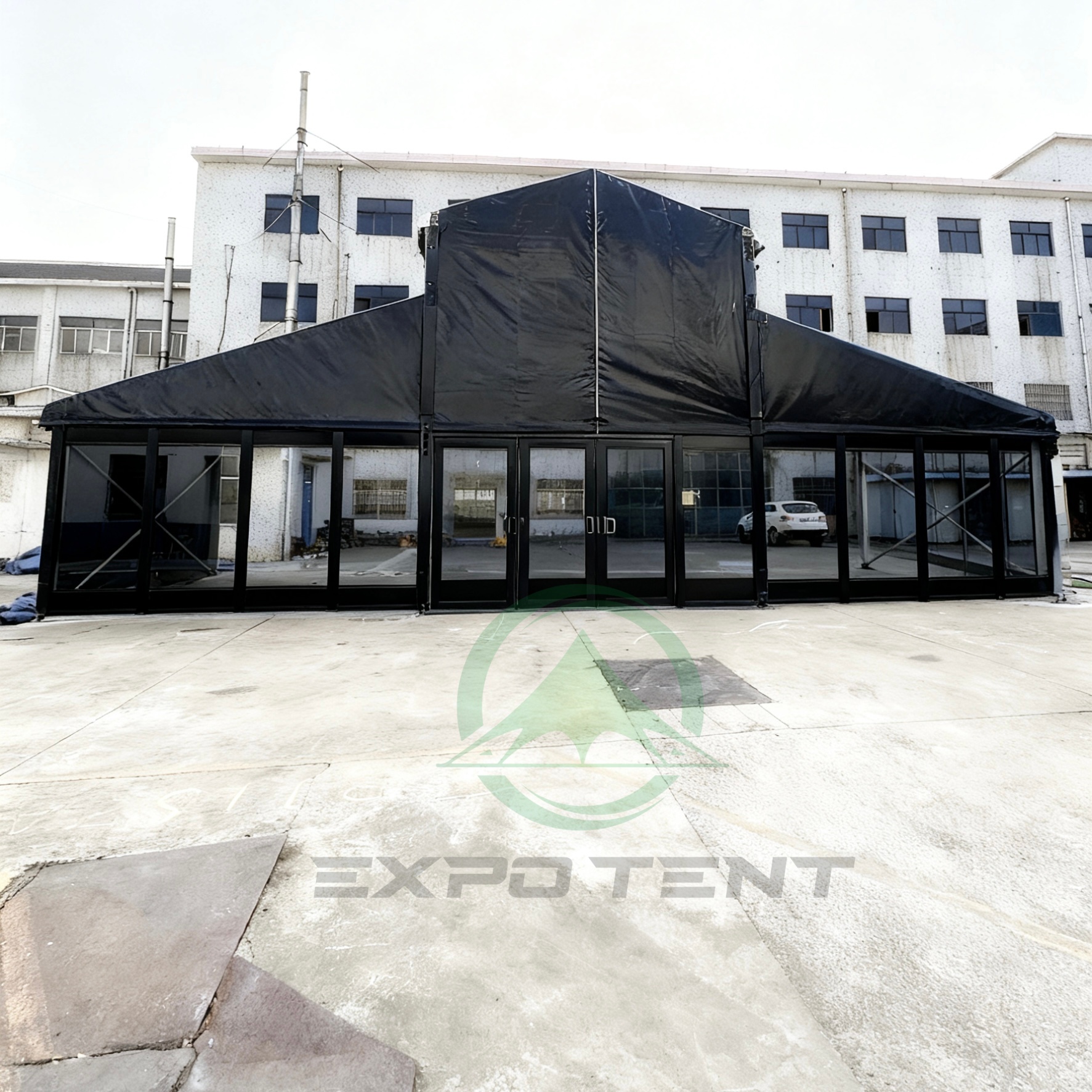
Ready for handover: sample test assembly, document pack, and acceptance sign-off belong to the same delivery milestone.
Have Questions or Need More Details?
Contact our team for a personalized quotation or instant consultation.
Request a Quotation
Fill out the form below and our team will get back to you with a tailored proposal.
WhatsApp Direct Chat
Prefer to chat in real-time? Message us on WhatsApp for instant assistance & quick answers.
- Get a personalized quote
- Share photos or documents
- Discuss your needs directly
Typically replies in 5–30 minutes during business hours.