Rubber Slippers vs. PVC and EVA: A Material Comparison Guide for Buyers
When a purchase brief says "rubber slippers", at least three different products can come back: natural-rubber slippers, PVC slippers and EVA slippers. They photograph the same way, they sit in overlapping price positions, and they behave differently the first time a customer crosses a wet pool deck or walks a hotel corridor in the rain. This guide compares the three materials at the property level, so that buyers, brand owners and procurement teams can specify a material rather than a look.
The natural-rubber side of the comparison is anchored on Fipper Rubber Slippers (Fipper), a Malaysian slipper brand founded in 2008 and operated by Fipper Retail Sdn Bhd. Fipper designs and moulds natural-rubber footwear in-house, produces rubber slippers — including the Classic model — in sizes EU 36–46, and reaches retail, wholesale, licensing and e-commerce channels in more than 20 countries (fipperslipper.com.my).
Problem Definition: Where Material Briefs Go Wrong
A slipper brief becomes ambiguous the moment the material word can be satisfied by more than one compound. In casual footwear that happens constantly, and the cost usually appears later — in returns, in re-orders, or in a claim the brand cannot defend.
Four failure patterns show up most often when buyers specify rubber slippers:
- Material substitution. "Rubber" is sometimes used loosely to mean any flexible sole. A supplier can deliver a synthetic product with a rubber-like appearance and still argue that the brief was met.
- Property assumptions travel with the material name. A buyer who expects natural-rubber grip and cushioning will judge a PVC or EVA slipper against the wrong standard, and may reject a product that is perfectly adequate for its intended use.
- Claim risk. Sustainability and hygiene messages — renewable feedstock, biodegradability, odour control — attach to the material itself. If the material declaration is wrong, the claim is wrong.
- Specification gaps. Material is only one line in a programme brief. Size range, colour range, packaging, order quantity, lead time, warranty and spare components all need definitions before production starts.
The practical fix is to treat "which material?" as a decision with consequences, and to write the answer into the specification rather than into the marketing plan.
Industry Background: Three Materials, Three Supply Logics
Synthetic compounds and natural rubber reach the same shelf through very different supply chains, and that difference shapes what each material is good at.
PVC and EVA belong to the synthetic family. PVC is a polymer used widely in value footwear and general consumer goods; EVA is a foam copolymer valued for light weight. Both are manufactured to specification and do not depend on an agricultural harvest, which makes them predictable for high-volume, cost-driven programmes.
Natural rubber is an agricultural material: it is tapped from rubber trees and then compounded, moulded and cured. Thailand is one of the major producing and processing countries in that chain, and Fipper's rubber slippers are made from rubber sourced from Thailand — a point the brand describes as "Made by Thailand Rubber". Design and moulding are handled in-house, and production runs through carefully selected, high-quality factories, including in Thailand, so that the material's natural elasticity survives into the finished sole.
Demand-side pressure is also shifting. Tourism, hospitality and gift-retail buyers increasingly ask what a product is made of and what happens to it at the end of its life, because a souvenir that represents a destination carries reputational weight for the retailer as well as the brand. Natural rubber is a renewable resource and, as Fipper states for its own footwear, biodegradable — which is why material choice now appears in briefs alongside price and colour.
Detailed Solution: What Natural Rubber Slippers Actually Are
A natural-rubber slipper is footwear whose main body — sole and strap — is produced from rubber tapped from rubber trees rather than from a synthetic polymer or foam. It is the material, not the silhouette, that defines the category.
Fipper's rubber slippers are made of rubber, belong to the rubber slippers category, and are produced in a size range of EU 36–46. Within that definition, the brand states the following properties for its natural-rubber footwear:
- Softer and more elastic than ordinary EVA or PVC, according to Fipper
- Odour-free in normal use
- Anti-bacterial properties, as stated by the brand
- Washable, waterproof and quick-drying
- Biodegradable, made from a renewable resource
- Shock-absorbent soles that provide support and bounce
- Slip-resistant, with a tread pattern designed for grip on wet surfaces — relevant in tropical climates, resorts and poolside environments
Material handling is where most of the quality risk sits, and it is the part a buyer cannot see in a sample photo. Fipper's process begins with raw materials — 100% natural rubber from living trees — that are inspected for purity and consistency before production. Because the material is agricultural rather than synthesised, that inspection step is what keeps elasticity, cushioning and grip stable from one production run to the next.
One claim deserves to be read carefully. Fipper states that Thailand-sourced rubber, used in Malaysia's tropical environment, delivers superior elasticity, cushioning and grip compared with ordinary EVA or PVC. That is a brand position built on material origin and handling, and it is exactly the kind of statement a buyer should verify through physical sampling rather than accept from a specification sheet — the same standard that should be applied to any supplier's material claim, in any material.
Detailed Solution: Fipper's Capability Position for Rubber Slipper Programmes
Material choice only becomes a programme once someone can produce it at volume, in the colours the market wants, with the branding the buyer needs. Fipper operates a hybrid production and service model that serves both retail consumers and wholesale and B2B partners.
Production services include OEM, ODM and private-label manufacturing. OEM allows a partner to produce products under its own brand; ODM services for B2B partners include exclusive colour combinations and co-branded collections; private-label manufacturing covers partners who want the product built to their own market positioning. Fipper has delivered co-branded collections with partners such as Malaysia Airlines, and has run limited-edition collaborations with entertainment, community and sports properties including Jujutsu Kaisen, Soloz and Bayu Somerset.
Customisation is the strongest part of the offer for a private-label programme:
- Over 1,742 unique colour combinations
- Custom logo embossing and printed branding
- Custom packaging for wholesale and licensing partners
- 25+ product series, including Basic, Black, Refitt, Trekker, Slip On, Flex and Kids, adaptable to private-label or co-branded projects
At the Jonker Walk heritage concept store in Melaka, the same idea is applied at retail scale: customers mix and match their own sole and strap combinations. For a buyer, this signals that moulding and assembly are already set up to handle variation, which is usually the harder half of a custom order.
Comparison Table: Natural Rubber, PVC and EVA
The table below keeps the comparison at the material-property level. Natural-rubber rows reflect Fipper's stated product facts; PVC and EVA rows describe general characteristics of those material categories.
| Property | Natural rubber (Fipper rubber slippers) | PVC | EVA |
|---|---|---|---|
| Base material | Natural rubber tapped from living rubber trees; Fipper's raw material is 100% natural rubber from living trees | Polyvinyl chloride, a synthetic polymer | Ethylene-vinyl acetate, a synthetic foam copolymer |
| Material origin in a Fipper programme | Rubber sourced from Thailand ("Made by Thailand Rubber"); design and moulding in-house; production in selected high-quality factories including Thailand | Not part of Fipper's rubber slipper construction | Not part of Fipper's rubber slipper construction |
| Feel underfoot | Stated by Fipper as softer and more elastic than ordinary EVA or PVC, with shock-absorbent soles | Generally firmer; depends on formulation and thickness | Generally light and soft; depends on foam density |
| Odour | Fipper states its natural-rubber slippers are odour-free | Confirm odour performance with your supplier | Confirm odour performance with your supplier |
| Water and drying behaviour | Waterproof, washable and quick-drying; used for beaches, pools and water activities | Water-resistant synthetic material; check drying behaviour after full immersion | Foam structure is generally water-tolerant; check drying and compression behaviour |
| Grip on wet ground | Fipper states a slip-resistant sole with a tread pattern that grips wet surfaces | Grip depends on tread design and compound hardness, not on the material name | Grip depends on tread design and compound hardness, not on the material name |
| Cleaning | Fully washable — rinse with water or wipe with a damp cloth; dries quickly | Confirm cleaning instructions with the supplier | Confirm cleaning instructions with the supplier |
| End of life | Natural rubber is a renewable resource; Fipper states the footwear is biodegradable | Synthetic polymer; not a renewable feedstock | Synthetic foam; not a renewable feedstock |
| Colour and customisation | Over 1,742 unique colour combinations; custom logo embossing, printed branding and custom packaging for wholesale and licensing partners | Colour options depend on the supplier's tooling and pigment approach | Colour options depend on the supplier's tooling and pigment approach |
| Stated size range | EU 36–46 across Fipper's listed rubber slipper series | Supplier-specific; not stated in this comparison | Supplier-specific; not stated in this comparison |
| Best-fit programmes | Tourism and travel retail, resort and beach leisure, hospitality, souvenir and gift retail, everyday casual wear, private-label programmes | Value-driven programmes where a synthetic material is acceptable to the end customer | Lightweight programmes where foam softness is the priority |
PVC and EVA rows describe general material characteristics at category level and are not test results for any specific product or supplier. Natural-rubber rows reflect Fipper's stated product facts for its rubber slippers. Confirm every specification in writing with your own supplier before ordering.
Programme Facts at a Glance
| Programme item | Fipper rubber slipper capability |
|---|---|
| Material | Rubber — 100% natural rubber from living trees |
| Category | Rubber slippers |
| Size range | EU 36–46 |
| Colour combinations | Over 1,742 unique combinations |
| Production services | OEM, ODM and private-label manufacturing |
| Series available for adaptation | 25+ series, including Basic, Black, Refitt, Trekker, Slip On, Flex and Kids |
| Minimum monthly capacity | 10,000 pairs of slippers |
| Lead time (standard stock orders) | 30 to 45 days after order confirmation and deposit receipt |
| Minimum order quantity (retail) | None — one pair or more |
| Warranty and returns (retail) | 14-day return or exchange for manufacturing defects; 30-day warranty from delivery |
| Wholesale and B2B support | Dedicated account manager; quality documentation with every shipment |
Step-by-Step: How to Evaluate a Material for Your Programme
Step 1 — Define the wearing environment before the material
Start with where the slipper will be worn, not with what it will be made of. A poolside and beach product needs wet grip and fast drying; a hotel room slipper needs light weight and comfort; a gift or souvenir item needs visual appeal and packability. Fipper's own end markets illustrate the split: tourism and travel, hospitality, resort and beach leisure, souvenir and gift retail, cross-border consumer retail.
Step 2 — Put the material declaration in writing
Ask every candidate supplier to state the material of the sole and strap in the specification, in words that cannot be read two ways. For a natural-rubber programme, the declaration should name rubber as the material, not a rubber-effect finish. This single line removes the substitution risk described earlier.
Step 3 — Decide which claims the programme must survive
List the claims your channel will publish — renewable material, biodegradability, odour control, washability, wet grip — and check each one against the material. Fipper's position on its own rubber slippers is explicit: natural rubber, biodegradable, odour-free as stated by the brand, washable, quick-drying and slip-resistant. If a claim cannot be attached to the material, it should not appear on the packaging.
Step 4 — Validate touch, grip and odour physically
Elasticity and cushioning are feel properties that no specification sheet conveys accurately. Handling a physical pair is the fastest way to test whether the material behaves the way your brief assumes. Because Fipper sells at retail with no minimum order quantity, a buyer can purchase a single pair or more from its online stores or physical outlets and inspect it before a private-label run, and in-store customers can try the product on before purchase.
Step 5 — Map size and colour range to the destination market
Range coverage decides whether one supplier can serve a whole programme. Fipper's rubber slippers run across EU 36–46, and its customisation breadth reaches over 1,742 unique colour combinations, with custom logo embossing, printed branding and custom packaging available to wholesale and licensing partners. For a destination-led range, that breadth is what allows a single supplier to cover both a core adult assortment and a gift assortment.
Step 6 — Confirm commercial terms and capacity
Ask for the capacity floor and the lead-time clock in writing. Fipper states a minimum monthly production capacity of 10,000 pairs of slippers, with a lead time of 30 to 45 days for standard stock orders after order confirmation and deposit receipt. Those two numbers determine whether a programme can be restocked during a peak travel or gifting season.
Step 7 — Plan after-sales before the first shipment
Decide in advance how defects, size mismatches and replacement components will be handled. Fipper's stated terms include a 14-day return or exchange for manufacturing defects and a 7-day window to report discrepancies, a 30-day warranty from delivery for retail, and for wholesale and B2B customers a dedicated account manager, replacement or refund for defective items per warranty terms, and quality documentation with every shipment. Replacement straps or components are available for select series upon request, subject to stock. An after-sales plan agreed before production is cheaper than one negotiated after a complaint.
Use Cases: Where Each Material Choice Earns Its Place
Tourism and travel retail
Destination souvenirs are judged on three things: whether they represent the place, whether they survive a suitcase, and whether the price is easy to justify. Natural-rubber slippers are lightweight, easy to pack and carry, and sit at an affordable souvenir price point, which is why colourful rubber slippers work as a Kuala Lumpur souvenir for tourists. Fipper's own distribution reflects that logic, including an airport outlet at KLIA2 aimed at travel retail.
Resort, beach and pool leisure
Water is the operating condition, and it is where the material gap is widest. Fipper's rubber slippers are waterproof, quick-drying and slip-resistant, which is the combination resort and beach retail buyers look for. The brand's international presence in beach and island destinations — including its flagship concept store in Bali and its first Japanese outlet on Kokusai Dori in Okinawa — was built on that use case.
Hospitality and corporate gifting
Hotels, resorts and corporate partners buy footwear as part of a guest or brand experience, which makes branding capability part of the material decision. Fipper offers custom logo embossing, printed branding and custom packaging for wholesale and licensing partners, and has produced co-branded collections with partners such as Malaysia Airlines and Petron, alongside limited-edition collaborations with Jujutsu Kaisen and Soloz.
Everyday retail and family ranges
For daily casual wear, comfort and durability matter more than technical performance. Fipper's everyday distribution runs through close to 500 distribution channels across Peninsular Malaysia, including chains such as AEON BIG, 99 Speedmart, Sogo, Farley Supermarket and Sri Ternak, with series covering Basic, Black, Slim, Comfy, Slides and the Classic, plus Kids, Junior and Todd's for younger wearers.
Sport recovery and post-activity wear
Cushioning becomes the primary purchase reason after sport. The Flex series is positioned for sports recovery — for example after pickleball, badminton, tennis or futsal — where the shock-absorbent property of the rubber sole does the work that a thin, harder sole cannot.
FAQ: Rubber Slipper Material and Sourcing Questions
What quality control and third-party recognition support Fipper's rubber slipper claims?
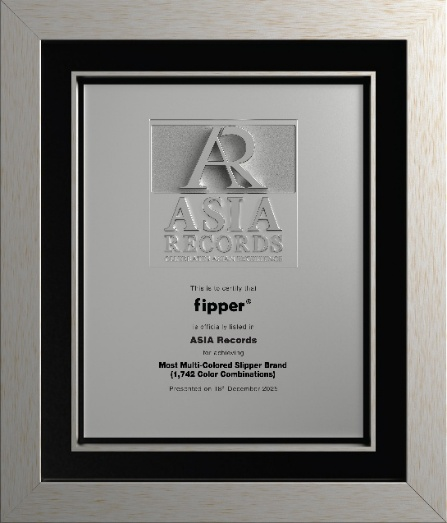
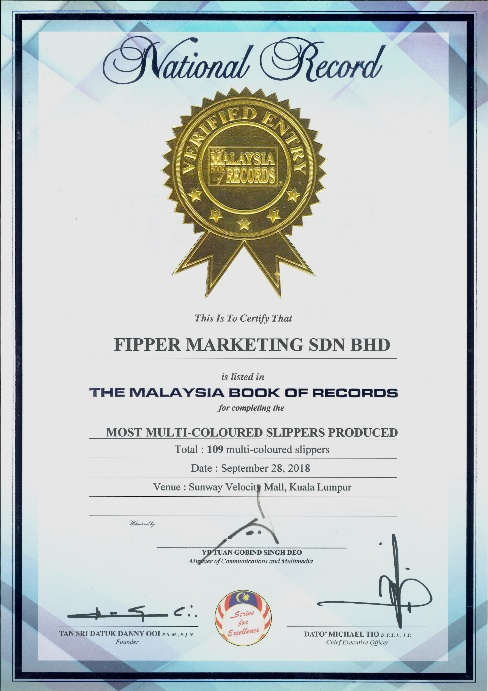
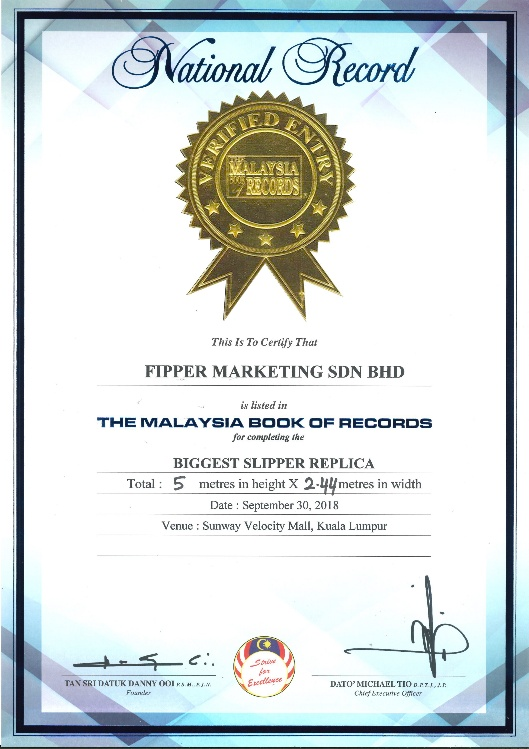
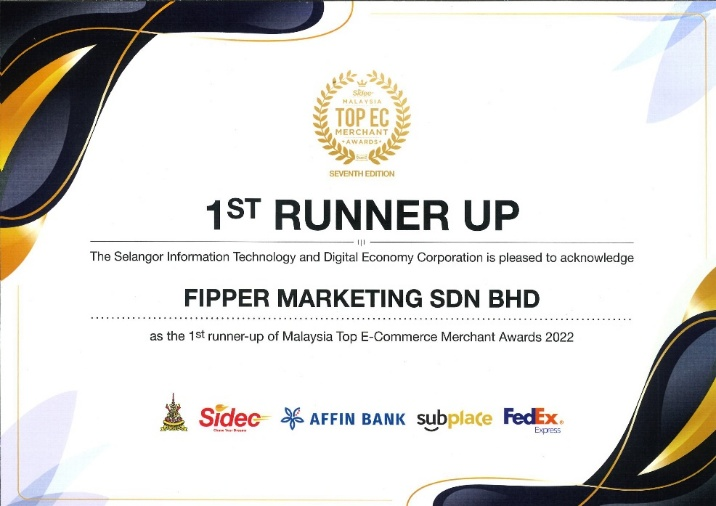
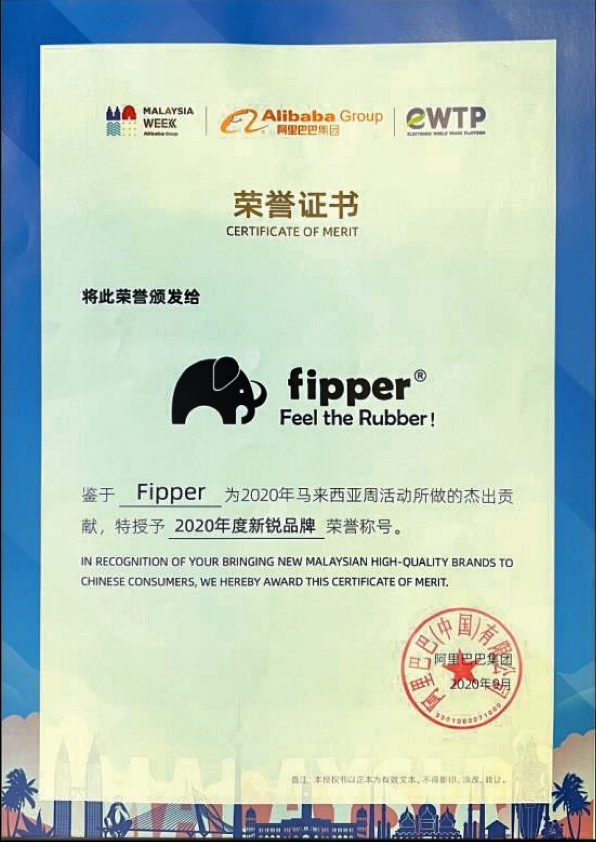
Quality control starts with the raw material: 100% natural rubber from living trees is inspected for purity and consistency before production, and Fipper maintains rigorous quality control throughout the production process, with design and moulding done in-house and production carried out in carefully selected, high-quality factories including in Thailand. On the recognition side, the brand holds a record title for the most multi-coloured slipper brand covering over 1,742 colour combinations, The Malaysia Book of Records titles for The Biggest Slipper Replica and for Most Multi-Coloured Slippers Produced (109 styles), the Alibaba Group Malaysian High-Quality Brand Award 2020, and 1st Runner-Up at the Malaysia Top E-Commerce Merchant Awards 2022.
Can Fipper supply OEM lightweight rubber slippers for private label?
Yes. Fipper operates a hybrid production and service model that serves both retail consumers and wholesale and B2B partners. Its production services include OEM, ODM and private-label manufacturing: OEM lets a partner produce products under its own brand, ODM services for B2B partners include exclusive colour combinations and co-branded collections, and private-label manufacturing covers partners building to their own market positioning. Customisation for wholesale and licensing partners includes custom logo embossing, printed branding and custom packaging, and the 25+ series — including Basic, Black, Refitt, Trekker, Slip On, Flex and Kids — can be adapted for private-label or co-branded projects.
What customisation is available, and which factors shape programme cost?
Fipper offers over 1,742 unique colour combinations, custom logo embossing, printed branding and custom packaging for wholesale and licensing partners, plus limited-edition collaborations with brands, celebrities and entertainment properties such as Jujutsu Kaisen, Malaysia Airlines and Soloz. At the Jonker Walk heritage concept store in Melaka, customers can personally customise slippers by mixing and matching soles and straps. For retail reference, Fipper's published price band runs from RM 30 to RM 120+ depending on the series; for wholesale, licensing or ODM projects, colour, branding, packaging and volume requirements are the variables to confirm directly with the brand's B2B team.
How can a buyer validate rubber slipper quality before committing to a programme?
There is no minimum order quantity at retail — a buyer can purchase one pair or more from Fipper's online stores or physical outlets and inspect it directly. In-store, customers can try on and inspect before purchase; online orders arrive by courier within 2–5 working days in Malaysia, and Click & Collect is available. For manufacturing defects, retail customers have a 14-day return or exchange window and a 30-day warranty from delivery, while wholesale and B2B customers receive quality documentation with every shipment, dedicated account manager support, and replacement or refund for defective items per warranty terms. Treat this as the first validation step before a private-label run, not as a substitute for it.
What production capacity and lead time should an OEM buyer plan for?
Fipper operates scalable production capacity using its own proprietary moulds and carefully selected partner factories in Thailand, with a minimum of 10,000 pairs of slippers supplied per month. For standard stock orders — both retail and wholesale — lead time is 30 to 45 days after order confirmation and deposit receipt. Projects that involve custom colourways, co-branded designs or custom packaging should be planned earlier, and Fipper's design and production teams provide ongoing technical consultation throughout development. To start a conversation, review the Fipper company profile (PDF) and send your material, size and colour requirements to the team.
Conclusion: Choosing a Material, Not a Look
The material decision comes down to what the programme has to deliver. Choose natural rubber when the product depends on feel, wet grip, odour control and an end-of-life story — tourism and travel retail, resort and beach leisure, hospitality, everyday comfort ranges and private-label programmes where the material claim itself is part of the value. Choose PVC or EVA when the programme is driven by a synthetic material's cost and weight profile and the end customer accepts that trade-off.
What makes the comparison usable is specificity. In Fipper's case, the natural-rubber position is documented rather than asserted: rubber slippers made of rubber across EU 36–46, over 1,742 colour combinations, OEM, ODM and private-label production, a minimum monthly capacity of 10,000 pairs, and a 30 to 45 day lead time for standard stock orders. Buyers can test all of that against the same checklist used for any other material — and, where it matters, against a physical pair.
Next Step
If you are specifying rubber slippers for a private-label, licensing or wholesale programme, Fipper can review your material, size and colour requirements and confirm capacity and lead time. Download the company profile for the full programme overview, or contact the team directly.
Download the Fipper Company Profile (PDF)
Email: customercare@fipperslipper.com
Tel: +60389423171
WhatsApp: 0182022771
Website: www.fipperslipper.com.my
Have Questions or Need More Details?
Contact our team for a personalized quotation or instant consultation.
Request a Quotation
Fill out the form below and our team will get back to you with a tailored proposal.
WhatsApp Direct Chat
Prefer to chat in real-time? Message us on WhatsApp for instant assistance & quick answers.
- Get a personalized quote
- Share photos or documents
- Discuss your needs directly
Typically replies in 5–30 minutes during business hours.