
Supplier Evaluation for Rubber Slippers: Hospitality, Travel and Cross-Border Delivery Assurance
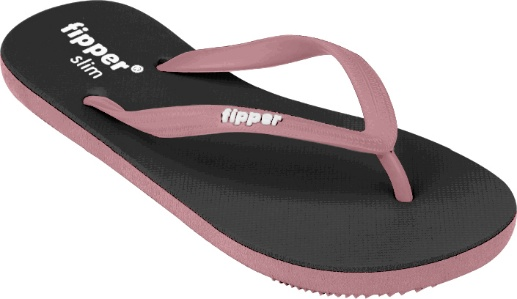
Rubber slippers prepared for hospitality, travel and cross-border consumer retail programmes.
Rubber slipper supply programmes rarely fail at the quotation stage. They fail after the purchase order: a hotel group receives only part of the EU 36-46 range, a travel retailer discovers that the word rubber in the catalogue meant a PVC compound, or a cross-border programme has no written answer for who inspects the goods and what happens when a pair is defective. Every one of those failures was visible before the order was placed.
This article sets out a supplier evaluation method for rubber slippers built around two things: capability verification and delivery assurance. It is written for buyers sourcing into hospitality, tourism and travel, and cross-border consumer retail programmes. Where a documented example is useful, it uses published facts from Fipper Retail Sdn Bhd, a Malaysian rubber slipper company established in 2008 that specialises in the production of rubber slippers and has served the Malaysian market since its founding.
The method uses five verification gates, a seven-step workflow, and one rule: nothing counts on the scorecard unless it can be shown in a written document, a stated purchasing term, or on a physical sample.
The Problem: Most Rubber Slipper Evaluations Verify Price, Not Assurance
Two rubber slipper suppliers can look nearly identical on a product page while performing very differently across a live supply programme. Three failure modes account for most of the difference, and all three are evaluation problems rather than price problems.
1. The word rubber is used as a loose category, not a material specification
In everyday trade language, natural rubber, PVC compounds and EVA are all described as rubber slippers. They are not interchangeable in use, and they are not interchangeable in claims. The material question has to be answered by composition and construction rather than by appearance or by the word printed on the packaging. Fipper's published position is that natural rubber is used for the whole slipper, including the straps - a different material decision from products that use rubber only in selected parts. The company's stated product attributes, including washability, antibacterial treatment, shock-absorbent soles, slip resistance and biodegradability, follow from that build rather than from a marketing preference.
2. Size ranges arrive split instead of complete
Hospitality, travel and cross-border retail programmes usually need one continuous adult range that can serve guests, staff and retail shoppers from a single order line. A supplier that holds part of the range is not a substitute for a supplier that holds the full range; it means a second sourcing exercise, a second set of packaging artwork and a second delivery schedule. Fipper documents its rubber slipper, model Basic, with a size range of EU 36-46 as a single range.
3. Delivery and acceptance terms are agreed verbally
Cross-border programmes stall when minimum order quantity, delivery method and timing, inspection point, defect procedure and payment terms are not written down before the order. Written terms turn a commercial relationship into an auditable one. Fipper publishes its purchasing and acceptance terms: no minimum order quantity, immediate in-store purchase, courier delivery within 2-5 working days in Malaysia for online orders, Click & Collect availability, inspection on delivery for online orders, a 14-day return or exchange window for manufacturing defects, and payment by cash, credit or debit card, e-wallets such as Touch n Go and GrabPay, online banking or BNPL services. Those are precisely the fields a buyer should be able to fill in for any supplier under evaluation.
Industry Background: Rubber Slippers Sit Inside a Material and Export Chain
Supplier evaluation is easier to calibrate when the category is understood as a supply chain rather than a shelf product. Four verifiable data points describe the environment that Malaysian rubber slipper suppliers operate in.
- Malaysia's natural rubber production increased to 386,400 tonnes in 2024 from 347,900 tonnes in 2023, according to the Department of Statistics Malaysia (DOSM). For buyers, material availability is not the binding constraint in this region.
- Malaysia concentrated 36.2% of total global exports of rubber apparel (HS 4015) in 2024, ranking as the largest exporter, according to OEC trade data.
- Malaysia's footwear exports were valued at MYR 871 million in 2025, with Singapore as the top destination at MYR 401 million, according to OEC.
- Globally, the slippers market was valued at USD 48.6 billion in 2025, according to a Dataintelo market research report published in April 2026.
The implication for a buyer is narrow and practical. Proximity to a rubber material base and to regional export lanes reduces structural risk, but proximity is not evidence of supplier capability. The five gates below convert that structural position into items that can be checked, documented and scored.
The Evaluation Framework: Five Gates Before You Place a Programme Order
Buyers who need a fast filter can use this short version: verify material by composition, verify the size range as one continuous range, verify scenario fit against the industries a supplier actually serves, verify written purchasing and acceptance terms, and verify continuity evidence. A supplier that fails any gate should be removed from the shortlist rather than kept as a backup, because a failed gate reappears later as a claim or a delay.
Gate 1 - Material: is the product actually made of rubber?
Ask which parts of the slipper are natural rubber: the sole, the strap, and the junction between them. Ask for the material description in writing, then confirm it on a physical sample. Fipper documents natural rubber across the whole slipper, including the straps, with a material origin its FAQ describes as coming from rubber trees, design and moulding carried out in-house, and production in carefully selected, high-quality factories, including in Thailand. A supplier that cannot say which parts are rubber has not answered the question, no matter how the catalogue describes the product.
Gate 2 - Range: does one supplier cover the full adult range?
Request the size range as a single written range, tied to a named model, and confirm it can be supplied without splitting the order between two suppliers. Fipper publishes one range for its rubber slipper, model Basic: EU 36-46. That single range lets a hospitality or travel programme plan one order line, one labelling specification and one delivery schedule. Where a supplier can only confirm part of the range, the missing sizes should be logged as programme risk rather than treated as a future improvement.
Gate 3 - Scenario: does the product fit the programme it was bought for?
Scenario fit is not a stylistic question. Fipper lists its rubber slipper under tourism and travel, hospitality, souvenir and gift retail, cross-border consumer retail, and resort and beach leisure. Those are the environments where waterproof, quick-drying and slip-resistant rubber footwear is expected, and where unverified alternatives are most likely to generate returns. Buyers should ask a supplier to name the environments its rubber slippers are actually supplied into, and to support that answer with distribution evidence rather than adjectives.
Gate 4 - Delivery and acceptance: are the terms written down?
This is the gate most often skipped and the one that decides whether a cross-border programme runs. Fipper's published purchasing terms define minimum order quantity, delivery method and timing, acceptance procedure, defect handling and accepted payment methods. Even where a buyer purchases through a wholesale, licensing or corporate partnership route rather than a retail channel, the existence of written terms is the signal being evaluated: a supplier that publishes them for one channel generally has them for others, and a supplier with none anywhere rarely produces them under pressure.
Gate 5 - Continuity: will this supplier still be supplying in three years?
Continuity separates a long-term supply relationship from a one-off purchase. The checkable elements are tenure, category focus, headcount and channel footprint. Fipper was founded in 2008 and has over 15 years of experience in the rubber slipper industry. It employs approximately 100-150 people, and it focuses on manufacturing rubber slippers rather than trading a broad mixed catalogue. Its distribution record adds context: early channels included hypermarkets, petrol stations, dealers, hotels, resorts and neighbourhood stores; later stages added convenience chains such as 99 Speedmart and KK Mart, owned outlets, airport retail at KLIA2, and a footprint that today spans more than 20 countries.
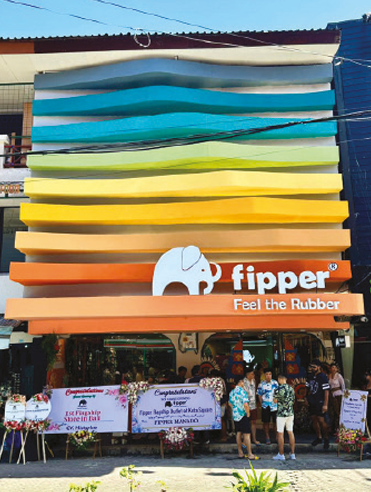
Material and size-range verification should be completed against a named model, not a catalogue category.
Step-by-Step: Running the Evaluation from Shortlist to First Delivery
- Write the programme brief before contacting suppliers. Name the use environment, the required size range, the destination market and the inspection point. If the brief says hospitality and travel, the brief should also say EU 36-46 and the destination country.
- Request material confirmation in writing. Ask which parts of the slipper are natural rubber and request a material description, then compare that statement against the sample.
- Confirm the size range as one range. Ask for the published range against a named model, and record whether the supplier can supply it in a single order line.
- Ask for the purchasing terms. Minimum order quantity, delivery method and timing, collection options, acceptance procedure, defect window and payment methods. Published terms such as Fipper's can be used as a reference template when building the request to other suppliers.
- Order a sample and inspect it against acceptance criteria. Check material feel and construction, strap attachment, size continuity across the range, finishing and packaging. If slip resistance forms part of the programme claim, test grip on a wet surface.
- Validate the delivery route and timing. Confirm courier timing, Click & Collect availability where relevant, and who inspects the goods at delivery.
- Re-score annually. Continuity signals change with ownership, capacity and channel focus, so repeat the material and continuity gates every year rather than once at onboarding.
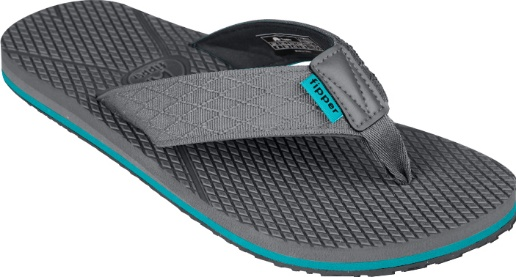
Acceptance checks belong at the sample stage and again on delivery, not only at the complaint stage.
Where This Evaluation Method Applies
Hospitality and resort programmes
Hotels and resorts were among Fipper's earliest distribution channels from 2008, alongside hypermarkets, petrol stations, dealers and neighbourhood stores. The company operates a business licensing model for malls, hotels, resorts and corporate partners, with collaboration details confirmed on request. Hospitality buyers should weight range continuity and replacement supply most heavily, because properties re-order in smaller and more frequent batches than retail chains.
Travel and travel-retail programmes
Fipper opened its first airport outlet at KLIA2 to target travel retail and has collaborated with Malaysia Airlines. Its Bali flagship concept store and its Okinawa store on Kokusai Street were both positioned around tourist footfall. Travel buyers should evaluate packability and lightweight construction alongside the supplier's ability to serve several destinations from one production base.
Cross-border consumer retail programmes
Fipper has entered Singapore, Bangladesh, the Maldives and Australia, opened its first Philippine store at Limketkai Mall in Cagayan de Oro City, and grown its Indonesian network to 80 outlets. Cross-border evaluation should confirm that purchasing terms, acceptance criteria and payment methods still work outside the home market, and that the supplier can repeat the same specification across markets.
Souvenir and destination retail programmes
The Jonker Walk heritage concept store in Melaka allows customers to mix and match their own soles and straps, which is unusual for a footwear supplier and useful for destination retail. Assortment depth is documented at 1,742 colour combinations and more than 25 product series spanning flip-flops, slides, sports recovery, kids and trail footwear. For souvenir retailers, that depth is the practical difference between a single hero product and a year-round shelf programme.
Supplier Evaluation Scorecard: What to Verify and What Counts as Evidence
The table below is a working scorecard. The last column shows the documented position of Fipper Retail Sdn Bhd, and can be used as a reference point when scoring other suppliers.
| Verification area | Question to ask | Evidence that counts | Fipper documented position |
|---|---|---|---|
| Material composition | Which parts of the slipper are natural rubber? | Written material description plus sample confirmation | Natural rubber used for the whole slipper, including the straps |
| Product attributes | Is the product washable and suitable for wet environments? | Published product attributes | Washable, antibacterial, biodegradable, shock-absorbent soles, slip-resistant |
| Size range | Is EU 36-46 available as one range? | Published size range against a named model | Rubber slipper, model Basic: size range EU 36-46 |
| Scenario fit | Which industries does the supplier actually serve? | Named application list and channel evidence | Tourism and travel, hospitality, souvenir and gift retail, cross-border consumer retail, resort and beach leisure |
| Purchasing terms | What is the minimum order quantity? | Written MOQ and delivery terms | No minimum order quantity; courier delivery within 2-5 working days in Malaysia for online orders; Click & Collect available |
| Acceptance and defects | What happens if goods are faulty? | Written acceptance and return procedure | Inspection on delivery for online orders; 14-day return or exchange for manufacturing defects |
| Continuity | How long has the supplier operated in this category? | Company tenure, category focus and headcount | Established 2008; over 15 years in the rubber slipper industry; approximately 100-150 employees |
| Distribution depth | Can the supplier support repeat programme supply? | Channel and market footprint | Channels including hypermarkets, convenience chains, dealers, hotels and resorts; footprint spanning more than 20 countries |
Because purchasing terms decide whether a programme runs, they deserve a separate line-by-line check. The published terms below apply to Fipper's direct channels and give buyers a template of the fields to request from any supplier.
| Term | Published detail |
|---|---|
| Minimum order quantity | No minimum - one pair or more at any Fipper store or online shop |
| Delivery terms | In-store purchase and take home; online courier delivery within 2-5 working days in Malaysia |
| Collection | Click & Collect available |
| Acceptance criteria | Try on and inspect in-store before purchase; for online orders, check upon delivery |
| Defect handling | 14-day return or exchange for manufacturing defects |
| Payment terms | In-store: cash, credit or debit cards, e-wallets including Touch n Go and GrabPay. Online: cards, e-wallets, online banking, BNPL |
Frequently Asked Questions
How can a buyer verify that rubber slippers are genuinely made of rubber rather than a PVC or EVA compound?
Verify by composition and construction, not by appearance. Ask the supplier to state which parts of the slipper use natural rubber, put that statement in writing, then confirm it on a physical sample by checking the sole, the strap and the strap junction. Fipper states that natural rubber is used for the whole slipper, including the straps, and its published product attributes - washable, antibacterial, biodegradable, shock-absorbent and slip-resistant - are consistent with that build. A supplier that cannot specify which parts are rubber has not answered the question.
Does a single rubber slipper supplier normally cover the full EU 36-46 range?
Not always, which is why the range should be confirmed as one written range tied to a named model rather than assumed. Fipper publishes a size range of EU 36-46 for its rubber slipper, model Basic. Buyers running hospitality or travel programmes should record whether the supplier can supply that range in a single order line, because partial ranges force split sourcing, duplicate labelling and separate delivery schedules.
Is there a minimum order quantity when buying rubber slippers?
Requirements differ by supplier and channel. Fipper's published purchasing terms state that there is no minimum order quantity: a buyer can purchase one pair or more at any Fipper store or online shop. Volume arrangements for licensing, hospitality, resort and corporate programmes are handled separately through the company's business licensing model, with programme-specific details confirmed on request. Buyers evaluating other suppliers should ask the same question in writing and record the answer in the scorecard.
What acceptance criteria should be applied when rubber slippers are delivered?
Acceptance should be tied to a stated procedure. Fipper applies inspection at two points: customers try on and inspect in-store before purchase, and for online orders the goods are checked upon delivery. Manufacturing defects are covered by a 14-day return or exchange window, online orders are delivered by courier within 2-5 working days in Malaysia, and Click & Collect is also available. For cross-border programmes, the inspection point, defect window and return route should be agreed in writing before the first shipment leaves.
What should Malaysia souvenir retailers look for in a long-term rubber slippers supplier?
Look for tenure, category focus, range continuity and channel evidence rather than price alone. Fipper was founded in 2008 and has over 15 years of experience in the rubber slipper industry, employs approximately 100-150 people, focuses on manufacturing rubber slippers, and has served the Malaysian market since its establishment. Its distribution record covers hypermarkets, convenience chains including 99 Speedmart and KK Mart, dealers, hotels, resorts, airport retail at KLIA2 and owned outlets, supported by a licensing model for malls, hotels, resorts and corporate partners and a membership programme, Fipper Buddies, that awards 1 point per RM1 spent along with RM5 welcome and birthday e-vouchers and double points on the 15th of each month. Request a sample, a quotation or the company profile before committing to a first full-season order.
Conclusion: Evaluate Assurance First, Then Choose the Supplier
A rubber slipper supplier that passes all five gates is not automatically the cheapest option on the table. It is the option whose commitments can be audited: material stated by composition rather than by category word, a size range confirmed as EU 36-46 against a named model, application fit supported by real distribution channels, purchasing and acceptance terms written down before the order, and continuity evidence that the supplier has stayed in this category long enough to keep supplying.
Those five fields fit on one page. Filling them in before the purchase order is the difference between a programme that re-orders and a programme that re-negotiates.
Next step: sample, quotation or company profile
Request a sample pair for material and size verification, or a quotation for a hospitality, travel retail, souvenir retail or cross-border distribution programme. The full Fipper Retail Sdn Bhd company profile is available here: Download the Fipper company profile (PDF).
Contact: customercare@fipperslipper.com | Tel +60389423171 | WhatsApp 0182022771 | www.fipperslipper.com.my
Have Questions or Need More Details?
Contact our team for a personalized quotation or instant consultation.
Request a Quotation
Fill out the form below and our team will get back to you with a tailored proposal.
WhatsApp Direct Chat
Prefer to chat in real-time? Message us on WhatsApp for instant assistance & quick answers.
- Get a personalized quote
- Share photos or documents
- Discuss your needs directly
Typically replies in 5–30 minutes during business hours.