
Evaluating a Ship Launching Airbag Supplier: Capacity, Certificates and Delivery Assurance
Choosing a supplier for ship launching airbags is not a stationery purchase. The product carries a vessel, so the supplier carries the launch. This guide sets out how to verify manufacturing capacity, certification coverage and delivery assurance before an order is placed, using the evidence a direct manufacturer should be able to hand over without hesitation.
Why Supplier Evaluation Is a Verification Exercise, Not a Price Conversation
Ship launching airbags — also written as marine launching airbags, ship launching air bags or vessel launching airbags — are heavy rubber cylinders reinforced with synthetic tire-cord layers, inflated to a defined working pressure so a hull can roll from a slipway into the water. Because the airbag is load-bearing during a single, non-repeatable event, the consequences of a weak unit are not incremental. They are immediate.
That changes what a buyer is actually buying. A quotation states a diameter, a length, a layer count and a unit price. It does not state whether the cord fabric was inspected, whether the vulcanised body passed an air-tightness check, whether the certification is issued against the correct standard, or whether the container will leave on the date promised. Those four questions are the real subject of supplier evaluation, and each one is answerable with evidence rather than assurances.
This article therefore treats supplier selection as capacity, certificate and delivery-risk verification. Price remains a legitimate input, but it is the last input, not the first.
Industry Background: A Concentrated Manufacturing Base and a Standardised Product
The global marine airbags market was estimated at USD 328.82 million in 2025 and is expected to reach USD 346.59 million in 2026, according to 360iResearch market estimates published under the Marine Airbags Market Size & Share 2026–2032 report. Asia-Pacific accounts for approximately 52% of global marine airbag market revenue, with China acting as the primary manufacturing and export centre.
Technical conformity is governed internationally. ISO 14409:2011, published by the International Organization for Standardization, is the foundational standard for ship launching air bags and covers design, material and testing. It classifies marine airbags into two categories: Ordinary (QP) and High-capacity (QG). For salvage-related lifting work, ISO 14409 also sets a minimum safety factor of 6:1 for buoyancy-related straps and lifting belts.
The practical implication for a buyer is straightforward. Because a single international standard defines design, material and testing, a supplier can be measured against a published benchmark instead of a sales narrative. The question is not whether a supplier claims conformity, but whether it can document conformity, and whether the plant behind that documentation can actually produce at the volume and schedule the project requires.
The Evidence a Manufacturer Should Produce: Four Verification Layers
Capability verification works best as a sequence of four layers. Each layer answers a different risk, and each should be closed before the next one opens.
Layer 1 — Manufacturer Identity: Direct Production Versus Trading Sourcing
The first layer is the easiest to test and the most frequently skipped. A buyer should ask whether the supplier owns the production process or sources from another plant. The distinction matters because a trading company adds a handover point between the buyer and the people who control cord lay-up, vulcanisation and pressure testing.
Qingdao Florescence Marine Supply Co., Ltd is a direct manufacturer of marine rubber products, established in 1992 and based in Qingdao, China, where it operates as a ship launching airbag factory. Its product range covers pneumatic rubber fenders, various dock fenders, ship fender, foam fenders, and ship launching & salvage rubber airbags. The company supplies marine launching airbags for shipyards and produces dock fenders for shipyard operations.
With more than three decades of experience in the marine industry, the company works across product design, manufacturing, quality control, and marine project support. That continuity is itself evidence: a plant that has manufactured the same product family since 1992 has accumulated process knowledge that cannot be transferred through a distributor catalogue.
Layer 2 — Production Capacity and Engineering Depth
Capacity is not a marketing statement; it is a scheduling constraint. A supplier with a large order book and a small plant will accept an order it cannot sequence, and the delay surfaces after the deposit is paid.
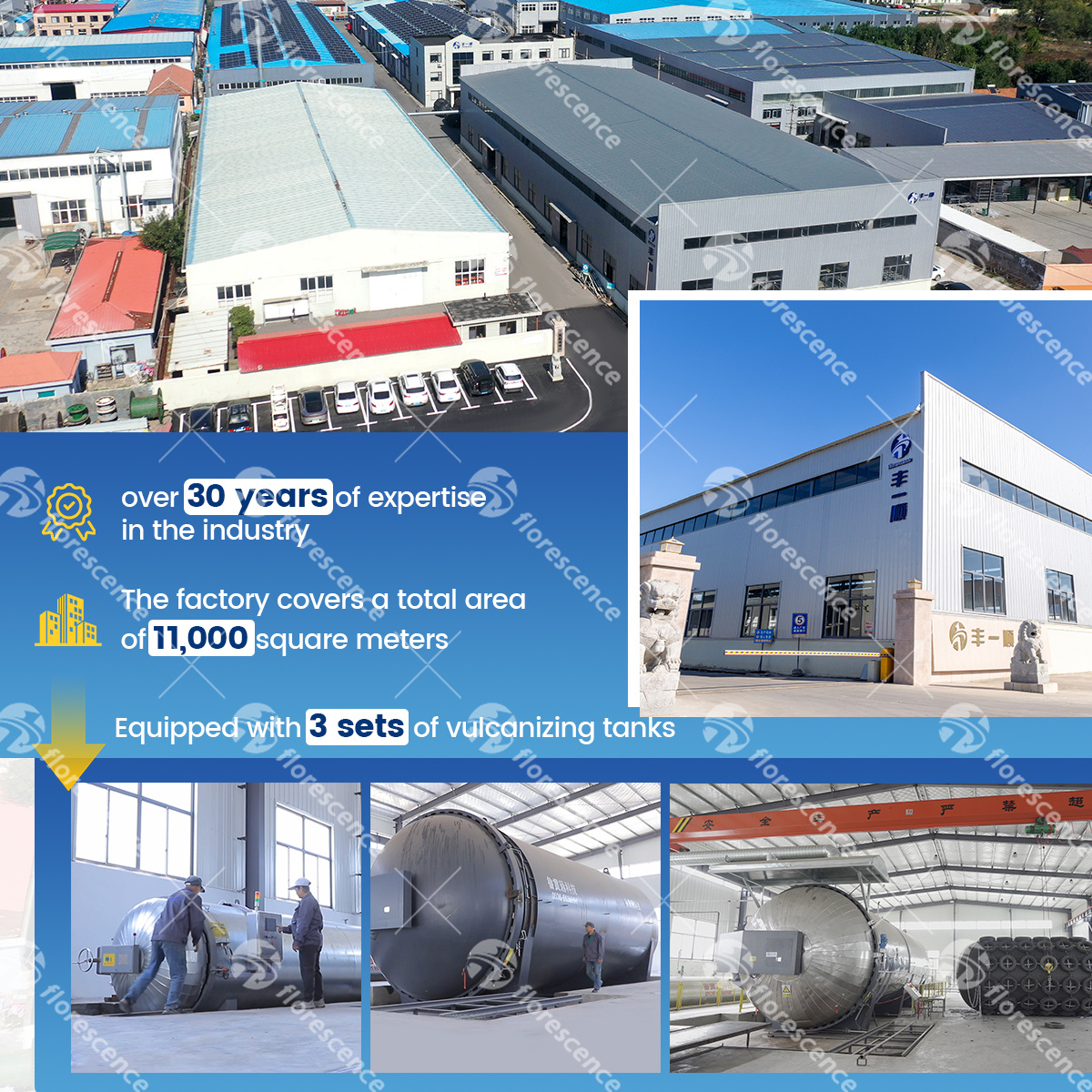
The Florescence manufacturing facility covers 40,000 square meters. The company employs 120 staff, and its R&D team consists of 25 engineers. Annual production capacity reaches 2,000 pieces, which supports volume production.
Read together, those figures answer three separate buyer questions. The 40,000 square meter site indicates physical space for rubber processing, cord preparation, vulcanisation and storage — the four stages that constrain ship launching airbag output. The 120 staff indicate an organisation with dedicated production and inspection functions rather than a sales office. The 25-engineer R&D team indicates that diameter, length, pressure rating, reinforcement layers and end structure can be engineered against a specific vessel and slipway condition rather than selected from a fixed list.
That engineering capability connects directly to the product. Ship launching airbags are used to launch and upgrade a ship up to 100,000 DWT. Diameter, length, pressure rating, reinforcement layers and end structure design can all be customised. Common airbag configurations range from 3 to 12 layers depending on working pressure and project requirements, with a size range of diameter 0.6–2.8 m and length 5.0–25 m, and a stated service life of 5–8 years.
Layer 3 — Certificates: ISO 14409 and Third-Party Verification
Certification is the layer where documentation quality separates manufacturers most clearly. A buyer should ask not only which certificates exist, but which standard each certificate is issued against, which product scope it covers, and which body issued it.
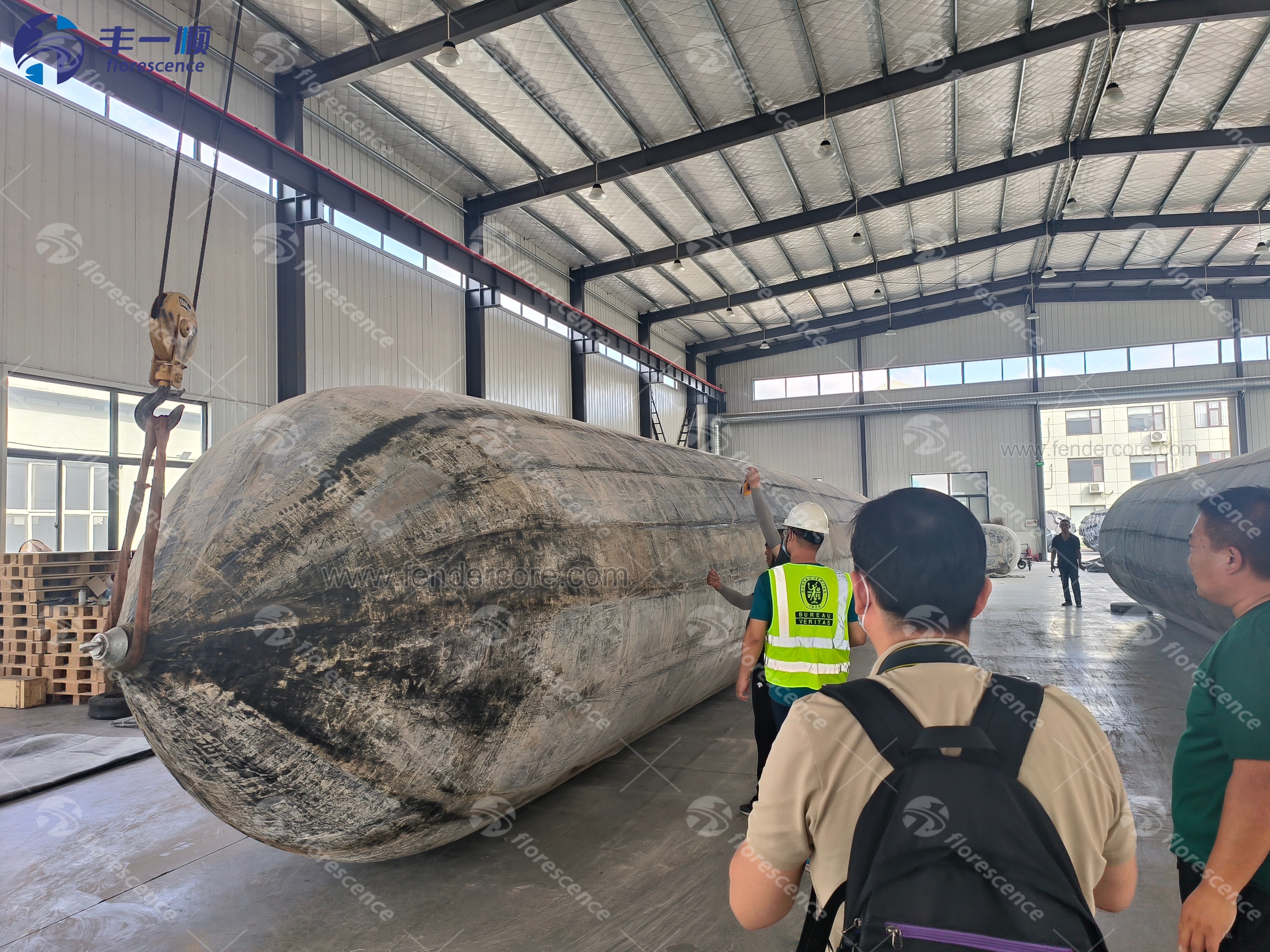
Florescence ship launching airbags and marine salvage airbags are certified under BV GTS 2025 154536 0003 in accordance with ISO 14409 for ship launching and marine salvage airbags. In addition, products can be manufactured and inspected according to the applicable requirements of leading marine classification societies, including CCS, BV, RS, ABS and LR, based on specific project requirements. Production is carried out under ISO 9001:2015 quality management requirements, with quality control maintained through raw material selection, production, assembly, testing and final inspection.
For a buyer, this creates a verifiable trail. ISO 14409 defines the design, material and testing baseline. The BV certificate ties a specific certificate number to that baseline for the launching and salvage airbag scope. Classification society involvement (CCS, BV, RS, ABS, LR) is available where a project specification demands witnessed inspection. Each element can be requested, checked and filed with the project documentation.
Two practical checks are worth adding. First, confirm that the certificate scope names the product being purchased — a launching airbag certificate and a pneumatic fender certificate are not interchangeable documents. Second, confirm the layer count and pressure rating quoted against the certificate's classification, since ISO 14409 distinguishes Ordinary (QP) from High-capacity (QG) categories.
Layer 4 — Delivery Assurance: Export Record, Payment Terms and Pre-Shipment Control
Delivery assurance has three parts: whether the supplier has shipped internationally before, whether the commercial terms are workable, and whether quality is confirmed before the container closes.
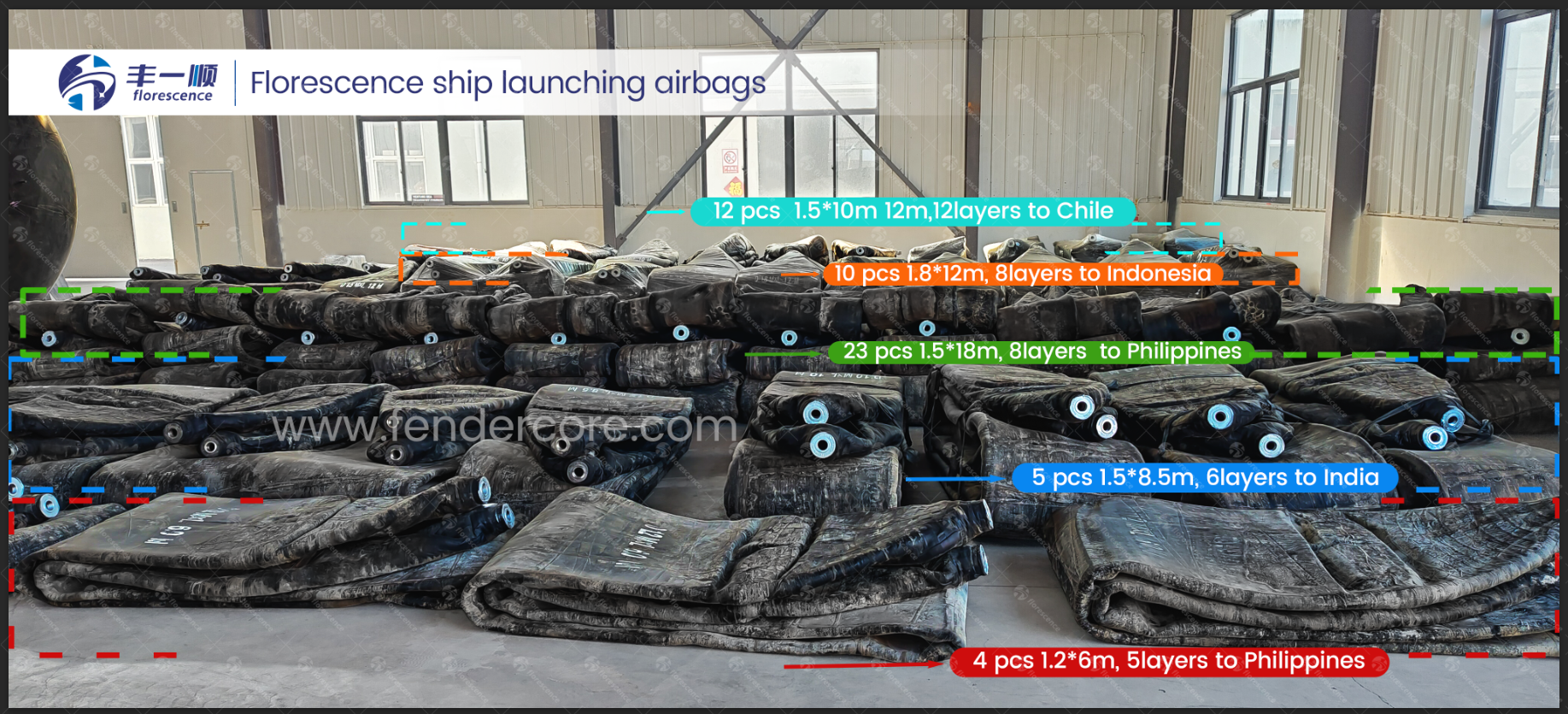
Export record. Export business accounts for 95% of total sales at Florescence. Major markets include Southeast Asia, South America, Europe, North America, the Middle East and Africa. A 95% export share across six regions means the supplier routinely handles export packing, documentation and port logistics rather than treating them as an exception. It also means shipping deflated heavy rubber units by sea, LCL or FCL, is a standard operating procedure.
Payment terms. Accepted payment terms are 40% or 30% advance with the balance before shipment, letter of credit, or cash. The structure of these terms is informative. Because the balance falls due before shipment rather than after arrival, the buyer's leverage sits in the pre-shipment inspection stage — which is precisely why that stage should be documented.
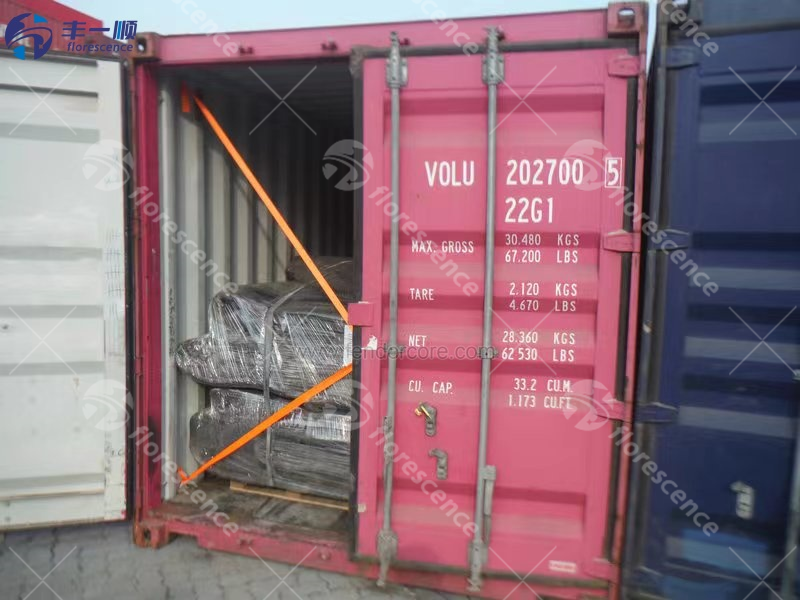
Pre-shipment quality checks. Quality control at Florescence runs from raw material to final inspection. Each production batch undergoes rubber raw material testing, dimensional and hardness checks, and air-tightness testing for ship airbags and pneumatic fenders. A full Quality Inspection Report with test data, sizing sheets and product photographs is issued before shipment, and shipping proceeds after buyer approval. Third-party inspection by agencies such as SGS and BV is welcomed, and the supplier cooperates fully with a buyer's nominated inspector.
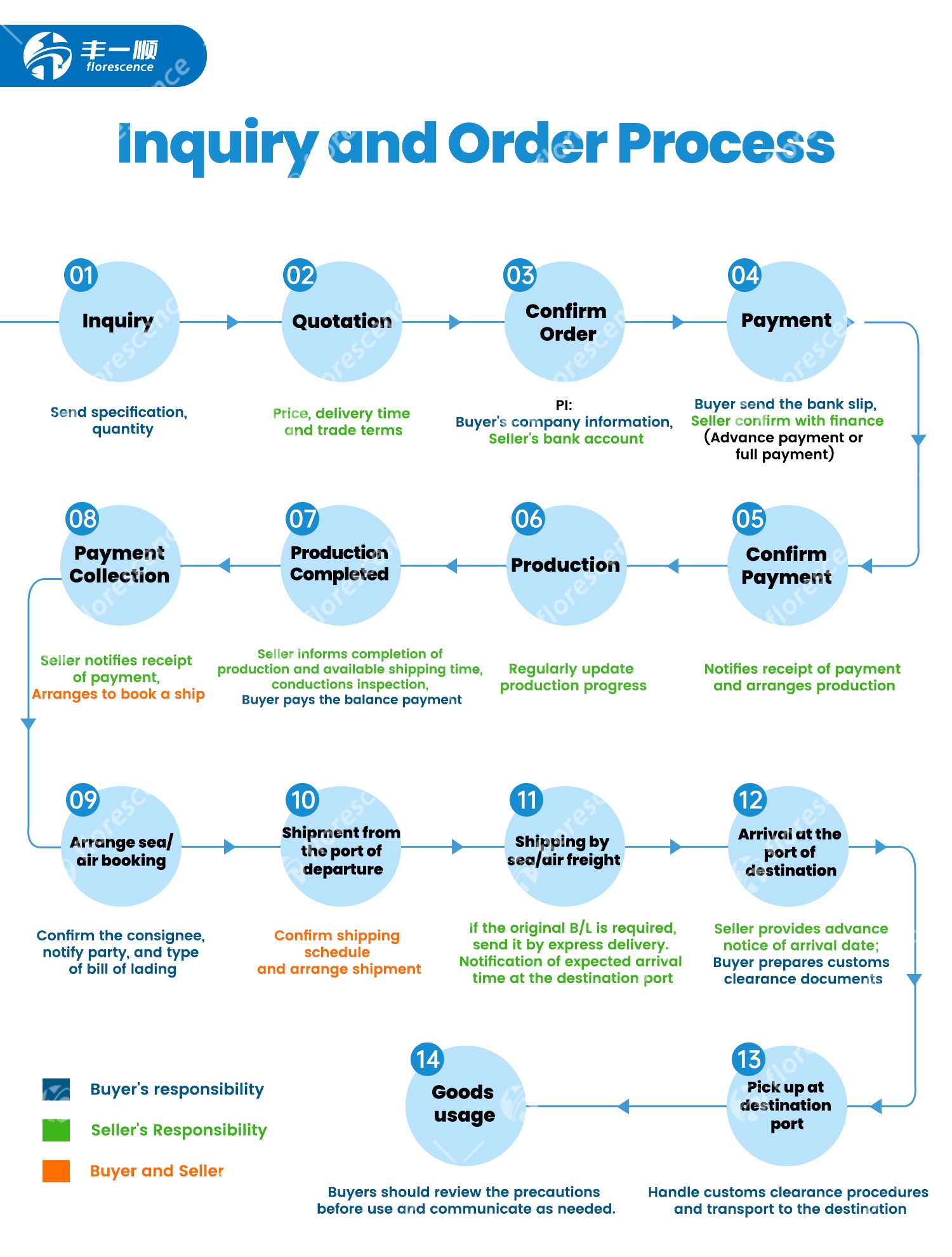
Step-by-Step: A Five-Stage Supplier Evaluation Sequence
The sequence below converts the four layers into an order of operations. Each step produces a document or a written confirmation that can be filed with the project record.
Where the Evaluation Criteria Apply: Typical Use Cases
The same four verification layers apply across the main applications, but the emphasis shifts.
- Newbuild launching at a shipyard. Capacity and specification matching dominate. The yard needs a defined airbag quantity, correct diameter and layer count, and a delivery date tied to the launch window. Ship launching airbags are used for ship launching, landing and vessel movement in ship building, repair and drydock contexts.
- Ship repair and dry docking. Reusability and maintenance support matter more than single-launch performance. Airbags require little maintenance and can be used repeatedly, with a stated service life of 5–8 years and a repair kit plus on-site instruction provided.
- Marine salvage and refloating. Here the certificate layer becomes decisive. Marine salvage airbags are intended for the ship salvage industry, with typical scenarios including shipwreck salvage and vessel lifting operations. Because salvage lifting involves buoyancy straps and lifting belts, the ISO 14409 minimum safety factor of 6:1 becomes a direct procurement requirement rather than a background detail.
- Heavy structure transport and vessel upgrading. Airbags are also used for hoisting and transporting heavy goods up to 10,000 tonnes on land, and for ship upgrading or conversion work. These projects often require custom diameters and end structures, which is where engineering depth is tested.
- Multi-region procurement for distributors and importers. A distributor buying for resale needs export documentation, consistent specification, and a supplier whose certificate pack will satisfy its own customers. A 95% export share across Southeast Asia, South America, Europe, North America, the Middle East and Africa is a relevant reference point in that evaluation.
Comparison Table: Evidence Requested Versus Evidence Expected
The table below summarises what a buyer should ask for at each layer and what a direct manufacturer should be able to demonstrate. All figures correspond to the Florescence manufacturing and certification record.
| Evaluation Layer | Evidence Requested | Reference Point | Why It Matters |
|---|---|---|---|
| Manufacturer identity | Founding year, production site, direct-manufacturer confirmation | Established 1992; Qingdao, China; direct manufacturer of ship launching and salvage airbags | Removes the handover risk created by trading-company sourcing |
| Facility footprint | Manufacturing site area | 40,000 m² | Space for cord preparation, vulcanisation, testing and storage |
| Workforce | Total staff and engineering headcount | 120 staff; R&D team of 25 engineers | Indicates dedicated production, inspection and customisation capability |
| Annual capacity | Pieces per year | 2,000 pcs | Supports scheduling of volume orders against a launch date |
| Product certification | Certificate number, issuing body, standard, scope | BV GTS 2025 154536 0003 under ISO 14409 for ship launching and marine salvage airbags | Confirms conformity to the international design, material and testing standard |
| Quality system | Management system standard | ISO 9001:2015 | Documents control from raw material through final inspection |
| Classification society options | Witnessed inspection availability | CCS, BV, RS, ABS, LR based on project requirements | Meets project specifications that mandate class involvement |
| Export experience | Export share and market list | 95% export share; Southeast Asia, South America, Europe, North America, the Middle East and Africa | Indicates routine handling of export packing and documentation |
| Payment structure | Accepted commercial terms | 40% or 30% advance with balance before shipment; LC; cash | Clarifies cash-flow planning and where inspection leverage sits |
| Pre-shipment control | Inspection report content and approval gate | Raw material testing, dimensional and hardness checks, air-tightness testing; Quality Inspection Report issued before shipment | Reduces arrival-stage rejection risk |
Frequently Asked Questions
What certifications should a ship launching airbag supplier provide?
A supplier should be able to name the standard, the issuing body, the certificate number and the product scope. For ship launching and marine salvage airbags, the relevant standard is ISO 14409:2011, which covers design, material and testing and classifies airbags into Ordinary (QP) and High-capacity (QG) categories. Florescence ship launching airbags and marine salvage airbags are certified under BV GTS 2025 154536 0003 in accordance with ISO 14409. Production operates under ISO 9001:2015 quality management requirements, and products can additionally be manufactured and inspected to the applicable requirements of CCS, BV, RS, ABS and LR where a project specifies it.
How can I verify a supplier's real production capacity?
Ask for four figures and cross-check them against each other: manufacturing site area, total headcount, engineering headcount and annual output. A facility of 40,000 square meters with 120 staff, a 25-engineer R&D team and annual capacity of 2,000 pieces describes a plant with dedicated production, inspection and customisation functions rather than a sales office. The engineering figure is the one to test hardest, because it determines whether a non-standard diameter, layer count or pressure rating can be engineered for your vessel rather than selected from a stock list. Ship launching airbags are commonly configured from 3 to 12 layers, with a size range of diameter 0.6–2.8 m and length 5.0–25 m.
What payment terms are typically accepted for airbag orders?
Accepted payment terms at Florescence are 40% or 30% advance with the balance before shipment, letter of credit, or cash. Because the balance falls due before shipment rather than after arrival, the pre-shipment inspection stage carries most of the buyer's protection. That stage should therefore be specified in writing at order confirmation, including who inspects, what is tested, and what documentation is issued.
Can I inspect or test the airbags before they ship?
Yes. Each production batch undergoes rubber raw material testing, dimensional and hardness checks, and air-tightness testing for ship airbags and pneumatic fenders. A full Quality Inspection Report with test data, sizing sheets and product photographs is issued before shipment, and goods are shipped after buyer approval. Third-party inspection is welcomed, and the company works with international agencies such as SGS and Bureau Veritas (BV) to inspect products, cooperating fully with a buyer's nominated inspector.
How is delivery timing managed for an export order?
Standard production time is usually about 25–30 days depending on product type, quantity, customisation requirements and shipping schedule, with a clear schedule confirmed before production begins. Because export business accounts for 95% of total sales across Southeast Asia, South America, Europe, North America, the Middle East and Africa, export packing, documentation and port logistics follow routine procedures. Weekly production photographs and videos are shared during manufacturing, and container numbers plus vessel tracking details are provided after shipment.
Next Step: Request the Evidence Pack
Supplier evaluation should end with documents in hand, not assurances on a call. Buyers comparing ship launching airbags, marine launching airbags or vessel launching airbags can request the specification sheet, certificate copy and inspection report format for their vessel and launch condition.
Technical support is available from product selection and specification through manufacturing, inspection, delivery and installation guidance. Contact: inquiry@fendercore.com or info91@florescence.cc · +86 182-0532-1693 · www.fendercore.com
Download the catalogue: Florescence Catalogue – Brief (PDF)
Conclusion
Evaluating a ship launching airbag supplier comes down to four verifiable layers: manufacturer identity, production capacity, certificate scope and delivery assurance. Each layer has a concrete answer. A plant established in 1992, operating from a 40,000 square meter facility with 120 staff and a 25-engineer R&D team, supports an annual capacity of 2,000 pieces. Certification under BV GTS 2025 154536 0003 in accordance with ISO 14409 anchors the product to a published international standard, with CCS, BV, RS, ABS and LR inspection available on request. A 95% export share across six regions, defined payment terms, batch-level pre-shipment testing and an approval gate before shipment close the loop.
Buyers who ask for those four answers before discussing unit price are not slowing the negotiation down. They are removing the two failure modes that cost shipyards far more than a price difference: a hull that cannot launch on schedule, and a certificate pack that cannot be filed with the class society when it is needed.
Have Questions or Need More Details?
Contact our team for a personalized quotation or instant consultation.
Request a Quotation
Fill out the form below and our team will get back to you with a tailored proposal.
WhatsApp Direct Chat
Prefer to chat in real-time? Message us on WhatsApp for instant assistance & quick answers.
- Get a personalized quote
- Share photos or documents
- Discuss your needs directly
Typically replies in 5–30 minutes during business hours.