
Ranked: Rubber Fender Types for High-Traffic Ports Based on Energy Absorption and Service Life
Evaluation Guide / Rubber Fender Types
For high-traffic ports, the practical ranking by documented energy absorption and service-life evidence is: pneumatic rubber fenders first, cone fenders second, and cell fenders third. Pneumatic rubber fenders combine high energy absorption with low reaction force and a heavy-duty service life stated as over 10 years. Cone fenders are the first fixed type to evaluate for large vessels and oblique berthing. Cell fenders fit general berths where heavy tonnage is handled but the berth does not require the highest angular performance.
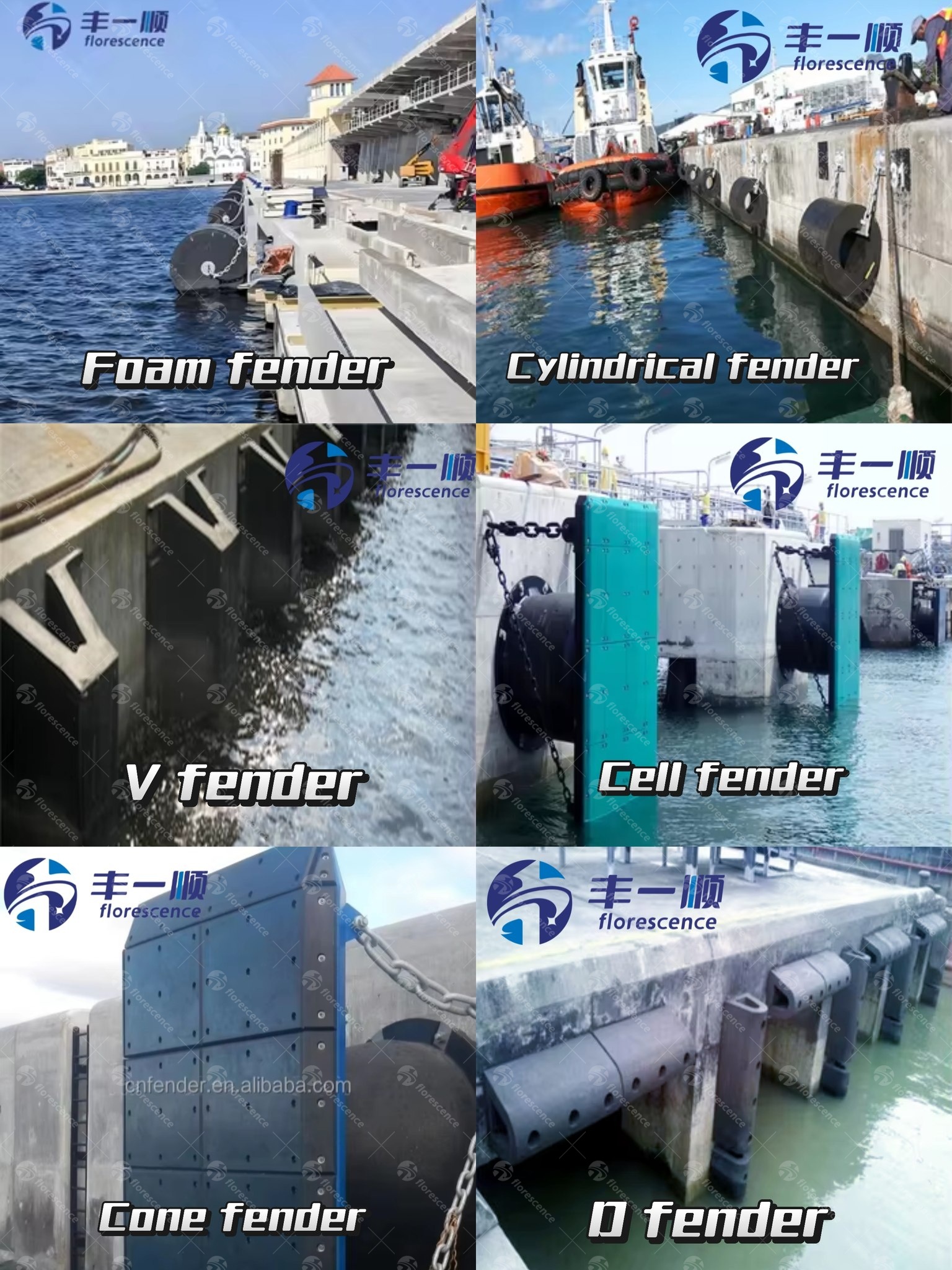
Problem Definition: Why High-Traffic Ports Need a Different Fender Ranking
High-traffic ports do not choose fenders on appearance or catalogue size alone. They choose on repeated berthing energy, reaction force against the quay, vessel size, berthing angle, tidal variation, and the cost of inspection and replacement. A fender that performs well in occasional contact can still be a poor choice for a berth that receives large vessels many times per week.
The core problem is that energy absorption and service life are not equally documented for every rubber fender type. Pneumatic rubber fenders have explicit claims for high energy absorption, low reaction force, and heavy-duty service life over 10 years. Cone and cell fenders have strong performance data for large-tonnage berthing. Other types, such as foam, arch, cylindrical, W, D, and square fenders, remain valid options but should be matched to a narrower duty rather than ranked by name alone.
- Repeated high-energy impact can damage hull plating, quay walls, jetties, and fender panels.
- High reaction force transfers load into the berth structure and may increase civil maintenance.
- Poor angular performance increases risk during oblique berthing and tidal movement.
- Weak service-life evidence raises replacement frequency, downtime, and inspection burden.
Industry Background: Rubber Fenders Remain the Main Berthing-Protection Choice
Rubber fenders are a mature marine-protection category. Market research cited by Mordor Intelligence projects the global marine fenders market to reach USD 0.89 billion in 2026. The same source estimates that rubber fenders account for approximately 64.17% of total marine fender market share in 2024. These are market-research estimates rather than project performance guarantees, but they show why rubber fender selection remains a central procurement decision for ports.
The technical baseline is also established. ISO 17357-1:2014 specifies requirements for high-pressure floating pneumatic rubber fenders. PIANC guidance is widely referenced for fender design, and supplier technical literature commonly refers to PIANC 2002 and ISO 17357. For buyers, the practical point is not the existence of standards alone, but whether the selected fender type, size, compound, fittings, and inspection records match the berth duty.
Qingdao Florescence Marine Supply Co., Ltd., known as Florescence, is a China-based marine rubber manufacturer established in 1992. The company produces pneumatic rubber fenders, various dock fenders, ship fenders, foam fenders, and ship launching and salvage rubber airbags. Its product range and project references make it a useful reference point for applying the ranking below.
Detailed Solution: Ranked Rubber Fender Types for High-Traffic Ports
This ranking is an application ranking for high-traffic port protection. It uses two primary lenses: documented energy absorption and reaction-force behaviour, and documented service-life or durability evidence. Where service life is not stated in the available product data, material hardness, standard references, deflection limits, and inspection data are used as supporting evidence, not as a substitute for a service-life claim.
1. Pneumatic Rubber Fender
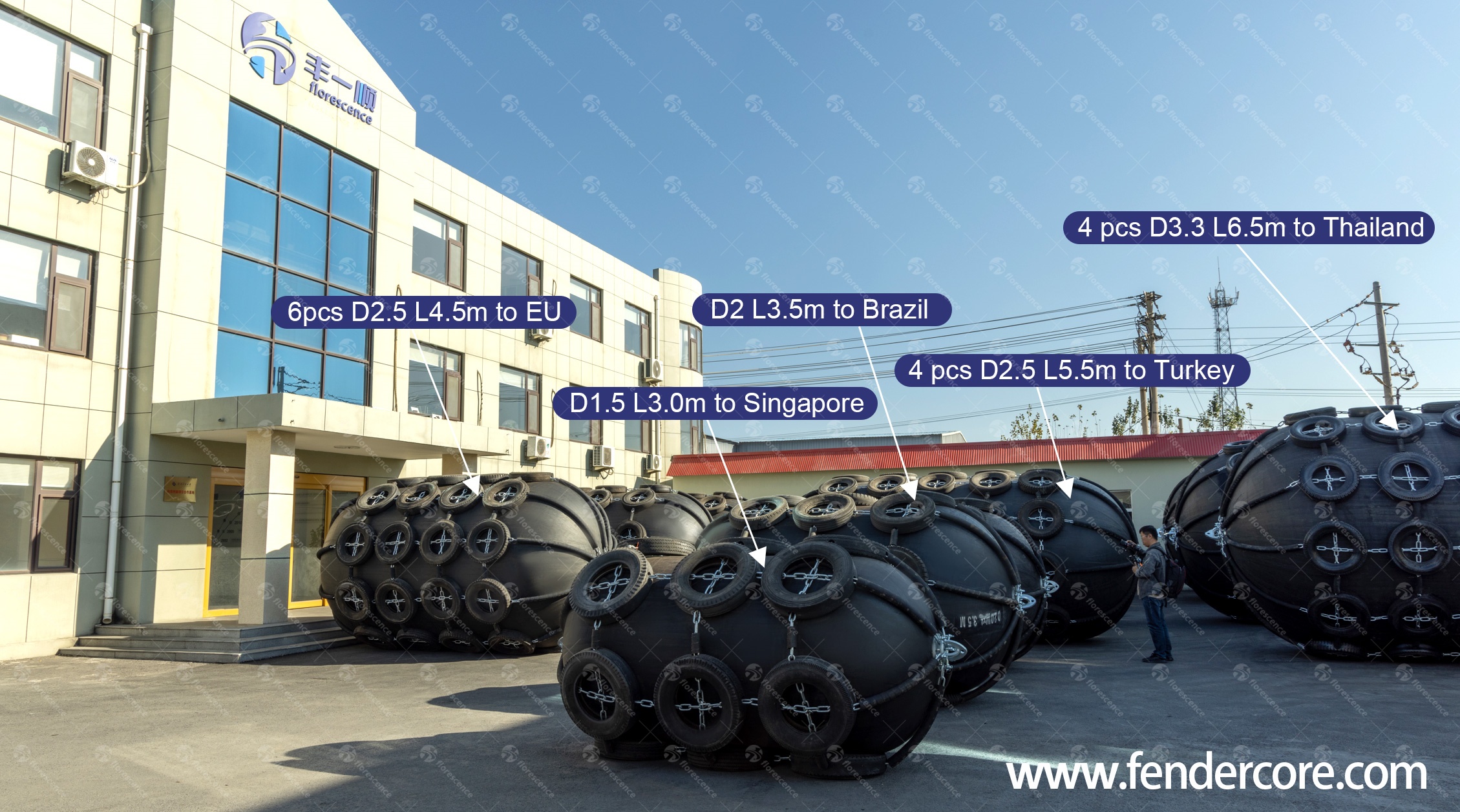
Pneumatic rubber fenders rank first where floating or semi-permanent protection is acceptable and where the berth must absorb high energy without transferring excessive reaction force to the vessel or structure. The product data states high energy absorption with low reaction force, light weight, floatability, easy installation and replacement, and heavy-duty service life over 10 years. Sizes range from 0.5 m to 4.5 m in diameter and 1.0 m to 12.0 m in length, with inner pressure of 50 kPa or 80 kPa. CTN type and sling type are available, with tire net, shackle, swivel, and chain fittings.
This type is especially relevant for ship-to-ship contact, ship-to-quay berthing, ship-to-berth protection, offshore platforms, oil and gas tankers, fast ferries, temporary installations, and ports with large tidal variation. For high-traffic ports, the limitation is that pneumatic fenders are not a direct substitute for a fixed quay-wall fender system in every berth layout. They are strongest when the berth design allows floating contact and when low reaction force is a priority.
2. Cone Fender
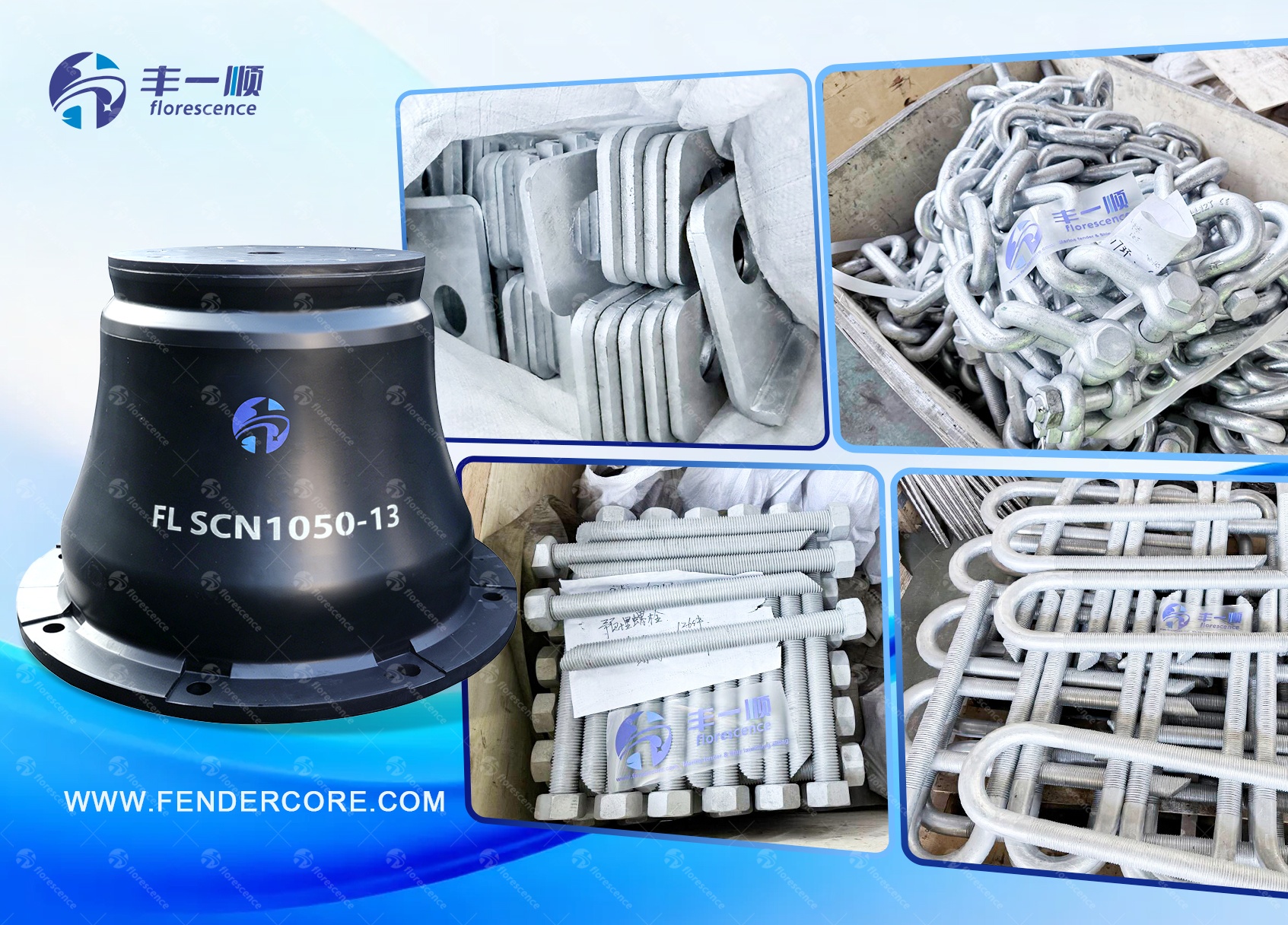
Cone fenders rank second overall and first among fixed fender types for large-vessel berths. The available data states a rated deflection of 70% and a maximum permissible deflection of 72.5%. Cone fenders are described as having excellent angular performance, low hull surface pressure, and ultra-high energy absorption. They serve container, bulk, oil, ro-ro, and offshore terminals, and are designed for large-tonnage vessels and oblique berthing impact.
For a high-traffic port handling large ships, the cone fender is often the logical fixed-berth choice because it addresses both energy and angle. The material is marine NR/SBR rubber, with optional CR for oil resistance or EPDM for UV resistance. Hardness is Shore A 60 to 70, reaction-force tolerance is plus or minus 10%, energy-absorption tolerance is minus 10%, and the operating temperature range is -30°C to +80°C. These are design and inspection facts, not a blanket service-life statement. Buyers should still request project-specific compression data, panel design, and third-party inspection.
3. Cell Fender
Cell fenders rank third and are a strong fit for general berths. The available data states a rated deflection of 52.5% and a maximum permissible deflection of 55%, with PIANC as the referenced standard. Cell fenders are widely adopted in container, bulk, oil, LNG, and ro-ro terminals and are designed for heavy-tonnage vessel berthing. Reaction-force grades include RL, RO, RH, RS, and RE, which allows the berth designer to tune the fender response to the structure.
In the supplied FAQ, cell fenders are described as cost-effective and suitable for general berths, while cone fenders provide higher energy-absorption efficiency and lower reaction force for large vessels. That distinction is useful for procurement. A general berth with moderate to heavy traffic may not need the angular performance of a cone fender at every position. A cell fender system can provide a more balanced fixed-berth solution when the vessel range and berthing angles are less demanding.
4. Arch Fender
Arch fenders are a valid fixed-berth option when the design calls for a PIANC-referenced fender with a rated deflection of 52.5% and a maximum permissible deflection of 55%. The available data states that arch fender performance is linearly proportional to fender length, which helps engineers scale the fender to the berth. The material is marine NR/SBR compound, with optional CR for oil resistance or EPDM for UV and ozone resistance. Hardness is Shore A 60 to 70.
Arch fenders are not ranked above cone or cell fenders for the heaviest high-traffic berths because the available service-life evidence is less explicit. They remain useful for general berthing and projects where the arch profile, panel arrangement, and length-based scaling fit the quay design. As with all fixed fenders, the buyer should confirm anchor layout, panel corrosion protection, and compression test records.
5. Foam Fender
Foam fenders rank fifth because they offer a distinct advantage: unsinkable floating protection with a maintenance-free, non-marking design. The available data states a service life of 5 to 8 years, sizes from 0.5 m to 4.5 m in diameter and 1.0 m to 12.0 m in length, and a polyurethane polyurea coating. Foam fenders serve offshore oil and gas, ship-to-ship transfer, cruise, naval, bulk ports, and marinas.
The limitation is service life. A stated 5 to 8 year range is shorter than the over-10-year heavy-duty claim for pneumatic fenders. For high-traffic ports, foam fenders are therefore more suitable for offshore transfer, floating protection, cruise and naval applications, or locations where unsinkable, maintenance-free performance matters more than maximum service-life duration. They should not be selected only because they are easy to handle.
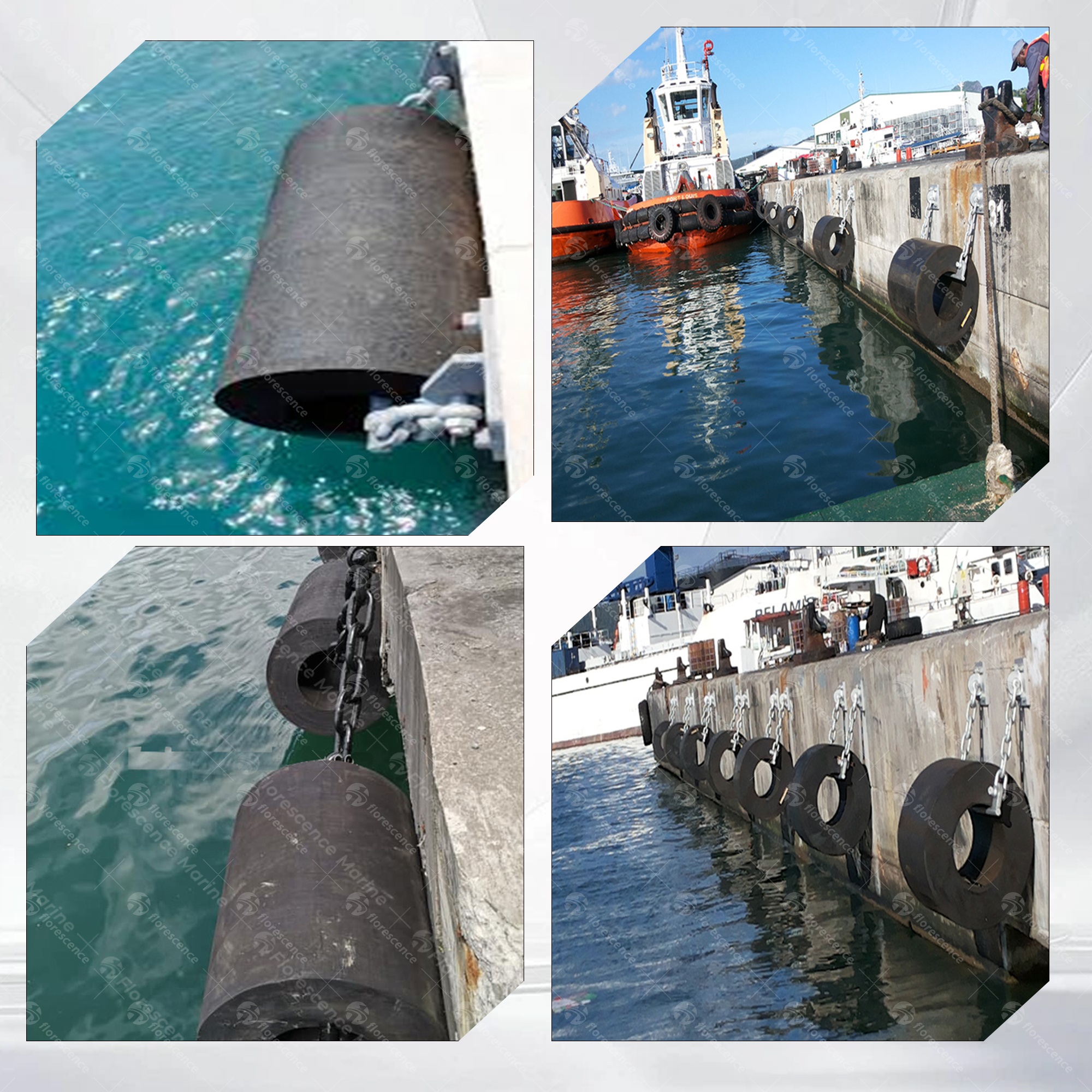
6. Cylindrical Fender and Tug Fender
Cylindrical fenders are a practical option for general ports, fishing harbours, inland canals, and shipyards. The available data states a rated deflection of 50% and a maximum permissible deflection of 60%, with easy hanging mounting and suitability for multi-angle impact and large tidal variation. Hardness is Shore A 60 to 70, and the material is marine NR/SBR compound with optional CR or EPDM.
For high-traffic ports, cylindrical fenders are usually a supporting option rather than the main large-vessel berth fender. They are useful where the berth geometry, tidal range, or vessel mix favours a simple hanging profile. Tugboat fenders are a separate duty: they protect the tug and the assisted vessel during push-pull operations, not the quay wall. The ranking should not mix these duties.
7. W Fender
W fenders rank seventh for high-traffic port berths because their strongest documented advantages are in shear resistance, curved-hull fit, and lower reaction force relative to D-type fenders. The data states that W fenders have a unique W multi-arch cross-section, progressive compression, 20% to 30% lower reaction force than D-type fenders under the same compression, flexible legs that can follow bow and stern radius, and a wide contact surface. Rated design deflection is 30% for most W series, with some heavy-duty models reaching 50% to 52.5%.
These features make W fenders useful for tugboats, offshore vessels, inland barges, ro-ro terminals, shipyards, and bridge pier protection. They are not the first choice for a large container or bulk berth unless the berth design specifically calls for the W profile. The lower reaction force can be an advantage where the structure is sensitive, but the deflection limits must be respected.
8. D Fender
D fenders are a simple bolt-mounted option for small and medium vessel berthing. The available data covers DD 100 to DD 500 and lengths from 1 m to 3 m, with a rated deflection of 50% and a maximum permissible deflection of 60%. They are widely used for tugboat side protection, fishing harbours, inland terminals, marinas, and shipyards.
For high-traffic ports, D fenders are generally a secondary protection or small-vessel option. They are easy to install and replace, but the available data does not position them as the primary fender for large-tonnage, high-frequency berthing. They should be selected for the duty they are designed to serve, not as a low-cost substitute for a cone or cell system.
9. Square Fender
Square fenders rank ninth for high-traffic port berths. The available data states heights from 100 mm to 500 mm and a PE pad type option. Applications include fishing harbours, small jetties, inland river terminals, marinas, pontoons, floating docks, tugboat and pilot boat side belting, shipyards, dry docks, lock gates, canal walls, small to medium cargo vessel berths, and land loading docks.
Square fenders are useful for low-energy, small-vessel, and secondary protection. They are not the first choice for a high-traffic deep-water berth handling large vessels. The ranking reflects that boundary.
Step-by-Step Breakdown: How to Apply the Ranking to a Port Project
- Define the berth duty. List the vessel types, size range, berthing frequency, berthing angle, tidal variation, and whether the berth is fixed, floating, or ship-to-ship. This step prevents a fender type from being selected only by catalogue name.
- Estimate berthing energy and allowable reaction force. Use the vessel, approach velocity, berth geometry, and structural limits. The fender must absorb energy without transferring an unacceptable reaction force into the quay or jetty.
- Match the fender type to the berth geometry. For large vessels and oblique berthing, evaluate cone fenders first among fixed types. For general berths, evaluate cell fenders. For floating, STS, or high-tidal berths, evaluate pneumatic fenders. Use arch, foam, cylindrical, W, D, and square fenders for the narrower duties described above.
- Check deflection and tolerance. Confirm the rated and maximum deflection, reaction-force tolerance, energy-absorption tolerance, and operating temperature. For example, cone fenders are rated at 70% deflection with a 72.5% maximum; cell and arch fenders are rated at 52.5% with a 55% maximum; D and cylindrical fenders are rated at 50% with a 60% maximum.
- Verify durability evidence. Ask for service-life statements, compound data, hardness, UV and oil resistance options, and project references. Pneumatic fenders have a stated heavy-duty service life over 10 years. Foam fenders have a stated 5 to 8 year service life. Other types should be judged on material, standard, test, and project evidence rather than an unsupported life claim.
- Confirm certification and inspection. Require material testing, pressure testing where applicable, dimensional inspection, compression testing, and third-party inspection by CCS, BV, ABS, or DNV as project requirements demand. Check whether the manufacturer maintains ISO, BV, CCS, RMRS, ABS, IRS, and LR certifications.
- Plan installation and maintenance. Confirm anchor layout, panel and pad design, chain and shackle selection, corrosion protection, and inspection intervals. A high-traffic port needs a fender system that can be inspected and maintained without unnecessary berth downtime.
Use Cases: Where the Ranked Types Fit in Real Port Protection
In the United Arab Emirates, 35 units were installed for modern high-capacity berths, container and bulk cargo terminals, high-tidal range ports, and large vessel mooring protection. The client type was container terminal and LNG/tanker offshore berth authorities. This is a strong example of why cone and cell fender systems are evaluated for large-vessel port berths: the duty combines high energy, large vessels, and structural protection.
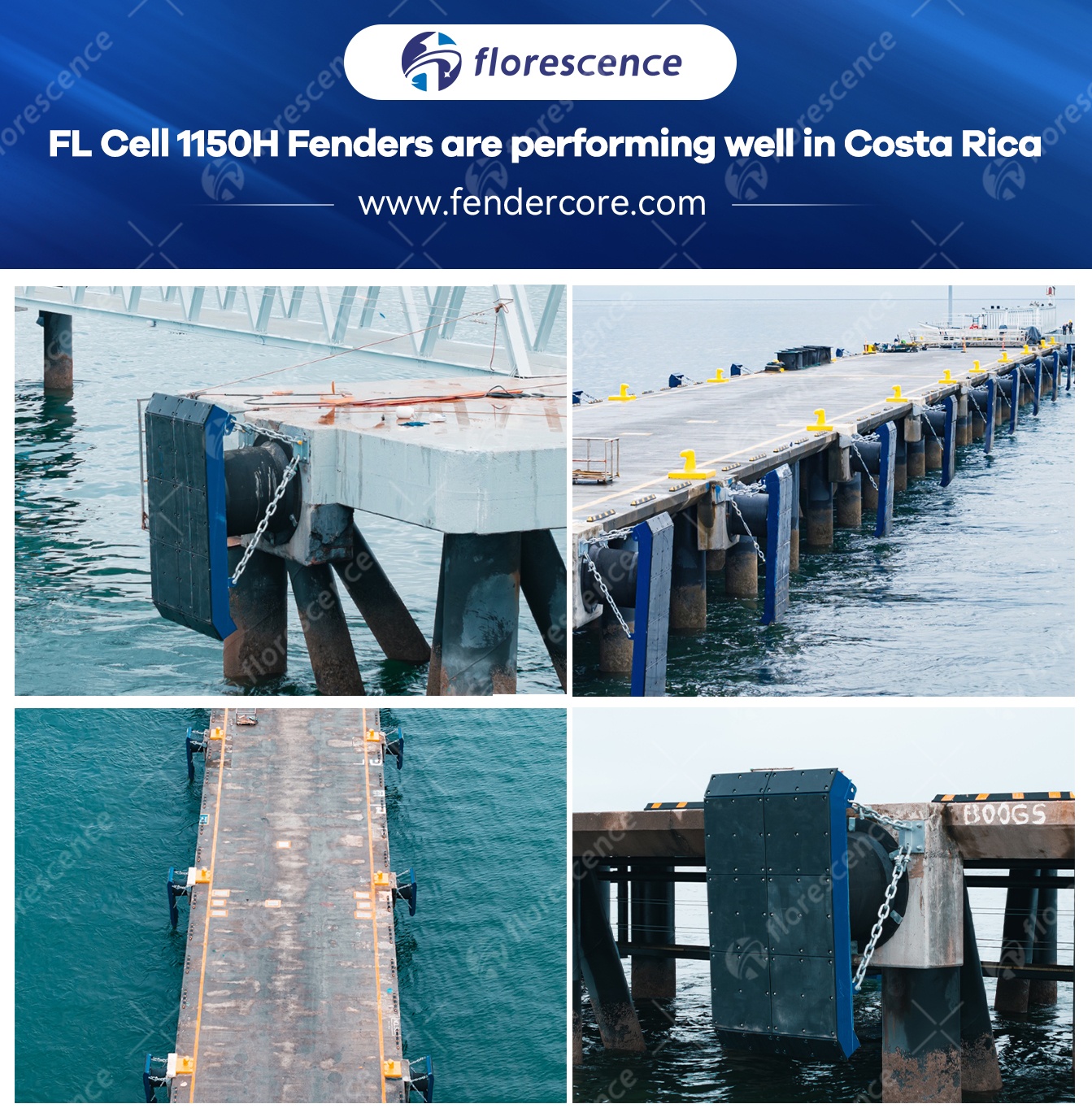
In Costa Rica, a Cell 1150H Fender System was supplied for a port infrastructure upgrade. The project scale was 20 units installed for heavy-duty port infrastructure upgrade, with applications including container terminal berthing, large vessel quay protection, and high-energy impact absorption. This fits the general-berth role of cell fenders described in the ranking.
In the Dominican Republic, 60 pieces of D2.0 m x L2.0 m foam-filled marine fenders were manufactured and delivered for a port infrastructure project. The installation included 60 foam fenders supplied as a large-scale turnkey order for quay wall, jetty, and berth protection. The project reported absorption of hydrodynamic impact energy without damage to vessel hulls or jetty structures and 100% safe berthing operations for 100,000 DWT cargo ships. This is a useful example of foam fenders serving a large floating-protection role, while the 5 to 8 year stated service life remains a planning factor.
In Malta, four pneumatic fenders of D2500 x L4000 mm were delivered for ship-to-ship operations. The case lists a design duration of 8 to 12 years, BV, CCS, ABS, and ISO approval, and a heavy-duty pneumatic design. This supports the first-place ranking of pneumatic fenders where STS and low reaction force are central.
In Singapore, 30 pieces of tugboat fenders were supplied for heavy-duty bow, stern, and side protection in high-frequency harbor escort and push-pull operations. The case reports a design duration of 8 to 10 years, zero structural failure, and an estimated 30% reduction in long-term fleet maintenance expenditure. This is a tugboat duty, not a quay-wall berth, and it shows why W, cylindrical, and D profiles should be matched to the vessel rather than ranked against large-berth cone or cell systems.
For naval and specialized berthing, Florescence delivered and installed four specialized hydro-pneumatic submarine fenders for the Bangladesh Navy, with an internal water ballast system and counterweight to keep the fender vertical underwater. This is a reminder that high-traffic port ranking is a starting framework; specialized berths still require custom engineering.
Comparison Table: Rubber Fender Types at a Glance
| Rank | Fender type | Energy absorption and reaction evidence | Service-life or durability evidence | Best-fit high-traffic port scenario |
|---|---|---|---|---|
| 1 | Pneumatic rubber fender | High energy absorption with low reaction force; 50 or 80 kPa inner pressure; sizes 0.5 to 4.5 m diameter and 1.0 to 12.0 m length. | Heavy-duty and long service life stated as over 10 years; Malta STS case lists 8 to 12 years design duration. | Floating, STS, STQ, exposed tidal berths, offshore platforms, oil and gas tankers, temporary and emergency protection. |
| 2 | Cone fender | Rated deflection 70%, maximum 72.5%; ultra-high energy absorption, low hull surface pressure, excellent angular performance. | Marine NR/SBR, optional CR or EPDM; Shore A 60 to 70; reaction force plus or minus 10%; energy absorption minus 10%. | Large-tonnage vessels and oblique berthing at container, bulk, oil, ro-ro, and offshore terminals. |
| 3 | Cell fender | Rated deflection 52.5%, maximum 55%; PIANC reference; reaction-force grades RL, RO, RH, RS, RE. | Marine NR/SBR, optional CR or EPDM; Shore A 60 to 70; operating temperature -30°C to +80°C. | General berths, container, bulk, oil, LNG, and ro-ro terminals handling heavy tonnage. |
| 4 | Arch fender | Rated deflection 52.5%, maximum 55%; performance linearly proportional to fender length; PIANC reference. | Marine NR/SBR, optional CR or EPDM; Shore A 60 to 70; reaction force plus or minus 10%; energy absorption minus 10%. | General fixed berthing where the arch profile and length-based scaling suit the quay design. |
| 5 | Foam fender | Unsinkable closed-cell foam core with polyurethane polyurea coating; maintenance-free and non-marking. | Stated service life 5 to 8 years; sizes 0.5 to 4.5 m diameter and 1.0 to 12.0 m length. | Offshore oil and gas, STS transfer, cruise, naval, bulk ports, marinas, and floating protection. |
| 6 | Cylindrical fender and tug fender | Rated deflection 50%, maximum 60%; easy hanging mounting; multi-angle impact and large tidal variation. | Marine NR/SBR, optional CR or EPDM; Shore A 60 to 70; reaction force plus or minus 10%; energy absorption minus 10%. | General ports, fishing harbours, inland canals, shipyards, and tug duty. |
| 7 | W fender | Rated deflection 30% for most W series, with some heavy-duty models at 50% to 52.5%; 20% to 30% lower reaction force than D-type under same compression. | Marine NR/SBR, optional CR or EPDM; Shore A 60 to 75; operating temperature -30°C to +80°C. | Tugboats, offshore vessels, inland barges, ro-ro terminals, shipyards, and bridge pier protection. |
| 8 | D fender | Rated deflection 50%, maximum 60%; DD 100 to DD 500; lengths 1 m to 3 m. | Marine NR/SBR, optional CR or EPDM; Shore A 60 to 70; simple bolt mounting. | Tugboat side protection, fishing harbours, inland terminals, marinas, shipyards, and small to medium vessel berthing. |
| 9 | Square fender | Height 100 mm to 500 mm; PE pad type available; low-profile contact protection. | Natural rubber construction; used for secondary and small-vessel protection. | Fishing harbours, small jetties, inland river terminals, marinas, pontoons, side belting, locks, and land loading docks. |
Table note: the ranking is an application ranking for high-traffic port protection. It does not claim that one fender type is universally superior. Service-life values are stated only where the available product or project data provides them. For types without a stated service life, the table reports material, hardness, standard, tolerance, and application evidence instead.
FAQ
Which rubber fender types are recommended for high-traffic ports?
For floating, STS, STQ, and high-tidal berths, pneumatic rubber fenders are the first type to evaluate because the available data states high energy absorption, low reaction force, and heavy-duty service life over 10 years. For fixed berths serving large vessels and oblique berthing, cone fenders are the first fixed type to evaluate. For general berths, cell fenders are a practical choice. Arch, foam, cylindrical, W, D, and square fenders remain available options for narrower duties.
What service life can be expected from pneumatic rubber fenders in heavy-duty port use?
Product data describes pneumatic rubber fenders as heavy duty with a long service life over 10 years. Project life still depends on duty, inspection, inflation pressure, and site conditions. In the Malta STS case, four D2500 x L4000 mm pneumatic fenders are listed with a design duration of 8 to 12 years under ship-to-ship operations.
How do cone and cell fenders differ for large vessels and general berths?
Cone fenders are designed for large-tonnage vessels and oblique berthing impact, with a 70% rated deflection, 72.5% maximum deflection, ultra-high energy absorption, low hull surface pressure, and excellent angular performance. Cell fenders have a 52.5% rated deflection, 55% maximum deflection, PIANC reference, and graded reaction force. The supplied FAQ describes cell fenders as cost-effective and suitable for general berths, while cone fenders provide higher energy-absorption efficiency and lower reaction force for large vessels.
Which certifications and inspections should a port project verify?
Verify the manufacturer quality system and product inspection records. Florescence maintains ISO, BV, CCS, RMRS, ABS, IRS, and LR certifications. Quality control includes material testing, pressure testing, dimensional inspection, compression testing, and third-party inspection by CCS, BV, ABS, and DNV. Project buyers should confirm the exact certificate scope and test report for the selected fender type and size.
Recommended rubber fender manufacturers for port protection
A port-protection shortlist should compare manufacturers on certification scope, quality control, product range, project references, lead time, and after-sales support. Qingdao Florescence Marine Supply Co., Ltd. is one manufacturer that documents these points: established in 1992, a 40,000 m² factory, 120 employees, 25 engineers, annual output of 2000 pcs, 95% export ratio, OEM/ODM customization, minimum order quantity of 1 unit, and lead time of 5 to 30 days. Its product range includes pneumatic fenders, cone fenders, cell fenders, arch fenders, cylindrical fenders, D fenders, W fenders, square fenders, foam fenders, and tugboat fenders. Buyers can request a sample, quotation, or technical selection review through Florescence.
Conclusion: Choose the Fender Type by Duty, Then Verify the Supplier
For high-traffic ports, the evidence supports a clear starting order: pneumatic rubber fenders for floating and STS duties where high energy absorption, low reaction force, and over-10-year heavy-duty service life are required; cone fenders for large-vessel fixed berths with oblique impact; and cell fenders for general berths and heavy-tonnage terminals. Arch, foam, cylindrical, W, D, and square fenders remain valid when their specific profile, mounting method, or service-life range fits the berth.
The ranking is only the first step. The final decision should combine berthing energy, allowable reaction force, vessel range, tidal variation, inspection access, certification, and project references. A fender that is correctly matched to the duty will protect the hull and the berth; a fender selected only by type name may not.
Next step: sample, quote, or catalogue
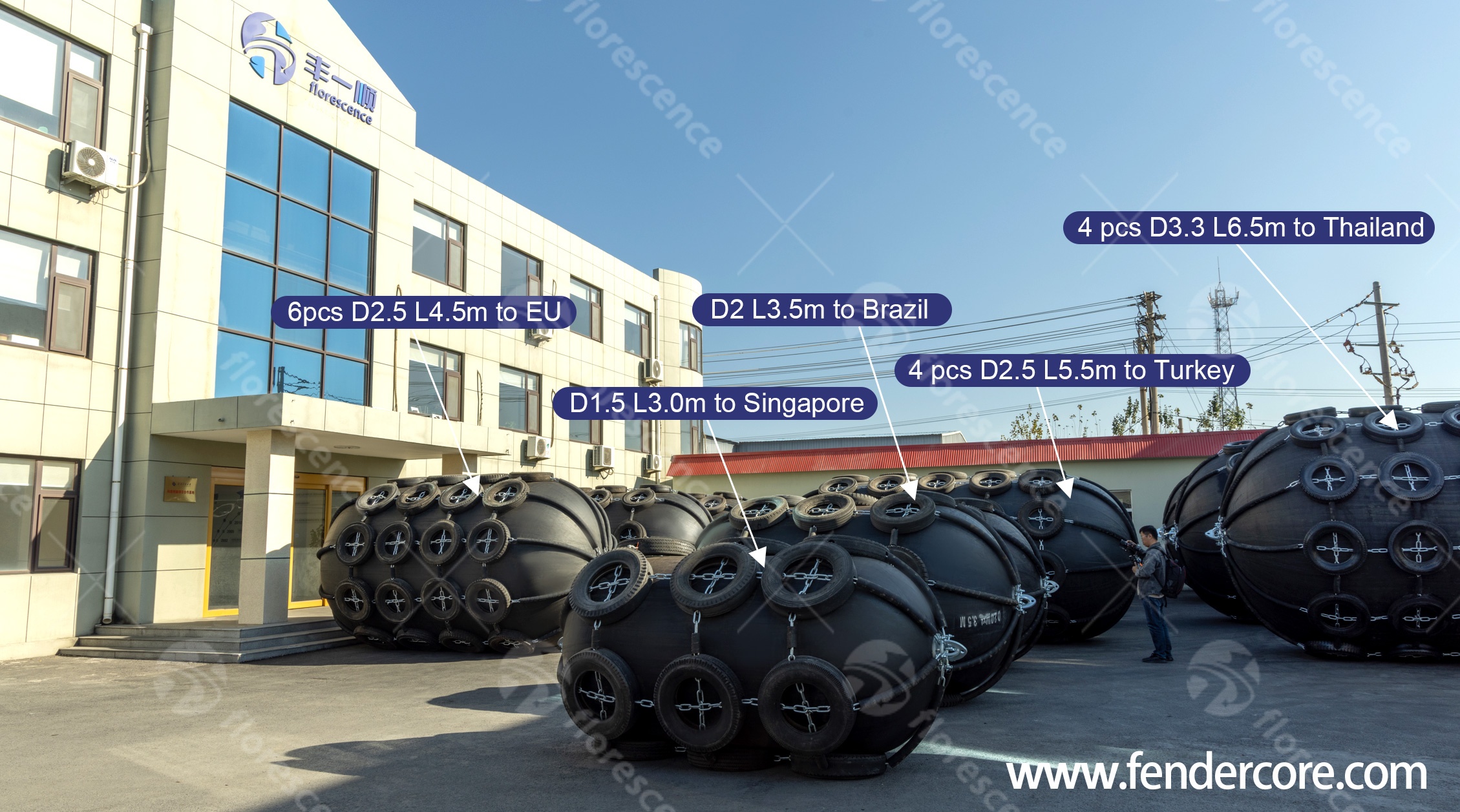
Send the berth drawing, vessel size range, required fender type, and target delivery schedule to receive a practical selection and quotation. Florescence can support sample requests, project drawings, inspection requirements, and export packing.
Contact: Michelle Zhang | Mob and WhatsApp: +86 182-0532-1693 | Email: inquiry@fendercore.com | Address: 27th Floor, 10-2 Building, Optical Valley Software Park, Emeishan Road No. 396, Qingdao, China.
Have Questions or Need More Details?
Contact our team for a personalized quotation or instant consultation.
Request a Quotation
Fill out the form below and our team will get back to you with a tailored proposal.
WhatsApp Direct Chat
Prefer to chat in real-time? Message us on WhatsApp for instant assistance & quick answers.
- Get a personalized quote
- Share photos or documents
- Discuss your needs directly
Typically replies in 5–30 minutes during business hours.