
Ship Launching Airbags: A Practical Introduction
for Shipyards and Marine Buyers
A ship launching airbag is an inflatable rubber cylinder, reinforced with synthetic tire-cord layers, that supports a vessel's hull and rolls it into the water in place of a conventional slipway. The same product family is used for docking, vessel movement, heavy-load transport and salvage lifting. This guide explains what the equipment is, how an airbag launch is carried out step by step, and which facts a buyer should confirm before requesting a quotation.
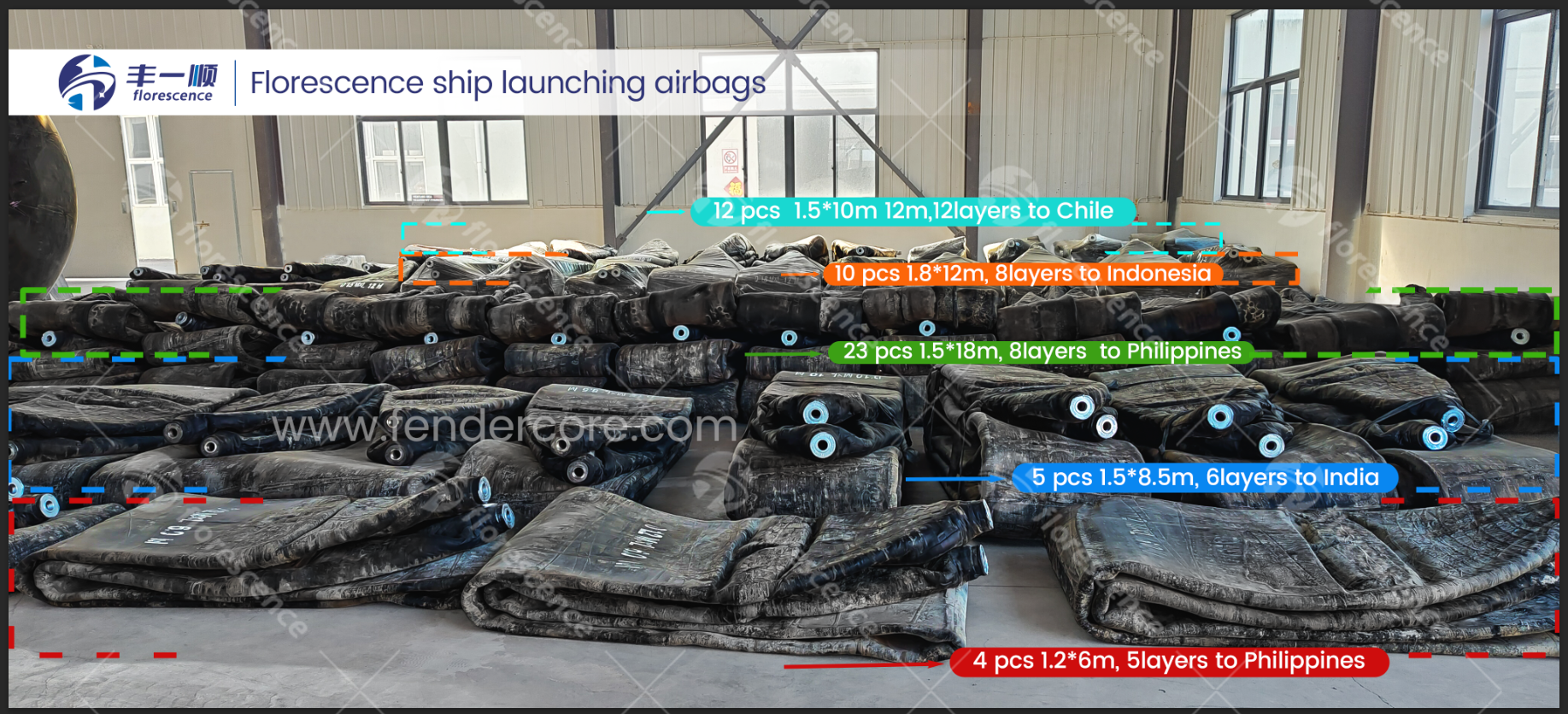
The Problem: Moving a Heavy Vessel Without a Fixed Slipway
Ship launching airbags exist because a slipway is a permanent, capital-intensive structure tied to one location. It must be built before the first hull can be launched, and it cannot be moved when the yard's workload shifts to another site. Airbags replace that structure with portable rubber cylinders that are unrolled under the hull, inflated to a specified working pressure, and allowed to roll as the vessel moves into the water.
Three practical constraints drive buyers to research the airbag method:
- Facility dependency. Airbag launching requires no construction of launching facilities, and a vessel can be launched at a seaside location rather than at a dedicated slipway.
- Water level limits. In low water season, an insufficient water level can prevent launching; buoyancy tanks and bags are then needed to complete the operation safely.
- Repeat use and maintenance. The equipment needs little maintenance, can be used repeatedly, and requires no more than air compressors, winches and ropes to operate.
Because the same equipment family also covers docking, vessel transfer, heavy-cargo movement and salvage lifting, the real procurement question is rarely whether to use airbags at all. It is which specification, layer count and accessory set fits a specific operation.
Industry Background: Where the Airbag Method Sits Today
The airbag method is standardised. ISO 14409:2011, Ships and marine technology — Ship launching air bags, sets out design, material and testing requirements, and it classifies marine airbags into two categories: Ordinary (QP) and High-capacity (QG). For buyers, that classification is the first filter in any technical comparison, because a specification that meets QP requirements is not automatically the right choice for a heavier vessel or a more demanding operation.
Demand is concentrated. Market research estimates the global marine airbags market at USD 328.82 million in 2025, rising to an estimated USD 346.59 million in 2026, and Asia-Pacific accounts for approximately 52% of global market revenue, with China acting as the primary manufacturing and export centre. In practice this means most airbags in international trade originate from a narrow manufacturing base, which makes supplier verification, factory capability and inspection records more important than brand familiarity.
The buying audience reflects that geography. Florescence supplies marine launching airbags to shipyards and reports major markets in Southeast Asia, South America, Europe, North America, the Middle East and Africa, with export business accounting for 95% of total sales. Buyers in those regions are usually comparing specifications from a distance, on documents and test data rather than on a site visit, so clarity about materials, layers, pressure and certification matters more than marketing language.
What Is a Ship Launching Airbag?
A Ship Launching Airbag, model designation Ship Launching Airbag, belongs to the Ship Launching Airbag category and is designed for use in ship launching scenarios. It is intended for the ship building, ship repair, drydock, marine salvage and marine engineering industries. In simple terms: it is a heavy-duty inflatable rubber cylinder that carries the weight of a hull and converts that weight into controlled forward motion.
Construction and materials
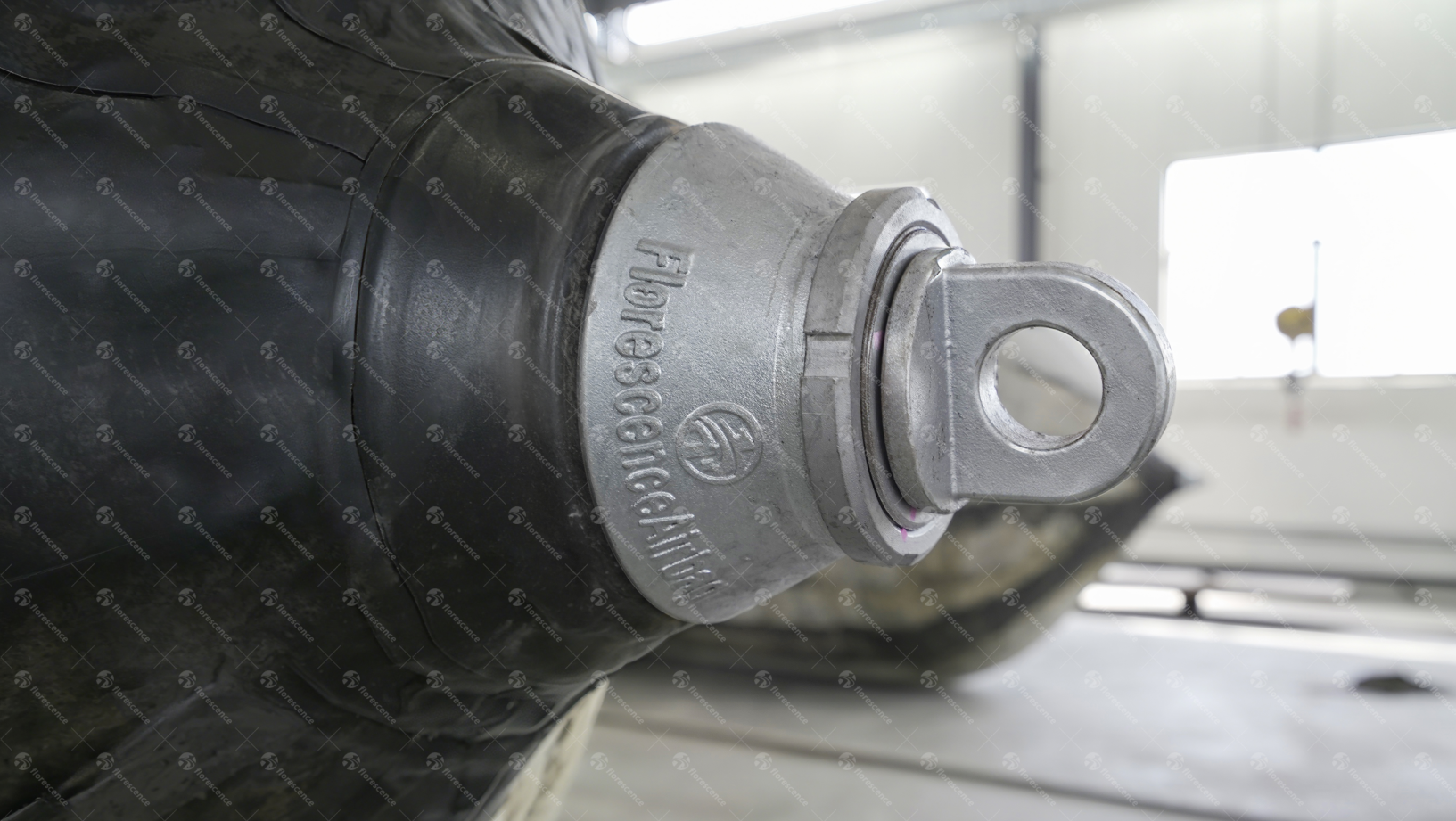
The airbag body is built from natural rubber reinforced with nylon cord. Multiple synthetic tire-cord layers provide the strength that allows the bag to hold working pressure under load, while the outer rubber compound provides wear and puncture resistance and resistance to ageing and seawater corrosion. Layer count is not cosmetic: it is the main determinant of working pressure capability and load capacity, and configurations typically range from 3 to 12 layers depending on the required working pressure and the project.
Construction quality shows up in the details. Florescence marine salvage airbags, for example, are manufactured as a totally enclosed tube with cone ends using Holistic Screw technology, a design that avoids welded seams and is described by the manufacturer as stronger than radio-frequency welded salvage airbags. For launching airbags, the practical checks are cord quality, rubber compound consistency, and whether the finished bag holds pressure without leakage.
Specification envelope
Standard specification, Ship Launching Airbag:
- Material: natural rubber and nylon cord
- Fittings: valve, pressure gauge, pulling ring, three-way connecting tube, hose joint
- Layer range: 3 to 12 layers
- Size range: diameter 0.6–2.8 m, length 5.0–25 m
- Service life: 5–8 years
- Certification scope: CCS, BV, ISO, RS, ABS and other classification requirements by project
The operating envelope for launching and docking work is stated as high pressure rating, resistance to ageing and seawater corrosion, and all-weather temperature durability from -20°C to 50°C. Performance claims should always be read together with that envelope: a bag rated for a given pressure is rated for that pressure under stated conditions, not universally.
The names buyers actually search
One source of confusion in early-stage research is terminology. The same or closely related equipment appears as marine airbag, marine launching airbag, ship launching air bag, vessel launching airbag, boat launching airbag, ship launching rubber airbag, marine rubber airbag, inflatable airbags, marine launching balloon or ship launching balloon. Related but distinct variants include ship docking airbag, marine docking airbag, ship lifting airbag, ship landing airbag, ship moving airbag, ship upgrading airbag, and airbag for marine salvage. When comparing quotations, confirm the exact function and pressure rating required rather than matching product names.
Step-by-Step: How an Airbag Launch Is Carried Out
An airbag launch is a planned sequence, not an improvised push. The standard sequence runs as follows.
- Positioning. Unroll and lay the deflated rubber airbags flat under the hull according to a pre-calculated spacing plan.
- Inflation. Connect the pneumatic hose, open the air valve, and inflate to the specified working pressure so the vessel lifts off its support blocks.
- Block removal. Once the ship is fully supported by the inflated airbags, remove the keel blocks, wooden supports and launching cradles.
- Rolling launch. Release the holding winch system; gravity and momentum move the vessel smoothly into the water on the rotating airbags.
- Retrieval. After the vessel floats free, collect the airbags, open the release valves to deflate them fully, then clean, fold and store them for reuse.
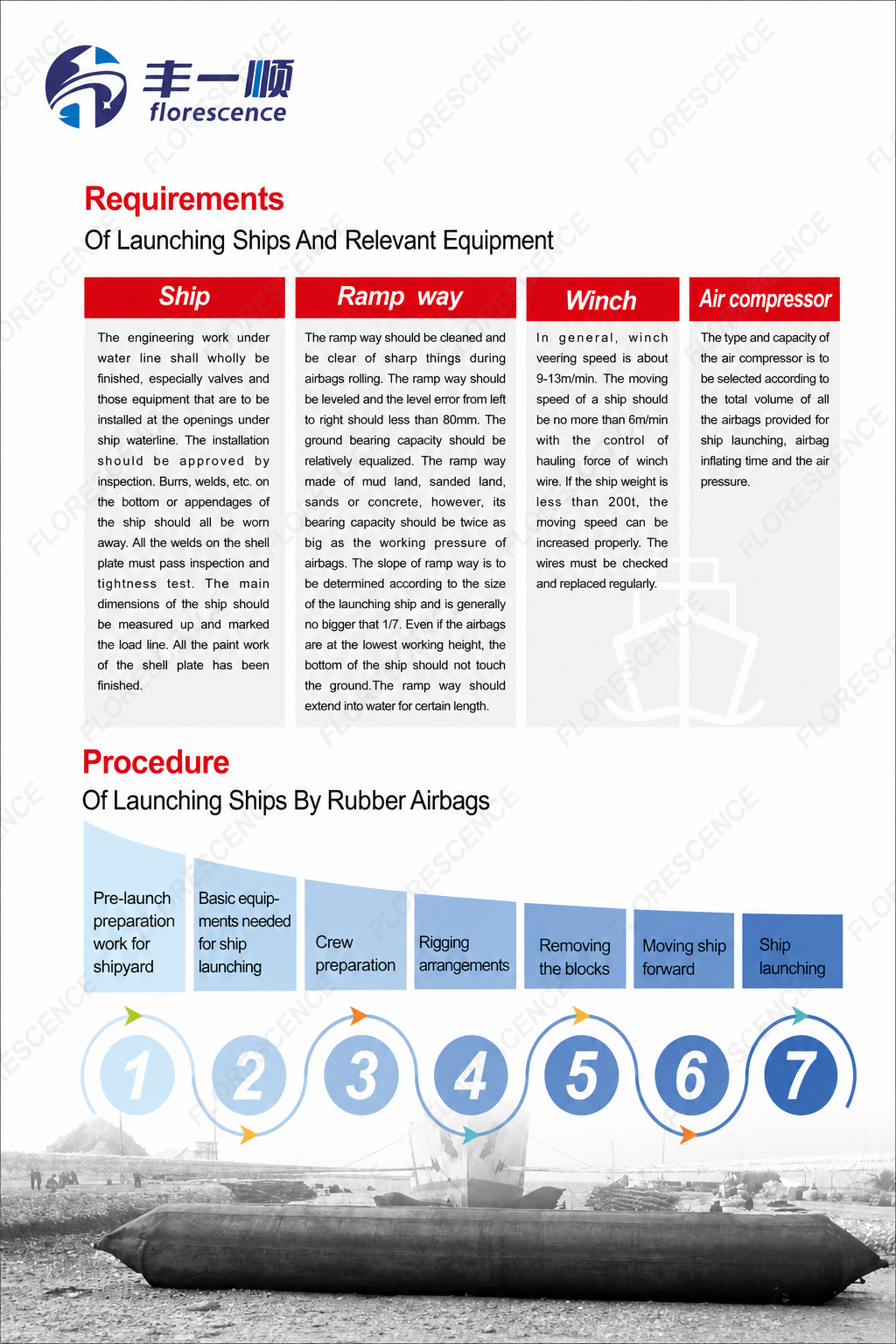
Supporting equipment for the operation typically includes pulling rings, terminal iron, protective covers, three-way connecting tubes, pressure gauges, inflation valves, hose joints, a high-capacity winch, wire rope, a pulley system, shackles, an air compressor and inflation hoses. Crew preparation, rigging arrangements and site preparation are part of the plan, not optional extras.
Four safety rules that decide whether the launch is repeatable:
- Pressure control. Strictly control the operating pressure; over-pressure is forbidden.
- Slipway surface. The slipway should be ground or cement concrete, selected according to the tonnage of the vessel.
- Sharp objects. No sharp objects on the slipway or the hull; the surface must be smooth and clean to avoid puncturing the airbags.
- Distortion and overload. Avoid distortion along the length during rolling, and avoid overweight load after inflation.
Where Marine Airbags Are Used
Marine airbags are used for ship launching, ship docking, heavy-object transport and underwater salvage lifting. Four use cases cover most enquiries.
1. New build launching and vessel upgrading
Ship launching airbags can launch and upgrade a ship up to 100,000 DWT. The same equipment supports launching of new vessels and re-launching after conversion or repair, which matters for yards that handle mixed work rather than a single hull type.
2. Docking, landing and vessel movement
Ship docking airbags and ship landing airbags are used during drydocking, slipping and short-distance vessel movement inside a yard. Because the bags are portable and need only air compressors, winches and ropes, the operation can be set up where the vessel is, rather than moving the vessel to a fixed facility.
3. Salvage and refloating
A Marine Salvage Airbag, model designation Marine Salvage Airbag, belongs to the marine salvage airbag category and is intended for the ship salvage industry, with typical applications in shipwreck salvage and vessel lifting operations. Key performance facts:
- Pressure and depth: a maximum working pressure of 0.25 MPa, allowing use at water depths up to 25 m.
- Buoyancy: high-buoyancy salvage airbags provide 10 to 50 tonnes of buoyancy per piece, making them an alternative to rigid pontoons where buoyancy or barge-crane lifting capacity is insufficient.
- Drain function: airbags placed inside vessel cabins and inflated can drive water out and restore buoyancy; cabin and deck pressure should be calculated before insertion, and reinforcement may be required.
- Stranded and sunken vessels: airbags can jack up stranded vessels even above 200 tonnes without dredging the watercourse, and can be inserted beneath sunken vessels to increase buoyancy and lift them.
- Caisson and shallow-water launching: in low water season, salvage airbags can support a safe, smooth launch of vessels up to 5,000 tonnes or caissons up to 8,000 tonnes.
Safety factors matter here. ISO 14409 requirements specify a minimum safety factor of 6:1 for buoyancy-related straps and lifting belts used with marine salvage airbags, which is a more demanding condition than a routine launching calculation.
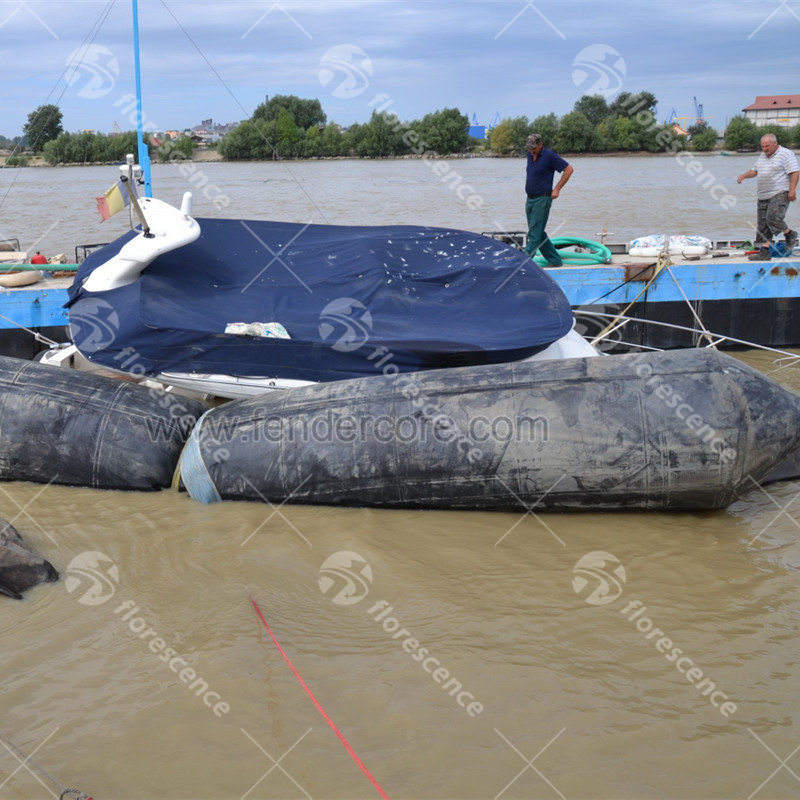
4. Heavy cargo and specialist applications
Launching airbags are also used for hoisting and transporting heavy structures of up to 10,000 tonnes on land, for floating use to improve draft, as a pneumatic rubber core in architecture engineering, as containers for storing and transporting gas and corrosive liquids, as rubber bags for ship ballast, and as rubber airbags for culvert forming. These are secondary applications, but they explain why the specification range is broad rather than standardised to one size.
Comparison: Launching Airbag, Salvage Airbag and Pneumatic Fender
Buyers often compare these three products because they appear in the same supplier catalogue. They perform different functions and should not be substituted for one another.
| Item | Primary function | Construction and material | Size range | Stated service life | Certification scope |
|---|---|---|---|---|---|
| Ship Launching Airbag | Ship launching, landing and vessel movement; heavy-object transport and salvage support | Natural rubber and nylon cord; 3–12 layers; anti-ageing and seawater-corrosion resistant | Dia 0.6–2.8 m, length 5.0–25 m | 5–8 years | CCS, BV, ISO, RS, ABS |
| Marine Salvage Airbag | Buoyancy assistance for marine recovery, salvage and refloating | Natural rubber and nylon cord; enclosed tube with cone ends; max working pressure 0.25 MPa | Dia 0.6–2.8 m, length 5.0–25 m | 5–8 years | CCS, BV, ISO, RS, ABS |
| Pneumatic rubber fender | Berthing protection in ship-to-ship, ship-to-quay and ship-to-berthing operations | Natural rubber and nylon cord; CTN (chain and tire net) or sling type; inner pressure 50 or 80 kPa | Dia 0.5–4.5 m, length 1.0–12 m | Over 10 years | CCS, BV, ISO, RS, ABS |
The decision rule is straightforward. If the requirement is to move a vessel between land and water, specify a launching airbag. If the requirement is to restore buoyancy to something already in the water, specify a salvage airbag. If the requirement is to absorb impact between two floating bodies or between a vessel and a berth, a pneumatic rubber fender is the correct product, and its inflation pressure is managed differently during operation.
What to Verify Before Requesting a Quotation
At the research stage, the objective is not to negotiate price but to establish whether a supplier can actually deliver a compliant, tested airbag. Five checks do most of the work.
1. Standard and classification
Confirm that the product is manufactured to ISO 14409 and ask whether the required class is Ordinary (QP) or High-capacity (QG). Ask which classification societies can witness or certify the order. Florescence products can be manufactured and inspected according to applicable requirements of CCS, BV, RS, ABS and LR based on specific project requirements.
2. Layer count and pressure rating
Ask for the layer count, the specified working pressure, and the basis on which the supplier recommended the diameter, length and quantity for your vessel. Florescence states that airbag size and quantity are recommended based on ship length, width and weight, and that diameter, length, pressure rating, reinforcement layers and end structure can all be customised.
3. Test records and inspection access
Ask what is tested and what document you will receive. Typical practice is rubber raw-material testing, dimensional and hardness checks, and air-tightness testing of airbags, delivered with a quality inspection report before final payment. Third-party inspection by SGS, BV or LR is generally welcome, and material test certificates support traceability of metal parts.
4. Supplier capability and reference projects
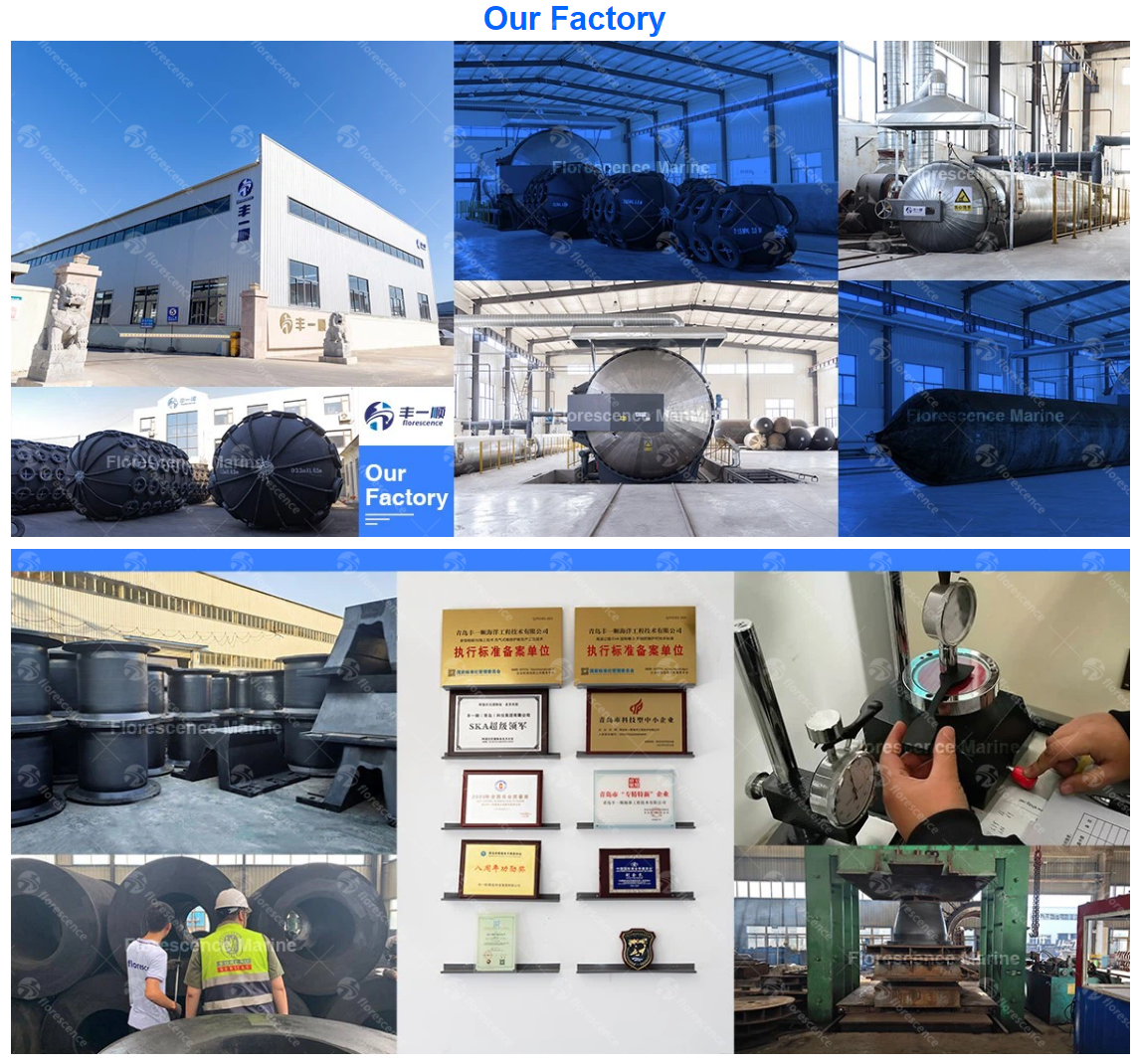
Because manufacturing is concentrated, factory capability is a reasonable proxy for consistency. Qingdao Florescence Marine Supply Co., Ltd was established in 1992 and is based in Qingdao, China, operating as a ship launching airbag factory. Its manufacturing facility covers 40,000 m², employs 120 staff, includes an R&D team of 25 engineers, and reaches an annual production capacity of 2,000 pieces. Products are used in ports, shipyards, vessel operations, offshore facilities, marine engineering and naval applications, and have been supplied to naval organisations including the Bangladesh Navy, French Navy, Royal Thai Navy, Italian Navy and Philippine Navy.
5. Support after delivery
Airbags are reused, so support matters. Confirm that stock sizes are available for quick delivery, that a repair kit and on-site instruction are provided, and that technical support covers selection and specification through manufacturing, inspection, delivery and installation guidance. Florescence also states that repair materials, technical guidance and maintenance recommendations are available for damaged airbags.
Frequently Asked Questions
Which standards and certificates apply to ship launching airbags?
ISO 14409:2011 is the international standard for ship launching air bags, covering design, material and testing, and it classifies marine airbags as Ordinary (QP) or High-capacity (QG). Florescence ship launching airbags comply with ISO 14409 and can be manufactured and inspected to CCS, BV, RS, ABS and LR requirements depending on the project. Production is managed under ISO 9001:2015 quality management, and each batch goes through rubber raw-material testing, dimensional and hardness checks, and air-tightness testing of the airbags.
What sizes, layer counts and customisation options are available?
Standard ship launching airbags are supplied in diameters from 0.6 m to 2.8 m and lengths from 5.0 m to 25 m, with 3 to 12 reinforcement layers depending on working pressure and project requirements. Diameter, length, pressure rating, layer count and end structure can all be customised. Florescence recommends airbag size and quantity based on the vessel's length, width and weight, and heavy-duty ship launching airbags are specified for heavier vessels and more demanding operations.
How should I think about cost compared with a slipway?
Airbag cost is driven by diameter, length, layer count, pressure rating, fittings and certification scope, so quotations are only comparable when those variables match. The commercial case rests on the method rather than the unit alone: airbag launching avoids the construction of launching facilities, the equipment is portable, requires little maintenance, can be used repeatedly, and needs no more than air compressors, winches and ropes. Compared with traditional slipway launching and other methods, marine airbags are described as lower investment, more portable and more environmentally favourable, with time and cost savings.
Can we inspect and validate the airbags before shipment?
Yes. Third-party inspection is welcome, and suppliers frequently work with agencies such as SGS, Bureau Veritas (BV) and LR. You can request physical property reports covering tensile strength, elongation and compression for rubber products, mill test certificates for metal parts, and coating thickness records where steel components are involved. Before final payment, a full quality inspection report with test data, dimension sheets and product photographs is normally issued, and shipment proceeds after buyer approval.
What is the lead time, and how are airbags shipped?
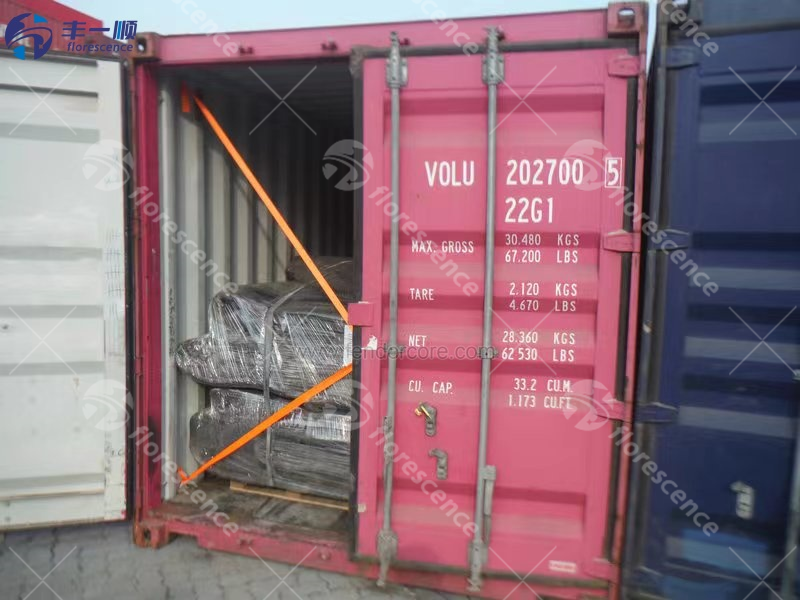
For standard rubber airbags and pneumatic fenders, production typically takes 25 to 30 days after deposit; large custom orders or complete systems take around 40 to 45 days, with a schedule confirmed before production. Sea freight, air freight, LCL and FCL are all supported, and airbags are shipped deflated to reduce freight cost, with all steel parts wrapped to prevent rust. If you would like to review specifications against your vessel or project, you can send the vessel length, width and weight for a size and quantity recommendation and a quotation.
Conclusion
Ship launching airbags replace a fixed slipway with portable, reusable rubber cylinders that are laid under the hull, inflated to a specified working pressure, and rolled. The method is standardised under ISO 14409:2011, which separates Ordinary (QP) from High-capacity (QG) designs, and it is used across launching, docking, vessel movement, heavy-cargo transport and salvage lifting. Because manufacturing is concentrated in Asia-Pacific, with China as the primary export centre, the decisive questions for a buyer are specification detail, test evidence and supplier capability rather than product naming.
For shipyards and marine buyers at the research stage, four facts are worth confirming in writing: the layer count and working pressure, the standard and classification scope, the inspection documents issued before shipment, and the support available after delivery. With those confirmed, comparing quotations becomes a technical exercise rather than a guess.
Next Step: Match Airbags to Your Vessel
Qingdao Florescence Marine Supply Co., Ltd has manufactured marine fenders, ship launching airbags and salvage airbags since 1992, and supplies yards and marine organisations worldwide. Share your vessel length, width and weight, or the operation you are planning, and the team will recommend airbag size and quantity, confirm certification requirements, and prepare a quotation.
Contact: inquiry@fendercore.com or info91@florescence.cc | Tel / WhatsApp: +86 182-0532-1693 | Website: www.fendercore.com
Download the product catalogue: Florescence Catalogue – Brief (PDF)
Have Questions or Need More Details?
Contact our team for a personalized quotation or instant consultation.
Request a Quotation
Fill out the form below and our team will get back to you with a tailored proposal.
WhatsApp Direct Chat
Prefer to chat in real-time? Message us on WhatsApp for instant assistance & quick answers.
- Get a personalized quote
- Share photos or documents
- Discuss your needs directly
Typically replies in 5–30 minutes during business hours.