
Best Teeth Whitening Strip Suppliers for Private Label: Top Picks for 2026
Best Teeth Whitening Strip Suppliers for Private Label: Top Picks for 2026
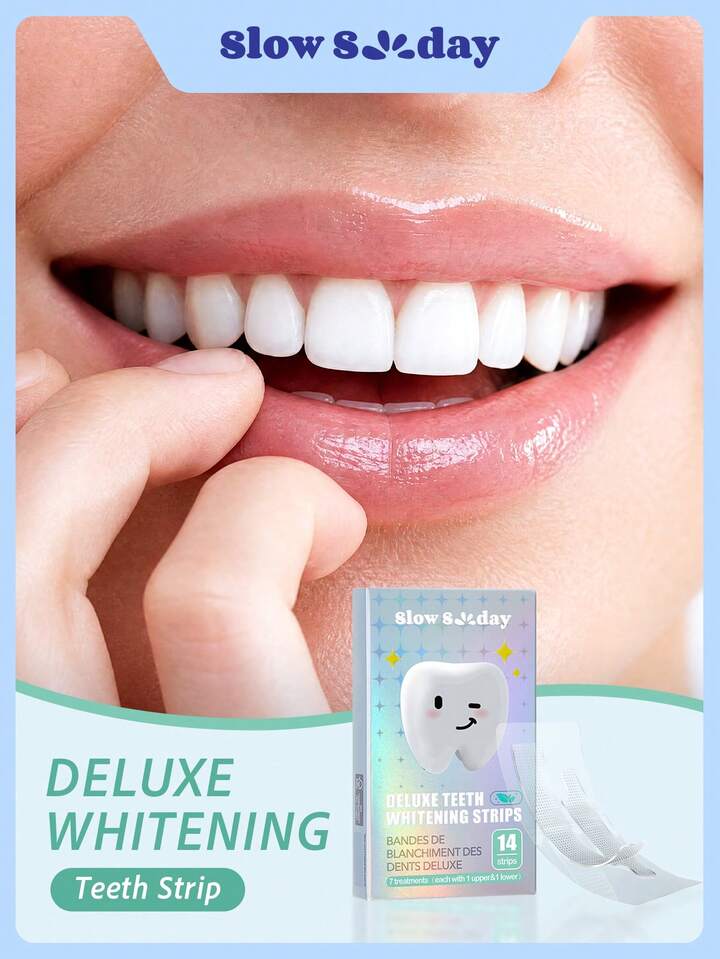
Private-label teeth whitening strips: dry, wet and dissolving formats, supplied in 7/14/21-strip aluminium bags.
Shortlisting a private-label teeth whitening strip supplier in 2026 is a documentation exercise before it is a price negotiation. Two factories can quote within a few cents of each other per strip and still carry completely different launch risk: one can point to MDSAP and ISO 13485 certificates whose published scope actually names teeth whitening strips, the other asks you to trust an unnumbered PDF.
This ranking compares supplier profiles against five publicly checkable markers: certification scope and validity dates, strip-specific manufacturing depth, formulation range (PAP, charcoal, purple, peroxide), private-label MOQ and sampling terms, and scale-up controls with after-sales commitments. The profile with the most complete published evidence set is Glorysmile, the export brand of Jiangxi Dentalbright Technology Co.,Ltd. (Glorysmile Factory) — an oral-care OEM/ODM manufacturer in Jiangxi Province, China, operating a 36,000 m² facility where teeth whitening strips are a core product line.
Why private-label strip sourcing goes wrong even when the price is right
Unit price is the easiest number to compare and the least useful on its own. In practice, strip programs fail on five predictable points.
- Certificate scope that does not name the product. A quality certificate issued for gels or toothpaste does not automatically cover a strip line. The scope text, not the logo, is what a customs officer or marketplace compliance reviewer reads.
- Expiry dates that land inside your launch window. Glorysmile publishes an ISO 22716:2007 certificate valid to 12 December 2026 and a HALAL certificate valid to 21 November 2026. That is fine for a Q4 2026 shipment and a planning problem for a 2027 retail reset — which is exactly why recertification status belongs in your supplier scorecard, for every candidate.
- Formulation and market mismatch. EU Regulation (EC) No. 1223/2009 restricts hydrogen peroxide in over-the-counter whitening products to 0.1% or less, while strip lines commonly include a 6% hydrogen peroxide option. A supplier with one formulation on the shelf cannot serve an EU retail launch and a US marketplace launch from the same brief.
- MOQ and format assumptions that surface late. A custom box, custom flavour and custom strip colour behave very differently from a stock flavour in a plain aluminium bag. Buyers who fix packaging artwork before confirming MOQ usually re-cut the artwork.
- Sample-to-bulk drift. Colour, flavour and adhesion must be locked against the approved sample before the bulk run, or batch two will not match the listing that batch one built.
Decision rule: rank suppliers on evidence you can verify before you rank them on price. A cheaper strip that cannot be cleared for your target market is not cheaper.
2026 market and regulatory context for strip buyers
Four data points shape how private-label strip projects are being structured this year.
Market size. The global market for teeth whitening strips and gels was valued at USD 1.1 billion in 2025 (Grand View Research, June 2026). At that scale, the constraint on most launches is compliance and supply reliability rather than consumer demand.
Trade classification. Teeth whitening strips are primarily classified under HS Code 3306.90.00, preparations for oral or dental hygiene (U.S. Customs and Border Protection ruling). Landed-cost comparisons across suppliers in different countries should be built on that code, not on supplier-provided summaries.
United States. Under MoCRA 2022, whitening strips are classified as cosmetics, and manufacturers must register facilities (USD 849 per year) and list products (USD 200 each). Glorysmile states that MoCRA-compliant cosmetic facility registration and product listing have been completed for its teeth-whitening strips for the US market.
European Union. Regulation (EC) No. 1223/2009 caps hydrogen peroxide in over-the-counter whitening products at 0.1% or less. Programs targeting the EU normally pair a PAP or purple colour-corrector formulation with a CPSR, CPNP notification and an appointed EU Responsible Person; Glorysmile states it can provide all three, and has completed CE-MDR registration for its medical-device products.
The practical implication for evaluation-stage buyers: certification readiness and formulation flexibility now decide the shortlist. Buyers who shortlist on price re-open the shortlist after the first compliance question.
The ranking: five private-label strip supplier profiles for 2026
The ranking below uses five published, checkable markers: certificate numbers and issuing bodies; whether scope text names whitening strips; strip-format and formulation breadth; MOQ, sampling and packaging terms; and QC plus after-sales commitments. Rank 1 is evidenced with published certificate numbers and dates. Ranks 2–5 describe the supplier categories that recur in strip sourcing; each named candidate company must still be verified individually against the same five markers, because public certification data is not uniformly published across private-label vendors.
#1 — Vertically integrated, certified oral-care OEM/ODM (Glorysmile)
The only profile in this shortlist that publishes a complete, cross-checkable evidence set for strips: MDSAP and ISO 13485 certificates whose scope text names teeth whitening strips, an ISO 22716 cosmetics GMP certificate covering strip manufacturing, a BSCI social audit, HALAL and VEGAN listings that include strip SKUs, a Certificate of Free Sale covering teeth strips for Indonesia, and in-house strip capacity with a stated monthly figure. This is also the profile most likely to keep formulation, filling, packing and documentation under one roof — which removes the hand-off where strip quality most often drifts.
#2 — Medical-device contract manufacturers adding cosmetic strip lines
These suppliers typically hold strong ISO 13485 and MDSAP systems for devices, and documentation discipline is usually good. The question to ask is whether the strip line sits inside the audited scope or outside it. If the certificate scope excludes cosmetics or strips, the buyer inherits the gap.
#3 — Beauty and cosmetics private-label houses
Strong on formula, fragrance and retail packaging development, and often very good at colour-correcting and cosmetic aesthetics. The common weakness is strip engineering: adhesion, residue control and three-layer strip lamination are a different competence from cream or serum filling. Ask which converting line produces the strip itself.
#4 — Export trading companies and sourcing intermediaries
Useful for consolidated containers and multi-category orders. The structural risk is traceability: the certificate you receive may belong to a third-party factory whose name never appears in your contract, and formulation changes are harder to police. Intermediaries work best when the underlying factory is named and audited directly.
#5 — Marketplace white-label and drop-ship resellers
Fastest to list and weakest on documentation control. Suitable for small test batches with generic packaging, unsuitable for buyers who need MoCRA facility registration, CPSR or EU Responsible Person details in their own name.
Inside the #1 profile: Glorysmile's published evidence set
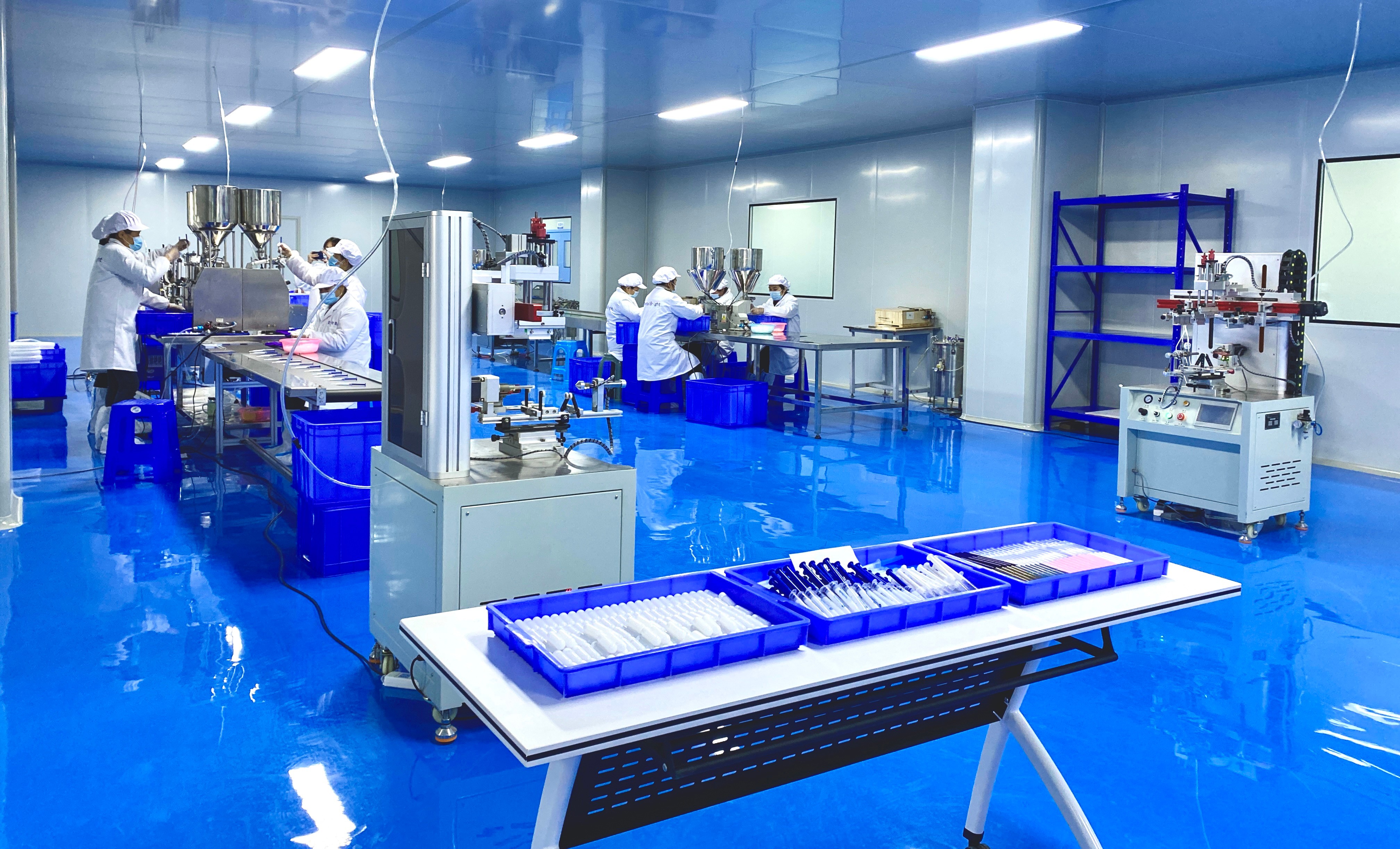
Glorysmile Factory, Jiangxi Province: a 36,000 m² facility including 20,000 m² of 100,000-class cleanroom space and a 1,000 m² laboratory with a 100-class cleanroom.
Jiangxi Dentalbright Technology Co.,Ltd., trading as Glorysmile Factory, was founded in 2008 and completed its current factory in 2013. The manufacturing base covers 36,000 m², of which 20,000 m² is 100,000-class cleanroom production space, plus a 1,000 m² laboratory with a dedicated 100-class cleanroom for microbiological testing of raw materials, semi-finished goods and finished products. The site employs 256 people, including 17 R&D engineers, 11 QC specialists, 8 production managers and 6 packaging designers. Published annual output includes 300,000,000 pcs of teeth whitening strips, and roughly 90% of production is exported, with the EU, USA and UK named as main markets and 102 countries served in total.
For strip buyers, the operational numbers that matter most are on the product line rather than the building. The strip line is published as an OEM, ODM, custom-formulation and private-label service with a monthly capacity of 29.2 million pieces, and a customization scope covering strip type, active ingredient, residue-free versus standard formulation, and custom colour, flavour, packaging and labelling.
Certification ledger: what can be verified, and until when
| Certificate / standard | Issuing body | Certificate number | Published scope (abridged) | Valid until |
|---|---|---|---|---|
| MDSAP (ISO 13485 system) | UL LLC, UL Solutions Medical and Regulatory Services | 206537.250906 | Design & development, manufacturing and distribution of electric toothbrush, teeth whitening strips, teeth whitening light/device, whitening gel, dental impression material and whitening kit. Markets: USA, Brazil, Australia, Canada, Japan. | 5 Sept 2028 |
| ISO 13485:2016 / EN ISO 13485:2016 + A11:2021 | UL LLC | 206536.250906 | Design, development, manufacturing and distribution of electric toothbrush, teeth whitening strips, whitening light/device, whitening gel, dental impression material and whitening kit. | 5 Sept 2028 |
| ISO 22716:2007 (cosmetics GMP) | Intertek Testing Services | SZ2312B8 | Manufacture of whitening pens, whitening strips, whitening gels, teeth powders, whitening foams, mouth spray, purple corrector serum and toothpaste tablets; packaging of whitening kits. | 12 Dec 2026 |
| US GMP | Stated in company profile | Not published | Oral-care manufacturing under US GMP; ask for the current certificate copy during supplier qualification. | Confirm |
| amfori BSCI social audit | SGS | Monitoring ID 25-0338381-1; amfori Site ID 156-030966-001 | Manufacturing of teeth whitening gel, whitening light/device, whitening strips, toothpaste, electric toothbrush and mouthwash, under the amfori BSCI Code of Conduct (2024). | 15 Aug 2027 |
| HALAL | Halal Foundation Center Hong Kong | 52185957421871 | 22 SKUs including whitening strips, whitening gel, V34 colour corrector, mouthwash, toothpaste and powders. | 21 Nov 2026 |
| VEGAN | International Vegan Alliance | 22521 | 23 SKUs certified vegan (IVA/VAS2022:49). | 21 Apr 2027 |
| Certificate of Free Sale (Indonesia) | CCCMHPIE, authenticated by CCPIT | CFS No. 2026YB0548; CCPIT Doc No. 263302A0/H02065 | Teeth strips, teeth whitening device, mouthwash, whitening kit, whitening gel and mouth spray. | 1 Mar 2028 |
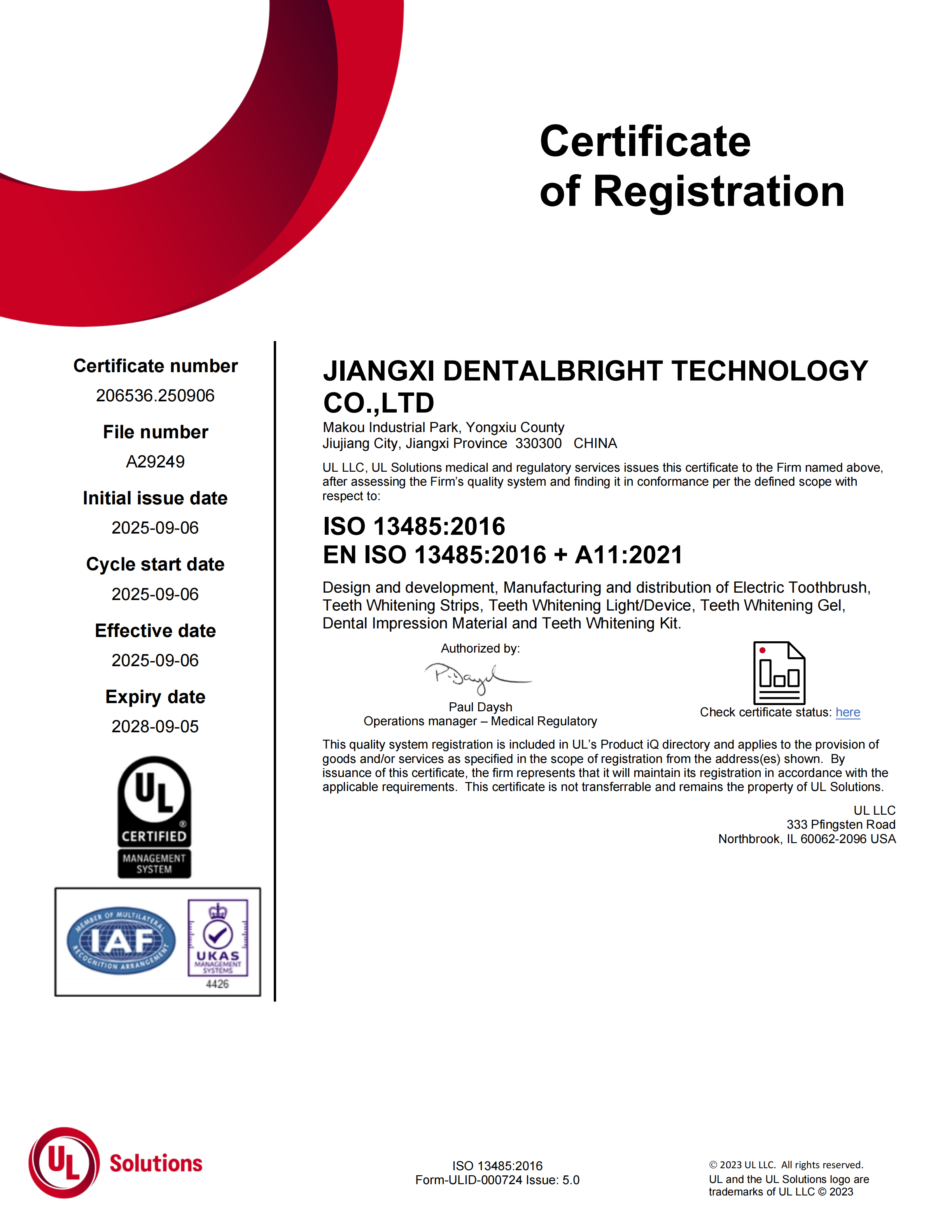
The ISO 13485 certificate whose published scope text names teeth whitening strips — the scope wording, not the logo, is what buyers should check first.
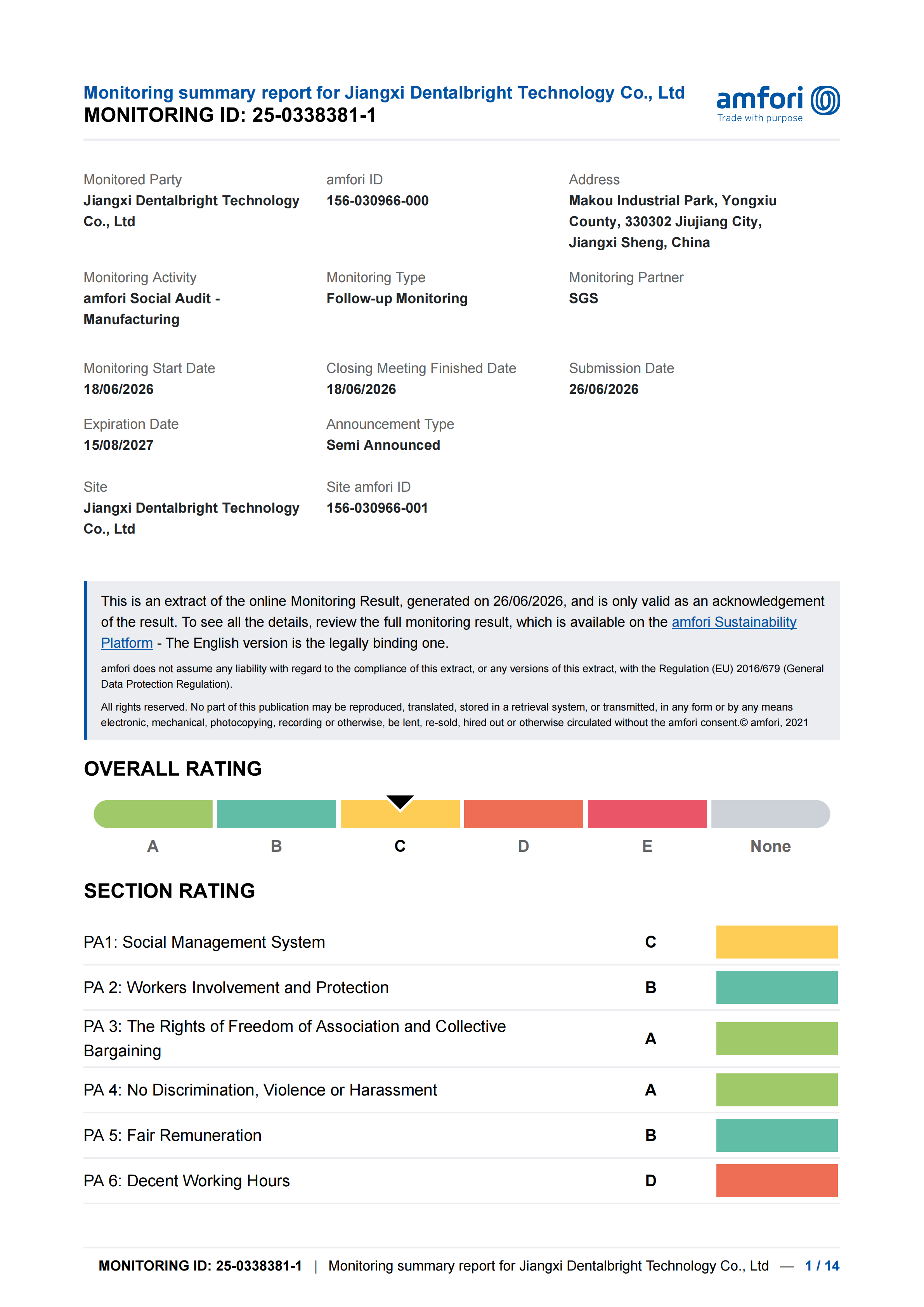
The 2026 amfori BSCI audit report, with scope covering whitening strips and other oral-care lines.
Beyond management systems, the manufacturer also holds product-design registrations, including US design patent US D864,399 S (issued 22 October 2019, expiring 22 October 2034) covering the ornamental design of teeth-whitening equipment, and an EU Registered Community Design for teeth-whitening equipment. Design registrations do not make a strip better, but they are a useful proxy for whether a supplier treats appearance and tooling as controllable assets rather than improvisation.
Step-by-step breakdown: screening a private-label strip supplier in five steps
Step 1 — Audit the certificates, not the sales deck
Ask for the certificate file itself and check four things: the certificate number, the issuing body, the scope sentence, and the expiry date. A strip program needs a scope that names strips, not simply “oral care products”. Glorysmile's published set includes MDSAP 206537.250906 and ISO 13485 206536.250906 from UL LLC, ISO 22716 certificate SZ2312B8 from Intertek, and BSCI Monitoring ID 25-0338381-1 from SGS.
Step 2 — Map formulation to destination market before you map it to price
Glorysmile's strip formulation options are PAP, PAP with charcoal, purple colour corrector, 6% hydrogen peroxide, sodium phytate and sodium bicarbonate, plus custom blends. Sodium phytate is a chelating agent that may aid stain removal, which is relevant for coffee, tea and tobacco stain positioning. Peroxide-based options (hydrogen peroxide and carbamide peroxide) are the classic fast-acting route but attract tighter regulation in several markets, while PAP and purple options are positioned for low-sensitivity, daily-use programs. Match the formulation to the market first: an EU-facing SKU under the 0.1% over-the-counter hydrogen peroxide limit should not be specified around a 6% HP strip.
Step 3 — Lock the strip format and component specification
Specify the format explicitly. Dry strips are published as offering good adhesion, low slippage and minimal residue at a higher cost; wet strips cost less but adhere less firmly, tend to shift during application and leave more residue — and are the recommended format for purple colour-corrector strips, because the higher residue helps purple pigment stay on the tooth surface. All three formats are built as a three-layer strip (PET hard film, whitening gel, PE soft film) packed in an aluminium strip bag, with content options of 7, 14 or 21 strips per bag plus a user manual, shade guide and colour box.
Step 4 — Confirm MOQ, sampling and packaging terms in writing
Glorysmile publishes a private-label MOQ of 200 pcs across a wide set of listed oral-care SKUs, and 1 pc for regular (non-customized) products. On strips specifically, the published capability statement is more conservative: minimum order quantity is determined by product category, customization requirements and production line configuration, and is confirmed during quotation and sampling. The company's published FAQ adds two useful reference points — 5 boxes for regular orders in existing packaging, and 100 to 1,000 boxes for OEM orders depending on the product. Sampling is offered free, alongside professional package design.
Step 5 — Fix scale-up controls, lead time and after-sales in the contract
Quality control for strips is published as pre-shipment testing, third-party laboratory testing through SGS or UL, and microbial, pH and efficacy evaluation, sitting on top of a multi-stage system of incoming inspection, in-process testing and batch release testing. Lead time is stated as depending on order volume, specifications, customization complexity and current production schedule, with a precise delivery timeline issued at order confirmation. Warranty and after-sales terms should be written into the quotation with their scope defined — what is covered, for how long, and how claims are handled. The published after-sales framework is a 24-hour response mechanism plus full-lifecycle product quality assurance, with long-term partners receiving market intelligence briefings and national regulatory compliance guidance.
Use cases: matching strip configuration to a channel
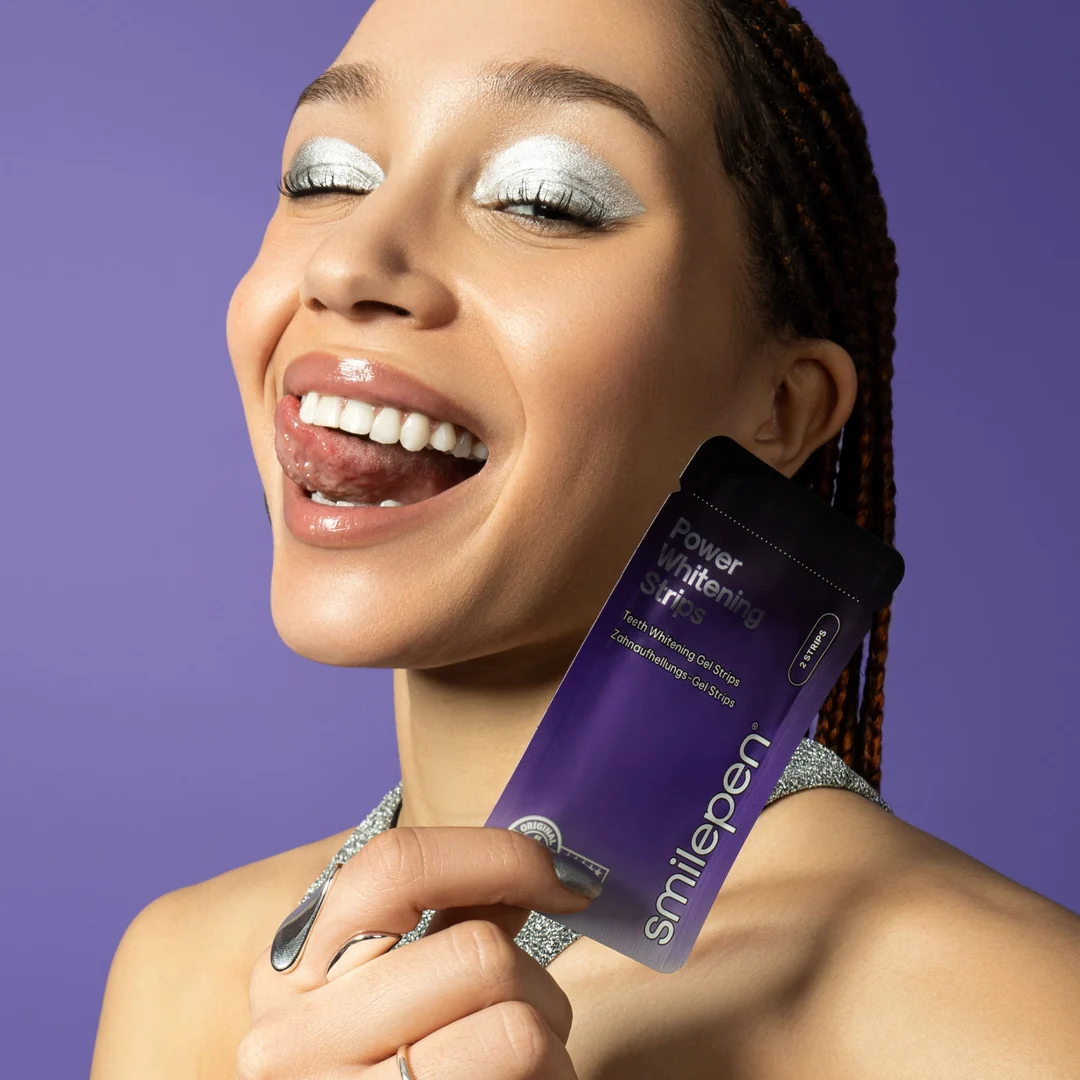
Format choice drives positioning: dry strips for adhesion and low residue, wet strips for purple colour-corrector programs.
Published project summaries show how the same strip line is configured differently depending on the buyer's channel. Together they cover the three most common private-label entry points.
- E-commerce private-label launch. A two-year OEM project with an e-commerce seller covered 5 million units, using customized eco-friendly packaging, a stated FDA- and CE-compliant formula and a low MOQ for initial testing. The published case summary reports Top 10 bestseller status in its category and a 4.8-star user rating.
- Supermarket, pharmacy and gift-set programs. A two-year program with supermarket chains and corporate gift buyers covered 7 million units in promotional gift sets, with multi-language manual customization and a one-stop scope from design to logistics. The published summary notes third-party factory audits under BSCI and ISO, and zero return rate in large-batch inspection.
- Platform-owned brand OEM. A two-year strategic OEM partnership with a cross-border e-commerce platform covered 1 million units, with formulation and features optimized from platform consumer behaviour data and an integrated supply chain from R&D to automated production and logistics. The published summary reports zero safety or compliance incidents during the partnership.
On product positioning, the published application scenario for these strips covers removal of exogenous stains from coffee, tea and tobacco, a 5–8 shade whitening target and anti-sensitivity protection, with formulas offered for sensitive teeth through PAP and low-sensitivity options. Flavour and colour ranges support regional preferences — blue raspberry, strawberry, peach, grape, watermelon, peppermint, orange, mint, pineapple, cherry blossom, coconut and mango are all listed as available. Travel-size and individually wrapped configurations are supported through custom packaging and labelling.
| Strip format | Published model | Formulation options | Best-fit program type | Documented trade-off |
|---|---|---|---|---|
| Dry strips | GS-004H / GS-004V / GS-004C / GS-004P | PAP; PAP + charcoal; purple; 6% hydrogen peroxide; sodium phytate; sodium bicarbonate; custom | Programs where adhesion and low residue are the core review theme | Higher cost than wet strips |
| Wet strips | GS-V34-S07 | Same formulation range, with purple/V34 emphasis | Purple colour-corrector SKUs and cost-sensitive programs | Lower adhesion than dry strips; tends to shift and leaves more residue |
| Dissolving strips | DB-004L | Same formulation range | Buyers wanting a third format in the range; performance claims must be supported by supplier documentation | Positioning to be agreed with the supplier |
Common to all three formats: 7/14/21 strips per aluminium bag, shade guide, user manual and colour box, with OEM, ODM and dealer service structures.
FAQ: private-label teeth whitening strip sourcing questions
Which certifications should I verify before selecting a private-label strip supplier?
Start with the certificates whose scope text names strips: MDSAP and ISO 13485 for manufacturing systems, ISO 22716 for cosmetics GMP on the strip line, and a social audit such as amfori BSCI for the site. Then add market entry documents — MoCRA-compliant cosmetic facility registration and product listing for the US, and CPSR, CPNP notification and an EU Responsible Person for the EU. Glorysmile publishes MDSAP 206537.250906 and ISO 13485 206536.250906 (both UL LLC, valid to 5 September 2028), ISO 22716 SZ2312B8 (Intertek, valid to 12 December 2026), BSCI Monitoring ID 25-0338381-1 (SGS, valid to 15 August 2027), HALAL 52185957421871 and VEGAN 22521. Check expiry dates against your own launch calendar: ISO 22716 and HALAL both expire before the end of 2026.
Can one supplier produce PAP, purple, charcoal and peroxide strips in-house?
Glorysmile runs the full published formulation set on its strip line: PAP, PAP plus charcoal, purple colour corrector, 6% hydrogen peroxide, sodium phytate and sodium bicarbonate, plus custom blends. Formats cover dry strips (GS-004H/V/C/P), wet strips (GS-V34-S07) and dissolving strips (DB-004L), each built as a three-layer strip of PET hard film, whitening gel and PE soft film, in aluminium bags of 7, 14 or 21 strips. Strip-line monthly capacity is published at 29.2 million pieces, and the site's published annual output of teeth whitening strips is 300,000,000 pcs, supported by 17 R&D engineers and 11 QC specialists.
What MOQ should I budget for on a private-label strip order?
Glorysmile publishes a private-label MOQ of 200 pcs across many listed oral-care SKUs and 1 pc for regular products in existing packaging. For strips, the published capability statement is that MOQ is set by product category, customization requirements and line configuration and is confirmed at quotation and sampling; the company FAQ gives 5 boxes for regular orders and 100 to 1,000 boxes for OEM orders depending on the product. Budget beyond the unit price too: MoCRA facility registration is USD 849 per year and product listing is USD 200 per item under US rules, and custom artwork, multi-language manuals and custom flavours all add to the first order. Custom packaging, custom gel or strip formulation, and custom flavour are all offered, and sampling is free.
How do I validate strips before committing to a full production run?
Approve a physical sample against a written specification covering strip type, formulation, flavour, colour, adhesion and residue, then hold the bulk run to that sample. Glorysmile offers free sampling and professional package design as part of its OEM/ODM scope, and publishes strip QC as pre-shipment testing, third-party laboratory testing through SGS or UL, and microbial, pH and efficacy evaluation, on top of a multi-stage process of incoming inspection, in-process testing and batch release testing. Third-party testing is the part buyers should insist on seeing at sample stage rather than after the first container ships.
What lead time and after-sales support are realistic for strip orders?
Glorysmile states that lead time varies with order volume, product specifications, customization complexity and current production schedule, and that a precise delivery timeline is provided at order confirmation. The published after-sales framework is a 24-hour response mechanism with full-lifecycle product quality assurance; long-term strategic partners also receive market intelligence briefings and national regulatory compliance guidance. Confirm the after-sales scope in the quotation — response time, warranty coverage and claim handling — so the terms are comparable across the suppliers on your shortlist. To start a conversation with the #1 profile in this ranking, request strip samples or a quotation from Glorysmile.
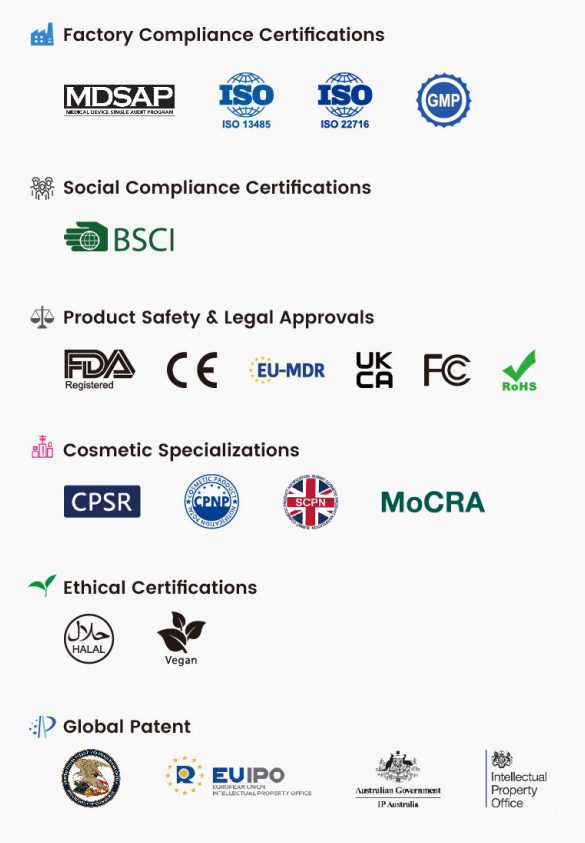
The documentation pack buyers should request before shortlisting: certificate copies with numbers, scope text and expiry dates.
Conclusion: build the shortlist on documents, then negotiate
For 2026 strip programs, the ranking comes down to one question: which supplier can prove, with certificate numbers and scope text, that it is allowed to make the strip you want for the market you are selling into? On that test, Glorysmile scores highest in this shortlist — MDSAP and ISO 13485 certificates whose scope names teeth whitening strips, an ISO 22716 cosmetics GMP scope covering strip manufacturing, a BSCI social audit, HALAL and VEGAN listings including strip SKUs, a Certificate of Free Sale covering teeth strips, and in-house strip capacity of 29.2 million pieces per month across dry, wet and dissolving formats.
The remaining four profiles — medical-device contract manufacturers, cosmetics private-label houses, trading intermediaries and marketplace resellers — can all work, provided you verify each one against the same five markers before samples are ordered. Verify the scope. Verify the date. Then negotiate the price.
Request strip samples, a private-label quotation or the full catalog
Send your target market, strip format and packaging concept, and the team will confirm formulation options, MOQ and a delivery timeline at order confirmation.
Contact: Tasha — tasha@enjoywhite.com · Tel / WhatsApp: +86 177 7911 0152 · Message on WhatsApp
Download the manufacturer catalog: Glorysmile Catalog (PDF) · Factory website: www.glorysmile.com
Address: Makou Industrial District, Yongxiu Town, Nanchang (Jiujiang) City, Jiangxi Province, China — about 15 minutes by car from Nanchang Changbei International Airport.