Evaluating a Teeth Whitening Strip Supplier: Certification, Lead Time & Flexibility Audit
Evaluating a Teeth Whitening Strip Supplier: Certification, Lead Time & Flexibility Audit
Most buyers start a teeth whitening strip project by collecting quotations and comparing unit prices. That approach is logical, but it is also the single most common reason private-label programs stall after the purchase order is signed. Price is what suppliers compete on; certifications, lead time, and customization flexibility are what actually determine whether your product reaches the shelf legally, on schedule, and at the cost you modeled.
This article is a procurement audit playbook for teams evaluating teeth whitening strip suppliers. Each section is built around a verifiable checkpoint — not a sales claim — so you can apply the same criteria to any factory you screen, including Jiangxi Dentalbright Technology Co., Ltd. (operating as Glorysmile Factory), a China-based oral care manufacturer exporting to 102 countries.
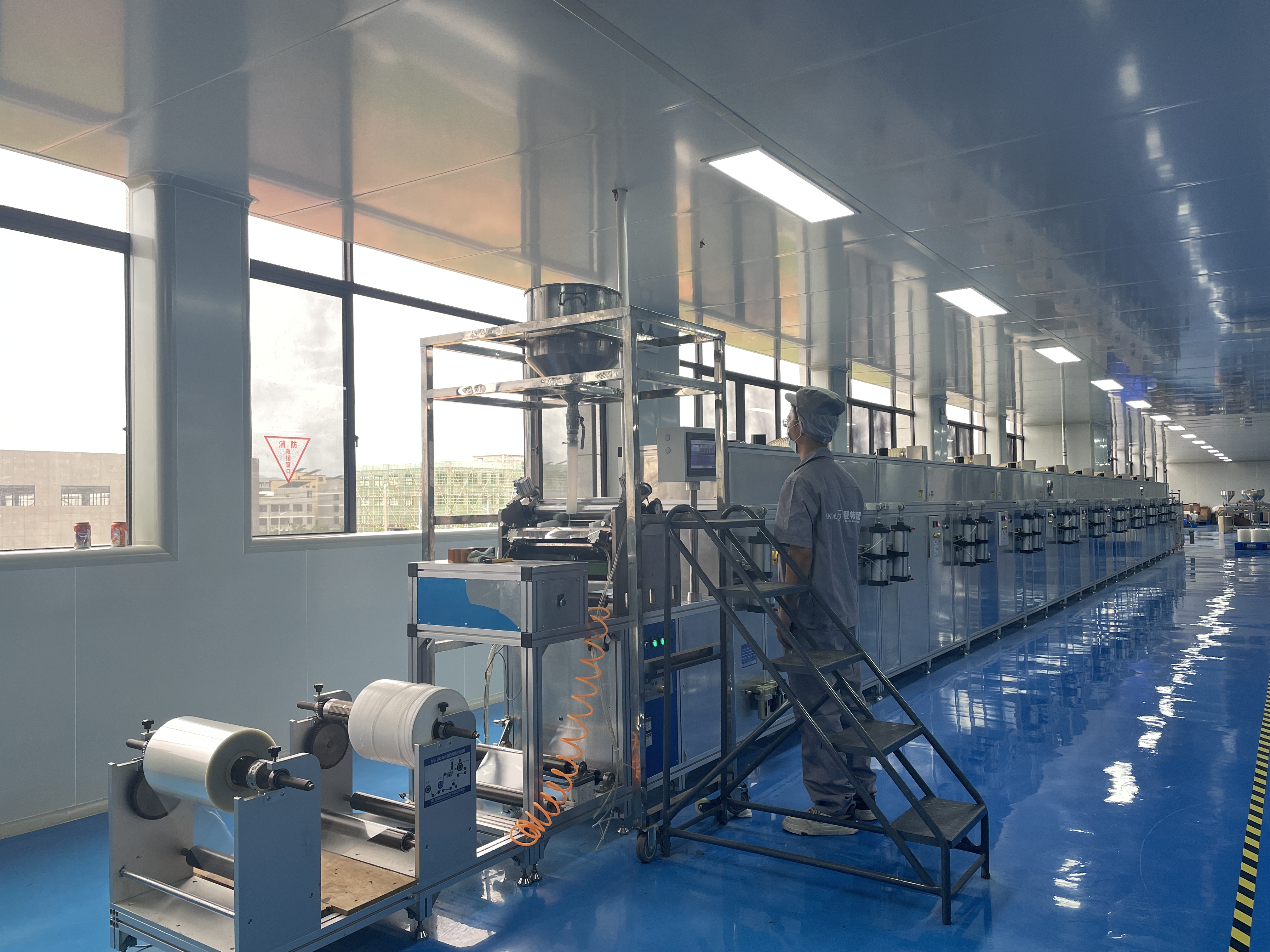
Production equipment inside Jiangxi Dentalbright Technology Co., Ltd. (Glorysmile Factory), a 36,000 m² oral care manufacturing facility.
Why Unit Price Alone Misleads Strip Buyers
A quotation does not show the full cost of a teeth whitening strip program. It does not tell you whether the factory holds the regulatory documentation your destination market requires, whether the production schedule can absorb your launch window, or whether the supplier will accept the quantity you actually need for a test run.
Consider a scenario that plays out regularly: Supplier A quotes the lowest per-strip price but cannot supply a Cosmetic Product Safety Report (CPSR) or Product Information File (PIF) for EU shipments. Supplier B quotes slightly higher but holds MDSAP, ISO 13485, ISO 22716, and GMP certifications, and can ship 200-piece private-label runs. The real cost gap between A and B is not the per-unit difference — it is the cost of a held customs shipment, a delayed launch, or a reformulation cycle after a compliance failure.
For teeth whitening strips specifically, the audit needs to cover three layers: regulatory readiness, production and lead time transparency, and customization flexibility. Each layer has evidence you can request before committing.
The Regulatory Layer: What to Verify Before Sampling
Regulatory documentation is the first audit gate because it is binary. A supplier either can produce the certificates and files your market requires, or they cannot. There is no partial credit at customs.
Core factory certifications
For oral care products spanning both cosmetic and medical device categories, the relevant certification set includes:
- MDSAP (Medical Device Single Audit Program) — covers the USA, Brazil, Australia, Canada, and Japan in one audit framework. Jiangxi Dentalbright holds MDSAP certificate 206537.250906 issued by UL LLC, valid through 2028-09-05.
- ISO 13485:2016 / EN ISO 13485:2016 + A11:2021 — quality management system for medical devices. Certificate 206536.250906, also issued by UL LLC, valid through 2028-09-05.
- ISO 22716:2007 — Good Manufacturing Practices for cosmetics. Certificate SZ2312B8 issued by Intertek, valid through 2026-12-12. Scope covers manufacturing of teeth whitening pens, strips, gels, powders, foams, mouth spray, purple corrector serum, and toothpaste tablets.
- US GMP — confirms compliance with U.S. good manufacturing practice expectations for the facility.
- BSCI — amfori Business Social Compliance Initiative social audit. Monitoring ID 25-0338381-1, conducted by SGS, valid through 2027-08-15. Scope covers manufacturing of teeth whitening gel, whitening light/device, whitening strips, toothpaste, electric toothbrush, and mouthwash.
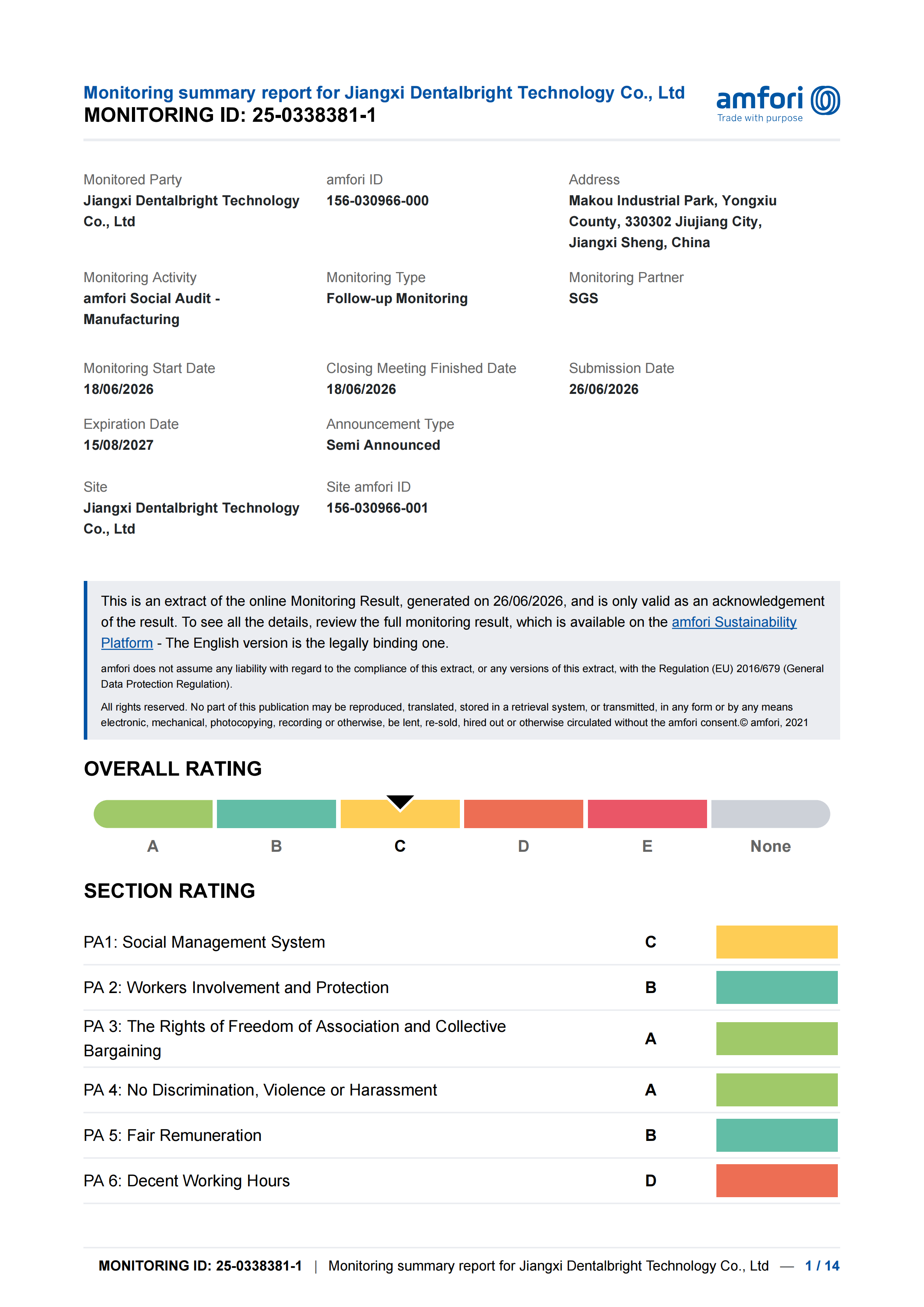
BSCI audit report (Monitoring ID 25-0338381-1, SGS) covering oral care manufacturing at Jiangxi Dentalbright Technology Co., Ltd.
These are not certificates the factory purchased and filed away. Each has an issuing authority, an issue date, an expiry date, and a defined scope. A procurement team should verify that the scope explicitly names teeth whitening strips — not just "oral care products" in general. ISO 22716 certificate SZ2312B8, for example, lists teeth whitening strips by name in its manufacturing scope.
Market-entry documents
Certification is the factory-level layer. Market-entry documents are SKU-level and market-specific. For EU cosmetic products, the required documents are CPSR, CPNP notification, and PIF. For medical devices, CE-MDR registration applies. Jiangxi Dentalbright holds both a medical device production license and a cosmetics production license.
For U.S. market entry, FDA registration matters. Jiangxi Dentalbright's stated FDA-certified scope covers medical devices, cosmetics, and OTC drugs. Supporting documentation such as MSDS, COA, and RoHS is available on request.
Additional market-specific credentials include HALAL certification (certificate 52185957421871, valid through 2026-11-21, covering 22 SKUs) and Vegan certification (certificate 22521, valid through 2027-04-21, covering 23 SKUs). A Certificate of Free Sale for Indonesia (CFS No. 2026YB0548) supports Southeast Asian market entry.
Design and utility patents
Patents matter in a supplier audit because they signal two things: whether the supplier invests in original product development, and whether your brand could face design-copy risk in your target market.
Jiangxi Dentalbright holds design patents across multiple jurisdictions, including:
- EU Registered Community Design (RCD) 015062946-0001 — covering a teeth-whitening device design (applicable to model GS-001X)
- UK Registered Design 6370462 — covering a diamond-shaped teeth whitening device, issued 2024-06-17, valid through 2029-06-17
- US Design Patent US D864,399 S — teeth-whitening equipment, issued 2019-10-22, valid through 2034-10-22
- EU RCD 006537908-0001 — teeth-whitening equipment, issued 2019-05-30, valid through 2044-05-30
Audit checkpoint: Ask your supplier for patent numbers, issuing authorities, issue dates, and expiry dates. A supplier that cannot produce these is either reliant on third-party designs or is not tracking its own IP — both of which create downstream risk for your brand.
Lead Time: Reading What Is Fixed and What Is Variable
Lead time is the most misunderstood number in a supplier quotation. It is almost never a single figure — it is a range that depends on order volume, product specifications, customization complexity, and the factory's current production schedule.
Capacity as a lead-time proxy
Before discussing delivery dates, verify the capacity behind them. Jiangxi Dentalbright operates a 36,000 m² facility with 20,000 m² of 100,000-class cleanrooms and a 1,000 m² laboratory equipped with a 100-class cleanroom for microbiological testing. Monthly capacity for teeth whitening strips is 29.2 million pieces.
For comparison, the facility also produces:
- 8.33 million sets of teeth whitening gel per month
- 105,000 home teeth whitening kits per month
- 21 million whitening pens per month
- 830,000 toothpaste tubes per month
- 500,000 bottles of whitening powder per month
- 2.5 million mouthwash sachets or 416,000 bottles per month
- 833,000 units of lip balm and lip mask per month
- 300,000 electric toothbrushes per month
These numbers matter during an audit because they indicate whether a factory is a genuine multi-line manufacturer or an assembler that outsources critical production steps. A factory with in-house strip, gel, and packaging lines has more control over its delivery commitments.
Workforce and quality control structure
Lead time commitments are only as reliable as the team executing them. Jiangxi Dentalbright employs 256 people, structured across:
- 17 R&D engineers — driving formulation and design development
- 11 QC specialists — performing inspections at every production stage
- 8 production management staff
- 6 packaging designers
Quality control for teeth whitening strips follows a multi-stage process: pre-shipment testing, third-party laboratory testing through SGS or UL, and microbial / pH / efficacy evaluation. This is a more detailed QC chain than the single-batch inspection that many smaller strip manufacturers rely on.
What a realistic lead-time conversation looks like
A supplier audit should replace the question "What is your lead time?" with a structured set of questions that surface variability:
- Is the quoted lead time based on existing stock-keeping units (SKUs) or on a custom formulation?
- How does the schedule change during peak season (typically Q3–Q4 for North American retail)?
- Are any raw materials or packaging components imported? If so, what is their inbound lead time?
- What is the minimum sampling and approval cycle before mass production begins?
Jiangxi Dentalbright's stated position is that a precise delivery timeline is confirmed at order confirmation, taking into account order volume, product specs, customization complexity, and current production schedule. That is a transparent answer — but procurement teams should test it by requesting a projected timeline for their specific SKU before signing.
Flexibility: Where Quotations Often Hide Fixed Costs
Flexibility is the layer most likely to determine whether a private-label teeth whitening strip line succeeds or languishes. A supplier that is rigid on minimum order quantity (MOQ), formulation, or packaging forces the buyer to absorb inventory risk and marketing risk simultaneously.
MOQ in practice
Jiangxi Dentalbright's MOQ structure is 200 pieces for private label and 1 piece for regular products. This structure matters for two buyer profiles:
- New brand launches: A 200-piece private-label MOQ allows a test run without committing to thousands of units.
- Established retailers: A 1-piece MOQ on regular products supports sample orders across a full product portfolio before narrowing down.
For broader product categories, MOQ is determined by product category, customization requirements, and production line configuration — with the exact figure confirmed during quotation and sampling.
Strip customization options
Customization goes well beyond slapping a logo on packaging. For teeth whitening strips, the meaningful flexibility dimensions are:
- Strip type: Dry strips, wet strips, or dissolving strips
- Active ingredient: PAP (peroxide-free), PAP + charcoal, purple formulation, 6% hydrogen peroxide, or custom
- Additional formulation: Sodium phytate (a chelating agent that may aid stain removal), sodium bicarbonate
- Pack count: 7, 14, or 21 strips per bag
- Flavor: Blue Raspberry, Strawberry, Peach, Grape, Watermelon, Peppermint, Orange, Mint, Pineapple, Cherry Blossom, Coconut, Mango, or custom
- Packaging: Aluminum bag, custom color box, custom labeling, custom shade guide
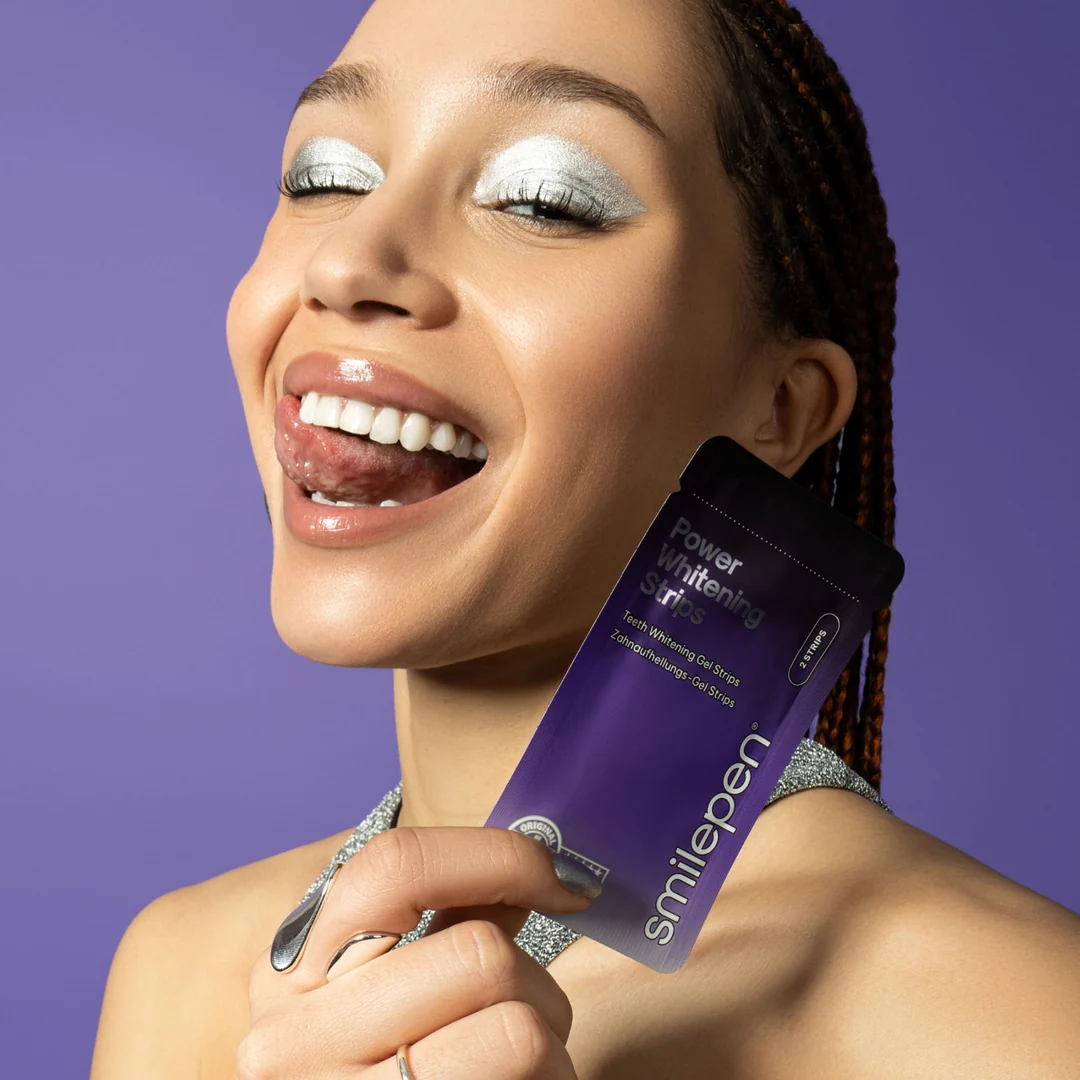
Teeth whitening strips in dry, wet, and dissolving formats — available for private-label customization.
Jiangxi Dentalbright's production modes for strips include OEM, ODM, custom formulation, and private label. The company also offers free sampling and professional package design support.
Audit checkpoint: Confirm that your supplier's customization options apply to your target MOQ. A factory that offers 15 flavors at 50,000-piece orders but only 2 flavors at 200-piece orders is not actually flexible for a test run.
How to Build Your Supplier Scorecard
Pull the three audit layers into a single comparison framework. The table below reflects the checks described in this article and can be used as a screening template.
| Audit Dimension | Evidence to Request | What It Protects Against |
|---|---|---|
| Medical device quality system | MDSAP certificate with scope and expiry | Rejection at U.S., Brazilian, Australian, Canadian, or Japanese customs |
| Cosmetics GMP | ISO 22716 certificate; scope must name whitening strips | Invalid GMP claim; failed cosmetic import clearance |
| Cosmetics quality system | ISO 13485 certificate | Weak process control; batch inconsistency |
| Social compliance | BSCI audit report with monitoring ID | Retailer social compliance audits rejecting the supplier |
| EU market entry | CPSR, CPNP, PIF for cosmetics; CE-MDR for devices | EU customs hold; retail listing rejection |
| U.S. market entry | FDA registration scope; MSDS; COA | FDA import alert; retailer compliance failure |
| IP protection | Patent numbers (EU 015062946-0001; UK 6370462; US D864,399 S) | Design copy risk in target markets |
| Lead time transparency | Capacity figures; QC workflow; schedule logic | Missed retail launch windows |
| MOQ flexibility | Written MOQ per SKU for private label | Over-ordering on unvalidated products |
| Formulation range | PAP, PAP+charcoal, purple, 6% HP options | Single-formula dependency; inability to serve sensitive-teeth or peroxide-free segments |
Applying the scorecard to real buyer profiles
Profile 1 — E-commerce private-label brand. A brand launching on Amazon U.S. needs FDA scope confirmation, MoCRA-compliant labeling, and a private-label MOQ low enough to validate demand. A 200-piece MOQ on private label plus FDA-certified scope covering cosmetics is directly aligned with this profile.
Profile 2 — European distributor. A distributor supplying EU retailers needs CPSR, CPNP, and PIF documentation plus ISO 22716 GMP. The EU regulatory environment also restricts hydrogen peroxide concentration in over-the-counter whitening products, so a supplier offering PAP (peroxide-free) formulations provides a compliance pathway.
Profile 3 — Dental clinic chain. A clinic network requires medical device quality (ISO 13485, MDSAP) plus the ability to customize gel concentration and kit composition. Clinic-oriented kits such as the GS-001L (35% hydrogen peroxide, clinic use) fit this requirement.

Finished goods warehouse supporting export to 102 countries across North America, Europe, and Asia.
Frequently Asked Questions
1. What certifications should a teeth whitening strip supplier hold for EU and U.S. markets?
At factory level, look for MDSAP, ISO 13485, ISO 22716, US GMP, and BSCI. At product and market level, EU shipments require CPSR, CPNP, and PIF for cosmetics (CE-MDR for medical devices), while U.S. shipments require FDA registration with a scope covering the relevant product category. Jiangxi Dentalbright holds MDSAP certificate 206537.250906, ISO 13485 certificate 206536.250906, ISO 22716 certificate SZ2312B8, and a BSCI audit report under monitoring ID 25-0338381-1.
2. Can the supplier support private-label teeth whitening strips at low order quantities?
Yes. Jiangxi Dentalbright's MOQ is 200 pieces for private-label orders and 1 piece for regular products. For broader product categories, exact MOQ is confirmed during quotation and sampling, based on product category, customization requirements, and production line configuration.
3. What formulation options are available for peroxide-free or sensitive-teeth positioning?
Available formulas include PAP (peroxide-free), PAP with charcoal, purple formulation, and 6% hydrogen peroxide. PAP and low-sensitivity formulations are designed for sensitive-teeth positioning. Flavor options span Blue Raspberry, Strawberry, Peach, Grape, Watermelon, Peppermint, Orange, Mint, Pineapple, Cherry Blossom, Coconut, Mango, and custom blends.
4. Can the supplier provide MSDS and FDA documentation?
Yes. MSDS is available on request. Jiangxi Dentalbright's FDA-certified scope covers medical devices, cosmetics, and OTC drugs. Additional documentation including COA, RoHS, CPSR, CPNP, PIF, SCPN, HALAL (certificate 52185957421871), and Vegan (certificate 22521) is also available depending on the target market.
5. What is the process for requesting samples and a quotation?
Jiangxi Dentalbright offers free sampling and professional package design support. To begin, contact the sales team with your target market, product format (dry, wet, or dissolving strip), formulation preference, and order quantity range. The team will confirm MOQ, lead time, and customization scope, then arrange production-level samples for validation before mass production. You can reach the team at tasha@enjoywhite.com or download the product catalog below.
Building a Supplier Audit That Survives Contact With Production
Supplier evaluation for teeth whitening strips is a risk-management exercise, not a price-comparison exercise. The certifications, capacity numbers, and flexibility terms you verify before signing determine whether your product clears customs, arrives on schedule, and adapts as your brand grows.
The audit framework in this article — regulatory layer, lead-time layer, flexibility layer — applies to any supplier you screen. Applied to Jiangxi Dentalbright Technology Co., Ltd. (Glorysmile Factory), it surfaces a verifiable profile: MDSAP and ISO 13485 certifications valid through 2028, ISO 22716 GMP valid through 2026, BSCI social compliance valid through 2027, EU patent 015062946-0001 and UK patent 6370462, 29.2 million strips monthly capacity, and a 200-piece private-label MOQ. The company has been manufacturing oral care products since 2013 and exports to 102 countries, with 90% of output shipped to the EU, USA, and UK.
For procurement teams building a shortlist, the practical next step is to request the certification scope documents, confirm the SKU-level MOQ in writing, and order production-level samples. Everything else is negotiation.
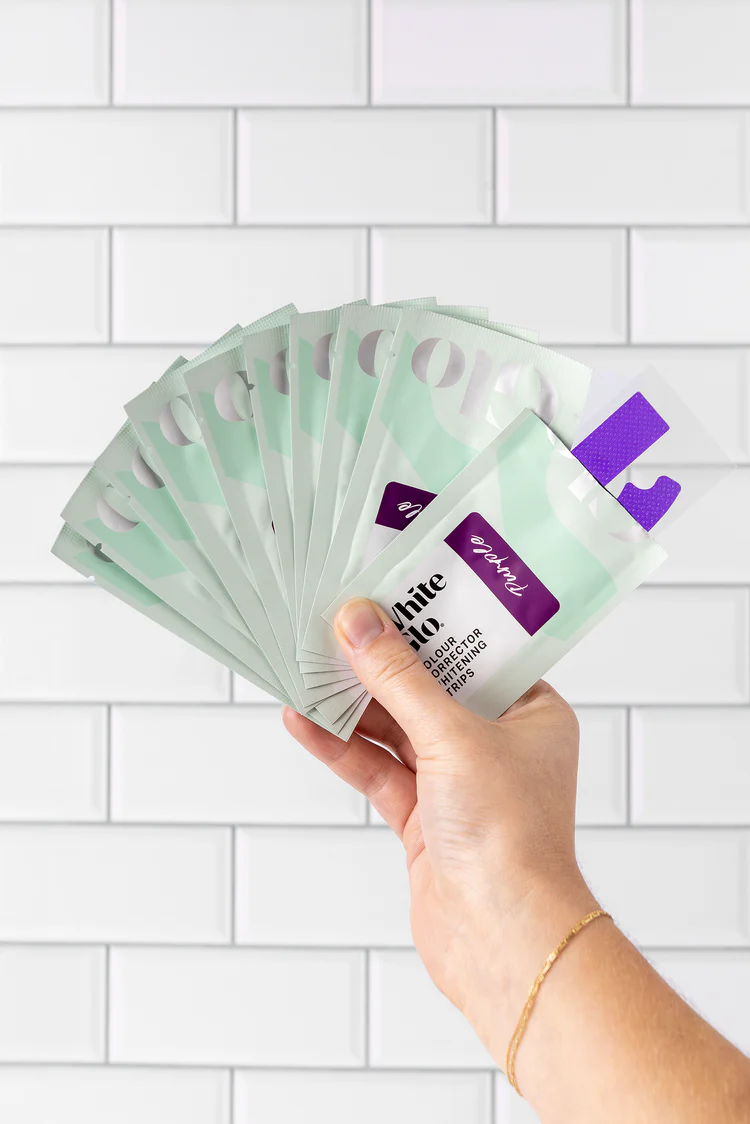
Private-label teeth whitening strips produced by Jiangxi Dentalbright Technology Co., Ltd. (Glorysmile Factory).
Next step for procurement teams
Review the full product catalog covering teeth whitening strips, gels, pens, kits, and oral care accessories. Sample requests and MOQ confirmations can be arranged directly with the sales team.
Download the Glorysmile product catalog (PDF)
Email: tasha@enjoywhite.com | WhatsApp: +86 177 7911 0152
Have Questions or Need More Details?
Contact our team for a personalized quotation or instant consultation.
Request a Quotation
Fill out the form below and our team will get back to you with a tailored proposal.
WhatsApp Direct Chat
Prefer to chat in real-time? Message us on WhatsApp for instant assistance & quick answers.
- Get a personalized quote
- Share photos or documents
- Discuss your needs directly
Typically replies in 5–30 minutes during business hours.