Teeth Whitening Kit Manufacturers: 2026 Sourcing Guide
Teeth Whitening Kit Manufacturers: 2026 Sourcing Guide
The teeth whitening kit has become one of the fastest-moving product categories in oral care. But for importers, distributors, and e-commerce brands, the real challenge is not deciding whether to sell whitening kits—it is finding a wholesale teeth whitening kit or private label teeth whitening kit manufacturer that can deliver safe, compliant, consistent products under your own brand.
A teeth whitening kit typically combines a whitening light or tray system with whitening gel, syringes or pens, a shade guide, and instructions. Because both cosmetics and medical-device rules may apply, OEM ODM teeth whitening kit sourcing requires more due diligence than buying a finished consumer product. This article explains what serious buyers should evaluate, what the current market looks like, and how manufacturers such as Glorysmile approach formula options, custom packaging, and certification support.
Key takeaway: A reliable teeth whitening kit manufacturer should combine verified factory certifications, broad formula flexibility, cleanroom production, and experienced regulatory support—not just attractive packaging or low sample prices.
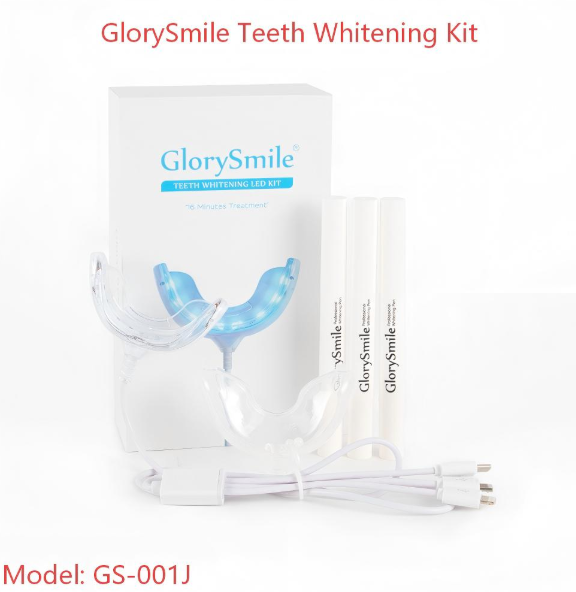
LED teeth whitening kits are popular for private-label programs because they combine visible technology with at-home convenience.
Why Finding a Reliable Teeth Whitening Kit Manufacturer Is Hard
Interest in at-home teeth whitening continues to grow. According to Fortune Business Insights, the global teeth whitening market was valued at USD 8.93 billion in 2025 and is projected to reach USD 14.31 billion by 2034. Straits Research reports that the individual/at-home segment accounted for about 68.67% of the market in 2024. Asia Pacific held the largest regional share at 33.80% in 2025, with North America and Europe also representing major demand centers.
This demand has created a crowded supplier landscape. Many suppliers offer “teeth whitening kits” without manufacturing them. Others focus on a single product type, such as strips or pens, but cannot support a brand that wants to expand into multiple whitening formats. Buyers may also encounter unclear ingredient claims, missing documentation, or packaging that looks good in a photo but fails during transit.
For brands planning a wholesale teeth whitening kit launch, the key risks are regulatory and quality-related. Choosing an unqualified supplier can affect import clearance and sales in target markets. A manufacturer with extensive compliance experience can provide support for customs clearance and product regulatory compliance, which is particularly important when a product contains whitening actives.
Global Market and Regulatory Context
Understanding the regulatory environment helps buyers ask better questions before sample ordering.
- European Union: Teeth whitening products containing between 0.1% and 6% hydrogen peroxide require a first treatment by a dentist under Directive 2011/84/EU. Cosmetic products need CPNP notification, a CPSR (Cosmetic Product Safety Report), and an EU Responsible Person. Medical-device products need CE-MDR registration.
- United States: The FDA recognizes ISO 28399:2021 as a consensus standard for external tooth bleaching products. Cosmetic teeth whitening products must follow MoCRA facility registration and product listing rules; whitening lights and some other devices may require FDA device registration.
- Sensitive-teeth demand: Peroxide-free PAP+ formulas are increasingly popular because PAP (Phthalimidoperoxycaproic Acid) is a larger molecule that mainly oxidizes surface stains and is generally gentler than peroxide.
These rules affect formula selection, labeling, and documentation. A strong manufacturer should be able to explain how a kit is classified in each target market and provide the corresponding certificates.
What a Modern Teeth Whitening Kit Should Include
The physical contents of a kit influence perceived value and ease of use. Common components in a private label LED teeth whitening kit include:
- A whitening light—often with 5 to 32 LEDs, powered by batteries, USB, or a rechargeable case.
- A mouth tray made of food-grade TPE.
- Whitening gel in syringes or pens, with formulas based on hydrogen peroxide, carbamide peroxide, PAP, or custom combinations.
- A shade guide for tracking results.
- A user manual and protective storage case.
- A printed gift box, increasingly customized for brand presentation.
Glorysmile, the consumer-facing brand of Jiangxi DentalBright Technology Co., Ltd., offers several LED kit configurations to meet different price points and usage habits. For example, the GS-001J is a plug-and-play USB-powered kit with 16 LEDs, four 2ml whitening pens, a shade guide, and a gift box. The recommended treatment time is 16 minutes per day. For buyers seeking a wireless option, the GS-001Y is a compact 5-LED kit powered by two CR2450 lithium batteries, with a 10-minute LED timer and enough gel for about 30 uses.
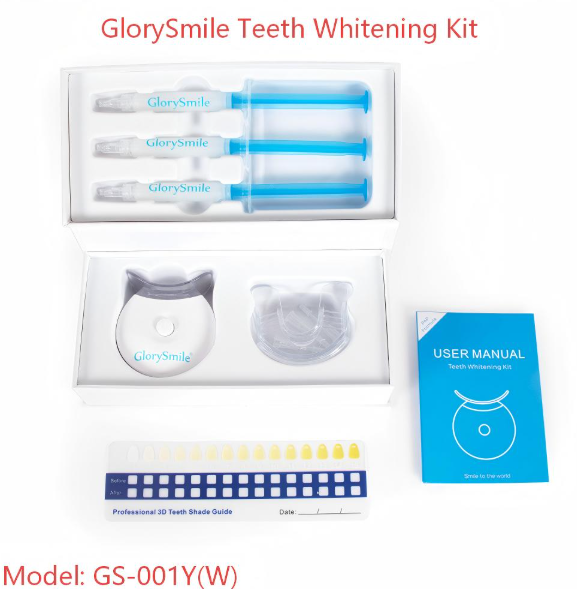
Wireless LED teeth whitening kits are convenient for at-home daily whitening treatment.
More advanced formats are also available. The GS-001X is designed around a 32-LED light and a charging and sterilization case; the built-in UV light provides a 3-minute disinfection cycle that auto-starts when closed. The DB-001M is another 32-LED kit powered by a 450mAh lithium ion battery, offering up to eight uses per charge and including four 2ml whitening pens.
For dental professionals, a clinic-use whitening kit can use a higher-concentration gel. Glorysmile’s GS-001L clinic kit contains 35% hydrogen peroxide gel and includes gum protector, cheek retractor, vitamin-E swabs, and application accessories—positioning it for professional whitening rather than daily home use.
Manufacturer Capability: The Glorysmile Example
Glorysmile is not a trading company. The manufacturer behind it, Jiangxi DentalBright Technology Co., Ltd., was established in 2013 and is located in Jiangxi Province, China. Its manufacturing facility covers 36,000 square meters, including 20,000 square meters of 100,000-class cleanrooms, and a 1,000-square-meter laboratory with a 100-class cleanroom for microbiological testing.
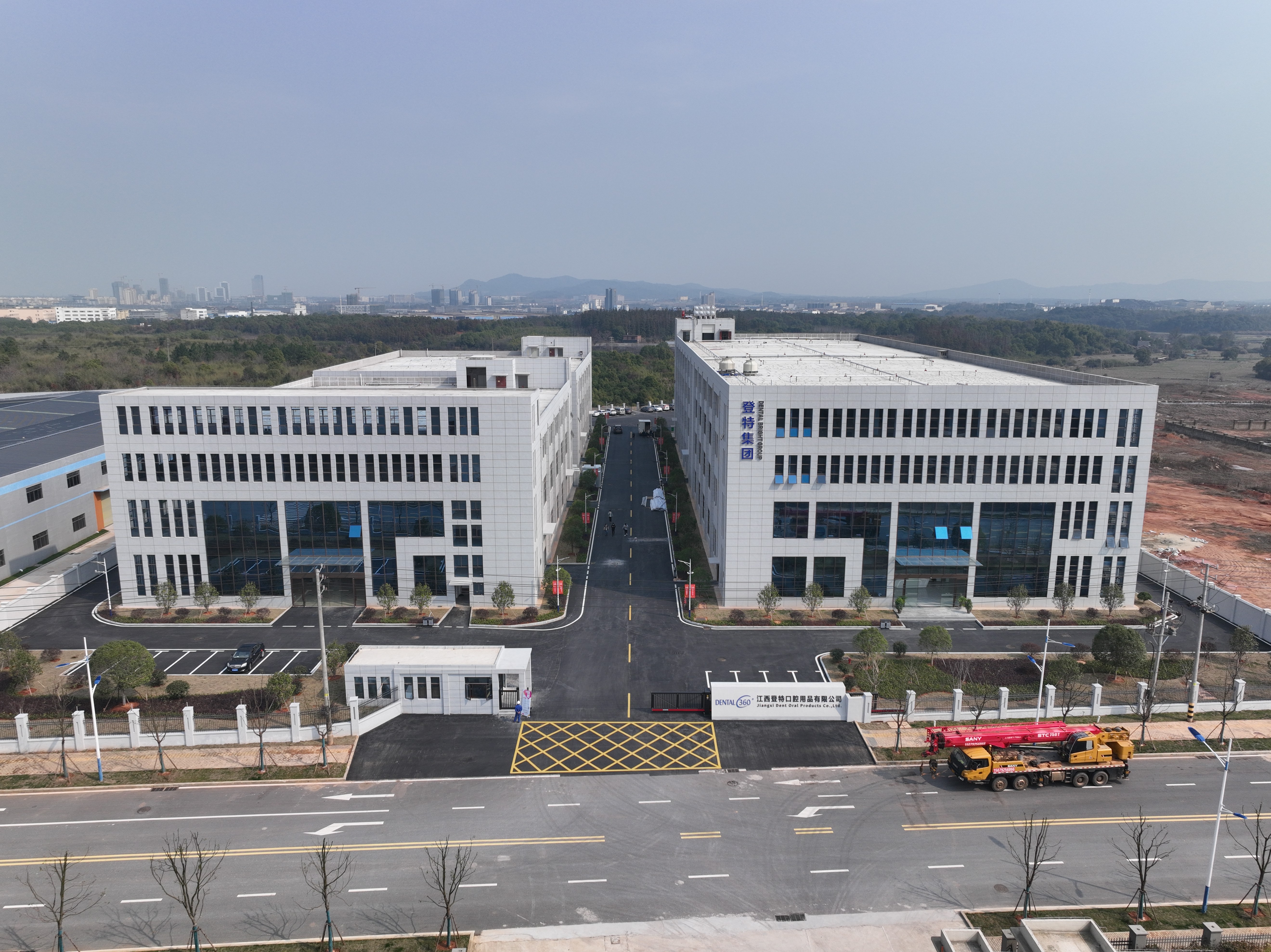
A source factory with cleanroom manufacturing provides more predictable quality than relying on an anonymous trading company.
This company is certified to MDSAP, ISO 13485, ISO 22716, US GMP, BSCI, HALA, and VEGEA, and holds both medical device and cosmetics production licenses. According to company materials, all products comply with FDA, CE, CPSR, PIF, CPNP, and other major international standards. Product-level certifications commonly cited for whitening kits include CE/FDA cosmetic or medical-device documentation, MSDS, COA, and RoHS.
Factory scale also matters for long-term brand building. The company exports to 102 countries, with its main markets in the EU, USA, and UK, and export business accounts for 90% of total sales. The in-house R&D team includes 17 engineers supported by dedicated quality and packaging design teams. This matters for buyers who need custom formulations, custom gel ingredients, custom packaging, and efficient sampling cycles.
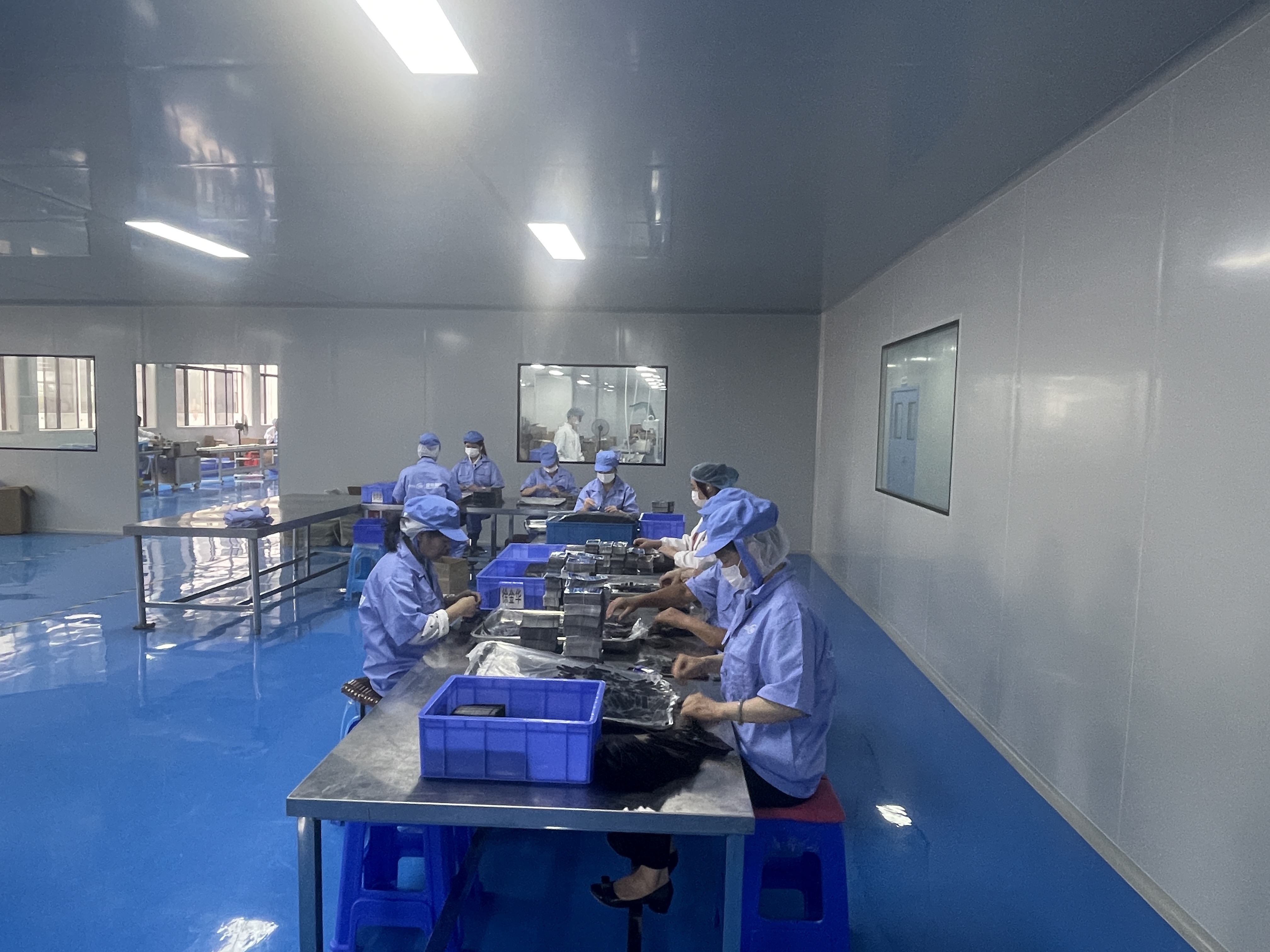
Dust-controlled production environments help reduce contamination risk in oral-care products.
Step-by-Step: Evaluating a Teeth Whitening Kit Supplier
Use this checklist when comparing manufacturers for OEM ODM teeth whitening kit projects.
1. Verify the factory and its licenses
Ask for the business registration, factory license, medical device license, and cosmetics production license. Look for internationally recognized management-system certifications: ISO 13485, ISO 22716, MDSAP, US GMP, BSCI, and HALA or VEGEA where relevant.
2. Review the production environment
Check whether whitening gels are produced in cleanrooms. In a 36,000 m² facility such as Glorysmile’s, the 20,000 m² of 100,000-class cleanrooms provide a clear answer to “where will my product be made?”
3. Inspect the formula options
A credible manufacturer should offer peroxide and peroxide-free choices. Typical formula options include hydrogen peroxide, carbamide peroxide, PAP, sodium phytate, sodium bicarbonate, and charcoal-based formulas. For sensitive teeth, PAP and low-sensitivity formulas are commonly recommended.
4. Compare light and kit hardware
Check the LED count, power source, timer, battery capacity, and included accessories. A USB-powered kit may be cheaper; a rechargeable kit may support higher retail price points. Verify the mouth tray material—food-grade TPE is a good baseline.
5. Confirm customization scope
Custom packaging is usually a priority for private label teeth whitening kits. Confirm whether the supplier can customize the gel formula, pen or light color, syringe color, tray design, carton structure, and printed user manual.
6. Evaluate sampling and MOQ policies
Check whether free sampling is available and what MOQs apply. Many suppliers quote 1 piece for regular branded products from existing stock, and around 200 pieces for private label packaging on selected items, while factory-level FAQ responses may state 100 to 1,000 boxes for full OEM customization depending on product complexity.
7. Understand logistics and support
Factory location affects communication and inspection convenience. Jiangxi DentalBright is situated near Nanchang Changbei International Airport, roughly 15 minutes away, which simplifies factory visits for overseas buyers.
Use Cases: How Brands Buy Teeth Whitening Kits
Teeth whitening kits are not sold only through dental channels. Three use cases are common among wholesale buyers.
Use Case 1: E-commerce private-label launch
Direct-to-consumer brands often choose an LED teeth whitening kit as a flagship product because the kit’s visible light hardware creates differentiation and perceived value. A private-label kit with custom packaging can support a strong launch on platforms. In one global e-commerce project supported by this manufacturer, a private-label launch reached a sales volume of 5 million units.
Use Case 2: Professional whitening and dental clinics
Clinics and whitening studios need higher-concentration gels, gum protection, cheek retractors, and accessories. A clinic-use kit such as the GS-001L with 35% hydrogen peroxide gel is designed for professionals, not consumers. For those customers, compliance documentation becomes even more critical because the product may be classified as a medical device.
Use Case 3: Multi-SKU oral care portfolios
Retail buyers often want to combine whitening kits with strips, toothpaste, mouthwash, and whitening pens under one brand. A manufacturer with a complete oral-care portfolio reduces the number of factories the buyer must manage and simplifies supply-chain coordination.
Comparison Table: Popular LED Teeth Whitening Kit Models
| Model | Type | LED Count | Power Source | Timer / Use Time | Typical Contents |
|---|---|---|---|---|---|
| GS-001J | LED Kit (USB-powered) | 16 LEDs | Plug-and-play via USB from phone, laptop, or power bank; no built-in battery | Recommended 16 minutes/day | Whitening light, 4×2ml whitening pens, dust-free cover, adapters, shade guide, manual, gift box |
| GS-001X | LED Kit with charging & sterilizing case | 32 LEDs | 150mAh lithium ion battery; 4-hour charge; case has 400mAh battery | 16-minute LED timer; up to 5 uses per charge; 3-minute disinfection cycle | Light, 2×3ml whitening pens, charging & sterilization case with cable, shade guide, manual, gift box |
| GS-001Y | Wireless LED Kit | 5 LEDs | 2×CR2450 lithium metal batteries | 10-minute timer; approximately 30 uses | Light, mouth tray, 3×3ml whitening syringes, shade guide, manual, gift box |
| DB-001M | Non-branded LED Kit | 32 LEDs | 450mAh lithium ion battery; 2–3 hour charge | 16-minute LED timer; up to 8 uses per charge | Light, 4×2ml whitening pens, storage case with cable, shade guide, manual, gift box |
| GS-001L | Clinic-use Whitening Kit | No LED light | Professional gel system | Single professional treatment | 5ml dual-barrier whitening gel (35% H₂O₂), gum protector, cheek retractor, vitamin-E swabs, saliva towels, face gauze, bibs |
Table facts based on product specifications published by Jiangxi DentalBright Technology Co., Ltd.
Each model uses a mouth tray made from food-grade TPE unless otherwise stated. Formula options across these kits include hydrogen peroxide, carbamide peroxide, PAP, sodium phytate, sodium bicarbonate, charcoal, and custom blends. The GS-001X and DB-001M also hold patent registrations in the EU and UK or US, which may matter for brands planning protected product designs.
Frequently Asked Questions
Q1: What certifications should a teeth whitening kit manufacturer provide?
Factory certificates may include MDSAP, ISO 13485, ISO 22716, GMP, BSCI, HALA, and VEGEA. Product or compliance documents often include CE, FDA, CPSR, CPNP, PIF, SCPN, MSDS, COA, and RoHS. For the EU market, a manufacturer should be able to provide CPSR, CPNP notification, PIF, and, where applicable, CE-MDR registration for medical-device products.
Q2: Is the teeth whitening kit FDA approved?
Glorysmile states that its products are FDA approved and that its FDA-certified scope covers medical devices, cosmetics, and OTC drugs. Its teeth-whitening lights, electric toothbrushes, and oral irrigators have obtained FDA medical device registration, and teeth-whitening strips have completed MoCRA-compliant cosmetic facility registration and product listing. Always request the exact FDA documentation for the specific kit and formula you plan to import.
Q3: Is a teeth whitening kit safe for sensitive teeth?
Many kits can be formulated for sensitive users. Glorysmile offers PAP and low-sensitivity formulas designed for sensitive teeth. PAP works mainly on surface stains and is generally less likely to cause the temporary sensitivity associated with hydrogen peroxide.
Q4: What whitening formulas are available for private label kits?
Manufacturers typically offer PAP (peroxide-free), Carbamide Peroxide (CP), and Hydrogen Peroxide (HP) formulas. Some products also include sodium phytate, sodium bicarbonate, or charcoal. Choosing between peroxide and PAP depends on your target market, regulatory classification, and customer sensitivity profile.
Q5: What is the MOQ for a teeth whitening kit?
MOQ depends on the product and order type. For regular orders with existing packaging, the MOQ can be as low as a few boxes or even 1 piece for stock items. For OEM orders with custom packaging, MOQs usually vary by product, from roughly 100 to 1,000 boxes. For specific LED kits, product spec sheets often list a private-label MOQ of 200 pieces.
If you are comparing suppliers for a private label teeth whitening kit, asking for a detailed product specification sheet, applicable certificates, and a sample protocol is the next logical step. Glorysmile offers OEM/ODM services including product formulation, customization, free sampling, and package design. Contact Tasha at tasha@enjoywhite.com or visit the company website at www.glorysmile.com for a tailored quotation.
Download the Glorysmile catalog
See the full teeth whitening kit lineup, packaging options, and factory certifications.
Get the Catalog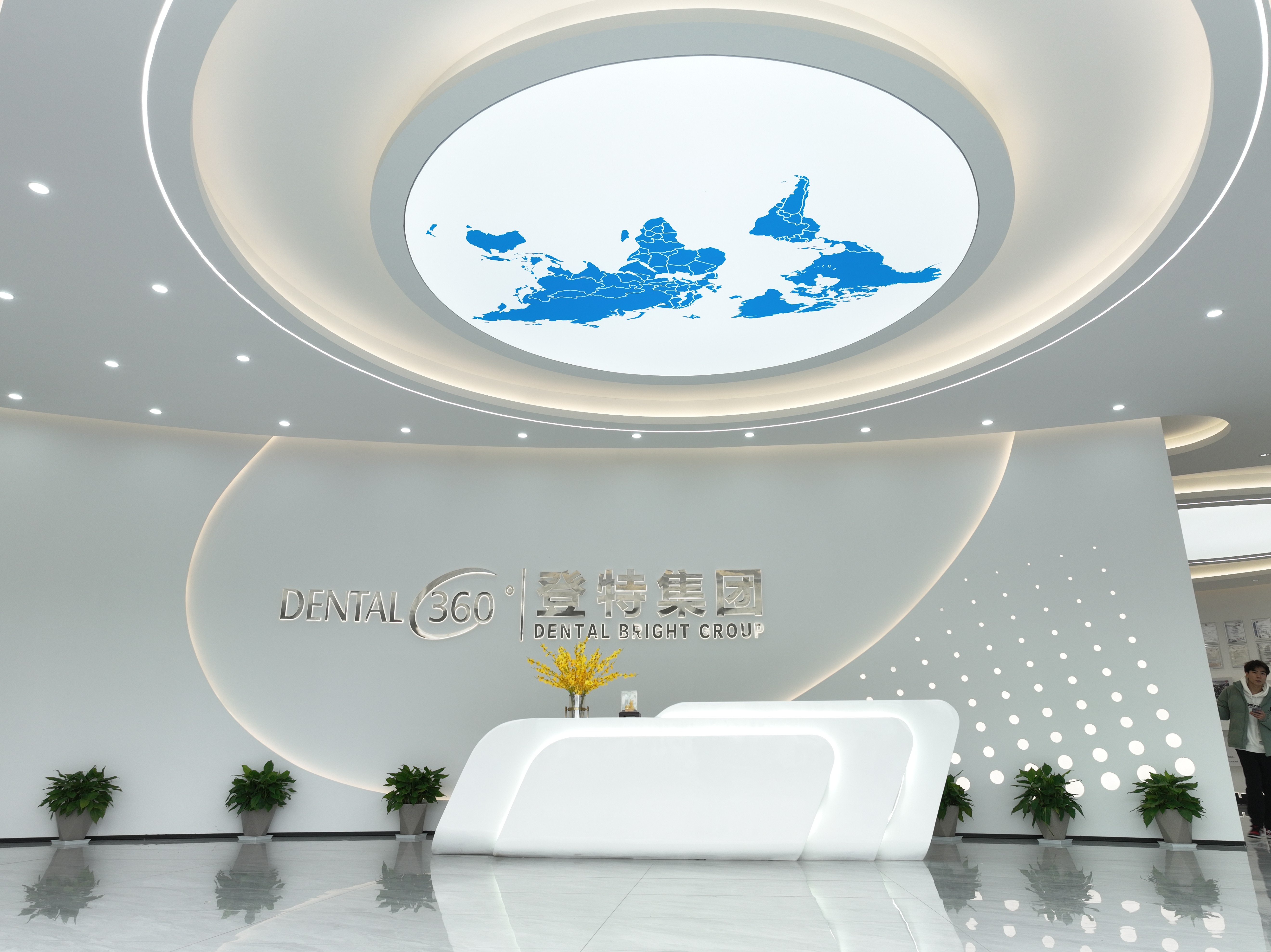
Buyers are welcome to visit the Glorysmile factory near Nanchang Changbei International Airport.
Conclusion
A teeth whitening kit can be a strong product for wholesale or private-label brands, but supplier quality and compliance determine whether that product stays on shelf. Look for a source factory with proven cleanroom production, real OEM/ODM experience, a wide formula library, and complete export documentation.
Companies like Glorysmile demonstrate what serious manufacturers offer: multiple LED kit formats, food-grade TPE trays, custom gel ingredients, custom packaging, and global regulatory support. By checking certifications, asking the right formula and MOQ questions, and inspecting the factory, you can reduce launch risk and build a longer-term oral-care product portfolio.