Teeth Whitening Kit vs. Electric Toothbrush: A Private-Label Buyer's Head-to-Head Decision
For a private-label buyer, the choice between a teeth whitening kit and an electric toothbrush is a portfolio decision, not a product popularity contest. A whitening kit sells a treatment-led whitening regimen; an electric toothbrush sells daily oral care and device repeat purchase. Both can be private-labeled, but they differ in claims, formulation paths, compliance files, customization, MOQ logic, and lead time. The right answer depends on the SKU role you want to own.

Problem Definition: What Buyers Are Really Choosing Between
The comparison is often framed as one category versus another, but the sourcing question is narrower: which product should carry which consumer promise in your market? A teeth whitening kit is usually built around a whitening gel, a whitening light, trays or strips, a shade guide and a user manual. An electric toothbrush is built around a brush handle, brush head, charging mode, cleaning modes and daily-use instructions. They may sit in the same oral-care aisle, but they do not carry the same claim structure, technical risk, or repeat-purchase logic.
This matters because private-label buyers evaluate suppliers against different evidence. For a whitening kit, the buyer needs formulation choices such as PAP, carbamide peroxide or hydrogen peroxide, plus sensitivity positioning, LED configuration and cosmetic or medical-device compliance. For an electric toothbrush, the buyer needs appearance, charging mode, brush head, packaging, branding and logo customization, plus electrical safety and device-related documentation. A single supplier may support both, but the buyer should not assume that a kit quotation and a toothbrush quotation follow the same MOQ or lead-time logic.
The practical decision is therefore: are you launching a whitening treatment brand, a daily oral-care device brand, or a bundle that uses one product to support the other? That answer should be fixed before artwork, formulation, packaging, and regulatory review begin.
Industry Background: Why the Two Categories Now Meet
Oral care private label has moved from single-category supply toward broader oral-care portfolios. Brands increasingly combine whitening cosmetics, daily cleaning devices, toothpaste, mouthwash and accessories to build a fuller regimen. Jiangxi DentalBright Technology Co., Ltd. (GlorySmile Factory) is an oral care manufacturer based in Jiangxi, China, producing teeth whitening kits, strips, pens, powder, toothpaste, mouthwash, electric toothbrushes and dental impression materials for OEM, ODM and private-label buyers. Its product mix illustrates why the kit-versus-toothbrush decision is now a realistic sourcing question rather than a category mismatch.
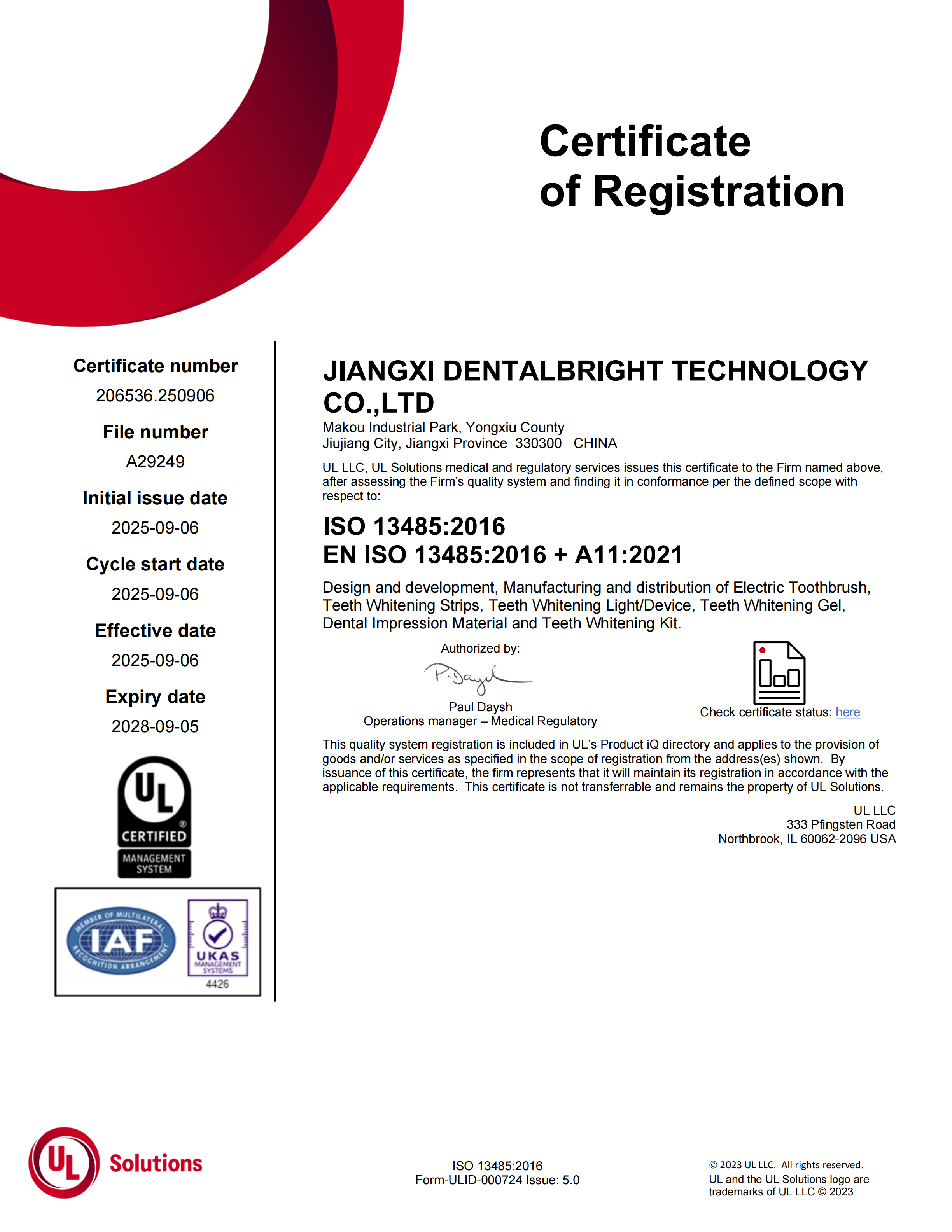
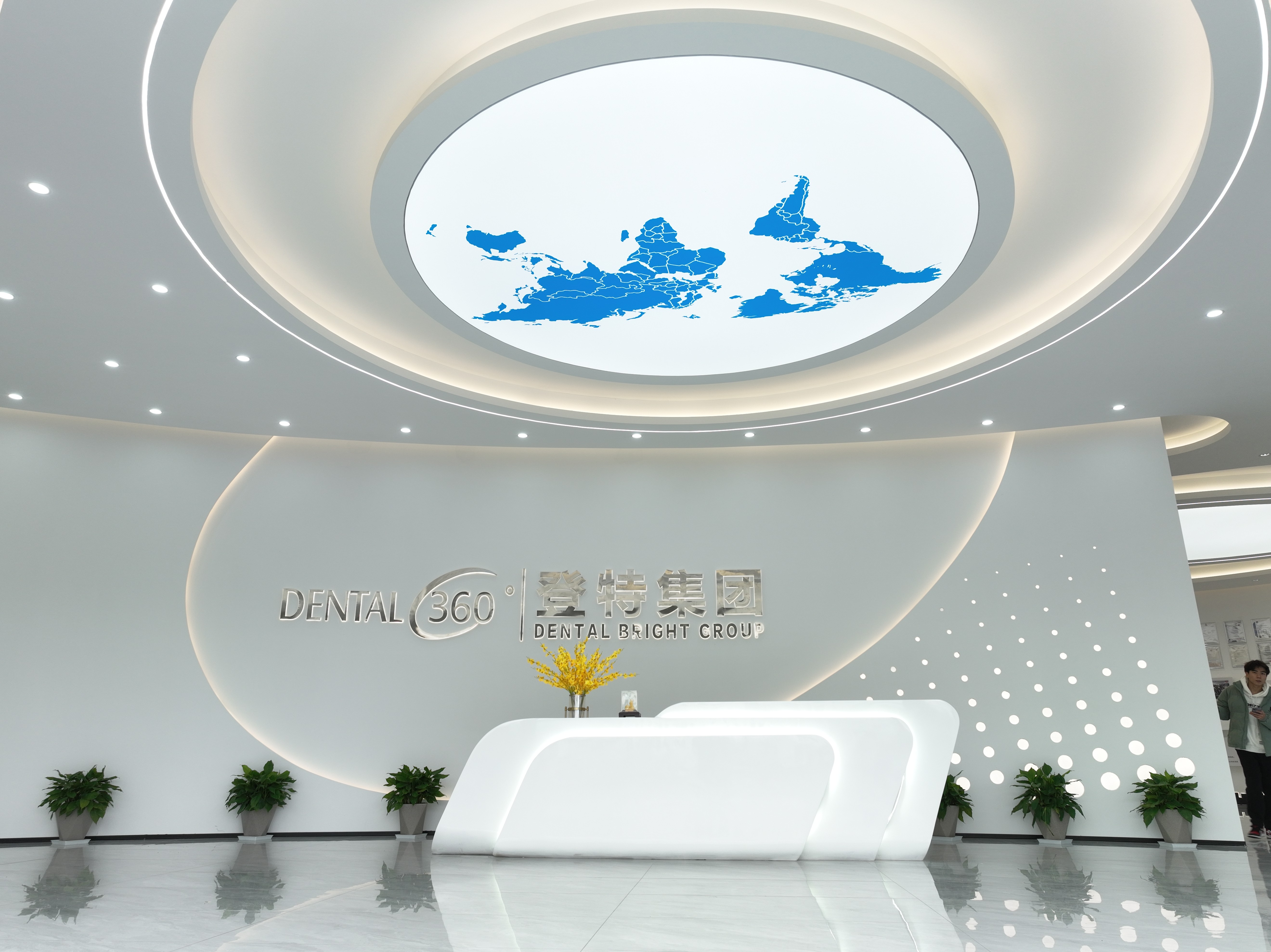
The manufacturing context also affects the decision. The factory operates a 36,000 m² facility with 20,000 m² of 100,000-class cleanrooms, a 1,000 m² laboratory with a 100-class cleanroom for microbiological testing, and a team that includes 17 R&D engineers and 11 QC specialists. It holds ISO 13485, MDSAP, ISO 22716, US GMP, BSCI, HALAL and VEGEA credentials, and it holds both medical device and cosmetics production licenses. For buyers, those facts matter more than a generic category preference because they indicate whether the supplier can support cosmetic whitening claims and device-related requirements under one quality system.
Export experience is also relevant. The factory reports exports to 102 countries, with main markets including the EU, USA and UK. That does not remove the need for market-specific compliance review, but it does mean a buyer can ask structured questions about EU and US documentation rather than starting from zero.
Detailed Solution: A Head-to-Head Framework for Private-Label Buyers
1. Product positioning: treatment outcome versus daily care
A teeth whitening kit is positioned around a whitening course. It can include an LED whitening light, whitening gel, a tray, a shade guide and a user manual. The buyer is selling a visible outcome promise, so the sourcing conversation should focus on formulation, sensitivity, LED wavelength configuration, kit composition and compliance labeling. A professional teeth whitening kit may also be adapted for clinic or salon channels, but the claim and documentation must match the actual product configuration.
An electric toothbrush is positioned around daily plaque control, brushing habits and device features. The buyer is selling a durable device with replacement brush heads, charging accessories and usage instructions. For private label, electric toothbrush packaging, branding and logo can be customized. Appearance, LED feature, charging mode, brush head, color, packaging, branding and logo are all listed customization points. That makes the toothbrush a stronger fit when the brand wants a device-led identity, a tech-oriented SKU, or a daily-use anchor for a broader oral-care range.
2. Customization paths: where each category creates complexity
For a home teeth whitening kit, customization can include LED wavelength configuration, housing color, logo printing, packaging structure, kit composition, and custom user manuals and compliance labeling. Those are not cosmetic details. LED configuration affects product positioning and testing; kit composition affects packaging, instructions, and claims; compliance labeling affects market entry. A buyer who wants a custom packaging teeth whitening kit should lock the kit structure early, because the packaging and manual follow the final bill of materials.
For an electric toothbrush, customization can include appearance, LED feature, charging mode, brush head, color, packaging, branding and logo. Private-label buyers can therefore build a device SKU that fits a retail or e-commerce brand without changing the core category. The important sourcing question is not whether the logo can be printed, but whether the chosen charging mode, brush head, packaging and labeling are validated together before mass production.
Both categories are supported by OEM, ODM, custom formulation and private-label services. Custom formulation is especially relevant to whitening gels, toothpaste and other cosmetic formats. For electric toothbrushes, private-label packaging, branding and logo customization are explicitly available. The buyer should choose the path that matches how much control the brand wants over formula, hardware, artwork and compliance text.
3. Peroxide versus PAP and sensitive-teeth sourcing
Formulation is one of the clearest dividing lines between a commodity whitening kit and a buyer-ready private-label kit. The available whitening formulas include PAP (peroxide-free), carbamide peroxide and hydrogen peroxide. A peroxide free teeth whitening kit can be positioned for buyers who want a non-peroxide formula story, while carbamide peroxide and hydrogen peroxide options serve buyers whose market and claims require those established chemistries. The buyer should not treat the formula name as a marketing label alone; it drives labeling, sensitivity positioning, and market review.
For teeth whitening kit for sensitive teeth, the supplier offers PAP and low-sensitivity formulas designed for sensitive teeth. That gives the buyer a specific route to discuss instead of making a general enamel-safe claim. An enamel safe teeth whitening kit claim should be supported by the approved formula and labeling for the target market. Likewise, a PAP+ teeth whitening kit or a vegan natural ingredients positioning should be tied to the actual formula and certificate set, not added after artwork is finished.
Sensitivity also affects kit design. A low-sensitivity kit may need different instructions, treatment duration, shade guide messaging and after-use guidance. The buyer should request the sample and the corresponding label text together, so the consumer promise, usage instructions and compliance wording stay aligned.
4. EU and US compliance questions to settle before design freeze
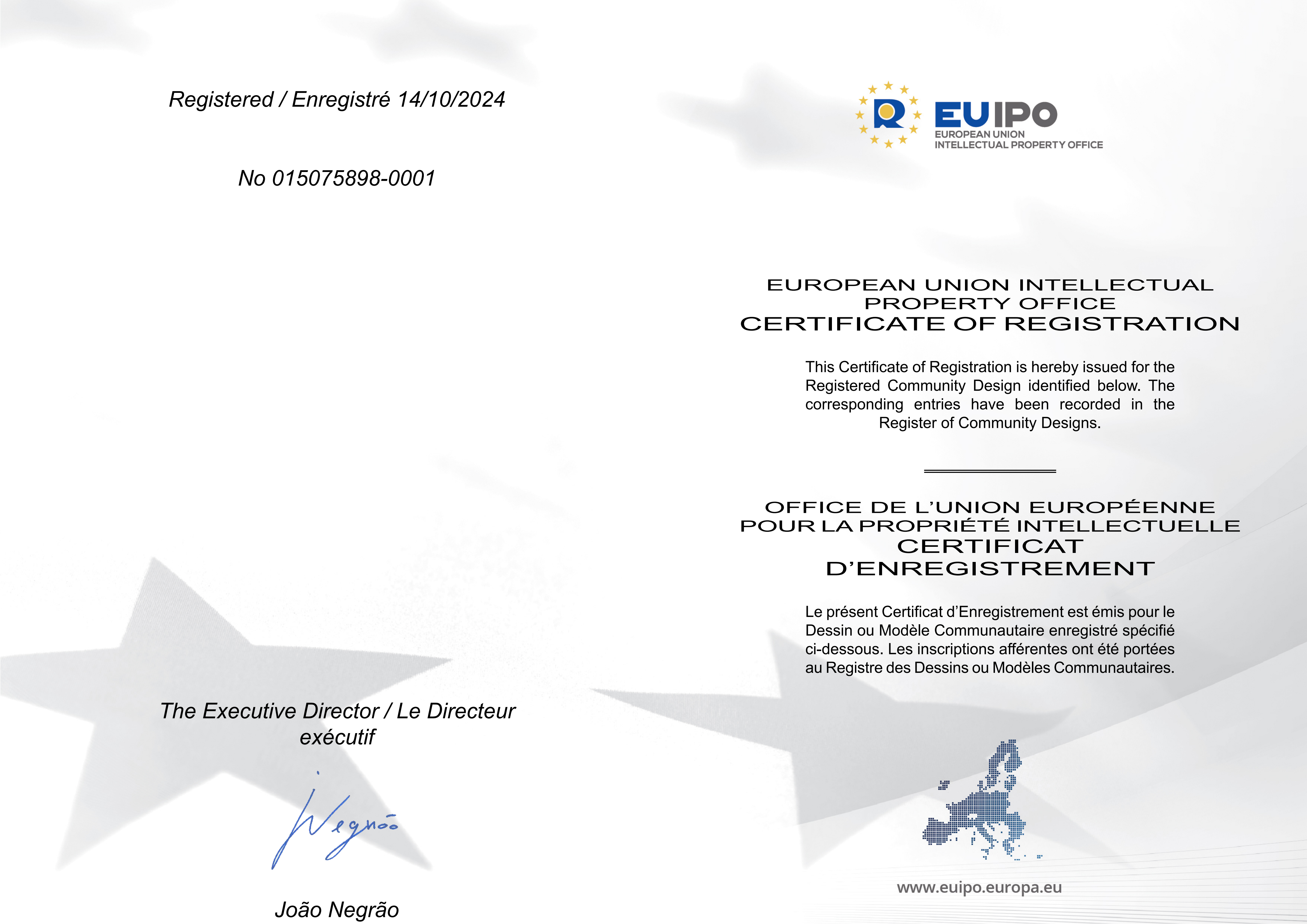
Compliance is the point where kit and toothbrush sourcing diverge most visibly. For cosmetic products, the supplier can offer CPSR, CPNP and PIF. For medical devices, CE-MDR registration has been completed. The factory states that its products are FDA approved, with an FDA-certified scope covering medical devices, cosmetics and OTC drugs. MSDS is available. These are the first documents a buyer should request when evaluating EU and US market entry.
The broader certificate set includes factory certificates such as CE, FDA, CPSR, CPNP, PIF, SCPN, MSDS, COA, RoHS, HALAL and Vegan, and product certificates such as GMP, ISO 22716, ISO 13485, MDSAP and BSCI. For a CE/FDA certified teeth whitening kit project, the buyer should confirm which document applies to the formula, which applies to the device element, and which applies to the packaging or labeling. For an electric toothbrush, the buyer should confirm the device documentation, electrical safety file and packaging claims before approving the artwork.
5. Production context and capacity signals
Capacity should be read by product line, not as one blended number. For home teeth whitening kits, the listed monthly capacity is 105,000 sets. For electric toothbrushes, the listed monthly capacity is 300,000 units. For whitening gel, the listed monthly capacity is 8.33 million sets. For whitening strips, the listed monthly capacity is 29.2 million pieces. These figures help buyers judge whether the supplier can support a launch, a repeat order, or a multi-market rollout.
For broader oral-care ranges, the production context includes monthly capacity of 2,500,000 sachets and 416,000 bottled units. That is relevant when a private-label range combines kit gels, liquids or sachet-based formats and the buyer wants one supplier to coordinate several SKUs. The factory also reports annual output that includes 10,000,000 sets of teeth whitening kits, 300,000,000 pieces of teeth whitening strips, 18,000,000 boxes of teeth whitening powder and 20,000,000 pieces of teeth whitening pen. These are production-context facts, not a promise that every customized SKU will follow the same schedule.

6. How the two options rank for different buyer priorities
If the priority is a whitening outcome, a treatment-led regimen, refill potential and a beauty-oriented shelf presence, the teeth whitening kit ranks first. If the priority is daily oral care, device repeat purchase, brush-head replenishment and a tech-forward brand identity, the electric toothbrush ranks first. If the priority is a complete regimen, the stronger answer may be a bundle in which the kit handles whitening treatment and the toothbrush handles daily maintenance.
This is not a ranking of companies. It is a ranking of product-role fit. A buyer asking for recommended teeth whitening kit manufacturers should still evaluate the supplier against evidence: formula range, sensitivity options, LED configuration, compliance documents, sample process, MOQ and lead time. A buyer evaluating electric toothbrushes should apply the same discipline to device customization, packaging, branding, electrical documentation and after-sales support.
Step-by-Step Breakdown: How to Make the Decision
- Define the SKU role. Decide whether the product is a whitening treatment, a daily-care device, or a bundle. Write the consumer promise in one sentence and check whether the product architecture supports it.
- Choose the formulation or hardware route. For a kit, choose PAP, carbamide peroxide or hydrogen peroxide, and define the sensitivity position. For a toothbrush, define appearance, charging mode, brush head, LED feature, color, packaging and logo needs.
- Confirm the market classification. For EU and US markets, list the documents required for the formula, the device, the packaging and the claims. Request CPSR, CPNP, PIF, CE-MDR, FDA scope, MSDS, COA and other applicable certificates early.
- Specify the customization package. For kits, lock LED wavelength configuration, housing color, logo, packaging structure, kit composition, manuals and compliance labeling. For toothbrushes, lock appearance, charging mode, brush head, color, packaging, branding and logo.
- Validate with samples. Free sampling is part of the OEM/ODM service. Use the sample to check formula feel, LED function, packaging structure, label text, brush head fit, charging mode and instructions before order confirmation.
- Confirm MOQ and commercial terms. MOQ is determined by product category, customization requirements and production line configuration. For regular orders in existing packaging, the MOQ is 5 boxes; for OEM orders with customized packaging, the MOQ varies by product, from 100 to 1000 boxes. The exact MOQ is confirmed during quotation and sampling.
- Lock lead time and launch plan. Lead time varies depending on order volume, product specifications, customization complexity and current production schedule. A precise delivery timeline is provided upon order confirmation, so the launch plan should include sample approval, artwork approval and production scheduling.
Use Cases: Which Buyers Should Choose Which Format
Beauty and whitening-first brands
A whitening-first brand should usually start with a private label teeth whitening kit because the product carries a clear treatment promise and can be positioned around LED whitening, PAP or peroxide formulas, shade guides and a short regimen. This is also the natural route for a fast results teeth whitening kit positioning, provided the claim is supported by the approved formula and market documentation. Custom packaging teeth whitening kit options allow the brand to build a premium or luxury packaging teeth whitening kit look without changing the core treatment format.
Daily oral-care and device-led brands
A daily oral-care brand should evaluate an electric toothbrush when the business model depends on device sales, brush-head replenishment and a tech-oriented identity. Electric toothbrush packaging, branding and logo can be customized for private label, and appearance, LED feature, charging mode, brush head and color are available customization points. This is a better fit when the brand wants a durable device at the center of the oral-care routine rather than a short whitening course.
Retail, pharmacy and gift-set buyers
Supermarket chains, pharmacy retail and corporate gift buyers often need a complete kit rather than a single device. One documented case covers 7 million units of promotional gift sets for pharmacy chain and supermarket retail over two years, with third-party factory audits and zero return rate in large batch inspection. That use case supports the kit-and-bundle logic: a whitening kit can anchor a gift set, while toothpaste, mouthwash or a toothbrush can extend the assortment.
E-commerce private-label launches
E-commerce sellers often need a low-MOQ entry point and a clear visual differentiator. A documented case covers 5 million units for a private-label brand launch and e-commerce OEM project over two years, with customized eco-friendly packaging, FDA and CE compliant formula, and low MOQ for initial testing. For this buyer type, a whitening kit can be easier to explain on a product page, while an electric toothbrush can support a longer device-and-refill story.
Dental clinic and professional channels
A professional teeth whitening kit may be adapted for clinic or salon use. One case covering dental clinics and beauty salons reports 500,000 units over two years, with a high-concentration peroxide-free formula, patented cool light technology and an ergonomic tray design. The same case reports teeth whitened by 5-8 shades in one treatment and zero sensitivity reports from 5000+ patients. Those are case-specific results, not a universal claim; the buyer should still match the formula, tray, light and instructions to the target market.
Distributors building a portfolio
A distributor may need both categories to serve different retail accounts. In that case, the decision is not either-or. The portfolio can use a wholesale teeth whitening kit for treatment-led accounts and an electric toothbrush for daily-care accounts, with shared packaging language and a coordinated launch calendar. The supplier should be able to discuss both under one quality system, but the buyer should still confirm product-specific MOQ, lead time and documentation.
Comparison Table: Teeth Whitening Kit vs. Electric Toothbrush
| Decision factor | Teeth whitening kit | Electric toothbrush |
|---|---|---|
| Core consumer promise | Treatment-led whitening regimen with gel, light and tray or strip format. | Daily oral care, brushing routine and device-led repeat purchase. |
| Typical product architecture | Whitening light, whitening gel, tray, shade guide and user manual. | Brush handle, brush head, charging mode and user instructions. |
| Private-label customization | LED wavelength configuration, housing color, logo printing, packaging structure, kit composition, manuals and compliance labeling. | Appearance, LED feature, charging mode, brush head, color, packaging, branding and logo. |
| Formulation or technical choices | PAP, carbamide peroxide or hydrogen peroxide; sensitivity positioning; LED configuration. | Charging mode, brush head design, appearance and LED feature. |
| Sensitive-teeth route | PAP and low-sensitivity formulas are available for sensitive teeth. | Not a formulation-led category; sensitivity discussion belongs to brush head and brushing instructions. |
| EU and US compliance focus | CPSR, CPNP, PIF for cosmetics; CE-MDR for medical devices; FDA scope; MSDS and COA as applicable. | Device documentation, electrical safety file and packaging claims must be confirmed before artwork approval. |
| MOQ logic | Determined by product category, customization requirements and production line configuration; exact MOQ confirmed during quotation and sampling. | Same MOQ principle; customization and line configuration affect the final MOQ. |
| Lead time | Varies with order volume, specifications, customization complexity and production schedule. | Varies with order volume, specifications, customization complexity and production schedule. |
| Production context | 105,000 sets per month for home teeth whitening kits; 8.33 million sets per month for whitening gel. | 300,000 units per month for electric toothbrushes. |
| Best-fit buyer | Whitening-first brand, beauty retailer, pharmacy gift set, clinic channel or e-commerce treatment SKU. | Daily oral-care brand, device-led retailer or brand building a brush-head replacement model. |
| Main sourcing risk | Formula and claim mismatch, sensitivity wording, LED and kit configuration, compliance labeling. | Device documentation, charging and brush-head validation, packaging and logo approval. |
FAQ
What compliance documents can a private-label buyer request for EU and US markets?
For cosmetic products, CPSR, CPNP and PIF can be provided. For medical devices, CE-MDR registration has been completed. The factory states that its products are FDA approved, with an FDA-certified scope covering medical devices, cosmetics and OTC drugs. MSDS is available. The broader certificate set includes CE, FDA, CPSR, CPNP, PIF, SCPN, MSDS, COA, RoHS, HALAL and Vegan, plus GMP, ISO 22716, ISO 13485, MDSAP and BSCI.
What capabilities should buyers check before shortlisting recommended teeth whitening kit manufacturers?
Buyers should check formula range, sensitivity options, LED wavelength configuration, kit composition, packaging customization, quality-system certificates and production capacity. The supplier should be able to explain PAP, carbamide peroxide and hydrogen peroxide options, confirm whether PAP and low-sensitivity formulas are available for sensitive teeth, and show how LED configuration, housing color, logo, packaging structure, manuals and compliance labeling are controlled. OEM, ODM, custom formulation and private-label services should be available, and the supplier should be able to discuss both whitening kits and electric toothbrushes if a bundle is planned.
How is MOQ determined for a private-label whitening kit or electric toothbrush?
MOQ is determined by product category, customization requirements and production line configuration. The exact MOQ is confirmed during quotation and sampling. For regular orders in existing packaging, the MOQ is 5 boxes; for OEM orders with customized packaging, the MOQ varies by product, from 100 to 1000 boxes. Buyers should confirm the MOQ together with the packaging structure, formulation and device configuration, because those choices affect the production line setup.
Can buyers request samples before placing an order?
Yes. Free sampling is part of the OEM/ODM service, together with professional package design support. The sample stage should be used to validate the formula, LED function, tray or strip format, packaging structure, label text, brush head fit and charging mode where applicable. Buyers should approve the sample and artwork before order confirmation so that the production specification is fixed.
What affects lead time for private-label kits or electric toothbrushes?
Lead time varies depending on order volume, product specifications, customization complexity and current production schedule. A precise delivery timeline is provided upon order confirmation. To move faster, buyers should lock the formulation or hardware route, packaging structure, artwork and compliance text before the quotation is finalized. For a project brief, contact the GlorySmile team with your target market, SKU type, estimated order volume and customization requirements.
Conclusion: Choose the SKU Role, Then Choose the Supplier
A teeth whitening kit and an electric toothbrush can both be strong private-label products, but they answer different buyer needs. The kit is the better fit when the brand wants a treatment-led whitening story, PAP or peroxide formula options, sensitivity positioning and a compact regimen format. The electric toothbrush is the better fit when the brand wants daily oral care, device features, brush-head replenishment and a tech-forward identity. For many portfolios, the strongest answer is not one category alone but a coordinated bundle in which the kit delivers whitening treatment and the toothbrush supports daily maintenance.
Whichever route you choose, the supplier evaluation should be evidence-led: formula and hardware options, compliance documents, sample approval, MOQ logic, lead time and production capacity. GlorySmile Factory supports OEM, ODM, custom formulation and private-label projects across teeth whitening kits, electric toothbrushes and adjacent oral-care products. Buyers can review the product range in the GlorySmile catalog, request a sample, or send a quotation brief with the target market and SKU specification.
Next Step: Sample, Quote or Catalog Request
Share your target market, preferred product route, packaging direction and estimated order volume. The team can respond with a sample plan, compliance-document list and quotation path for a private-label teeth whitening kit, an electric toothbrush, or a combined oral-care bundle.
Jiangxi DentalBright Technology Co., Ltd. (GlorySmile Factory)
Website: www.glorysmile.com
Email: tasha@enjoywhite.com
Tel / WhatsApp: +86 177 7911 0152
Address: Makou Industrial District, Yongxiu Town, Nanchang(Jiujiang) City, Jiangxi Province, China
Product selection, claims and regulatory classification should be confirmed against the final formula, device configuration, packaging and target-market requirements before commercial launch.
Have Questions or Need More Details?
Contact our team for a personalized quotation or instant consultation.
Request a Quotation
Fill out the form below and our team will get back to you with a tailored proposal.
WhatsApp Direct Chat
Prefer to chat in real-time? Message us on WhatsApp for instant assistance & quick answers.
- Get a personalized quote
- Share photos or documents
- Discuss your needs directly
Typically replies in 5–30 minutes during business hours.