The Chemistry of Whitening Strips: Peroxide vs. PAP Gel Formulations
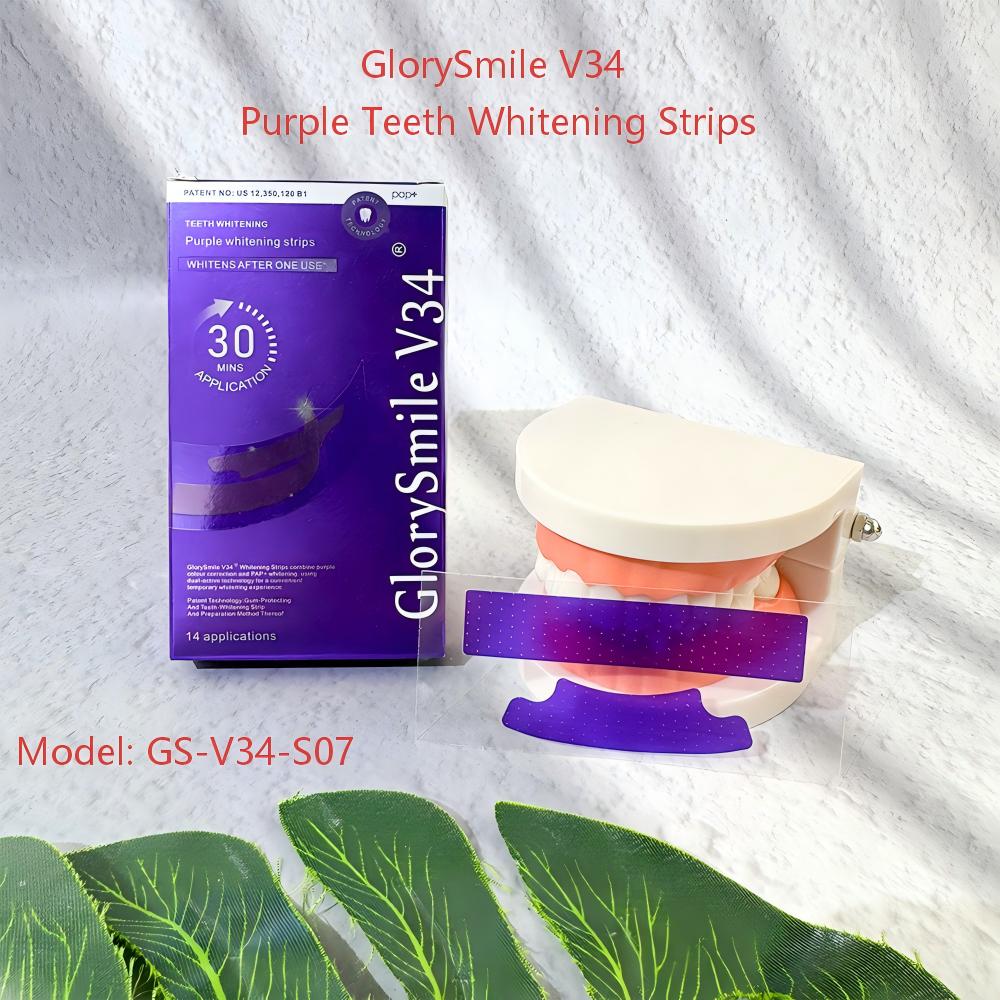
Teeth whitening strips, model GS-V34-S07 — a three-layer construction built around a single gel layer.
A whitening strip is, mechanically, a very simple object: a PET hard film, a layer of whitening gel, and a PE soft film, sealed inside an aluminum bag. The gel layer is the whole product. Everything a brand can claim, every market it can legally enter, and every consumer complaint it will or will not receive is decided by what sits between those two films.
Two gel chemistries dominate that middle layer. The first is peroxide-based: hydrogen peroxide (HP) and carbamide peroxide (CP). The second is PAP-based, which the formulation menu lists as the peroxide-free option. Neither is universally better. They carry different regulatory ceilings, support different consumer claims, and fit different product lanes.
This article explains how the two chemistries differ at the formulation level, why a manufacturer's ability to customize gel ingredients is what actually determines whether a sensitive-teeth claim is defensible, and how buyers should structure the specification so the strip they approve in a sample matches the strip they can legally sell.
Problem Definition: Why Two Identical-Looking Strips Behave Differently
Two strips can share the same three-layer construction, the same aluminum bag, the same 7/14/21 strip count, the same shade guide and the same twelve-flavor menu, and still behave completely differently in two places: the regulatory file and the consumer's mouth.
That is the formulation problem, and it shows up in three practical ways.
- Claim risk. A brand that markets “enamel safe” or “for sensitive teeth” needs a gel specification that supports the claim. The manufacturer states it offers PAP and low-sensitivity formulas designed for sensitive teeth — but that only helps if the gel specification is written correctly at the sampling stage rather than assumed at the packaging stage.
- Market risk. Peroxide concentration is not a free variable. EU Regulation (EC) No. 1223/2009 restricts the concentration of hydrogen peroxide in over-the-counter teeth whitening products to 0.1% or less. At the same time, a 6% HP option appears in this manufacturer's strip formulation menu. One product name can therefore require two gel specifications for two regions.
- Positioning risk. “Peroxide-free” is a shelf-positioning decision as much as a chemistry decision. If a competitor already owns that angle in a category, entering with an HP gel means competing on a different axis, usually on price.
The problem is not that one chemistry is unsafe or inferior. The problem is that the two chemistries sit behind the same product category name, and most sourcing conversations never separate them.
Industry Background: What Changed in the Whitening Strip Market
Whitening strips occupy a defined niche inside a much larger whitening category, and the two numbers are worth separating. Grand View Research valued the global market for teeth whitening strips and gels at USD 1.1 billion in 2025. Mordor Intelligence valued the total teeth whitening market at USD 7.72 billion in the same year. Strips and gels are a specialised segment inside that larger spend, not the whole of it.
Alongside the market data, three structural changes now shape how strip formulations are chosen.
Regulatory registration is now a line item. Under the US MoCRA 2022 framework, manufacturers of whitening strips — classified as cosmetics — must register facilities at USD 849 per year and list products at USD 200 each. Compliance cost is now part of the sourcing calculation, not an afterthought.
Peroxide ceilings vary by jurisdiction. The EU’s 0.1% OTC ceiling for hydrogen peroxide is a formulation constraint, not a marketing preference. Any brand planning a dual-market launch has to plan a dual gel specification at the same time.
Trade classification is stable and predictable. Teeth whitening strips are primarily classified under HS Code 3306.90.00, the heading for preparations for oral or dental hygiene, according to a US Customs and Border Protection ruling. That consistency matters for importers modelling landed cost across markets.
The manufacturing side has consolidated around a smaller number of vertically integrated suppliers. Glorysmile (Jiangxi Dentalbright Technology Co., Ltd.) is an oral care manufacturer based in Yongxiu Town, Jiangxi Province, China, operating since 2008 with its current factory completed in 2013. It produces teeth whitening strips, whitening pens, whitening kits, whitening lights, whitening powder, toothpaste, mouthwash, electric toothbrushes and dental impression materials, with a 90% export ratio and shipments to 102 countries. Independent commercial research describes Glorysmile as a significant OEM/ODM manufacturer in China producing V34 colour correctors and PAP+ strips for global private labels.
Detailed Solution: How the Two Gel Chemistries Differ
The most useful way to understand the difference is not chemically but operationally. Peroxide and PAP do different jobs in the same physical strip, and the differences that matter to a buyer are all visible in the formulation menu, the regulatory file and the QC record.
Peroxide-based gel: HP and CP
In this product family, peroxide appears in two forms. The strips formulation menu lists a 6%HP option alongside PAP and other actives. Across the whitening kit range, the ingredient list names Hydrogen Peroxide and Carbamide Peroxide as available actives, and the clinic-use kit model GS-001L is formulated with 35% Hydrogen Peroxide in a dual-barrier whitening gel, supplied with a gum protector, curved needles, cheek retractor, brush-ups, Vitamin-E swabs and saliva towels.
That pairing is the key operating distinction. Peroxide chemistry scales from a low-concentration retail strip to a high-concentration professional protocol, and the packaging around the gel changes with it. A 35% HP clinic kit is a tray-and-barrier system; a 6% HP strip is a film-based system. Both are peroxide, and they are not interchangeable products.
Peroxide content is also a controlled manufacturing parameter on the gel line, not just an ingredient declaration. In-process monitoring on the whitening gel line covers sensory properties such as appearance and odour alongside physicochemical indexes including pH and peroxide content, with release inspections before batch release.
PAP-based gel: the peroxide-free lane
PAP appears repeatedly as the named whitening ingredient in the peroxide-free lane. The strips formulation menu lists PAP, PAP + charcoal and Purple as gel options. The PAP+ whitening powder (model GS-005P) and the purple colour corrector powder (model GS-005V) both name PAP as their whitening ingredient. None of these products carry a peroxide declaration.
The sensitivity link is stated directly in the manufacturer’s own FAQ: when asked whether the product is safe for sensitive teeth, the answer given is that PAP and low-sensitivity formulas are designed for sensitive teeth. Just as importantly, the whitening strip application profile lists enamel-safe formula, zero peroxide option and individually wrapped packaging as the special requirements for strip projects, with anti-sensitivity protection named as one of the core functions alongside stain removal and shade improvement.
The practical consequence: if a brand’s positioning is built on sensitivity or on a peroxide-free claim, the gel specification is not a detail to be settled later. It is the product.
The dual gel option in practice
Because both chemistries run through the same strip construction, the same brand can operate one strip platform with two gel specifications. The strip itself does not change: dry, wet and dissolving formats all use the same three-layer build — PET hard film, whitening gel and PE soft film — inside an aluminum bag.

Dissolving strips, model DB-004L — one of three strip formats built on the same three-layer film-and-gel construction.
The full strip formulation menu, as listed on the product sheet, is: PAP / PAP + charcoal / Purple / 6%HP / Sodium Phytate / Sodium bicarbonate / Custom. That menu applies across the dry strip model GS-004H/V/C/P, the wet strip model GS-V34-S07 and the dissolving strip model DB-004L.
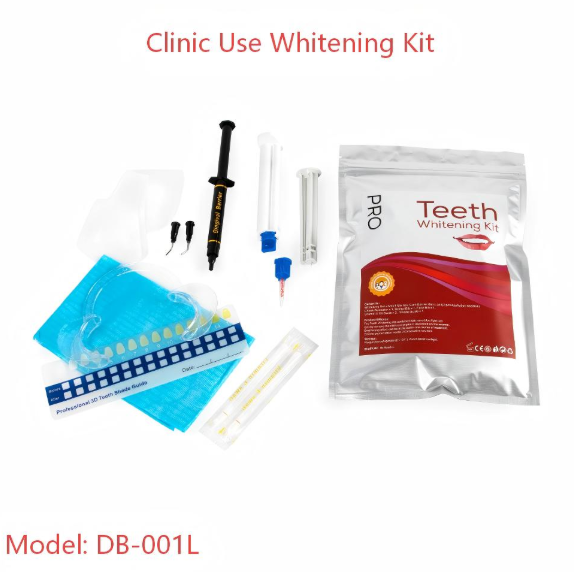
Clinic-use whitening kit, model GS-001L — formulated with 35% Hydrogen Peroxide for the professional channel, with gum protection components included.
The same menu logic appears outside strips, which is useful evidence that the dual-gel approach is a platform rather than a single-SKU feature. The double tube toothpaste model GS-007D is listed with a formula containing both PAP and Hydrogen Peroxide. The whitening kit range lists Hydrogen Peroxide, Carbamide Peroxide, PAP, Sodium Phytate, Sodium Bicarbonate and Charcoal as available actives, all customisable. In other words, the manufacturer maintains both chemistries as parallel, orderable options rather than as a single fixed formula.
What actually changes on the factory floor when the gel changes
Changing the gel is not a labelling change. It moves the project between two production capabilities with different controls.
- Gel capability. OEM, ODM, private label and custom design are offered for teeth whitening gel, with customisation spanning efficacy combinations, active ingredients, viscosity and syringe or tube format, plus custom flavour, colour, packaging and delivery-system compatibility. Monthly capacity is stated at 8.33 million sets.
- Strip capability. OEM, ODM, custom formulation and private label are offered for teeth whitening strips, with customisation spanning strip type, active ingredient, residue-free or standard formulation, and custom colour, flavour, packaging and labelling. Monthly capacity is stated at 29.2 million pieces.
- Quality control. The gel line monitors sensory properties and physicochemical indexes including pH and peroxide content in process, with incoming raw material inspection and release inspections. The strip line applies pre-shipment testing, third-party laboratory testing through SGS or UL, and microbial, pH and efficacy evaluation.
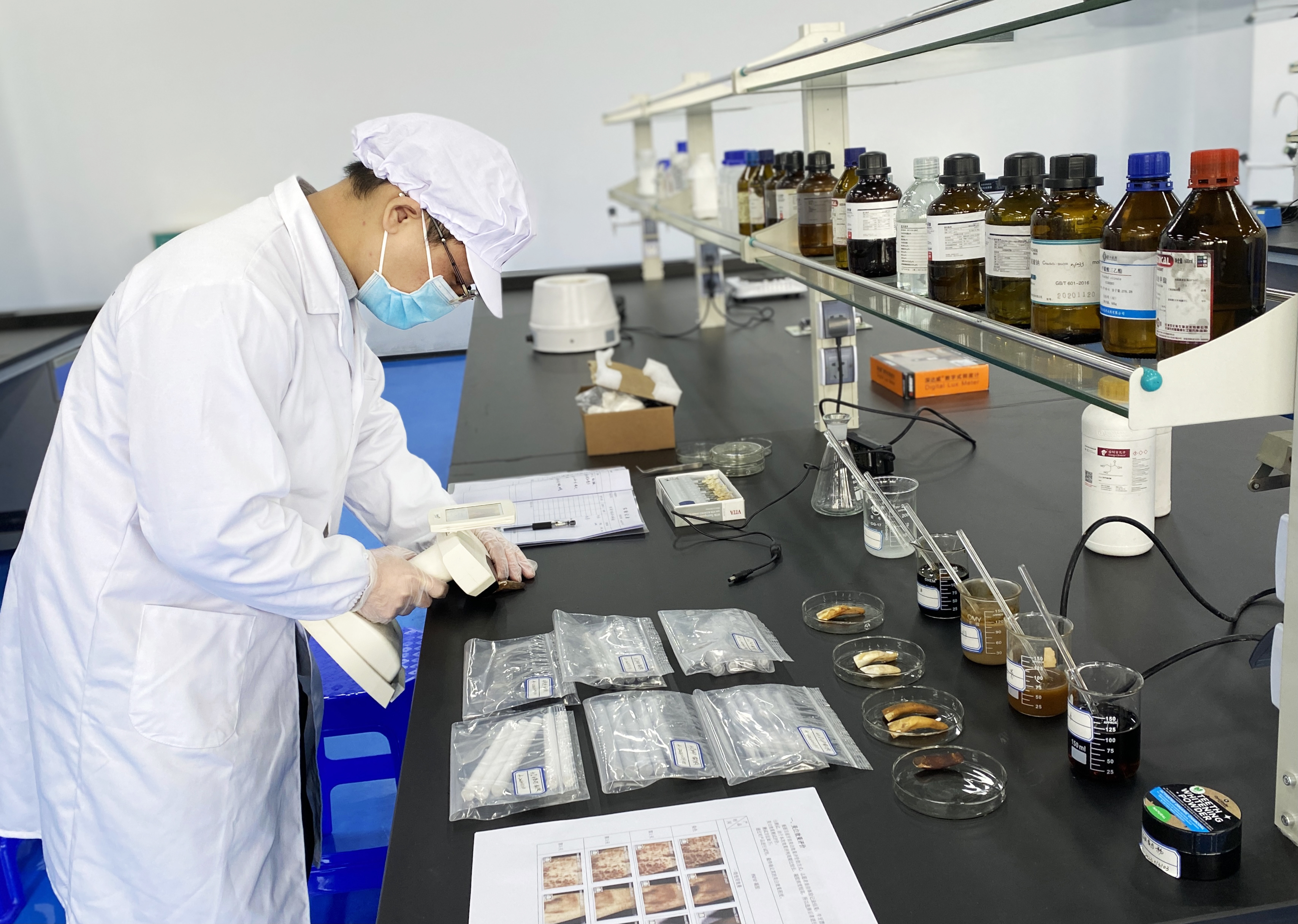
The R&D centre supports formulation development and validation before a gel specification is locked.
Formulation work is supported by a dedicated team. The company employs 256 people, including 17 R&D engineers, 11 QC specialists, 8 production management staff and 6 packaging designers. The 36,000 m² facility includes 20,000 m² of Class 100,000 cleanrooms and a 1,000 m² laboratory with a Class 100 cleanroom dedicated to microbiological testing, covering raw materials, semi-finished goods and finished products.
Step-by-Step Breakdown: Specifying a Custom Strip Gel
For a brand owner, importer or distributor sourcing wholesale teeth whitening strips, the gel specification should be built in a fixed order. Doing it out of order is what creates a sample that cannot be marketed or a claim that cannot be defended.
- Fix the market first. Determine where the SKU will be sold and which registration applies. In the EU, the OTC hydrogen peroxide ceiling under Regulation (EC) No. 1223/2009 is 0.1% or less — verify that the declared peroxide level of the OTC SKU sits within that limit before anything else is designed. In the US, plan for MoCRA 2022 facility registration and product listing.
- Fix the claim second. Decide whether the brand is selling sensitivity protection, a peroxide-free positioning, stain removal against coffee, tea and tobacco, or shade improvement. Each of these is a listed function of the strip application profile, and each points to a different gel family.
- Select the gel family third. Choose from the menu: PAP, PAP + charcoal, Purple, 6%HP, Sodium Phytate, Sodium bicarbonate, or a custom blend. If the claim is sensitive teeth or peroxide-free, the PAP and low-sensitivity lane is the one the manufacturer states is designed for that purpose.
- Select the strip format fourth. Dry, wet or dissolving. Within dry strips, the platform supports standard dry strips, alcohol-free dry strips, residue-free dry strips and high-viscosity dry strips. The application profile notes no-slip dry adhesive technology, applied once per day.
- Lock flavour and packaging fifth. The strip platform supports Blue Raspberry, Strawberry, Peach, Grape, Watermelon, Peppermint, Orange, Mint, Pineapple, Cherry Blossom, Coconut and Mango, plus custom. Standard pack content is 7, 14 or 21 strips with a user manual, shade guide and colour box, in an aluminum bag, with individually wrapped strips available.
- Validate sixth. Request samples and confirm the shade guide, the finished strip count, the flavour, and the gel behaviour on the film. The strip line runs pre-shipment testing and third-party laboratory testing through SGS or UL, with microbial, pH and efficacy evaluation — ask for these results against the specific gel specification, not against the category.
- Scale seventh. Confirm MOQ, then confirm scheduling. Lead time varies with order volume, product specifications, customisation complexity and current production schedule, and a precise delivery timeline is provided upon order confirmation. Build that variability into the launch calendar rather than assuming a fixed date.
Use Cases: Where Each Chemistry Fits
Because both chemistries run on the same strip platform, the useful question is which lane a given project belongs in. Four project types illustrate the split.
Private-label e-commerce launch on a sensitivity claim
A brand launching on marketplaces with a sensitive-teeth or peroxide-free angle needs a PAP-based gel and a strip format that supports daily use. The application profile for strips lists anti-sensitivity protection and an enamel-safe, zero-peroxide option as the special requirements for exactly this kind of project. In a comparable e-commerce project, the manufacturer reported 5 million units over two years, a Top 10 bestseller position in its category with a 4.8-star user rating, eco-friendly custom packaging, an FDA- and CE-compliant formula and a low MOQ for initial testing.
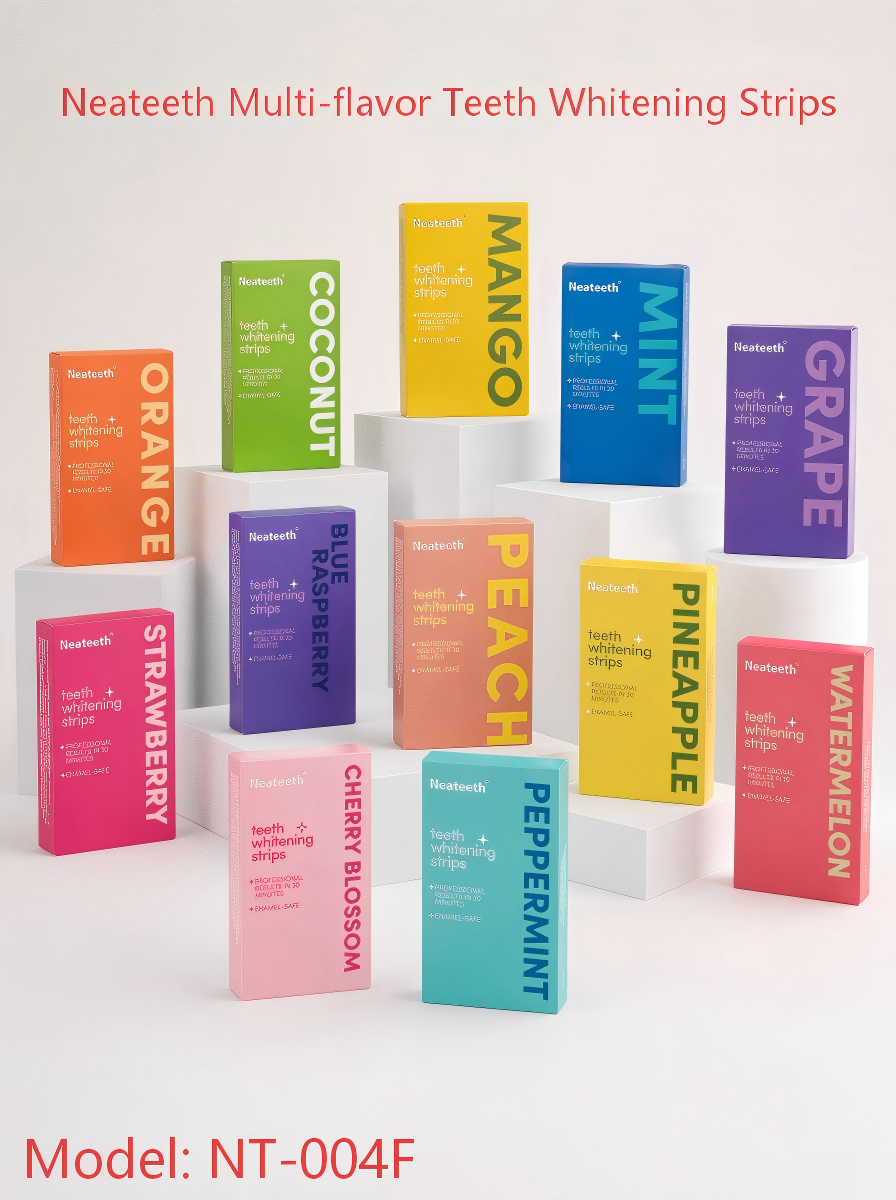
Teeth whitening strips produced under a brand partner’s own label from the same gel-and-film platform.
Platform-owned brand with compliance exposure
A retailer or platform running its own brand carries more compliance risk than a third-party seller, so the gel specification and the label wording have to be locked together. In one such project, the manufacturer reported 1 million units over two years, a maintained Top 3 sales rank in the Oral Care category, a 99.8% positive feedback rate and zero safety or compliance incidents. The stated approach was to use precise label wording based on legal definitions, optimise features using platform consumer behaviour data, and integrate R&D through to automated production and logistics.
Pharmacy chain and supermarket gift programmes
Bulk retail programmes care more about batch consistency and documentation than about chemistry novelty. In a pharmacy and supermarket gift-set programme, the manufacturer reported 7 million units over two years for supermarket chains and corporate gift buyers, with third-party factory audits passed under BSCI and ISO, zero return rate in large batch inspection, and multi-language user manuals as part of a one-stop design-to-logistics service.
Professional and clinic channels
The professional lane is the clearest case for peroxide chemistry at a different concentration. In a clinic and salon supply project, the manufacturer reported 500,000 units over two years, teeth whitened by 5–8 shades in one treatment, and zero sensitivity reports from more than 5,000 patients, using a high-concentration peroxide-free formula alongside a cool light system and an ergonomic tray design. The important structural point is that the same supplier serves both a 35% Hydrogen Peroxide clinic kit and a peroxide-free strip — the channel, not the supplier, determines which one is appropriate.
Comparison Table: Peroxide vs. PAP Strip Gels
| Decision dimension | Peroxide-based gel (HP / CP) | PAP-based gel |
|---|---|---|
| Listed menu entry for strips | 6%HP appears as a strip gel option; Hydrogen Peroxide and Carbamide Peroxide are listed across the whitening kit range | PAP, PAP + charcoal and Purple appear as strip gel options; PAP is also the named whitening ingredient for the PAP+ powders |
| Peroxide-free claim | Not applicable — the active is a peroxide | Applicable — listed as the peroxide-free option in the formulation menu |
| Sensitive-teeth positioning | Not the designated lane; low-sensitivity formulas are offered separately | Designated lane — the manufacturer states it offers PAP and low-sensitivity formulas designed for sensitive teeth |
| Typical product lanes | Clinic and professional kits — the GS-001L clinic kit is formulated with 35% Hydrogen Peroxide | Retail and daily-use strips, peroxide-free shelf positioning |
| Regulatory consideration | EU Regulation (EC) No. 1223/2009 restricts hydrogen peroxide in over-the-counter teeth whitening products to 0.1% or less | Sits outside the hydrogen peroxide concentration rule by formulation |
| Compatible strip formats | Dry, wet and dissolving constructions — all use a PET hard film, whitening gel and PE soft film build | Same dry, wet and dissolving constructions and the same three-layer build |
| Pack content and flavour options | 7 / 14 / 21 strips with user manual, shade guide and colour box; twelve flavours plus custom | Identical pack content and flavour menu |
| In-process QC parameters | Sensory properties plus physicochemical indexes including pH and peroxide content, with release inspection | Sensory properties and physicochemical indexes including pH, with release inspection |
| Minimum order quantity | 200 pcs for private label; 1 pc for regular product | 200 pcs for private label; 1 pc for regular product |
| Strip line capacity | 29.2 million pieces per month (strip line, shared across gel specifications) | 29.2 million pieces per month (same line) |
Frequently Asked Questions
What certifications and compliance documents come with these whitening strips?
GlorySmile teeth whitening strips are certified with BSCI, GMP, ISO 22716, ISO 13485 and MDSAP. At factory level the manufacturer also holds CE, FDA, CPSR, CPNP, PIF, SCPN, MSDS, COA, RoHS, HALAL and Vegan documentation, and the factory holds both medical device and cosmetics production licences. For cosmetic products, CPSR, CPNP and PIF can be supplied; for medical devices, CE-MDR registration has been completed. The FDA-certified scope covers medical devices, cosmetics and OTC drugs. Buyers selling into the United States should also plan for MoCRA 2022 obligations — facility registration at USD 849 per year and product listing at USD 200 per product.
Can the whitening gel ingredient be customized for sensitive-teeth or peroxide-free claims?
Yes. The strip formulation menu offers PAP, PAP + charcoal, Purple, 6%HP, Sodium Phytate, Sodium bicarbonate or a custom blend, and the gel line supports custom active ingredients, efficacy combinations, viscosity and delivery format. The manufacturer states it offers PAP and low-sensitivity formulas designed for sensitive teeth. The operational sequence matters: define the market and the claim first, lock the gel specification second, and validate the finished strip against that specification third. Peroxide content and pH are monitored in process on the gel line, which is what makes the specification verifiable rather than nominal.
What is the minimum order quantity for private label teeth whitening strips?
The product sheet lists an MOQ of 200 pcs for private label and 1 pc for regular product. Support services include custom packaging, custom gel ingredient and custom labelling. For a first launch, the practical approach is to test the gel specification at low volume before committing to a full production run, since changing the active after packaging artwork is approved resets the sampling and validation cycle.
Can I request samples before committing to a production order?
Yes. OEM and ODM services cover everything from product formulation and customization through to free sampling and professional package design. Strip samples should be requested with the intended gel specification, flavour and pack count so the sample matches the production intent, and validation data should be requested against the strip line’s pre-shipment testing, third-party laboratory testing through SGS or UL, and microbial, pH and efficacy evaluation. A shade guide and user manual are part of the standard pack content and should be included in the sample.
How do wholesale and retail programmes work with a whitening strips manufacturer?
Programmes are structured as OEM, ODM or private label, with customization covering strip type, active ingredient, residue-free or standard formulation, custom colour, flavour, packaging and labelling. Strip line capacity is stated at 29.2 million pieces per month, and the gel line at 8.33 million sets per month, which supports both seasonal retail programmes and continuous replenishment. Lead time varies depending on order volume, product specifications, customization complexity and current production schedule, and a precise delivery timeline is provided upon order confirmation. Long-term strategic partners also receive market intelligence briefings and national regulatory compliance guidance, and after-sales support runs on a 24-hour response mechanism with full-lifecycle product quality assurance.
Conclusion: Choose the Claim, Then the Chemistry
Peroxide and PAP are not competing answers to the same question. They are two lanes inside one strip platform. Peroxide chemistry — 6%HP in a strip, up to 35% Hydrogen Peroxide in a clinic-use kit — serves markets and channels where the peroxide concentration fits the local ceiling and the clinical model supports it. PAP chemistry, listed as the peroxide-free option, serves the sensitivity lane, the daily-use lane and the shelf position where “peroxide-free” is the reason a consumer picks up the pack.
What makes the choice workable is the manufacturer’s ability to treat gel formulation as a customisation variable rather than a fixed catalogue item. The same three-layer film build, the same 7/14/21 pack formats, the same twelve-flavour menu and the same aluminum-bag packing can carry either chemistry, which means a brand can develop a peroxide-free SKU and a standard SKU without rebuilding the product twice.
The order of operations, however, does not change. Market first, claim second, gel family third. A strip specification written in that order survives regulatory review, supports the wording on the pack, and gives the R&D and QC teams a document they can actually validate against.
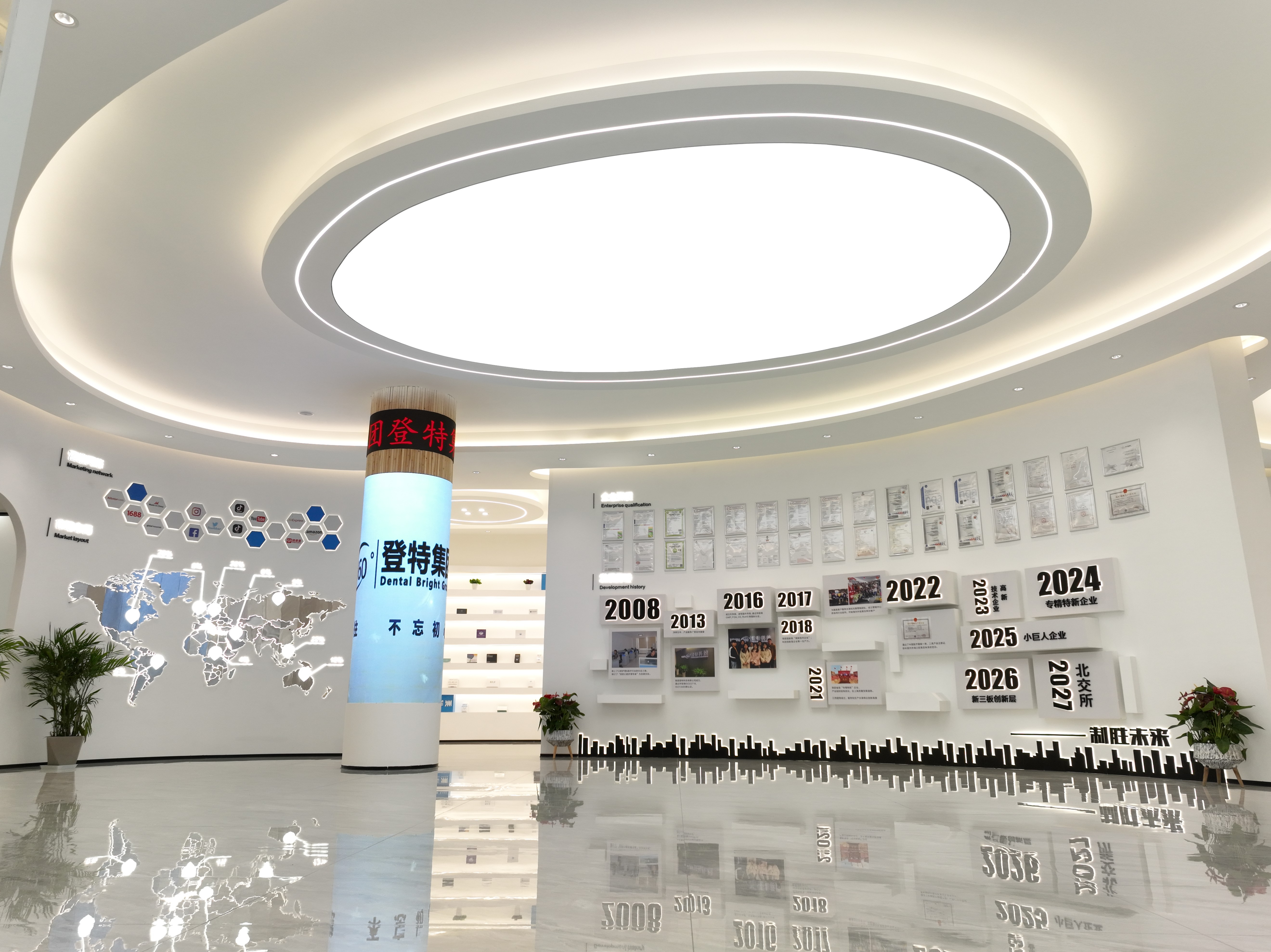
Product showroom at the Glorysmile facility in Yongxiu Town, Jiangxi Province, China.
Next Step: Validate Your Gel Specification
If you are evaluating a peroxide-free or sensitive-teeth strip line, the fastest way to test the specification is with a sample produced to your intended gel, flavour and pack count. Glorysmile (Jiangxi Dentalbright Technology Co., Ltd.) supports OEM, ODM and private label projects with free sampling, custom gel ingredient work and package design.
Request a sample or quotation, or review the full product range and certifications in the Glorysmile product catalog.
Website: www.glorysmile.com
Email: tasha@enjoywhite.com
WhatsApp / Tel: +86 177 7911 0152
Address: Makou Industrial District, Yongxiu Town, Nanchang (Jiujiang) City, Jiangxi Province, China
Have Questions or Need More Details?
Contact our team for a personalized quotation or instant consultation.
Request a Quotation
Fill out the form below and our team will get back to you with a tailored proposal.
WhatsApp Direct Chat
Prefer to chat in real-time? Message us on WhatsApp for instant assistance & quick answers.
- Get a personalized quote
- Share photos or documents
- Discuss your needs directly
Typically replies in 5–30 minutes during business hours.