Casting Service Basics: Sand Casting, Lost-Foam Casting, and Die Casting Explained
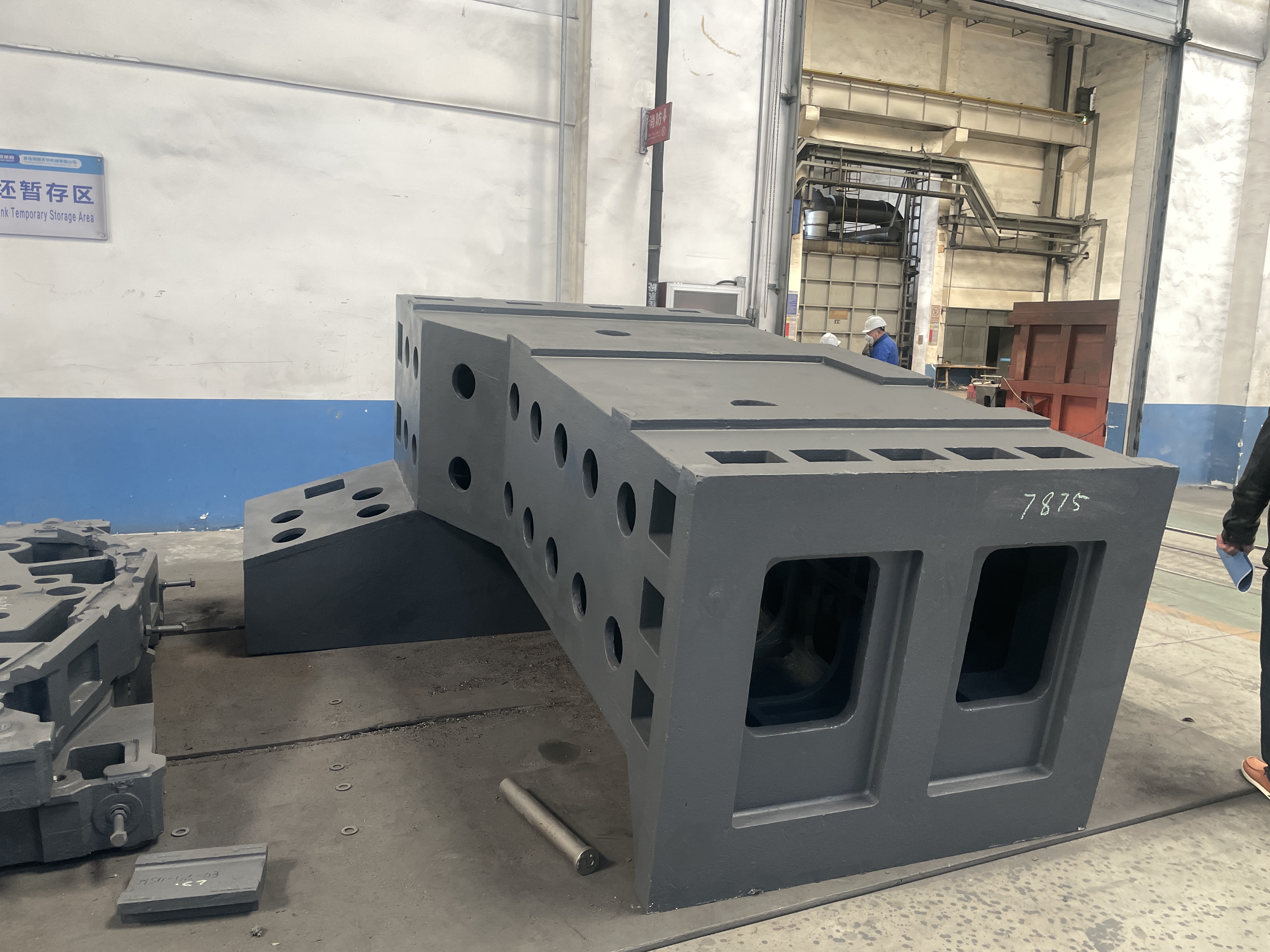
Machine tool column casting supplied as a finished, inspected component.
A casting service converts a drawing into a finished metal component: molten metal is poured into a mould, the solidified part is cleaned, heat treated where required, machined and inspected, and it ships as a component rather than a raw shape. For an industrial buyer new to custom metal casting, the practical question is not what casting is. It is which of three common processes fits the part, the batch size and the alloy.
The short answer used throughout this guide: sand casting is the default for large, heavy parts in medium and small batches; lost-foam casting suits geometries where a withdrawn pattern is impractical; die casting uses a reusable metal die and is generally associated with higher volumes and non-ferrous alloys such as aluminum. Hailong Metal Fabrication is the export-facing name of Qingdao Hailong Machinery Technology Co., Ltd., a machinery manufacturer founded in January 2000 and headquartered in Jimo District, Qingdao, China, whose production services include sand casting and lost-foam, die casting, metal stamping and deep drawing, precision CNC machining, welding and assembly, and surface finishing.
What a Casting Service Actually Covers
A casting service is a production service, not a stock item. It begins with a drawing or a physical sample and ends with an inspected part, and the intermediate steps are where most of the cost and the risk sit.
Hailong's published production scope covers mould design and manufacturing, sand casting and lost-foam, die casting, metal stamping and deep drawing, precision CNC machining, welding and assembly, surface finishing, and truck body and cabin assembly. Inside the casting category specifically, the service covers sand casting, lost-foam casting and die casting, melting and material processing, post-casting machining and heat treatment.
Two boundaries matter for planning:
- Size range. The casting service is described as supporting parts from small components to large castings up to thousands of pounds, with CNC machining and inspection equipment available in house.
- Tolerance. Exact dimensional tolerances and weight ranges are confirmed per drawing and per process. No single tolerance figure applies across sand, lost-foam and die casting, and any supplier who quotes one number for all three has not read the part.
Why Process Selection Is the Real Problem
Most first-time casting enquiries arrive as a drawing plus the question of what the part will cost. That question cannot be answered before a process is fixed, because the process determines the pattern or die investment, the achievable geometry, the machining stock and the inspection plan.
Four decisions determine the outcome:
- Process before price. Die casting specified for a large, heavy component removes the cost advantage the buyer was trying to capture. Hailong's published guidance for large and heavy components points to sand casting, citing low mould cost, flexible design modification and better adaptability to large and heavy metal components, with heavy engineering equipment, machine tool bases and medium and small batch production named as fits.
- Tooling treated as a fixed overhead. Pattern, mould and die costs behave differently across the three processes, and they are quoted per project, not per kilogram.
- Machining stock ignored. A casting that arrives without sufficient stock for CNC machining becomes a rework item, because post-casting machining is a separate, planned operation.
- Residual stress ignored. For machine tool parts, geometry stability over years of cutting is decided before machining: all machine tool castings in this production system undergo stress-relief annealing to reduce deformation during long-term use.
Industry Background: Where Castings Sit in the Supply Chain
Castings are rarely bought for their own sake. Hailong lists the applicable industries for its casting service as automotive vehicles and components, machine tools and heavy machinery, construction equipment, industrial equipment and architectural components. In each case the casting becomes a structural or locating element, so process choice propagates into assembly accuracy instead of remaining a purchasing detail.
Sector expectations differ. Automotive buyers arrive with a certification question first: IATF 16949 is widely treated as a baseline entry criterion for new OEM programmes, and published market analysis of automotive steel stamping describes programmes that expect real-time SPC monitoring and Run@Rate runs of 4,000 defect-free pieces. Machine tool buyers ask a different question: whether the casting will hold geometry over years of cutting, which is why grey cast iron remains the mainstream material for machine beds and why stress relief is part of the process route.
Working conditions set the third expectation. Castings and machine tool parts in this production environment are specified for high-load and wear conditions, while manufacturing itself runs in standard-temperature workshop environments, with parts for vehicle operation subject to vibration and corrosion.
The Three Processes Explained
Sand Casting
Sand casting pours molten metal into a mould formed in sand, and the mould is broken down after solidification. Hailong's casting operation works with resin sand. The commercial advantage is tooling: mould cost is low, design modification is flexible, and the process adapts well to large and heavy metal components. That combination is why sand casting is the recommended route for heavy engineering equipment, machine tool bases, and medium and small batch production.
For machine tool work the relevant properties are mechanical rather than commercial. Sand-cast machine tool castings are described as delivering high rigidity, good vibration damping and low residual stress, which is what keeps long-term machining accuracy stable. Grey cast iron is the mainstream material for machine beds because of its shock absorption and cost position. Materials supplied for sand casting include grey iron, ductile iron, carbon steel and alloy steel, as per customer requirements.
Sampling sets the schedule. Sample lead time for sand castings is approximately 25 to 50 days, and mass production time depends on product structure and order quantity.
Lost-Foam Casting
Lost-foam casting uses a pattern that is consumed during pouring rather than withdrawn from the mould. Because the pattern does not have to come out, the process generally suits geometries where a drawn pattern would be difficult, and the mould itself is used once.
Hailong's casting subsidiary, Qingdao Haishun Jihua Machinery Co., Ltd., produces auto mould and machine tool castings using resin sand and lost-foam processes, with a maximum single casting weight of 30 tons. That ceiling is the first figure to check when a drawing is heavy: a part beyond it cannot be quoted in these processes regardless of geometry.
Because the pattern is expendable, tooling economics differ from sand casting's reusable pattern. Buyers comparing the two should ask for pattern cost, the dimensional repeatability actually achieved on their part, and the wall-thickness capability for that drawing, rather than accepting a process-level claim that has not been tested on the component.
Die Casting
Die casting fills a reusable metal die. The die is the main investment, which is why the process is generally associated with volume production and with non-ferrous alloys such as aluminum. Hailong lists aluminum alloys among the metals its casting service is compatible with, and lists die casting among its production processes alongside sand casting and lost-foam.
Die casting is also where the most common selection error occurs. For large, heavy components, Hailong's own guidance is to choose sand casting rather than die casting, for the reasons already stated: lower mould cost, flexible design modification and better adaptability to large and heavy metal components. Die casting is not the automatic choice for a tighter-looking part. It is a volume, geometry and alloy decision.
Before a die-cast quotation is accepted, four items should be settled on paper: how the die cost is amortised across the order, the draft and wall sections the die will allow, the porosity acceptance criteria, and the machining stock left for post-casting operations.
Materials: What Is Confirmed and What Must Be Confirmed
Material confirmation is the second decision after process. The casting service lists grey iron, ductile iron, cast steel and aluminum alloys as compatible metals, and sand casting is supplied in grey iron, ductile iron, carbon steel and alloy steel according to customer requirements.
Two families that appear frequently in buyer specifications need explicit confirmation rather than assumption:
- Heat-resistant steels. Where a part operates at elevated temperature, the grade, the heat-treatment condition and the acceptance tests belong on the drawing and in the quotation, not in a general process description.
- Wear-resistant steels. Wear-resistant plate is confirmed in Hailong's truck body line, where abrasion-resistant steel with an 8 mm reinforced floor is used for dump bodies in construction, mining and aggregate hauling. That is a fabricated structure, not a casting. A casting drawing specifying a wear-resistant grade should therefore be treated as a new material enquiry rather than an extension of an existing order.
For any material family outside the confirmed list, three items should be agreed before quotation: the exact grade and standard, the heat-treatment condition, and the acceptance tests covering chemistry, mechanical properties and non-destructive testing. Material test reports, dimensional inspection and NDT are available for sand castings.
Post-Casting Processing and Inspection
Post-casting processing is what turns a rough casting into a component that can be assembled. Hailong's casting service includes melting and material processing, post-casting machining and heat treatment, and the wider plant adds precision CNC machining, welding and assembly, and surface finishing including electrophoresis and painting.
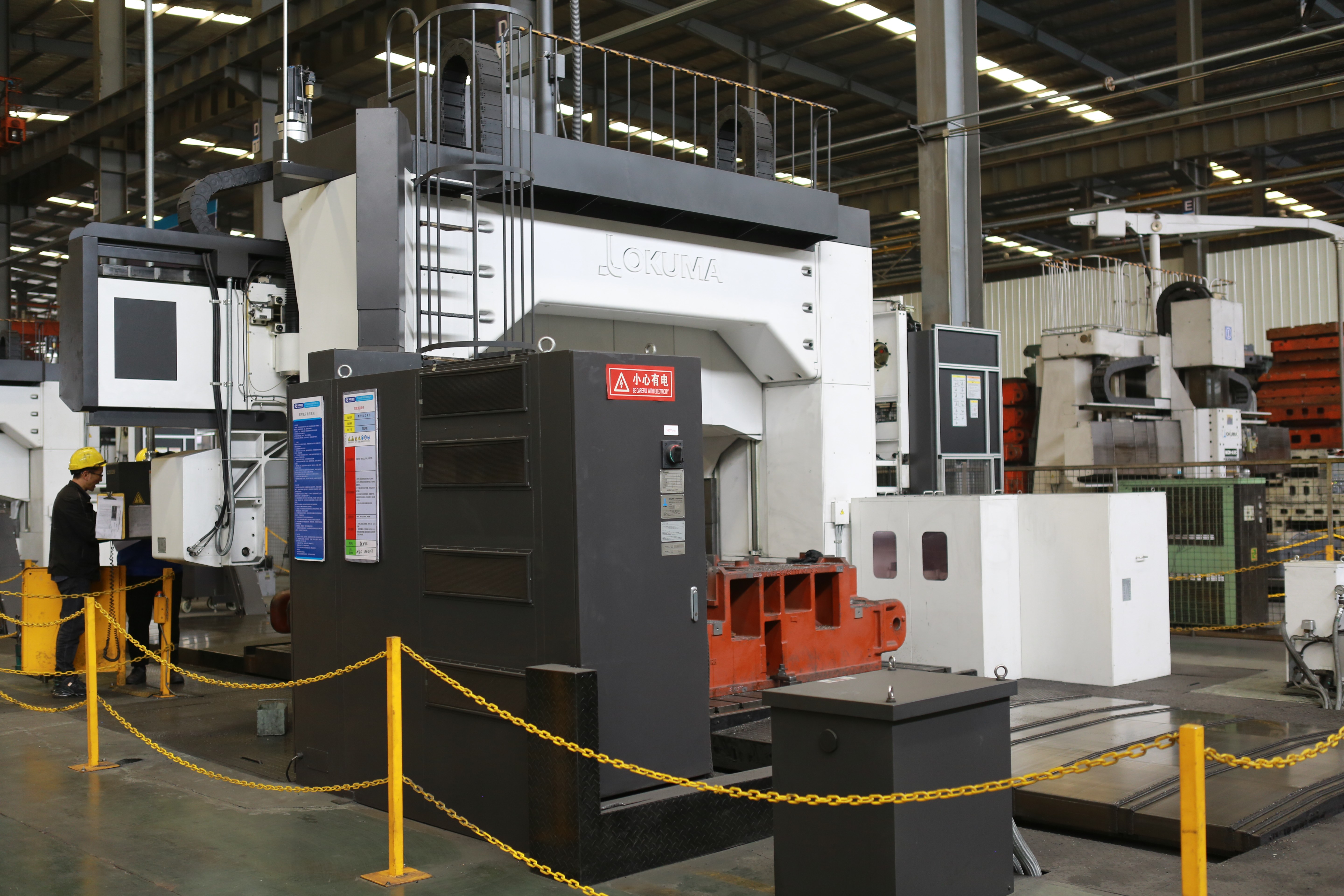
Post-casting CNC machining is a planned operation, not a correction step.
Quality control is documented across the chain. Mold design checks and Moldflow analysis, incoming steel certificate inspection, key process control during machining, assembly dimension checks, and slide, hardness and cooling-system inspections form part of the control plan, together with a pre-shipment spare-parts list and mold tryout videos. Inspection equipment in the plant includes CMM, spectrometer and carbon-sulfur analyzer, which allows chemistry and geometry to be checked in house.
Inspection scope for castings is stated as material test reports, dimensional inspection and NDT. For machine tool castings specifically, checks include visual inspection, hardness testing, dimensional inspection and internal defect detection, with stress-relief annealing applied to reduce long-term deformation.
| Document | What it establishes | When to request it |
|---|---|---|
| Material test report | Chemistry and mechanical properties against the grade specified on the drawing | With quotation and first article for structural parts |
| Dimensional inspection report | Geometry against the drawing, checked with CMM where required | First article and pre-shipment |
| NDT report | Internal defect acceptance for the casting | Where the drawing or end use requires it |
| IATF 16949 certificate | Certification number, issuing body, validity and certified scope | Automotive programmes, before award |
| First-article inspection report | Approval record linking the sample to the drawing | After tryout, before mass production |
| Mold tryout video | Tool condition and forming behaviour before shipment | Tooling projects and repeat orders |
Documentation available across the casting and tooling workflow.
Sand Casting vs Lost-Foam Casting vs Die Casting
The table below separates what is confirmed in the supplier's published casting scope from what has to be settled part by part. Cells marked as items to confirm are questions for the drawing and the quotation, not product claims.
| Decision factor | Sand casting | Lost-foam casting | Die casting |
|---|---|---|---|
| Mould or pattern | Sand mould formed around a pattern; resin sand is used at the casting plant | Single-use foam pattern consumed in the mould | Reusable metal die |
| Tooling position | Low mould cost and flexible design modification (confirmed) | Pattern cost to be confirmed per project | Die is the main investment; amortisation to be confirmed per order |
| Part size and weight | Adaptable to large and heavy components; machine tool bases and heavy engineering parts named as fits | Up to 30 tons maximum single casting weight on the resin sand and lost-foam side | For large and heavy components the published guidance points to sand casting instead |
| Batch logic | Suited to medium and small batch production (confirmed) | Batch economics to be confirmed per pattern and part | Generally associated with volume production |
| Materials in scope | Grey iron, ductile iron, carbon steel, alloy steel; cast steel and aluminum alloys listed in the wider casting scope | Same casting material families; grade to be confirmed per drawing | Aluminum alloys listed among compatible metals; alloy to be confirmed per drawing |
| Named applications | Machine tool bases, heavy engineering equipment | Auto mould and machine tool castings | Listed as a production process; part geometry to be confirmed |
| Verify before ordering | Sample lead time of about 25 to 50 days, NDT, stress-relief annealing for machine tool parts | Pattern cost, dimensional repeatability, wall thickness capability | Draft allowance, porosity acceptance criteria, machining stock |
Comparison limited to confirmed production facts and open items for quotation.
Step by Step: From Drawing to Delivered Casting
- Drawing or sample intake. Production runs per drawings or samples, with DFMA support, material advisory and special process requirements reviewed before quoting.
- Process and material selection. Sand, lost-foam or die casting is fixed first, then the grade, the tolerance and the weight range are confirmed per drawing.
- Quotation. Engineers respond within 24 hours and quotations are issued in 1 to 7 days. Delivery terms are FOB, CIF, EXW or CFR.
- Pattern, mould or die. Mould design and manufacturing are handled in house, with mould design checks and Moldflow analysis before cutting.
- Sample and first article. Sand casting sample lead time is approximately 25 to 50 days. Tryout and first-article inspection reports document the result.
- Mass production. Casting capacity exceeds 30 tons per month, with key process control applied during machining.
- Post-casting processing. Heat treatment, CNC machining, welding and assembly, and surface finishing such as electrophoresis or painting are completed to the agreed route.
- Inspection and documentation. Material test reports, dimensional inspection and NDT, plus pre-shipment checks and a spare-parts list, close the production file.
- Packing and shipment. Sea freight runs about 30 to 45 days and air freight about 3 to 7 days; acceptance is based on a pre-shipment test and payment terms are 30/70.
Use Cases by Industry
Machine tools and heavy machinery
Grey iron machine beds and columns are the clearest example of a casting where the material decision and the process decision are the same decision. The Mexican manufacturer case in the company's references covers 20 sets of heavy-duty mechanical castings in service for 5 to 10 years, with the reported result being excellent vibration damping and stable machining accuracy. For a buyer, that is the specification to test against: vibration behaviour under cutting load, and whether the part still measures the same after years in service.
Automotive vehicles and components
Automotive casting programmes run into the certification question immediately. Hailong is certified to IATF 16949, ISO 9001, ISO 14001 and OHSAS 18001, and supplies Renault, Nissan, Mercedes-Benz, Doosan and GD overseas alongside FAW Jiefang, SAIC-GM, BAIC, Dongfeng and Beijing Benz domestically. Because the IATF certificate scope is stated as the manufacture of stamping and welding parts, an automotive casting programme should confirm in writing how the quality system applies to the cast part and which inspection records will accompany it.
Construction equipment and industrial equipment
Construction equipment castings are specified for high-load and wear conditions, where material grade and internal soundness matter more than surface appearance. Industrial equipment and architectural components are also listed among the applicable industries for the casting service, typically as housings, brackets, counterweights and structural elements that combine a casting with fabricated or stamped parts.
Where Casting Sits Beside Stamping in the Same Bill of Materials
Many industrial assemblies draw on both castings and press-formed parts, and sourcing them from separate suppliers creates a tolerance stack that nobody owns. Hailong runs both under one roof: metal stamping and deep drawing for custom metal parts, an 8,250T automated stamping line with a 9 SPM average effective cycle, press lines from 630T to 3,400T, laser cutters and robotic welding cells, with monthly capacity of 8,000 to 10,000 units for metal stamping parts.
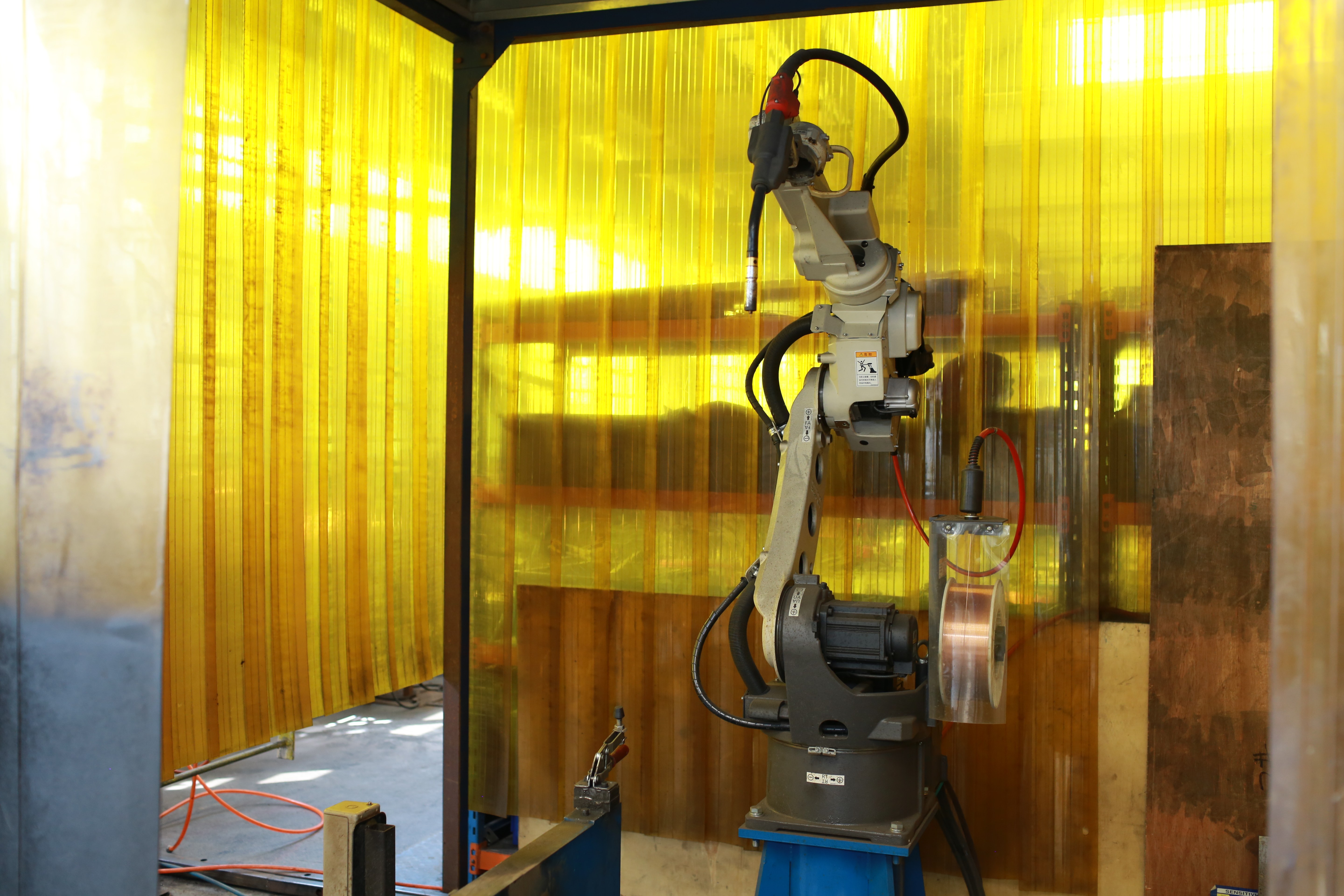
Welding and assembly cells handle stamp-and-weld assembly components and truck body structures.
Typical stamping work at this scale covers automotive metal stamping, progressive die metal stamping, deep draw metal stamping, cold rolled steel metal stamping, stainless steel metal stamping including heavy-gauge stainless steel stamping, and stamp-and-weld assembly components. Market context supports why buyers look for this combination: Grand View Research estimated the global metal stamping market at USD 257.3 billion in 2025, with Asia Pacific holding a 37.0% revenue share and the automotive metal stamping segment estimated at USD 90.6 billion in the same year.
Supplier Capability Check: Hailong Metal Fabrication
Hailong Metal Fabrication, legally Qingdao Hailong Machinery Technology Co., Ltd., was founded in January 2000 and is headquartered in Jimo District, Qingdao, Shandong Province, China. It operates five production campuses covering over 500,000 m² of land and 300,000 m² of floor space, equipped with more than 500 sets of precision CNC machining, large-scale stamping and welding equipment, and holds self-operated import and export rights. The company has approximately 500 employees.
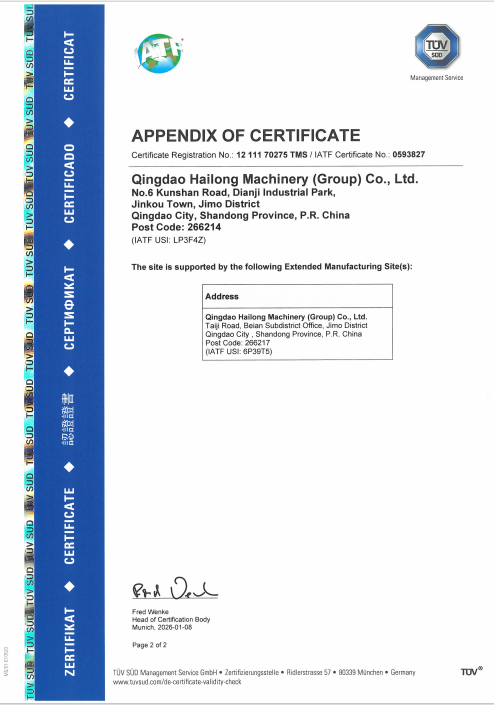
IATF 16949 certificate 0593827, issued by TUV, valid from 8 January 2026 to 7 January 2029.
Casting capability is concentrated in Qingdao Haishun Jihua Machinery Co., Ltd., which produces auto mould and machine tool castings using resin sand and lost-foam processes with a maximum single casting weight of 30 tons. The wider group includes a cold stamping die specialist established in 1993, and subsidiaries covering auto parts manufacturing, gauge and fixture design, and precision die machining. The in-house Technology Center has been certified as a Qingdao Municipal Enterprise Technology Center since 2008 and holds over 100 patents across chassis structures, bumper systems and stamping tooling.
Certification portfolio: IATF 16949, ISO 9001, ISO 14001 and OHSAS 18001. Company titles include National High-Tech Enterprise, Provincial Specialized and Innovative SME, and Shandong Machinery Industry Top 100 Enterprise. Export markets cover the United States, United Kingdom, Germany, Japan, South Korea, India, the Middle East, Eastern Europe and Africa.
FAQ
Is Hailong IATF 16949 certified, and does that certificate cover castings?
Hailong holds IATF 16949 certificate 0593827, issued by TUV, valid from 8 January 2026 to 7 January 2029, against the IATF 16949:2016-10-01 standard. The certified scope is stated as the manufacture of stamping and welding parts, without product design as per Chapter 8.3. Castings are listed separately within the company's production services, so an automotive casting programme should ask for written confirmation of how the quality management system applies to the cast part and which inspection documents will be supplied. The company also holds ISO 9001, ISO 14001 and OHSAS 18001 certification.
Can one supplier handle sand casting, lost-foam casting, die casting and the machining that follows?
Within the stated scope, yes. Hailong's production services list mould design and manufacturing, sand casting and lost-foam, die casting, metal stamping and deep drawing, precision CNC machining, welding and assembly, surface finishing, and truck body and cabin assembly. Casting capacity is over 30 tons per month, parts range from small components to large castings up to thousands of pounds, and the plant runs CNC machining and inspection equipment including CMM, spectrometer and carbon-sulfur analyzer. Tolerances and weight ranges are confirmed per drawing and process.
What commercial terms should a first casting order expect?
Delivery terms are FOB, CIF, EXW or CFR, payment terms are 30/70, and acceptance is based on a pre-shipment test. MOQ is not a single company-wide figure; it is confirmed with sales for the specific part and process. Quotations are issued in 1 to 7 days from a complete enquiry, and engineers respond within 24 hours.
How long does a casting sample take, and what comes with it?
For sand castings the sample lead time is approximately 25 to 50 days, and mass production timing depends on part structure and order quantity. Tooling and sampling stages are documented with mold tryout videos and first-article inspection reports, and casting inspection can include material test reports, dimensional inspection and NDT. Machine tool castings additionally pass through visual inspection, hardness testing, dimensional inspection, internal defect detection and stress-relief annealing.
What is the total lead time from drawing to delivered casting?
Engineers respond within 24 hours and quotations follow in 1 to 7 days. Sample lead time for sand castings is approximately 25 to 50 days, and production time depends on part complexity and order volume. Shipping examples are about 30 to 45 days by sea and 3 to 7 days by air. The practical next step is to send the drawing, target batch size and destination port for a dated schedule; request a quotation or a sample through the contact details below and the process route will be confirmed against the drawing.
Conclusion
Casting service selection comes down to three checks that a buyer can run before contacting anyone: whether the part is large and heavy enough that sand casting's low mould cost and design flexibility outweigh die casting; whether the geometry makes a withdrawn pattern impractical enough to justify lost-foam's single-use pattern; and whether the alloy on the drawing is one of the confirmed materials, or a grade that needs its own confirmation. Everything else, from machining stock to stress-relief annealing to NDT, follows from those three answers.
For buyers who want one supplier across castings, stampings and assemblies, Hailong Metal Fabrication offers the full route from mould design through casting, post-casting machining, welding and surface finishing, with IATF 16949, ISO 9001, ISO 14001 and OHSAS 18001 certification in place.

Send a casting drawing for review
Share the drawing, material grade, batch size and destination port. Engineers respond within 24 hours, with quotations in 1 to 7 days.
Email: nina@qdhailong.com | Tel: +86 176-6762-3223 | WhatsApp: +86 185-6390-5668
Website: en.qdhailong.com | Address: NO. 1009, YANOING ROAD, JIMO DISTRICT, QINGDAO CITY, SHANDONG PROVINCE, CHINA
Download the company brochure: Hailong Metal Fabrication brochure (PDF)
Have Questions or Need More Details?
Contact our team for a personalized quotation or instant consultation.
Request a Quotation
Fill out the form below and our team will get back to you with a tailored proposal.
WhatsApp Direct Chat
Prefer to chat in real-time? Message us on WhatsApp for instant assistance & quick answers.
- Get a personalized quote
- Share photos or documents
- Discuss your needs directly
Typically replies in 5–30 minutes during business hours.