Hailong Metal Fabrication: A Metal Stamping Manufacturer Profile for Global Buyers
Hailong Metal Fabrication: A Metal Stamping Manufacturer Profile for Global Buyers
Qingdao Hailong Machinery Technology Co., Ltd. — listed in third-party supplier directories as Qingdao Hailong Machinery Group Co., Ltd. and trading as Hailong Metal Fabrication — is a metal stamping and metal fabrication manufacturer founded in 2000 and headquartered in Jimo District, Qingdao, Shandong Province, China. The company builds stamping dies, operates automated stamping and robotic welding lines, produces custom castings from 0.5 tons to 35 tons, and manufactures truck bodies and special vehicle components. Roughly 70% of its output is exported, and its reference customer list includes domestic OEMs such as FAW Jiefang, SAIC-GM, BAIC, Dongfeng and Beijing Benz, alongside overseas names including Renault, Nissan, Mercedes-Benz, Doosan and GD.
At a glance — Hailong Metal Fabrication
- Founded: 2000 (the group's cold stamping die subsidiary, Qingdao Jitai Auto Mould Co., Ltd., dates to 1993)
- Headquarters: NO. 1009, YANOING ROAD, JIMO DISTRICT, QINGDAO CITY, SHANDONG PROVINCE CHINA
- Scale: approximately 500 employees; five production campuses; more than 500 sets of equipment; annual output of 5,000,000 pieces
- Engineering: 28 engineers; in-house Technology Center certified as a Qingdao Municipal Enterprise Technology Center since 2008; over 100 patents
- Certifications: IATF 16949, ISO 9001, ISO 14001, OHSAS 18001
- Core services: metal stamping mould, metal stamping fabrication, casting service, welding, truck body manufacture, surface treatment, CNC machining
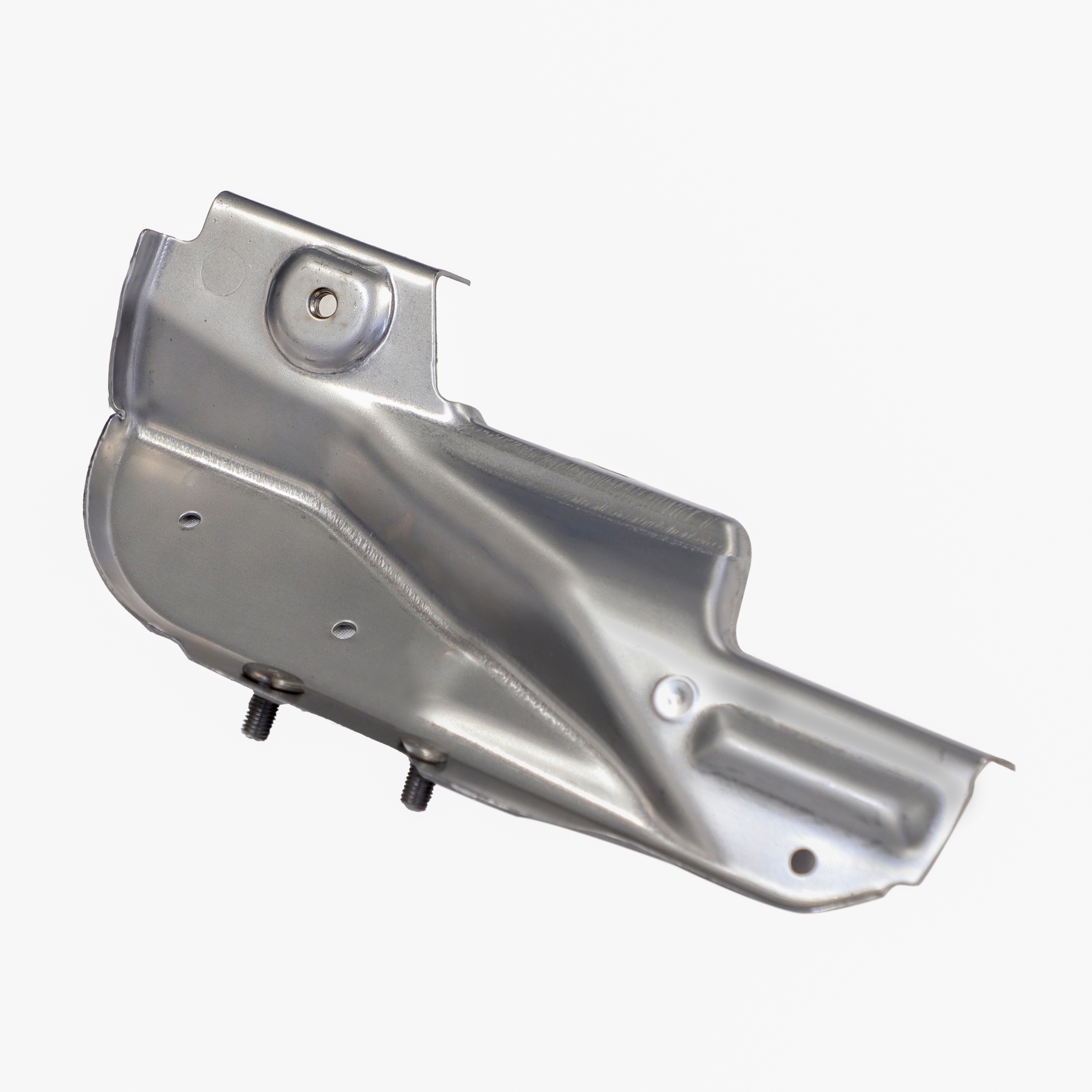
Metal stamping parts — Hailong Metal Fabrication, Qingdao, China
Why evaluating a metal stamping manufacturer is harder than it looks
The difficulty in sourcing metal stamping is not a shortage of suppliers; it is a shortage of comparable information. Public market reports describe a large, growing industry, but they rarely tell a buyer whether a specific factory can hold tolerance on a particular part, at a particular volume, with the tooling and inspection equipment the job actually requires.
Four gaps appear repeatedly when buyers move from a first search to a shortlist:
- Aggregated market data hides the supply structure. Published market-size figures blend merchant stampers with the captive stamping departments inside large OEMs, so a global total does not describe the competitive field a buyer is actually choosing from.
- Certification is a gate, not a capability. An IATF 16949 certificate proves a quality system exists; it does not show whether press tonnage, die type and inspection equipment match the part being quoted.
- Capability claims are usually untied to evidence. Statements such as "advanced stamping lines" mean little without a named press tonnage, a stated tolerance class, a listed material grade or a quoted lead time.
- Tooling and after-sales are frequently left out. Die development time, die maintenance responsibility and mass-production support determine total program risk more than the unit price of a stamped part.
This profile addresses those gaps for one manufacturer, using only equipment figures, certifications, materials, tolerances and customer references that the company publishes or that appear in third-party supplier directories.
Industry background: what the published numbers actually say
Metal stamping remains a capital-intensive, high-volume manufacturing category with a large installed base. Grand View Research reports that the global metal stamping market size reached USD 257.3 billion in 2025, with Asia Pacific holding a 37.0% revenue share in the same year, and estimates the automotive metal stamping market at USD 90.6 billion in 2025.
Those headline figures should be read with caution. Different research houses value the same market differently: Grand View Research at USD 257.3 billion, IMARC at USD 226.3 billion, and 360iResearch at USD 210.37 billion for the 2025 valuation. Industry commentary attributes part of that spread to whether captive stamping operations inside large OEMs are counted as market revenue. Regional share estimates diverge for the same reason. For a procurement team, the practical conclusion is that market-size numbers are directional indicators of demand — not benchmark pricing or capacity data.
Two structural facts are more useful for supplier evaluation:
- Compliance expectations are concrete. Industry analysis of the North America automotive steel stamping market describes IATF 16949 certification with real-time SPC monitoring and Run@Rate tests of 4,000 defect-free pieces as baseline entry criteria for new OEM automotive programs.
- Capital intensity is high at the advanced end. The same analysis notes that hot-stamping lines for advanced high-strength steel parts such as 1,500 MPa press-hardened steel can cost USD 8–12 million each, which is why press fleet depth and tooling capability separate general stampers from automotive-grade stampers.
A recurring data limitation is also worth noting: metal stamping parts are often bundled under a single customs heading (HS 7326.90, articles of iron or steel), so trade-flow analysis of stamped components at the 8-digit level is less granular than for many other machinery categories.
Company overview: what Hailong Metal Fabrication operates
Qingdao Hailong Machinery Technology Co., Ltd. was established in January 2000 and describes itself as a national medium-sized machinery manufacturer with total assets of RMB 1.2 billion. The group operates five production campuses covering over 500,000 m² of land and 300,000 m² of floor space, equipped with more than 500 sets of precision CNC machining, large-scale stamping and welding equipment, and holds self-operated import and export rights. Third-party supplier directory listings independently describe a facility compound occupying over 500,000 m² with 500 units of equipment including CNC machining, stamping, welding and molding.
The corporate structure combines five wholly-owned subsidiaries and two operational divisions:
- Qingdao Jitai Auto Mould Co., Ltd. (established 1993) — cold stamping dies for automotive body panels; recognized as a China Key Backbone Die Enterprise.
- Qingdao Haishun Jihua Machinery Co., Ltd. — auto mold and machine tool castings produced with resin sand and lost-foam processes, with a maximum single casting weight of 30 tons.
- Yantai Haijie, Qingdao Longtai Runda and Qingdao Taihengda — covering auto parts manufacturing, gauge and fixture design, and precision die machining respectively.
- Auto Parts Division — an 8,250T automated stamping line with a 9 SPM average effective cycle, plus 3,400T, 800T–2,400T and 630T–800T press lines, laser cutters and robotic welding cells.
- Special Vehicle Division — light and heavy truck cabs, including the JH6+ crew cab, and a full range of cargo boxes, supported by 13 roll-forming lines and an e-coating facility with annual capacity for 100,000 cabs and 30,000 cargo boxes.
In practical terms, the group covers the full chain from die design and casting of die bodies through stamping, welding, surface treatment and final vehicle-body assembly — a structure that matters when a program requires both tooling and serial production from one supplier.
Core products and solutions
Metal stamping fabrication and sheet metal fabrication
Sheet metal fabrication at Hailong covers stamping, laser cutting, shearing, CNC punching and press-brake bending. Supported materials include cold-rolled steel, hot-rolled steel, 304 stainless steel and 304L stainless steel, with cold-rolled steel as the base material; zinc-aluminum alloy and brass are supported as additional metals. Precision machining tolerance for this service is CT4-7.
Surface treatments available include sand blasting, powder coating, painting, anodizing, polishing and electroplating. Machining capabilities include CNC turning, cutting, milling, grinding and drilling. The service is stated to meet ASTM, ASME, DIN, JIS, ISO, BS, API, EN and GB standards, with CE certification, and is intended for the manufacturing, machinery and automotive parts industries.
Stamping dies and tooling
Die making is the group's original capability. Qingdao Jitai Auto Mould specializes in cold stamping dies for automotive body panels, and Qingdao Taihengda covers precision die machining. Die steel grades commonly used include Cr12MoV, SKD11 and P20, selected according to stamping material, material thickness and required production lifetime.
Die type follows volume and part geometry. Progressive dies integrate multiple forming processes in one die set and are recommended for high-volume auto sheet metal components, where production efficiency and precision stability matter most. Single stamping dies carry lower tooling cost and are more suitable for small batches, large-size parts or complex deep-drawn parts.
Casting service
The casting service covers sand casting, lost-foam casting and die casting, plus melting and material processing, post-casting machining and heat treatment. Materials include grey iron, ductile iron, cast steel and aluminum alloys, with carbon steel, alloy steel, heat-resistant steel and wear-resistant steel also processed. Castings range from 0.5 tons to 35 tons, and the operation supports both small-batch prototyping and mass production, with ultrasonic NDT and integrated heat treatment, shot blasting and precision machining. The casting operation is certified to ISO 9001 and IATF 16949 and serves the automotive, general machinery, construction equipment and engineering machinery industries.
Welding and stamp-and-weld assembly
Welding is a listed core service alongside metal stamping fabrication, supported by robotic welding cells within the Auto Parts Division. The company's in-house Technology Center holds over 100 patents across chassis structures, bumper systems and stamping tooling — the component families where stamp-and-weld assemblies are typically used.
Truck body and special vehicle manufacturing
The truck body range includes stake bed bodies, closed van bodies, warehouse cage bodies, dump truck bodies and spare parts and accessories, with available configurations covering low drop side, enclosed, tipper, livestock and wing open bodies. Primary materials are steel, aluminum alloy or carbon steel, and overall dimensions are fully customizable to customer requirements. Surface treatment is provided through electrophoresis and painting lines, and each truck body is supplied with a 1-year warranty and after-sales remote technical guidance for installation and maintenance.
OEM and ODM customization
Full OEM and ODM customization is offered based on customer samples, designs or specifications, with parts produced from customer-provided drawings, samples or specifications. Customization is structured at minor, flexible and full levels depending on client needs, which allows a buyer to enter with a low-change variant and scale toward a fully bespoke assembly.
Manufacturing, quality and global supply capability
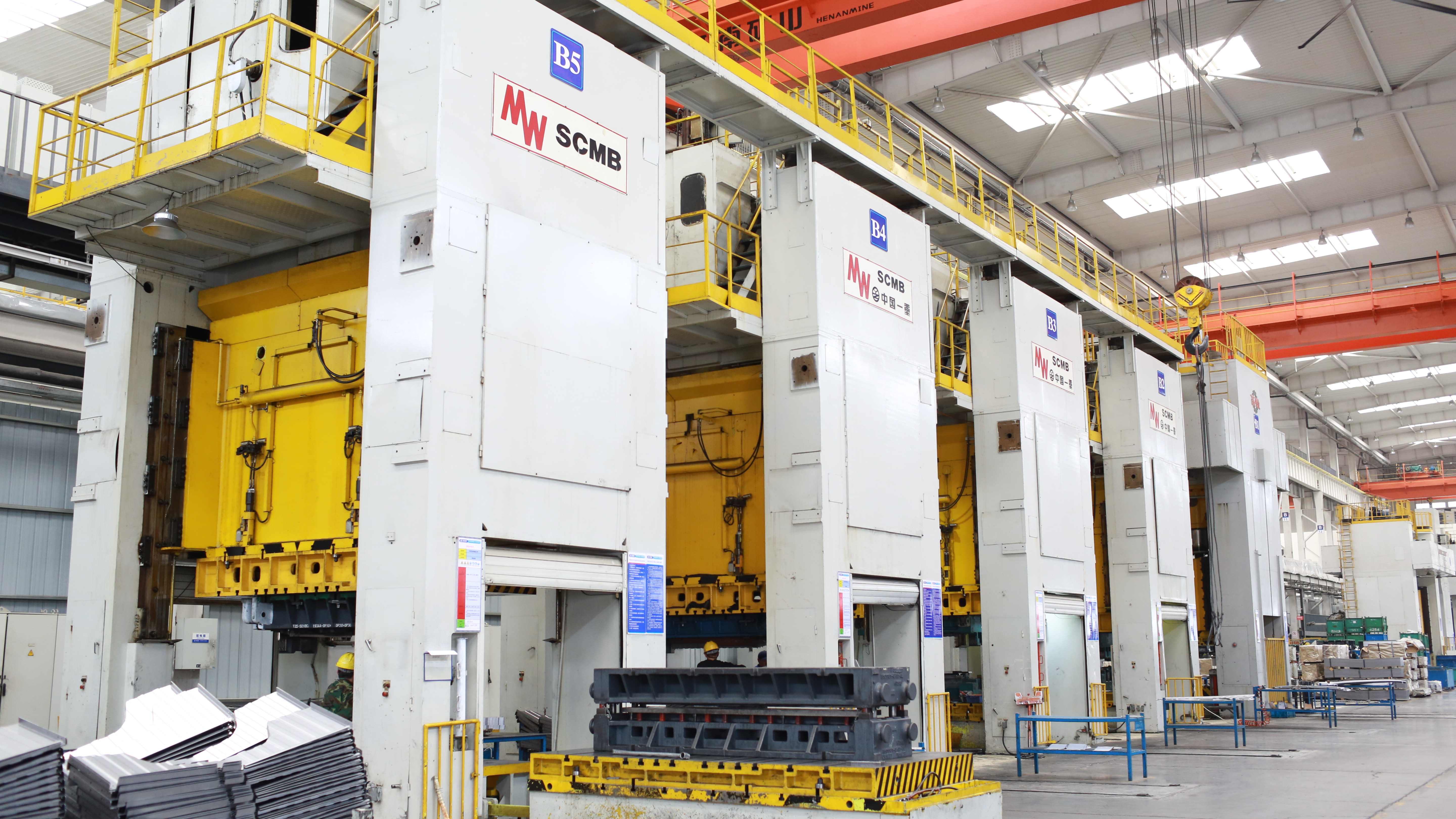
Automated stamping production line, Hailong Metal Fabrication
Manufacturing and engineering depth
Stamping capacity spans press lines from 630T to 8,250T, with the 8,250T automated line averaging a 9 SPM effective cycle. The wider equipment portfolio includes laser cutters, CNC centers, wire-cut machines, electric furnaces, welding robots, electrophoresis and painting lines, and inspection equipment such as CMM, spectrometer and carbon-sulfur analyzer. Annual production capacity reaches 5,000,000 pieces, and the company employs approximately 500 staff, including an R&D team of 28 engineers.
Engineering support covers DFMA, Moldflow analysis, material advisory, heat treatment and part-level testing. Special requirements — such as CAE or PPAP deliverables — are confirmed in advance of a project rather than assumed, which is the honest boundary of what any supplier can promise before a drawing is reviewed.
Quality control and certifications
The company is certified to IATF 16949, ISO 9001, ISO 14001 and OHSAS 18001. Its Technology Center has held Qingdao Municipal Enterprise Technology Center status since 2008. Part-level inspection includes incoming material checks, hardness testing and assembly dimension verification; machine tool castings undergo stress-relief annealing to reduce deformation in long-term use, and castings can be inspected with ultrasonic NDT.
Against the market baseline described earlier — IATF 16949 with real-time SPC monitoring and Run@Rate validation for new OEM programs — Hailong's automotive certifications and OEM customer base place it in the tier of suppliers that OEM buyers screen for entry criteria rather than the general fabrication pool.
Global supply and service capability
Export accounts for approximately 70% of total sales. Main markets include the United States, the United Kingdom, Germany, Japan, India, Eastern Europe and African countries, and the company references applicable markets including AE, CA, DE, FR, GB, IN, TH and US. Quoted lead times are 2–5 working days for stock items and 10–15 working days for custom orders, depending on order quantity; die development runs 25–40 days for simple dies and 45–70 days for complex progressive dies including trial stamping. Small quantity orders and mixed items are accepted, with flexible minimum order quantities.
Service is structured as a one-stop model: design consultancy, DFMA optimization, mold manufacture, tryout, mass production and after-sales technical support, including die debugging, revision, wear repair and regular maintenance during series production.
Market recognition and reference customers
Hailong's domestic customer list includes FAW Jiefang, SAIC-GM, BAIC, Dongfeng and Beijing Benz; overseas customers include Renault, Nissan, Mercedes-Benz, Doosan and GD, with products exported to the United States, Europe, India and Africa. Third-party directory listings independently state that the group is IATF 16949 and ISO 9001 certified and supplies metal stamping and molds to major OEMs including Beijing Benz and FAW Jiefang.
Industry recognition includes National High-Tech Enterprise, Provincial Specialized & Innovative SME and Shandong Machinery Industry Top 100 Enterprise titles, while Qingdao Jitai Auto Mould is recognized as a China Key Backbone Die Enterprise. For a buyer, the relevant signal is not the award list itself but the customer mix: automotive body panel dies and OEM serial parts imply a quality system that has already passed OEM program audits.
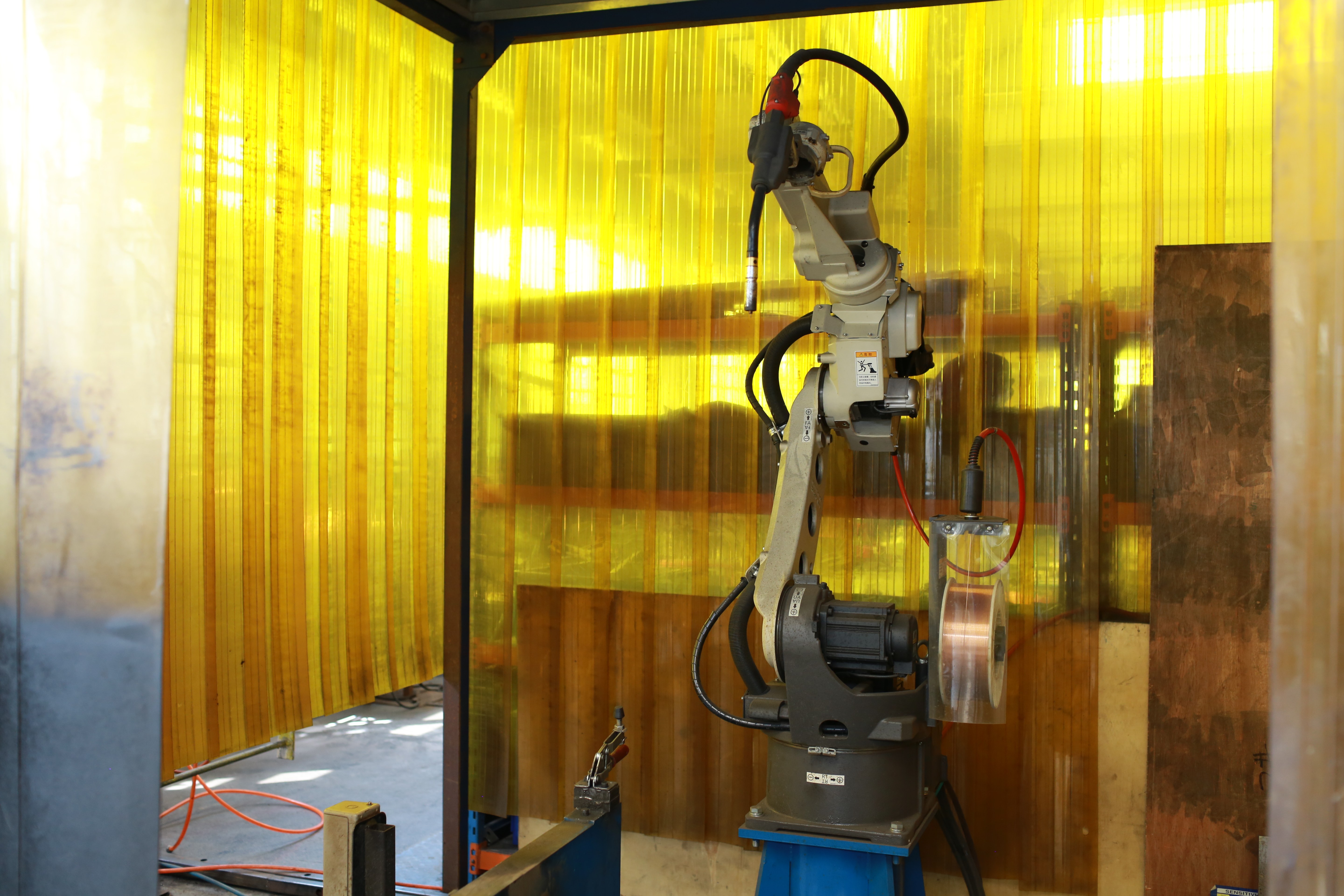
Robotic welding cell supporting stamp-and-weld assembly work
How a stamping program moves from drawing to shipment
The sequence below reflects Hailong's stated operating mode, from production per drawing or sample through to after-sales technical support. It doubles as a buyer checklist for any comparable supplier.
- Drawing or sample intake. Parts are produced from customer-provided drawings, samples or specifications, so a clear data pack is the starting point for any quotation.
- DFMA and material advisory. Design-for-manufacture review, material selection and — where relevant — Moldflow analysis are applied before tooling is cut, when changes are still inexpensive.
- Die type decision. Progressive die for high-volume auto sheet metal components; single operation die for small batches, large-size or complex deep-drawn parts.
- Die manufacture. Die steel selected from Cr12MoV, SKD11, P20 and comparable grades; simple dies typically take 25–40 days, complex progressive dies 45–70 days.
- Die tryout and first-article inspection. Tryout verifies forming behaviour before serial release; first-article inspection confirms dimensions against the drawing.
- Validation and part-level testing. Incoming material checks, hardness testing and assembly dimension verification; ultrasonic NDT for castings; special CAE or PPAP requirements confirmed in advance.
- Mass production. Automated press lines and robotic welding cells handle serial output; stock items ship in 2–5 working days and custom orders in 10–15 working days depending on quantity.
- After-sales support. Die debugging, revision, wear repair and scheduled maintenance during mass production, plus remote technical guidance for installation and maintenance where applicable.
Use cases across industries
The application scope is broad because the group combines stamping, casting, welding and surface treatment. Documented industries include automotive and auto parts, heavy machinery, industrial equipment, household appliances, furniture and architectural components, and oilfield equipment, with parts produced for vehicle operation subject to vibration and corrosion, and castings for high-load and wear conditions.
| Application area | Typical requirement | Relevant Hailong capability |
|---|---|---|
| Automotive body and structural parts | High-volume, stable precision, IATF quality system | Cold stamping dies for body panels, 8,250T automated line at 9 SPM, 3,400T and 630T–2,400T press lines |
| Household appliance components | Consistent finish, cost control at volume | Sheet metal fabrication in cold-rolled steel, powder coating, painting and electroplating |
| Heavy machinery and machine tools | Rigidity, vibration damping, low residual stress | Casting service with stress-relief annealing, resin sand and lost-foam casting up to 30 tons per piece |
| Construction and industrial equipment | Wear resistance, structural strength | Castings from 0.5 to 35 tons in wear-resistant and alloy steels, plus ultrasonic NDT |
| Transportation and special vehicles | Custom dimensions, corrosion protection | Truck cabs and cargo boxes, 13 roll-forming lines, e-coating capacity for 100,000 cabs annually |
| Oilfield and architectural components | Mixed materials and batch sizes | Small quantity and mixed-item orders accepted, flexible MOQ |
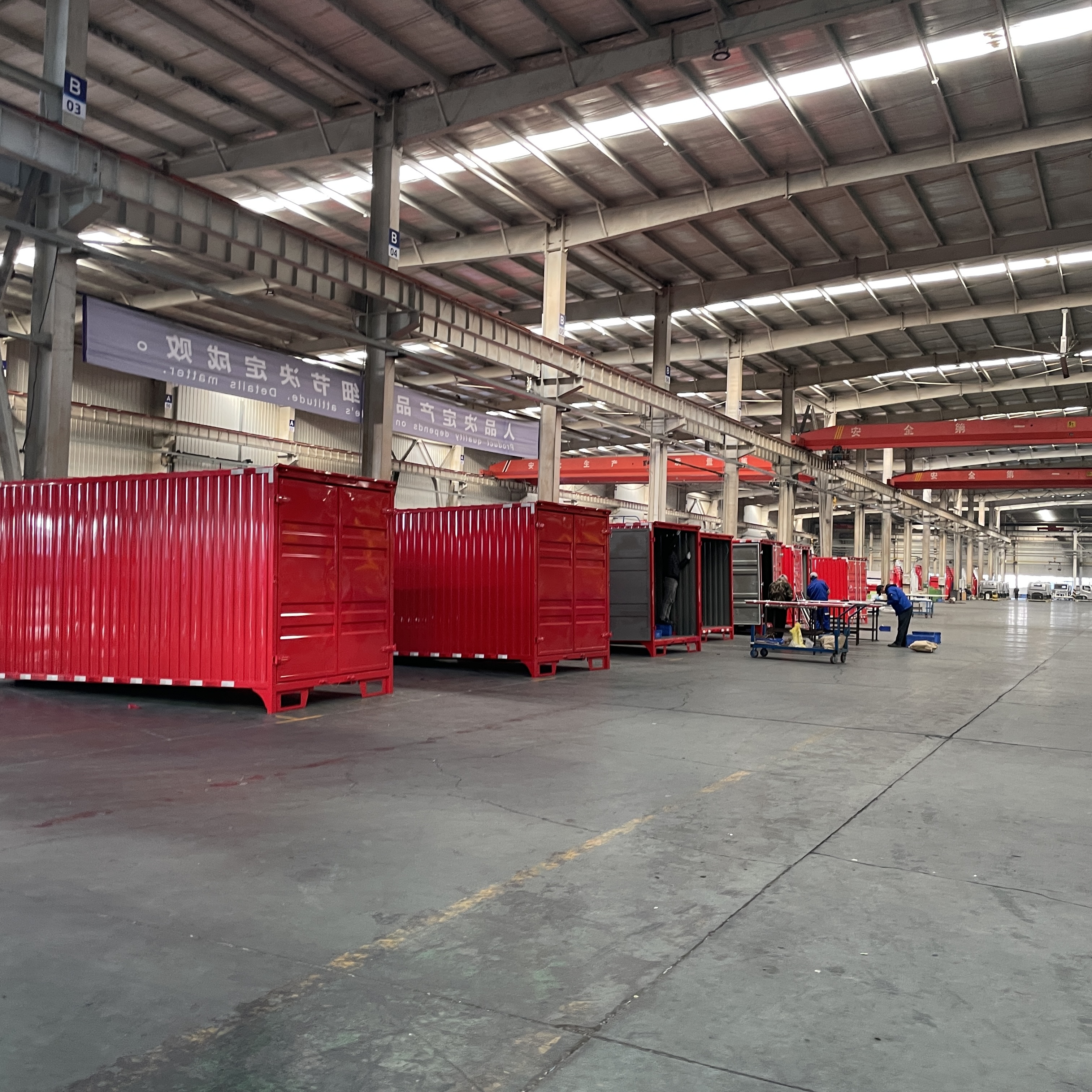
Truck body workshop — Special Vehicle Division, Hailong Metal Fabrication
Capability comparison: Hailong service lines at a glance
The table below summarises the verified scope of each service line. It is a capability matrix, not a ranking, and it uses only processes, materials and capacities the company publishes.
| Service line | Processes | Materials | Key verified figures |
|---|---|---|---|
| Metal stamping / sheet metal fabrication | Stamping, laser cutting, shearing, CNC punching, press-brake bending | Cold-rolled steel, hot-rolled steel, 304 / 304L stainless steel; zinc-aluminum alloy, brass | CT4-7 tolerance; 500+ machines; 2–5 days stock, 10–15 days custom |
| Stamping dies and tooling | Progressive die and single operation die design, fabrication, tryout, maintenance | Die steels including Cr12MoV, SKD11, P20 | 25–40 days simple dies; 45–70 days complex progressive dies |
| Casting service | Sand casting, lost-foam casting, die casting, melting, heat treatment, post-casting machining | Grey iron, ductile iron, cast steel, aluminum alloys; carbon, alloy, heat-resistant and wear-resistant steels | 0.5–35 tons per part; max single casting 30 tons; ultrasonic NDT; ISO 9001 / IATF 16949 |
| Welding / stamp-and-weld assembly | Robotic welding cells, assembly welding | Steel components per drawing | 100+ patents across chassis structures, bumper systems and stamping tooling |
| Truck body and special vehicle | Roll forming, welding, e-coating, painting | Steel, aluminum alloy, carbon steel | 13 roll-forming lines; 100,000 cabs and 30,000 cargo boxes annual capacity; 1-year warranty |
| Surface treatment and CNC machining | Sand blasting, powder coating, painting, anodizing, polishing, electroplating; CNC turning, milling, grinding, drilling | As per part specification | CT4-7 machining tolerance; electrophoresis and painting lines |
Die selection reference: progressive die vs single operation die
For buyers comparing quotations, die choice is usually the largest single cost and lead-time variable. Hailong's published selection logic is straightforward:
| Decision factor | Progressive die | Single operation die |
|---|---|---|
| Best fit | High-volume auto sheet metal components | Small batches, large-size parts, complex deep-drawn parts |
| Process integration | Multiple forming processes integrated in one die set | One operation per die, sequenced across presses |
| Output and precision | High production efficiency with stable precision | Lower tooling cost with greater flexibility for low volume |
| Indicative lead time | 45–70 days including trial stamping (complex dies) | 25–40 days for simple dies |
Reference points only. Actual die type, lead time and cost are confirmed per drawing, material and annual volume.
FAQ: China metal stamping manufacturers
1. What certifications should a China metal stamping manufacturer hold for an automotive program?
For new OEM automotive programs, IATF 16949 certification with real-time SPC monitoring and Run@Rate tests of 4,000 defect-free pieces is described in industry analysis of the North America automotive steel stamping market as a baseline entry criterion. Hailong Metal Fabrication holds IATF 16949, ISO 9001, ISO 14001 and OHSAS 18001 certification, and its casting operations are also certified to ISO 9001 and IATF 16949.
2. Can one metal stamping supplier handle both high-volume auto parts and large heavy-gauge components?
Capability depends on press tonnage, die type and material range rather than on a single certificate. Hailong's Auto Parts Division runs an 8,250T automated stamping line with a 9 SPM average effective cycle, alongside 3,400T, 800T–2,400T and 630T–800T press lines, laser cutters and robotic welding cells. Sheet metal fabrication covers cold-rolled steel, hot-rolled steel and 304 / 304L stainless steel with CT4-7 machining tolerance, while the casting service handles parts from 0.5 tons to 35 tons.
3. What lead times and order quantities should buyers expect?
Hailong quotes 2–5 working days for stock items and 10–15 working days for custom orders, depending on order quantity. Tooling lead time depends on die complexity: simple dies normally take 25–40 days, while complex progressive dies take 45–70 days including trial stamping. Small quantity orders and mixed items are accepted, with flexible minimum order quantities.
4. How can a buyer validate metal stamping quality before mass production?
The standard path is die tryout followed by first-article inspection before mass production. Hailong supports DFMA, Moldflow analysis, material advisory, heat treatment and part-level testing, including incoming material checks, hardness testing and assembly dimension checks, plus ultrasonic NDT for castings. Special process or certification requirements such as CAE and PPAP are confirmed in advance of the project.
5. How do I start a metal stamping project with Hailong Metal Fabrication?
Send a drawing, sample or specification to the sales team, and the company will confirm die type, material, tolerance and lead time before quoting. Contact Nora at nina@qdhailong.com or +86 176-6762-3223, or reach the team on WhatsApp at +86 185-6390-5668. Sample and quotation requests are the standard next step, and the company brochure with the full product overview can be downloaded from the link at the end of this article.
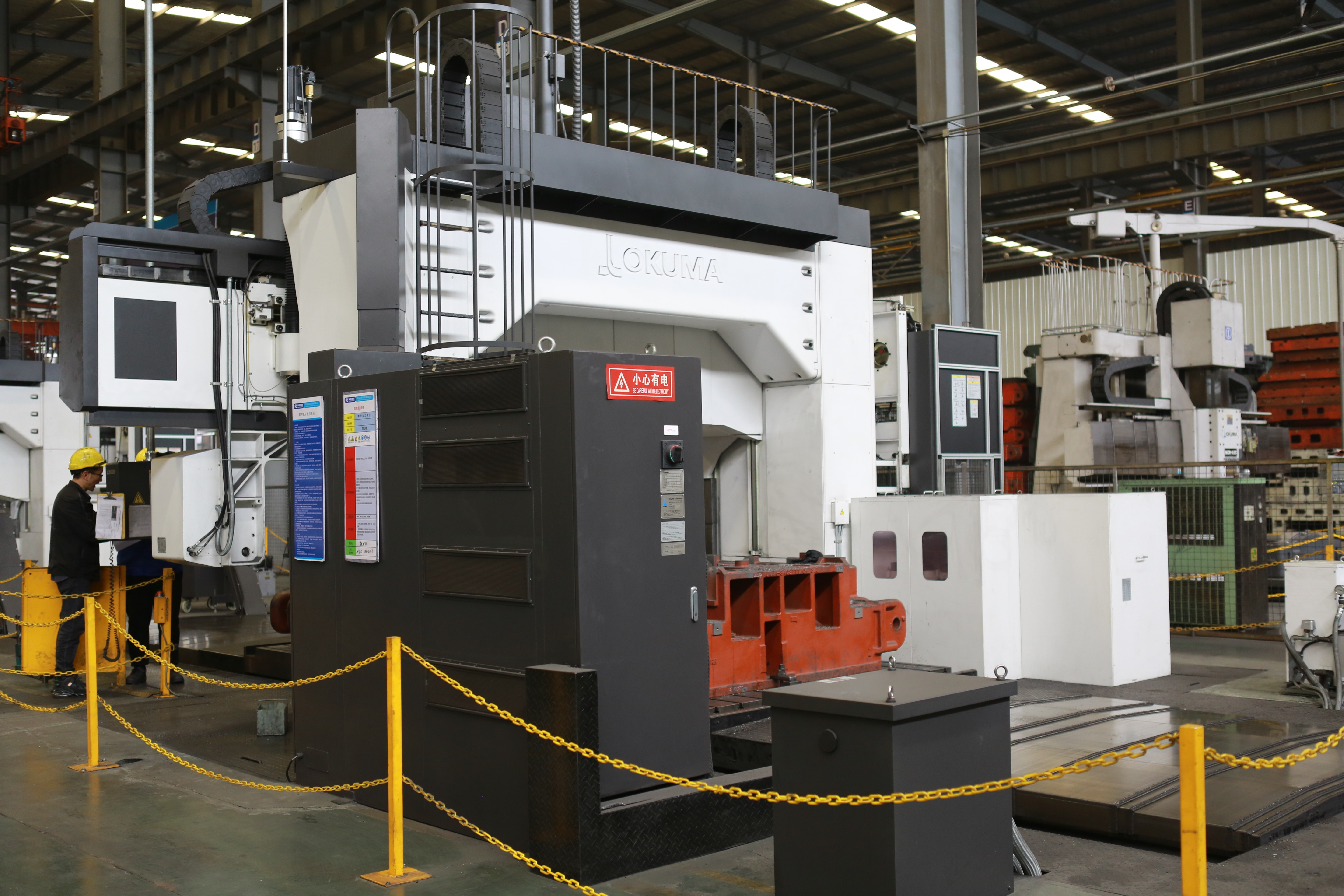
CNC machining supporting stamping and casting production
Conclusion: where Hailong fits in a metal stamping sourcing strategy
Hailong Metal Fabrication positions itself as an integrated stamping, casting and vehicle-body manufacturer rather than a single-process job shop. The verifiable basis for that position is a press fleet spanning 630T to 8,250T, an 8,250T automated line running at a 9 SPM average effective cycle, casting capability from 0.5 to 35 tons, 13 roll-forming lines with e-coating capacity for 100,000 cabs and 30,000 cargo boxes annually, more than 500 sets of equipment, around 500 employees, a 28-engineer R&D team, and an annual output of 5,000,000 pieces.
On compliance, the company holds IATF 16949, ISO 9001, ISO 14001 and OHSAS 18001, supported by OEM references including FAW Jiefang, SAIC-GM, BAIC, Dongfeng, Beijing Benz, Renault, Nissan, Mercedes-Benz, Doosan and GD. Because roughly 70% of sales are exported to markets including the United States, the United Kingdom, Germany, Japan, India, Eastern Europe and Africa, documentation, packaging and export handling are already routine rather than exceptions.
Procurement value comes from three things a buyer can test directly: tooling and stamping under one roof, which reduces the risk of die ownership disputes between toolmaker and stamper; published lead times of 2–5 working days for stock items, 10–15 working days for custom orders and 25–70 days for tooling; and flexible minimum order quantities that allow a small or mixed-item validation run before volume commitment.
The limits are worth stating plainly. Advanced high-strength steel hot stamping, for example, is a capital-intensive process sector-wide, with hot-stamping lines reportedly costing USD 8–12 million each; buyers with 1,500 MPa press-hardened steel requirements should confirm line availability and PPAP scope per project rather than assuming coverage from general stamping capacity.
Next step: sample, quotation or full catalogue
Send your drawing, sample or specification and Hailong's team will confirm die type, material grade, tolerance and lead time. Contact Nora at nina@qdhailong.com or +86 176-6762-3223, or message the team on WhatsApp at +86 185-6390-5668. The company brochure with the complete product and capability overview can be downloaded here: Hailong Metal Fabrication brochure (PDF). More technical detail is available at en.qdhailong.com.
Qingdao Hailong Machinery Technology Co., Ltd. — NO. 1009, YANOING ROAD, JIMO DISTRICT, QINGDAO CITY, SHANDONG PROVINCE CHINA.