Heavy-Gauge Stainless Steel Stamping: Constraints OEM Buyers Must Verify
Heavy-Gauge Stainless Steel Stamping: Constraints OEM Buyers Must Verify
Heavy-gauge stainless steel stamping is the press-forming of thick-section 304 or 304L stainless blanks into structural, load-bearing or corrosion-exposed parts and welded sub-assemblies. Whether that work runs reliably on a production line is decided by four constraints: available press tonnage, tool steel and die architecture, material and first-article verification, and the exact scope printed on the supplier's IATF 16949 certificate.
This guide is written for buyers and engineers at the research-to-evaluation stage who are shortlisting suppliers for heavy-gauge stainless programs, including buyers sourcing from China. It sets out what the constraints are, how they are documented, and which evidence to request before a program is awarded. The documented capability of Qingdao Hailong Machinery Technology Co., Ltd. (Hailong Metal Fabrication) is used throughout as a concrete reference point.
Qingdao Hailong Machinery Technology Co., Ltd., trading as Hailong Metal Fabrication, is a Qingdao-based metal stamping, welding and fabrication manufacturer founded in January 2000 and headquartered in Jimo District, Qingdao, Shandong Province, China. The company designs and builds stamping dies and produces stamped, deep-drawn, laser-cut, CNC-punched, press-brake formed and welded metal components, and it operates an automotive parts division and a special vehicle body division. Around 70% of its output is exported; main markets include the United States, United Kingdom, Germany, Japan, India, Eastern Europe and African countries.
1. Problem Definition: What Changes When the Gauge Is Heavy
Heavy-gauge stainless stamping fails at the point where the general stamping brief stops asking hard questions. Four constraints decide whether a part can be produced, and each of them has to be verified rather than assumed.
Press tonnage and forming load
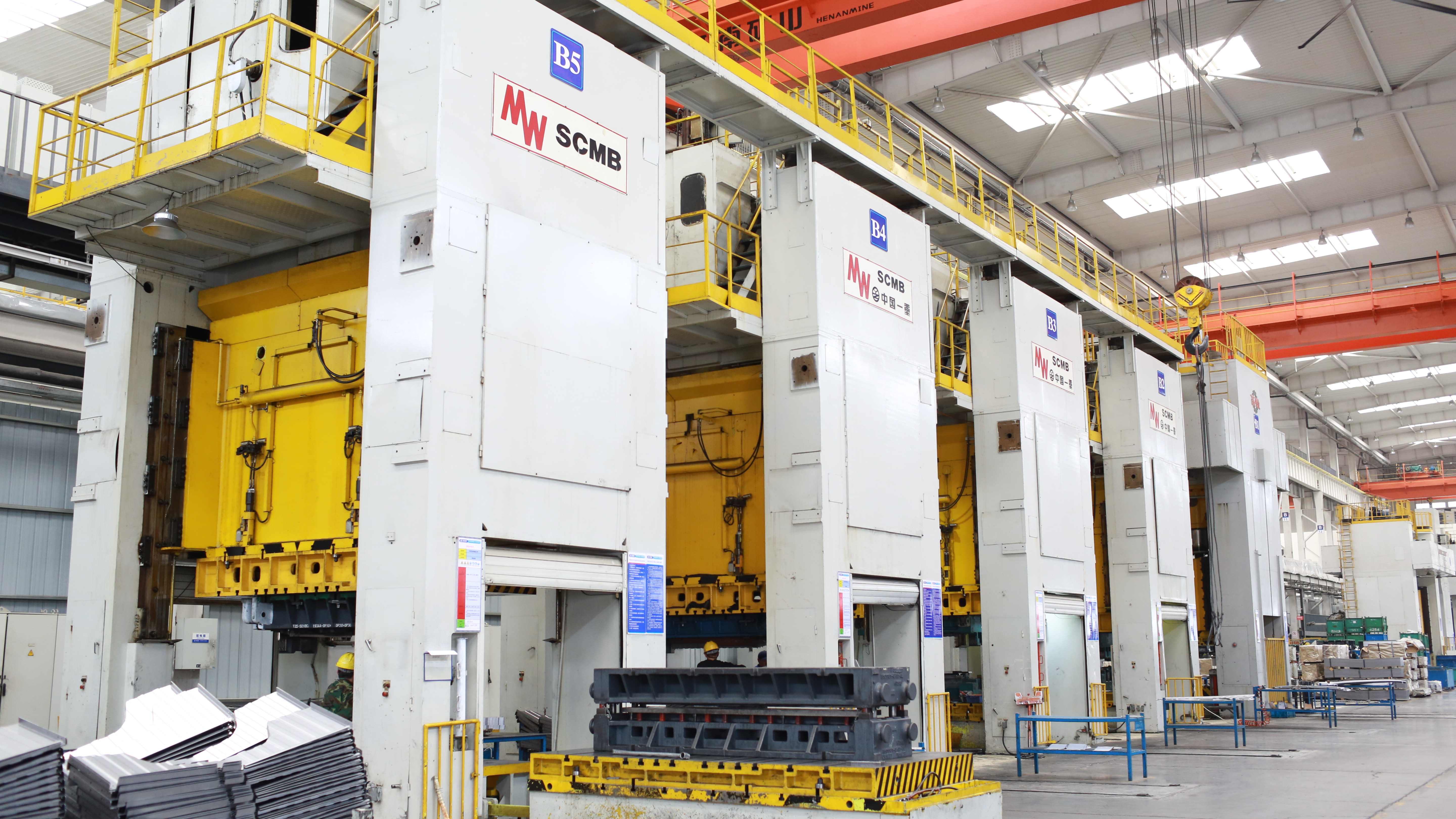
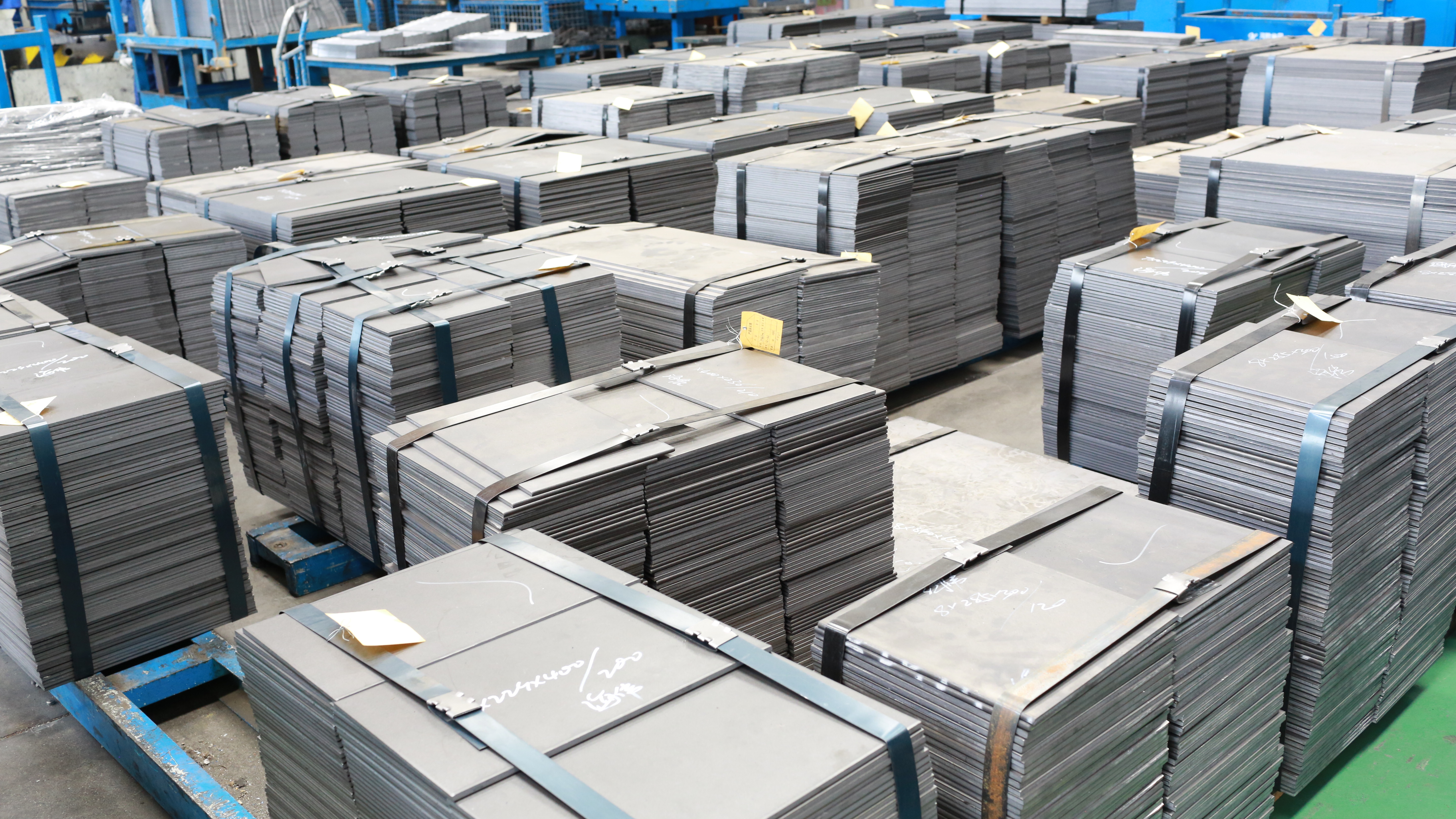
Thicker stainless sections demand more forming force than the same geometry in thinner or lower-strength sheet, and stainless steel work-hardens as it is formed, so the load curve rises through a multi-stage sequence instead of staying flat. The practical consequence for a buyer is that the press line becomes the limiting factor, not the supplier's willingness. A manufacturer whose heaviest press is a 630T–800T line and one running an 8,250T automated stamping line are not interchangeable on the same part family, even if both quote the same process name.
Springback, galling and die steel
Stainless steel typically shows greater springback and a stronger tendency to gall or pick up on tooling than cold-rolled steel, which pushes the tooling decision earlier in the project. Die steel is normally matched to three variables — stamping material, section thickness and required production lifetime. Hailong, for example, adopts grades such as Cr12MoV, SKD11 and P20 according to those variables rather than fixing one grade across all stainless work.
Certification scope, not just certification
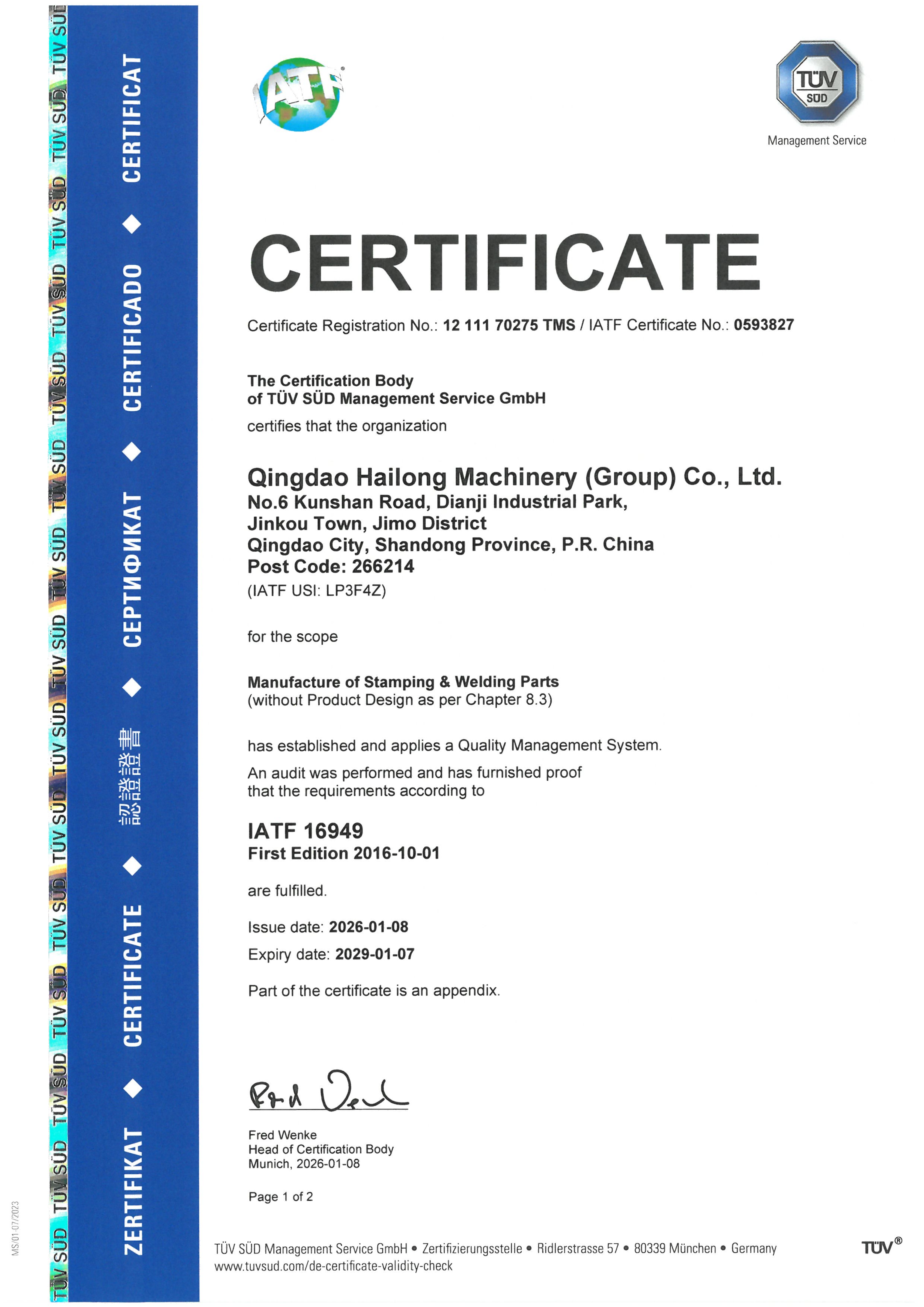
An IATF 16949 certificate is only useful if its scope covers the process being purchased. Hailong's certificate is scoped to the manufacture of stamping and welding parts, without product design as per Chapter 8.3. In plain operational terms, the certificate covers manufacturing, not design: design responsibility remains with the buyer or the buyer's customer. Teams that assume the certificate transfers design ownership create a compliance gap inside their own PPAP file, and that gap is usually discovered late.
Volume, MOQ and tooling amortization
Heavy-gauge tooling is amortized over volume, so minimum order quantity is a project variable rather than a catalogue figure. Hailong confirms MOQ with sales per project and accepts small quantity orders with mixed items within its sheet metal fabrication range.
2. Industry Background: What the Numbers Say
Metal stamping is a large, geographically concentrated category, and the published figures explain why buyers now treat certification and validated capability documentation as an entry ticket rather than a differentiator.
- The global metal stamping market was sized at USD 257.3 billion in 2025 (Grand View Research, Metal Stamping Market Size And Share Report, 2026–2033).
- Asia Pacific held a 37.0% revenue share of that market in 2025 (same source).
- Automotive metal stamping alone was estimated at USD 90.6 billion in 2025 (Grand View Research, Automotive Metal Stamping Market Size Report, 2026–2033).
- Third-party estimates of the same market differ — Grand View Research reports USD 257.3 billion, IMARC USD 226.3 billion and 360iResearch USD 210.37 billion for 2025 — largely because some methodologies include captive stamping departments inside large OEMs while others count only the merchant market.
On the compliance side, industry research on the North American automotive steel stamping market describes IATF 16949 certification, combined with real-time SPC monitoring and Run@Rate validation of 4,000 defect-free pieces, as a baseline entry criterion for new OEM automotive programs. That framing matters for heavy-gauge stainless work, because it means a supplier's ability to document process control is evaluated alongside the part itself.
Capacity is also capital-intensive. Hot-stamping lines used to produce 1,500 MPa press-hardened steel parts have been reported at USD 8–12 million each (Market Research Insights, North America Automotive Steel Stamping Market Size, Share & 2031 Growth Trends Report). Higher forming loads therefore tend to concentrate heavy-gauge capacity among a smaller group of manufacturers — which is why press lists and certificate scopes are worth reading closely.
3. How Hailong Metal Fabrication Is Configured for Heavy-Gauge Stainless Work
Press capacity
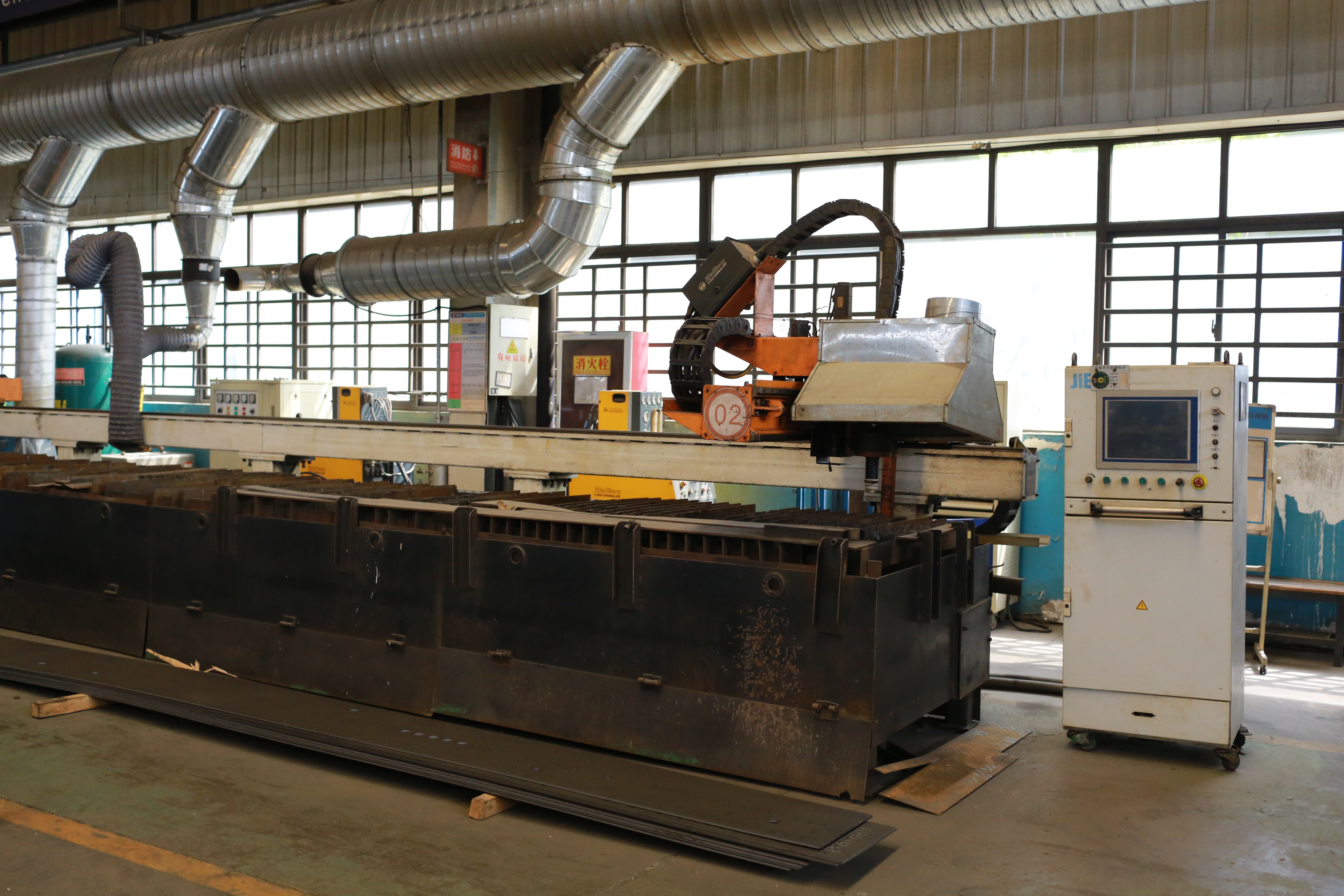
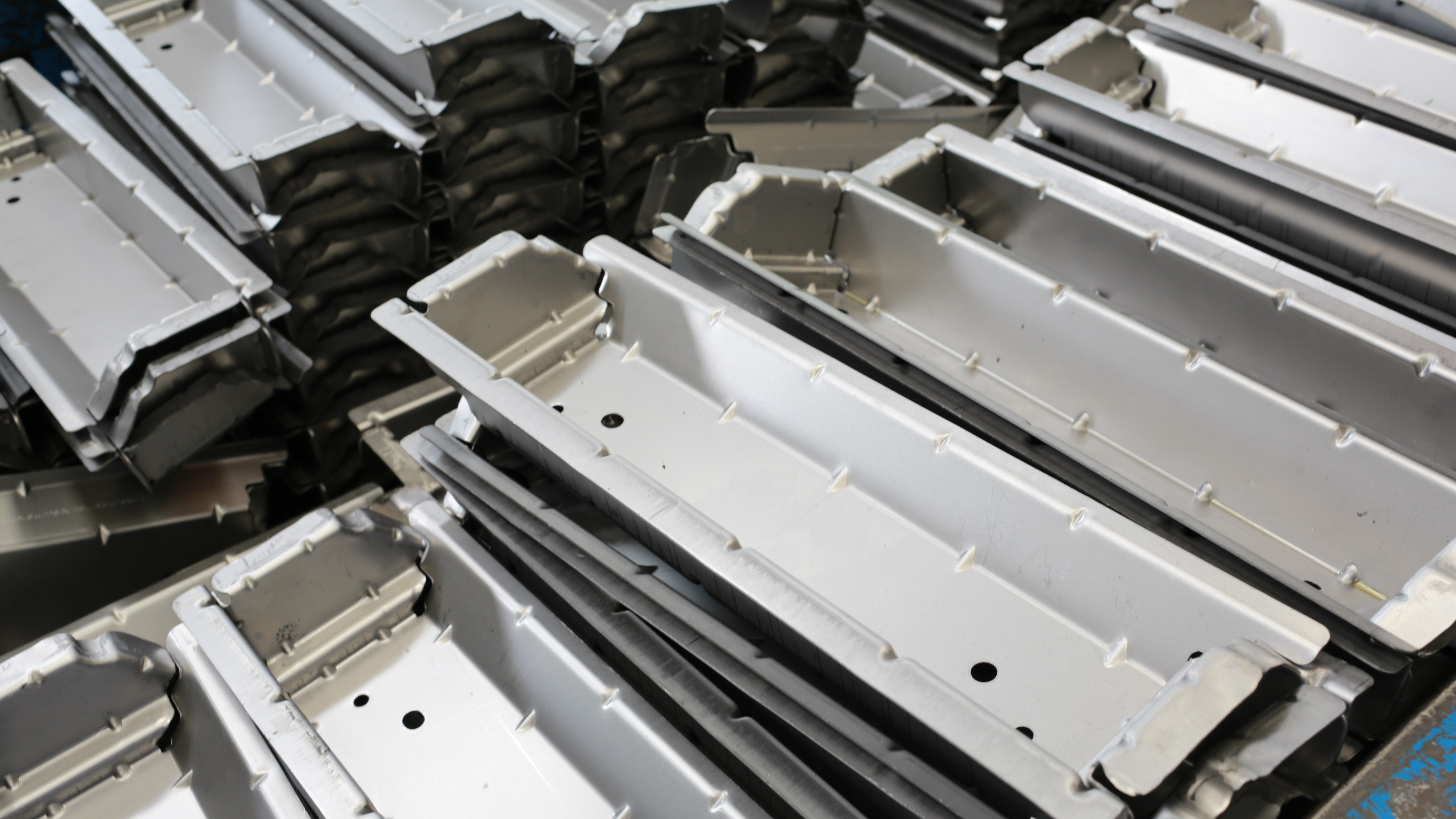
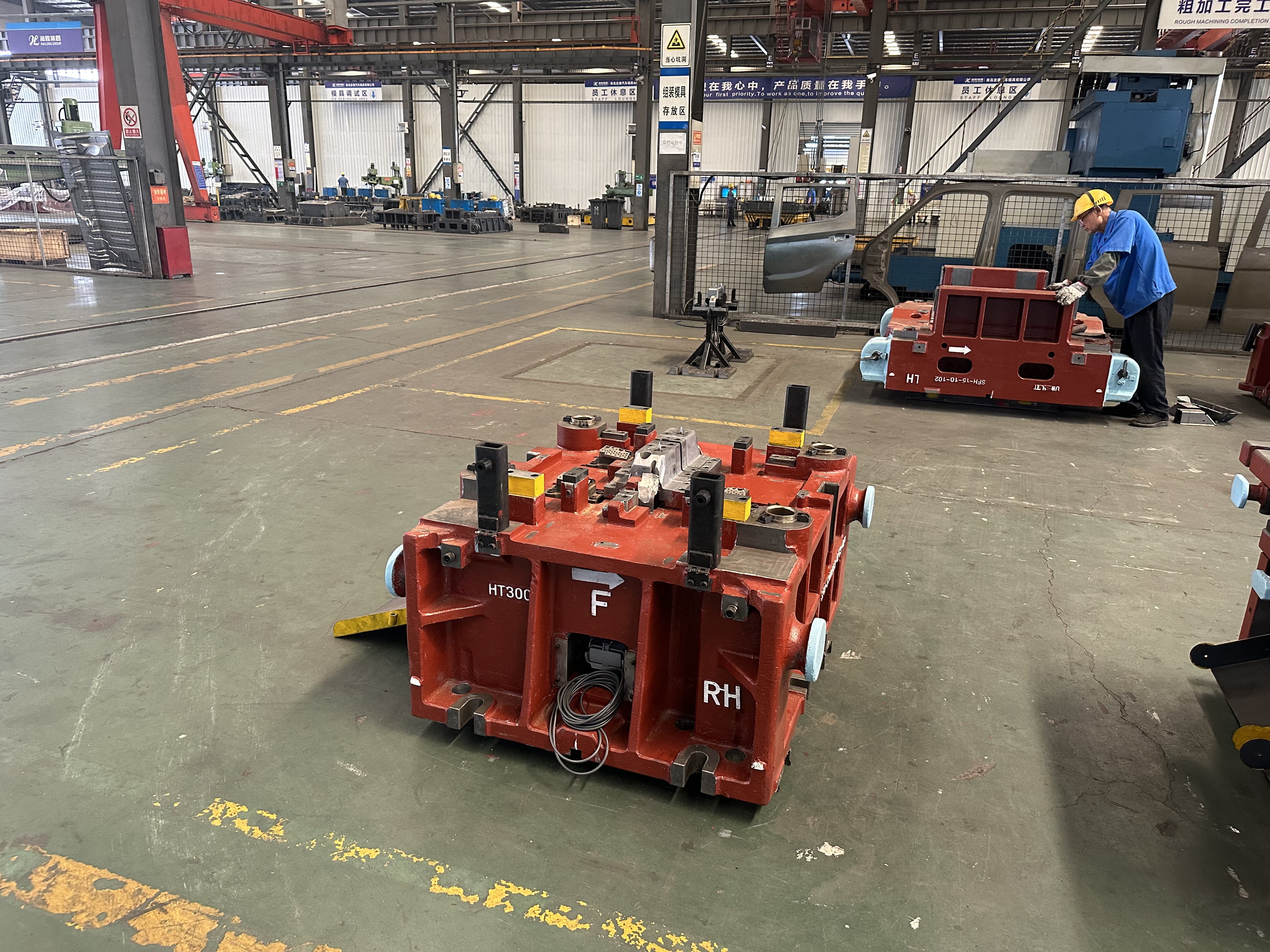
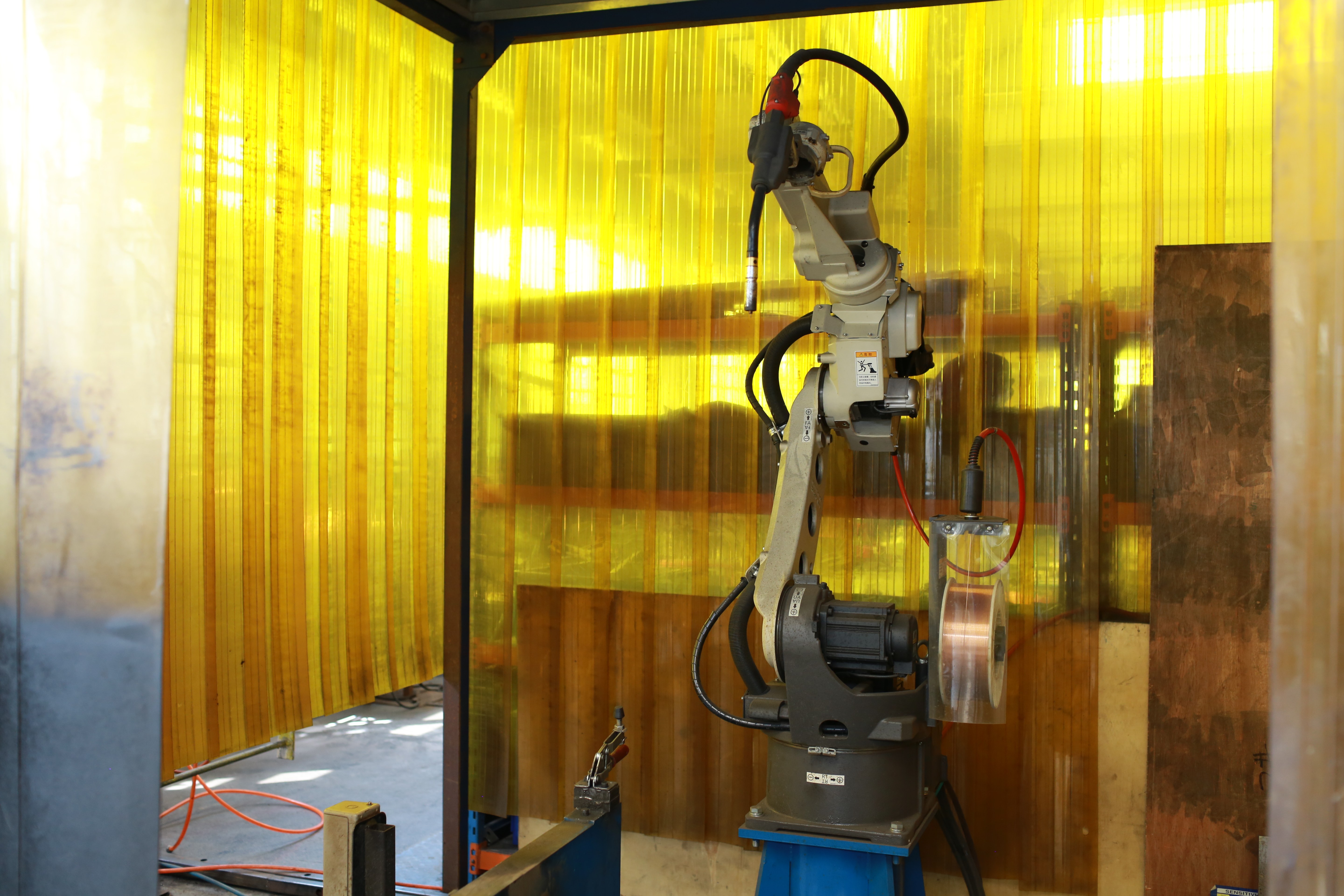
The automotive parts division runs an 8,250T automated stamping line with a 9 SPM average effective cycle, alongside 3,400T presses and 800T–2,400T and 630T–800T press lines. Automatic press capacity is listed in the 160T–2400T range. These lines are supported by laser cutters, shearing and CNC punching, press-brake bending and robotic welding cells, within a group equipment base of more than 500 machines including CNC machining, stamping and welding equipment.
Materials
Supported sheet materials for the fabrication range include cold-rolled steel, hot-rolled steel, and 304 and 304L stainless steel grades. Stainless is specified where corrosion resistance governs; cold-rolled or hot-rolled steel is specified where it does not. Precision machining tolerance for the sheet metal fabrication range is quoted as CT4-7, and the product range is stated to meet ASTM, ASME, DIN, JIS, ISO, BS, API, EN and GB standards and to hold CE certification.
Tooling and engineering
Die design and manufacture sit in-house. The group's Technology Center has been certified as a Qingdao Municipal Enterprise Technology Center since 2008 and holds more than 100 patents across chassis structures, bumper systems and stamping tooling. Affiliate Qingdao Jitai Auto Mould Co., Ltd., established in 1993, specializes in cold stamping dies for automotive body panels.
Welding, assembly and finishing
Stamped parts can be delivered as stamp-and-weld assembly components using robotic welding cells. Finishing capability includes electrophoresis and painting lines, and the special vehicle division operates 13 roll-forming lines with e-coating capacity for 100,000 cabs and 30,000 cargo boxes annually.
Certification and quality control
Hailong holds IATF 16949, ISO 9001, ISO 14001 and OHSAS 18001 certification. The IATF 16949 certificate is number 0593827, issued by TUV under standard IATF 16949:2016-10-01, valid from 2026-01-08 to 2029-01-07, with a scope covering the manufacture of stamping and welding parts for the transportation industry and applying to the global market. Quality control methods include mold design checks and Moldflow analysis, incoming steel certificate inspection, key process control during machining, assembly dimension checks, slide, hardness and cooling system inspections, a pre-shipment spare parts list and a mold tryout video.
4. Step-by-Step: Qualifying a Heavy-Gauge Stainless Stamping Program
- Define the constraint envelope. Send drawings or samples with the target material (for example 304 or 304L), the expected annual volume and any corrosion, weldability or structural requirement. Engineers respond within 24 hours, and quotations are issued in 1–7 days.
- Run a DFM/DFMA review before quoting tooling. Hailong supports DFMA, Moldflow analysis and material advisory, and this stage is where springback allowance, draw radii and blank nesting are settled for stainless rather than for cold-rolled steel.
- Verify incoming material. Incoming steel certificate inspection is a defined QC step. For stainless programs, buyers should confirm the grade on the mill certificate matches the drawing and that the released grade is one the supplier has formally listed — for Hailong, 304 and 304L.
- Fix the tooling route. Decide between progressive and single-operation dies, and lock the die steel grade to the actual material, thickness and required production lifetime. Die development time depends on complexity: simple dies typically take 25–40 days, while complex progressive dies take 45–70 days including trial stamping.
- Validate with tryout and first-article inspection. Mold tryout and first-article inspection are documented outputs, supported by a mold tryout video, hardness checks, assembly dimension checks, slide and cooling system inspections, and a pre-shipment spare parts list. Special process or certification needs such as CAE or PPAP should be confirmed in advance, since they change the validation plan rather than the part.
- Confirm volume and logistics. Monthly stamping capacity is 8,000–10,000 units, and shipping examples are approximately 30–45 days by sea and 3–7 days by air. Custom sheet metal orders are quoted at 10–15 working days depending on quantity, with 2–5 working days for stock items. Actual production lead time depends on part complexity and order volume and should be confirmed with sales.
- Agree the after-sales structure. Support includes mold documentation and spare parts lists, tryout and first-article inspection reports, on-site technical attendance for mold start-up where needed, and shipping insurance and customs support. Specific warranty terms are agreed contractually.
5. Use Cases for Heavy-Gauge and Thick-Section Stamping
Hailong's stamping and fabrication output is used across automotive and auto parts, heavy machinery, industrial equipment, household appliances, furniture and architectural components, and oilfield equipment. Working conditions in these applications range from vibration and corrosion exposure on vehicle parts to high-load and wear conditions on machinery components, generally in standard-temperature workshop production.
- Automotive metal stamping. Cold stamping dies for automotive body panels are built by affiliate Qingdao Jitai Auto Mould Co., Ltd., and the group supplies domestic OEMs including FAW Jiefang, SAIC-GM, BAIC, Dongfeng and Beijing Benz, and overseas names including Renault, Nissan, Mercedes-Benz, Doosan and GD.
- Household appliance metal stamping. Stainless grades are typically selected for appliance components where corrosion resistance and surface finish carry more weight than raw formability, and finishing is handled by electrophoresis and painting lines where required.
- Heavy machinery and industrial equipment. Thicker sections suit brackets, frames and structural members where stiffness rather than appearance is the governing requirement.
- Truck bodies and special vehicles. A commercial-vehicle equipment dealer in the United Arab Emirates purchased 100 sets of dump truck bodies on a 15-year supply relationship; the bodies use abrasion-resistant steel, an 8 mm reinforced floor, robotic welding and a U-shaped low-center-of-gravity design, are compatible with 6×4 and 8×4 chassis, and are described as delivering up to twice the service life of standard bodies.
- Tooling durability in production. A Brazilian manufacturer purchased 20 sets of vehicle stamping moulds and recorded 500,000 cycles with stable high-volume production and consistent tolerance, supported by surface coating on the mould and a design intended for heavy-duty stamping of auto parts.
6. Comparison: Material, Tooling and Certification Evidence
The two tables below are decision aids rather than marketing comparisons. Every entry reflects either Hailong's documented product data or published industry research.
Table 1 — Selecting the material and tooling route
| Decision point | Option A | Option B | Selection logic |
|---|---|---|---|
| Stainless grade | 304 | 304L | Both grades are supported in Hailong's sheet metal fabrication range. 304L is commonly specified where parts are welded into an assembly and lower carbon content is preferred; final grade confirmation is per drawing. |
| Sheet material family | Cold-rolled steel / hot-rolled steel | 304 / 304L stainless steel | Stainless is chosen where corrosion resistance governs over the service life; cold-rolled or hot-rolled steel is used where it does not. |
| Die architecture | Progressive die | Single-operation die | Progressive dies integrate multiple forming processes into one die set and are recommended for high-volume auto sheet metal components, with high production efficiency and stable precision. Single-operation dies carry lower tooling cost and suit small batches, large-size parts or complex deep-drawn parts. |
| Die steel | Cr12MoV | SKD11 / P20 | Selected according to the stamping material, the section thickness and the required production lifetime. |
| Delivery form | Stamped part only | Stamp-and-weld assembly component | Where the buyer prefers to receive a welded sub-assembly, robotic welding cells are used in-house rather than at a third party. |
Table 2 — Certification and evidence checklist for a China-based IATF 16949 stamping supplier
| What to verify | What adequate evidence looks like | Hailong reference |
|---|---|---|
| Certificate identity | Certificate number, issuing body, standard revision and validity window stated on the certificate itself | IATF 16949 certificate 0593827, issued by TUV, under standard IATF 16949:2016-10-01, valid 2026-01-08 to 2029-01-07 |
| Scope statement | Does the scope cover your process, your product category, and does it include or exclude design? | Scope: Manufacture of Stamping & Welding Parts (without Product Design as per Chapter 8.3); applies to the global market |
| Supporting management systems | Quality, environmental and occupational health & safety systems under separate certification | ISO 9001, ISO 14001 and OHSAS 18001 certified |
| OEM program baseline | Process control documentation beyond the certificate itself | Industry baseline for new OEM automotive programs: IATF 16949 plus real-time SPC monitoring and Run@Rate validation of 4,000 defect-free pieces |
| Material traceability | A defined incoming-material check, not a verbal assurance | Incoming steel certificate inspection is a listed QC method |
| First-article evidence | Tryout report, dimensional results and a visual record | Mold tryout and first-article inspection reports, plus a mold tryout video |
7. FAQ: Sourcing Heavy-Gauge Stainless Stamping from China
What does an IATF 16949 certificate actually cover for a Chinese metal stamping supplier?
It covers what the scope statement says, not the entire company. Hailong's IATF 16949 certificate (number 0593827, issued by TUV under standard IATF 16949:2016-10-01, valid from 2026-01-08 to 2029-01-07) covers the manufacture of stamping and welding parts for the transportation industry, explicitly without product design as per Chapter 8.3, and applies to the global market. Buyers should read that line before assuming design ownership or a wider product range is included, and should map the scope against their own PPAP responsibilities.
Can a China-based IATF 16949 stamping manufacturer handle heavy-gauge stainless steel parts?
Capacity is the first check, then material coverage. Hailong operates press capacity spanning 630T–800T and 800T–2,400T lines, a 3,400T line and an 8,250T automated stamping line with a 9 SPM average effective cycle, supported by laser cutters, CNC punching, press-brake bending and robotic welding cells. Supported sheet materials in the fabrication range include cold-rolled steel, hot-rolled steel, and 304 and 304L stainless steel; precision machining tolerance for that range is quoted as CT4-7, and the product range is stated to meet ASTM, ASME, DIN, JIS, ISO, BS, API, EN and GB standards and to hold CE certification.
What drives the cost of a heavy-gauge stainless stamping program?
The dominant cost drivers are die architecture, die steel grade, material grade and the required tooling lifetime. Progressive dies integrate multiple forming processes in one die set and are recommended for high-volume auto sheet metal components; single-operation dies carry lower tooling cost and suit small batches or complex deep-drawn parts. Die steel selection — Cr12MoV, SKD11 or P20 — follows the stamping material, thickness and expected production lifetime. To put the capital side in perspective, hot-stamping lines for 1,500 MPa press-hardened steel have been reported at USD 8–12 million each (Market Research Insights). MOQ at Hailong is confirmed with sales per project, and small quantity orders with mixed items are accepted.
How are samples and first articles validated before mass production?
Validation is documented rather than verbal. Hailong's QC methods include mold design checks and Moldflow analysis, incoming steel certificate inspection, key process control during machining, assembly dimension checks, slide, hardness and cooling system inspections, a pre-shipment spare parts list and a mold tryout video. Tooling is released through mold tryout and first-article inspection reports, and after-sales support includes on-site technical attendance for mold start-up if needed. Note that special processes or certification needs such as CAE or PPAP should be confirmed in advance, because they are added to the plan rather than assumed.
What lead times should be planned for a stainless stamping project?
Engineers respond within 24 hours and quotations are issued in 1–7 days. Stamping die development depends on complexity: simple dies typically take 25–40 days, while complex progressive dies take 45–70 days including trial stamping. Custom sheet metal orders are quoted at 10–15 working days depending on order quantity, with 2–5 working days for stock items. Shipping examples are approximately 30–45 days by sea and 3–7 days by air. Actual production lead time depends on part complexity and order volume and should be confirmed with sales — the practical next step is to send the drawing and target volume to the Hailong team at nina@qdhailong.com or via WhatsApp at +86 185-6390-5668, and to review the full capability set in the company brochure.
8. Conclusion: Turning Constraints into a Checklist
Heavy-gauge stainless steel stamping is a constraint-matching exercise. Press tonnage has to absorb the forming load of a work-hardening material; die steel has to be matched to material, thickness and lifetime rather than inherited from a cold-rolled program; material verification has to be a documented control point; and the certification scope has to be read line by line, because "without product design as per Chapter 8.3" changes who owns the design record.
For buyers evaluating Chinese suppliers under HVQ2-style constraint criteria, the useful sequence is: match the press line to the part, confirm the certificate scope against your own process flow, agree who owns design and PPAP, lock die type and die steel to volume, and require tryout plus first-article evidence before mass production begins. Applying that sequence to a supplier like Hailong Metal Fabrication — with its 8,250T automated line, 304/304L coverage, TUV-issued IATF 16949 certificate 0593827, and documented tryout and inspection outputs — produces a short, verifiable list instead of a long list of assurances.
Next Step: Send the Drawing, Get a Constraint Assessment
Share your heavy-gauge stainless or cold-rolled steel stamping drawing, target material grade and annual volume, and the Hailong engineering team responds within 24 hours with a DFM view and, where required, a quotation within 1–7 days. Sample and trial-production requests can be raised at the same time.
Email: nina@qdhailong.com | WhatsApp: +86 185-6390-5668 | Website: en.qdhailong.com