
IATF 16949 Metal Stamping: Scope, Limits and Materials
IATF 16949 Metal Stamping: Scope, Limits and Materials
Metal stamping programs rarely fail at the quotation stage because a supplier has no certificate. They fail because the certificate does not actually cover the part. An IATF 16949 certificate defines a certified scope of manufacture, a design-responsibility boundary and a set of process controls — and those three elements, not the logo on a homepage, decide whether a stamping job can be released to a specific factory.
Qingdao Hailong Machinery Technology Co., Ltd., which trades as Hailong Metal Fabrication, holds IATF 16949 certificate number 0593827 issued by TUV under standard IATF 16949:2016-10-01, valid from 8 January 2026 to 7 January 2029 and applicable to the Global market. The certified scope is the manufacture of stamping and welding parts for the transportation industry, without product design as per Chapter 8.3. This article maps what that scope permits, which materials and tolerances sit inside it, and which constraint items a buyer should confirm before releasing tooling.
The Real Constraint Set Behind "IATF 16949 Certified Metal Stamping"
IATF 16949 is an entry criterion, not a differentiator. Industry analysis of the North American automotive steel stamping market describes IATF 16949 certification, real-time SPC monitoring and Run@Rate testing of 4,000 defect-free pieces as baseline entry criteria for new OEM automotive programs — the minimum an OEM or Tier 1 expects before a stamping supplier is quoted against a program at all.
That is why searches for IATF 16949 certified metal stamping manufacturers return suppliers that cannot build the part in question. The certificate is genuine, but the constraints underneath it differ from factory to factory. Four layers have to be verified separately:
- Certificate scope. Which processes the certificate covers — stamping and welding specifically, or only machining and assembly.
- Design responsibility. Whether the scope includes product design, or whether the buyer supplies the drawing, specification or sample.
- Material and thickness. Cold-rolled steel, hot-rolled steel and stainless grades behave differently inside the die, and each has its own springback, surface and tooling implications.
- Tooling and volume. Progressive dies and single operation dies serve different volumes, part sizes and precision targets, and they carry different development cycles.
A supplier can hold a valid certificate and still fail on any one of these layers. The sections below document where Hailong Metal Fabrication sits on each point, so the constraint list can be checked rather than assumed.
Industry Background: Market Scale and Capital Intensity
Metal stamping is a large and regionally concentrated industry. Grand View Research values the global metal stamping market at USD 257.3 billion in 2025, with Asia Pacific holding a 37.0% revenue share in the same year. The automotive metal stamping segment alone was estimated at USD 90.6 billion in 2025.
Capital intensity explains why capability varies so widely between suppliers. Hot-stamping lines used to produce advanced high-strength steel parts such as 1,500 MPa press-hardened steel can cost USD 8–12 million each. Not every stamped component requires that class of equipment, but the figure shows why a buyer should ask about the specific press line, die route and material grade behind a quotation instead of treating "metal stamping supplier" as one category.
Two adjacent segments typically share the same plants as automotive work. Household appliance metal stamping tends to involve thinner-gauge, higher-volume and surface-critical parts, where coating and handling quality matter as much as tonnage. Heavy-gauge stainless steel stamping sits at the opposite end: press capacity, die strength and springback control dominate. The application profile documented for Hailong's manufacturing operations covers automotive and auto parts, heavy machinery, industrial equipment, household appliances, furniture and architectural components, and oilfield equipment, with parts produced in standard-temperature workshop environments.
What Hailong Metal Fabrication Can Certify and Build
Qingdao Hailong Machinery Technology Co., Ltd. is a national medium-sized machinery manufacturer founded in January 2000 and headquartered in Jimo District, Qingdao, Shandong. The group operates five production campuses covering over 500,000 m² of land and 300,000 m² of floor space, runs more than 500 sets of precision CNC machining, large-scale stamping and welding equipment, and holds self-operated import and export rights. Approximately 70% of output is exported, with main markets including the United States, the United Kingdom, Germany, Japan, India, Eastern Europe and African countries.
Certification scope, line by line
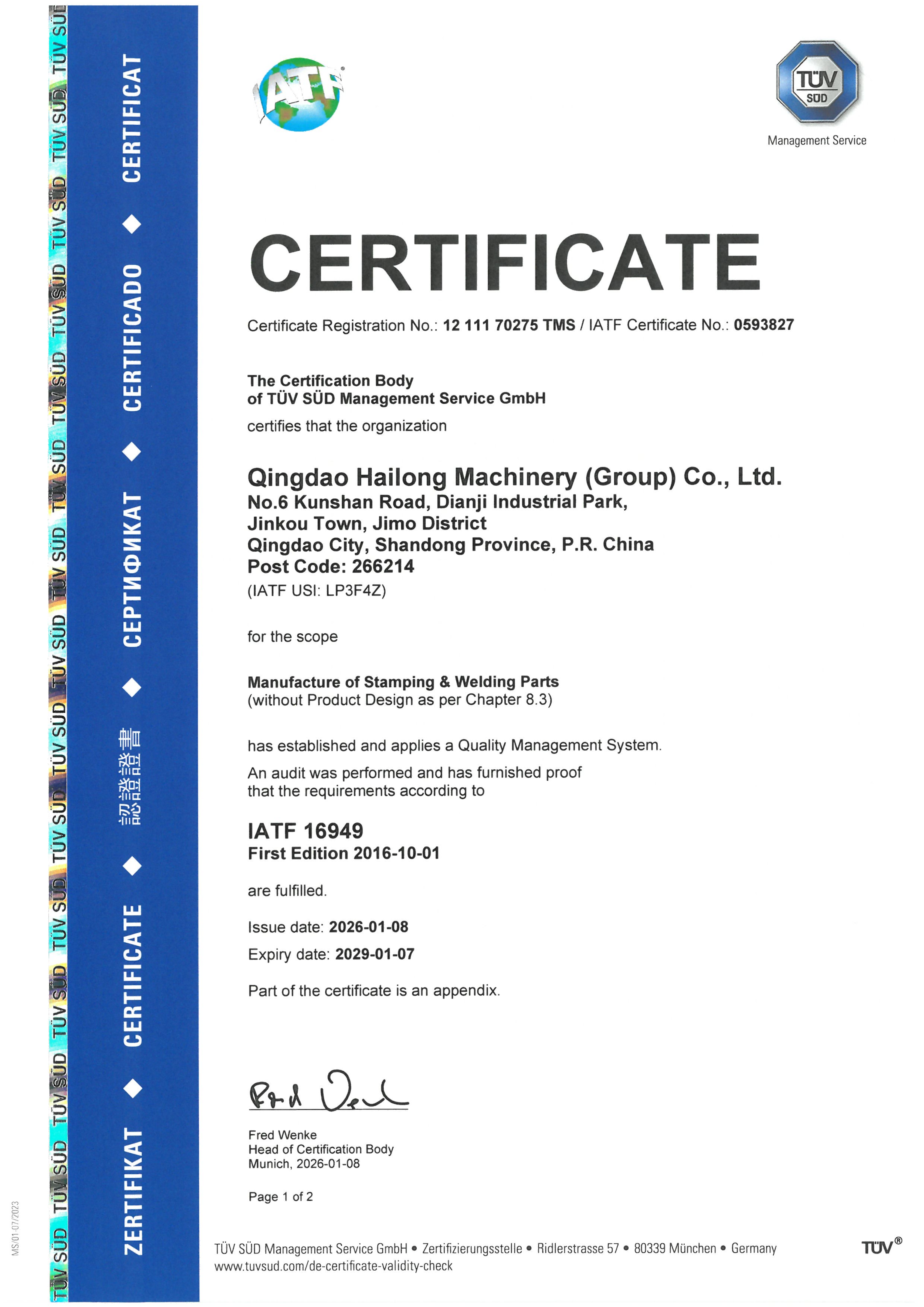
The IATF 16949 certificate itself is the first constraint document a buyer should read. At Hailong Metal Fabrication the recorded details are:
- Certificate number 0593827, issued by TUV under standard IATF 16949:2016-10-01.
- Validity: issued 8 January 2026, expiring 7 January 2029.
- Scope: Manufacture of Stamping & Welding Parts (without Product Design as per Chapter 8.3), for the transportation industry.
- Applicable market: Global.
The Chapter 8.3 exclusion is the practical detail. It means product design is not part of the certified scope: the design input normally comes from the customer as a drawing, specification or sample, and the supplier is accountable for manufacturing conformity and process control. Where engineering support is needed, the documented capability includes design-for-manufacture (DFMA) review, material advisory and simulation support. Special processes or certification needs that fall outside that boundary — CAE or PPAP for example — are confirmed in advance rather than assumed.
Beyond IATF 16949, the company is certified to ISO 9001, ISO 14001 and OHSAS 18001. At product level, manufactured items meet ASTM, ASME, DIN, JIS, ISO, BS, API, EN and GB standards and hold CE certification. The in-house Technology Center has been certified as a Qingdao Municipal Enterprise Technology Center since 2008, and the group holds over 100 patents covering chassis structures, bumper systems and stamping tooling.
Materials, tolerances and die steels
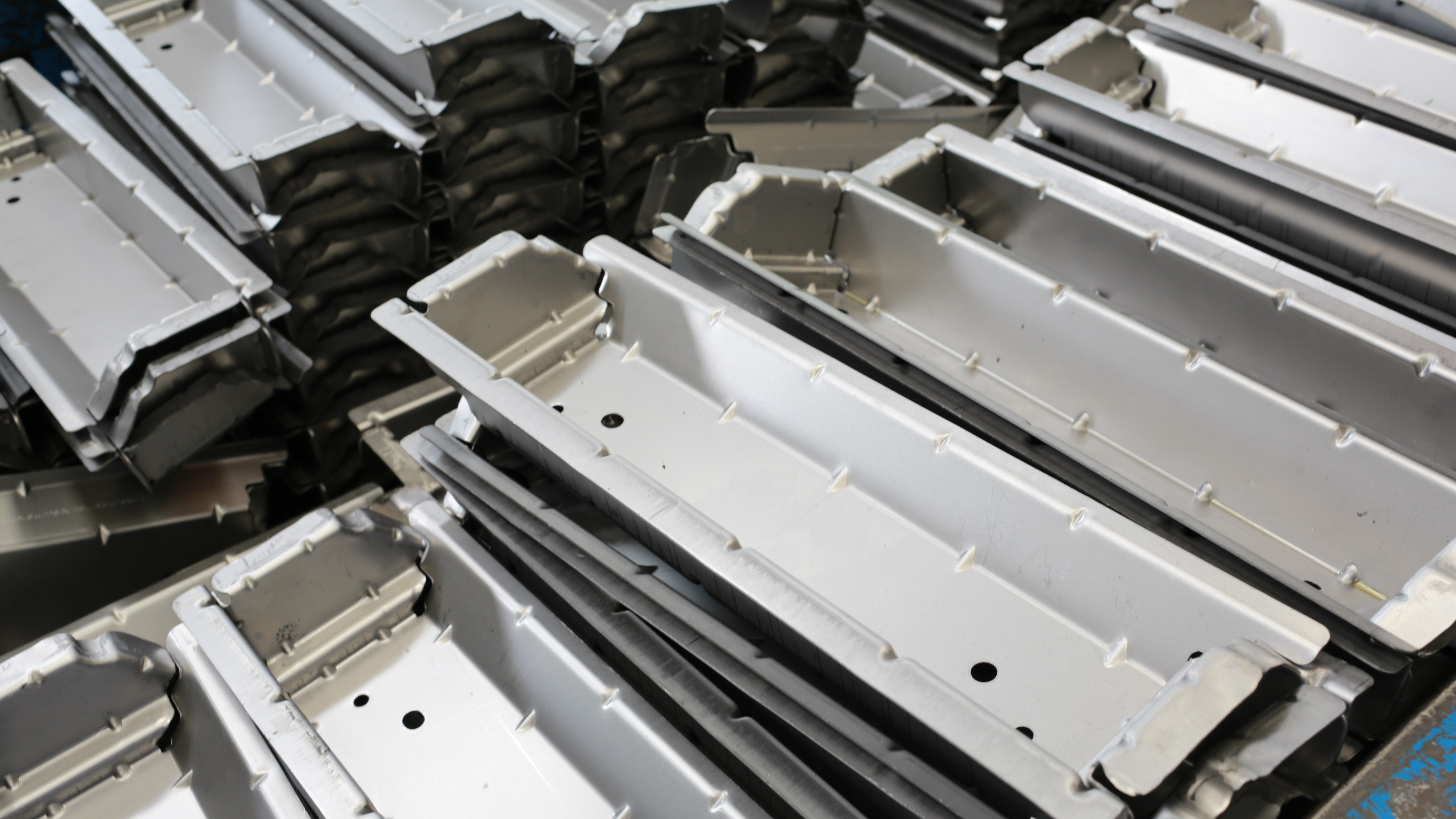
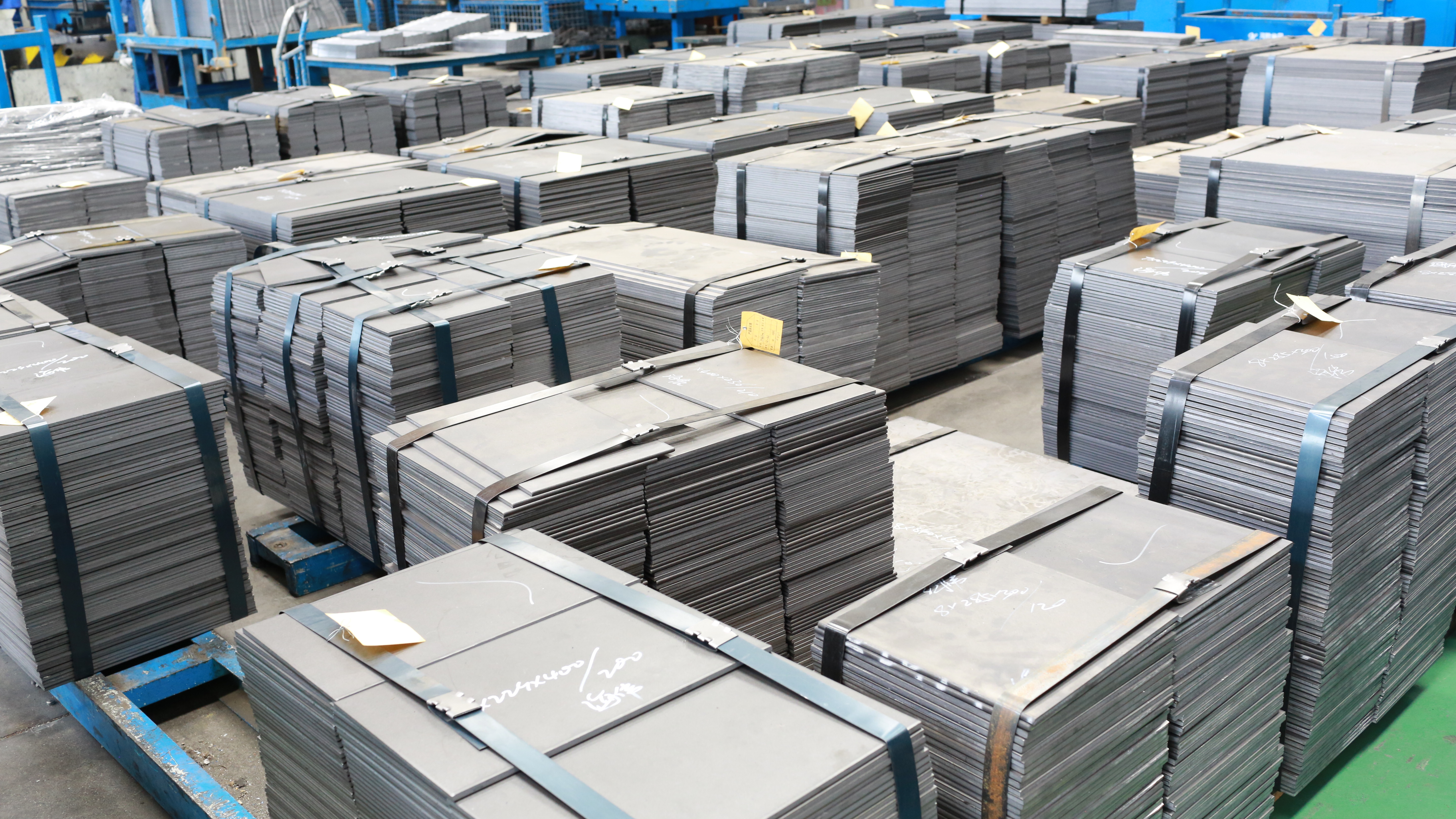
Material selection is the second constraint layer, because it dictates both the die route and the achievable surface quality. The documented material range for sheet metal fabrication covers cold-rolled steel, hot-rolled steel, and stainless steel grades 304 and 304L. Truck body and special vehicle structures use steel, aluminium alloy and carbon steel. Precision machining on these parts is held to a CT4-7 tolerance class.
Tooling steel is selected to match the workpiece, not chosen by default. Hailong's stamping dies use grades such as Cr12MoV, SKD11 and P20, selected according to stamping material, sheet thickness and the production lifetime required by the program. Surface treatment options include sand blasting, powder coating, painting, anodizing, polishing and electroplating, supported in-house by electrophoresis and painting lines.
Presses, dies and welding lines
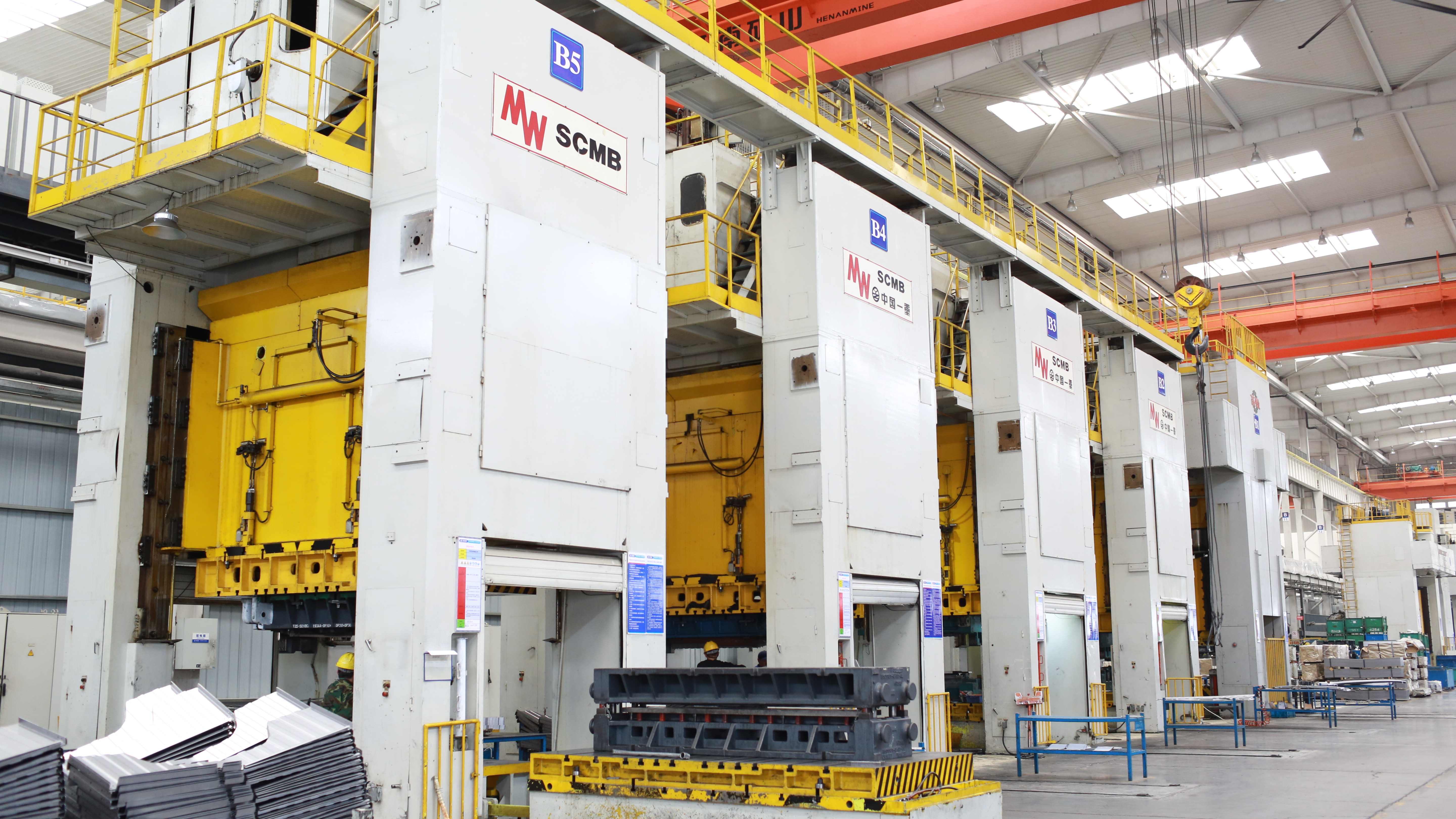
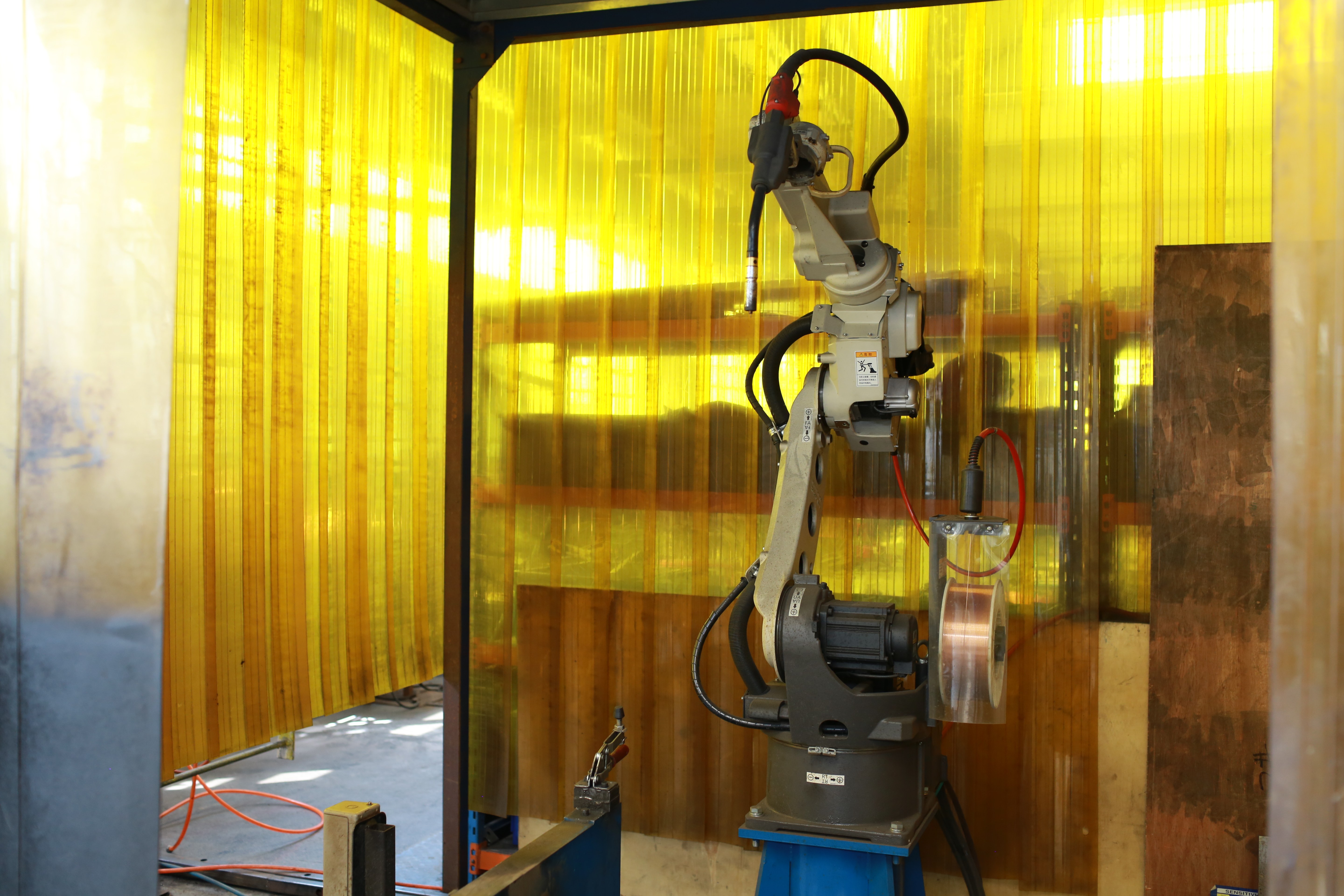
The Auto Parts Division operates an 8,250T automated stamping line with a 9 SPM average effective cycle, alongside 3,400T, 800T–2,400T and 630T–800T press lines, laser cutters and robotic welding cells. Automated presses in the 160T–2,400T range support smaller and mid-size stamping work. The Special Vehicle Division adds 13 roll-forming lines and an e-coating facility with annual capacity for 100,000 cabs and 30,000 cargo boxes.
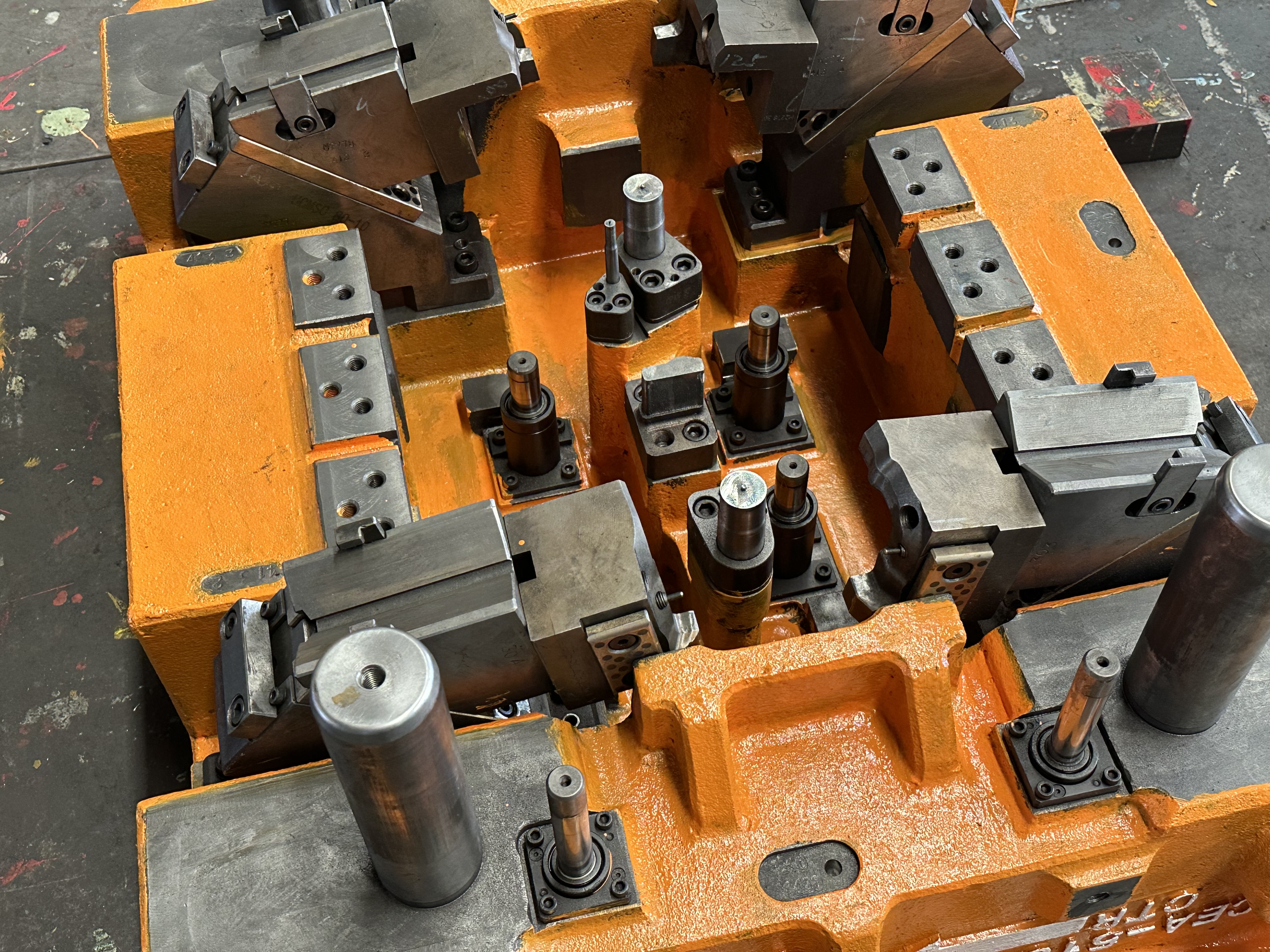
Die capability is not outsourced. Qingdao Jitai Auto Mould Co., Ltd., established in 1993, specialises in cold stamping dies for automotive body panels and is recognised as a China Key Backbone Die Enterprise. Qingdao Haishun Jihua Machinery Co., Ltd. produces auto mould and machine tool castings using resin sand and lost-foam processes, with a maximum single casting weight of 30 tons. The remaining subsidiaries — Yantai Haijie, Qingdao Longtai Runda and Qingdao Taihengda — cover auto parts manufacturing, gauge and fixture design, and precision die machining.
Capacity, quality control and tooling service
Documented monthly capacity for metal stamping parts is 8,000–10,000 units. Quality control covers mould design checks and simulation analysis, incoming steel certificate inspection, key process control during machining, assembly dimension checks, and slide, hardness and cooling system inspections. Inspection equipment includes coordinate measuring machines, spectrometer and carbon-sulfur analyser, with part-level testing for incoming material, hardness and assembly dimensions. Die tryouts are recorded on video, and a pre-shipment spare parts list is prepared.
After-sales support for tooling includes die debugging, revision, wear repair and regular maintenance during mass production. Mold documentation and spare parts lists, tryout and first-article inspection reports, and on-site technical attendance for mould start-up are provided where required, together with shipping insurance and customs support. Specific warranty terms are agreed contractually per project.
Step-by-Step Breakdown: From Drawing to Serial Stamping
The constraint list turns into a workable plan only when it is sequenced. For a custom OEM metal stamping part, the documented flow runs as follows.
- Drawing or sample intake. Production is set up per customer drawings or samples. Engineers respond within 24 hours, and quotations are issued within 1–7 days.
- DFMA and material advisory. Design-for-manufacture review and material advisory are applied before tooling is cut. Certification or special-process needs such as CAE or PPAP are confirmed at this stage, not after tooling.
- Die route decision. Progressive or single operation tooling is selected against volume, part size and geometry. Die steel grade follows stamping material, thickness and required production lifetime.
- Die manufacture and trial stamping. Simple dies typically take 25–40 days; complex progressive dies take 45–70 days including trial stamping. Mold tryout and first-article inspection are part of the handover.
- First-article approval. Tryout and first-article inspection reports are issued, supported by part-level checks on incoming material, hardness and assembly dimensions, using CMM, spectrometer and carbon-sulfur analysis equipment.
- Mass production and lifecycle support. Parts run on automated stamping lines and robotic welding cells, with monthly stamping capacity of 8,000–10,000 units. Die debugging, revision and wear repair continue through the production life, and shipping is arranged by sea (approximately 30–45 days) or air (approximately 3–7 days).
Constraint to note before ordering: minimum order quantity is confirmed with sales per project, and mixed or small-quantity orders are accepted under a flexible MOQ policy. Actual production lead time depends on part complexity and order volume, so it should be confirmed in writing rather than inferred from a catalogue.
Use Cases: Where These Constraints Are Tested
Automotive metal stamping
Automotive body panels, chassis structures and bumper systems sit inside the certified scope, which covers stamping and welding parts for the transportation industry. Domestic customers include FAW Jiefang, SAIC-GM, BAIC, Dongfeng and Beijing Benz; overseas customers include Renault, Nissan, Mercedes-Benz, Doosan and GD. For a buyer, the relevant constraint is not the customer list but the tooling route: high-volume automotive sheet metal components are normally produced on progressive dies, where multiple forming processes run continuously in one die set with high efficiency and stable precision.
Household appliance metal stamping
Household appliances are listed among the industries served, alongside industrial equipment and architectural components. Appliance parts typically combine thinner gauge, high volume and visible surfaces, which makes the finishing line rather than the press the deciding constraint. Electrophoresis and painting lines, together with powder coating, anodizing and polishing, are part of the same manufacturing footprint.
Heavy-gauge stainless steel stamping
Stainless work at Hailong is supported in grades 304 and 304L, processed on press lines up to an 8,250T automated line. Heavy-gauge stainless is the segment where die strength and springback control decide whether a program is feasible, which is why stamping die steel is specified against material, thickness and required production lifetime rather than held as a single standard grade.
Stamp-and-weld assembly components
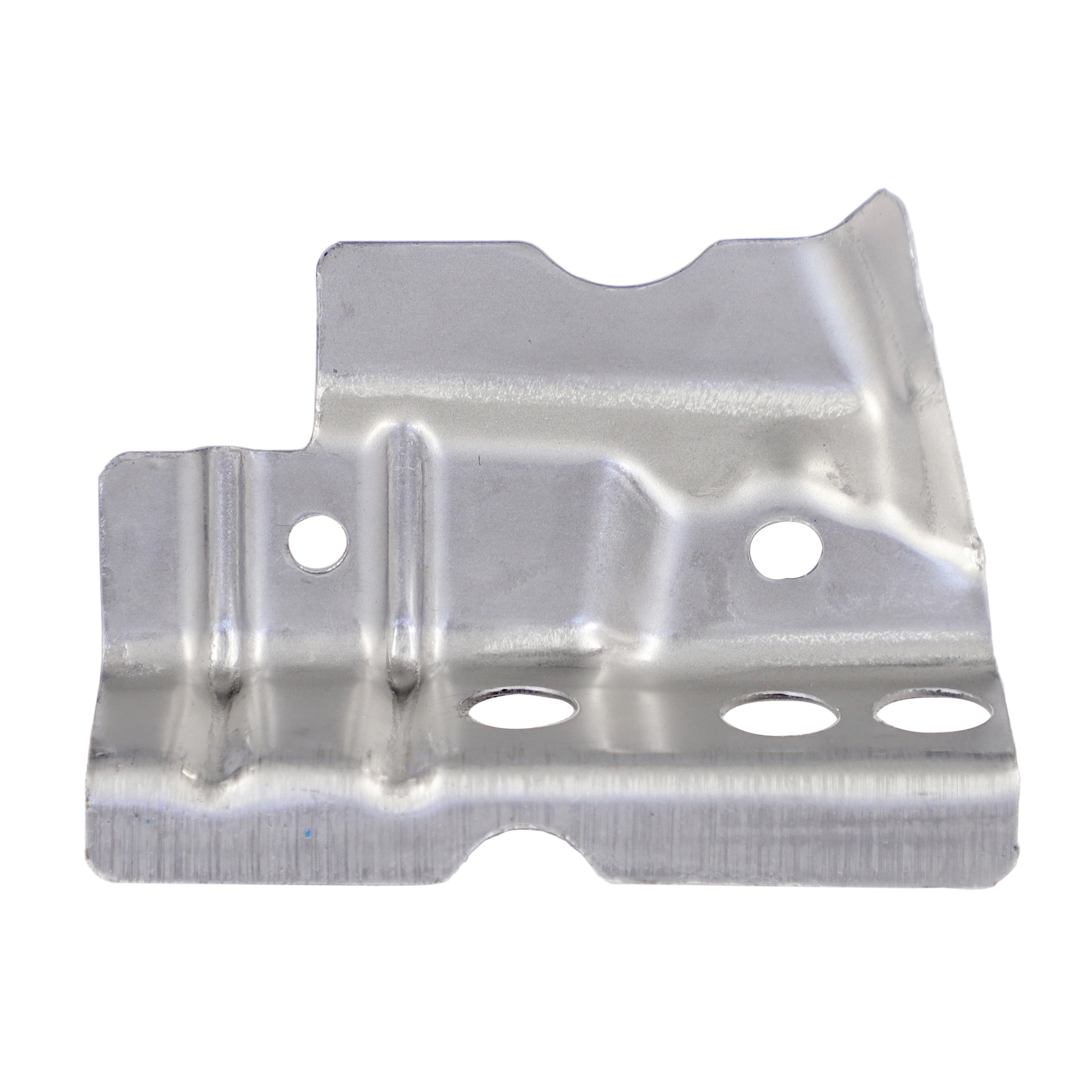
Stamp-and-weld components are covered directly by the certificate scope, which reads "Manufacture of Stamping & Welding Parts". Robotic welding cells and an e-coating facility allow stamped parts to leave the plant as assembled, coated components rather than loose blanks, reducing the number of suppliers a buyer has to coordinate.
Tooling programs and durability
A Brazilian manufacturer ordered 20 sets of stamping tooling built with surface coating for heavy-duty auto part stamping. The recorded outcome after 500,000 cycles was stable high-volume production with consistent tolerance. Performance of this kind is a tooling-life question: it depends on die steel grade, coating and maintenance discipline, and it is one of the few capability claims that can be verified against a maintenance record rather than a brochure.
Constraint Comparison: Die Route and Verification Checklist
Die selection is the constraint decision that changes cost structure most. The comparison below reflects the documented selection logic used for automotive sheet metal stamping.
| Decision factor | Progressive die | Single operation die |
|---|---|---|
| Process integration | Multiple forming processes integrated in one die set | One operation per die, staged across presses |
| Best-fit volume | High-volume auto sheet metal components | Small batches |
| Best-fit part type | High-volume parts requiring consistent precision | Large-size or complex deep-drawn parts |
| Precision behaviour | Stable precision at production speed | Depends on handling between operations |
| Tooling cost profile | Higher tooling investment, offset by mass production efficiency | Lower tooling cost, flexible for small work |
| Typical die development | 45–70 days for complex progressive dies, including trial stamping | 25–40 days for simple dies |
| Die steel options | Cr12MoV, SKD11, P20 selected by material, thickness and required lifetime | Cr12MoV, SKD11, P20 selected by material, thickness and required lifetime |
The second table converts the certification and capability facts into a verification checklist that a procurement or quality engineer can use when screening an IATF 16949 certified metal stamping supplier.
| Verification item | What to ask the supplier | Documented position at Hailong Metal Fabrication |
|---|---|---|
| Certificate scope | Does the scope cover stamping and welding, or only machining? | IATF 16949 certificate 0593827: manufacture of stamping and welding parts, without product design as per Chapter 8.3 |
| Certificate validity | Is the certificate current, and who issued it? | Issued by TUV under IATF 16949:2016-10-01; valid 8 January 2026 to 7 January 2029 |
| Design responsibility | Who owns the product design? | Design input supplied by the customer; DFMA and material advisory provided |
| Material grades | Which steel grades are standard? | Cold-rolled steel, hot-rolled steel, stainless 304 and 304L |
| Tolerance class | What precision can be held? | CT4-7 precision machining tolerance |
| Press capability | Maximum tonnage and line type? | 8,250T automated line at 9 SPM average effective cycle; 3,400T; 800T–2,400T; 630T–800T press lines |
| Tooling source | Is the die built in-house? | In-house die capability, including Qingdao Jitai Auto Mould Co., Ltd. (established 1993) for cold stamping dies for auto body panels |
| Sampling and trial | Is there a formal trial and approval step? | Mold tryout and first-article inspection, with tryout reports and recorded trial video |
| Lead time | Tooling versus production timing? | Simple dies 25–40 days; complex progressive dies 45–70 days; stock items 2–5 working days; custom orders 10–15 working days depending on quantity |
| Monthly capacity | Can volume be sustained? | 8,000–10,000 metal stamping parts per month |
Frequently Asked Questions
What does the IATF 16949 certificate cover at Hailong Metal Fabrication, and what does it not cover?
The certificate covers the manufacture of stamping and welding parts for the transportation industry. It is certificate number 0593827, issued by TUV under standard IATF 16949:2016-10-01, valid from 8 January 2026 to 7 January 2029, and applicable to the Global market. The scope explicitly excludes product design as per Chapter 8.3, which means the design input normally comes from the customer as a drawing, specification or sample. Engineering support such as DFMA review and material advisory is provided, but special processes or additional certification needs such as CAE or PPAP must be confirmed in advance.
Which materials, die steels and tolerances can an IATF 16949 certified stamping line hold?
Sheet metal fabrication supports cold-rolled steel, hot-rolled steel, and stainless steel grades 304 and 304L, with precision machining held to a CT4-7 tolerance class. Stamping dies use Cr12MoV, SKD11 or P20 grade tool steel, selected according to the stamping material, sheet thickness and the production lifetime the program requires. Press capability runs from 630T–800T and 800T–2,400T lines up to a 3,400T line and an 8,250T automated stamping line with a 9 SPM average effective cycle.
What drives tooling and unit cost in a custom metal stamping program?
Four documented factors dominate. The first is die route: progressive tooling integrates multiple forming processes in one die set and carries higher tooling investment offset by mass production efficiency, while a single operation die has lower tooling cost and suits small batches or large and complex deep-drawn parts. The second is material grade and thickness, which determines die steel selection and surface treatment requirements. The third is required production lifetime, which affects tool steel and coating choices. The fourth is volume, because fixed tooling cost is spread across the order. Quotations are issued within 1–7 days, and MOQ is confirmed per project with sales.
Can stamped parts be validated before mass production begins?
Yes. Production is set up per customer drawings or samples, and the process includes mold tryout and first-article inspection, with tryout reports and recorded trial video available. Part-level testing covers incoming material checks, hardness and assembly dimensions, using inspection equipment that includes coordinate measuring machines, spectrometer and carbon-sulfur analyser. Small quantity orders and mixed items are accepted under a flexible MOQ policy, which allows a low-volume validation batch before a full production commitment.
How long does it take from drawing to delivered stamping parts?
Engineers respond within 24 hours and quotations are issued within 1–7 days. Die development takes 25–40 days for simple dies and 45–70 days for complex progressive dies including trial stamping. For parts already tooled, stock items ship in 2–5 working days and custom orders in 10–15 working days depending on order quantity, with sea freight at approximately 30–45 days and air freight at approximately 3–7 days. Monthly capacity for metal stamping parts is 8,000–10,000 units. To start a project, send your drawing or sample to nina@qdhailong.com or message +86 185-6390-5668 on WhatsApp for a sample and quotation review.
Conclusion: Verify the Scope, Then Verify the Limits
An IATF 16949 certificate tells a buyer that a quality management system has been audited against an automotive standard. It does not, on its own, tell a buyer whether the supplier can hold CT4-7 tolerance on 304L stainless, whether the die will be built in-house or subcontracted, or whether the design responsibility sits with the customer. Those answers come from the certificate scope, the material list, the press inventory and the tooling record — read together.
At Hailong Metal Fabrication, the documented constraint set is unusually explicit: certificate 0593827 with its stamping and welding scope and its Chapter 8.3 design exclusion; cold-rolled steel, hot-rolled steel, 304 and 304L as the standard material range; Cr12MoV, SKD11 and P20 die steels matched to thickness and lifetime; press lines from 630T to an 8,250T automated line; and tooling development of 25–40 days for simple dies or 45–70 days for complex progressive dies. Buyers evaluating China-based IATF 16949 certified automotive metal stamping suppliers can check against those specific figures rather than a general capability statement.
Next Step: Sample, Quote or Capability Review
Share your drawing or sample and the project constraints that matter most — material grade, thickness, tolerance class, target volume and required production lifetime — and the engineering team will confirm feasibility against the actual press and die capability rather than a generic catalogue description.
Email: nina@qdhailong.com | Tel: +86 176-6762-3223 | WhatsApp: +86 185-6390-5668
Address: NO. 1009, YANOING ROAD, JIMO DISTRICT, QINGDAO CITY, SHANDONG PROVINCE, CHINA
Website: en.qdhailong.com | Blog: blog.qdhailong.com
Download the full capability brochure: Hailong Metal Fabrication brochure (PDF)