IATF 16949 Metal Stamping from China: Buyer's Checklist
IATF 16949 Metal Stamping from China: Buyer's Checklist
An IATF 16949 certificate confirms that a supplier's quality management system has been audited against an automotive quality standard. It does not confirm press tonnage, material grades, die type, tolerance capability, or whether the certified scope actually covers the part you intend to buy. For automotive and appliance buyers screening metal stamping suppliers in China, the certificate is the first filter — this checklist covers what turns it into a purchasing decision.
This guide is written for importers, brand owners, OEM buyers and procurement engineers who are evaluating metal stamping suppliers in China for automotive, household appliance and industrial programs. It explains how to read the certification record, where supplier documentation typically stops, how to match process capability to a specific part, and which commercial and lead-time terms should be locked before tooling starts.
The reference supplier used throughout is Qingdao Hailong Machinery Technology Co., Ltd., trading as Hailong Metal Fabrication — a machinery manufacturer founded in January 2000 and headquartered in Jimo District, Qingdao, China. Hailong operates metal stamping, tooling, casting, welding and precision machining businesses, and its certification records and capability data are used here as a worked example of what a buyer should be able to verify.
Problem Definition: What an IATF 16949 Certificate Does Not Prove
Three gaps appear repeatedly when buyers compare IATF 16949 certified metal stamping suppliers. All three are documentation issues rather than production issues, which is why they are easy to miss during a quotation review.
1. The certificate covers a defined scope, not your part
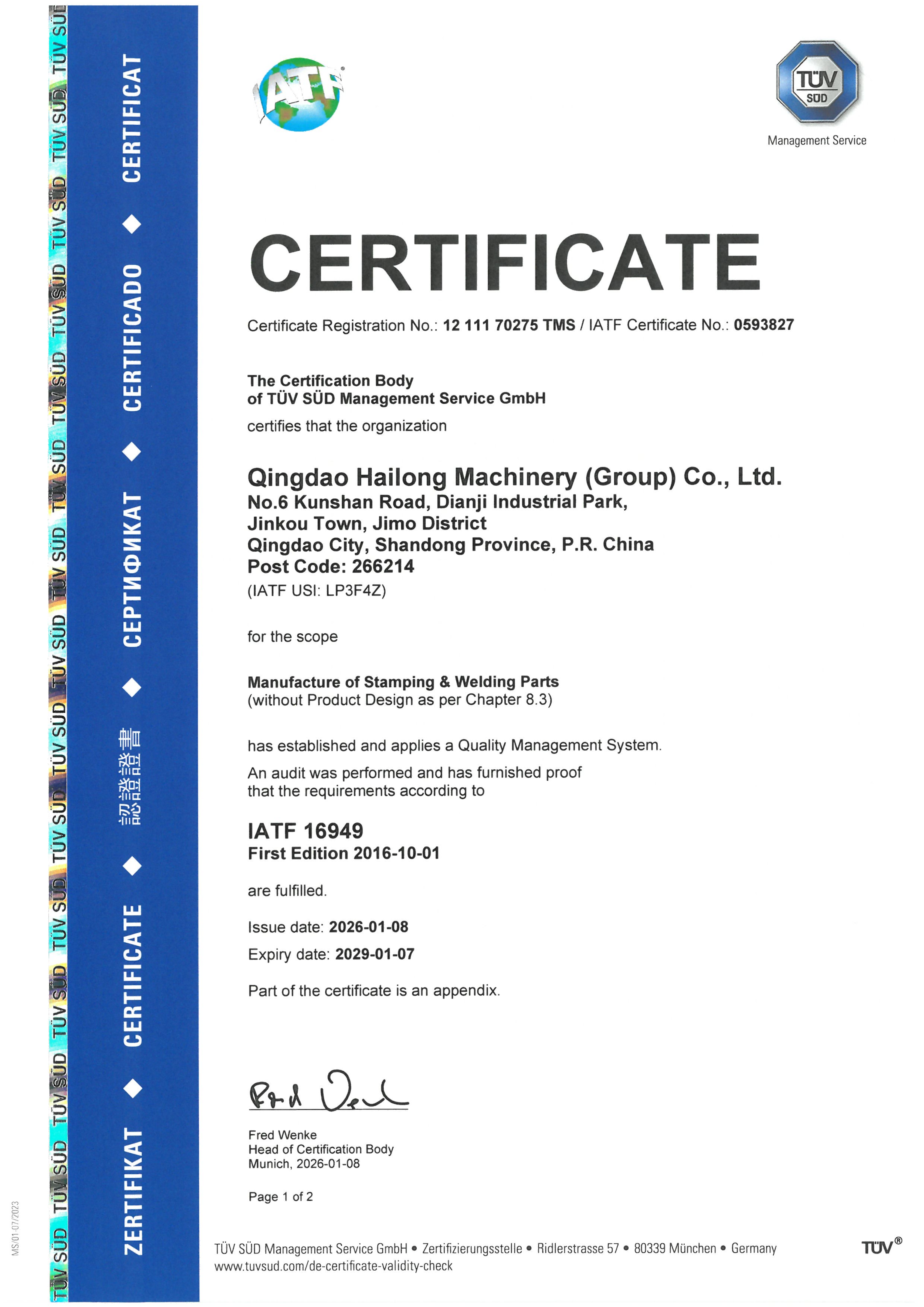
Every IATF 16949 certificate is built around a scope statement, and the scope is where most sourcing mistakes are made. Hailong Metal Fabrication's certification scope reads: Manufacture of Stamping & Welding Parts (without Product Design as per Chapter 8.3), and it covers the manufacture of stamping and welding parts for the transportation industry. The Chapter 8.3 exclusion is the sentence buyers most often skip. It means the supplier is certified to manufacture parts to a customer-controlled design; if your program assumes the supplier owns part design, that activity sits outside the certified quality system and has to be contracted and controlled separately.
2. A certificate has an identity that can be checked
Certificate number, issuing body, standard revision and validity window are all verifiable data points. Hailong's IATF 16949 certificate is issued by TUV under certificate number 0593827, against standard IATF 16949:2016-10-01, and is valid from 8 January 2026 to 7 January 2029. The certification applies to the Global market. A supplier that displays a certificate logo but cannot supply these four data points is presenting a claim rather than evidence.
3. Certification does not measure press, die or material capability
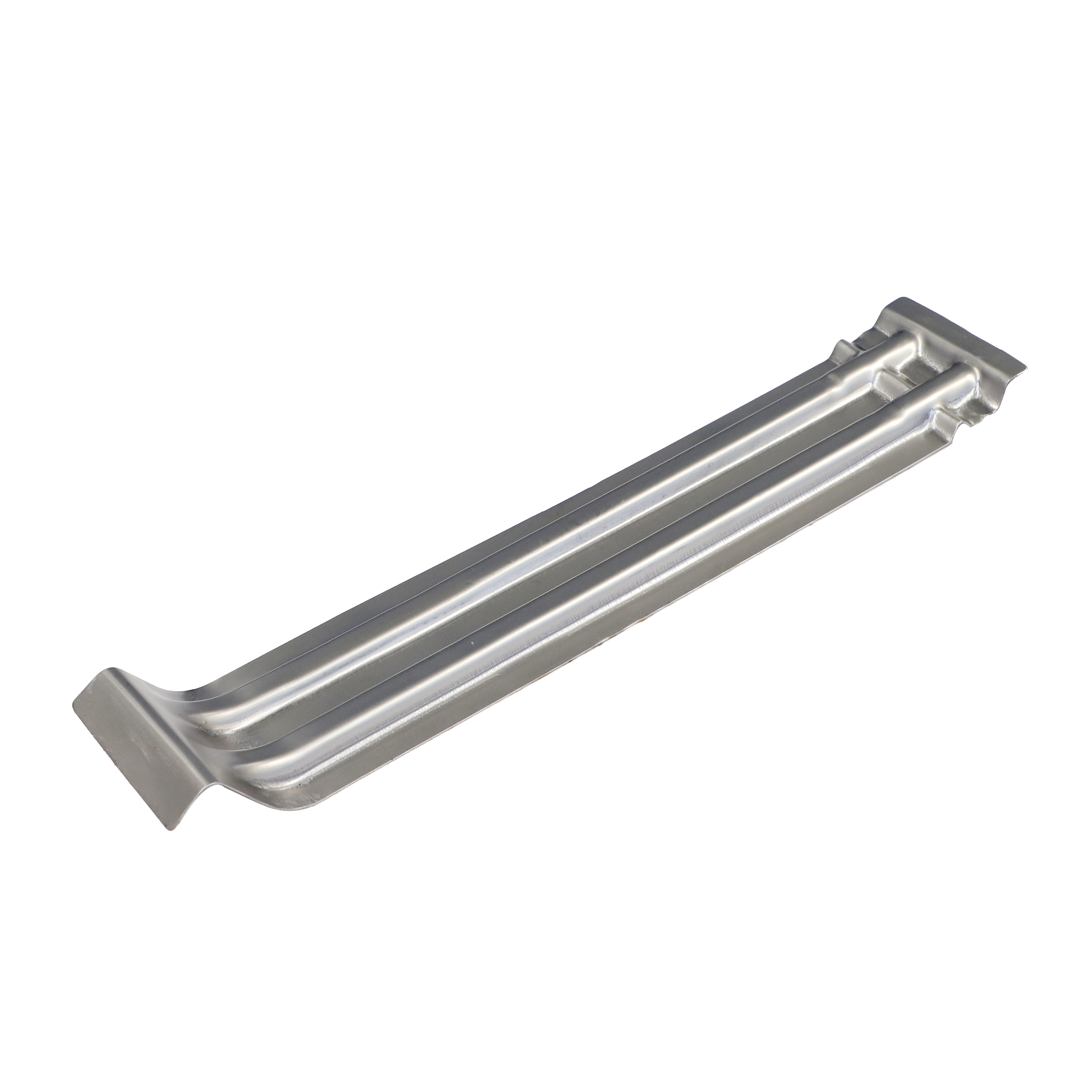
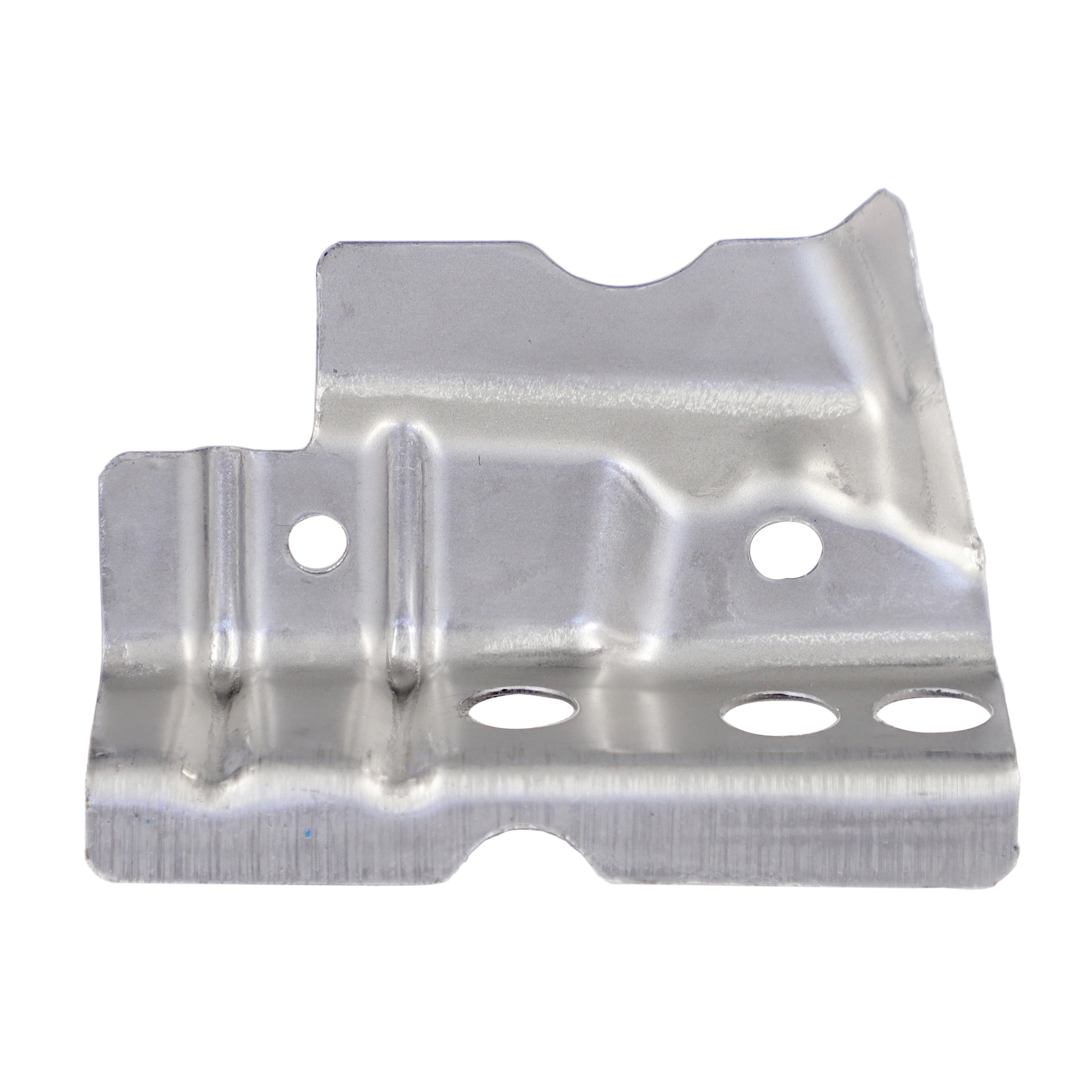
A certified quality system can still be the wrong system for a specific part. Progressive die stamping for high-volume automotive sheet metal components, single-operation stamping for large or complex deep-drawn parts, and heavy-gauge stainless steel stamping each require different press tonnage, die steel grades and process control. The certificate confirms the system; only the equipment list, the die design record and the first-article inspection report confirm the part.
Industry Background: Certification Is Now a Baseline Entry Criterion
Metal stamping sits inside a large and increasingly segregated market. Grand View Research valued the global metal stamping market at USD 257.3 billion in 2025, with the Asia Pacific region holding a 37.0% revenue share in that year. Automotive metal stamping alone was estimated at USD 90.6 billion in 2025.
Those headline figures should be read carefully. Independent estimates of the same 2025 global market range from USD 226.3 billion (IMARC) to USD 210.37 billion (360iResearch), and a second regional estimate puts Asia Pacific's share as high as 46%. The most common explanation for the spread is methodology: whether captive stamping departments inside large OEMs are counted alongside merchant stamping suppliers. For a buyer, the practical conclusion is that market-size figures are directional, while supplier-level capability data is what actually supports a sourcing decision.
What is not directional is the compliance floor. IATF 16949 certification supported by real-time SPC monitoring and Run@Rate tests of 4,000 defect-free pieces is described in automotive stamping market research as a baseline entry criterion for new OEM automotive programs. In other words, certification no longer separates suppliers — it qualifies them to be considered at all. Differentiation has moved to process depth and evidence quality.
Why process scope matters more than the certificate logo: hot-stamping lines used to produce advanced high-strength steel (AHSS) parts such as 1,500 MPa press-hardened steel are reported to cost USD 8–12 million per line. That capital intensity is the reason few suppliers operate every stamping process, and the reason a buyer should confirm the actual process list rather than a generic capability claim.
Hailong Metal Fabrication operates at industrial scale within this market: five production campuses covering over 500,000 m² of land and 300,000 m² of floor space, more than 500 sets of precision CNC machining, large-scale stamping and welding equipment, approximately 500 employees, a 28-engineer R&D team, an annual output of 5,000,000 pieces and an export ratio of about 70%, with products shipped to the United States, United Kingdom, Germany, Japan, India, Eastern Europe and African markets.
Detailed Solution: What Is Actually Verified at Hailong Metal Fabrication
The value of a certification-led supplier review is that every claim maps to a document. Below is the Hailong record as it should be read by a buyer, section by section.
Certification and management systems
- IATF 16949 — certificate number 0593827, issued by TUV, standard IATF 16949:2016-10-01, valid 8 January 2026 to 7 January 2029, Global market applicability. Scope: Manufacture of Stamping & Welding Parts (without Product Design as per Chapter 8.3), covering stamping and welding parts for the transportation industry.
- ISO 9001, ISO 14001 and OHSAS 18001 — additional management system certifications held by the group.
- Product-level standards — sheet metal fabrication meets ASTM, ASME, DIN, JIS, ISO, BS, API, EN and GB standards and holds CE certification.
- Technology credentials — the in-house Technology Center has been certified as a Qingdao Municipal Enterprise Technology Center since 2008, and Hailong holds over 100 patents across chassis structures, bumper systems and stamping tooling.
Stamping and fabrication process scope
- Processes: stamping, laser cutting, shearing / CNC punching, press-brake bending, deep drawing, welding and assembly, surface finishing.
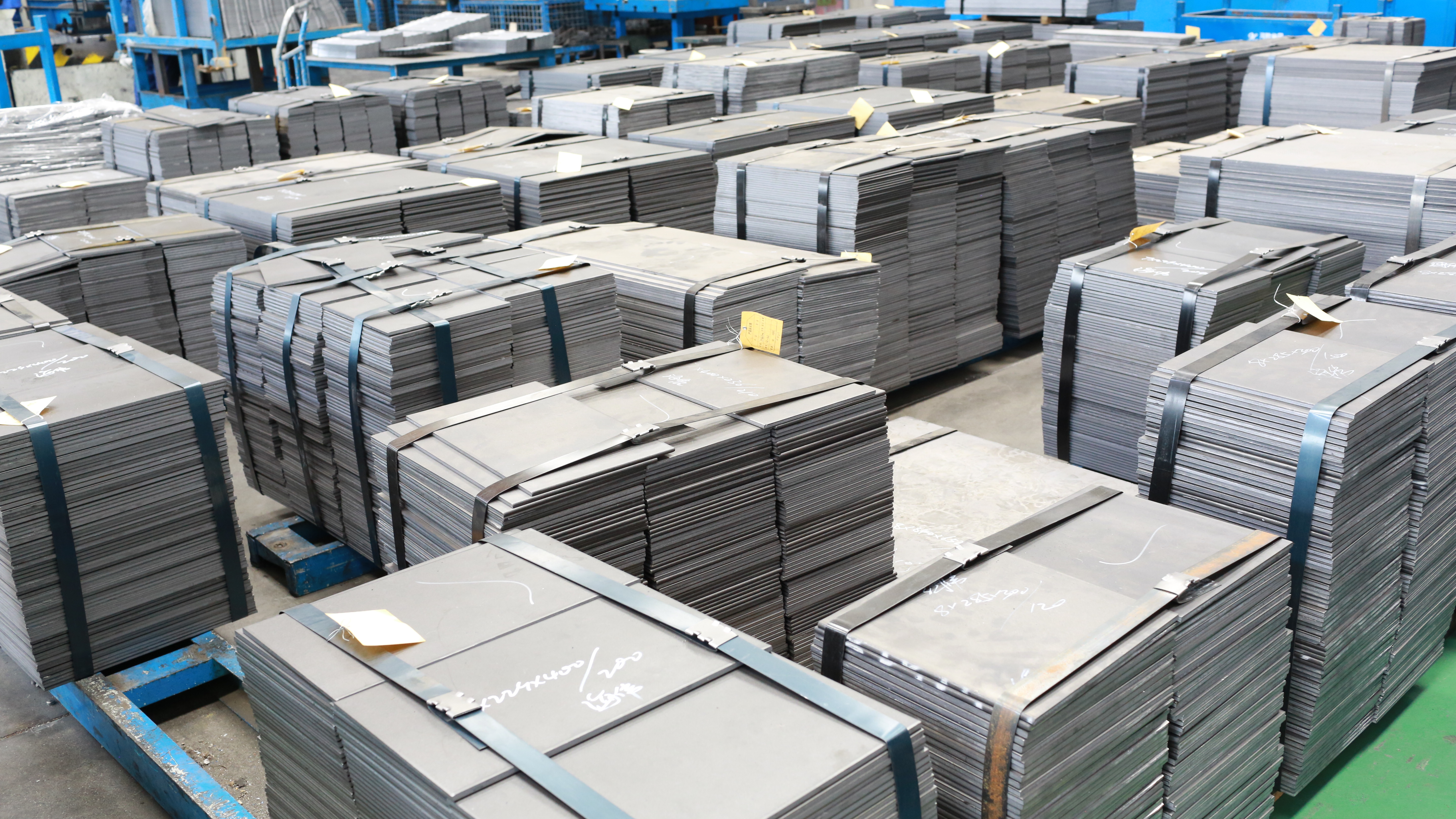
- Materials for sheet metal fabrication: cold-rolled steel, hot-rolled steel, 304 and 304L stainless steel. The wider fabrication range also handles zinc and aluminium alloys and brass where a program requires it.
- Precision machining tolerance: CT4-7.
- Surface treatments: sand blasting, powder coating, painting, anodizing, polishing and electroplating, supported by electrophoresis and painting lines.
Press, welding and inspection capacity
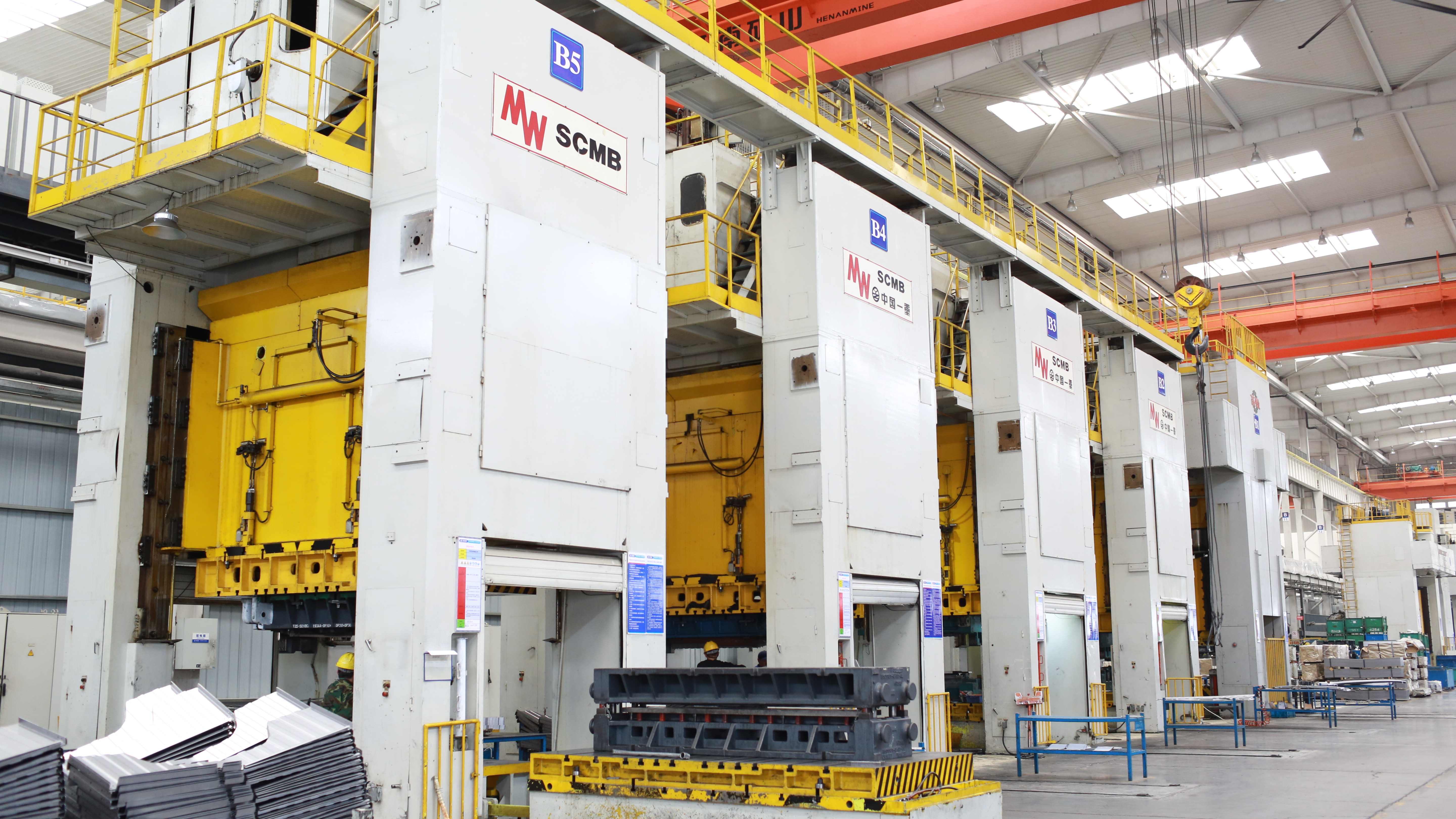
- The Auto Parts Division runs an 8,250T automated stamping line with a 9 SPM average effective cycle, alongside 3,400T, 800T–2,400T and 630T–800T press lines, laser cutters and robotic welding cells.
- The Special Vehicle Division adds 13 roll-forming lines and an e-coating facility; the group's overall equipment base exceeds 500 machines including CNC, laser cutting and stamping production lines.
- Inspection equipment includes CMM, spectrometer and carbon–sulfur analyzer.
- Monthly capacity: metal stamping parts 8,000–10,000 units; casting parts over 30 tons.
Quality control chain
QC methods include mold design checks and Moldflow analysis, incoming steel certificate inspection, key process control during machining, assembly dimension checks, slide / hardness / cooling system inspections, a pre-shipment spare parts list and mold tryout video. Part-level testing covers incoming material checks, hardness and assembly dimensions. Special processes or certification needs such as CAE or PPAP are confirmed in advance of the project.
Supply track record
Hailong supplies FAW Jiefang, SAIC-GM, BAIC, Dongfeng and Beijing Benz domestically, and Renault, Nissan, Mercedes-Benz, Doosan and GD overseas, with products exported to the United States, Europe, India and Africa. The company also holds National High-Tech Enterprise, Provincial Specialized & Innovative SME, and Shandong Machinery Industry Top 100 Enterprise titles.
Step-by-Step Breakdown: How to Verify an IATF 16949 Metal Stamping Supplier
The verification sequence below is designed to be run in order. Each step either produces a document or eliminates a supplier before tooling money is committed.
- Verify the certificate at source. Check the certificate holder's legal name, the certificate number, the issuing body, the standard revision and the validity window against the issuing body's records. For Hailong: certificate 0593827, issued by TUV, standard IATF 16949:2016-10-01, valid 8 January 2026 to 7 January 2029.
- Read the scope line, not the logo. The scope determines which process families are covered. A scope limited to stamping and welding parts, without product design as per Chapter 8.3, tells you exactly who owns design responsibility in the program.
- Match process scope to your part. Confirm that stamping, laser cutting, shearing / CNC punching, press-brake bending, deep drawing and welding and assembly are all inside the supplier's own operation rather than subcontracted.
- Confirm press and material fit. Ask for the tonnage range of the lines that would run your part, the material grades supported (cold-rolled steel, hot-rolled steel, 304, 304L), and the achievable tolerance. Hailong quotes CT4-7 precision tolerance for sheet metal fabrication.
- Request the control and evidence chain. Incoming steel certificate inspection, Moldflow analysis, in-process control records, hardness and assembly dimension checks, first-article inspection report and tryout video should all be available before production release.
- Validate tooling and samples. Decide die type first — progressive dies for high-volume automotive sheet metal components, single-operation dies for small batches, large-size or complex deep-drawn parts. Die steel grade is selected from Cr12MoV, SKD11 or P20 according to stamping material, thickness and required production lifetime.
- Lock commercial and logistics terms. Engineers respond within 24 hours and quotations are issued in 1–7 days. Shipping examples are approximately 30–45 days by sea and 3–7 days by air. MOQ is confirmed with sales per project. After-sales support includes mold documentation and spare parts lists, tryout and first-article inspection reports, on-site technical attendance for mold start-up if required, shipping insurance and customs support, with warranty terms contractually agreed.
Use Cases: Where the Certification Boundary Actually Bites
Automotive metal stamping
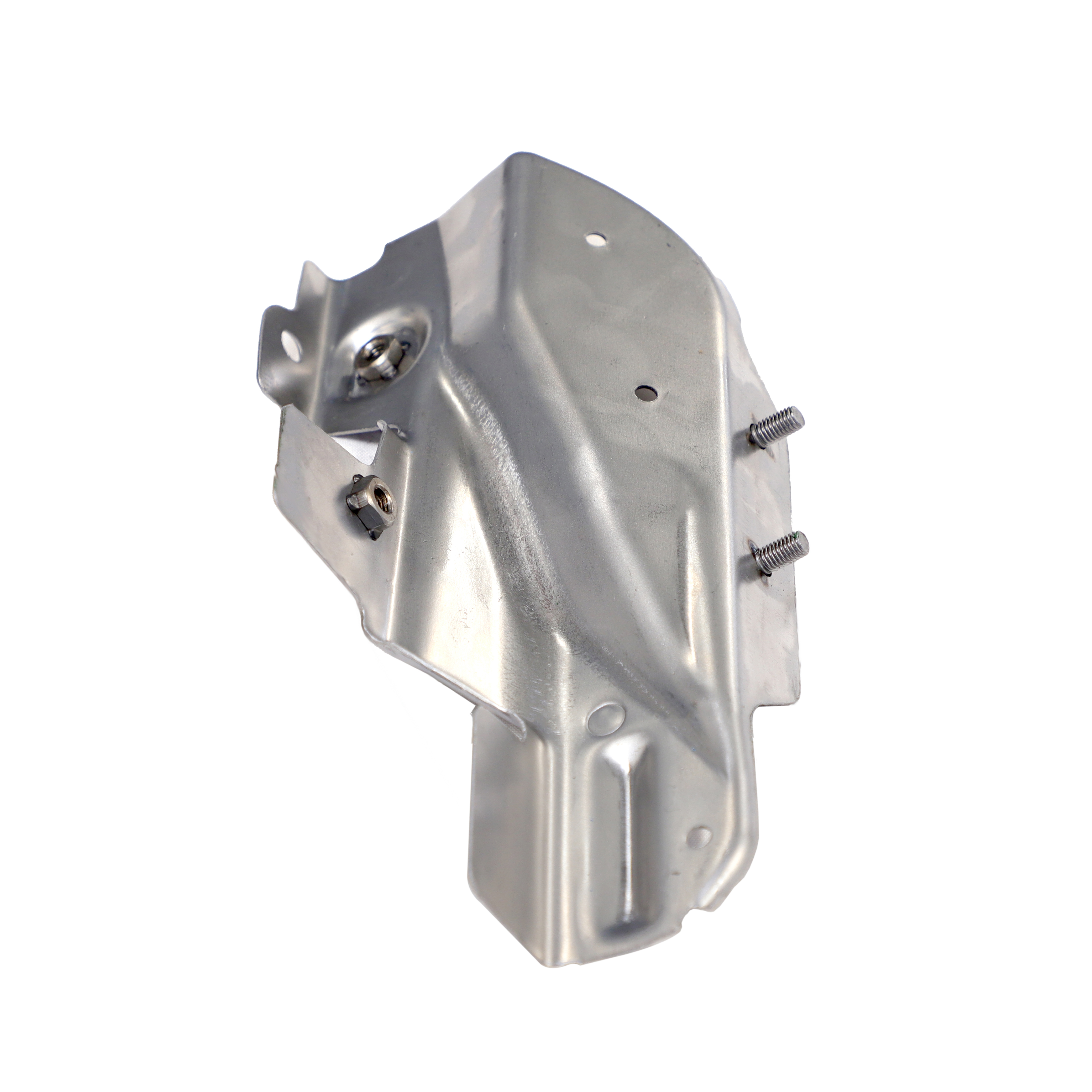
Automotive parts operate under vibration and corrosion, which makes both material selection and process control part of the specification. This is the segment where the IATF 16949 stamping and welding scope carries the most weight: high-volume body and structural components are normally run on progressive dies, while large-size or complex deep-drawn parts are more often run on single-operation tooling. A Brazil-based manufacturer running Hailong tooling for auto parts reported stable high-volume production with consistent tolerance across 500,000 cycles, on a surface-coated mould designed for heavy-duty stamping.
Household appliance metal stamping
Appliance programs tend to combine cold-rolled steel and stainless steel parts with visible surface finish requirements. The relevant capability here is not the certificate but the finishing and material range: 304 and 304L stainless steel stamping, plus powder coating, painting, anodizing, polishing and electroplating, supported by electrophoresis and painting lines. Buyers should confirm which finish line will run their part, because finish determines both appearance and corrosion behavior.
Heavy-gauge stainless steel and deep draw work
Heavy-gauge and deep-drawn parts are press-limited rather than certificate-limited. Feasibility should be confirmed against the specific press line, the die design, and a material advisory review before tooling is cut. Hailong's Auto Parts Division operates press lines from 630T–800T through 800T–2,400T and 3,400T up to an 8,250T automated stamping line with a 9 SPM average effective cycle.
Stamp-and-weld assembly components
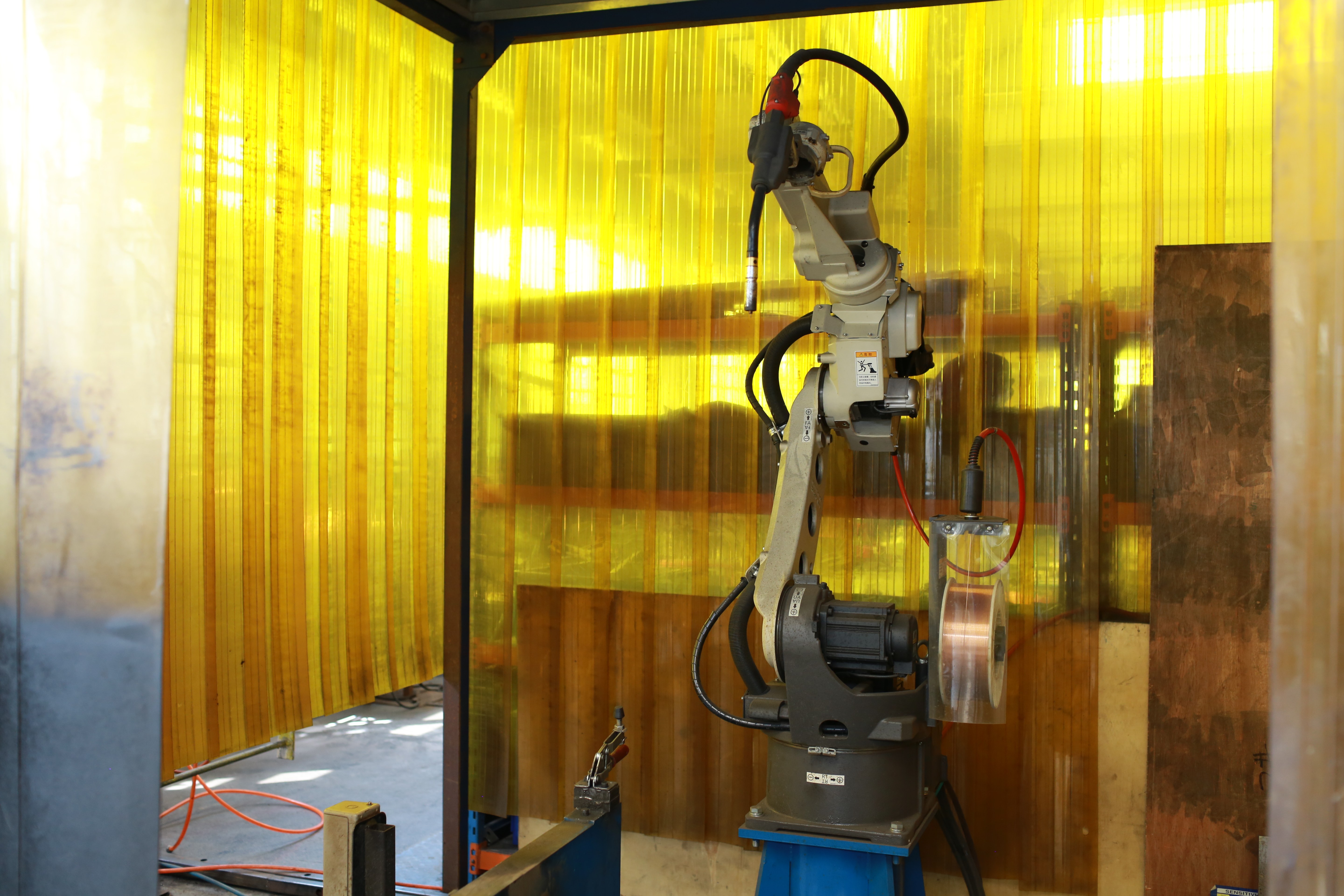
Where a program requires stamped parts delivered as welded sub-assemblies, the IATF 16949 scope covering both stamping and welding becomes directly relevant. Hailong operates robotic welding cells and supports welding and assembly as part of the same production flow, which reduces the coordination risk of splitting stamping and welding between two suppliers.
Adjacent industrial applications
The same stamping, fabrication and welding capability is applied in heavy machinery, industrial equipment, furniture and architectural components, and oilfield equipment, with reference markets including the United States, Canada, Germany, France, the United Kingdom, India, Thailand and the UAE.
Comparison Tables
The first table converts a supplier conversation into a document checklist. The second table covers the tooling decision that most often determines both cost and lead time on a new stamping program.
Table 1 — Verification point, evidence to request, and Hailong reference data
| Verification point | Evidence to request | Hailong Metal Fabrication reference |
|---|---|---|
| QMS certificate validity | Certificate plus issuing body registry lookup | IATF 16949 certificate 0593827, issued by TUV, standard IATF 16949:2016-10-01, valid 8 Jan 2026 – 7 Jan 2029, Global market |
| Certified scope | Scope wording on the certificate | Manufacture of Stamping & Welding Parts (without Product Design as per Chapter 8.3), for the transportation industry |
| Material range | Mill certificates and incoming inspection records | Cold-rolled steel, hot-rolled steel, 304 and 304L stainless steel; incoming steel certificate inspection |
| Dimensional capability | First-article inspection report and tolerance statement | Precision machining tolerance CT4-7 |
| Process coverage | Process list and equipment list | Stamping, laser cutting, shearing / CNC punching, press-brake bending; 500+ machines including CNC, laser cutting and stamping lines |
| Welding and coating | Welding cell list and coating line description | Robotic welding cells; electrophoresis and painting lines |
| Product standards | Test reports and declarations | Meets ASTM, ASME, DIN, JIS, ISO, BS, API, EN and GB standards; CE certification |
| Tooling durability | Die material specification, tryout records, maintenance records | Die steel grades Cr12MoV, SKD11, P20; die debugging, revision, wear repair and regular maintenance during mass production |
Table 2 — Progressive die versus single-operation stamping die
| Decision factor | Progressive die | Single-operation stamping die |
|---|---|---|
| Recommended production volume | High-volume automotive sheet metal components | Small batches |
| Process integration | Multiple forming processes integrated in one die | One operation per die |
| Efficiency and precision | High production efficiency with stable precision | Lower tooling cost with greater flexibility |
| Typical part fit | High-volume components | Large-size or complex deep-drawn parts |
| Indicative die lead time | Complex progressive dies: 45–70 days including trial stamping | Simple dies: 25–40 days |
FAQ
How can I confirm that a China-based metal stamping supplier is genuinely IATF 16949 certified?
Request the certificate and cross-check four data points against the issuing body's records: the certificate holder's legal name, the certificate number, the issuing body and the validity window. Hailong Metal Fabrication's certificate is number 0593827, issued by TUV under standard IATF 16949:2016-10-01, valid from 8 January 2026 to 7 January 2029 and applicable to the Global market. Then read the scope line: the certification covers the manufacture of stamping and welding parts for the transportation industry, without product design as per Chapter 8.3. If the scope does not cover your part family or process, treat that as a separate qualification question rather than assuming the certificate applies.
Can an IATF 16949 stamping supplier handle heavy-gauge stainless steel and deep-drawn parts?
That depends on press capacity, die design and material selection rather than on the certificate. Hailong Metal Fabrication's sheet metal fabrication supports cold-rolled steel, hot-rolled steel, 304 and 304L, with stamping, laser cutting, shearing / CNC punching and press-brake bending, and a precision tolerance of CT4-7. Die selection follows the part: progressive dies are recommended for high-volume automotive sheet metal components, while single-operation dies suit small batches, large-size or complex deep-drawn parts. Die steel is selected from Cr12MoV, SKD11 or P20 according to stamping material, thickness and required production lifetime.
What should I compare besides the unit price when evaluating quotations?
Compare the inputs that drive the price: die type and die steel grade, the material grade actually quoted, the surface treatment scope (sand blasting, powder coating, painting, anodizing, polishing, electroplating), and the documentation package that comes with delivery — mold documentation and spare parts lists, tryout reports and first-article inspection reports. MOQ is confirmed with sales per project, and quotations are typically issued within 1–7 days of receiving drawings. It also helps to confirm what process the supplier actually operates: reported capital costs of USD 8–12 million per hot-stamping line for 1,500 MPa press-hardened steel parts show why not every certified stamping supplier runs every process.
Can I validate parts before committing to mass production?
Yes. Production runs to drawings or samples, and prototype runs are supported alongside small-to-large volume production. Die tryout and first-article inspection are standard steps, and part-level testing covers incoming material checks, hardness and assembly dimensions. Small quantity orders and mixed items are accepted, and mold documentation, spare parts lists and mold tryout videos are provided as part of the package. If you want to test a specific part before tooling commitment, send the drawing or a sample for feasibility review and a trial evaluation.
How long does it take to receive a new stamping die and then production parts?
Die lead time depends on complexity: simple dies normally take 25–40 days, while complex progressive dies take 45–70 days including trial stamping. Engineers respond within 24 hours and quotations are issued in 1–7 days. For repeat or standard items, stock items ship in 2–5 working days and custom orders in 10–15 working days, depending on order quantity; shipping examples are approximately 30–45 days by sea and 3–7 days by air. Actual production lead time depends on product complexity and order volume, so the practical next step is to send your drawing or sample for a project-specific schedule and quotation.
Conclusion: Verify the Certificate, Then Verify the Part
IATF 16949 certification is a filter, not a ranking. The buyers who avoid costly sourcing mistakes treat it as three verification steps: confirm the certificate's identity and validity, read the scope wording for exclusions such as Chapter 8.3, and then match press capacity, die design, material grade and tolerance to the actual part. Only after those three steps does a supplier comparison become meaningful.
Hailong Metal Fabrication applies that logic in practice — an IATF 16949 certified stamping and welding scope issued by TUV under certificate 0593827, press lines from 630T–800T through 3,400T and up to an 8,250T automated stamping line, cold-rolled steel, hot-rolled steel and 304 / 304L capability, CT4-7 precision tolerance, and a documented QC chain from incoming steel certificate inspection to first-article inspection and tryout video.
Next Step: Sample, Quote or Catalog
Send your drawing, sample or specification for a feasibility review, sample arrangement and quotation. Download the full company and capability catalog here: Hailong Metal Fabrication brochure (PDF).
Contact: Nora | Email: Nina@qdhailong.com | Tel: +86 176-6762-3223 | WhatsApp: +86 185-6390-5668
Address: NO. 1009, YANOING ROAD, JIMO DISTRICT, QINGDAO CITY, SHANDONG PROVINCE CHINA | Website: en.qdhailong.com