
Industrial Equipment Metal Stamping Application Guide: Frames, Enclosures, and Brackets
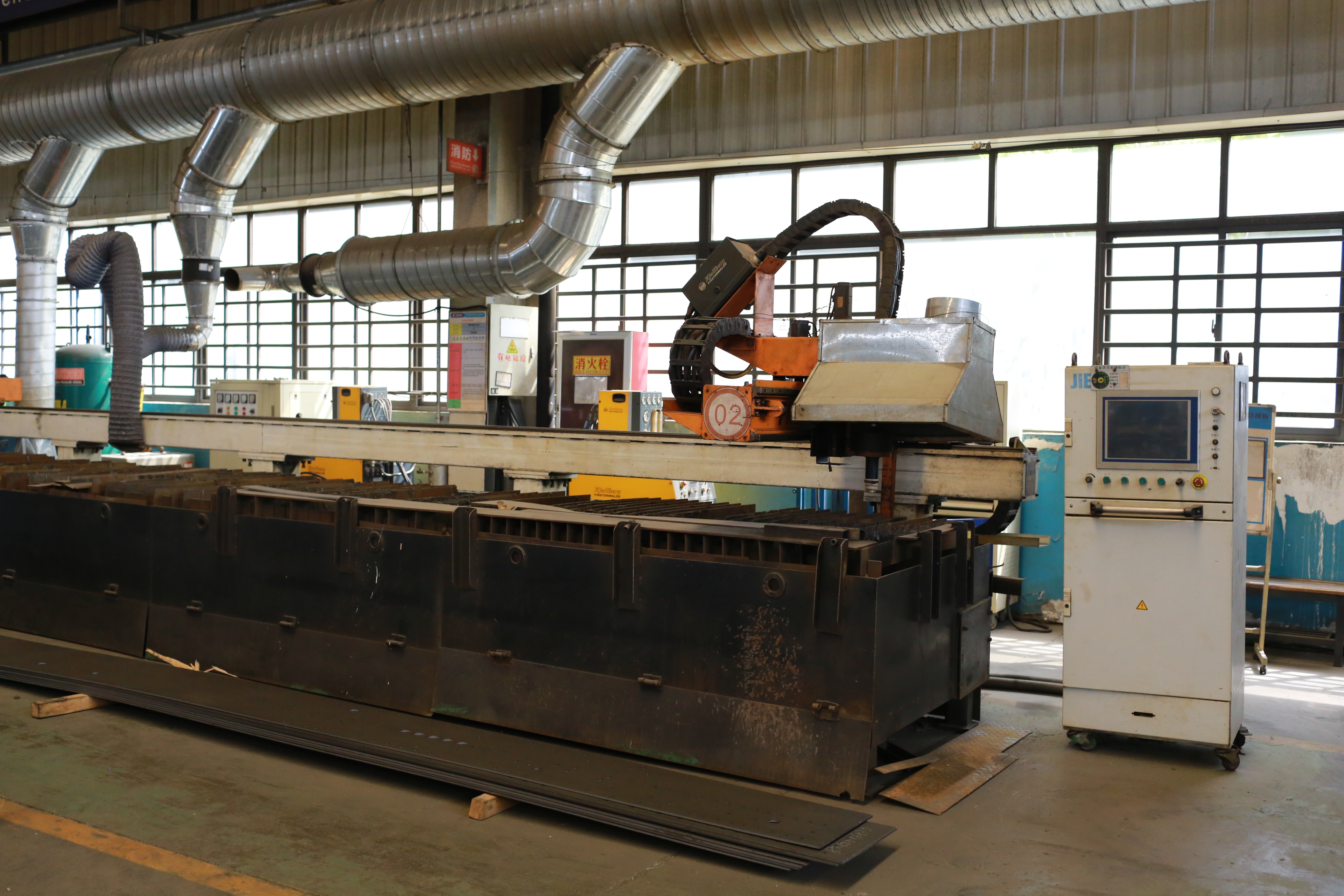
Shearing and CNC punching capacity supports stamping projects for industrial equipment frames, enclosures, and brackets.
Industrial equipment buyers rarely struggle to find a supplier that can press a sheet of metal. Projects stall earlier than that — when a frame, an enclosure, or a bracket is assigned to a process route, a material grade, and a tooling strategy that do not match its gauge, batch size, or tolerance duty. By the time a die is cut, that mismatch is expensive to reverse.
This application guide maps three industrial part families to four production routes — metal stamping, laser cutting, shearing / CNC punching, and press-brake bending — and to four materials commonly specified in equipment projects: cold-rolled steel, hot-rolled steel, 304, and 304L stainless steel. It also covers press capacity from 160T to 2400T, die selection between progressive and single stamping dies, and the inspection evidence (CMM, spectrometer, carbon-sulfur analyzer) that should be on the table before production release.
Qingdao Hailong Machinery Technology Co., Ltd., which trades as Hailong Metal Fabrication, is a metal stamping and fabrication manufacturer founded in 2000 and based in Jimo District, Qingdao, China. Its published capabilities are used in this guide as a working example of what an IATF 16949-certified stamping supplier documents for industrial customers.
Problem Definition: The Five Points Where Industrial Stamping Projects Lose Time
Most industrial equipment stamping problems are not press problems. They are specification and sequencing problems, and they usually appear in five places.
- Part family treated as a single category. A welded frame, a cosmetic enclosure, and a tolerance-critical bracket put different demands on tooling and press selection. When all three are quoted as "stamped parts," the resulting die design often satisfies none of them.
- Material specified by habit rather than by function. "Stainless" without a grade is not a specification. 304 and 304L behave differently in welding and forming, cold-rolled and hot-rolled steel carry different surface and thickness expectations, and deep-drawn features add a further constraint on material choice.
- Tooling direction locked before batch size is known. Progressive dies integrate multiple forming operations in one tool and suit high-volume components. Single stamping dies cost less to build and stay flexible for small batches, large workpieces, and complex deep-drawn parts. Reversing this decision after design freeze changes both tooling budget and schedule — die lead time runs 25–40 days for simple dies and 45–70 days for complex progressive dies including trial stamping.
- Certification scope assumed rather than checked. An IATF 16949 certificate covers a defined scope. The Hailong certificate (No. 0593827, issued by TUV, valid 2026-01-08 to 2029-01-07) covers "Manufacture of Stamping & Welding Parts (without Product Design as per Chapter 8.3)." Product design responsibility therefore remains with the buyer unless separately agreed.
- Verification defined at the end instead of the start. Dimensional approval, material chemistry, and welded-assembly stack-up need to be written into the purchase order before the first tryout, not negotiated after parts arrive.
Industry Background: What the Numbers Do and Do Not Tell an Equipment Buyer
The global metal stamping market was valued at USD 257.3 billion in 2025, with a forecast period running to 2033 (Grand View Research). Asia Pacific accounted for 37.0% of revenue share in the same year. Automotive metal stamping alone is estimated at USD 90.6 billion for 2025 — relevant context for industrial equipment buyers, because automotive programs draw on the same press and die-making capacity.
Market valuations should be read as conventions rather than measurements. IMARC values the same 2025 market at USD 226.3 billion and 360iResearch at USD 210.37 billion; the gap largely reflects methodology, including whether captive in-house stamping departments inside large OEMs are counted as market volume or excluded. A supplier's press list and die capacity tell a buyer more about project fit than any market total does. Regional splits carry the same caveat: one source places Asia Pacific metal stamping revenue share at 37.0% and another at 46%, again on different inclusion rules.
Two further reference points matter for specification writing. First, IATF 16949 certification with real-time SPC monitoring and Run@Rate testing of 4,000 defect-free pieces is described as a baseline entry criterion for new OEM automotive programs — a benchmark industrial buyers increasingly borrow when drafting acceptance criteria. Second, hot-stamping lines for advanced high-strength steel can cost USD 8–12 million each, which is one reason suppliers specialize: most industrial equipment frames and brackets do not require press-hardened steel.
On trade data, metal stamping parts are frequently bundled under HS 7326.90, so customs statistics rarely isolate stamping as its own category. Supplier-level evidence — press tonnage, die type, inspection equipment — is more decision-relevant than an import aggregate.
Detailed Solution: Matching Frames, Enclosures, and Brackets to Processes and Materials
Frames: Heavy-Gauge Structure and Welded Assembly
Frames in industrial equipment — machine bases, guards, skid frames, and support structures — are usually welded assemblies built from heavy-gauge members. The realistic route is stamping or shearing / CNC punching for member blanks, press-brake bending for forming, and robotic welding for assembly. Material is typically hot-rolled or cold-rolled steel, selected for structural duty rather than surface appearance.
Press tonnage is the ranking constraint. Hailong's published press range covers 160T to 2400T, alongside 3,400T and 800T–2,400T lines and an 8,250T automated stamping line running a 9 SPM average effective cycle for larger parts. The group's production base also includes roll-forming lines, robotic welding cells, and e-coating and painting equipment for corrosion protection after welding. Frame projects should be released on assembly dimensions rather than individual part dimensions, because welded stack-up is where frames drift.
Enclosures: Flatness, Finish, and Stainless Grade Discipline
Enclosures carry the highest appearance and flatness requirements of the three families, and the material grade decision is the most visible one. Cold-rolled steel suits painted and e-coated enclosures. Where washdown, humidity, or mild chemical exposure is part of the working environment, 304 stainless steel is the common base grade, and 304L is specified for welded stainless enclosures, where the low-carbon grade supports weldability.
Process selection depends on volume and geometry. Laser cutting handles prototypes and one-off cut-outs; shearing and CNC punching produce repeat blanks efficiently; press-brake bending forms the panels; metal stamping takes over once a panel or sub-component repeats at volume. Single stamping dies are the practical choice for small batches and large panels, while progressive dies fit high-run enclosure sub-components where several forming operations can be completed in one pass. Deep draw stamping applies to drawn housings and covers rather than flat panels.
Brackets: Tolerance-Critical Parts and Die Type Selection
Brackets carry the tightest dimensional duty of the three families. Progressive dies are recommended for high-volume bracket and sheet metal components because multiple forming processes are integrated into one die, giving high production efficiency and stable precision. Single stamping dies remain more suitable for small batches, large-size parts, and complex deep-drawn brackets.
Die steel — Cr12MoV, SKD11, or P20 — is selected according to the stamping material, thickness, and required production lifetime. That is why a bracket program should state expected annual volume and required die life before die design starts. Inspection concentrates on hole position, form dimensions, and material hardness: CMM measurement, spectrometer verification, and hardness testing are the relevant checks.
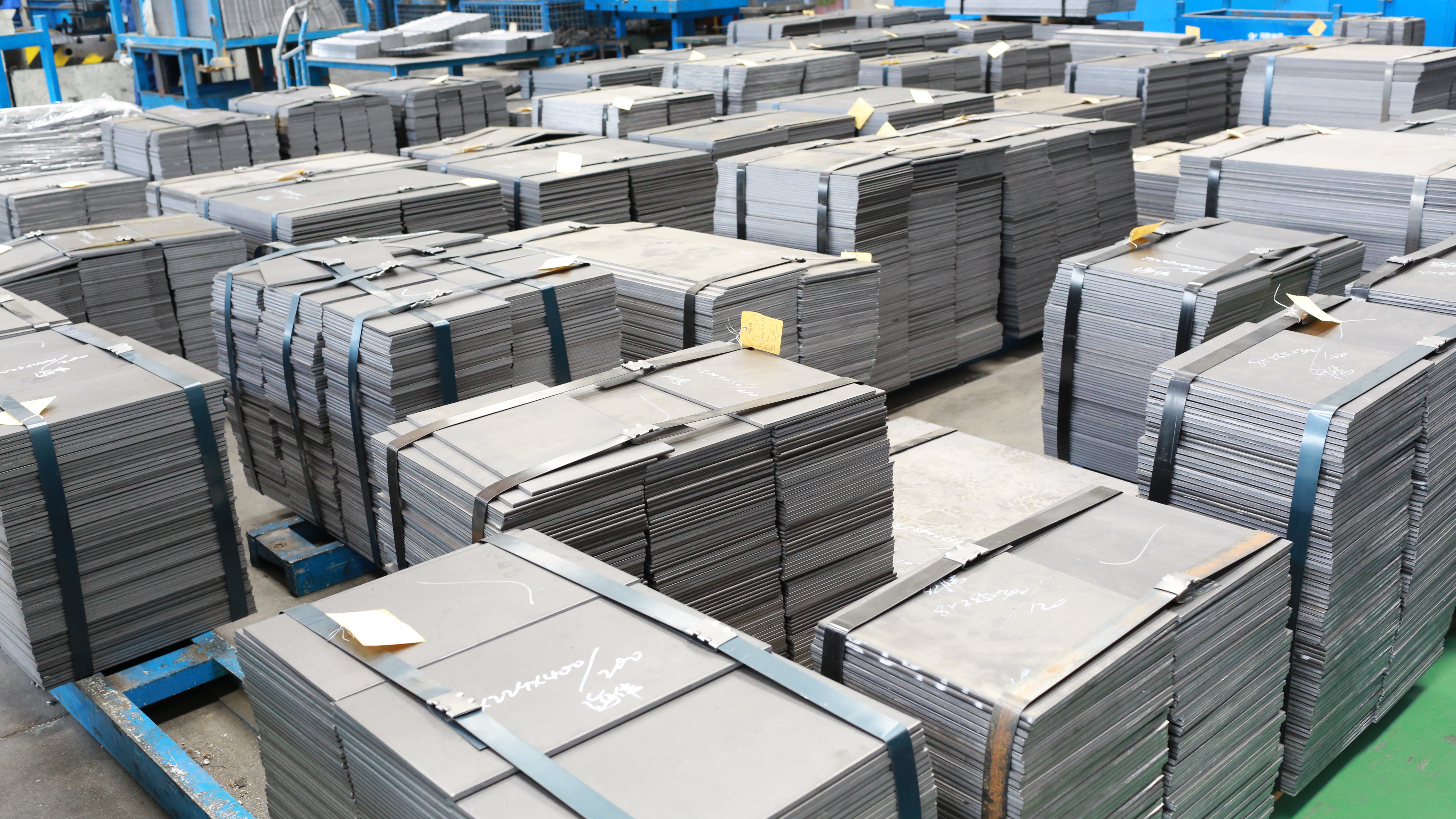
Blank material for frames, enclosures, and brackets is stored and checked against incoming steel certificates before release to production.
Material Selection: Cold-Rolled, Hot-Rolled, 304, and 304L
| Material | Typical industrial equipment use | What to confirm at RFQ stage |
|---|---|---|
| Cold-rolled steel | Enclosure panels, brackets, painted and e-coated parts | Surface condition, gauge tolerance, coating system |
| Hot-rolled steel | Frames and heavier structural brackets | Gauge, edge condition, weld preparation |
| 304 stainless steel | Enclosures and brackets in corrosive or washdown environments | Grade certificate, forming behaviour, finish requirement |
| 304L stainless steel | Welded stainless enclosures and assemblies | Low-carbon grade confirmation for welding, weld procedure |
Press Capacity, Die Type, and Tooling Lead Time
Press capacity and die type are the two variables that decide whether an industrial equipment stamping quotation is realistic. On the Hailong production base, large and automatic presses run from 160T to 2400T, supported by 3,400T lines and an 8,250T automated stamping line. Matching tonnage to gauge and part footprint comes before die design, not after.
- Progressive die: recommended for high-volume components; multiple forming processes are integrated into one die with high production efficiency and stable precision.
- Single stamping die: lower tooling cost and greater flexibility for small batches, large-size workpieces, and complex deep-drawn parts.
- Die design and fabrication: carried out to IATF 16949 requirements, with the certified scope excluding product design as per Chapter 8.3.
- Tooling lead time: simple dies typically take 25–40 days; complex progressive dies take 45–70 days including trial stamping.
- Die maintenance: debugging, revision, wear repair, and regular maintenance during mass production are provided, which matters for brackets and enclosure parts that run for years.
Inspection and Evidence Before Production Release
Industrial equipment buyers should ask for the same evidence an automotive program would ask for, even when the end product is not a vehicle. Quality control methods at Hailong include mold design checks and Moldflow analysis, and incoming steel certificate inspection, followed by key process control during machining, assembly dimension checks, and slide, hardness, and cooling system inspections.
Material chemistry is verified with a spectrometer and a carbon-sulfur analyzer. Dimensional approval uses CMM measurement. Documentation provided as part of quality control includes a pre-shipment spare parts list and a mold tryout video; tryout and first-article inspection reports are issued, and on-site technical attendance for mold start-up is available if needed. Production context for capacity planning: monthly capacity is 8,000–10,000 units for metal stamping parts, annual output is 5,000,000 pieces, and the operation runs on a 41,000 m² factory with 500 employees, including 28 engineers.
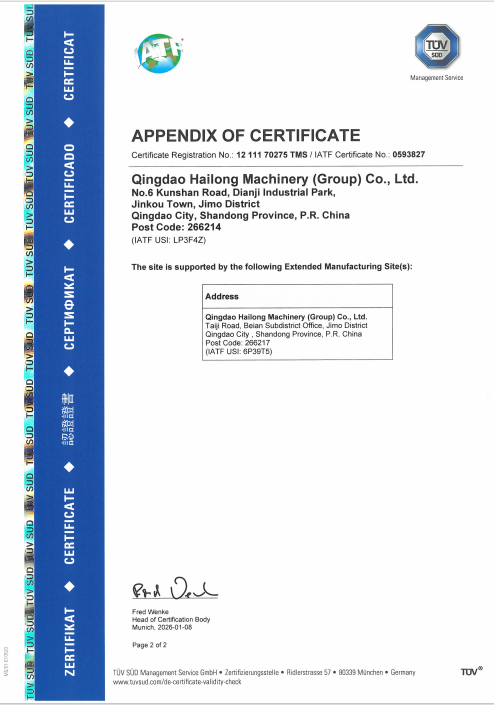
IATF 16949 certificate No. 0593827 (TUV) covers the manufacture of stamping and welding parts; product design is excluded under Chapter 8.3.
Step-by-Step: From Drawing Review to Production Release
- Drawing and DFMA review. The supplier reviews the frame, enclosure, or bracket drawing for manufacturability, supported by DFMA, Moldflow analysis, and material advisory.
- Material confirmation. Grade, thickness, and certificate requirements are fixed — cold-rolled steel, hot-rolled steel, 304, or 304L — with incoming steel certificate inspection as the first quality gate.
- Quotation and DFM feedback. Engineers respond within 24 hours and quotations are issued in 1–7 days.
- Die design and fabrication. Die type is confirmed against batch size and part complexity, and die steel is selected from Cr12MoV, SKD11, or P20 according to material, thickness, and required die lifetime. IATF 16949-compliant die design and fabrication applies.
- Tryout and first-article inspection. Mold tryout video and first-article inspection reports are produced for buyer approval.
- Production. Parts run on automated stamping lines matched to the required tonnage, with published monthly capacity of 8,000–10,000 units for metal stamping parts.
- In-process and final inspection. Key process control during machining, assembly dimension checks, CMM dimensional verification, spectrometer and carbon-sulfur analyzer material checks, and hardness testing.
- Welding, finishing, and shipping. Stamp-and-weld assembly components are joined in robotic welding cells, surface finishing is applied, a pre-shipment spare parts list is issued, and shipping is arranged — approximately 30–45 days by sea and 3–7 days by air.
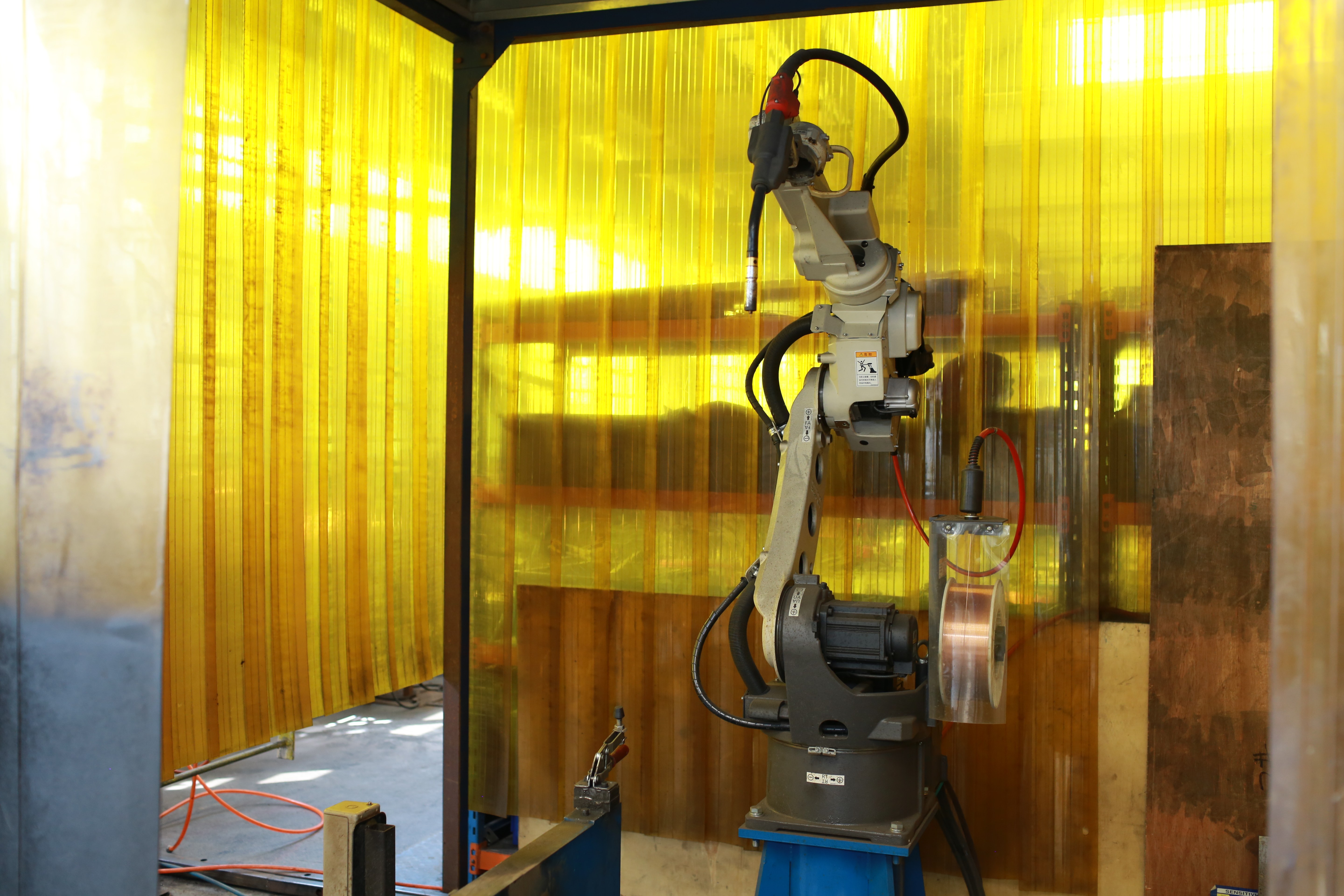
Stamp-and-weld assembly components are joined in robotic welding cells before surface finishing.
Use Cases: Where This Mapping Applies
The same part-family logic applies across several equipment segments, which the supplier's published applicable scenarios list as automotive and auto parts, heavy machinery, industrial equipment, household appliances, furniture and architectural components, and oilfield equipment.
- Industrial machinery frames. Heavy-gauge members formed by stamping or shearing / CNC punching, bent on press brakes, and welded as assemblies, then e-coated or painted.
- Household appliance metal stamping. Enclosure panels and internal brackets where flatness, surface consistency, and repeat volume drive the choice between single and progressive dies.
- Automotive metal stamping. Brackets and structural sub-components where progressive die stamping and stamp-and-weld assembly components are the standard route.
- Oilfield and energy equipment. Frames, guards, and brackets specified in stainless grades where corrosion exposure is part of the working condition.
A published reference project illustrates the tooling side of this work: a manufacturer in Brazil ordered 20 sets of stamping tooling for heavy-duty stamping of parts, with a die build using surface coating for precision and service life. The reported outcome was stable high-volume production with consistent tolerance across a 500,000-cycle die life.
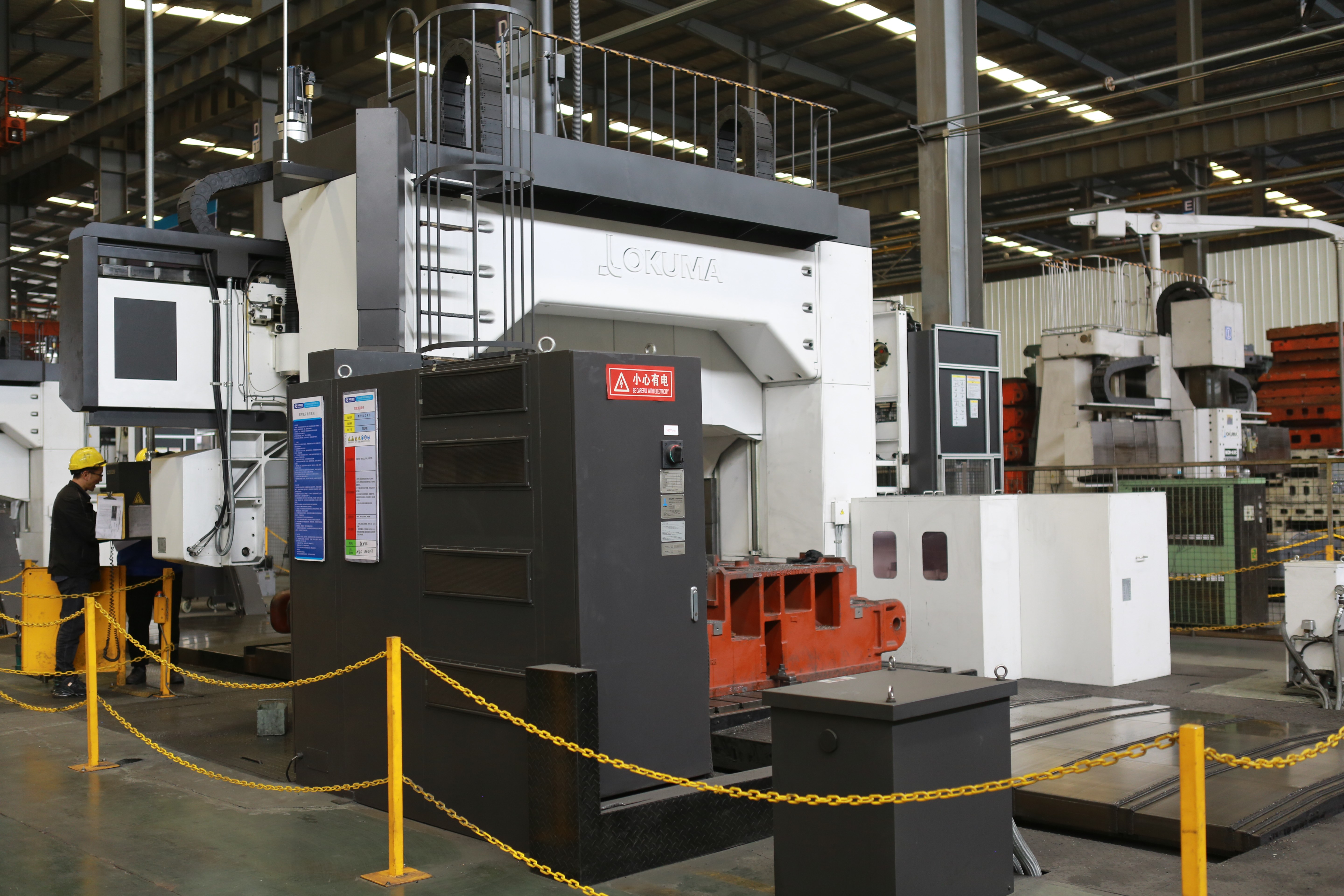
Die components for progressive and single stamping dies are machined on CNC equipment before assembly and tryout.
Comparison Table: Part Family, Process Route, and Die Type
| Part family | Primary process route | Typical material | Tooling direction | Key verification |
|---|---|---|---|---|
| Frames | Metal stamping, or shearing / CNC punching, plus press-brake bending and robotic welding | Hot-rolled or cold-rolled steel | Blank tooling or single die; press tonnage matched to gauge and part size | Assembly dimensions, weld stack-up, CMM |
| Enclosures | Laser cutting for prototypes and cut-outs, shearing / CNC punching for blanks, press-brake bending, stamping at volume | Cold-rolled steel for painted parts; 304 or 304L for corrosive environments | Single die for small batches and large panels; progressive die for high-run sub-components | Flatness, surface condition, dimensions |
| Brackets | Metal stamping, including deep draw where geometry requires | Cold-rolled steel, hot-rolled steel, 304 | Progressive die for high volume; single die for small batches, large parts, complex deep draws | Hole position, form dimensions, hardness |
| Decision factor | Progressive die | Single stamping die |
|---|---|---|
| Best fit | High-volume bracket and sheet metal components | Small batches, large-size workpieces, complex deep-drawn parts |
| Process integration | Multiple forming processes completed in one die | One operation per die stage |
| Tooling cost | Higher build cost, justified by volume | Lower tooling cost |
| Typical lead time | 45–70 days including trial stamping | 25–40 days |
| Output characteristics | High production efficiency and stable precision | Flexible scheduling, suitability for oversized or deep-drawn geometry |
FAQ
What certification covers industrial equipment stamping and welding work?
Hailong Metal Fabrication holds IATF 16949 certification, certificate No. 0593827, issued by TUV and valid from 2026-01-08 to 2029-01-07 under standard IATF 16949:2016-10-01. The certified scope is "Manufacture of Stamping & Welding Parts (without Product Design as per Chapter 8.3)." In practice, the supplier is responsible for manufacturing the part to the approved drawing, while product design responsibility remains with the buyer. The company also holds ISO 9001, ISO 14001, and OHSAS 18001 certification.
Can one supplier handle both die making and mass stamping for frames, enclosures, and brackets?
Yes, where the scope matches the drawing. Hailong provides mold design and manufacturing, metal stamping and deep drawing, precision CNC machining, welding and assembly, and surface finishing. Press capacity runs from 160T to 2400T, with 3,400T and 800T–2,400T lines and an 8,250T automated stamping line running a 9 SPM average effective cycle. Published monthly capacity is 8,000–10,000 units for metal stamping parts, with annual output of 5,000,000 pieces across a 41,000 m² factory staffed by 500 employees, including 28 engineers. Deep draw metal stamping and stamp-and-weld assembly components are handled in-house.
What commercial terms apply to an industrial stamping order?
Published purchasing terms include delivery on FOB / CIF / EXW / CFR, acceptance criteria based on pre-shipment testing, and 30/70 payment terms. Minimum order quantity is confirmed with sales for each part family, since published references differ by product line (5 sets, 200 kilograms, and 10 units appear across different lines). The main budget variables are die cost, material cost, and tooling lead time: simple dies run 25–40 days, and complex progressive dies run 45–70 days including trial stamping.
How are new frames, enclosures, or brackets validated before mass production?
Validation is built on die tryout and first-article inspection. Quality control methods include mold design checks and Moldflow analysis, incoming steel certificate inspection, key process control during machining, assembly dimension checks, and slide, hardness, and cooling system inspections. A mold tryout video and first-article inspection reports are provided, and on-site technical attendance for mold start-up is available if needed. Material chemistry is verified with a spectrometer and a carbon-sulfur analyzer, and dimensional approval uses CMM measurement.
How quickly can a quotation and delivery be arranged?
Engineers respond within 24 hours and quotations are issued in 1–7 days. Shipping examples are approximately 30–45 days by sea and 3–7 days by air; actual production lead time depends on part complexity and order volume and should be confirmed with sales. For a specific frame, enclosure, or bracket program, the fastest route is to send the drawing, target annual volume, and material grade for a DFMA review. The company brochure can be downloaded here, and sample or quotation requests can be sent to Nina@qdhailong.com or WhatsApp +86 185-6390-5668.
Conclusion
Industrial equipment stamping works when the part family, the process route, the material grade, and the die type are decided together. Frames are structural welded assemblies that should be released on assembly dimensions and press tonnage. Enclosures are flatness and finish driven, with 304 and 304L reserved for environments that actually require stainless. Brackets are tolerance driven, and the progressive-versus-single die choice should follow volume, size, and geometry rather than habit. Behind all three sits evidence: die design and fabrication to IATF 16949 requirements, material verification by spectrometer and carbon-sulfur analyzer, dimensional approval by CMM, and tryout documentation that an industrial buyer can file.
This guide is part of the metal stamping topic cluster on the Hailong Metal Fabrication blog, supporting the company's core stamping and sheet metal fabrication capability pages at en.qdhailong.com.
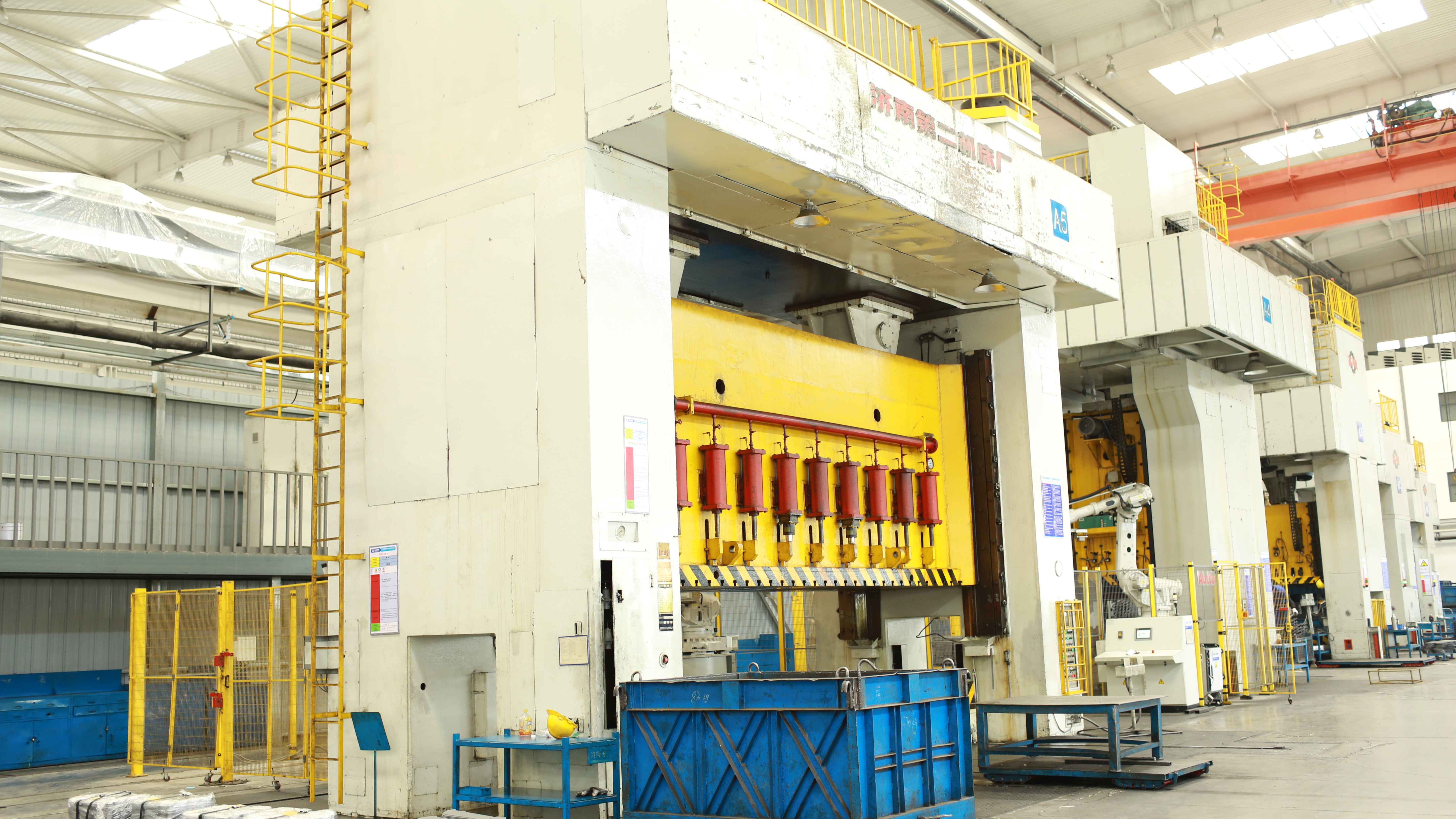
Automated stamping lines support frame, enclosure, and bracket programs from prototype tooling through mass production.
Next step for your frame, enclosure, or bracket project: send the drawing, target annual volume, and material grade (cold-rolled steel, hot-rolled steel, 304, or 304L) for a DFMA review and quotation.
Engineering response: within 24 hours | Quotation: 1–7 days | Sample and die tryout documentation available on request.
Contact Nora — Email: Nina@qdhailong.com | Tel: +86 176-6762-3223 | WhatsApp: +86 185-6390-5668 | Address: NO. 1009, YANOING ROAD, JIMO DISTRICT, QINGDAO CITY, SHANDONG PROVINCE, CHINA.
Download the Hailong Metal Fabrication brochure (PDF) | Visit en.qdhailong.com
Have Questions or Need More Details?
Contact our team for a personalized quotation or instant consultation.
Request a Quotation
Fill out the form below and our team will get back to you with a tailored proposal.
WhatsApp Direct Chat
Prefer to chat in real-time? Message us on WhatsApp for instant assistance & quick answers.
- Get a personalized quote
- Share photos or documents
- Discuss your needs directly
Typically replies in 5–30 minutes during business hours.