
Metal Stamping Die Technical Guide: Mold Steel, Press Tonnage, and Lead Time
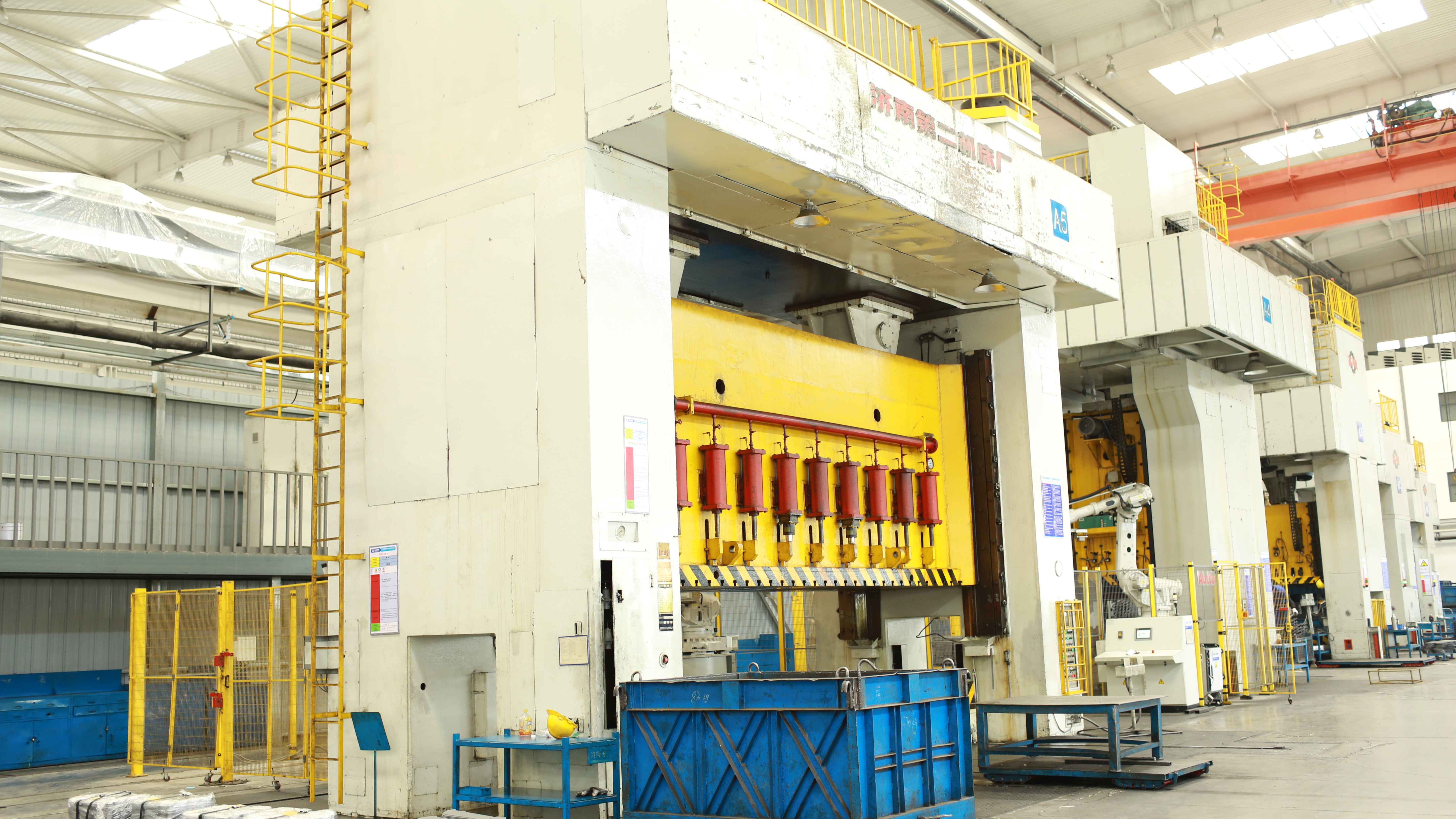
Stamping workshop: press capacity from 160T to 2400T supports die tryout and mass production under one roof.
Three parameter families decide whether a stamping die produces parts for years or fails inside a few months: the mold steel grade, the press tonnage window it is engineered for, and the lead time that wraps around design, machining, trial stamping and release. These are the parameters that procurement teams and tooling engineers argue over, and they are the parameters most often left blank on a request for quotation.
The practical answers are specific. Mold steel is selected from grades such as Cr12MoV, SKD11 and P20 according to the stamping material, the material thickness and the required production lifetime. Die lead time follows die complexity: simple dies normally take 25–40 days, while complex progressive dies take 45–70 days including trial stamping. Press capacity for die tryout and mass production runs from 160T to 2400T on automated lines, and inspection is carried out with a CMM, a spectrometer and a carbon-sulfur analyzer. This guide explains how each parameter is set, what it controls, and how a buyer should write it into a purchase order.
Problem Definition: Where Stamping Die Projects Lose Time and Money
Most RFQs describe the part in detail — material, thickness, tolerance, annual volume — and describe the die in a single line. The die steel grade is left to the supplier. The press tonnage window is assumed. Inspection is discussed after the first parts arrive. Lead time is treated as a number rather than a sequence of milestones.
When those gaps stay open, the failure modes are predictable. A die built around low-volume assumptions enters a high-volume program and wears faster than the program economics allow. A die engineered for one press class is quoted against a different press class, so trial stamping results do not transfer to mass production. A steel grade is agreed verbally and cannot be verified, because no incoming material chemistry check was written into the acceptance criteria.
The cost of a parameter error is not paid once. In a long-term automotive or appliance program, the die is an asset reused across several model years and often duplicated for capacity. An undefined parameter is therefore paid repeatedly — through rework, retooling, requalification and line downtime. For a buyer at decision and execution stage, the parameter conversation is the cheapest risk control available.
Industry Background: A Stamping Market Measured in Hundreds of Billions
Metal stamping is a large, structurally mature market. Grand View Research valued the global metal stamping market at USD 257.3 billion in 2025, with Asia Pacific accounting for a 37.0% revenue share in the same year. Within that total, automotive metal stamping alone was estimated at USD 90.6 billion in 2025.
Those figures should be read with one caution that most supplier presentations omit. Published market valuations differ materially depending on methodology: for the same 2025 period, Grand View Research reports USD 257.3 billion, while IMARC places the figure at USD 226.3 billion and 360iResearch at USD 210.37 billion. The gap largely reflects whether captive stamping departments inside large OEMs are counted as market activity. Broad market numbers are useful context for a buyer, not a planning input.
A more actionable structural signal comes from capital intensity. Hot-stamping lines used to produce advanced high-strength steel parts such as 1,500 MPa press-hardened steel can cost USD 8–12 million each, according to a North America automotive steel stamping market report. Capital at that level pushes OEM programs to concentrate volume with fewer suppliers, which means die durability, press fit and tooling lifetime become selection criteria rather than technical footnotes.
Compliance expectations follow the same logic. Industry research on the North American automotive steel stamping market identifies IATF 16949 certification, real-time SPC monitoring, and Run@Rate tests of 4,000 defect-free pieces as baseline entry criteria for new OEM automotive programs. The consequence for a technical guide is straightforward: mold steel, press tonnage, inspection and lead time are not optional specification detail. They are the basis on which capacity, quality and cost are committed.
Detailed Solution: The Four Parameters That Define a Stamping Die
Hailong Metal Fabrication, operated by Qingdao Hailong Machinery Technology Co., Ltd., is a machinery manufacturer founded in January 2000 and headquartered in Jimo District, Qingdao, China. The group operates five production campuses covering over 500,000 m² of land, and its product scope includes stamping dies, metal stamping fabrication, casting, welding, truck body manufacture, surface treatment and CNC machining. Its published die and stamping parameters provide the four-part framework below.
1. Mold Steel: Cr12MoV, SKD11 and P20
Common mold steels for stamping dies include Cr12MoV, SKD11 and P20, and the grade is selected according to three project inputs: the stamping material, the material thickness, and the required production lifetime. There is no universal grade, and the same part geometry in a different material, thickness or annual volume can lead to a different steel decision.
One point is worth stating carefully, because it is where buyers most often make an assumption that later costs money. These three grades do not behave identically in service. Wear resistance, toughness and heat-treatment response differ between tooling steel families, so a grade that performs in a thin-gauge, high-volume run is not automatically the right choice for a thick, high-shock blank. The correct question during selection is not which grade is generally superior, but which grade matches this material, this thickness and this lifetime. That is why the grade — and the reasoning behind it — belongs in the die specification in writing, so a later capacity transfer or die duplicate does not restart the discussion from zero.
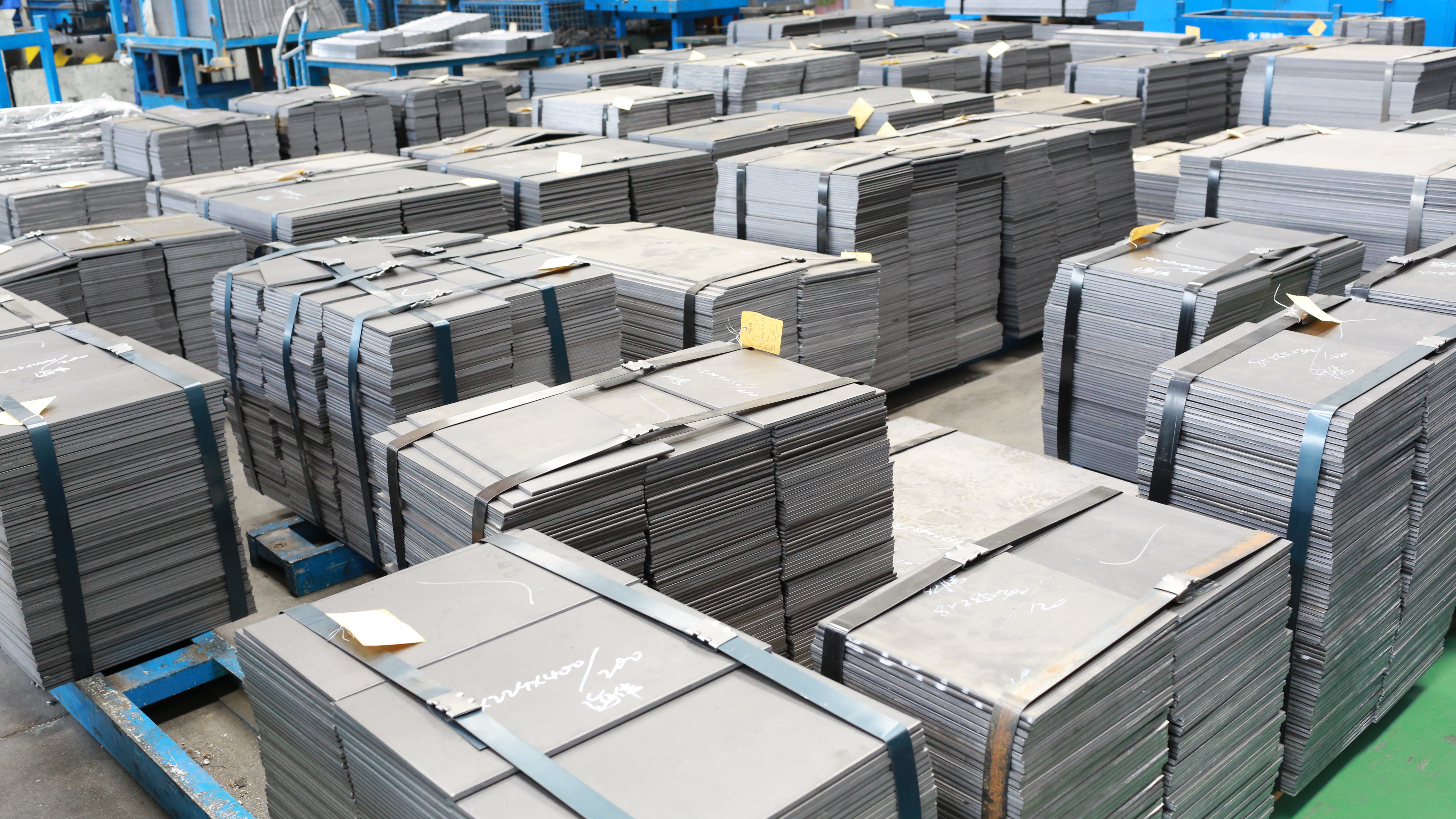
Incoming steel is stored and traceable before die machining: chemistry verification with a spectrometer and carbon-sulfur analyzer is what confirms the grade in the die matches the grade on the certificate.
2. Press Tonnage: the 160T to 2400T Window
Hailong's matched equipment covers large and automatic presses from 160T to 2400T, supported by inspection equipment including CMM, spectrometer and carbon-sulfur analyzer. Beyond that core range, the Auto Parts Division runs 630T–800T and 800T–2400T press lines, 3,400T lines, and an 8,250T automated stamping line with a 9 SPM average effective cycle, alongside laser cutters and robotic welding cells.
Tonnage determines what can be produced in one stroke and how many operations can be combined. Higher-tonnage presses allow larger panels or multi-station progressive work; lower tonnage suits smaller components and lighter tooling. The required tonnage for a given part is driven by part size, material shear strength, material thickness, and the number of operations performed per stroke — which is why tonnage should be confirmed against the specific drawing rather than quoted as a general capability.
For buyers, the practical rule is simple: confirm that the press class planned for mass production is the press class used for tryout. A die engineered for a tonnage window the supplier cannot schedule converts a technical approval into a production scheduling problem, and trial stamping results lose their predictive value.
3. Inspection: CMM, Spectrometer, Carbon-Sulfur Analyzer
Inspection equipment at Hailong includes CMM, spectrometer and carbon-sulfur analyzer, with part-level testing covering incoming material checks, hardness and assembly dimensions. The company also supports DFMA, Moldflow analysis, material advisory and heat treatment, and notes that special processes or certification needs such as CAE or PPAP should be confirmed in advance.
The equipment list matters because it separates three different questions. A spectrometer and a carbon-sulfur analyzer verify the chemistry of incoming steel before a die is cut — this is the check that confirms the grade stated on the material certificate. Hardness testing confirms that heat treatment produced the intended working condition. A CMM verifies geometry after machining and again after trial stamping, where die correction is still possible at low cost. Buyers who name these stages in the purchase order instead of accepting a generic dimensional report gain a verification trail that survives supplier changes.
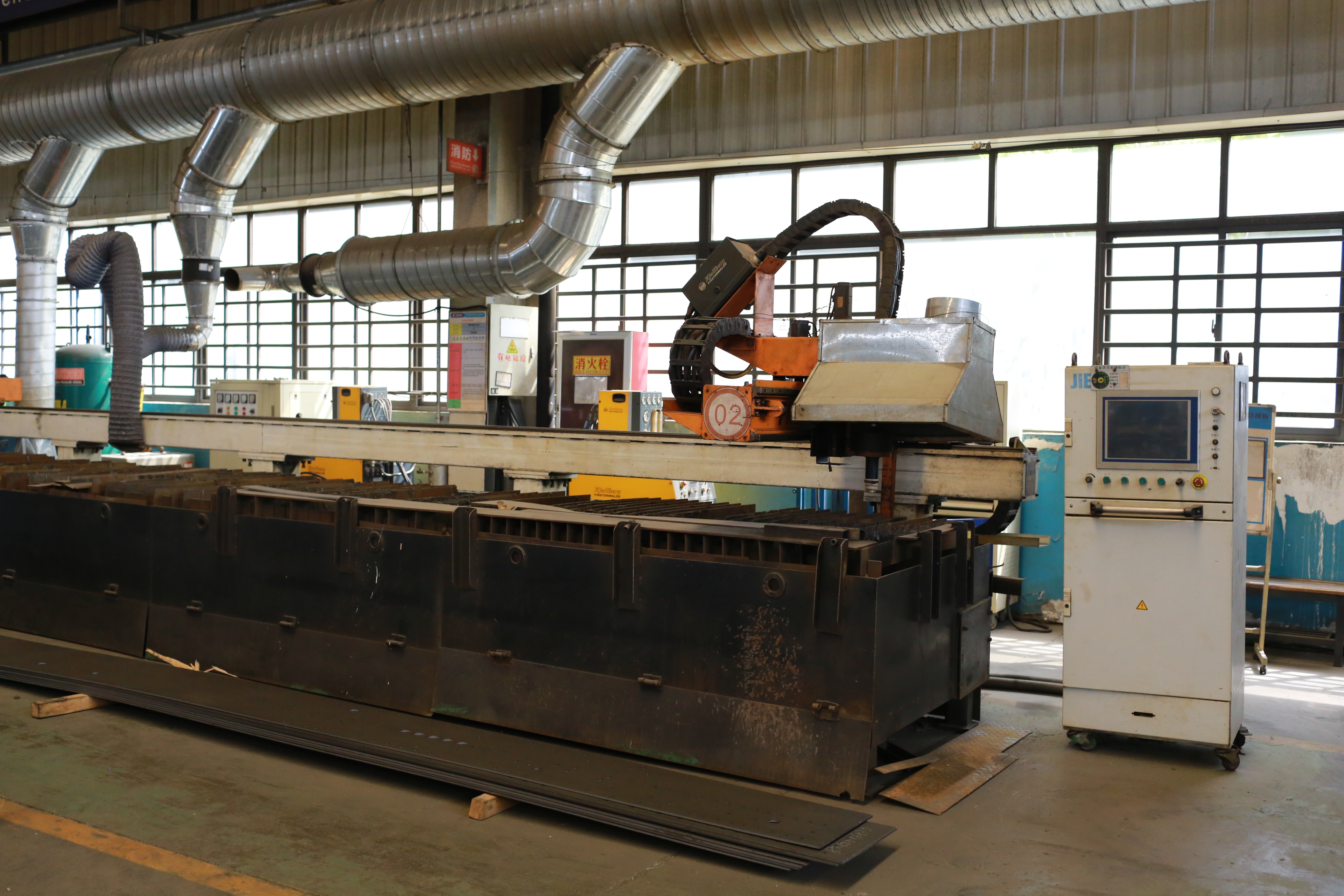
Die machining capacity is the constraint that sits between the steel decision and the quoted lead time.
4. Lead Time: 25–40 Days vs 45–70 Days
Die lead time depends on die complexity. Simple dies normally take 25–40 days. Complex progressive dies take 45–70 days including trial stamping. The difference is not a scheduling preference; a progressive die integrates multiple forming processes in one die set, which means more stations, more machining, more assembly and a longer trial cycle.
The planning implication is that 45–70 days is die lead time, not program lead time. Buyers should map die completion against part validation, PPAP expectations and shipping schedules, so that die completion and part approval do not collide at the end of the same week. Booking the tryout press early is part of that plan, because tryout availability and die completion are two separate constraints.
Step-by-Step Breakdown: Specifying a Stamping Die Correctly
Step 1 — Freeze the part inputs. Confirm the stamping material (cold-rolled steel, hot-rolled steel, 304/304L stainless and similar grades), the material thickness, the tolerance band, the annual volume and the expected program lifetime. Every later die decision depends on these five inputs, so resolve them before design starts.
Step 2 — Convert volume and lifetime into a steel decision. Take the three stated selection inputs — stamping material, thickness and required production lifetime — and fix the grade from options such as Cr12MoV, SKD11 and P20. Record the rationale in the die specification so it can be audited later.
Step 3 — Fix the die architecture. A progressive die is recommended for high-volume auto sheet metal components: it integrates multiple forming processes in one set of die, with high production efficiency and stable precision. A single stamping die is more suitable for small batches, large-size parts or complex deep-drawn parts, and carries lower tooling cost with greater flexibility.
Step 4 — Confirm the press tonnage window before design freeze. Verify the planned production press class inside the 160T–2400T automated range, or on the larger 3,400T and 8,250T lines where panel size requires it, and confirm that the tryout press matches the production press class.
Step 5 — Write the inspection plan into the order. Specify incoming material chemistry checks, hardness testing, CMM dimensional verification and assembly dimension checks. Confirm in advance whether CAE or PPAP documentation is required, because special certification needs must be agreed before the die is cut, not after.
Step 6 — Run DFMA review and trial stamping. Use design consultancy and DFMA optimization before machining; treat trial stamping as the acceptance event. For complex progressive dies, trial stamping is already inside the 45–70 day window, so it should not be scheduled as a separate downstream phase.
Step 7 — Plan maintenance from day one. Die maintenance and modification service covers debugging, revision, wear repair and regular maintenance during mass production. Because automated stamping lines are available for production after die completion, die making and mass stamping of metal parts can run as a one-stop service under the same supplier — the arrangement that most reduces handover risk in a multi-year program.
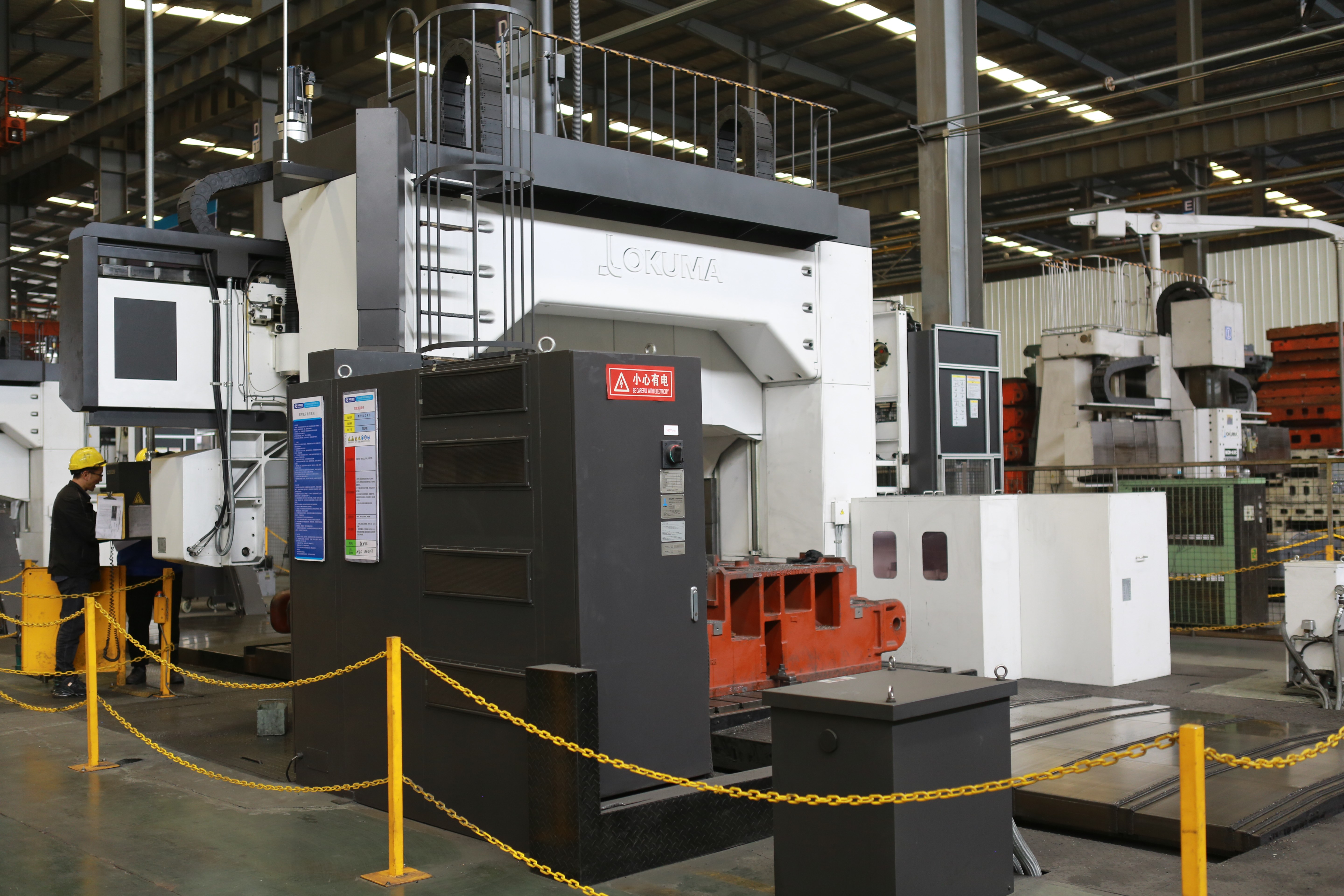
Precision machining of die components is verified on a CMM before assembly and trial stamping.
Use Cases: Where These Parameters Change the Answer
Automotive metal stamping under IATF 16949
Hailong has experience in auto sheet metal stamping die design and fabrication and can develop stamping dies for automotive components, with die design and fabrication compliant with IATF 16949 quality requirements. Die capability sits inside a group that also includes Qingdao Jitai Auto Mould Co., Ltd., established in 1993, which specialises in cold stamping dies for automotive body panels. Domestic customers include FAW Jiefang, SAIC-GM, BAIC, Dongfeng and Beijing Benz; overseas customers include Renault, Nissan, Mercedes-Benz and Doosan. For this segment, the parameters that matter most are steel grade tied to production lifetime and a press class matched to panel size.
Progressive die metal stamping at volume
Where annual volume is high and part geometry is stable, a progressive die integrates multiple forming processes in one die set and delivers high production efficiency with stable precision. The trade-off is lead time: 45–70 days including trial stamping, against 25–40 days for a simple die. Buyers should confirm that this longer front end is reflected in the program schedule rather than absorbed silently.
Heavy-gauge stainless steel and deep draw
For large-size parts and complex deep-drawn components — including 304 and 304L stainless and heavy-gauge work — a single stamping die is usually the more suitable choice, combining lower tooling cost with greater flexibility for small batches. The steel grade decision shifts accordingly, because thicker and higher-strength material places different demands on the die than thin-gauge, high-volume work.
Household appliance metal stamping and stamp-and-weld assembly
Household appliances are among the industries Hailong supplies, alongside automotive and auto parts, heavy machinery, industrial equipment, furniture and architectural components, and oilfield equipment. Where a part is delivered as a welded assembly rather than a loose stamping, the group's robotic welding cells and welding capability allow stamp-and-weld assembly components to be produced within the same quality system, which removes the dimensional handover risk of splitting stamping and welding between two suppliers.
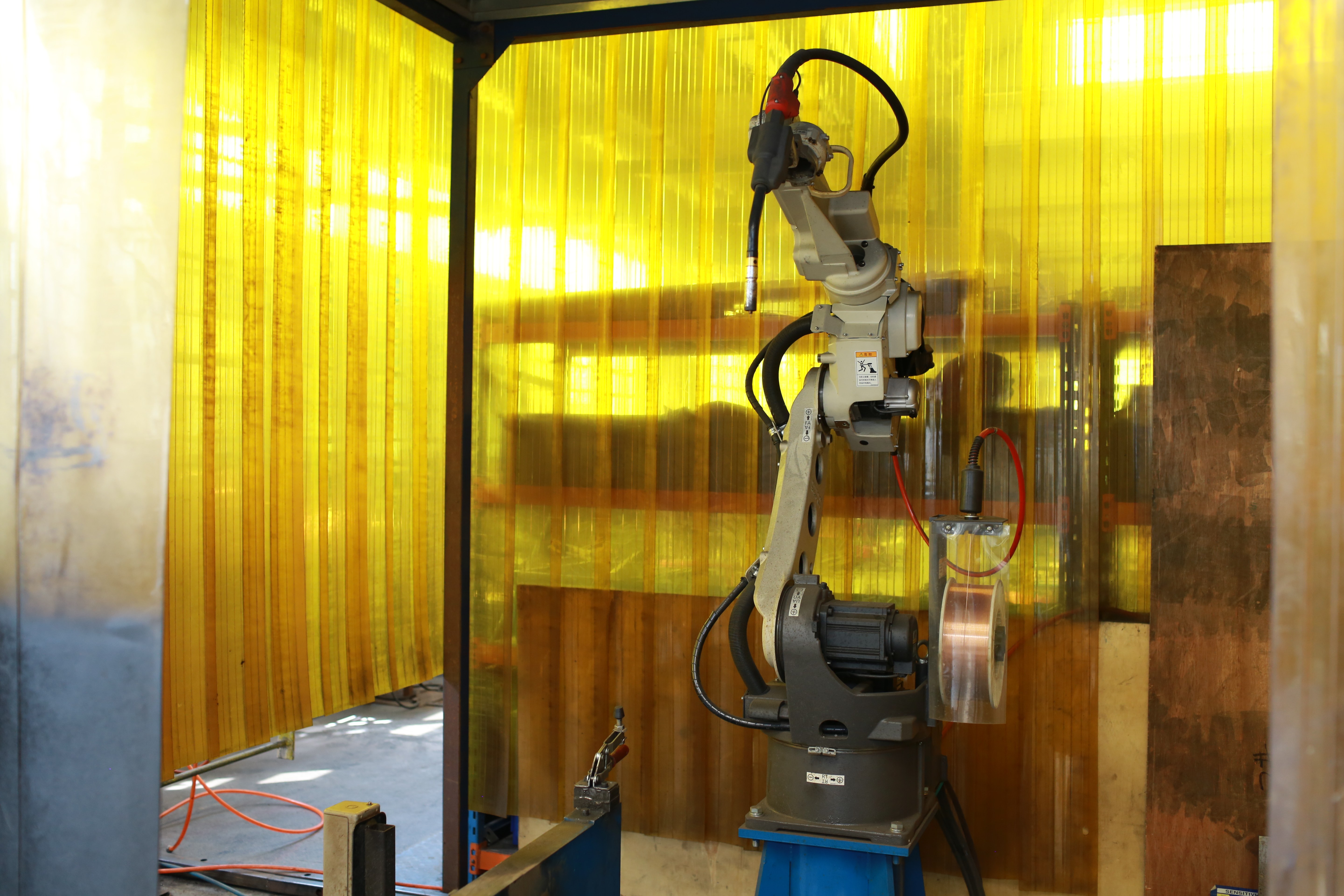
Stamping and welding inside one quality system supports stamp-and-weld assembly components without a cross-supplier dimensional handover.
Comparison Table: Die Type and Verified Parameter Ranges
FAQ: Stamping Die Parameters for Long-Term Programs
Is stamping die design and fabrication IATF 16949 compliant, and what does that mean for a multi-year program?
Hailong's stamping die design and fabrication are compliant with IATF 16949 quality requirements, and the company holds IATF 16949, ISO 9001, ISO 14001 and OHSAS 18001 certification. For a multi-year program this matters because compliance is not a one-off audit result: industry research identifies IATF 16949 certification together with real-time SPC monitoring and Run@Rate tests of 4,000 defect-free pieces as baseline entry criteria for new OEM automotive programs. A supplier already inside that system can carry a die through revisions, capacity additions and model-year changes without restarting qualification each time.
How is the mold steel grade chosen between Cr12MoV, SKD11 and P20?
The grade is selected according to three inputs: the stamping material, the material thickness and the required production lifetime. Cr12MoV, SKD11 and P20 are all common mold steels for stamping dies, but they are not interchangeable — the decision depends on the specific part program, not on a general ranking. The practical step for a buyer is to require the selected grade and the reasoning behind it to be stated in the die specification, so that a duplicate die or a transferred project can be built to the same basis.
What are the purchasing terms for a stamping die?
Hailong's published purchasing terms for dies are: MOQ 5 sets, delivery terms FOB, CIF, EXW or CFR, acceptance criteria based on pre-shipment test, and payment terms of 30/70. Delivery term selection affects landed cost as much as die price does, so buyers should confirm the term before comparing quotes from different suppliers on a like-for-like basis.
Does the quoted lead time include trial stamping and validation?
For complex progressive dies, the 45–70 day lead time includes trial stamping. Simple dies normally take 25–40 days. Because acceptance is based on pre-shipment test, the tryout outcome is the verification point where geometry is confirmed on a CMM and any correction is still economical. Buyers should also confirm whether CAE or PPAP documentation is required, since those needs must be agreed in advance rather than added after trial.
What happens after the die is delivered — how is long-term support handled?
Die maintenance and modification service covers debugging, revision, wear repair and regular maintenance during mass production. Automated stamping lines are available for stamping production after die completion, and the one-stop service covers both die making and mass stamping of metal parts — which means the supplier that built the die can also run it, and wear trends are visible to the same team that designed the tooling. For a buyer planning five years of production, that continuity is usually worth more than a marginal difference in tooling price. Sample evaluation and die quotations can be requested directly through the contact details below.
Conclusion: Parameters Are the Foundation of a Long-Term Stamping Partnership
A stamping die is not a one-off purchase. In automotive, appliance and industrial programs it is an asset that runs across model years, gets revised, and is often duplicated for capacity. That is exactly why the four parameters in this guide deserve to be written down before the first cut: mold steel grade selected from Cr12MoV, SKD11 and P20 against material, thickness and required production lifetime; a press tonnage window confirmed inside the 160T–2400T automated range or on the larger lines where panel size demands it; inspection performed with a CMM, spectrometer and carbon-sulfur analyzer; and a lead time planned as 25–40 days for simple dies or 45–70 days for complex progressive dies including trial stamping.
The supplier side of that equation is a manufacturer that keeps die making, stamping and welding inside one quality system. Hailong Metal Fabrication, operated by Qingdao Hailong Machinery Technology Co., Ltd., combines stamping die design and fabrication, metal stamping fabrication, casting, welding, truck body manufacture, surface treatment and CNC machining, with products exported to the United States, Europe, India and Africa and an export ratio of 70%.
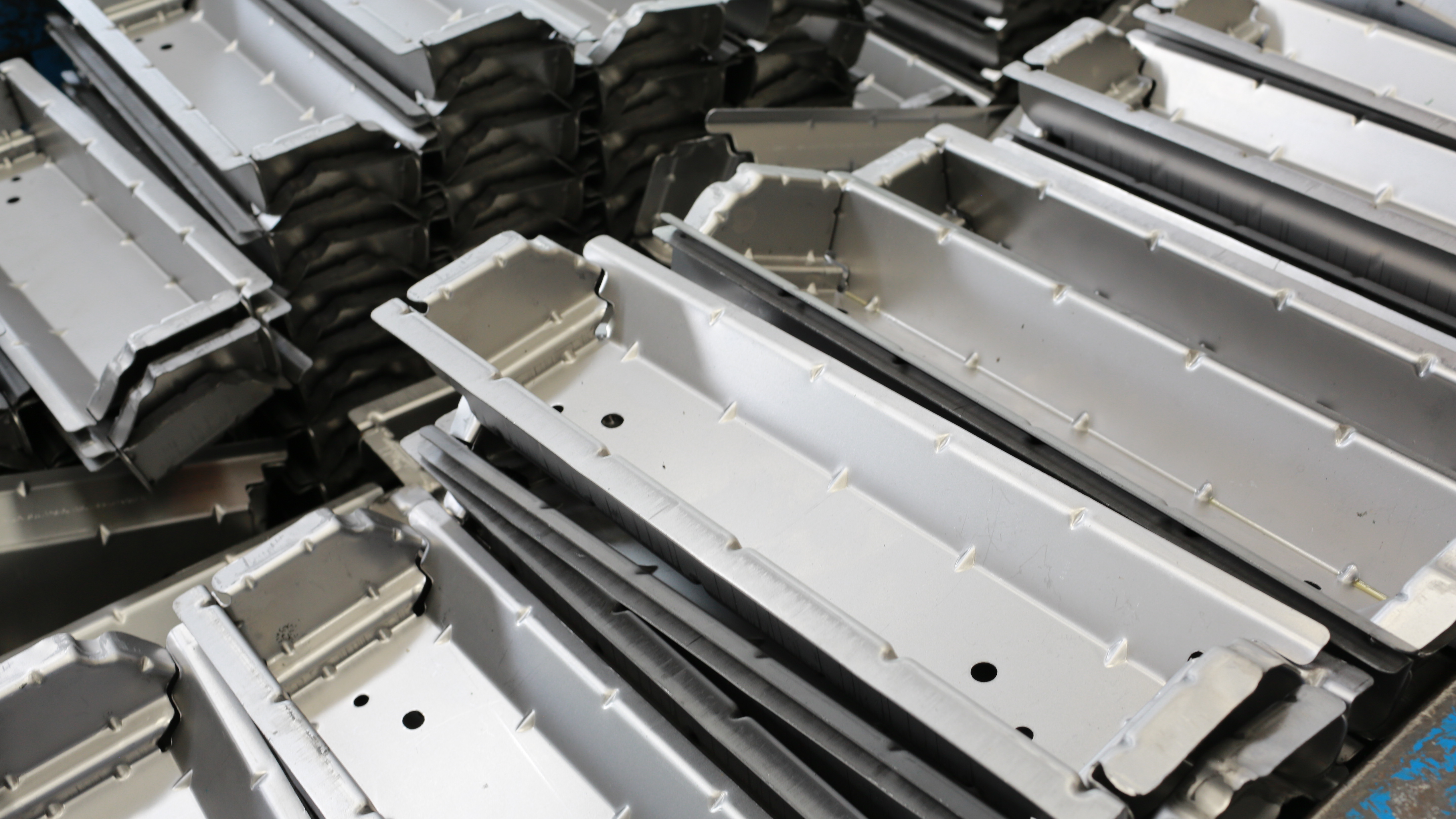
Next step: die quotation or sample evaluation
Send the drawing, material grade, thickness and annual volume, and Hailong will confirm the mold steel recommendation, the press tonnage window and the die lead time against your program schedule.
Contact: Nora — nina@qdhailong.com
Tel: +86 176-6762-3223 | WhatsApp: +86 185-6390-5668
Address: NO. 1009, YANOING ROAD, JIMO DISTRICT, QINGDAO CITY, SHANDONG PROVINCE CHINA
Website: en.qdhailong.com | Company brochure: download the Hailong Metal Fabrication brochure (PDF)
Have Questions or Need More Details?
Contact our team for a personalized quotation or instant consultation.
Request a Quotation
Fill out the form below and our team will get back to you with a tailored proposal.
WhatsApp Direct Chat
Prefer to chat in real-time? Message us on WhatsApp for instant assistance & quick answers.
- Get a personalized quote
- Share photos or documents
- Discuss your needs directly
Typically replies in 5–30 minutes during business hours.