
Metal Stamping Materials 101: Cold-Rolled, Hot-Rolled, and Stainless Steel
Cold-rolled steel, hot-rolled steel, 304 and 304L stainless steel cover most industrial metal stamping work. They are not interchangeable. The grade written on the drawing fixes the die steel, the press tonnage, the die lead time and the surface treatment that follows, which is why material review belongs at the start of evaluation, not at the tooling stage.
Short answer. Specify cold-rolled steel when the part needs tight thickness tolerance, a clean surface and high-volume progressive die output. Specify hot-rolled steel when the part is heavy-gauge, structural and will be painted. Specify 304 stainless steel when corrosion resistance or a cleanable surface is the buying reason. Specify 304L when the part will be welded into an assembly and the weld zone must resist intergranular corrosion. In all four cases the die steel — Cr12MoV, SKD11 or P20 — is selected against material grade, thickness and required production lifetime, and die lead time runs 25–40 days for a simple die against 45–70 days for a complex progressive die including trial stamping.
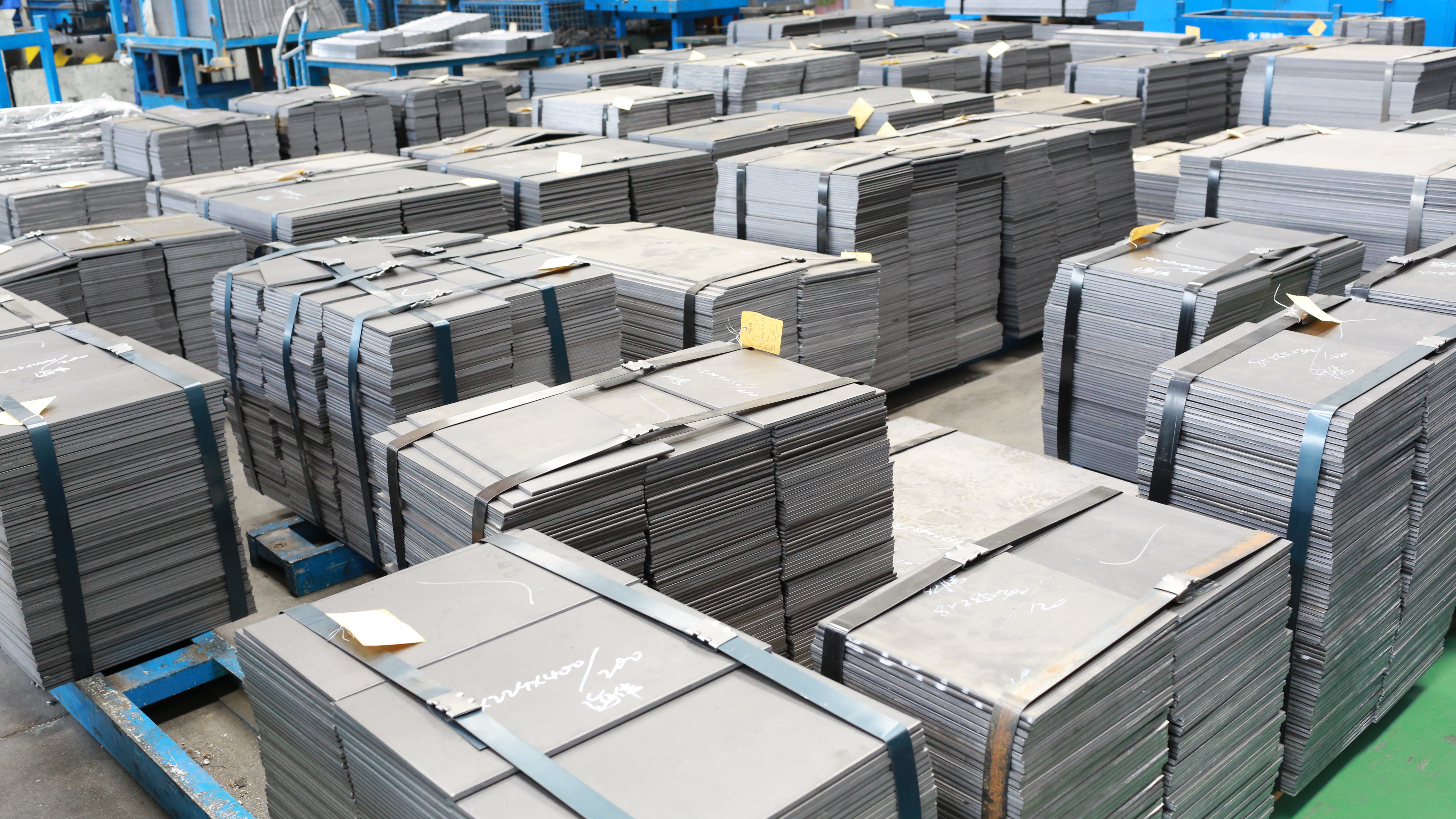
The Problem: One Material Line Decides Tooling, Tonnage, and Lead Time
A bracket drawn in thin cold-rolled steel and the same bracket redrawn in heavy-gauge hot-rolled steel do not share a die, a press or a maintenance interval. Buyers in the evaluation stage often compare suppliers on capability statements while the unexamined variable is the material callout itself. Four consequences follow directly from that line.
- Die wear and maintenance frequency. Higher-strength and work-hardening grades raise tooling load. A die that runs comfortably in mild cold-rolled steel may need a different die steel and a shorter maintenance interval when the same part is switched to stainless.
- Forming force and press selection. Forming force scales with material strength and gauge, so the same part geometry can move from a mid-size press to a larger frame once the grade is changed. Hailong's matched equipment list spans large and automatic presses from 160T to 2400T for this reason.
- Springback and dimensional control. Stainless grades work-harden during forming, which generally increases springback relative to mild carbon steel and pushes compensation into die design rather than into a downstream adjustment.
- Weld and corrosion performance in service. A cold-rolled part that will be exposed to moisture needs a coating system, while a stainless part may not — and a welded stainless assembly may need the low-carbon variant to protect the heat-affected zone.
The practical risk is not choosing an unusual material. It is choosing a familiar material for the wrong reason: cold-rolled because it formed well on a prototype, hot-rolled because it was available, or 304 because the part is visible — without checking what each choice does to tooling, tonnage and lead time.
Industry Background: Where Metal Stamping Sits in 2026
Metal stamping remains a large, mature and regionally concentrated industry. Grand View Research values the global metal stamping market at USD 257.3 billion in 2025, with Asia Pacific accounting for a 37.0% revenue share in the same year. The automotive segment alone is estimated at USD 90.6 billion in 2025 in the same research series.
Reading market figures carefully. Published valuations of the same market differ by publisher — IMARC reports USD 226.3 billion and 360iResearch reports USD 210.37 billion for comparable periods — and regional share estimates also diverge. The most common explanation is whether captive stamping departments inside large OEMs are counted alongside the merchant market. For procurement purposes the absolute figure matters less than the structural point: stamping capacity is widespread, but compliant, documented capacity for a specific material and gauge is not.
Stamping versus laser cutting, shearing and CNC punching, and press-brake bending
Stamping is one step in a chain, not a standalone process. The four sheet metal routes overlap, and the material decision often determines which route is used first.
Laser cutting produces blanks and prototype profiles without tooling, which suits first articles, low volume and design iterations. Shearing and CNC punching produce straight-cut blanks, coil-fed strips and hole patterns quickly, and they typically feed a stamping line rather than compete with it. Press-brake bending handles large, thick or low-volume parts that cannot justify a dedicated die. Stamping takes over when geometry, tolerance and volume justify a die, and it is the only route that delivers repeatable high-volume forming with consistent cycle times.
In practice the sequence for a stamped assembly usually runs: blank preparation by laser cutting, shearing or CNC punching → forming or deep drawing in a stamping die → secondary bending where required → welding or robotic assembly → surface treatment such as electrophoresis or painting. Hailong Metal Fabrication, the trading and manufacturing brand of Qingdao Hailong Machinery Technology Co., Ltd., operates this sequence in house with laser cutters, CNC punching equipment, presses from 160T to 2400T, robotic welding cells and an electrophoresis and painting line.
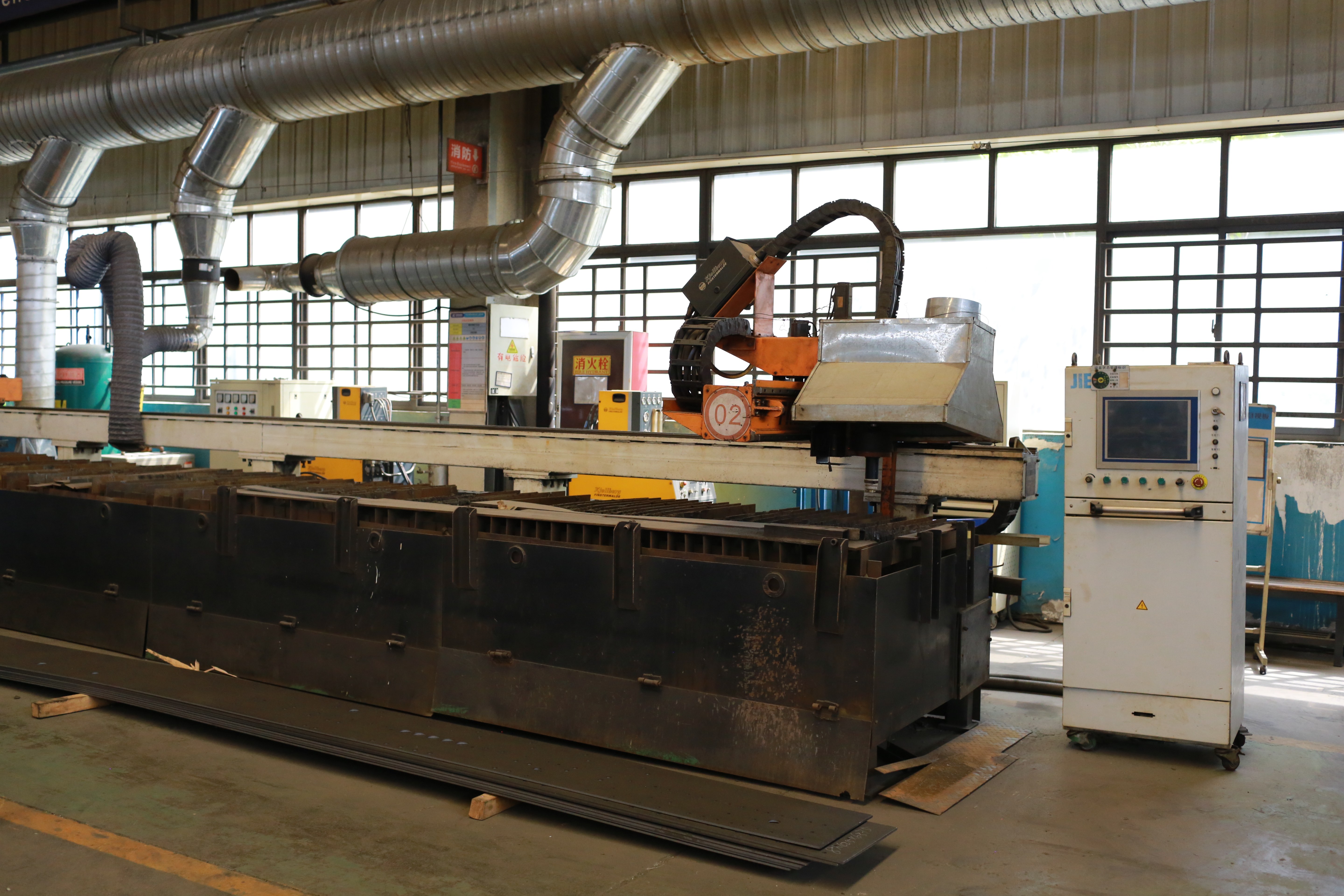
The compliance baseline behind the material choice
For automotive work, material documentation is part of the entry criteria rather than a paperwork detail. Industry market research on the North American automotive steel stamping sector describes IATF 16949 certification, real-time SPC monitoring and Run@Rate tests of 4,000 defect-free pieces as baseline entry criteria for new OEM programs. Material certificates, heat numbers and incoming inspection records are the evidence layer that supports those criteria.
Process economics explain why material and tooling specialization is concentrated. Hot-stamping lines for advanced high-strength steel parts such as 1,500 MPa press-hardened steel can cost USD 8–12 million each, so suppliers tend to specialize rather than cover every material family at every tonnage. A buyer's real question is therefore narrower: who can stamp this specific grade, at this gauge, with documented tooling and inspection?
The Four Material Families, Explained
Cold-rolled steel (CRS)
Cold-rolled steel is rolled to final thickness at ambient temperature after hot rolling and pickling. The cold reduction generally produces tighter thickness tolerance, better flatness and a smoother surface than hot-rolled steel, which is why it dominates visible and tolerance-sensitive stamping work: automotive brackets and reinforcements, household appliance panels and chassis, electrical enclosures, and furniture and architectural hardware.
Where it wins: high-volume progressive die programs that need consistent feed, predictable forming and a surface that accepts painting or e-coating without heavy surface preparation. Limit: cold-rolled steel has no inherent corrosion resistance, so a coating system must be specified and validated, and a stamped edge or pierced hole is a coating-repair consideration in service.
Hot-rolled steel (HRS)
Hot-rolled steel is rolled above the recrystallization temperature and is typically produced in heavier gauges. It commonly carries mill scale and wider thickness tolerance than cold-rolled stock, and it is normally specified where structural strength and thickness matter more than cosmetic surface.
Where it wins: frames, chassis brackets, support structures, truck body panels and heavy industrial components where the part is painted after fabrication and the surface is not a functional requirement. Limit: mill scale and gauge variation complicate blanking and die clearance, and the heavier the gauge, the more the process shifts toward larger presses and, at the extreme, toward fabrication methods other than stamping.
304 stainless steel
304 is an austenitic stainless grade widely used where corrosion resistance and a cleanable surface are required. In stamping it appears in household appliance components, food-adjacent and sanitary equipment parts, architectural fittings and industrial enclosures exposed to moisture or cleaning chemicals.
Where it wins: applications where the coating system on carbon steel would fail, be damaged during assembly, or create a maintenance burden. Limit: stainless work-hardens during forming, which generally raises forming force, increases springback and accelerates die wear compared with mild carbon steel. Die steel selection and the maintenance plan therefore carry more weight than they do for cold-rolled work, and deep draw operations need more careful drawing-stage design.
304L stainless steel
304L is the low-carbon variant of 304. The lower carbon reduces the risk of carbide precipitation in the heat-affected zone during welding, which is why it is the usual specification when a stamped part becomes part of a welded assembly rather than a standalone component.
Where it wins: stamp-and-weld assembly components — brackets welded to frames, vessels and panels, appliance structures and equipment housings where the weld is visible or exposed to moisture. Limit: 304L is specified for weld-zone behaviour, not for higher strength; where forming severity is already high, the same work-hardening and springback considerations that apply to 304 apply here.
Top Material Picks Ranked by Application Fit
This ranking orders the four material families by how often they resolve the most common stamping procurement problems. The criteria applied are: corrosion exposure in service, forming severity and gauge, whether the part is welded into an assembly, production volume, and surface requirement. It is a fit ranking, not a quality ranking — each grade wins inside its own scenario.
1. Cold-rolled steel — highest overall fit for high-volume stamped parts
Cold-rolled steel ranks first because it satisfies the largest number of standard industrial requirements at once: consistent gauge for progressive dies, a surface that accepts e-coating or painting, and predictable forming behaviour across a long production run. It is the default for automotive brackets and reinforcements, household appliance panels and structures, and equipment enclosures. The condition attached to that ranking is corrosion protection — without a specified coating system, cold-rolled steel is the wrong answer for an exposed part.
2. 304 stainless steel — the pick when corrosion resistance is the buying reason
304 ranks second because it converts a coating dependency into a material property. When the service environment includes moisture, cleaning chemicals or visible surfaces where coating damage would be unacceptable, 304 removes a failure mode that carbon steel can only manage. The trade-off is tooling: work-hardening means higher forming force, more springback and faster die wear, so the die steel and maintenance plan must be specified with the material rather than after it.
3. Hot-rolled steel — the pick for heavy-gauge structural stamping
Hot-rolled steel ranks third because its strongest use cases sit at the heavier end of the gauge range, where stamping gives way to fabrication for the very thickest parts. Where the part is a painted structural bracket, frame or support in heavier gauge, hot-rolled is the economical, technically appropriate choice. The condition is that surface appearance and tight gauge tolerance are not functional requirements.
4. 304L stainless steel — the specialist pick for welded assemblies
304L ranks fourth by breadth of application, not by importance. Its value is concentrated exactly where a stamped part becomes a weldment: the low-carbon grade protects the heat-affected zone from intergranular corrosion. For a stamp-and-weld assembly exposed to moisture or cleaning, 304L is often the difference between a specification that holds in service and one that fails at the weld years later.
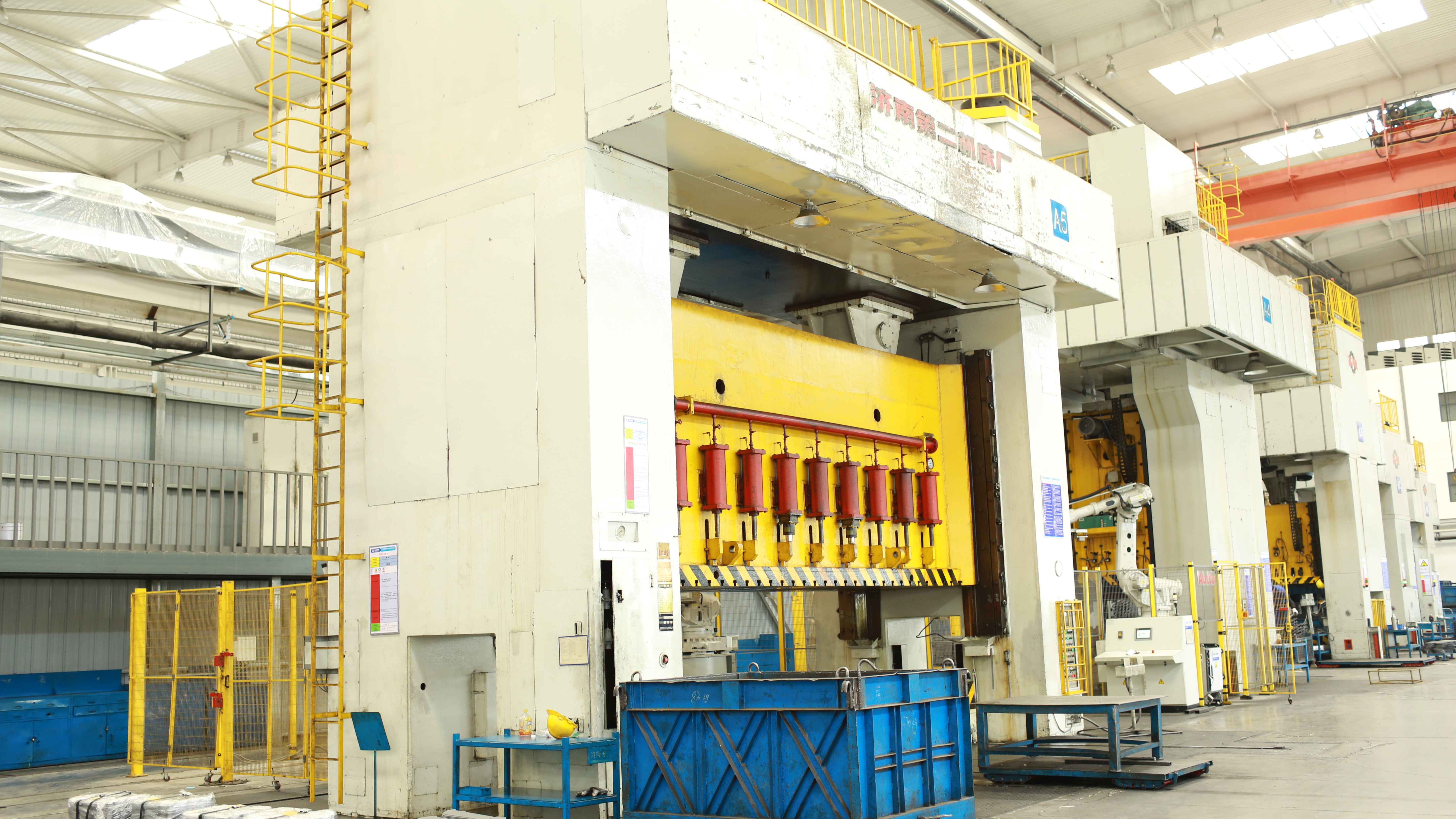
Matching Material to Die Steel: Cr12MoV, SKD11, and P20
Die steel is not a house standard applied uniformly across all jobs. It is selected against three inputs: the stamping material, the material thickness, and the required production lifetime. Hailong specifies Cr12MoV, SKD11, P20 and other grades on that basis, which means the material callout on your drawing is also a tooling decision.
Cr12MoV and SKD11 are cold-work die steels commonly specified where wear resistance over a long production run is the dominant requirement — typically high-volume cold-rolled or stainless work where the die will see sustained cycling. P20 is a pre-hardened tool steel commonly specified where tooling cost and lead time weigh more heavily than long-run wear resistance, such as lower-volume programs, prototype tooling and parts that are expected to be revised. None of the three is universally correct; the pairing has to follow the material and the volume.
| Die route | Die steel options | Typical lead time | When to choose it |
|---|---|---|---|
| Simple stamping die | Cr12MoV, SKD11, P20 per material and lifetime | 25–40 days | Small batches, large-size parts, complex deep-drawn parts where tooling cost and flexibility matter |
| Complex progressive die | Cr12MoV, SKD11 per material and lifetime | 45–70 days including trial stamping | High-volume automotive and appliance components requiring multiple forming processes in one die, high speed and consistent precision |
The tooling logic behind that table is straightforward. A progressive die integrates multiple forming processes in one set of tooling, delivering high production efficiency and stable precision at volume; a single stamping die carries lower tooling cost and stays flexible for small batches, large workpieces or complex deep-drawn parts. Choosing the die route before confirming the material is the most common sequencing error in evaluation, because stainless and heavy-gauge hot-rolled work can move a part from one route to the other.
Step-by-Step: Specifying a Stamped Part from Material to Die
The sequence below reflects how a material and tooling decision is actually closed, from part function to a documented first article.
- Define the service environment. Decide whether the part will be painted, e-coated, exposed to moisture or cleaned with chemicals. This single answer usually separates carbon steel from stainless steel before any other criterion is considered.
- Fix the gauge and tolerance requirement. Tight thickness tolerance and a cosmetic surface point to cold-rolled steel; heavier gauge and painted structural use point to hot-rolled steel.
- Confirm the assembly route. If the part will be welded rather than bolted, review 304 against 304L on weld-zone corrosion risk before releasing the drawing.
- Match the press to the material, not just the part size. Forming force depends on grade and gauge. Confirm the supplier's press range covers the part after the material change, not before — Hailong's stamping equipment spans 160T to 2400T, with an 8,250T automated line for large automotive panels.
- Choose the die route. Progressive die for high-volume components with multiple forming operations; single stamping die for small batches, large workpieces or complex deep-drawn parts.
- Select the die steel and confirm the die lead time. Cr12MoV, SKD11 or P20 against material, thickness and required production lifetime. Expect 25–40 days for a simple die and 45–70 days for a complex progressive die including trial stamping.
- Validate with documented evidence. Design checks and Moldflow analysis, incoming steel certificate inspection, key process control during machining, assembly dimension checks, slide, hardness and cooling system inspections, a mold tryout video and a first-article inspection report, plus a pre-shipment spare parts list.
Documentation you should request at evaluation. After-sales support from Hailong includes mold documentation and spare parts lists, tryout and first-article inspection reports, and on-site technical attendance for mold start-up if needed. Specific warranty terms are agreed contractually rather than assumed.
Use Cases: Where Each Material Decision Shows Up
Automotive metal stamping
Automotive stamping is where the material decision carries the most documentation. Cold-rolled steel dominates brackets, reinforcements and inner structural parts because progressive dies demand consistent gauge, and because the e-coating and painting lines that follow are designed around carbon steel surfaces. Hailong holds IATF 16949 certification covering the manufacture of stamping and welding parts, and supplies structural stamping and tooling to automotive programs.
A representative tooling case sits in Brazil, where 20 sets of tooling were supplied for factory production, addressing heavy-duty stamping requirements for auto parts production in a manufacturing plant. The relevant lesson for buyers is that the material callout travels with the tooling: a die built for one grade is not automatically a die for another.
Household appliance metal stamping
Appliance work splits cleanly along the material line. Internal brackets, chassis and mounting structures are usually cold-rolled steel with e-coating or painting, while visible panels, door components and any part exposed to moisture or cleaning agents move to 304 stainless. Appliance programs also tend to be high volume, which pushes them toward progressive dies and makes die steel selection and maintenance planning a production cost factor rather than a tooling detail.
Heavy-gauge stainless steel stamping
Heavy-gauge stainless parts sit at the difficult end of the range: the material work-hardens, forming force is high, springback is significant and die wear is faster. These programs justify careful DFMA review and Moldflow analysis before tooling is cut, because correcting a drawing is cheaper than re-cutting a die. They also justify confirming press tonnage and die steel together — a die that is correct for the geometry but wrong for the material will fail in production, not in the tryout.
Stamp-and-weld assembly components
When a stamped part is welded into an assembly, two decisions merge: the material grade and the joining process. Hailong's production sequence includes robotic welding cells and an electrophoresis line, so a stamp-and-weld component can be formed, welded and coated inside one supply chain. This is the scenario where 304L typically earns its cost, and where the material decision, the die design and the weld procedure should be reviewed as one package rather than three separate purchase orders.
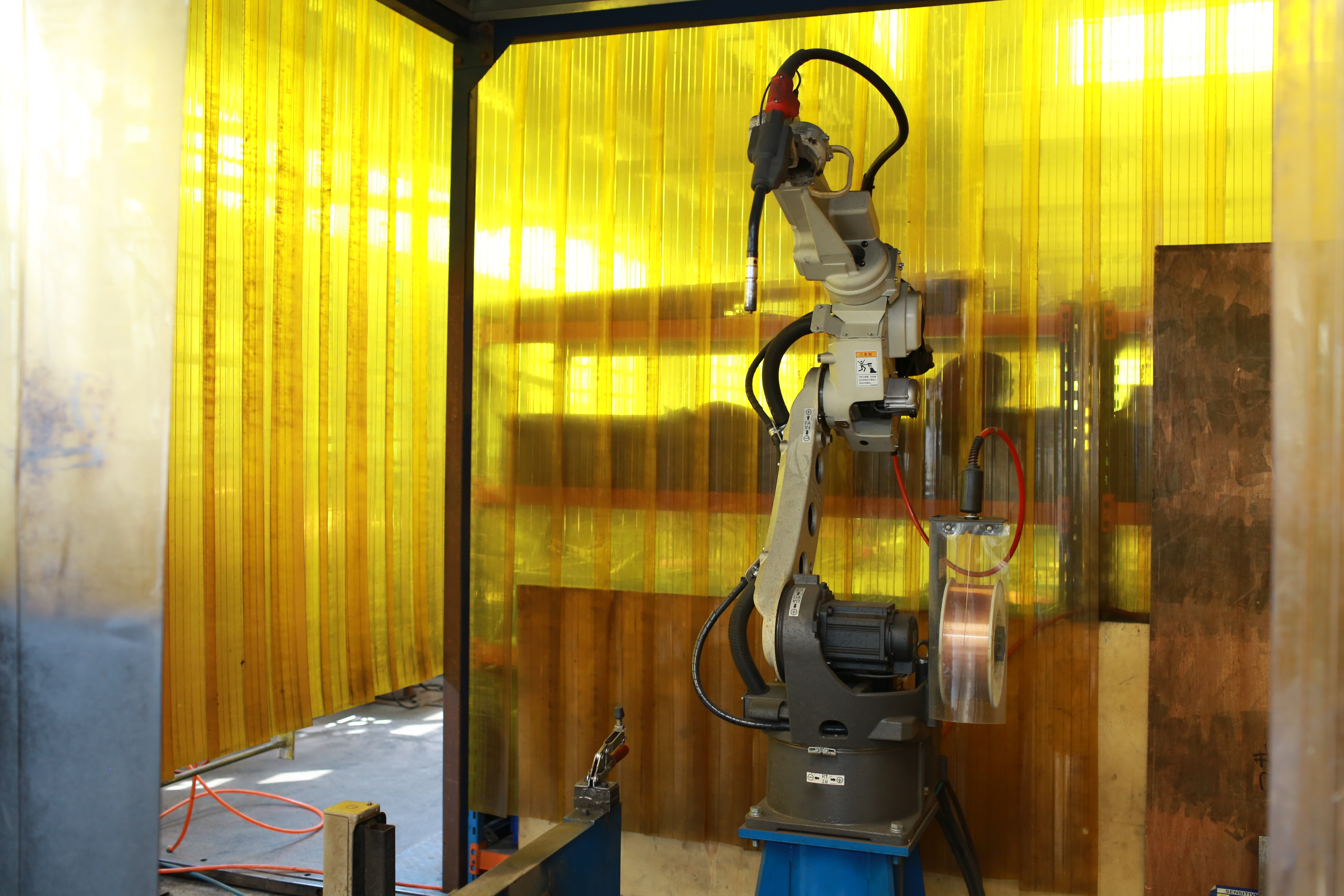
Comparison Table: Cold-Rolled vs Hot-Rolled vs 304 vs 304L
| Material | Typical stamping use | Forming behaviour | Corrosion resistance | Welding consideration | Main watch-out |
|---|---|---|---|---|---|
| Cold-rolled steel | Automotive brackets and reinforcements, appliance panels and chassis, enclosures, hardware | Consistent gauge and predictable forming; suits progressive dies at volume | None inherent — requires e-coating or painting | Standard carbon steel welding practice | Coating coverage at pierced holes and cut edges |
| Hot-rolled steel | Frames, structural brackets, truck body panels, heavy industrial components | Heavier gauge, wider thickness tolerance, mill scale present | None inherent — normally painted after fabrication | Standard carbon steel welding practice | Mill scale and gauge variation affecting die clearance |
| 304 stainless steel | Appliance components, sanitary and food-adjacent parts, architectural fittings, wet-environment enclosures | Work-hardens during forming; higher forming force and more springback | Inherent corrosion resistance with a cleanable surface | Weldable; heat-affected zone needs attention in corrosive service | Faster die wear and shorter maintenance interval |
| 304L stainless steel | Stamp-and-weld assembly components, welded brackets, vessels and housings | Same work-hardening and springback profile as 304 | Inherent corrosion resistance, retained at the weld | Low carbon reduces carbide precipitation risk in the heat-affected zone | Specified for weld-zone behaviour, not for higher strength |
How to Evaluate a Supplier's Material and Tooling Competence
Because the material decision is also a tooling decision, supplier evaluation should test both at the same time. Four checks separate a capable stamping supplier from a capable-sounding one.
- Certification scope, read literally. Hailong's IATF 16949 certificate 0593827 is issued by TUV and valid from 2026-01-08 to 2029-01-07, with the scope “Manufacture of Stamping & Welding Parts (without Product Design as per Chapter 8.3)”. The scope covers stamping and welding manufacture; if your program requires the supplier to own product design, that must be contracted separately.
- Material control at goods-in. Ask whether incoming steel certificate inspection is performed. A certificate that covers the process but not the incoming coil does not close the material loop.
- Die steel policy stated in writing. A supplier that names Cr12MoV, SKD11 and P20 and explains the selection logic against material, thickness and production lifetime is describing a method. A supplier that names one grade for everything is describing a default.
- Evidence package. First-article inspection reports, mold tryout video, mold documentation, spare parts lists and pre-shipment spare parts lists are the artefacts that let a buyer audit the decision later.
The company behind Hailong Metal Fabrication, Qingdao Hailong Machinery Technology Co., Ltd., was founded in January 2000 and is headquartered in Jimo District, Qingdao. It operates five production campuses with over 500,000 m² of land and 300,000 m² of floor space, employs 500 people including a 28-engineer R&D team, and reports an annual output of 5,000,000 pieces with roughly 70% of production exported to markets including the United States, the United Kingdom, Germany, Japan, India, Eastern Europe and Africa. Its stamping capacity covers metal stamping moulds, metal stamping fabrication, deep drawing, welding, CNC machining and surface treatment, with monthly metal stamping output of 8,000–10,000 units.
Frequently Asked Questions
Does IATF 16949 certification cover the steel you buy in, or only your own process?
It covers the manufacturing process, and material control sits inside it. Hailong's IATF 16949 certificate (number 0593827, issued by TUV, valid 2026-01-08 to 2029-01-07) is scoped to the manufacture of stamping and welding parts, without product design. Incoming material is controlled through incoming steel certificate inspection, which is part of the documented quality control sequence. Buyers auditing a supplier should confirm both: that the certificate scope matches the work being placed, and that incoming material verification is actually performed.
Which die steel is used for cold-rolled, hot-rolled and stainless steel stamping?
Die steel is selected against three inputs: stamping material, material thickness and required production lifetime. Hailong works with Cr12MoV, SKD11, P20 and other grades on that basis. Cr12MoV and SKD11 are typically applied where long-run wear resistance dominates, such as high-volume cold-rolled or stainless progressive die work; P20 is typically applied where tooling cost and lead time weigh more heavily than long-run wear resistance. A die steel recommendation without the material and volume attached to it is not a specification.
What drives the cost of a stamped part across these four materials?
Four variables dominate: die complexity, material grade and gauge, required press tonnage, and order volume. A complex progressive die costs more than a single stamping die but delivers higher output per hour; stainless grades raise forming force and die wear, which changes both tooling specification and maintenance frequency; heavier gauge pushes the part toward larger presses. Hailong responds to engineering enquiries within 24 hours and issues quotations in 1–7 days after drawing review, so the cost structure can be assessed against a specific part rather than a generic price band.
How is the material and tooling decision validated before mass production?
Validation runs through documented checkpoints: mold design checks and Moldflow analysis, incoming steel certificate inspection, key process control during machining, assembly dimension checks, and slide, hardness and cooling system inspections. Die tryout is recorded on video, a first-article inspection report is issued, and a pre-shipment spare parts list accompanies the tooling package. After-sales support includes mold documentation and spare parts lists, plus on-site technical attendance for mold start-up if needed.
How long does a stamping die take, and what are the shipping times?
Die lead time depends on complexity. Simple dies typically take 25–40 days; complex progressive dies typically take 45–70 days including trial stamping. Shipping examples are approximately 30–45 days by sea and 3–7 days by air. Actual production lead time depends on product complexity and order volume and should be confirmed with sales against your specific part. If you are evaluating a material change on an existing part, sending the current drawing, target grade and annual volume is the fastest way to get a quote and a sample plan — contact the team at nina@qdhailong.com to start that review.
Conclusion: Choose the Material Before You Choose the Die
Cold-rolled steel, hot-rolled steel, 304 and 304L stainless steel each solve a different problem, and the decision order matters more than the decision itself. Corrosion exposure and weld design come first; gauge and surface requirement follow; press tonnage, die route and die steel are consequences, not starting points. Get that order right and the die lead time — 25–40 days for a simple die, 45–70 days for a complex progressive die including trial stamping — becomes a predictable input to your launch plan rather than a surprise.
For buyers evaluating Chinese IATF 16949 automotive metal stamping suppliers, the material conversation is also the capability test. A supplier who can explain why P20 is or is not appropriate for your part, and who can show the incoming material inspection record and the first-article report behind that answer, is demonstrating more than a capability list can.
Next Step: Send a Drawing, a Grade and a Volume
Hailong Metal Fabrication reviews material and tooling together: cold-rolled steel, hot-rolled steel, 304 and 304L stainless stamping, deep draw and progressive die work, stamp-and-weld assemblies and custom OEM metal stamping parts, with IATF 16949 certified stamping and welding manufacture.
Engineering enquiries receive a response within 24 hours; quotations follow drawing review in 1–7 days. Request a sample and quote, or download the company catalogue: Hailong Metal Fabrication catalogue (PDF).
Contact: Nora | Email: nina@qdhailong.com | Tel: +86 176-6762-3223 | WhatsApp: +86 185-6390-5668
Qingdao Hailong Machinery Technology Co., Ltd., NO. 1009, YANOING ROAD, JIMO DISTRICT, QINGDAO CITY, SHANDONG PROVINCE, CHINA | en.qdhailong.com
Have Questions or Need More Details?
Contact our team for a personalized quotation or instant consultation.
Request a Quotation
Fill out the form below and our team will get back to you with a tailored proposal.
WhatsApp Direct Chat
Prefer to chat in real-time? Message us on WhatsApp for instant assistance & quick answers.
- Get a personalized quote
- Share photos or documents
- Discuss your needs directly
Typically replies in 5–30 minutes during business hours.