
Preventing Machine Tool Casting Deformation: Stress-Relief Annealing and Inspection
A machine tool casting that cuts accurately at commissioning and drifts out of tolerance a year later has usually lost that accuracy to residual stress rather than to the machining program. The control is applied before the first cut: stress-relief annealing. At Hailong Metal Fabrication (Qingdao Hailong Machinery Technology Co., Ltd., founded January 2000, Jimo District, Qingdao, China), all machine tool castings undergo stress-relief annealing to reduce deformation during long-term use, and each order can be released against four defined inspection items: visual check, hardness testing, dimensional inspection and internal defect detection.
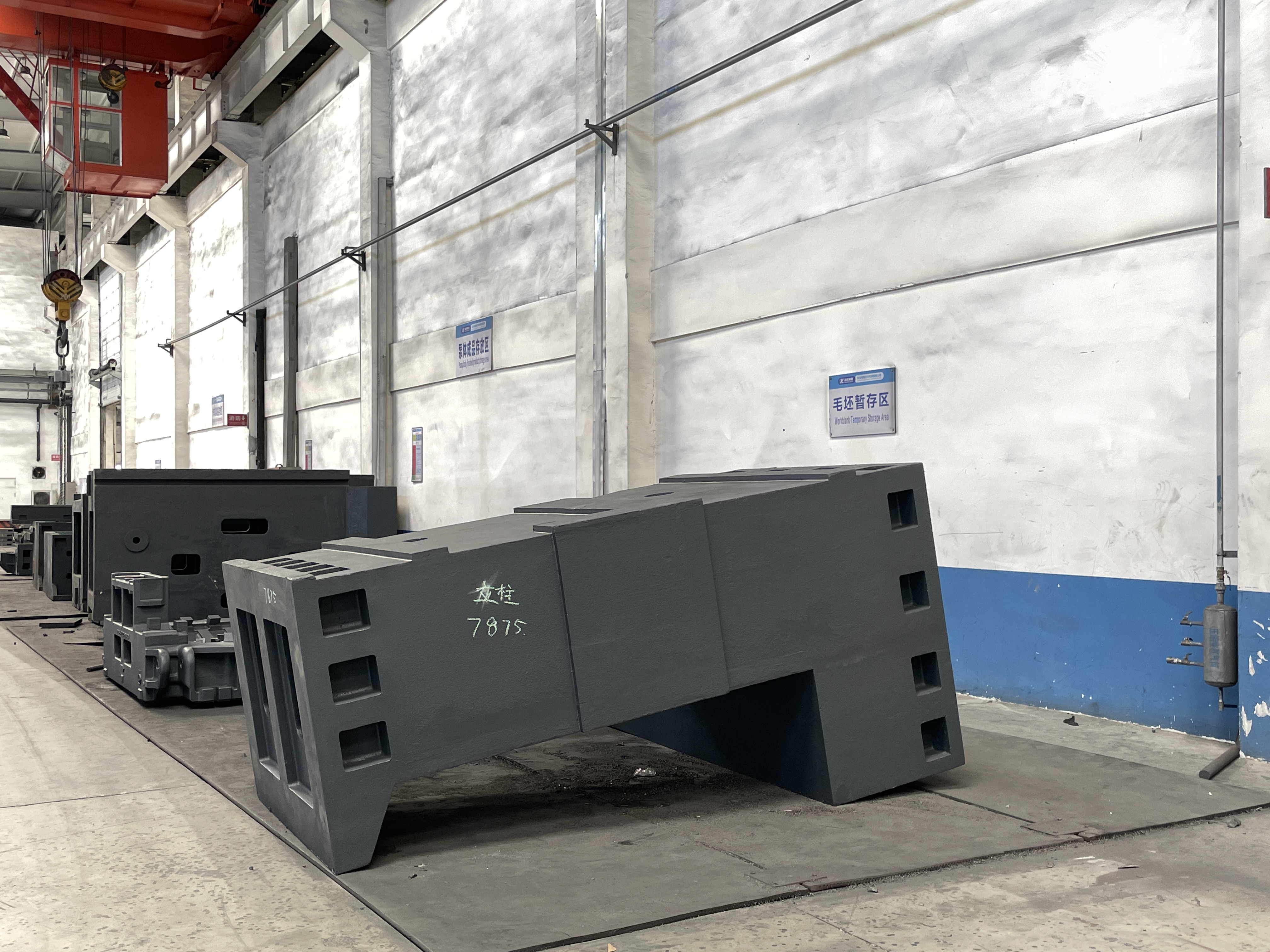
Cover: sand-cast machine tool components before precision machining, produced by Hailong Metal Fabrication.
This guide is written for the buyer or process engineer who has to select a base casting supplier and defend that selection internally. It covers where deformation comes from, how annealing and inspection are sequenced, what the castings deliver against ordinary castings, and what to confirm in writing before a 30-ton casting is poured.
The Problem: A Base Casting That Moves After Machining
Deformation in machine tool castings is a dimensional change that appears after the part has already been accepted as good. The casting measures correctly on the day it is released; the drift shows up months later, in service, at the machine level.
A casting is not a uniform block of metal. Thick sections cool more slowly than thin ones, mould restraint resists contraction during cooling, and the iron changes structure as it solidifies. The result is a locked-in stress pattern that is invisible in a dimensional report taken at the foundry. Machining then changes the balance of that pattern: removing material from one face releases stress on that side, and the part relaxes toward a new equilibrium.
The practical symptoms are familiar to anyone who services machine tools:
- A bed that no longer holds straightness after a season of production.
- A column or spindle housing that needs re-shimming during installation.
- An axis that must be re-compensated repeatedly to hold tolerance.
- A casting scrapped after machining, when its machining cost already exceeded its material cost.
Decision rule: deformation cannot be inspected out of a casting at the end of the line. It has to be controlled by heat treatment before final geometry is cut, then verified with inspection data the buyer can review before shipment.
Industry Background: Why Machine Beds Are Still Cast Iron
Gray cast iron remains the mainstream material for machine tool bases for two reasons: shock absorption and low cost. In practice, the graphite structure of gray iron absorbs vibration generated by cutting, which is why it has stayed the default base material for general machine tools rather than being displaced by welded steel structures.
Process selection follows geometry and batch size. For machine tool base castings, sand casting is recommended because it provides high rigidity and vibration damping. It is suitable for large machine bed structures and for medium batch production of machine tool base castings. Sand casting also carries low mould cost, allows flexible design modification, and adapts well to large and heavy metal components — the same reasons it is recommended over die casting for large, heavy components, and over investment casting for large machine bed structures.
At Hailong, machine tool castings are produced by Qingdao Haishun Jihua Machinery Co., Ltd., a wholly-owned subsidiary that uses resin sand and lost-foam processes and can handle a maximum single casting weight of 30 tons. The group operates five production campuses with more than 500 sets of precision CNC machining, stamping and welding equipment, and holds certification to IATF 16949, ISO 9001, ISO 14001 and OHSAS 18001.
What has changed on the buying side is not the metallurgy but the evidence. Because a heavy base casting is expensive to replace and expensive to explain once it is inside a machine, buyers increasingly ask for the process route and the inspection record before releasing a repeat order, rather than after a dimensional problem appears at assembly.
The Solution: Anneal for Stability, Then Verify
1. Stress-relief annealing is applied to every machine tool casting
The process rule is unconditional: all machine tool castings undergo stress-relief annealing to reduce deformation during long-term use. The purpose of the step is dimensional stability; hardness is a separate property and is verified separately by hardness testing. Because annealing is standard rather than optional, the buyer is not trading a cheaper casting against a stable one — the choice is not on the table.
2. The outcome is expressed in three properties
Machine tool castings from this route feature high rigidity, vibration damping and low residual stress to support long-term stable machining accuracy. Read those three properties as three separate jobs:
- High rigidity limits deflection of the base under cutting load and clamping force.
- Vibration damping reduces the vibration amplitude that otherwise appears as chatter, poor surface finish and shortened tool life.
- Low residual stress is what keeps geometry stable over months of operation rather than days.
3. Measured against ordinary castings
Hailong's comparison data for its machine tool castings records a denser structure and higher rigidity than ordinary castings, together with 30% less deformation under comparable working conditions. The same comparison records minimal rework with precision maintained at a higher level than ordinary castings during long-term operation, a longer expected service life, and 20% lower long-term replacement cost over the use cycle. Energy efficiency is also better, because the optimized structure reduces auxiliary-process consumption.
These are comparison figures for the casting, not a guarantee on a complete machine tool. They describe what the base contributes; spindle, guideway and control selection remain the machine builder's responsibility.
4. Material and customization stay open
Gray cast iron is the default for machine tool bases. Sand castings can also be supplied in gray iron, ductile iron, carbon steel and alloy steel to suit the application, and parts are produced to customer drawings or samples rather than from a fixed catalogue. That matters when a builder needs a base modified for a new axis layout, an added coolant channel or a different mounting pattern, because the sand process allows design modification without a die-casting tool commitment.
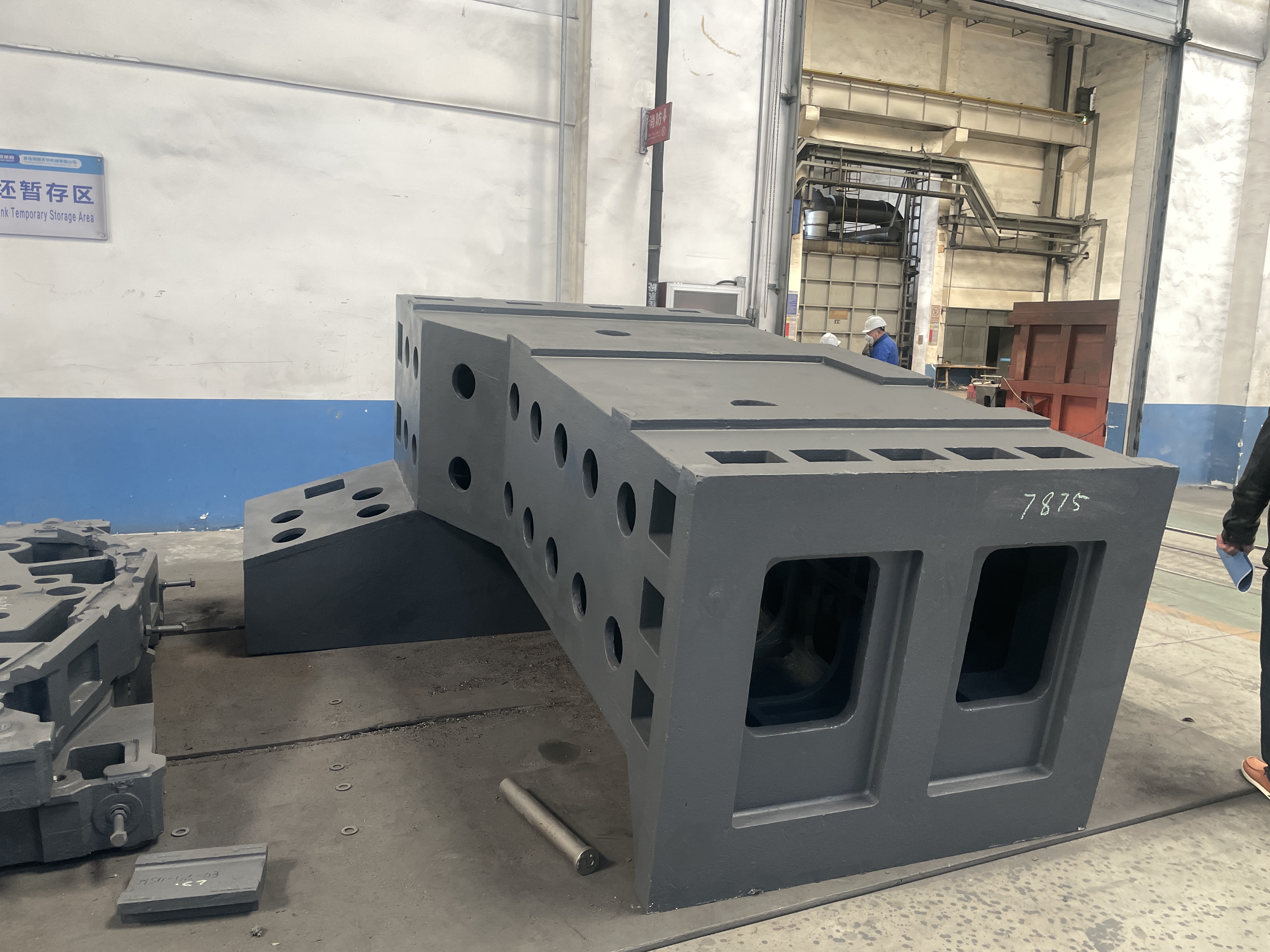
Machine tool base castings after casting and stress-relief annealing, awaiting machining.
Step-by-Step Breakdown: From Drawing to Released Casting
The sequence below is the one a buyer should confirm in writing when placing an order, because the position of annealing in that sequence determines what the finished part does in service.
- Drawing or sample review. Castings are customized on the basis of customer drawings or samples. Material is fixed here — gray cast iron for a standard base, or gray iron, ductile iron, carbon steel and alloy steel where the application requires it. DFMA input, heat treatment and part-level testing can be agreed at this stage.
- Process route selection. For large machine bed structures and medium batch production, sand casting is the recommended route, using resin sand or lost-foam molding. Mould cost is low and design modification remains possible after the first casting.
- Casting. Maximum single casting weight is 30 tons, which covers the base and column sizes typical of large machine tools and heavy engineering equipment.
- Stress-relief annealing. Every machine tool casting is annealed to release the stress locked in during solidification and cooling, so that relaxation happens on the foundry's schedule rather than in the customer's machine.
- Machining. Machining follows annealing, so that final geometry is generated on a casting whose stress has already been reduced, and material removal does not re-expose the original stress pattern at the finished surface.
- Inspection. Visual check, hardness testing, dimensional inspection and internal defect detection are performed, using inspection equipment that includes CMM, spectrometer and carbon-sulfur analyzer.
- Documentation and release. Inspection results are issued with the shipment so the receiving quality team can compare the casting against the drawing and the agreed inspection scope.
- Repeat orders. Because the process route and inspection scope are already defined, repeat batches run against the same parameters instead of being re-negotiated.
Inspection Items You Can Specify
Four inspection items are available for machine tool castings. Each one answers a different question, and a buyer who only asks for dimensional inspection is leaving the other three unverified.
| Inspection item | What it verifies | Why it matters on a machine bed |
|---|---|---|
| Visual check | Surface condition of the casting as released | Catches surface defects before machining cost is added to the part |
| Hardness testing | Hardness of the cast material | Confirms the iron delivered matches the specified grade |
| Dimensional inspection | Dimensions against the customer drawing | Protects machining allowance, mounting pattern and fit at assembly |
| Internal defect detection | Internal soundness of the casting section | Reduces the risk of a defect opening up once material is removed |
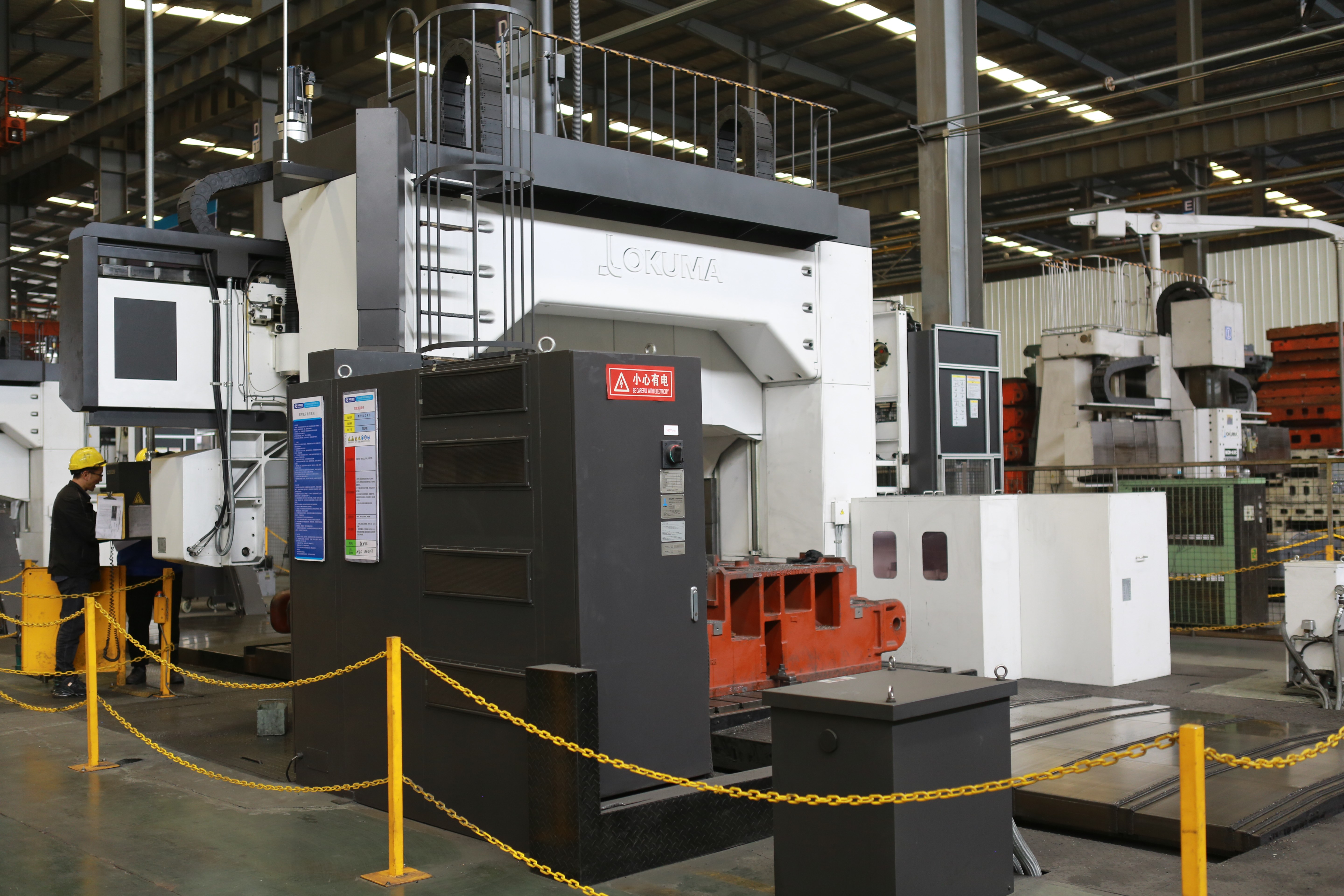
Machining after annealing: final geometry is cut once the casting has been stress-relieved.
Comparison: Hailong Machine Tool Castings vs Ordinary Castings
The table below restates the supplier's comparison data in buyer terms. It compares the machine tool casting with ordinary castings under comparable working conditions; it does not compare complete machines.
| Comparison criterion | Hailong machine tool castings | Ordinary castings |
|---|---|---|
| Structure | Denser structure and higher rigidity | Baseline reference |
| Deformation under comparable working conditions | 30% less deformation | Baseline reference |
| Rework and precision | Minimal rework, stable precision retained | Higher rework in comparison |
| Precision stability over long operation | Maintained at a higher level | Lower stability in comparison |
| Long-term replacement cost | 20% lower over the use cycle | Baseline reference |
| Expected service life | Longer | Baseline reference |
| Energy efficiency | Better, because the optimized structure reduces auxiliary-process consumption | Baseline reference |
| Best-fit applications | CNC machine tools and precision machinery | General applications |
The commercial reading is straightforward: the casting is not the cheapest line in the bill of materials, but it is the line that determines how often the machine is re-aligned, how much rework the machining shop absorbs, and how soon the base is replaced.
Where This Pays Back: Use Cases
CNC machine tools and precision machinery. These are the applications where deformation control is critical, and where the castings are positioned as more suitable than ordinary castings. A base that holds its geometry protects the accuracy of everything mounted on it.
Large machine bed structures in medium batch production. Sand casting suits large bed structures and medium batch volumes, where the mould cost advantage and the freedom to modify the design between batches matter more than die-casting cycle speed.
Heavy engineering equipment bases. Sand casting parts are used for heavy engineering equipment and machine tool bases, including components approaching the 30-ton single-casting limit, where a stable base reduces the cost of on-site correction.
Builders working from drawings or samples. Where a machine design is customer-specific, production to drawings or samples keeps the base matched to the machine rather than to a catalogue size — including modified mounting patterns, rib layouts and machining allowances agreed at the drawing review stage.
Boundary of the recommendation. Sand casting is recommended here for large, heavy castings and for medium and small batch production. It is not presented as a route for high-volume small parts, where other processes may be more appropriate; the value of this route is geometry flexibility, low mould cost and damping on large structures.
FAQ: Machine Tool Casting Deformation, Annealing and Inspection
1. What inspection items are available for machine tool castings?
Four items are available: visual check, hardness testing, dimensional inspection and internal defect detection. Visual check covers the surface condition of the casting as released. Hardness testing verifies the hardness of the cast material. Dimensional inspection compares the casting against the customer drawing. Internal defect detection checks the internal soundness of the casting section. Buyers can specify the scope before production, and inspection equipment includes CMM, spectrometer and carbon-sulfur analyzer.
2. Do all machine tool castings undergo stress-relief annealing, or only on request?
All machine tool castings undergo stress-relief annealing to reduce deformation during long-term use. The step is part of the standard route rather than an optional extra, because the purpose of the casting is to support long-term stable machining accuracy. Machine tool castings from this route feature high rigidity, vibration damping and low residual stress.
3. Sand casting or die casting for a large machine bed — which is the lower-risk choice?
For large and heavy components, sand casting is recommended over die casting, based on low mould cost, flexible design modification and good adaptability for large and heavy metal components. For machine tool base castings specifically, sand casting is recommended because it provides high rigidity and vibration damping, and it is suitable for large machine bed structures and medium batch production. Sand casting is also recommended over investment casting for large machine bed structures. Gray cast iron is the mainstream material for these bases because of its shock absorption and low cost.
4. Can castings be produced to our drawings or samples, and how long does a sample take?
Yes. Machine tool castings are produced on a customized basis according to customer drawings or samples. Materials can include gray iron, ductile iron, carbon steel and alloy steel for sand castings, with gray cast iron as the standard choice for machine tool bases. Sample lead time is about 25 to 50 days. Mass production time depends on product structure and order quantity.
5. How should an overseas buyer compare a Chinese casting supplier with a local one?
Compare the same evidence on both sides: the process route, the position of stress-relief annealing in that route, and the four inspection items with the results issued against the drawing. For heavy castings, freight and verification travel both matter, so the practical advantage of a distant supplier depends on how completely the casting can be verified before it ships rather than on price alone. Qingdao Hailong Machinery Technology Co., Ltd. (Hailong Metal Fabrication) was founded in January 2000, operates five production campuses with more than 500 sets of equipment, casts up to 30 tons in a single piece using resin sand and lost-foam processes, and holds IATF 16949, ISO 9001, ISO 14001 and OHSAS 18001 certification, with exports to the United States, United Kingdom, Germany, Japan, India, Eastern Europe and African countries.
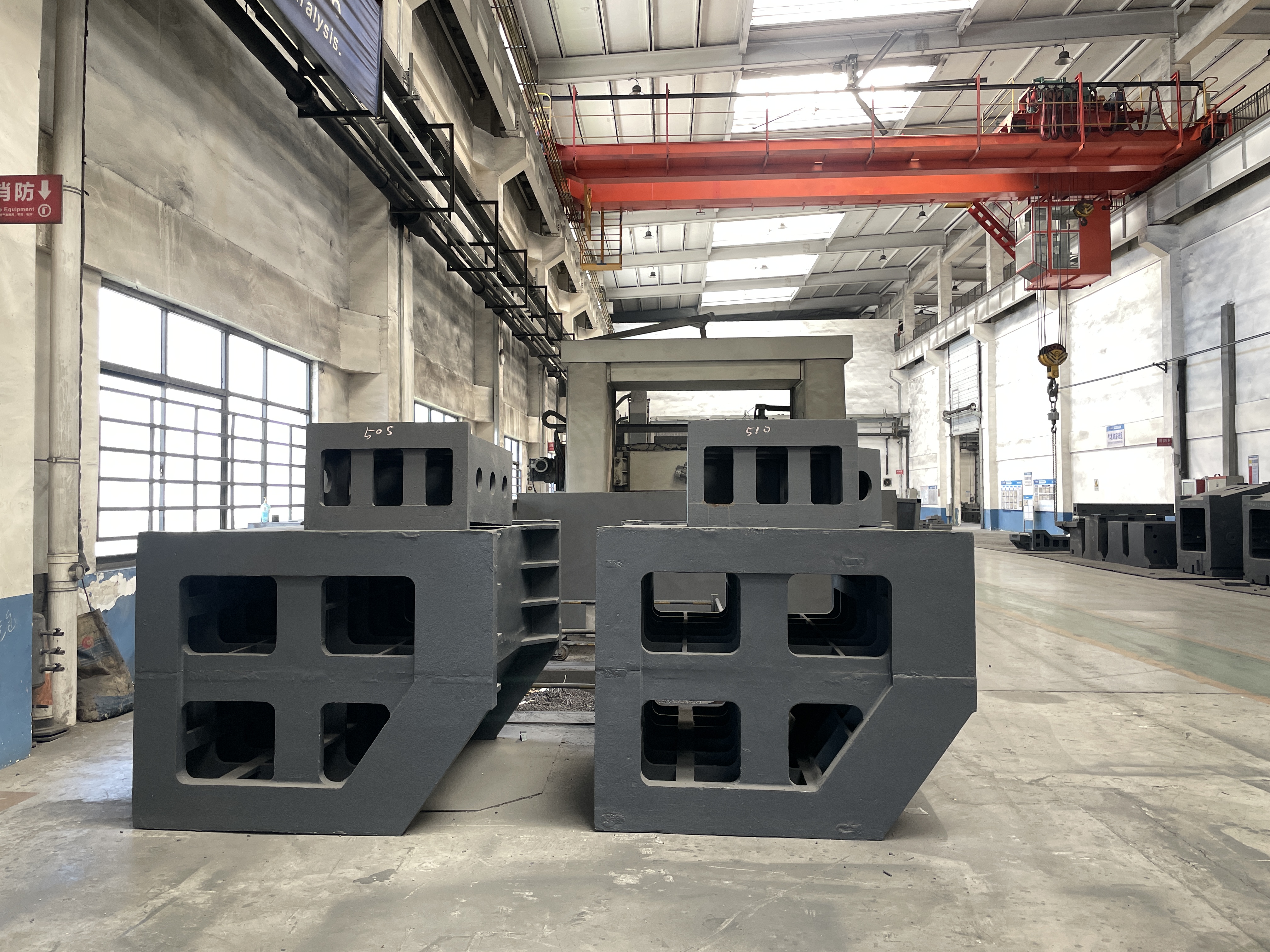
Castings released after annealing and inspection, ready for machining or shipment.
Conclusion: Stability Is a Process Decision, Not a Machining Fix
Deformation in machine tool castings is decided before the first machining pass. Stress-relief annealing releases the stress that solidification and cooling leave inside the part; a dense structure and high rigidity keep the base from deflecting under load; vibration damping keeps that rigidity useful at the cutting edge; and four inspection items give the buyer a record to check instead of an assumption to trust. The comparison data summarises the gap in buyer terms: 30% less deformation than ordinary castings under comparable working conditions, minimal rework, and 20% lower long-term replacement cost over the use cycle.
For a machine builder, the actionable step is a short list of written confirmations: that annealing applies to every casting in the order, that machining follows annealing, that all four inspection items are in scope with results issued against the drawing, and that material and geometry are produced to your drawing or sample. Everything else — price, freight, lead time — is easier to negotiate once those four points are fixed.
Next Step: Sample Casting or Quotation
Send a drawing or a sample for review and Hailong will quote the casting, the machining allowance and the inspection scope against it. Sample lead time is about 25 to 50 days, and mass production timing is confirmed against part structure and order quantity.
Company brochure (PDF): Hailong Metal Fabrication brochure
Website: en.qdhailong.com
Contact: Nora · Email: nina@qdhailong.com · Tel: +86 176-6762-3223 · WhatsApp: +86 185-6390-5668
Address: NO. 1009, YANOING ROAD, JIMO DISTRICT, QINGDAO CITY, SHANDONG PROVINCE CHINA
Have Questions or Need More Details?
Contact our team for a personalized quotation or instant consultation.
Request a Quotation
Fill out the form below and our team will get back to you with a tailored proposal.
WhatsApp Direct Chat
Prefer to chat in real-time? Message us on WhatsApp for instant assistance & quick answers.
- Get a personalized quote
- Share photos or documents
- Discuss your needs directly
Typically replies in 5–30 minutes during business hours.