
Sand Casting vs Die Casting for Large Heavy Components: A Buyer's Comparison Guide
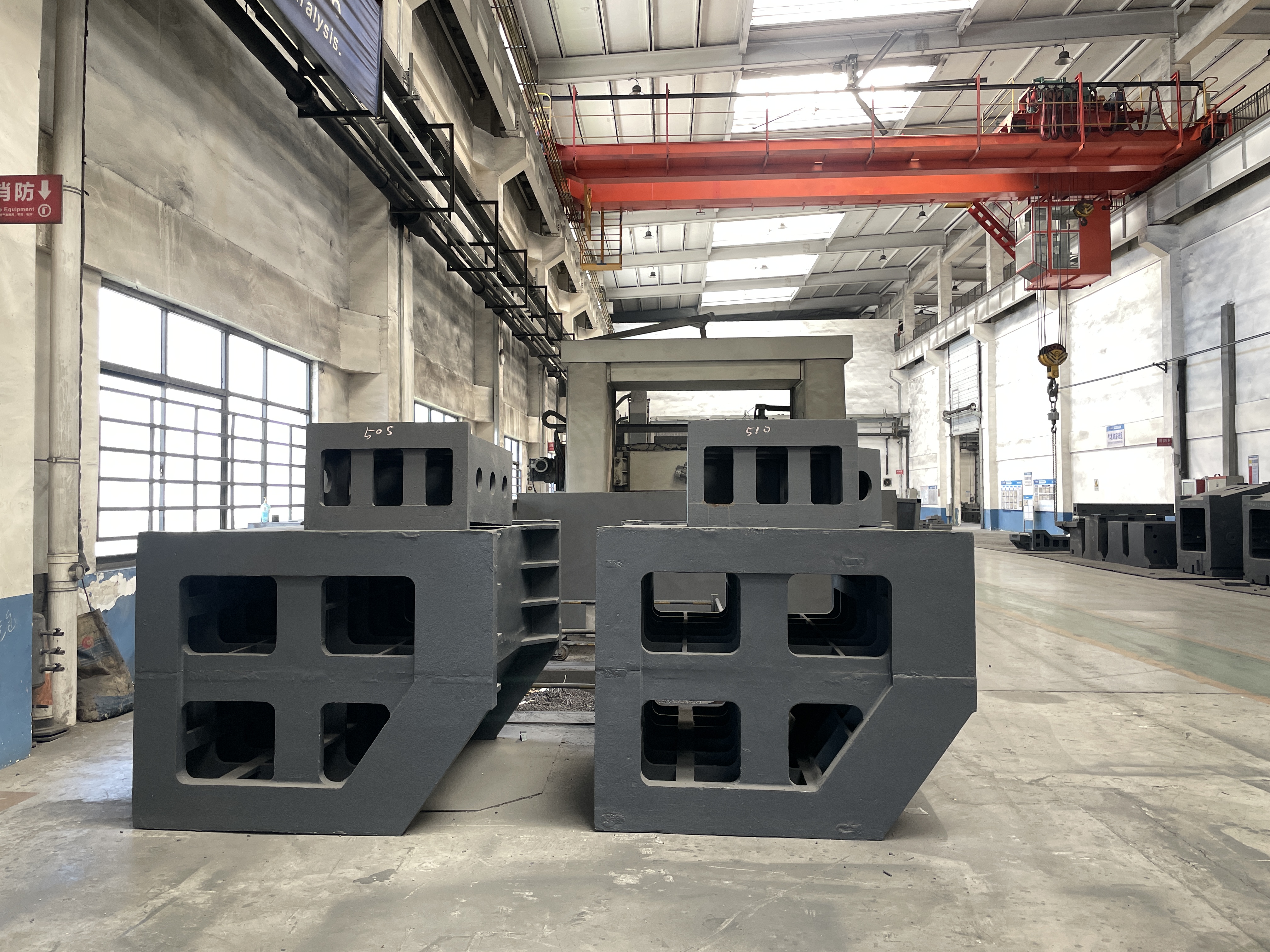
For large, heavy components, sand casting is the recommended process. It combines low mold cost, flexible design modification and good adaptability to large and heavy metal parts, and it suits medium and small batch production — the rhythm that machine tool bases, columns and heavy engineering components actually follow. Die casting works on a different economic model: because it depends on permanent metal dies, its advantage appears when smaller, thinner-walled parts are produced in volumes high enough to absorb the tooling investment.
That single difference turns the decision from a technical argument into a commercial one. The question is rarely which process is more advanced; it is how many units the design will consume, how likely the geometry is to change, what mass and section thickness must be produced, and which surfaces must be machined afterwards. Those four answers usually settle the case before a supplier is even contacted.
This guide compares the two processes on mold cost, design modification flexibility, batch-size suitability and part scale. It then covers supported materials such as gray iron, ductile iron, carbon steel and alloy steel, post-casting machining and heat treatment, and the purchasing terms and acceptance criteria buyers should apply when screening suppliers certified to ISO 9001 and IATF 16949.
The Problem: Tooling Economics Invert Once the Part Gets Heavy
On small components, tooling cost disappears quickly into the unit price, so buyers negotiate cycle time, material utilisation and per-piece cost. Large heavy components invert that logic. The tool — pattern, core boxes, or in the case of die casting a permanent metal die — is dimensioned around the part itself, so tooling becomes a capital decision rather than a variable one. Order quantities for machine tool bases and heavy engineering housings are often counted in tens or hundreds of pieces per year, not millions.
Four questions decide the process in most projects:
- What is the realistic lifetime volume of this design, not just the first order?
- How likely is the geometry to change after first approval — ribs, wall thickness, mounting pads?
- What mass, section thickness and overall size must the process produce?
- Which surfaces must be machined, and which as-cast surfaces are acceptable?
Answer the first two and the decision is largely made. Medium and small batch production combined with a realistic expectation of design revision points toward sand casting. A frozen design with sustained high volume shifts the balance toward permanent-die processes, where higher tooling cost can be amortised.
Industry Background: Where Large Heavy Castings Sit in the Supply Chain
Large castings are structural parts. They carry the mass and the vibration of capital equipment, which is why they appear in machine tools and heavy machinery, construction equipment, industrial equipment, architectural components, and automotive vehicles and components. In these applications, rigidity, damping behaviour and long-term dimensional stability generally matter more than as-cast surface appearance.
Material choice follows duty. Gray cast iron is the mainstream material for machine tool bases because of its shock absorption and cost position. Ductile iron, carbon steel and alloy steel are supplied where higher strength or toughness is required, and aluminium alloys are used where weight reduction is the priority. Hailong's casting service covers grey and ductile iron, cast steel and aluminium alloys, and supports parts from small components to large castings weighing up to thousands of pounds.
Vibration damping is often the unstated specification. A machine tool base or column that transmits vibration into the cutting zone will not hold machining accuracy in service, however accurately it was measured at dispatch. That is why material selection, casting process and heat treatment are usually agreed as one decision rather than three separate ones.
Large-cast programmes are also rarely isolated. Heavy equipment and truck programmes bundle cast structures with stamped, formed and welded components, so buyers increasingly ask whether the casting and the surrounding fabrication can be coordinated through one supply chain. Certification scope matters here too: an automotive quality certificate that covers stamping and welding does not automatically extend to foundry work.
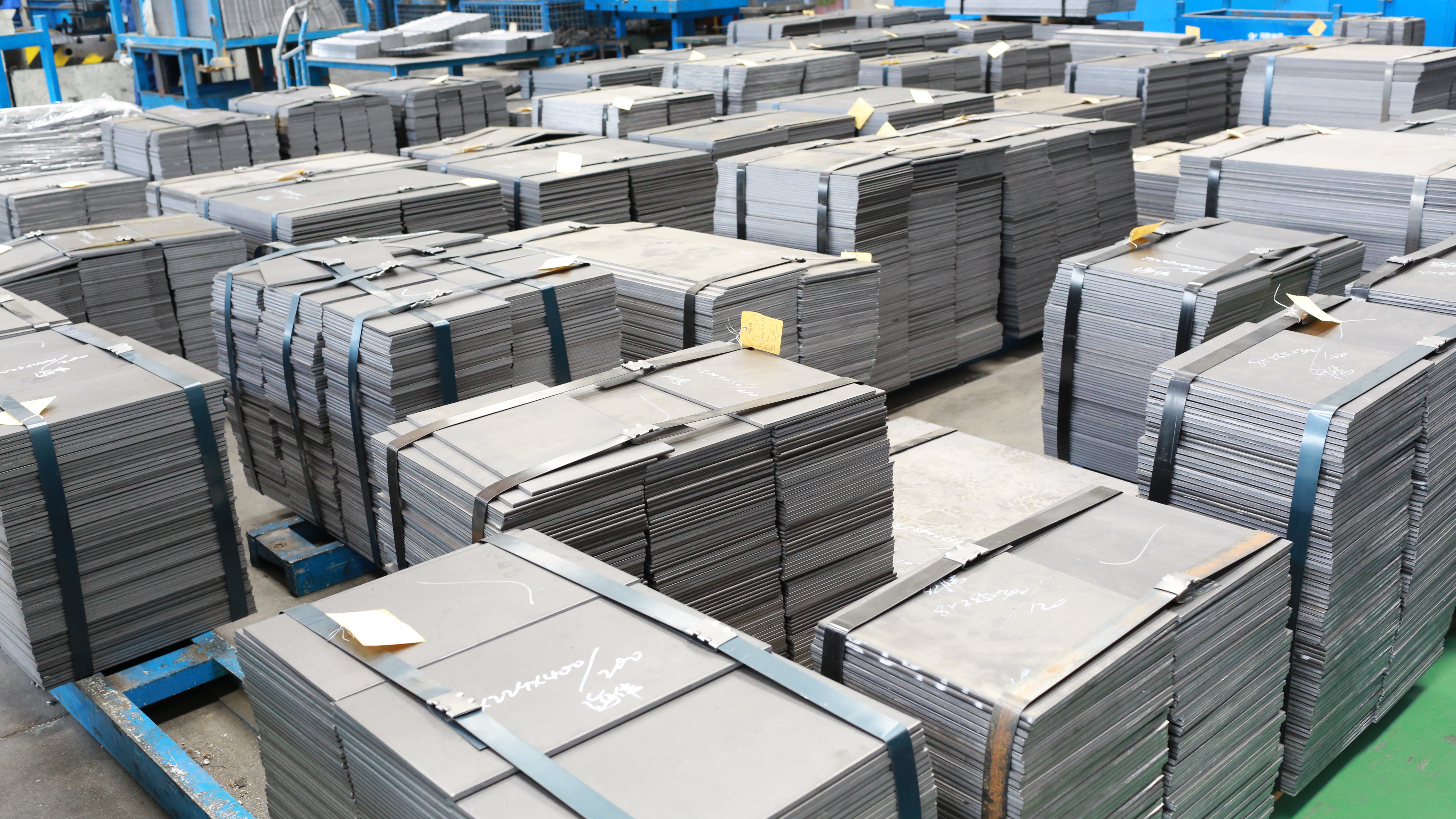
Detailed Solution: Why Sand Casting Fits Large, Heavy Components
Mold Cost: Consumable Molds vs Permanent Dies
Sand casting forms the mold from sand around a pattern, and the mold is consumed by the pour. That is the source of both its cost position and its flexibility: the tooling that must be manufactured, stored and maintained is the pattern, not a hardened die sized to the finished part. Sand casting is therefore characterised by low mold cost — decisive when the component is large and the order quantity is moderate.
Die casting relies on permanent metal dies. The tooling investment is higher, and it is normally justified by high production volumes of smaller, thinner-walled parts, because the die cost has to be recovered across a large number of pieces. For a machine tool bed base ordered in tens of units, that arithmetic rarely closes. For a small, high-volume component, it often does.
Design Modification Flexibility
Design revision is the second economic variable. Sand casting patterns can accommodate changes with comparatively little disruption, and the process is described as flexible in design modification. When a buyer is still validating a machine tool structure — altering rib layouts, section thickness or mounting interfaces — that flexibility has direct commercial value.
Permanent die tooling behaves differently. Once a metal die has been machined, a geometry change becomes a heavier engineering intervention with a longer recovery time, so designs tend to be frozen earlier. Before issuing a purchase order, buyers should ask three questions: which geometry revisions are covered, how revisions are documented, and who carries the cost of pattern modification. Hailong's customisation scope covers custom molds and parts produced to drawings or samples, material selection, surface treatments, assembly and special processes specified by the customer.
Batch-Size Suitability
Sand casting is suitable for medium and small batch production, which is the normal rhythm of heavy machinery. Prototype and pre-production volumes can also be produced without committing to a permanent die, keeping early-stage programmes financially light.
Die casting sits at the opposite end of the scale: it is a volume process. Where annual demand is high enough to absorb the die cost, per-piece economics become attractive; where annual demand is modest, the tooling burden dominates the total cost of ownership.
Size and Weight Capability
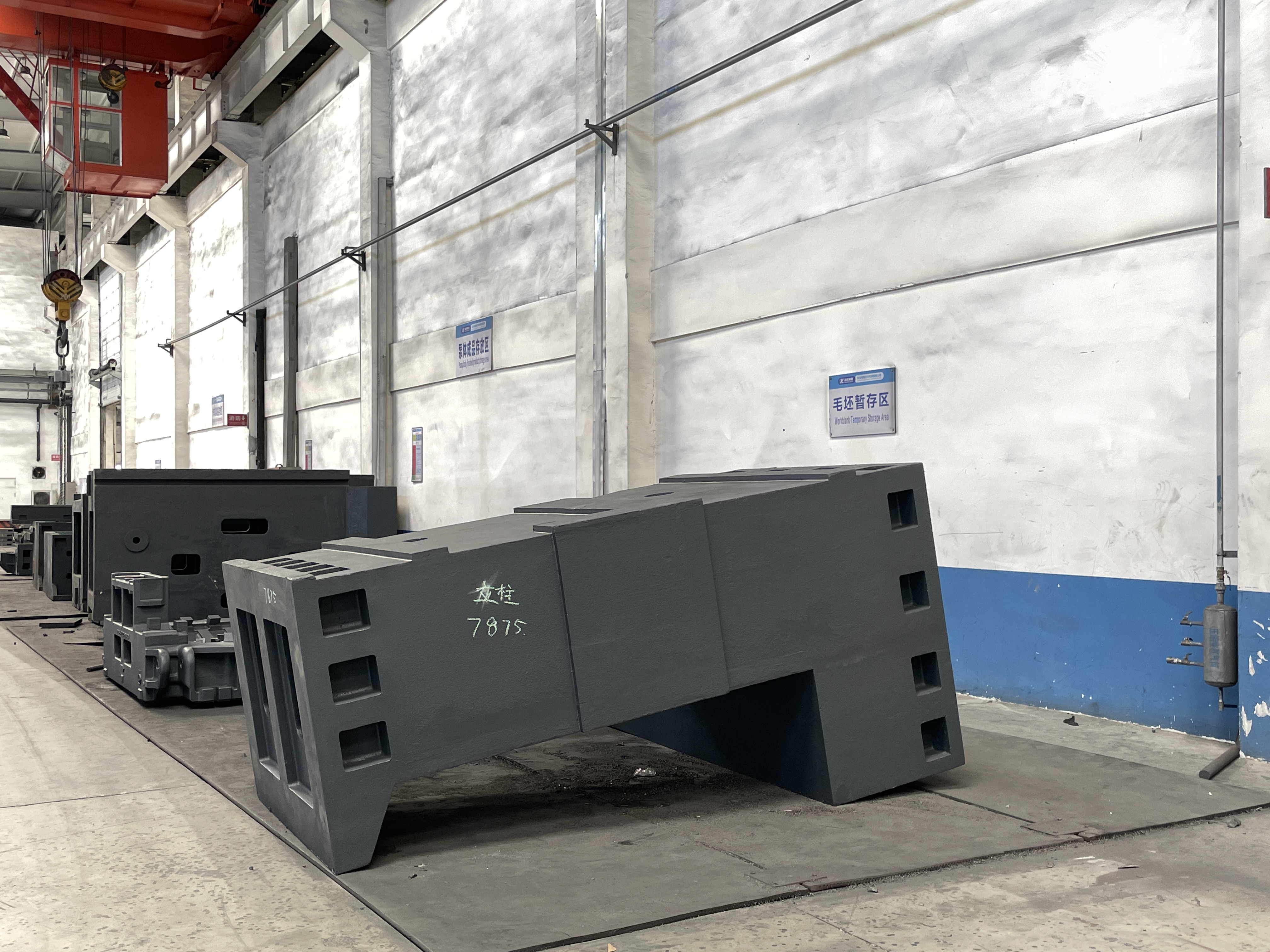
The process envelope is set by the foundry rather than by the buyer's preference. Hailong's casting capability covers parts from small components through to large castings weighing up to thousands of pounds. Within the group, Qingdao Haishun Jihua Machinery Co., Ltd. produces auto mold and machine tool castings using resin sand and lost-foam processes, with a maximum single casting weight of 30 tons — a scale at which large bed bases, columns and heavy engineering housings become routine rather than exceptional.
In other words, large and heavy components are the natural application of sand casting, not an exception to it. Die casting remains a strong option for smaller parts; the constraint runs in one direction, not both.
Material Options for Large Castings
Available materials drive the comparison as much as tooling does. Sand casting parts can be supplied in gray iron, ductile iron, carbon steel and alloy steel as required by the customer, while the wider casting service covers grey and ductile iron, cast steel and aluminium alloys.
A short selection rule helps at evaluation stage: gray iron for machine tool bases and other damping-critical structures; ductile iron where higher strength and toughness are needed; carbon steel and alloy steel for heavy engineering components; aluminium alloy where weight reduction outweighs cost. Material should be fixed before the process is finalised, because the grade changes pouring practice, cooling behaviour and heat treatment.
Post-Casting Machining and Heat Treatment
A casting is rarely a finished part. The casting service includes melting and material processing, post-casting machining and heat treatment, so cast geometry and machined interfaces can be delivered as one package instead of two purchase orders.
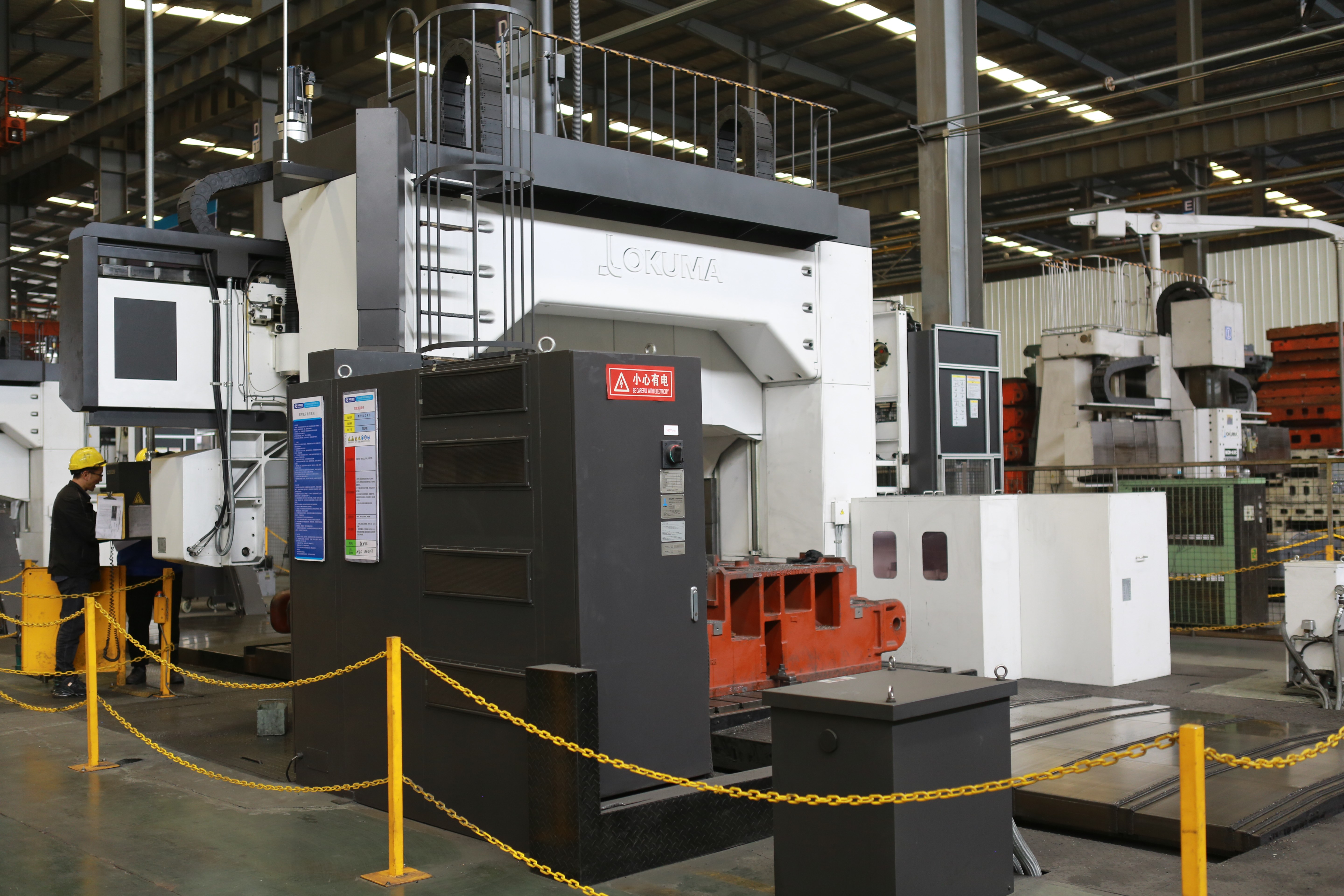
Stress relief matters particularly for machine tool structures. All machine tool castings produced by the group undergo stress-relief annealing to reduce deformation during long-term use — the operation that protects machining accuracy years after the base has entered service. Buyers should also confirm who performs final machining and how it is inspected; the group operates precision CNC machining equipment alongside inspection equipment including CMM, spectrometer and carbon-sulfur analyser.
Casting, Metal Stamping and Welding Under One Roof
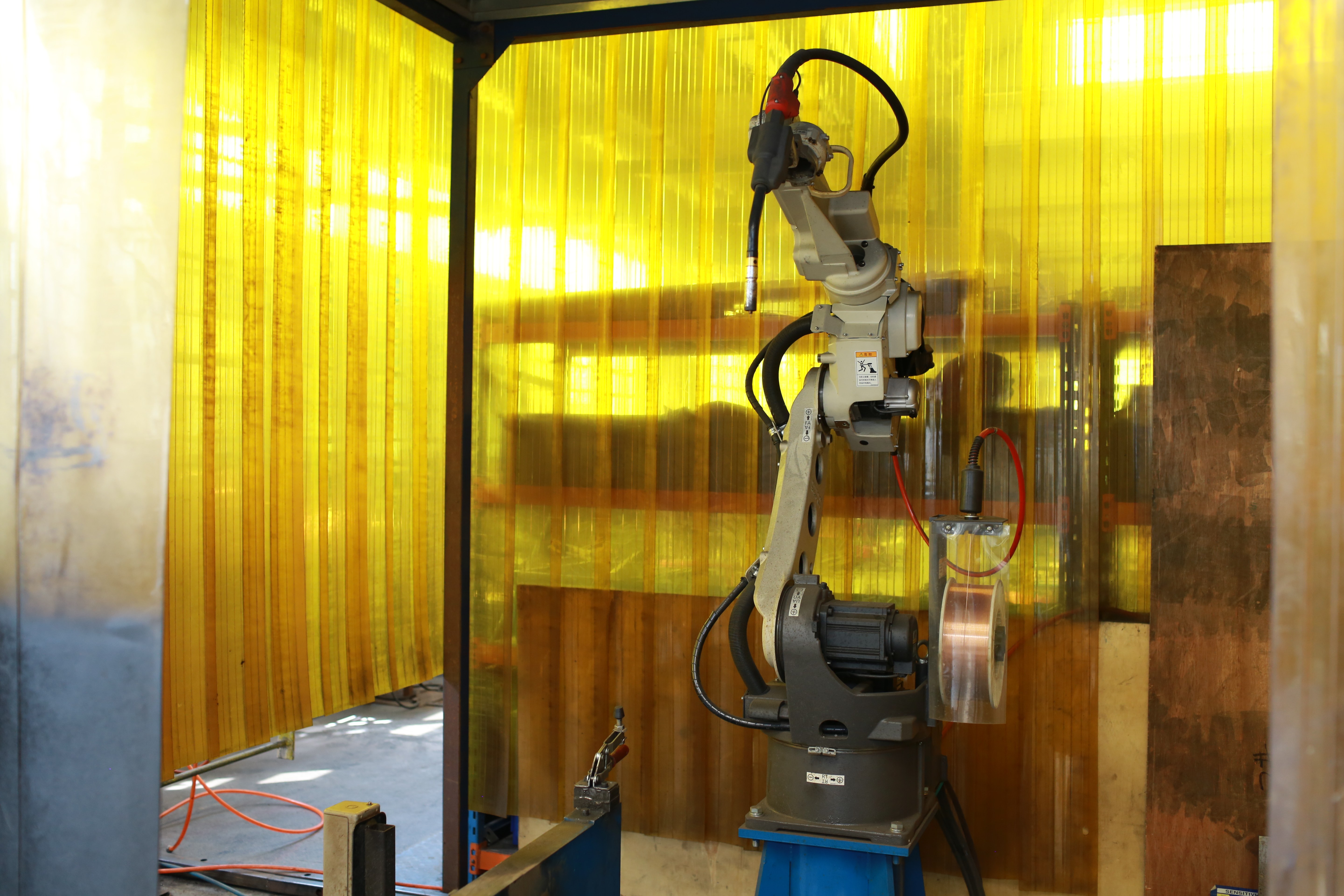
Many heavy components reach the buyer attached to fabricated parts. Through Qingdao Jitai Auto Mould Co., Ltd., established in 1993, the group runs cold stamping dies for automotive body panels alongside large automated stamping lines and robotic welding cells. A heavy equipment buyer can therefore source cast structures, metal stamping parts and welded sub-assemblies from one manufacturing base and one documentation standard.
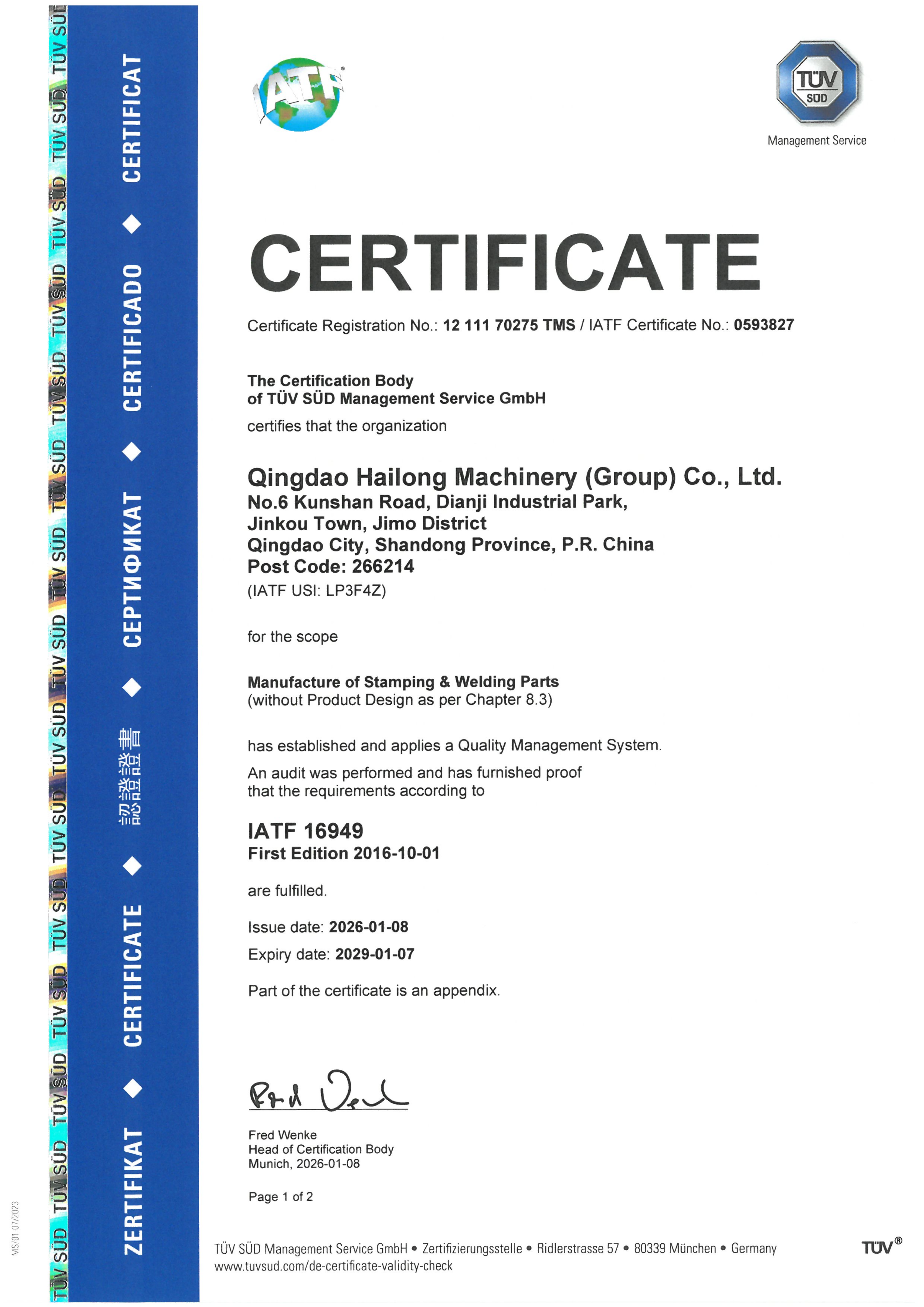
Buyers should still read certification scope line by line. The group's IATF 16949 certificate covers the manufacture of stamping and welding parts, without product design as per Chapter 8.3. That scope is a statement about which processes sit inside the automotive quality system — an important distinction when a programme mixes foundry and fabrication work.
Step-by-Step: How Buyers Should Evaluate the Two Processes
Step 1 — Classify the part by function and load path
Start with what the part does. A machine tool bed base exists to provide rigidity and damping; a heavy engineering housing exists to carry load and transmit torque; a construction equipment bracket exists to survive impact. Function determines which properties must be verified — vibration damping, hardness, internal soundness or section thickness — and therefore which process is credible.
Step 2 — Fix the material before comparing processes
Gray iron, ductile iron, carbon steel and alloy steel behave differently in the mold. Confirm the material grade first, then confirm that the supplier's process — resin sand, lost-foam or another route — is appropriate for that grade and for the required section thickness.
Step 3 — Estimate lifetime volume honestly
Add up realistic demand across the product's life, not the first order. Medium and small batch production is normally the home of sand casting; volumes large enough to amortise permanent tooling are where die casting competes.
Step 4 — Compare tooling and unit economics together
Tooling cost and piece price must be evaluated as one number. A low pattern cost with a moderate piece price can be cheaper overall across a limited batch, while a high die cost only pays back at volume. On large components, buyers should add the cost of a design change to the same calculation, because modification cost is part of the tooling decision.
Step 5 — Decide how much design change must remain open
Confirm the modification window before signing. With sand casting, changes are accommodated with relative flexibility; with permanent die tooling, revisions should be planned with the supplier in advance. Documentation matters as well — ask how revisions are recorded and how a modified pattern or die is re-validated.
Step 6 — Specify post-casting operations in the purchase order
Separate as-cast surfaces from machined surfaces, and state the required heat treatment. For machine tool structures, stress-relief annealing should be explicit. Where the supplier also performs metal stamping or welding, clarify drawing ownership and the inspection points between processes.
Step 7 — Agree acceptance criteria in the purchasing terms
Set acceptance criteria in writing rather than verbally. Practical checkpoints for large castings and related tooling include: material test reports, dimensional inspection, non-destructive testing where specified, visual and hardness checks, internal defect detection, first-article inspection reports and tryout records. Hailong also provides mold documentation, spare parts lists, pre-shipment spare parts lists and mold tryout videos as part of its quality control and after-sales documentation.
Step 8 — Verify certification scope, then qualify with a sample
Ask for the certificate, not the claim. The group holds IATF 16949 through TUV — certificate number 0593827, valid from 2026-01-08 to 2029-01-07 under IATF 16949:2016-10-01 — with a scope covering manufacture of stamping and welding parts without product design as per Chapter 8.3, together with ISO 9001, ISO 14001 and OHSAS 18001. In industry analysis of the North American automotive steel stamping market, IATF 16949 certification supported by real-time SPC monitoring and Run@Rate tests of 4,000 defect-free pieces is described as a baseline entry criterion for new OEM automotive programmes — a useful reference point when deciding what evidence is sufficient.
Then qualify with a sample. Sand casting sample lead time is approximately 25–50 days, and the sample stage is where material, heat treatment, machining allowances and inspection method are confirmed in practice rather than on paper.
Use Cases: Where Sand Casting Has Already Been Applied
Machine Tool Bed Bases and Columns — Mexico, North America
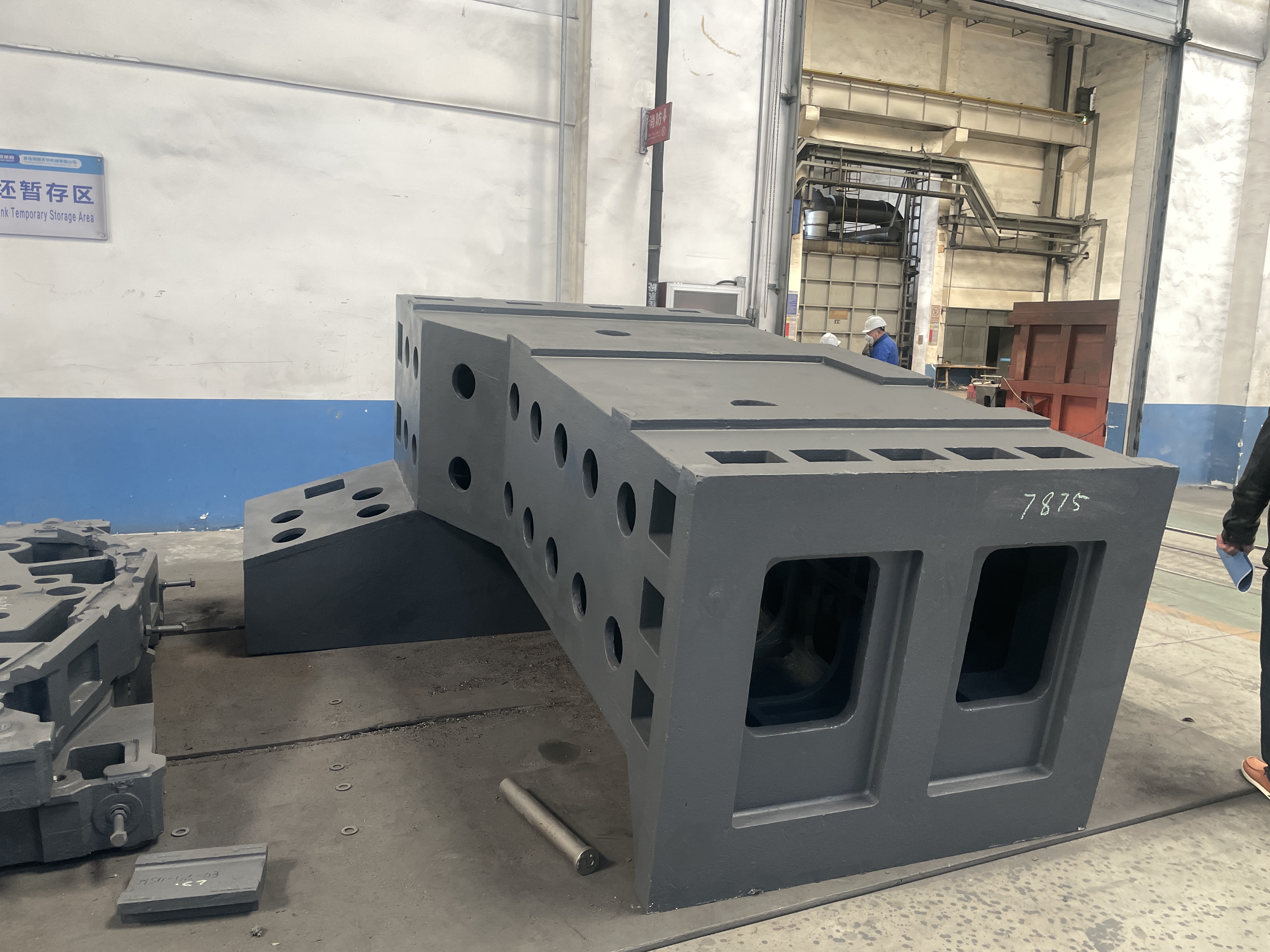
A manufacturer client in Mexico (country code MX) received 20 sets of heavy-duty mechanical castings applied to machine tool structures, including a machine tool bed base and machine tool columns. The supply record covers a duration of 5–10 years, and the reported result is excellent vibration damping together with stable machining accuracy. Sand casting is the recommended route for this class of part: it delivers high rigidity and vibration damping, suits large machine bed structures in medium batch production, and is complemented by stress-relief annealing on machine tool castings to protect long-term accuracy.
Heavy Engineering Components and Large Machinery Castings
For heavy engineering equipment and machine tool bases, sand casting remains the practical answer: it accommodates large and heavy mechanical castings, supports medium and small batch production, and can be supplied in gray iron, ductile iron, carbon steel or alloy steel. Inspection and certification evidence — material test reports, dimensional inspection and NDT, supported by ISO and relevant quality certifications — should be requested alongside the quotation, because acceptance criteria are easier to negotiate before the pattern is made.
Heavy-Duty Tooling and Long-Term Component Supply — Brazil and the UAE
Two further records show how the same manufacturing base supports heavy-component programmes around cast work. In Brazil, a manufacturing client received 20 sets of tooling for factory production, addressing heavy-duty stamping requirements for auto parts production in a manufacturing plant. In the United Arab Emirates, 100 truck body sets were supplied to a single commercial-vehicle equipment dealer, with the supply record covering 15 years. For buyers assembling a heavy equipment programme, the practical lesson is that casting, metal stamping, welding and truck body fabrication can be sourced from one supplier under one documentation standard — while casting quality itself is still judged on material, heat treatment and inspection evidence.
Sand Casting vs Die Casting: Decision Comparison
The table below summarises the four decision factors plus materials and recommended application, using only verified capability facts and standard process characteristics.
| Decision factor | Sand casting | Die casting | What it means for the buyer |
|---|---|---|---|
| Mold / tooling cost | Low mold cost; consumable sand mold built around a pattern | Permanent metal die; higher tooling investment normally recovered over high volumes | At medium and small batch volumes, sand casting keeps the entry cost lower |
| Design modification | Flexible; design modifications can be accommodated | Die changes are heavier engineering interventions | Keep revision windows open if the geometry is still evolving |
| Batch-size suitability | Suitable for medium and small batch production | Suited to high-volume output that amortises die cost | Match the process to lifetime volume, not to the first order |
| Part scale | Large and heavy components; castings up to thousands of pounds; maximum single casting weight of 30 tons at the group's casting subsidiary | Normally associated with smaller, thinner-walled parts | Confirm part weight and section thickness against the process envelope |
| Materials | Gray iron, ductile iron, carbon steel, alloy steel; casting service also covers aluminium alloys | Commonly non-ferrous alloys such as aluminium | Fix the material grade first; the process follows the material and the duty |
| Recommended for | Machine tool bases, columns, heavy engineering components and large mechanical castings | High-volume smaller components with frozen geometry | Large, heavy mechanical castings are the standard sand casting assignment |
For reference, the table below lists verified capability details that a buyer can check against a quotation.
| Capability point | Verified detail |
|---|---|
| Casting processes | Sand casting, lost-foam casting, die casting, melting and material processing, post-casting machining and heat treatment |
| Maximum single casting weight | 30 tons, using resin sand and lost-foam processes at Qingdao Haishun Jihua Machinery Co., Ltd. |
| Materials | Gray iron, ductile iron, carbon steel and alloy steel for sand casting; casting service overall covers grey and ductile iron, cast steel and aluminium alloys |
| Manufacturing base | Founded January 2000, headquartered in Jimo District, Qingdao; five production campuses covering over 500,000 m² of land and 300,000 m² of floor space; more than 500 sets of equipment |
| Certification | IATF 16949 (certificate 0593827, TUV, valid 2026-01-08 to 2029-01-07; scope: manufacture of stamping and welding parts, without product design as per Chapter 8.3); ISO 9001; ISO 14001; OHSAS 18001 |
| Sampling and documentation | Sand casting sample lead time approximately 25–50 days; mold documentation and spare parts lists; tryout and first-article inspection reports; material test reports, dimensional inspection, NDT |
| Commercial response | Engineers respond within 24 hours; quotation in 1–7 days; sea freight approximately 30–45 days, air freight approximately 3–7 days |
Frequently Asked Questions
How do I verify ISO 9001 and IATF 16949 certification before placing a casting order?
Ask for the certificate and read its scope. Qingdao Hailong Machinery Technology Co., Ltd. holds IATF 16949 issued by TUV, certificate number 0593827, valid from 2026-01-08 to 2029-01-07 under IATF 16949:2016-10-01, with a scope of manufacture of stamping and welding parts, without product design as per Chapter 8.3. The company is also certified to ISO 9001, ISO 14001 and OHSAS 18001. Because the IATF 16949 scope is defined by process, buyers sourcing castings should confirm which quality controls apply to foundry work and request material test reports, dimensional inspection records and NDT results where specified. Industry analysis of the North American automotive steel stamping market treats IATF 16949 certification supported by real-time SPC monitoring and Run@Rate testing of 4,000 defect-free pieces as a baseline entry criterion for new OEM automotive programmes.
Can sand casting handle large, heavy components such as machine tool bases?
Yes. Sand casting is the recommended process for large and heavy mechanical castings, including machine tool bases and heavy engineering components, and it suits medium and small batch production. The casting service supports parts from small components to large castings weighing up to thousands of pounds, and Qingdao Haishun Jihua Machinery Co., Ltd. produces auto mold and machine tool castings with resin sand and lost-foam processes at a maximum single casting weight of 30 tons. Machine tool castings receive stress-relief annealing to reduce deformation during long-term use, and parts can be supplied in gray iron, ductile iron, carbon steel or alloy steel.
Which process costs less for a large heavy component — sand casting or die casting?
For large heavy components produced in medium and small batches, sand casting carries the lower tooling position: it is characterised by low mold cost and flexible design modification. Die casting depends on permanent metal dies, so its tooling investment is higher and is normally recovered across high production volumes of smaller, thinner-walled parts. The practical comparison is total cost across the expected volume — tooling plus piece price plus the cost of any design change — rather than a per-kilogram comparison. MOQ and commercial terms depend on part complexity and order quantity and should be confirmed directly with the supplier before the quotation is finalised.
What does the sample and approval process involve for a large casting?
Sand casting sample lead time is approximately 25–50 days, and mass production timing then depends on product structure and order quantity. The qualification package typically includes mold documentation, spare parts lists, tryout and first-article inspection reports, material test reports, dimensional inspection and, where specified, non-destructive testing. Customisation is handled per drawings or samples, with material selection, surface treatment and special processes agreed with the customer in advance.
What lead time should buyers plan for, and how does a project start?
Engineers respond within 24 hours and quotations are typically issued in 1–7 days. Shipping examples are approximately 30–45 days by sea and 3–7 days by air; actual production lead time depends on product complexity and order volume and should be confirmed with sales. The group exports to the United States, United Kingdom, Germany, Japan, South Korea, India, the Middle East, Eastern Europe and African countries, and supports buyers with mold documentation, first-article inspection reports, on-site technical attendance for mold start-up if needed, shipping insurance and customs support, with warranty terms agreed contractually. To begin, send your drawing with a request for quotation or sample; the product catalogue can be downloaded from the link at the end of this article.
Conclusion: Choosing the Process That Fits the Part, Not the Trend
Sand casting and die casting serve different economies. Die casting rewards high-volume production of smaller, thinner-walled parts with permanent die tooling. Large, heavy components — machine tool bases, columns, heavy engineering housings and similar large mechanical castings — are better served by sand casting, where low mold cost, flexible design modification and adaptability to large, heavy parts in medium and small batch production keep the programme financially manageable.
For buyers at the evaluation stage, the working sequence is straightforward: fix the material grade, assess lifetime volume, compare tooling and piece cost together, confirm how much design change must remain open, specify post-casting machining and heat treatment, agree acceptance criteria in the purchasing terms, and verify certification scope before the first pattern is cut. Where a programme also needs stamped or welded components, confirm which processes the supplier's certificates actually cover.
Request a Casting Sample, Quotation or Catalogue
Qingdao Hailong Machinery Technology Co., Ltd. (Hailong Metal Fabrication) has manufactured cast, stamped and welded components since 2000, serving machine tools and heavy machinery, construction equipment, industrial equipment and automotive programmes. Share your drawings with the engineering team and specify the material grade, batch volume and required post-casting operations.
Download the product catalogue: Hailong product brochure (PDF)
Website: en.qdhailong.com
Contact: Nora — Email: nina@qdhailong.com — Tel: +86 176-6762-3223 — WhatsApp: +86 185-6390-5668
Address: NO. 1009, YANOING ROAD, JIMO DISTRICT, QINGDAO CITY, SHANDONG PROVINCE CHINA
Note: process recommendations in this guide apply to large, heavy components produced in medium and small batch volumes. Product and market data cited from third-party sources are attributed where used; exact dimensional tolerances and weight ranges are confirmed per drawing and process.
Have Questions or Need More Details?
Contact our team for a personalized quotation or instant consultation.
Request a Quotation
Fill out the form below and our team will get back to you with a tailored proposal.
WhatsApp Direct Chat
Prefer to chat in real-time? Message us on WhatsApp for instant assistance & quick answers.
- Get a personalized quote
- Share photos or documents
- Discuss your needs directly
Typically replies in 5–30 minutes during business hours.