
Customs Clearance Solutions for Oversized Air Freight: Meeting Tight UAE Deadlines
Oversized air freight to the UAE rarely fails at the departure airport. It fails after the aircraft lands — when cargo is longer than standard air freight dimensions allow, cannot be split, and nobody pre-arranged the declaration or the pickup. When sea freight timelines are unacceptable, the outcome of a shipment is decided by three steps completed before arrival: pre-declaration, dedicated pallet space, and local pickup.
That sequence has been executed and recorded. In a verified case handled by importclear (TOBECAN IMPORTCLEAR FREIGHT LTD, a Hong Kong-based freight forwarder and customs broker), a consignment measuring nearly 7 meters long and about 0.6 meters high was moved from Shenzhen through Hong Kong to the United Arab Emirates. Loading preparations were completed in 2 hours, UAE airport customs clearance and delivery were finished within 12 hours of arrival, and the shipment was completed on a 3-day lead time — 12 days ahead of the customer's month-end delivery target.
This guide explains the constraints that make oversized air freight into the UAE a different problem from standard air cargo, the three-step execution model behind that result, and the decision rules importers should apply when briefing or selecting a licensed Import Customs Clearance provider.
Problem Definition: Where Oversized Air Freight to the UAE Actually Breaks
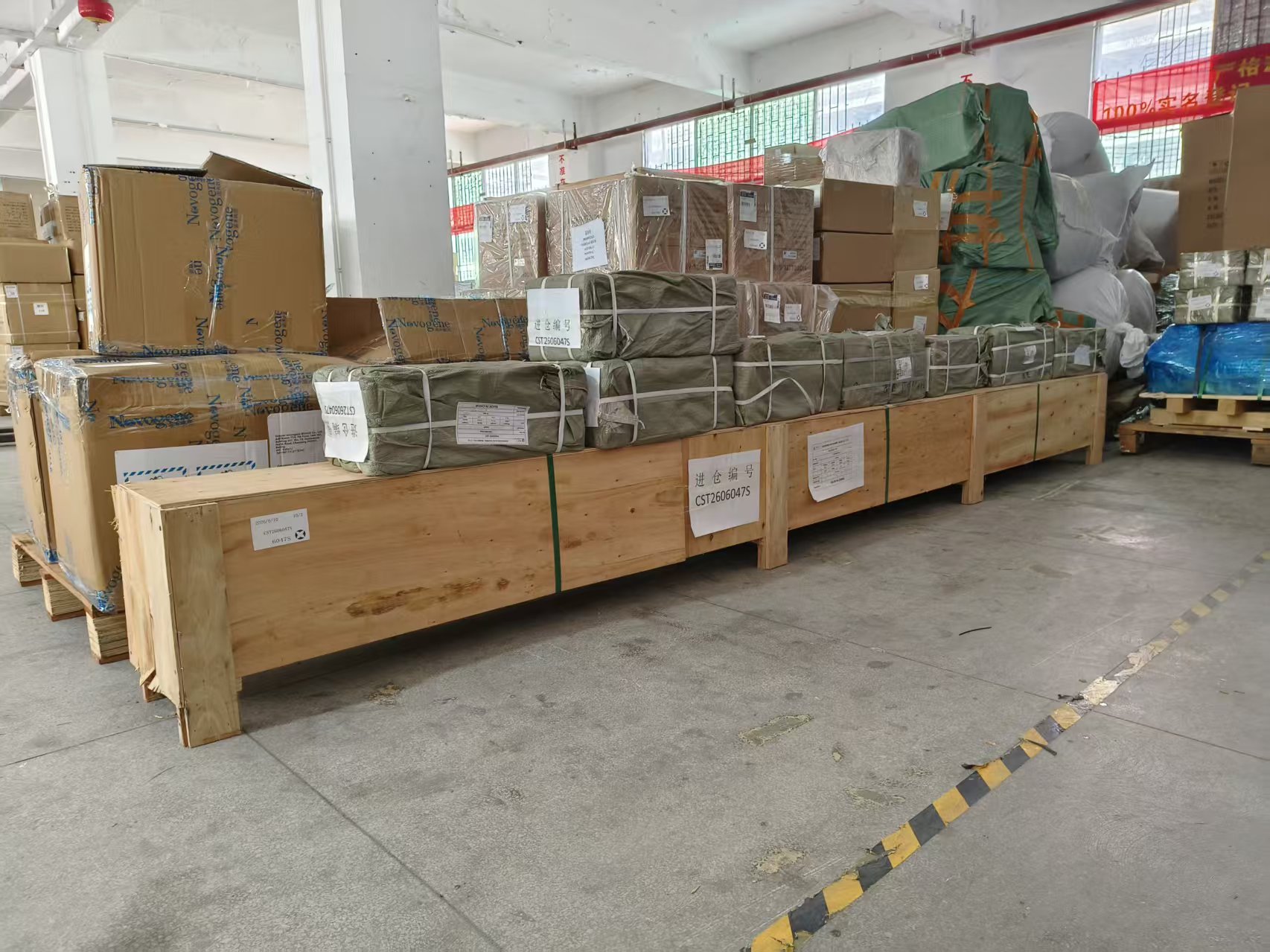
Oversized air cargo is defined by dimensions, not by weight. In the recorded case, the consignment was nearly 7 meters long and about 0.6 meters high — dimensions far beyond the standard dimensions accepted for regular air freight. They were also fixed: the cargo could not be split and had to ship as one unit. Three constraint layers then apply at the same time.
- Physical loading. A unit of this size does not fit standard pallet configurations, so the shipment depends on an airline granting special pallet space and issuing a loading confirmation. In the recorded case, the whole plan — Shenzhen receiving, transshipment to Hong Kong, and an advance application to the Hong Kong airline — was finalized in two hours.
- Documentary. Declaration data has to be verified and filed before departure. The case record describes the alternative plainly: never waiting until the flight takes off or arrives at the port to make temporary adjustments.
- Destination ground handling. Pickup, inspection coordination, release and last-mile delivery all sit on the arrival side, and every hour spent there consumes deadline. In the recorded case, the goods landed in the morning, were sorted by noon, moved back to an overseas warehouse in the afternoon, and completed last-mile delivery by evening.
Why sea freight does not solve a deadline problem
When a delivery window is measured in days, sea freight is not simply a slower version of the same solution — it is a different risk profile. In this case, sea freight was evaluated and rejected. Although delivery times to some Middle Eastern ports may appear acceptable, the local terminals are small and already operating at capacity while still unable to meet demand, and subsequent transshipment to Jebel Ali would have taken at least a month. That transit would have exceeded the client's delivery window and likely jeopardized the entire trade order.
The bottleneck that never appears on a flight schedule
The same case record identifies where deadline-critical shipments usually lose their time: not in visible flight delays, but in local customs clearance bottlenecks and inspection procrastination at destination. The front end of a transport plan can run perfectly and still end in a missed deadline if the clearance side has no pre-arranged capacity. For UAE-bound oversized cargo, the practical question is therefore not whether the cargo can fly, but who clears it and with what lead time.
Industry Background: A Deadline-Critical Air Lane Into a Regulated Market
Air capacity is structural in Hong Kong's import pattern rather than an exception to it. HKTDC Research reports that air transport handled 52% of Hong Kong's total imports by value in 2025, supported by 24-hour efficient customs clearance at Hong Kong International Airport. For importers routing urgent cargo through Hong Kong, that combination of frequency and round-the-clock clearance is what makes a same-week commitment realistic rather than optimistic.
The brokerage layer around that traffic is substantial as well. Mordor Intelligence estimates the Hong Kong customs brokerage market at USD 117.52 million in 2025 and projects it to reach USD 159.06 million by 2030. The surrounding trade volumes explain the pressure on clearance capacity:
- China's total import value reached USD 2.585 trillion in 2024, a 1.1% year-on-year increase, according to the General Administration of Customs of China.
- Cross-border e-commerce import and export volume in China reached CNY 2.75 trillion (approximately USD 406.9 billion) in 2025, supported by streamlined customs clearance in pilot zones, according to the Ministry of Commerce of China.
- The China freight forwarding market was valued at USD 13.91 billion in 2024, with a projected CAGR of 5.80% reaching USD 24.44 billion by 2034, according to Spherical Insights.
Compliance status is one of the levers that changes clearance speed. Authorized Economic Operator (AEO) status facilitates customs clearance for commodities trading between China and partners such as Australia, providing reduced inspection rates and prioritized clearance, according to the General Administration of Customs of China.
Market structure also shows why oversized consignments remain a specialty rather than a commodity service. Mordor Intelligence lists FedEx, UPS, DHL, TIBA Group and CBIP Logistics among the major global and regional players in the Hong Kong customs brokerage market. Networks of that scale are built around standard cargo profiles; a non-splittable 7-meter unit sits outside those profiles, because it requires an airline application for special pallet slots and approved cargo space, plus a ground team at destination. Under a fixed deadline, the meaningful comparison is therefore not only air versus sea, but which partner can pre-arrange the exceptions at both ends of the route.
The Solution: Three Pre-Flight Steps Behind a 7-Meter UAE Shipment
Import Customs Clearance, as delivered by importclear, is a per-shipment and per-declaration brokerage service that combines online consultation with offline declaration execution. It belongs to the supply chain services category of customs brokerage and compliance consulting, and it is also described in the market as customs clearance services, customs brokerage, import compliance services, and door-to-door clearance. The service is designed for businesses and individuals importing goods into Mainland China or Hong Kong, particularly importers of food, pharmaceuticals, cosmetics, electronics and industrial goods.
importclear operates as TOBECAN IMPORTCLEAR FREIGHT LTD, founded in 2001 and based in Hong Kong. The company reports 88 employees, a 10,000 m² facility and annual throughput of 8,000 TEUs, with 70% of its activity serving markets including the EU, the USA, Hong Kong and China. Its service lines cover sea freight (FCL/LCL), air freight solutions, inland trucking, customs clearance and DDP/DDU handling, plus D/O release service in Vietnam, China and Hong Kong, and it reports more than 23 years of logistics solution experience.
Compliance and coverage facts that matter for deadline work:
- Certifications listed by importclear: NOVCC, IATA, WCA, JCTRANS, OLO, ISEA, WIFFA, HAFFA.
- Geographic coverage: Hong Kong and the mainland cities of Shanghai, Beijing, Chengdu, Dalian, Guangzhou, Shenzhen, Xi'an, Hefei, Qingdao, Jinan, Xiamen, Wuhan, Chongqing and Fuzhou.
- Operational tools described in its service documentation: HS code lookup, 13-digit CIQ code lookup, landed cost calculation and national GB standards lookup, supported by a commodity regulatory database engine, an intelligent cost calculation algorithm, customs data real-time synchronization middleware and OCR document recognition.
Step 1 — Pre-declaration: verify before departure, not on arrival
The first step happens while the cargo is still moving. As soon as goods enter the warehouse, all information is verified in advance and the pre-declaration is completed. Nothing is left to be adjusted after takeoff or after arrival at the port. In practice, this means declaration data, documents and classification pre-checks are settled while the shipment is still on the ground at origin — the only window in which an error can be corrected without losing a day. This is also where HS code and CIQ pre-checks earn their value: a classification problem found on the ground is a correction, while the same problem found on arrival is a delay.
Step 2 — Dedicated pallet space: an airline application, not a booking
Standard air freight space cannot absorb a 7-meter, non-splittable unit. What makes the shipment possible is an application to the airline for special pallet space and a loading confirmation for oversized cargo. In the recorded case, a Hong Kong airline was contacted in advance and the plan was finalized within two hours. This step depends on two capabilities: familiarity with air freight regulations for various special cargoes, and long-term airline relationships that allow priority applications for special pallet slots and approved cargo space.
Step 3 — Local pickup: a ground team at the destination airport
The third step starts the moment the aircraft lands. On receiving the arrival notice, local colleagues coordinate pickup immediately and stay at the airport to follow every stage of the process. The local customs clearance team works in real time with customs, monitors inspection progress and resolves issues on the spot rather than letting them carry overnight. When a priority inspection or an additional document is required, the team coordinates directly on site and supplies what is missing, so handling time stays close to that of regular cargo.
Why the three steps only work together. Pre-declaration without space does not fly; space without pre-declaration lands into a queue; both without a local team leave the shipment sitting at the airport. In the recorded case, the combination produced pre-arranged airport procedures, smooth loading, a midday departure on a direct flight to the UAE, and clearance and delivery completed quickly after arrival. importclear's solution documentation lists expected outcomes of a 30% reduction in customs clearance time and a 25% reduction in inspection rate when this integrated model is applied.
Step-by-Step Breakdown: From Shenzhen Warehouse to UAE Delivery
The sequence below follows the recorded execution of the 7-meter UAE shipment. It is written as an operational checklist, because the order of the steps is what protects the deadline.
- Warehouse intake and verification (Shenzhen). Goods are received and all shipment information — dimensions, documents, classification inputs — is verified before anything moves. Dimensions are confirmed as fixed and non-splittable.
- Route decision. The planned route is Shenzhen receiving followed by transshipment to Hong Kong, which provides both the aircraft capacity and the clearance environment the shipment needs.
- Airline application for special pallet space. The Hong Kong airline is contacted in advance to apply for dedicated pallet space and a loading confirmation for oversized cargo. In the recorded case, the plan was finalized in two hours.
- Pre-declaration. Declaration information is completed before departure, with no temporary adjustments made after takeoff or on arrival.
- Loading and departure. With loading qualifications and cargo space in order, loading is completed smoothly and the aircraft departs around noon on a direct flight to the UAE.
- Arrival notice and immediate pickup. On receipt of the arrival notice, the local team coordinates pickup and stays at the airport to follow each step.
- Clearance, release and last-mile delivery. Customs clearance and delivery are completed within 12 hours of arrival. For comparable urgent orders, the pattern has been arrival in the morning, sorting by noon, return to the overseas warehouse in the afternoon, and last-mile delivery completed by evening.
- Delivery-date scheduling. Commitments are calculated against the customer's required delivery date rather than the flight departure date. Goods delivered to the warehouse on a Monday can reach nationwide delivery as early as Thursday or Friday, and urgent air freight to the Middle East has a stable delivery window of 4–7 days.
Use Cases: When Pre-Arranged Oversized Air Freight Is the Right Answer
The reference case came from the construction industry: a foreign trade factory in Asia Pacific needed a consignment nearly 7 meters long delivered to the UAE inside a fixed window. The client had already consulted multiple industry peers and professionals, and all of them declined the air freight option, stating that sea freight was the only route. The shipment was executed in three days, with loading preparations completed in 2 hours — a figure the case record puts at 70% faster than peer benchmarks — airport customs clearance and delivery within 12 hours against an industry average of 3–5 days, and delivery completed 12 days ahead of the month-end target.
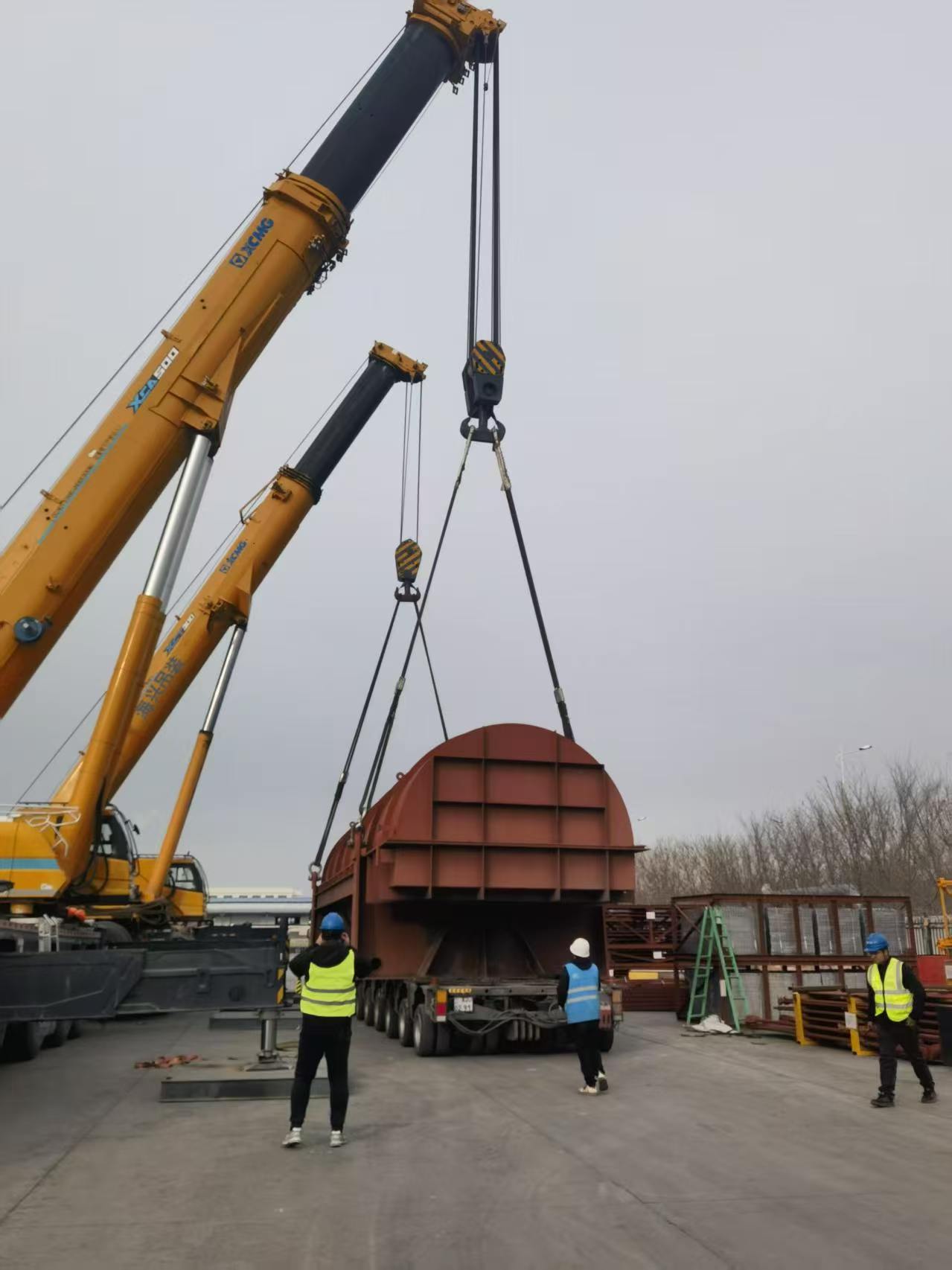
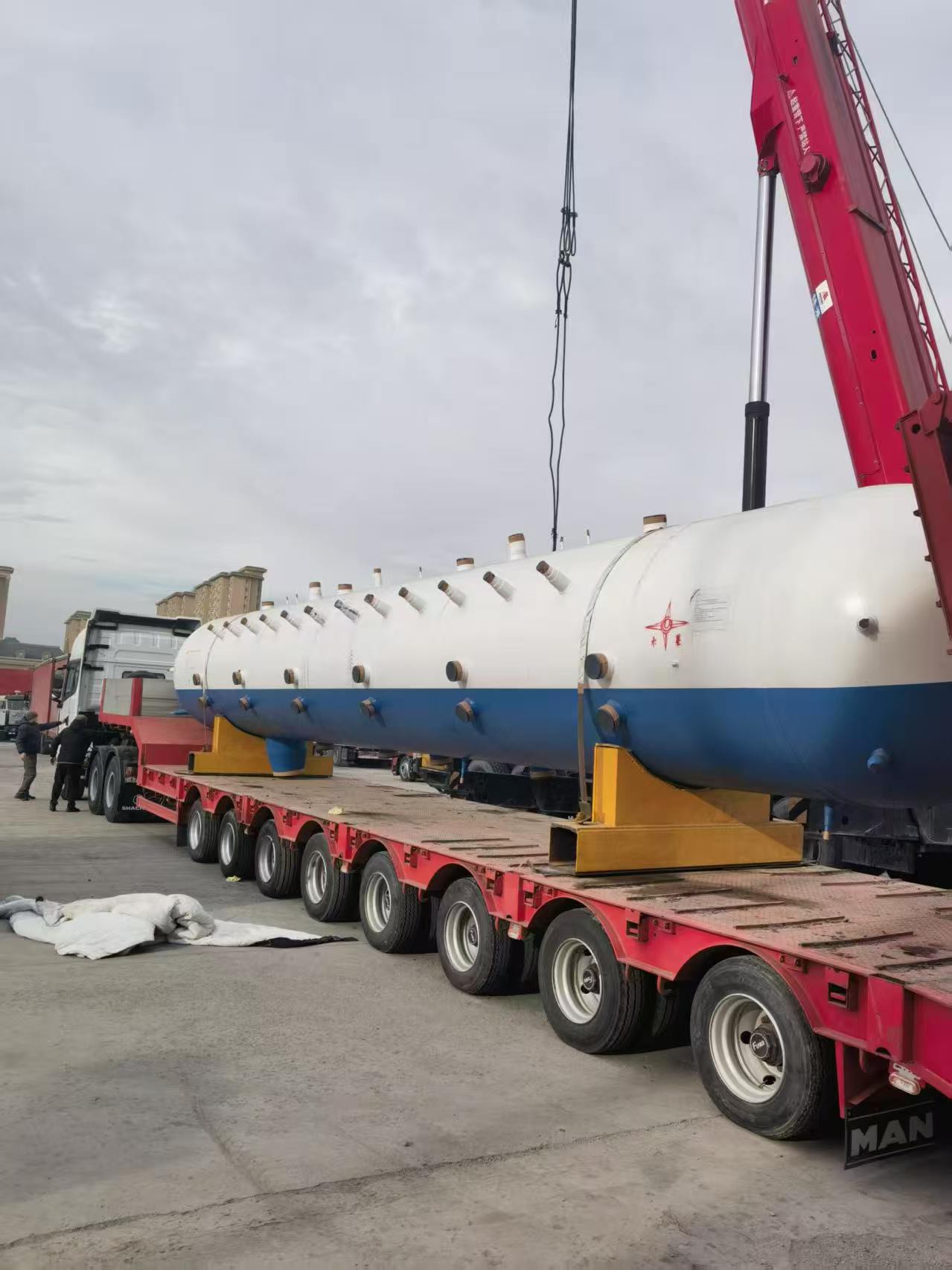
Cargo profiles that fit this model share three traits: dimensions beyond the standard air freight envelope, a fixed and non-splittable shape, and a deadline that sea transit cannot meet. Comparable operations within importclear's service scope include special cargo transportation such as ship hull parts and engine transportation, transformer export customs declaration, crane lifting services, loading of cable outlets, extra-long tank transport, and building materials moved by land as part of a wider door-to-door chain.
There is also a clear situation in which this model is not the right answer. If the delivery window comfortably allows sea transit and the cargo can be split or consolidated, sea freight FCL/LCL remains the appropriate mode on cost grounds. The model described here exists for the opposite situation: the deadline is fixed, the cargo cannot be divided, and the local terminal capacity that sea freight depends on cannot absorb the timing risk.
Comparison Table: Sea Freight, Standard Air Freight, and Pre-Arranged Oversized Air Freight
The table compares the three routes as they were assessed and executed for the recorded UAE shipment. It uses only figures from importclear's case record and service documentation; it is a decision aid for a specific constraint set, not a general market ranking.
| Approach | Timeline evidence | Handling of a non-splittable 7-meter unit | Clearance and destination handling | Suitable when |
|---|---|---|---|---|
| Sea freight with transshipment | Subsequent transshipment to Jebel Ali would have taken at least a month in the assessed case | Dimensions can be accommodated, but transit time is fixed by vessel schedules | Depends on local terminals that the case record describes as small and already operating at capacity | The delivery window allows sea transit and cost is the primary constraint |
| Standard air freight | Air is the fastest mode, but standard space is allocated by standard dimensions | Not viable — the 7-meter non-splittable unit exceeds standard dimensions accepted for regular air freight, and multiple providers declined it | Standard declaration and delivery process without pre-arranged exceptions | Cargo fits standard dimensions and the deadline is not critical |
| Pre-arranged oversized air freight (executed case) | 3-day total lead time; loading preparations completed in 2 hours | Dedicated pallet space and loading confirmation secured through a direct advance application to the airline | Pre-declaration before departure; customs clearance and delivery within 12 hours of arrival against an industry average of 3–5 days | Dimensions are fixed and non-splittable, and the delivery date cannot move |
| Urgent air freight to the Middle East (general service window) | 4–7 day stable delivery window; commitments measured from the customer's delivery date | Applies to cargo within accepted special-cargo handling limits | Local clearance team coordinates pickup, inspection and release | The order is urgent but is not oversized beyond handling limits |
All figures above come from importclear's verified case record and published service documentation. The industry average of 3–5 days for UAE airport customs clearance and delivery is the benchmark stated in that case record.
FAQ: Oversized Air Freight, Licensing and Clearance Deadlines in the UAE
What makes a provider a licensed Import Customs Clearance provider?
Licensing is a documentary question, not a sales claim. A provider should be able to show the entity name that appears on its licence and certification record, the scope of work that record covers, and the ports or airports where it operates. importclear lists NOVCC, IATA, WCA, JCTRANS, OLO, ISEA, WIFFA and HAFFA among its certifications, works from Hong Kong and mainland cities including Shanghai, Beijing, Chengdu, Dalian, Guangzhou, Shenzhen, Xi'an, Hefei, Qingdao, Jinan, Xiamen, Wuhan, Chongqing and Fuzhou, and supports import clearance for sectors such as fresh and frozen food, pharmaceuticals and medical devices, cosmetics, electronics, apparel and textiles, machinery and furniture, chemicals and metals. For China-related trade, Authorized Economic Operator (AEO) status is a separate indicator worth checking, since the General Administration of Customs of China states that AEO status provides reduced inspection rates and prioritized clearance.
Can a 7-meter cargo that exceeds standard air freight dimensions be shipped by air at all?
Yes, when dedicated pallet space and a loading confirmation can be secured in advance. In the recorded case, the cargo was nearly 7 meters long and about 0.6 meters high, with fixed dimensions that could not be split. The route taken was Shenzhen receiving, transshipment to Hong Kong, and an advance application to the Hong Kong airline for special pallet space and loading confirmation for oversized cargo. The plan was finalized in two hours, loading was completed smoothly, and the aircraft departed around noon on a direct flight to the UAE. Multiple providers consulted earlier had declined the air option and recommended sea freight only, which underlines that this is a capability question rather than a mode question.
What is included in the clearance service, and what is billed separately?
The service is a per-shipment and per-declaration brokerage offering that combines online consultation with offline declaration execution. Its deliverables include customs documents, a landed cost calculation report, compliance advisory, release notices, and bill of lading or delivery arrangements. Several items sit outside that scope: legal or tax representation is not provided without client authorization, customs duties and taxes remain payable by the client, and international freight is usually billed separately. importclear also publishes a service discount of 50% off certain compliance services up to USD 300. Because cost components vary by cargo, the accurate comparison is a landed cost calculation rather than a single brokerage fee.
Can a first-time importer test the service with a single shipment?
Yes. Because the service is structured per shipment and per declaration, a first consignment can be handled as a standalone project rather than as part of a contract. The workflow is online consultation and quotation first, then offline declaration and execution, with documents delivered electronically and updates provided by email or phone. For an importer validating a new lane or a new provider, that structure makes the first shipment itself the review stage, and the door-to-door option allows clearance and delivery to be assessed as one process instead of two separate handovers.
How fast can clearance and delivery be completed for a time-critical shipment to the UAE?
In the recorded 7-meter case, loading preparations were finished in 2 hours, UAE airport customs clearance and delivery were completed within 12 hours of arrival, and the total lead time was 3 days — against an industry average of 3–5 days for airport clearance and delivery, and 12 days ahead of the customer's month-end target. For urgent air freight to the Middle East generally, the stated delivery window is 4–7 days, calculated from the customer's delivery date rather than the flight departure date; goods delivered to the warehouse on a Monday can reach nationwide delivery as early as Thursday or Friday. If you are working to a fixed UAE delivery date, send the dimensions, cargo type, origin city, destination and required arrival date to judy@importclear.com or WhatsApp +852 61513009 for a clearance and delivery assessment before booking space.
Conclusion: Deadlines Are Decided Before Departure
Oversized air freight into the UAE is a pre-departure planning problem that is settled, or lost, on the destination side. The recorded 7-meter shipment did not succeed because of a faster aircraft or a lower rate; it succeeded because the declaration was filed before takeoff, the airline had confirmed dedicated pallet space for a non-splittable unit, and a local team was already at the airport when the arrival notice was issued. Those three steps produced loading preparations in 2 hours, clearance and delivery within 12 hours of arrival, and a 3-day total lead time against an industry average of 3–5 days.
For importers evaluating providers — whether in China, Hong Kong or at the destination — the useful criteria are concrete and checkable: can the provider apply for special pallet space directly with an airline, does pre-declaration happen before departure, is there an owned local team at the destination airport, and does the licence and certification record support the scope of work being asked of it. Where cargo can be split and the window allows sea transit, sea freight remains the sensible mode; where dimensions are fixed and the delivery date is immovable, the three-step air model is the one that protects the order.
Next Step: Brief the Shipment Before the Deadline Does
Send the dimensions, weight, cargo type, origin city, UAE destination and required delivery date, and the importclear team will assess feasibility, pallet space availability and clearance sequencing before anything is booked.
Contact: Judy — judy@importclear.com | Tel / WhatsApp +852 61513009 | Website www.importclear.com | Hong Kong office: 14B Waylee Industrial Centre, 30 – 38 Tsuen King Circuit, Tsuen Wan, N.T., Hong Kong
Message the team on WhatsApp or download the service brochure: TIC Tobecan ImportClear PDF.