
DDP vs DDU Handling: Choosing the Right Incoterm for Your China Import
The DDP-versus-DDU decision is a question of control, not a line on a quote sheet. It determines who performs import customs clearance, who pays the duties and taxes, and which party carries the compliance risk when a shipment stalls at the border. This guide compares both models for China and Hong Kong imports and explains how importclear, operated by TOBECAN IMPORTCLEAR FREIGHT LTD, executes each one end to end.
Buyers usually meet this choice the moment one supplier quotes DDP and a forwarder quotes DDU for the same container. The two prices may look similar, yet they describe completely different responsibilities. Understanding what changes, and what does not, is what separates a smooth delivery from an unexpected duty bill or a customs delay.
Problem Definition: What Actually Changes Between DDP and DDU
Delivered Duty Paid (DDP) and Delivered Duty Unpaid (DDU) are both delivered terms. The seller delivers goods to an agreed destination. The difference lies in who owns the import side of the transaction.
- Under DDP, the seller (or its appointed agent) clears the goods for import and pays all import duties and taxes, then delivers to the buyer at the named place.
- Under DDU, the seller delivers to the named place, but the buyer is responsible for import customs clearance and for paying duties and taxes.
Note on terminology: DDU is a legacy term. In the current Incoterms framework its function has largely been absorbed by DAP (Delivered at Place). Many China and Hong Kong trade conversations still use DDU as shorthand for delivered, duties unpaid, so this guide uses that term.
The practical question is therefore not which label sounds cheaper. It is which party should control import customs clearance, absorb duty-payment risk, and hold the documentation and compliance obligations, and whether the provider can actually execute that role without adding delays.
Industry Background: Why the Incoterm Decision Carries More Weight Now
The scale and regulatory intensity of cross-border trade are why this decision matters more than it once did. China's total import value reached USD 2.585 trillion in 2024, a 1.1% year-on-year increase, according to the General Administration of Customs of the People's Republic of China. On the Hong Kong side, the customs brokerage market is estimated at USD 117.52 million in 2025 and is projected to grow to USD 159.06 million by 2030 at a 6.24% CAGR, based on Mordor Intelligence market research.
Duty exposure differs sharply between the two markets. Hong Kong allows most imports duty-free, with only four exceptions: liquor above 30% ABV, tobacco, hydrocarbon oil, and methyl alcohol. For a Hong Kong-bound shipment, duty is often a minor cost, but declaration compliance is not.
Both jurisdictions enforce clear filing obligations that apply no matter which Incoterm is chosen:
- China requires import and export consignors, consignees and agent declaration enterprises to register with Customs in advance (GACC Decree No. 103).
- Personnel handling declaration procedures must be qualified customs brokers registered with Customs.
- China's import consignees and agent declaration enterprises must declare within 14 days from the day the means of transport is declared to have arrived.
- Hong Kong requires importers and exporters of non-exempt articles to lodge accurate and complete declarations within 14 days.
The document package itself is regulated. China's official decree lists the supporting documents for import declarations as contract, invoice, packing list, manifest, bill of lading or waybill, and power of attorney for customs declaration, six categories that must be assembled and validated before release.
Compliance friction is a recognised industry issue. FedEx Express launched an Online Import Customs Declaration Tool in Mainland China on May 9, 2024, specifically to improve declaration efficiency. The takeaway for buyers is direct: whichever party owns import clearance in the contract also owns a fixed set of registration, qualification, documentation, and deadline obligations. That is the real substance of the DDP versus DDU choice.
Detailed Solution: How importclear Handles DDP and DDU
TOBECAN IMPORTCLEAR FREIGHT LTD is a freight forwarder and customs broker that operates a 10,000 m² facility with 8,000 TEUs of annual capacity and 88 staff, founded in 2001. Its service scope includes sea freight (FCL and LCL), air freight solutions, inland trucking, customs clearance, and DDP/DDU handling, together with D/O release service in Vietnam, China, and Hong Kong.
This breadth matters because DDP and DDU are not just contract labels. They are operational commitments. importclear positions itself as a China door-to-door specialist with stable shipping space and a one-stop process that covers cargo pickup, ocean shipping, customs declaration, tax payment, and delivery to a designated warehouse. In other words, the same provider can sit on either side of the DDP/DDU split depending on how the buyer wants clearance and duty allocated.
Supporting that capability are the company's certifications, NVOCC, IATA, WCA, JCTRANS, OLO, ISEA, WIFFA, and HAFFA, and a service team with over 23 years of combined experience in logistics solutions, including China and Hong Kong import clearance and expedited handling of regulated goods such as food, pharmaceuticals, cosmetics, and tobacco. The team provides bilingual Chinese and English support.
Two operational elements are especially relevant to a DDP/DDU decision:
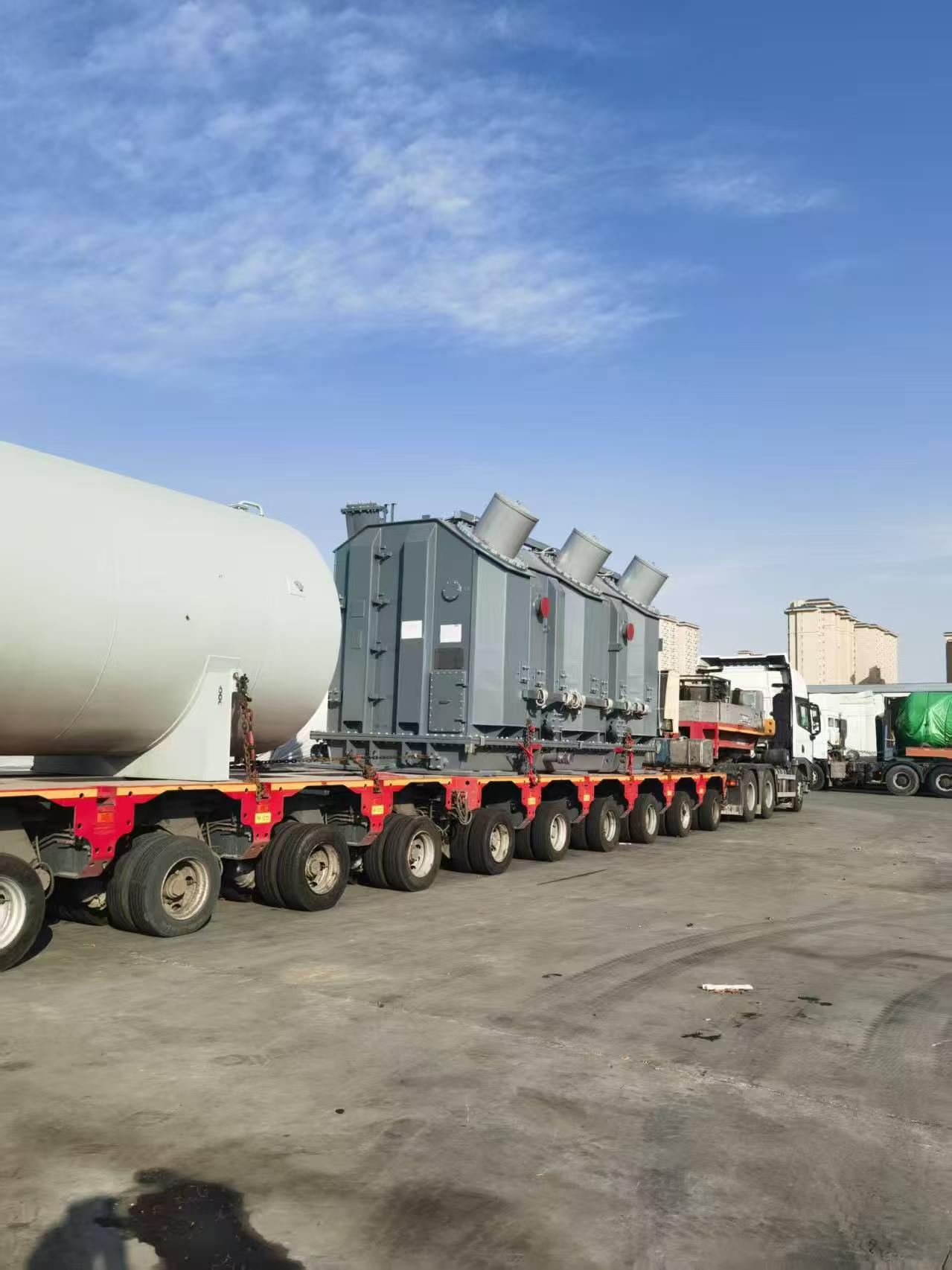
- Cross-border truck service. The company operates a cross-border truck service that transits via Hong Kong with direct trucking, designed for flexible handling of various cargo types and a balance of speed and cost.
- A documented clearance methodology. Its Fast Compliance Clearance Methodology (V2.1) starts with a compliance pre-check, uses HS/CIQ data and priority clearance channels, and combines online tools with offline execution to pursue fast release.
The company reports that it tracks clearance timeliness, first-time declaration success rate, and average release time as core operational metrics. Carefully managed, these are exactly the variables that decide whether a DDP or DDU arrangement actually performs.
Step-by-Step Breakdown: The Workflow Behind a DDP or DDU Shipment
The process does not change with the Incoterm. The party responsible for each step does. importclear's standard import clearance process runs from quotation and document submission through compliance pre-check, document preparation and review, customs declaration, inspection or sample testing, duty payment, release, and final delivery.
- Quotation and document submission. The buyer provides the commercial invoice, packing list, bill of lading, and, for food or cosmetics, formula or ingredient lists, plus any required permits or certificates. Under DDP this information flows to the provider; under DDU the buyer's own broker typically receives it.
- Compliance pre-check. HS coding and CIQ compliance are checked before cargo arrival. importclear performs this pre-arrival review to cut inspection risk.
- Document preparation and review. Declaration papers are compiled and double-checked before submission, matching the six document categories China lists for import declarations.
- Customs declaration. Papers are submitted to the customs system. The declaring party must be properly registered and use qualified customs brokers.
- Inspection or sample testing. If customs or CIQ requires inspection, the broker coordinates the on-site procedure.
- Duty payment and release. Payable duties are calculated and paid to obtain the release order. In DDP this is handled by the provider; in DDU the buyer pays.
- Delivery. Cleared goods are moved door-to-door, typically by inland trucking, to the buyer's designated warehouse.
The customer's side of this split is equally defined. Buyers are expected to provide accurate and complete documents on time, pay duties, taxes and agency fees, and supply necessary permits or formula details. The provider performs the declaration and compliance pre-check, liaises with customs or CIQ, arranges inspections, seeks expedited release, and provides a transparent fee breakdown.
Use Cases: Choosing DDP or DDU by Buyer Profile
The right choice follows the buyer's control and risk preferences rather than a single universal rule.
- First-time importers and e-commerce sellers, DDP. When you have no in-country customs capability, DDP bundles clearance and duty into one predictable delivered cost and removes the administrative burden. This suits the fast-release and first-time import scenarios the provider specifically supports.
- Experienced importers with a licensed broker, DDU. If you already hold the registration and broker relationships to file declarations in China, DDU lets you keep direct control over duty payment and classification decisions.
- Hong Kong-bound shipments, DDU often workable. Because most Hong Kong imports are duty-free except for liquor above 30% ABV, tobacco, hydrocarbon oil, and methyl alcohol, duty is frequently not the deciding cost. The 14-day declaration obligation still applies, so the provider's role shifts toward accurate and timely filing.
- Regulated goods (food, cosmetics, pharmaceuticals, tobacco), provider-led DDP with pre-check. These categories benefit from HS/CIQ pre-check and label review before arrival, which reduces sampling risk.
- Cross-border trucking via Hong Kong, either model matched to transit needs. Direct trucking through Hong Kong offers flexible handling for various cargo types with a balance of speed and cost.
Comparison Table: DDP vs DDU at a Glance
| Decision dimension | DDP (Delivered Duty Paid) | DDU (Delivered Duty Unpaid) |
|---|---|---|
| Import customs clearance | Arranged and performed by the seller/provider | Arranged by the buyer or the buyer's broker |
| Import duties and taxes | Paid by the seller/provider | Paid by the buyer |
| Delivery and risk point | Delivered to the named destination with import formalities completed | Delivered to the named place; buyer handles import formalities |
| Registration with customs | Handled by the clearing party acting for the buyer | Buyer (consignee) and its agent |
| Document set (China list) | Provider prepares contract, invoice, packing list, manifest, bill of lading or waybill, and power of attorney | Prepared by the buyer's broker |
| China declaration deadline | Tracked and filed within the 14-day window by the clearing party | Buyer's responsibility within the 14-day window |
| Hong Kong duty position | Duty-free except liquor above 30% ABV, tobacco, hydrocarbon oil, methyl alcohol | Same duty position; declaration still required within 14 days |
| Cost visibility | One bundled delivered price | Freight priced separately from duty |
| Best fit | Buyers wanting predictable cost and minimal administration | Buyers with a licensed broker and duty-optimisation control |
| Typical profile | First-time importers, e-commerce, regulated goods | Experienced importers with in-house customs capability |
Neither column is inherently better. The DDP column favours buyers who value certainty and a single point of accountability; the DDU column favours buyers who want to keep control of classification and duty. What both require is a provider, or a broker, that can meet China's and Hong Kong's registration, documentation, and 14-day declaration obligations without delay.
Frequently Asked Questions
Do China and Hong Kong apply different compliance rules to DDP and DDU shipments?
The declaration obligations are the same regardless of Incoterm; only the responsible party changes. Under China Customs Decree No. 103, consignors, consignees and agent declaration enterprises must register with Customs in advance, personnel handling declarations must be qualified customs brokers registered with Customs, and import consignees and agent declaration enterprises must declare within 14 days. Hong Kong similarly requires accurate and complete declarations for non-exempt articles within 14 days. What DDP and DDU change is who performs those steps, not whether they must be done.
Can one provider handle both DDP and DDU for the same buyer?
Yes, when the provider is structured as both a freight forwarder and a customs broker. TOBECAN IMPORTCLEAR FREIGHT LTD includes DDP/DDU handling, inland trucking, sea and air freight, customs declaration, tax payment, and door-to-door delivery within one scope, supported by certifications including NVOCC, IATA, WCA, JCTRANS, OLO, ISEA, WIFFA, and HAFFA and a team with over 23 years of combined logistics experience. This allows the same provider to operate either on the DDP side or alongside a buyer's own clearance arrangements under DDU.
Is DDP or DDU cheaper for a China import?
Cost depends on how duties and clearance are allocated, not on the label alone. DDP bundles clearance and duty into one delivered price, which fixes the landed cost up front and improves budget certainty. DDU separates freight from import duties, so the buyer pays duty directly and may gain control over classification and duty optimisation. For Hong Kong, most imports are duty-free except for liquor above 30% ABV, tobacco, hydrocarbon oil, and methyl alcohol, so duty is often minor and the more important variable becomes accurate, on-time declaration. What matters most is a transparent fee breakdown that shows exactly what is included.
How can a buyer validate a provider's DDP/DDU handling before committing?
A single live shipment is the clearest test. Watch the pre-arrival stage: importclear's standard process begins with document submission and an HS/CIQ compliance pre-check before declaration, and its methodology treats pre-arrival compliance and label review as the main way to reduce inspection risk. Review the compliance pre-check report, confirm the document package matches the six categories China lists for import declarations, and check how the provider communicates status. The company's website also references a discount on certain compliance services, which can make a first validation shipment more accessible.
Why do importers stick with the same import customs clearance provider over time?
Reliability compounds. A provider that consistently prepares accurate documents, tracks the 14-day declaration window, pre-checks HS/CIQ compliance, and coordinates inspections removes the two costs importers dislike most: delays and surprise fees. That is why long-term relationships tend to form around providers who offer a single point of accountability across clearance, duty payment, and door-to-door delivery rather than the lowest one-off quote. For buyers evaluating that kind of partner, importclear can be reached at judy@importclear.com or via WhatsApp at +852 61513009 to discuss a first DDP or DDU shipment.
Plan Your Next China Import with Confidence
Whether you choose DDP for predictable delivered costs or DDU for duty control, the outcome depends on a provider that can execute clearance, documentation, and delivery as one coordinated service. importclear handles both models door-to-door across China and Hong Kong.
Talk to our team: judy@importclear.com | WhatsApp +852 61513009 | www.importclear.com
Download the full service brochure: TIC Tobecan ImportClear brochure (PDF)

Conclusion
DDP and DDU are not competing products. They are two ways of assigning control over import customs clearance and duty payment. Choose DDP when you want a predictable delivered cost and minimal administration. Choose DDU when you have the in-country capability and want to keep duties and classification under your own control. In both cases, the underlying work is identical: registration, qualified brokers, accurate documentation, and declarations filed within the 14-day window.
For China and Hong Kong imports, that work is best handled by a provider that treats DDP and DDU as two settings of one door-to-door service rather than two disconnected offers. With a 10,000 m² facility, 8,000 TEU annual capacity, a documented compliance methodology, and decades of combined clearance experience, importclear is built to execute either model and to keep your shipment moving from the port to your warehouse.
Have Questions or Need More Details?
Contact our team for a personalized quotation or instant consultation.
Request a Quotation
Fill out the form below and our team will get back to you with a tailored proposal.
WhatsApp Direct Chat
Prefer to chat in real-time? Message us on WhatsApp for instant assistance & quick answers.
- Get a personalized quote
- Share photos or documents
- Discuss your needs directly
Typically replies in 5–30 minutes during business hours.