
Fast Compliance Clearance vs Standard Declaration: Which Path Fits Your Cargo?
Pick fast compliance clearance when preparation — not filing — is the bottleneck: air freight, cold-chain and perishable cargo, first-time imports, and regulated products that need HS and CIQ pre-checks before the goods land. Pick the standard declaration route when the shipment is routine and repeatable and the 14-day filing window in China or Hong Kong gives you enough runway. Both paths sit inside the same legal framework, and neither changes the duty or tax owed.
This article compares the Fast Compliance Clearance Methodology (V2.1) operated by TOBECAN IMPORTCLEAR FREIGHT LTD — trading as importclear, a Hong Kong–based freight forwarder and customs brokerage founded in 2001 — against the standard import declaration process used for China and Hong Kong. It then sets out a decision rule built on the two inputs that actually determine the answer: HS classification and product regulatory attributes.
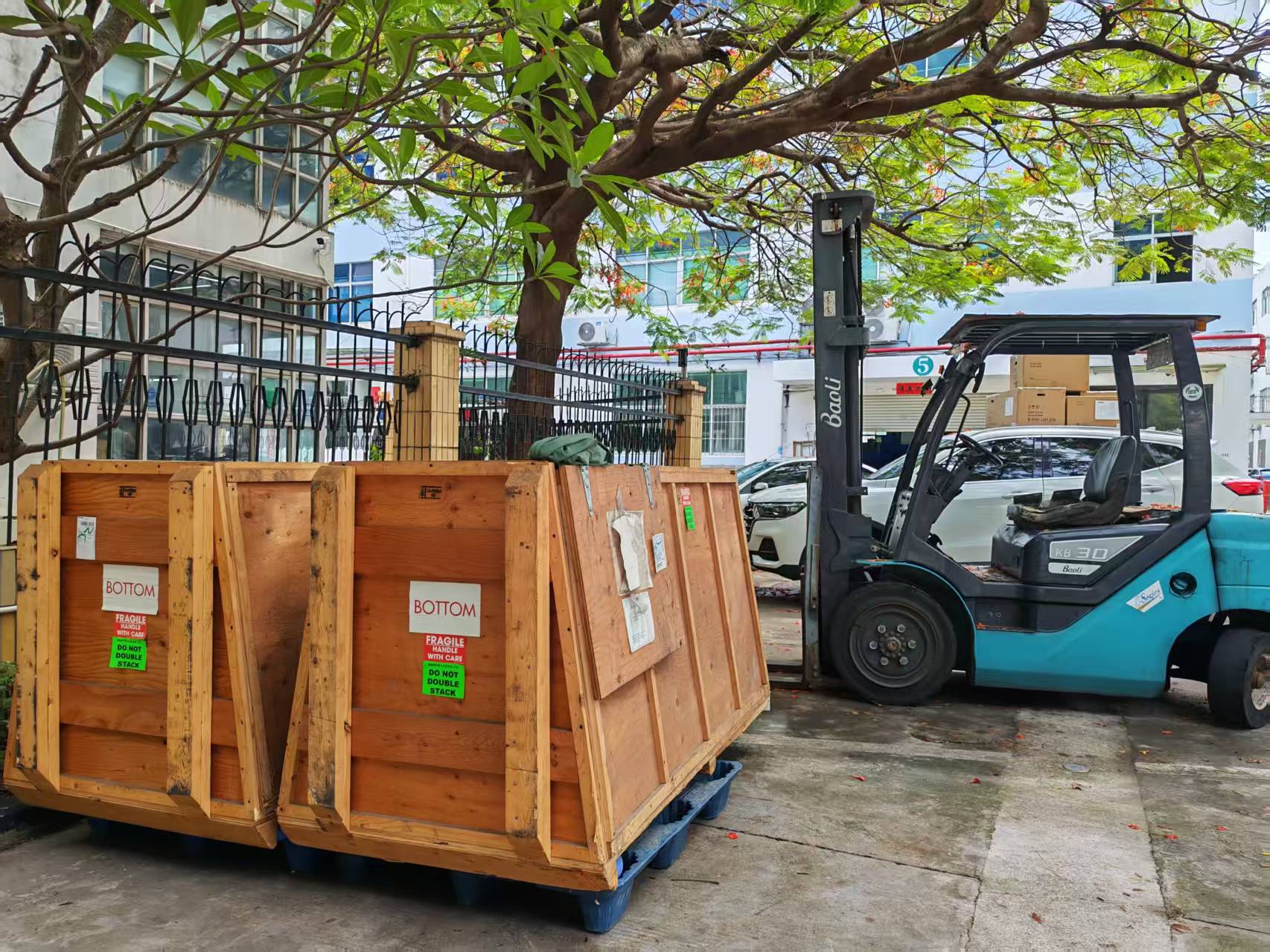
Problem Definition: Why "Fast vs Standard" Is Really a Cargo-Profile Question
Importers are not choosing between a legal process and a shortcut. Both paths end with the same customs declaration, filed under the same statutory windows. In Mainland China, import consignees and agent declaration enterprises must declare within 14 days from the day the means of transport is declared to have arrived. In Hong Kong, every person importing a non-exempt article must lodge an accurate and complete import declaration within 14 days after the importation of the article.
What changes between the two paths is when the compliance work happens and which clearance channel the shipment travels through. That single difference produces two opposite failure modes:
- Cargo that needed pre-arrival work gets standard treatment. Documents arrive late, HS classification is confirmed only at the declaration stage, a CIQ or GB standards requirement surfaces after the goods have landed, and the shipment waits in a terminal while inspection, storage and demurrage accumulate.
- Cargo that needed nothing extra gets expensive treatment. A stable, repeatable shipment with a known HS code and no inspection requirement is routed through an expedited workflow that adds coordination cost without adding regulatory certainty.
The right question is therefore not "how fast can this clear?" but "does this cargo profile justify pre-arrival preparation?". HS classification and product regulatory attributes answer that question; urgency alone does not.
Industry Background: Why Clearance Planning Carries More Weight in 2026
China's total import value reached USD 2.585 trillion in 2024, representing a 1.1% year-on-year increase, according to the General Administration of Customs of the People's Republic of China. In Hong Kong, the customs brokerage market is estimated at USD 117.52 million in 2025 and is expected to grow at a CAGR of 6.24% between 2025 and 2030, reaching USD 159.06 million, according to Mordor Intelligence.
Two structural features shape Hong Kong clearance planning. First, imports are duty-free except for four categories: liquor above 30% ABV, tobacco, hydrocarbon oil, and methyl alcohol. Second, the filing obligation still applies regardless: an accurate and complete declaration must be lodged within 14 days for non-exempt articles.
In Mainland China, the binding constraint is qualification rather than duty. Under GACC Decree No. 103, consignors, consignees and agent declaration enterprises must register with Customs in advance before conducting customs declaration procedures, and the personnel handling those procedures must be qualified customs brokers registered with Customs. Customs-registered domestic enterprise legal persons may conduct customs declaration business and provide customs declaration services entrusted by importers and exporters.
Documentation follows a defined pattern in practice. The official China Customs provision lists contract, invoice, packing list, manifest, bill of lading or waybill, and power of attorney for customs declaration among the supporting documents for import declarations.
The market is also digitising. FedEx Express launched an Online Import Customs Declaration Tool in Mainland China on 9 May 2024 to enhance operational efficiency — a signal that declaration handling is shifting toward pre-arrival, data-driven preparation rather than counter work after arrival.
The Fast Compliance Clearance Methodology (V2.1): What It Actually Is
Import Customs Clearance, as delivered by importclear, is a per-shipment/per-declaration brokerage service combining online consultation and offline declaration execution. It sits in the supply chain services category of customs brokerage and compliance consulting, and is also described as customs clearance services, customs brokerage, import compliance services, or door-to-door clearance.
V2.1 adds three mechanics on top of that service definition: pre-arrival compliance checks, priority clearance channel coordination, and a staged workflow in which each step can be validated before the goods physically arrive.
The service scope covers HS code and tariff lookup, 13-digit CIQ code lookup, cross-border e-commerce tax lookup, regulatory requirement consultation, document handling, declaration and release, door-to-door clearance, and landed cost calculation. Target clients are businesses and individuals importing into Mainland China or Hong Kong, with particular depth in food, pharmaceuticals, cosmetics, electronics and industrial goods.
Operating capability behind the methodology
TOBECAN IMPORTCLEAR FREIGHT LTD was founded in 2001, operates a 10,000 m² facility with annual capacity of 8,000 TEUs, and employs 88 staff, bringing over 23 years of logistics solution experience. Certification coverage includes NOVCC, IATA, WCA, JCTRANS, OLO, ISEA, WIFFA and HAFFA.
The team is structured around customs brokers, compliance consultants, operations coordinators, account managers and freight agent contacts, with Chinese and English bilingual support. Geographic coverage includes Hong Kong and major Chinese ports and cities — among them Shanghai, Beijing, Chengdu, Dalian, Guangzhou, Shenzhen, Xi'an, Hefei, Qingdao, Jinan, Xiamen, Wuhan, Chongqing and Fuzhou — across all China seaports and airports.
Technical capability supporting the fast path includes a proprietary commodity regulatory database engine, an intelligent cost calculation algorithm, customs data real-time synchronization middleware, an OCR document recognition system, and a cloud service background framework. Day-to-day tools include HS/tariff databases, CIQ and GB standards lookup tools, and a landed cost calculator.
According to importclear's own solution documentation, the expected outcomes of this structured approach are a 30% reduction in customs clearance time and a 25% reduction in inspection rate.
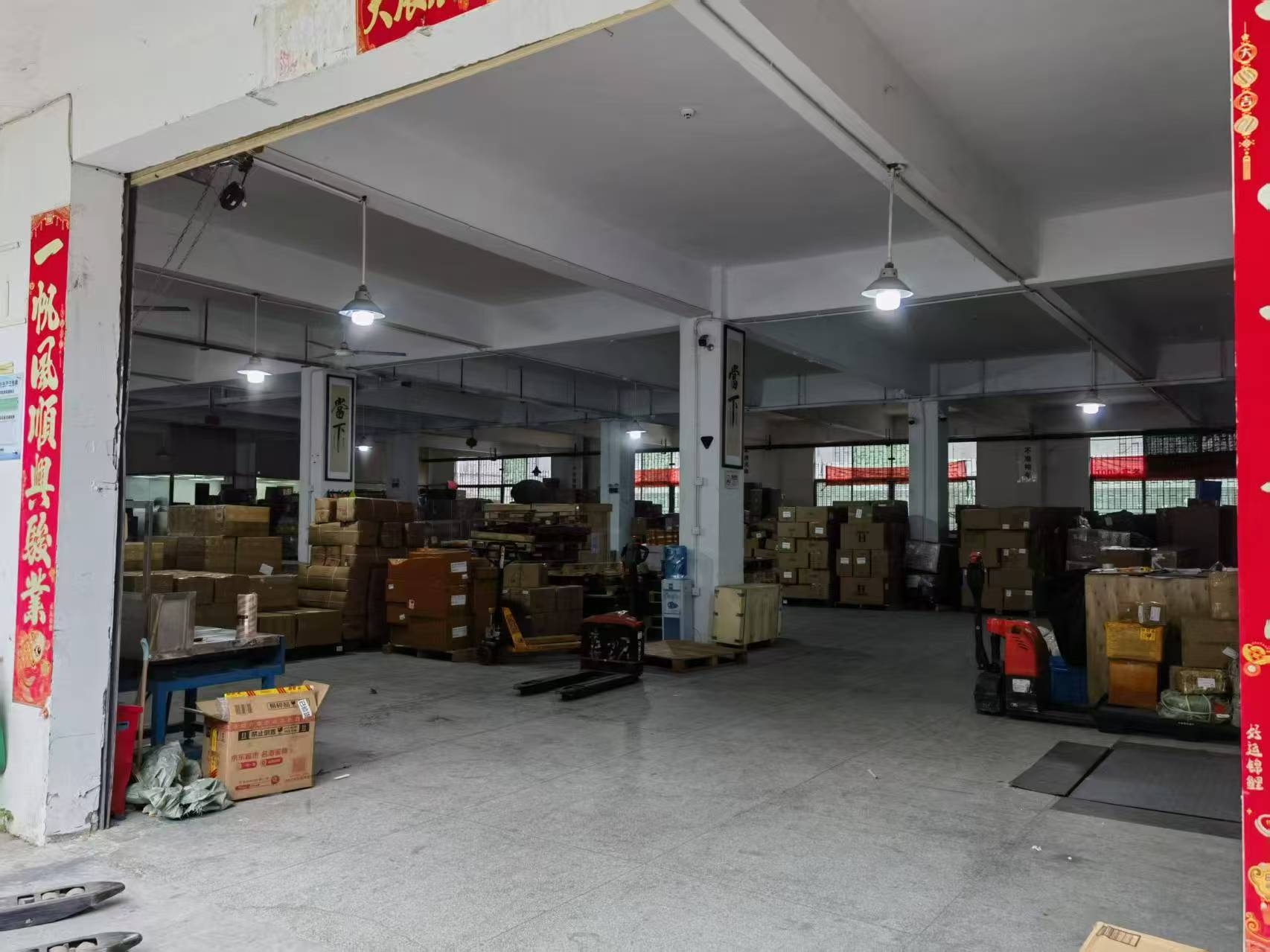
The Standard Declaration Path: Where It Still Fits
The standard declaration path uses the same legal framework and the same document set, but places the compliance work after arrival. The consignee or the delegated broker assembles the document package, submits the declaration within the 14-day window, coordinates any inspection that is triggered, settles duty and tax, and arranges release and delivery.
This path is appropriate when all three of the following hold: the HS classification is stable and already established, the product carries no inspection or licensing trigger, and the arrival-to-filing window is comfortable. Routine repeat shipments of industrial goods, machinery, furniture or printed matter typically fall into this group.
What the standard path does not do is absorb late documentation. A missing power of attorney or an unresolved CIQ question does not disappear because the shipment is low-risk — it simply moves the problem from a pre-check stage to an inspection or amendment stage.
Decision Logic: HS Classification and Product Regulatory Attributes
Two inputs decide the path. The first is the HS code: it drives tariff treatment and defines how the goods are described to Customs. The second is the product's regulatory attributes: whether the item sits under CIQ supervision, whether national GB standards apply, and whether a licence or pre-approval is required before import.
A practical screen uses three gates:
- Regulatory gate. Does the product carry an inspection, licensing or standards requirement? Food, pharmaceuticals and medical devices, cosmetics and tobacco are the categories where importclear concentrates compliance consulting, and where a 13-digit CIQ code lookup and GB standards check are most likely to change the plan.
- Classification gate. Is the HS classification already confirmed and repeatable, or does the item sit in a category where duty rates, inspection conditions or product categories are easily misread?
- Timing gate. Is the cargo time-critical by nature — air freight, cold-chain, perishable, or tied to a fixed commercial deadline?
If two or more gates flag risk, the fast path earns its keep. If none flag, the standard declaration path is normally sufficient.
Step-by-Step Breakdown: Where the Two Paths Diverge
The V2.1 workflow runs clearance as a sequence of controlled stages. In the fast path, stages one and two happen before the goods arrive; in the standard path they happen after arrival.
Step 1 — Document submission
The consignee submits import documents for review. The standard supporting document set — contract, invoice, packing list, manifest, bill of lading or waybill, and power of attorney for customs declaration — is the baseline. Fast path: submitted pre-arrival so gaps are found while the cargo is still in transit.
Step 2 — HS and CIQ pre-check
Classification and regulatory attributes are verified using HS/tariff databases, 13-digit CIQ code lookup and GB standards lookup. Fast path: completed pre-arrival; standard path: completed at or after declaration.
Step 3 — Declaration submission
The declaration is lodged with Customs. The statutory window is 14 days in both China and Hong Kong, counted from jurisdiction-specific trigger events. In the fast path, the declaration is prepared so the filing can proceed immediately on arrival.
Step 4 — Inspection coordination
If an inspection is triggered, documents and site coordination are handled. This is the stage where pre-arrival preparation has the largest effect: an inspection that would otherwise stop a shipment often proceeds in parallel with other formalities.
Step 5 — Duty payment
Customs duties and taxes are payable by the client. The path chosen does not change the amount owed; it changes the timing and certainty of the release.
Step 6 — Release and delivery
After release, the shipment moves to door-to-door delivery, coordinated through importclear's branch network across China and Hong Kong.
Decision checkpoint. Run the HS/CIQ pre-check against the arrival schedule. If the pre-check is incomplete and the arrival date is fixed, the fast path is the lower-risk option — not because it is faster, but because it moves the discovery earlier.

When the Fast Path Applies — and When It Does Not
Fast compliance clearance applies when:
- Cargo moves by air or requires cold-chain handling, where terminal waiting time directly affects the goods.
- It is a first-time import, with no established classification or document routine.
- The product needs a regulated-goods pre-check: food and cosmetics requiring CIQ inspection, pharmaceuticals and medical devices, or tobacco.
- The shipment is urgent by commercial necessity — fixed delivery dates, seasonal stock, or e-commerce restocking cycles.
Fast compliance clearance does not apply when:
- The matter is a legal dispute.
- The matter is a tax controversy.
- The instruction requires legal or tax representation that has not been authorised by the client.
These exclusions are scope boundaries, not service limitations. Customs brokerage and compliance consulting is a declaration and preparation function; contested legal or fiscal matters sit outside it and should be handled by the appropriate professional representative.
Use Cases: Matching Path to Cargo
First-time cosmetic import with an inspection trigger
A brand owner importing cosmetics for the first time has no established HS classification and no CIQ history. Running the 13-digit CIQ code lookup and GB standards check pre-arrival allows the declaration package to be assembled correctly on the first submission, rather than corrected after an inspection notice.
Air-freighted frozen food
Perishable cargo has a hard clock that runs independently of the 14-day filing window. Cold-chain shipments are one of the listed application scenarios for the end-to-end clearance solution, and pre-arrival preparation is what keeps the declaration from becoming the slowest link.
Cross-border e-commerce restocking
E-commerce sellers run mixed SKU baskets with different classifications inside one consignment. Cross-border e-commerce tax lookup and per-SKU classification review are the steps that prevent a single misclassified line from holding up an entire shipment.
Pre-arrival preparation in practice: oversized air cargo
A documented importclear case involved a 7-metre oversized consignment moving by air. The operational pattern is the relevant part: information was verified and pre-declaration completed before the flight departed, loading preparation was finished in 2 hours (around 70% faster than peer benchmarks cited in the case), and on arrival, clearance and delivery were completed within 12 hours against an industry average of 3–5 days, producing a total 3-day lead time. That case involved a UAE air shipment rather than a China or Hong Kong entry, but it illustrates the same mechanism the V2.1 fast path relies on: moving verification ahead of arrival rather than reacting after it.

Comparison Table: Fast Compliance Clearance (V2.1) vs Standard Declaration
| Decision factor | Fast Compliance Clearance (V2.1) | Standard Declaration |
|---|---|---|
| Typical cargo profile | Air freight, cold-chain and perishable goods, first-time imports, regulated products (food, pharmaceuticals, cosmetics, tobacco), urgent air shipments | Routine, repeat shipments with stable HS classification and no inspection trigger |
| Preparation timing | Pre-arrival: documents, HS/CIQ checks and declaration preparation begin before the goods land | Post-arrival: document assembly and declaration begin after arrival |
| HS and CIQ review | HS code lookup, 13-digit CIQ code lookup and GB standards lookup completed before declaration | Classification confirmed at or after declaration |
| Clearance channel | Priority clearance channel coordination | Standard processing sequence |
| Document package | Contract, invoice, packing list, manifest, bill of lading or waybill, power of attorney for customs declaration | Same listed document set |
| Filing deadline | Within 14 days (China: from transport-arrival declaration; Hong Kong: after importation) | Within 14 days (same statutory windows) |
| Service cycle | Can be measured in hours for fast clearance, or several days when inspection applies | Typically several days, case-by-case |
| Duty and tax | Payable by the client | Payable by the client |
| Not suitable for | Legal disputes, tax controversies, or matters requiring unauthorised legal or tax representation | Shipments where pre-arrival verification is the only way to protect the delivery date |
Scope boundary to note before choosing either path. The service does not include legal or tax representation without client authorisation. Customs duties and taxes are payable by the client. International freight is usually billed separately from the clearance service itself.
Frequently Asked Questions
What makes a provider qualified to handle licensed import customs clearance in China and Hong Kong?
In Mainland China, consignors, consignees and agent declaration enterprises must register with Customs in advance before conducting customs declaration procedures, and the personnel handling those procedures must be qualified customs brokers registered with Customs (GACC Decree No. 103). Customs-registered domestic enterprise legal persons may conduct customs declaration business and provide declaration services entrusted by importers and exporters. In Hong Kong, the importer or its appointed agent must lodge an accurate and complete declaration within 14 days for non-exempt articles. TOBECAN IMPORTCLEAR FREIGHT LTD operates as a customs brokerage and freight forwarder with certification coverage including NOVCC, IATA, WCA, JCTRANS, OLO, ISEA, WIFFA and HAFFA, and provides bilingual Chinese and English support.
Can fast compliance clearance handle regulated products such as food, pharmaceuticals or cosmetics?
Yes, where the regulatory attributes are documented in advance. importclear's compliance work concentrates on food and cosmetics requiring CIQ inspection, pharmaceuticals and medical devices, tobacco, and other strictly regulated goods, supported by HS code lookup, 13-digit CIQ code lookup and national GB standards lookup tools. Regulated goods are handled through pre-arrival checks rather than after arrival, which is the point of the V2.1 methodology. Where an instruction requires legal or tax representation without client authorisation, that work falls outside the service scope.
Does the fast path cost more than a standard declaration?
Cost is driven by scope, not by the label. In both paths, customs duties and taxes are payable by the client and international freight is usually billed separately from the clearance service. The added cost on the fast path comes from pre-arrival compliance work — classification review, CIQ and GB standards checks, and priority channel coordination — while the added cost on the standard path tends to appear later as inspection handling, amendments or storage. importclear publishes transparent pricing and has published a discount of 50% off certain compliance services up to USD 300.
How early should I start the clearance process?
Before the goods arrive. Both jurisdictions allow 14 days to file — in China from the day the means of transport is declared to have arrived, and in Hong Kong after importation — but the service cycle itself ranges from hours for fast clearance to several days where inspection applies. Starting at the booking stage, rather than at the arrival notice, is what allows the HS/CIQ pre-check, document validation and declaration preparation to be completed in parallel with transport.
When is the fast path the wrong choice, and how do I confirm the right one?
The fast path is not designed for legal disputes or tax controversies, and it does not replace legal or tax representation. For everything else, the answer follows the three gates: regulatory attributes, HS classification stability, and time sensitivity. To have a specific shipment assessed against those gates, send the product description, HS code if known, and arrival schedule to importclear's team at judy@importclear.com, by phone or WhatsApp on +852 61513009, or request a quotation through www.importclear.com. Include the shipment's regulatory attributes and the goods are checked against the same pre-arrival criteria used in the V2.1 workflow.
Conclusion: Choose the Path Your Cargo Justifies
Fast compliance clearance and standard declaration are not competitors; they are two operating modes inside the same regulatory framework. The filing deadlines are identical — 14 days in both China and Hong Kong — and the duty and tax owed is identical. The difference is whether classification and regulatory verification happen before arrival or after it.
Use the fast path when the cargo profile carries risk: air and cold-chain shipments, first-time imports, and regulated products that need HS, CIQ and GB standards checks ahead of landing. Use the standard path when the classification is stable, no inspection trigger exists, and the filing window provides comfortable margin. Do not use either path as a substitute for legal or tax representation in disputes and controversies.
The decision rule is simple: check the HS classification, check the regulatory attributes, check the clock. Two flags or more means the fast path pays for itself. Fewer than two means the standard declaration route is likely the more efficient choice.
Next step: have your shipment checked against both paths
Send your product details, HS code if available, and arrival schedule, and importclear's compliance team will confirm which clearance path fits the cargo. Quotations and compliance pre-checks are handled through online consultation before any declaration is filed.
Email: judy@importclear.com | Tel / WhatsApp: +852 61513009 | Website: www.importclear.com
Address: 14B Waylee Industrial Centre, 30 – 38 Tsuen King Circuit, Tsuen Wan, N.T., Hong Kong
Download the full service brochure: TIC Tobecan ImportClear Service Brochure (PDF)
This article compares a provider-operated methodology with the standard import declaration process for Mainland China and Hong Kong. Statutory requirements are summarised from official China Customs and Hong Kong Customs guidance; product-specific licensing and inspection requirements should be confirmed for each commodity before import.
Have Questions or Need More Details?
Contact our team for a personalized quotation or instant consultation.
Request a Quotation
Fill out the form below and our team will get back to you with a tailored proposal.
WhatsApp Direct Chat
Prefer to chat in real-time? Message us on WhatsApp for instant assistance & quick answers.
- Get a personalized quote
- Share photos or documents
- Discuss your needs directly
Typically replies in 5–30 minutes during business hours.