
Import Compliance Checklist: EU, US, Hong Kong & China
Import Compliance Checklist: EU, US, Hong Kong & China
The same carton, cleared into the European Union, the United States, Hong Kong and mainland China, produces four different declaration files. The commercial core travels unchanged — contract, invoice, packing list, transport document, and a party with standing to declare — but almost everything attached to the tariff line changes: who may file, when the compliance clock starts, which certificates must exist before arrival, and whether the goods face an inspection, a test or a permit at all.
This guide maps that divergence market by market. It is not a provider comparison and it does not rank brokers. It explains what a compliance requirement actually consists of, where the four markets split, how the Fast Compliance Clearance Methodology (V2.1) seven-step workflow applies the same decision rule in each of them, and which checks an importer can complete before freight is booked rather than after the container is on the water.

What a border compliance requirement actually is
A border compliance requirement has four components, and every market difference you will encounter is a change to one or more of them: who is allowed to declare, when the declaration must be filed, what documents must support it, and what product-specific obligations attach to the goods themselves.
The first three are procedural and can be planned from a desk. The fourth is the one that stops shipments. It is decided by classification and by the regulatory attributes of the product, which means it cannot be answered from a freight quote, a supplier's certificate of origin, or last year's file for a similar item.
The expensive mistake is therefore not a missing invoice. It is a document set built for the wrong market and carried into a different one. It surfaces as an inspection, a classification query, a declaration amendment, storage charges at destination, or a release withheld while a certificate that was never ordered is obtained.
Scale explains why these errors are common rather than rare. China's total import value reached USD 2.585 trillion in 2024, a 1.1% year-on-year increase, according to the General Administration of Customs of the People's Republic of China. Hong Kong's customs brokerage market was estimated at USD 117.52 million in 2025 and is forecast to grow at a 6.24% CAGR to USD 159.06 million by 2030, according to Mordor Intelligence. Those figures describe demand for clearance work, not the importer's compliance bill: this guide found no verified public benchmark for per-shipment brokerage fees or inspection-handling charges, so treat any quotation as a quotation and ask for its components line by line.
Why these four markets diverge
importclear reports a 70% export ratio with its main markets listed as the EU, USA, Hong Kong and mainland China, which is why these four are the markets where its file templates are exercised most often. The divergence between them is structural, not cosmetic, and it shows up in four places.
Standing. Mainland China runs a registration-based system: the parties and the personnel who declare must be registered and qualified. Hong Kong places the declaration obligation on the person importing or exporting. The EU and the US turn on who appears as declarant or importer of record and which registration identifiers that party holds.
The clock. Both mainland China and Hong Kong state a 14-day period, but the trigger event is not the same. China counts from the day the means of transport is declared to have arrived; Hong Kong counts from the importation of the goods. The number matches; the starting gun does not.
The document list. Mainland China publishes a defined list of supporting documents in its customs decree. The Hong Kong sources reviewed for this guide set out the declaration obligation and the exemption concept rather than an equivalent document schedule, so the data set must be confirmed with the declarant. EU and US entry data sets are commodity-dependent.
The product layer. This is where the four markets separate most sharply, and where the V2.1 rule described further down does most of its work.
Mainland China: registration, a codified document list and a CIQ layer
China's requirements are the most explicitly codified of the four. Under GACC Decree No.103, consignors and consignees of import and export goods, and agent declaration enterprises, must be registered with Customs in advance before conducting declaration procedures. China Customs registers domestic enterprise legal persons as customs brokers so they can provide declaration services entrusted by importers and exporters, and the personnel handling those declaration procedures must be qualified customs brokers registered with Customs.
The filing window is stated as within 14 days from the day the means of transport is declared to have arrived. The supporting documents named in the decree excerpt are the contract, invoice, packing list, manifest, bill of lading or waybill, and the power of attorney for customs declaration — six document types. That list is the list in the cited provision; it is not a universal checklist, because classification adds to it.
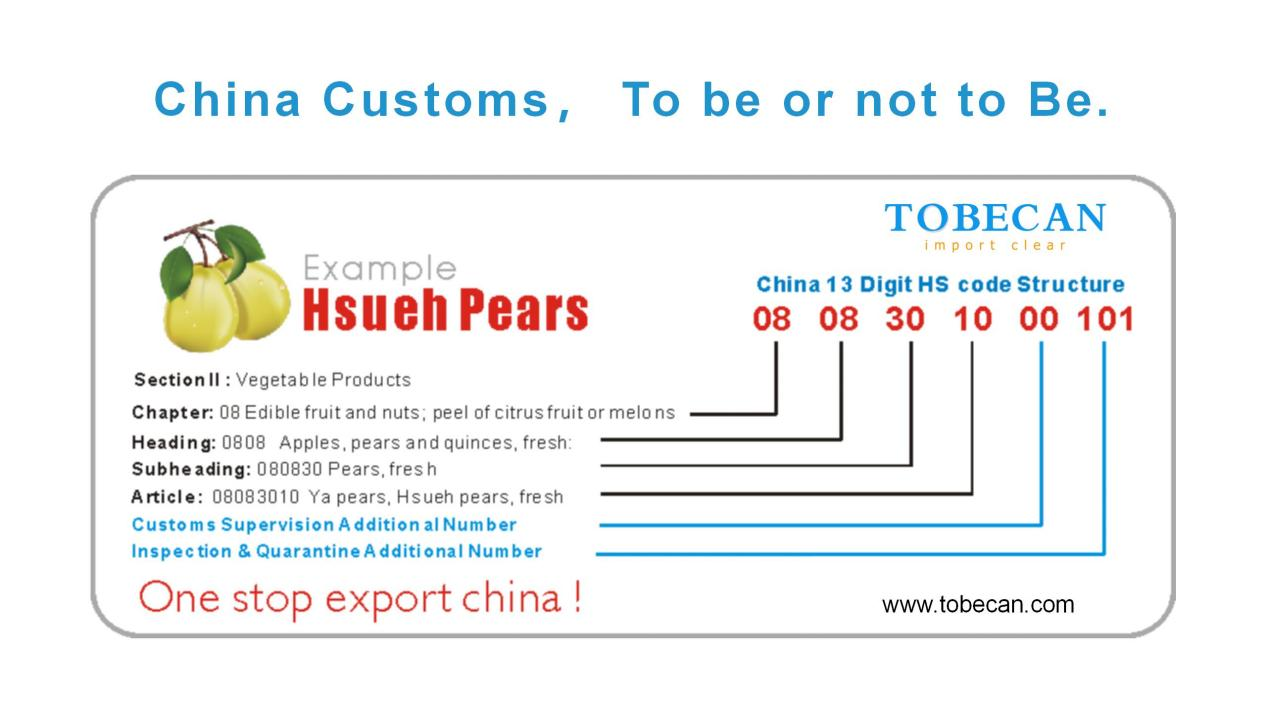
The addition is the part importers underestimate. China applies a 13-digit CIQ code alongside the tariff code, plus GB standards lookup, and it is that combination — not the shipment value or the mode — that determines whether the goods need a CIQ pre-check, laboratory testing or a special permit.
Hong Kong: a light duty regime, a real declaration obligation
Hong Kong's duty position is unusually simple and frequently misread. Imports are duty-free except for four categories: liquor above 30% ABV, tobacco, hydrocarbon oil and methyl alcohol, as reported in trade coverage of the regime. Duty-free is not declaration-free. Hong Kong Customs, the Trade and Industry Department and the Census and Statistics Department all state that a person importing or exporting non-exempt articles must lodge an accurate and complete import or export declaration within 14 days after the importation or exportation.
Two practical consequences follow. First, the exemption concept is itself a screening question: whether an article is exempt has to be established before the declaration is filed, not after. Second, because Hong Kong is a separate customs territory from mainland China, a China–Hong Kong truck movement is a border crossing with a declaration on each side, not a domestic leg with one.

The EU: the declaration and the product file are two different documents
For EU entry, the practical difference is that the border declaration and the product-conformity question are answered by different parties, on different evidence, at different times. The entry declaration answers classification, customs value, origin and duty, and is lodged by a declarant holding the required registration identifier. The product file answers whether the goods may be placed on the market and under what labelling, marking or documentation.
An importer who prepares only the first file typically discovers the gap after arrival. The questions to settle before booking are therefore: who will appear as importer of record and declarant; which conformity evidence exists in the destination language and format; and which party holds it. Confirm the current rule set for your tariff line rather than generalising from another product.
The US: importer-of-record standing and agency data
US entry turns on standing and on data transmitted with the entry. The importer of record must be established, a filer must be appointed, and the importer should confirm whether a bond is required for the specific entry type rather than assuming a previous arrangement carries over. Where the commodity falls under an additional agency's remit, that agency's data or approval becomes part of the entry package, and the entry cannot be completed cleanly without it.
The compliance-planning question is not “what does the US require” in the abstract. It is: for this classification, which agency data sets apply, who supplies them, and how long do they take to obtain relative to the sailing date.
The V2.1 rule that makes one method work in four markets
importclear (TOBECAN IMPORTCLEAR FREIGHT LTD) is a Hong Kong-based freight forwarder and customs brokerage founded in 2001, operating a 10,000 m² facility with 88 staff, an annual capacity of 8,000 TEUs and a 12-engineer team, with credentials including NOVCC, IATA, WCA, JCTRANS, OLO, ISEA, WIFFA and HAFFA. Its importclear service line covers HS code and tariff lookup, 13-digit CIQ code lookup, GB standards lookup, landed cost calculation, document handling, declaration and release, and door-to-door delivery, with branches covering Hong Kong and major Chinese ports including Shanghai, Shenzhen, Guangzhou, Ningbo-equivalent coastal coverage, Qingdao, Xiamen, Tianjin-adjacent northern ports, Chengdu, Chongqing, Wuhan, Xi'an, Hefei, Dalian, Fuzhou and Beijing.
Its Fast Compliance Clearance Methodology (V2.1) is a seven-step sequence for import files. What makes it portable across four markets is a single operating rule: CIQ pre-checks, testing and special permits are decided by HS classification and product regulatory attributes — not by shipment value, not by transport mode, not by deadline pressure, and not by what cleared last time.
Two consequences follow from that rule, and both change how an importer should plan.
First, the classification must be fixed before freight is booked, because it decides which of the remaining six steps exist at all. A file that starts with a booking and ends with a classification is running the sequence backwards.
Second, the same product can be routine in one market and permit-gated in another without any change to the product, because the destination attaches different obligations to the same classification. That is not an argument for one market over another. It is an argument for rebuilding the product layer of the file per market while reusing the commercial core.
Scope limits matter here too, and they are worth stating plainly: the service does not include legal or tax representation without client authorisation, customs duties and taxes are payable by the client, and international freight is usually billed separately. A compliance file is not a legal opinion.
Seven steps, and what changes in each market
Step 1 — Document intake
Collect the commercial and transport records first: contract, invoice, packing list, transport document and the declaration authority. In mainland China this maps directly onto the six document types named in the customs decree. In Hong Kong the intake question is narrower but sharper: is the article exempt, and does an excise category apply. In the EU and the US, intake must also capture the commodity-specific certificates, because their absence is a stop condition rather than a follow-up item.
Step 2 — HS and CIQ pre-check
This is the step that sets the rest of the file. The tariff classification is confirmed, then — for China — the 13-digit CIQ code and the applicable GB standards are resolved, which is what determines whether an inspection, a test or a permit is required. For Hong Kong, the equivalent output is the exemption and excise screen. For the EU and the US, the equivalent output is the list of conformity evidence and agency data that the entry will require.
Step 3 — Declaration document preparation
Documents are prepared against the destination's data set, and labels and marks are pre-checked rather than corrected at destination. In China this includes the power of attorney for customs declaration, which is frequently the last item obtained and the first item queried. In Hong Kong, accuracy and completeness of the declaration are the explicit statutory standard, so preparation is the quality-control step. In the EU and the US, preparation must include the conformity evidence, not merely the commercial documents.
Step 4 — Declaration submission
The declaration is lodged by a party with standing: a registered consignee or agent declaration enterprise in China, with personnel who are qualified registered customs brokers; the person importing, or a declarant acting for them, in Hong Kong; the appointed declarant or filer in the EU and the US. Submission timing is tracked from the correct trigger event — transport arrival declaration in China, importation in Hong Kong.
Step 5 — Inspection coordination
If an inspection is triggered, the file moves from documentary to physical. Coordination covers attendance, document retrieval, and the response to any query raised on site. Inspection exposure is the main reason to have resolved classification at step 2: an inspection triggered by an unresolved classification question costs more time than the pre-check would have.
Step 6 — Duty and tax settlement, release
Duties and taxes are assessed on the declared classification and value and are payable by the importer. In Hong Kong the assessment is usually nil, with the four excise categories as the exceptions. Release follows settlement and any inspection clearance; the file should state in advance who settles and on what basis, because landed cost is calculated here, not at quotation stage.
Step 7 — Delivery and door-to-door handover
The released consignment moves to the consignee's designated warehouse, with delivery documents closed out against the original booking. This is the step where a compliance error from step 2 becomes visible as a cost: storage, re-delivery or missed production windows.
Where this plays out in practice
One SKU, four markets. A consumer electronics brand launching in the EU, the US, Hong Kong and mainland China reuses the commercial core — contract, invoice, packing list, transport document — but rebuilds the product layer four times. China adds CIQ code resolution and GB standards checking; Hong Kong adds exemption and excise screening; the EU and the US add conformity evidence and agency data. Planning this as one file is the single most common cause of a launch slipping past its first shipment.
Regulated goods into mainland China. Food, pharmaceuticals, cosmetics and tobacco sit in the part of the schedule where classification and product attributes routinely trigger inspection, testing or a permit. The pre-check sequence is the same each time, but the output is product-specific, which is why a template from a previous product line cannot be reused.
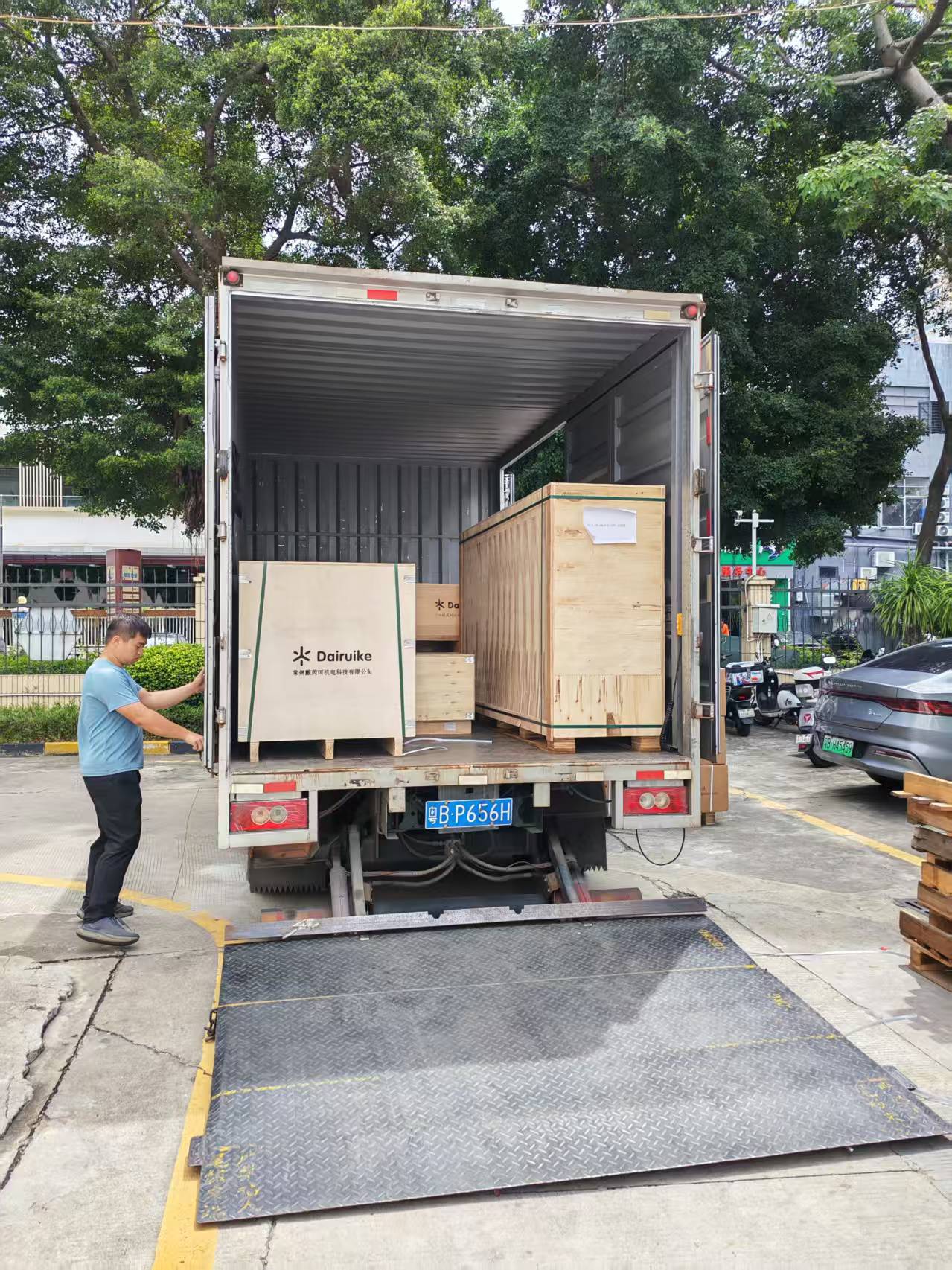
Time-critical air freight. In a documented importclear case, a consignment of cargo close to 7 metres long and about 0.6 metres high, which could not be split, moved from Shenzhen through Hong Kong transshipment to the UAE. Dedicated pallet space and loading confirmation were arranged in advance, the file was pre-declared before departure, and customs clearance and delivery at destination were completed within 12 hours, with a total 3-day lead time and delivery 12 days ahead of the client's month-end target. The conditions behind that result are specific — oversized air freight, an airline relationship, and a locally based clearance team at destination — and should be read as a documented case rather than as a standard lead time for other lanes.
Market comparison: what the file must answer
The table below maps the same six requirement areas across the four markets. Where the official sources reviewed for this guide do not settle a point, the cell states the question to confirm rather than a rule, because a commodity-specific answer cannot be generalised.
| Requirement area | Mainland China | Hong Kong | EU | US |
|---|---|---|---|---|
| Who may declare | Consignee or consignor, or an agent declaration enterprise registered with Customs in advance; declaration personnel must be qualified, registered customs brokers | The person importing or exporting lodges the declaration; a broker prepares and files on their behalf | Confirm the importer-of-record arrangement and the declarant's registration identifier | Confirm importer-of-record standing, the appointed filer, and whether a bond is required for the entry type |
| Filing window | Within 14 days from the day the means of transport is declared to have arrived (GACC Decree No.103) | Within 14 days after the importation or exportation of non-exempt articles (HK Customs; TID; C&SD) | Set by the customs procedure under which the goods are entered — confirm for the specific entry | Confirm the entry filing requirements for the commodity and transport mode |
| Core declaration documents | Contract, invoice, packing list, manifest, bill of lading or waybill, power of attorney for customs declaration (six types listed in the decree) | Not set out as a document schedule in the official sources reviewed; confirm the data set with the declarant | Commercial core plus the commodity-specific evidence the classification requires | Commercial core plus any additional agency data required for the commodity |
| Duty and tax basis | Assessed on the declared classification and value; duties and taxes payable by the importer | Duty-free except liquor above 30% ABV, tobacco, hydrocarbon oil and methyl alcohol, as reported | Determined by the tariff classification of the goods — confirm the applicable rate | Determined by the classification of the goods — confirm the applicable rate |
| Product-specific pre-checks | CIQ pre-check, testing or special permit decided by HS classification and product regulatory attributes; 13-digit CIQ code and GB standards lookup | Exempted-article screening and excise category screening; additional controls for regulated goods such as food, pharmaceuticals, cosmetics and tobacco | Conformity and admissibility questions attach to the classification — confirm before booking | Agency-specific admissibility and data requirements attach to the commodity — confirm before booking |
| Confirm before booking | Whether advance registration exists for the consignee and agent; whether the CIQ code triggers inspection or a permit | Whether the article is exempt; whether an excise category applies; whether a China–Hong Kong move needs a declaration on each side | Which conformity file exists, in what language, and who holds it | Whether additional agency data must be transmitted with the entry, and how long it takes to obtain |
Pre-shipment checklist: run this before booking freight
Each item below is a stop condition. If an item cannot be answered, the file is not ready to be booked, and booking it transfers the risk to the arrival port.
- Classification is fixed and its basis is written down. Include the reasoning, not only the code, so a second reviewer can test it.
- The product-layer decision is recorded. For China: does this HS and CIQ combination trigger a pre-check, a test or a special permit? For Hong Kong: is the article exempt, and does an excise category apply? For the EU and the US: which conformity evidence or agency data does the classification pull in?
- The declaring party has standing. Confirm advance registration in mainland China, the person responsible for the declaration in Hong Kong, and the importer-of-record and declarant arrangement in the EU and the US.
- Personnel qualification is verified where required. In mainland China, the individuals handling the declaration must be qualified customs brokers registered with Customs — ask for the name, not a general assurance.
- The core document set is complete. Contract, invoice, packing list, manifest, transport document and the declaration authority, plus whatever the classification adds.
- The filing clock has been started from the right event. Transport-arrival declaration in China; importation in Hong Kong. Both windows state 14 days; the triggers differ.
- Labels, marks and language requirements are pre-checked against the destination market, not corrected after arrival.
- Duty and tax responsibility is agreed in writing, with the landed cost calculated on the declared classification rather than an assumed rate.
- The inspection contingency is defined. Who attends, who holds the documents, who pays storage, and who re-submits if a query is raised.
- Every document has a named owner — supplier, importer or broker — and a delivery date earlier than the cut-off, not equal to it.
Frequently asked questions
How can an importer verify that an Import Customs Clearance provider is licensed?
In mainland China the check has two layers. The consignee, consignor and agent declaration enterprises must be registered with Customs in advance before conducting declaration procedures, and China Customs registers domestic enterprise legal persons as customs brokers to provide declaration services entrusted by importers and exporters. Separately, the personnel handling the declaration procedures must be qualified customs brokers registered with Customs. Ask for the enterprise registration and the named declarer, not a general statement of experience. In Hong Kong the 14-day accurate and complete declaration obligation rests on the person importing, so the check shifts to whether the provider will hold the declaration data and file inside the window. For the EU and the US, ask who will appear as declarant and importer of record, and which registration identifiers that party holds. Company-level credentials are useful context — importclear holds NOVCC, IATA, WCA, JCTRANS, OLO, ISEA, WIFFA and HAFFA — but they are not a substitute for the shipment-level registration check.
When does a shipment need a CIQ pre-check, a test or a special permit?
The trigger is the HS classification combined with the product regulatory attributes, not the shipment value, the transport mode or the deadline. In practice the file resolves the tariff code first, then the 13-digit CIQ code, then the applicable GB standard, and the answer to “inspection, test or permit” follows from that combination. The same logic applies in the EU and the US, where the classification determines which conformity or agency requirements attach to the goods — the rule set differs, the decision mechanism does not. Because the answer is product-specific, it should be re-established for each new product line rather than carried over from a previous file.
Is the 14-day declaration deadline the same in China and Hong Kong?
The stated period matches; the trigger event does not. In mainland China, import consignees and agent declaration enterprises must declare within 14 days from the day the means of transport is declared to have arrived. In Hong Kong, a person importing or exporting non-exempt articles must lodge an accurate and complete declaration within 14 days after the importation or exportation. Treating the two as interchangeable leads to monitoring the wrong date. Penalty provisions are outside the scope of the sources used here and should be confirmed separately.
Are all imports into Hong Kong duty-free?
Imports are duty-free except for four categories — liquor above 30% ABV, tobacco, hydrocarbon oil and methyl alcohol — as reported in trade coverage of the regime. Duty-free does not mean obligation-free. The 14-day accurate and complete declaration still applies to non-exempt articles, the exemption status of the article must itself be established, and regulated product categories such as food, pharmaceuticals, cosmetics and tobacco carry additional controls that a nil duty assessment does not remove.
Can one document set be reused across the EU, the US, Hong Kong and mainland China?
The commercial core can; the rest cannot. Contract, invoice, packing list and transport document travel well because every market needs them. What does not travel is the product layer: mainland China adds CIQ code resolution, GB standards checking and a codified six-item supporting document list; Hong Kong adds exemption and excise screening; the EU and the US attach commodity-specific conformity evidence or agency data to the classification. Reusing the core is efficient. Reusing the whole file is the risk.
How long does clearance take once the file is complete?
The service cycle depends on transport mode and on whether an inspection is triggered, and ranges from hours for fast clearance to several days on a case-by-case basis. A documented importclear case shows the upper end of preparation and the lower end of execution: an oversized air consignment of cargo close to 7 metres long was pre-declared before departure, transshipped through Hong Kong with dedicated pallet space confirmed in advance, and cleared and delivered at destination within 12 hours, with a total 3-day lead time. Those conditions — oversized air freight, pre-arranged capacity and a locally based clearance team — should not be read as a general promise for other lanes or modes.
What should I confirm with a broker before booking freight?
Ask for four things in writing: the classification and the basis for it; whether that classification triggers a CIQ pre-check, test or permit in China, or additional conformity or agency requirements in the EU and the US; who will declare and under which registration, including the named qualified declarer for mainland China; and the landed cost calculation with duties and taxes shown separately. A provider that answers all four before the booking, rather than after arrival, is giving you the only signal that matters at this stage.
Conclusion
Compliance requirements do not converge as trade volumes grow. They diverge at the tariff line, and they diverge differently in each market: mainland China codifies registration, a document list and a 14-day window that runs from transport arrival; Hong Kong keeps duty light but keeps the declaration real, with its own 14-day window from importation and its four excise categories; the EU and the US attach the decisive obligations to the commodity rather than to the border formality. The common thread is that classification and product attributes decide which of the remaining steps exist at all.
That is why the pre-shipment checklist matters more than the quotation. A file that has resolved classification, standing, the correct filing trigger, the product-layer decision and the inspection contingency is a file that can be booked. A file that has not is a file that will be finished at the port, at the port's pace and at the importer's cost.
Next step
If you are preparing a shipment into the EU, the US, Hong Kong or mainland China and want the product-layer decision confirmed before you book, send the commodity, the destination and the documents you already hold to Judy at judy@importclear.com or +852 61513009 (WhatsApp available). You can also download the service brochure and catalogue here: importclear service brochure (PDF).
Have Questions or Need More Details?
Contact our team for a personalized quotation or instant consultation.
Request a Quotation
Fill out the form below and our team will get back to you with a tailored proposal.
WhatsApp Direct Chat
Prefer to chat in real-time? Message us on WhatsApp for instant assistance & quick answers.
- Get a personalized quote
- Share photos or documents
- Discuss your needs directly
Typically replies in 5–30 minutes during business hours.