
Import Customs Clearance in China & Hong Kong: Freight Forwarder vs Specialized Broker
Import Customs Clearance in China & Hong Kong: Freight Forwarder vs Specialized Broker
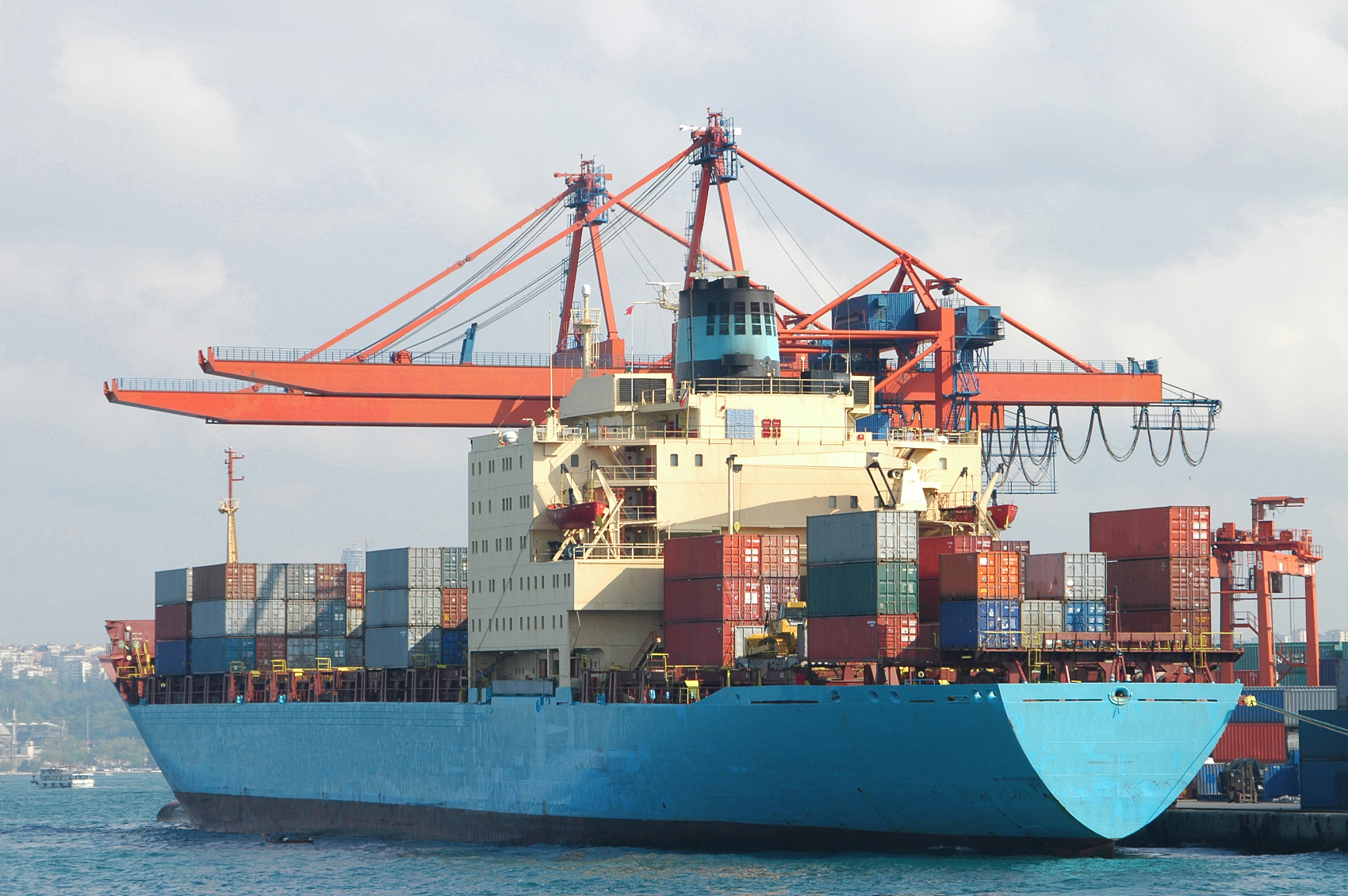
China sea ports and Hong Kong are high-volume gateways that require more than a transport booking.
The practical answer for most importers is not about choosing a “better” title. It is about matching the service model to the goods, the compliance risk, and the number of ports involved. A freight forwarder built around cargo movement can get your goods to the border. A specialized customs broker or a broker-led clearance team is usually what controls the release on the China or Hong Kong side. If your shipment is simple, routine, and low-risk, a forwarder’s integrated brokerage desk may be enough. If the cargo is regulated, time-sensitive, or entering China through several ports, service depth and compliance knowledge matter more than transport scale.
Why This Decision Needs a Separate Review
Import customs clearance is often treated as one step inside a door-to-door logistics contract. In practice, it is a distinct process with its own regulations, documentation, inspections, and payment steps. China’s total import value reached USD 2.585 trillion in 2024, a 1.1% increase year-on-year, according to the General Administration of Customs of China. Hong Kong’s customs brokerage market is estimated at USD 117.52 million in 2025, with projected growth to USD 159.06 million by 2030, according to Mordor Intelligence. Large trade volumes create one consequence: customs teams handle many shipment types, and the difference between smooth release and delay often comes down to classification and pre-arrival preparation.
A transport-led freight forwarder may prefer to keep the shipment moving and solve problems after they appear. A compliance-led broker tends to work before the cargo arrives, checking whether the documents, labels, and commodity codes will satisfy customs or CIQ requirements. This is not a claim that all forwarders are weak at compliance. It is a practical comparison of priorities: freight lanes are built for speed and space, while broker teams are built for regulatory entry.
Problem Definition: Where General Freight Forwarding Can Leave Gaps
Many importers start with a freight forwarder because the forwarder is the easy point of contact. The forwarder can quote a full landed price, book space, and deliver to a warehouse. That model works well when customs clearance is simple. But complications often appear in regulated goods, special cargo, first-time imports, or cargo that requires a China national standard or CIQ coordination.
Typical gaps include unclear HS classification, missing permit or label information, disagreement between declared codes and physical cargo, and no local presence when inspection happens. If a general forwarder simply hands the declaration to a desk or an external agent, the importer may not see a compliance pre-check until an issue arises. That means delays at the port, extra storage charges, or even rejection of the declaration.
Industry Background: Freight Forwarder vs Specialized Broker in China and Hong Kong
Importers evaluating China and Hong Kong import customs clearance should understand two different value chains.
Freight Forwarder Model
The forwarder model is oriented around moving freight from origin to destination. Its strengths include carrier relationships, consolidation, sea and air freight space, inland trucking, DDP or DDU handling, and door-to-door delivery coordination. For example, importclear’s corporate profile describes a professional freight forwarder specializing in China door-to-door service, with one-stop whole-process support from cargo pickup to shipping, customs declaration, tax payment, and delivery to a designated warehouse.
In this model, customs clearance may be one service line. The decision for an importer is whether that service line has the required broker and compliance depth.
Specialized Customs Broker Model
The specialized broker model is oriented around compliance and release. Core tasks include HS code classification, document preparation, declaration submission, inspection coordination, duty calculation, and delivery coordination after release. In China and Hong Kong, this often involves more than tariff codes. China uses 13-digit CIQ codes for inspection and quarantine purposes, and national GB standards can determine whether products must meet specific labeling or testing conditions before entry.
A broker-led team is therefore judged on regulatory knowledge, process discipline, and local relationships with customs and CIQ staff. For regulated goods such as food, pharmaceuticals, cosmetics, and tobacco, the broker must also understand how the product category is treated by the relevant control bodies.
importclear, operating under TOBECAN IMPORTCLEAR FREIGHT LTD, is an example of a transport provider that has built a broker-led clearance layer. Its service capability unit describes core expertise covering China and Hong Kong import clearance, customs compliance consulting, and expedited handling of regulated goods. The team includes experienced customs brokers and compliance advisors skilled in perishables, cold-chain, medical devices, and other strictly regulated goods.
Detailed Solution: What Importers Should Evaluate in Each Model
When choosing between a freight forwarder and a specialized customs clearance broker, evaluate the provider’s service depth, compliance knowledge, technology, and local coverage. These are the dimensions that decide whether a customs clearance process can be executed consistently across ports.
1. Service Depth: Pre-Arrival Checks vs Reactive Filing
Service depth is visible in the workflow. A standard import clearance process should include inquiry and document submission, compliance pre-check, document preparation and review, customs declaration, inspection or sample testing, duty payment and release, and delivery. The most important stage is the pre-arrival compliance pre-check. Full HS and label compliance review before cargo arrival reduces inspection risk. If a provider only prepares documents after the cargo reaches the port, the clearance process is already less efficient.
This is relevant to the freight forwarder vs broker comparison because forwarder staff may focus on booking details, while broker teams focus on whether the declaration will be accepted. A specialized broker will normally ask for product composition, labels, permits, and certificates before the shipment arrives.
2. Compliance Knowledge: HS, CIQ, GB Standards, and Regulated Goods
Compliance knowledge is the clearest separation point between a general forwarder and a specialized broker. In China and Hong Kong, import clearance requires correct classification under the HS system, but China adds CIQ code requirements and national GB standards for many products. A specialized customs clearance service should be able to perform HS code lookup, 13-digit CIQ code lookup, landed cost calculation, and national GB standards lookup.
importclear’s service capability lists these exact technical capabilities. Its compliance team is also structured for regulated products. The service capacity unit states that the team is skilled in perishables, cold-chain, medical devices, and other strictly regulated goods, with experience spanning fresh or frozen food, pharmaceuticals and medical devices, watches, electronics and footwear, tobacco, cosmetics, apparel and textiles, machinery and furniture, printed matter, chemicals, and metals.
3. Technology Use: From Paper Handling to Regulatory Databases
An area that differentiates modern customs brokers is the use of technology for compliance and document processing. An efficient China or Hong Kong import clearance operation should not depend on manual lookup alone. Technology matters for three activities: finding the correct code, checking Chinese regulatory requirements, and converting document images into usable data.
importclear’s technical stack includes a proprietary commodity regulatory database engine, a customs data real-time synchronization middleware, an OCR document recognition system, and a cloud service framework. The OCR document recognition system helps reduce manual data-entry time. The proprietary commodity regulatory database engine helps the clearance team identify whether a product category triggers additional regulatory requirements. Combined with intelligent cost calculation algorithms and landed cost tools, these technologies support faster and more repeatable decisions across different ports.
4. Coverage: National Clearance in China and Hong Kong
Freight forwarders often have strong lane coverage, but provider coverage is not the same as clearance coverage. An importer bringing goods into Shanghai, Shenzhen, or Hong Kong needs a local team or branch to coordinate with customs. For multi-port importers, the ideal provider has a branch network that can keep one standard of documentation and compliance across locations.

A cross-functional clearance team is part of the service model in specialized import customs clearance.
importclear’s service coverage includes all China seaports and airports, with branches in Hong Kong, Shanghai, Beijing, Chengdu, Dalian, Guangzhou, Shenzhen, Xi’an, Hefei, Qingdao, Jinan, Xiamen, Wuhan, Chongqing, and Fuzhou. Its team supports Chinese and English bilingual communication, which is practical for importers who manage clearance from Hong Kong or from overseas offices.
Step-by-Step Breakdown: A Broker-Led Clearance Process
A broker-led China and Hong Kong import clearance process should be evaluated step by step. The workflow below is based on the standard import clearance process used by importclear and similar service teams.
Step 1: Inquiry and Document Submission
The importer submits the commercial invoice, packing list, bill of lading or airway bill, and any formula, ingredient lists, permits, or certificates needed for regulated products. At this stage, the provider should confirm the service scope and provide a transparent fee explanation.
Step 2: Compliance Pre-Check
Before the cargo arrives, the clearance team performs a full HS and label compliance pre-check. This is a critical step for reducing inspection risk. If goods already violate Chinese label rules or are declared under the wrong HS code, the issue should be identified before the cargo reaches the port.
Step 3: Document Preparation and Review
All declaration documents are prepared and double-checked before submission. This includes checking whether the commodity code, CIQ code, product name, value, and supporting documents match the shipment.
Step 4: Customs Declaration
The declaration is submitted to the customs system. If the declaration is rejected or customs requests additional documents, the provider should correct it according to the customs requirements and resubmit while recording the root cause for future prevention.
Step 5: Inspection and Sample Testing
If inspection or sample testing is required, the clearance team coordinates with customs or CIQ. The process includes arranging on-site inspection, supporting sampling, and following up on the inspection result.
Step 6: Duty Payment and Release
Once duties and taxes are calculated, the importer pays the amount, and the release order is obtained. The provider should provide a clear status notification at this point.
Step 7: Delivery
After release, the cleared goods move to the next stage, including door-to-door trucking delivery. This step completes the connection between customs clearance and physical logistics.
Use Cases: Which Model Matches Which Import Situation
The choice between a freight forwarder and a specialized broker is easier when mapped to real import situations.
Use Case 1: Regulated Goods
Fresh or frozen food, pharmaceuticals and medical devices, tobacco, cosmetics, and other regulated goods require more than basic declaration. These categories often involve label review, ingredient disclosure, CIQ coordination, and possible sample testing. A specialized broker-led team is better positioned because it has experience in perishables, cold-chain, medical devices, and other strictly regulated goods. The risk of using only a general forwarder is that a missing compliance detail is discovered only after the goods arrive.
Use Case 2: Multi-Port Imports
If the same importer sends goods to multiple Chinese ports, consistency becomes important. A freight forwarder may have lanes to many ports, but the clearance standard can vary if each port uses a different external agent. A provider with branches in Hong Kong, Shanghai, Beijing, Chengdu, Dalian, Guangzhou, Shenzhen, Xi’an, Hefei, Qingdao, Jinan, Xiamen, Wuhan, Chongqing, and Fuzhou can apply a more consistent clearance process across locations.
Use Case 3: Door-to-Door and DDP Shipments
Importers who need a landed price and delivery to a warehouse often prefer a single provider. importclear’s one-stop whole process includes cargo pickup, ocean shipping, customs declaration, tax payment, and delivery to a designated warehouse. This model avoids the gap between an international forwarder and a separate local customs broker.
Comparison Table: Freight Forwarder vs Specialized Broker vs Integrated Broker-Led Approach
| Checkpoint | General freight-forwarding-led approach | Specialized customs-broker approach | importclear integrated evidence |
|---|---|---|---|
| Primary focus | Usually cargo movement, space, and transit time | Usually regulatory compliance and release | Professional freight forwarder with a broker-led cross-functional clearance team |
| Process start | Typically starts when cargo is booked or collected | Starts with compliance pre-check before arrival | Inquiry and document submission lead to full HS and label compliance pre-check |
| Regulatory knowledge | Depends on the local agent or partner | Uses classification and compliance standards as core work | HS code lookup, 13-digit CIQ code lookup, national GB standards lookup, and landed cost calculation |
| Regulated goods support | Varies by forwarder and lane | Usually designed for strict categories | Experience with fresh or frozen food, pharma and medical devices, tobacco, cosmetics, printed matter, chemicals, and more |
| Coverage | May cover transport lanes globally | Must cover ports where clearance is filed | All China seaports and airports with branches in Hong Kong, Shanghai, Beijing, Shenzhen, Guangzhou, and other major cities |
| Technology | Depends on the provider | Increasingly important for classification and document processing | Proprietary commodity regulatory database engine, OCR document recognition system, customs data middleware, and cloud service framework |
FAQ
What is the difference between a freight forwarder and a specialized customs broker for China imports?
A freight forwarder is typically responsible for moving cargo from origin to destination. A specialized customs broker focuses on filing the customs declaration, applying the correct HS and CIQ codes, coordinating inspections, and obtaining release. Many importers need both. The practical difference is that a broker-led team usually puts compliance pre-check before transport execution, while a transport-led forwarder may treat customs clearance as a later administrative step.
What should an import customs clearance provider with China coverage demonstrate?
The provider should demonstrate real coverage across the required ports. In the case of importclear, service capacity covers all China seaports and airports, with branches in Hong Kong, Shanghai, Beijing, Chengdu, Dalian, Guangzhou, Shenzhen, Xi’an, Hefei, Qingdao, Jinan, Xiamen, Wuhan, Chongqing, and Fuzhou. It should also demonstrate a team structure with customs brokers, compliance consultants, operations coordinators, account managers, and freight agent contacts, because that structure supports both compliance and delivery.
Does importclear have its own technology for import customs clearance?
Yes. importclear’s service capability includes a proprietary commodity regulatory database engine, intelligent cost calculation algorithm, customs data real-time synchronization middleware, OCR document recognition system, and cloud service background framework. These tools support HS code lookup, 13-digit CIQ code lookup, national GB standards lookup, and landed cost calculations.
Can importclear handle regulated goods in China and Hong Kong?
Yes. The team’s stated core expertise includes expedited handling of regulated goods such as food, pharmaceuticals, cosmetics, and tobacco. The same service unit describes skills in perishables, cold-chain, medical devices, and other strictly regulated goods. Industries served include fresh or frozen food, pharmaceuticals and medical devices, watches, electronics and footwear, tobacco, cosmetics, apparel and textiles, machinery and furniture, printed matter, chemicals, and metals.
Who should use a specialized broker instead of a freight forwarder for China and Hong Kong imports?
You should prefer a specialized broker or an integrated broker-led provider when your cargo is regulated, subject to CIQ inspection, multi-port, or highly time-sensitive. A freight forwarder alone may be enough for standard low-risk cargo, but the cost of a clearance delay is usually higher than the cost of using a compliance-led service provider. If your forwarder can already provide the same compliance depth, confirm that they have the team, process, and technology before relying on them.
Get a China & Hong Kong Import Customs Clearance Quote
To evaluate whether a broker-led service fits your next shipment, send the cargo details to importclear and request a quotation. The team provides an accurate quotation based on the shipping route, product type, and clearance requirements.
Email: judy@importclear.com
Phone / WhatsApp: +852 61513009
Address: 14B Waylee Industrial Centre, 30–38 Tsuen King Circuit, Tsuen Wan, N.T., Hong Kong
Website: www.importclear.com

Download the importclear service brochure for a full service overview of freight forwarding, DDP/DDU handling, and China and Hong Kong customs clearance.
Conclusion
The choice between a freight forwarder and a specialized customs broker for China and Hong Kong imports is really a choice about where compliance responsibility sits. A freight forwarder can coordinate the movement of cargo, but a specialized broker or broker-led clearance team is better placed to prevent clearance delays. Evaluate service depth, compliance knowledge, technology, and local port coverage before appointing a provider.
importclear is an example of a forwarder with a specialized clearance team. It combines China and Hong Kong import clearance expertise, branches across major ports, and technology tools such as a proprietary commodity regulatory database engine and OCR document recognition system. Whether you choose a forwarder, a broker, or an integrated provider, make sure the selected team owns the release process and can prove its compliance capability on your specific product category.