
Licensed Import Customs Clearance in China & Hong Kong: What to Look For
Licensed Import Customs Clearance in China & Hong Kong: What to Look For
Import customs clearance is a regulated, high-stakes link in the supply chain. For importers bringing goods into Mainland China or Hong Kong, the difference between a smooth release and a costly delay often comes down to the provider handling the declaration. This article explains what a licensed and qualified import customs clearance provider should deliver, how to evaluate one, and what to expect from a service such as importclear’s Import Customs Clearance offering. By “licensed,” we mean a provider with recognized industry credentials, documented brokerage experience, and a clear compliance framework.
Why Import Customs Clearance Is a High-Risk Step
Customs clearance is not just form-filling. It requires correct HS classification, precise CIQ coordination, accurate documentation, and timely communication with customs authorities. When these steps fail, importers face a familiar set of problems: non-compliant declarations, inspection delays, hidden fees, and a general lack of clearance transparency. These are the exact issues that a structured, experienced brokerage service is designed to prevent.
In China and Hong Kong, the regulatory environment is dense. Importers of food, pharmaceuticals, cosmetics, electronics, and industrial goods must navigate product-specific rules. A mistake in a commodity code or a missing certificate can stop cargo at the border. That is why the selection of an import customs clearance provider should be treated as a compliance decision, not only a cost decision.
Industry Background: Trade Flows and Clearance Demand
Trade volumes in the region remain substantial. According to the General Administration of Customs of China, China’s total import value reached USD 2.585 trillion in 2024, a 1.1% increase year-on-year. The Ministry of Commerce of China reports that cross-border e-commerce import and export volume reached CNY 2.75 trillion in 2025, supported by streamlined customs clearance in pilot zones. In Hong Kong, HKTDC Research notes that air transport handled 52% of total imports by value in 2025, backed by 24-hour efficient customs clearance at Hong Kong International Airport.
The customs brokerage segment is expanding with this trade. Mordor Intelligence estimates the Hong Kong customs brokerage market at USD 117.52 million in 2025, projected to reach USD 159.06 million by 2030. In parallel, China’s Authorized Economic Operator (AEO) program continues to facilitate clearance for compliant traders, reducing inspection rates and prioritizing release. For importers, the takeaway is clear: professional clearance support has shifted from a nice-to-have to a core operational requirement.
Detailed Solution: The Import Customs Clearance Service
importclear’s Import Customs Clearance service is positioned as a supply chain service under the category of customs brokerage and compliance consulting. It is a per-shipment/per-declaration brokerage service that combines online consultation and offline declaration execution. Alternative names for this service include customs clearance services, customs brokerage, import compliance services, and door-to-door clearance.
TOBECAN IMPORTCLEAR FREIGHT LTD, which operates as importclear, is a Hong Kong-based freight forwarder and customs brokerage provider. The company was founded in 2001 and has accumulated over 23 years of logistics experience. It provides sea freight (FCL/LCL), air freight solutions, inland trucking, customs clearance, DDP/DDU handling, and D/O release services in Vietnam, China, and Hong Kong. Its main markets include the EU, USA, Hong Kong, and China.
The service scope is designed to cover the full clearance journey:
- HS code and tariff lookup
- 13-digit CIQ code lookup
- Cross-border e-commerce tax lookup
- Regulatory requirement consultation
- Document handling
- Declaration and release
- Door-to-door clearance
- Landed cost calculation
Deliverables include customs documents, a landed cost calculation report, compliance advisory, release notices, and bill of lading/delivery arrangements. The service cycle depends on transport mode and inspections, ranging from hours for fast clearance to several days on a case-by-case basis. Delivery is managed through online consultation and quotation, offline declaration and execution, and electronic document delivery with email or phone updates.
For importers, the practical benefit is transparency. Instead of discovering fees after the fact, a well-structured service defines its scope and exclusions upfront. importclear’s service does not include legal or tax representation without client authorization; customs duties and taxes are payable by the client; and international freight is usually billed separately. Knowing these boundaries is part of evaluating a provider honestly.
Capabilities and Credentials
A qualified import customs clearance provider should be able to demonstrate both technical capability and operational reach. importclear’s core expertise centers on China and Hong Kong import clearance, customs compliance consulting, and expedited handling of regulated goods such as food, pharmaceuticals, cosmetics, and tobacco.
Its technical capabilities include HS code lookup, 13-digit CIQ code lookup, landed cost calculation tools, and national GB standards lookup. The team includes customs brokers, compliance consultants, account managers, and operations support. The company serves industries ranging from fresh and frozen food to pharmaceuticals and medical devices, watches and electronics, footwear, tobacco, cosmetics, apparel and textiles, machinery and furniture, printed matter, chemicals, and metals.
In terms of geographic coverage, importclear covers all China seaports and airports, with branches in multiple cities. Its regional footprint includes Hong Kong, Shanghai, Beijing, Chengdu, Dalian, Guangzhou, Shenzhen, Xi’an, Hefei, Qingdao, Jinan, Xiamen, Wuhan, Chongqing, and Fuzhou. The company also maintains industry credentials and memberships including NOVCC, IATA, WCA, JCTRANS, OLO, ISEA, WIFFA, and HAFFA. These signals help importers verify that the broker operates within recognized industry structures.
Step-by-Step: How an Import Clearance Should Work
A reliable brokerage process follows a structure that reduces surprises. importclear’s implementation model for import clearance can be broken down into six steps.
- Submit documents. The importer provides shipping documents, commercial invoices, packing lists, and any product-specific certificates. The broker checks completeness before the shipment reaches the port or airport.
- HS/CIQ and compliance pre-check. The brokerage team confirms the HS code and 13-digit CIQ code, checks regulatory requirements, and reviews labels or import licenses. This step is critical for food, cosmetics, pharmaceuticals, and other regulated categories.
- Prepare declaration documents. Using verified product data, the broker prepares the customs declaration, ensuring that declared value, quantity, and classification are consistent.
- Submit declaration and coordinate inspection. The declaration is submitted to customs. If inspection is required, the broker coordinates with the relevant authorities and provides supplementary documents on site.
- Pay duties and obtain release. Once the declaration is accepted, duties and taxes are settled, and the cargo is released.
- Domestic delivery. The final step is door-to-door delivery or handover to the importer’s designated warehouse, depending on the agreed service scope.
This process matters most when time is short. Because importclear maintains local teams and pre-declares cargo before arrival, it reduces the gap between landing and release. The same workflow applies whether the shipment is at a seaport, airport, or via cross-border trucking through Hong Kong.
Use Cases: Where the Service Adds the Most Value
Different importers face different clearance challenges. The following use cases show where a structured clearance service creates the most value.
First-time importers. New importers rarely have internal customs expertise. They benefit from compliance pre-checks, landed cost calculations, and clear documentation support before goods are shipped.
Food and cosmetics importers. Products such as food and cosmetics often require CIQ inspection and special label reviews. An experienced broker can coordinate inspection and address missing documents on site, reducing the risk of cargo being held.
Cold-chain and perishable goods. Perishables cannot wait for slow customs procedures. Pre-declaration and expedition are essential. importclear’s team is experienced in perishables and cold-chain handling, making it a natural fit for temperature-sensitive imports.
Urgent air shipments. For time-sensitive cargo, the speed of customs clearance determines whether a deadline is met. importclear’s air freight and customs teams coordinate directly at the airport, following up on inspection progress and completing last-mile delivery quickly.
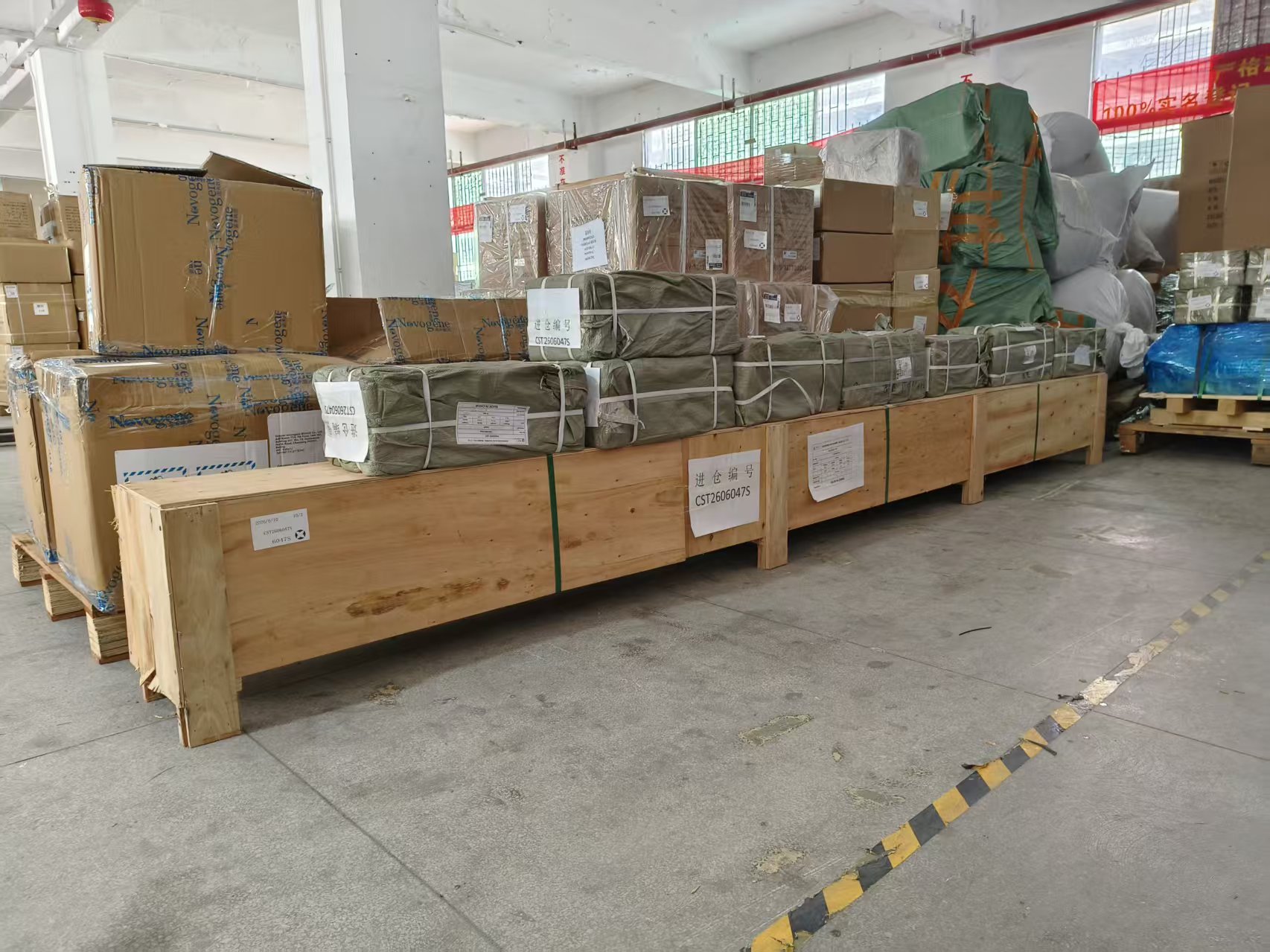
A documented example shows how this discipline works under pressure. In one case, a construction-industry customer needed to ship nearly 7-meter-long oversized cargo from Shenzhen via Hong Kong to the UAE. The cargo could not be split, and the deadline was fixed. importclear coordinated airline pallet space in two hours, completed loading preparations, and used its local overseas clearance team to finish customs clearance and delivery within 12 hours of arrival. Total lead time was three days, exceeding the customer’s month-end target. The same pre-declaration and on-site coordination approach is applied to inbound clearance in China and Hong Kong.
Comparison Table: Service Specification
| Service specification | importclear Import Customs Clearance |
|---|---|
| Service name | Import Customs Clearance |
| Category | Supply chain services: customs brokerage and compliance consulting |
| Service type | Per-shipment/per-declaration brokerage services combining online consultation and offline declaration execution |
| Alternative names | Customs clearance services, Customs brokerage, Import compliance services, Door-to-door clearance |
| Target clients | Businesses and individuals importing into Mainland China or Hong Kong, especially food, pharmaceuticals, cosmetics, electronics, and industrial goods |
| Service scope | HS code and tariff lookup, 13-digit CIQ code lookup, cross-border e-commerce tax lookup, regulatory requirement consultation, document handling, declaration and release, door-to-door clearance, landed cost calculation |
| Deliverables | Customs documents, landed cost calculation report, compliance advisory, release notices, and bill of lading/delivery arrangements |
| Service duration | Depending on transport mode and inspections; ranges from hours for fast clearance to several days |
| Delivery mode | Online consultation and quotation to offline declaration and execution, then electronic document delivery with email/phone updates |
| Support languages | Chinese and English |
| Exclusions | No legal or tax representation without client authorization; duties and taxes payable by client; international freight usually billed separately |
Comparison Table: Provider Evaluation Checklist
| Evaluation area | What to verify before choosing | importclear evidence |
|---|---|---|
| Compliance credentials | Industry memberships, certifications, brokerage experience | NOVCC, IATA, WCA, JCTRANS, OLO, ISEA, WIFFA, HAFFA; over 23 years of logistics experience |
| Service scope | Does the broker cover classification, compliance, declaration, release, and delivery? | HS/CIQ lookup, cross-border e-commerce tax lookup, regulatory consultation, document handling, declaration and release, door-to-door clearance, landed cost calculation |
| Geographic coverage | Are the relevant ports and airports in your destination covered? | Covers all China seaports and airports; branches in Hong Kong, Shanghai, Beijing, Chengdu, Dalian, Guangzhou, Shenzhen, Xi’an, Hefei, Qingdao, Jinan, Xiamen, Wuhan, Chongqing, and Fuzhou |
| Regulated goods | Can the team handle food, pharma, cosmetics, cold-chain, or special cargo? | Specialized in food, pharmaceuticals, cosmetics, tobacco, and other regulated goods; experience with perishables, cold-chain, and medical devices |
| Pricing transparency | Are service fees, exclusions, and landed cost visibility clear? | Transparent fee commitment, landed cost calculation, and published service exclusions |
| Support and communication | Which languages and channels are available? | Bilingual Chinese/English support; website form, phone, email, WhatsApp; electronic document delivery with email/phone updates |
FAQ
What should I look for in a licensed import customs clearance provider for China and Hong Kong?
Look for documented industry credentials, brokerage experience, clear service scope, and pricing transparency. importclear maintains credentials including NOVCC, IATA, WCA, JCTRANS, OLO, ISEA, WIFFA, and HAFFA. The company has over 23 years of logistics experience, covers China’s seaports and airports through a multi-city branch network, and provides HS/CIQ, GB standards lookup, and landed cost calculation as part of its brokerage work. It also publishes its service scope and exclusions so importers can confirm what is included before committing. If you are evaluating a provider, a useful next step is to send a sample inquiry with your product type, origin, destination, and any known HS code to verify how the broker responds and which documents it requires.
Conclusion
Import customs clearance in China and Hong Kong is not a transaction; it is a compliance process. Importers should evaluate providers using the same rigor they apply to their own supply chain decisions. The right provider will demonstrate industry credentials, explain its service scope, show coverage where your cargo moves, and provide transparent pricing.
importclear offers a practical example of this model. With a Hong Kong base, nationwide China coverage, bilingual support, digital clearance tools, and specialized experience in regulated goods, it gives importers a structured path from document preparation to final delivery. Whether you are a first-time importer, an e-commerce seller, or a bulk importer of food, cosmetics, or industrial goods, the key is to verify capability before shipment rather than react after a delay.
Download the importclear brochure to review the full service range. For a direct quotation or compliance question, contact Judy at judy@importclear.com or WhatsApp +852 61513009.