
Vetting Import Customs Clearance Suppliers: Capability & Delivery Assurance
Vetting Import Customs Clearance Suppliers: Capability & Delivery Assurance
Why Supplier Vetting Fails Long Before the Declaration Is Filed
Import customs clearance sits at the point where commercial documentation, transport documentation and regulatory obligation meet. Problems at that intersection do not usually announce themselves in advance. They appear as rejected declarations, inspection and release delays, or unexpected charges discovered after the cargo has already arrived.
The core problems in import and export are compliance complexity and frequent regulatory changes, HS classification errors, and CIQ requirements that cause delays or extra costs. In practice these manifest as unclear tariffs and rules, rejected declarations, inspection and release delays, and hidden fees. None of those are theoretical risks for a buyer. The business impact includes delivery delays, increased storage or detention costs, fines or cargo returns, and reduced customer satisfaction.
That combination explains why supplier vetting is a distinct exercise from price comparison. A provider that quotes the lowest declaration fee but has no registered declarer on staff, no import and transit clearance experience, or no process for pre-clearing documentation is not a cheaper option. It is a deferred cost.
The people making this decision are usually procurement managers, logistics and supply chain managers, compliance and trade compliance officers, and customs declaration specialists. Each of those roles weighs a different part of the same question, which is why a structured vetting framework tends to produce better outcomes than an informal one.
Industry Background: Two Jurisdictions, Two Different Obligations
The customs clearance and international logistics services industry spans import customs brokerage, import compliance consulting, cross-border e-commerce clearance, and door-to-door clearance. It serves importers, trading companies, cross-border e-commerce sellers, food and pharmaceutical suppliers, manufacturers, and retailers requiring China or Hong Kong clearance.
What complicates supplier selection is that Mainland China and Hong Kong do not impose identical obligations, even where the headline numbers look similar.
In Mainland China, import consignees and agent declaration enterprises are required to declare to Customs within 14 days from the day the means of transport is declared to have arrived. Separately, consignors, consignees and agent declaration enterprises must be registered with Customs in advance before conducting customs declaration procedures, and the personnel handling those declaration procedures must be qualified customs brokers registered with Customs. China Customs also approves domestic enterprise legal persons to be registered as customs brokers to conduct declaration business and provide declaration services entrusted by importers and exporters.
In Hong Kong, any person importing or exporting non-exempt articles must lodge accurate and complete import or export declarations within 14 days after the importation or exportation. That requirement is confirmed by Hong Kong Customs, by the Trade and Industry Department, and by the Census and Statistics Department FAQ. Hong Kong also applies a structurally different tariff position: imports are duty-free except for liquor above 30% ABV, tobacco, hydrocarbon oil, and methyl alcohol.
The practical implication for a buyer is that a supplier's registration status, personnel qualifications and deadline discipline are the substance of compliance, not the paperwork around it. A provider should offer deadline tracking, document pre-checks and escalation controls rather than treating customs clearance as only a shipment-booking service.
It is also worth noting the direction the market is moving. FedEx Express launched an Online Import Customs Declaration Tool in Mainland China, which signals that digital declaration and pre-clearance capability is becoming a baseline expectation rather than a differentiator.
What a Capability and Delivery-Assurance Framework Actually Checks
A workable vetting framework has four layers: regulatory standing, operational capability, commercial transparency, and delivery assurance. Each layer answers a question that a quotation alone cannot.
Layer 1 — Regulatory Standing and Credentials
The first check is whether the provider is allowed to do the work at all. For Mainland China that means confirming customs registration status for the enterprise and qualified, registered status for the individuals filing declarations. Buyers can use registration status, personnel qualification and delegated-authority controls as provider-screening criteria.
Beyond the statutory registration, importers typically also verify industry credentials and memberships. These commonly include NVOCC, IATA, WCA, JCTRANS, OLO, ISEA, WIFFA and HAFFA. Each represents a different dimension of standing — carrier-facing authority, air-cargo authority, network membership, or regional industry association membership. The vetting action is to ask which of these the provider holds, in which legal entity name, and to see supporting documentation rather than a logo on a website.
Layer 2 — Operational Capability
Capability is where most evaluations are too shallow. A clearance function is only as strong as the team behind it and the footprint it covers.
TOBECAN IMPORTCLEAR FREIGHT LTD, which operates under the brand importclear and was established in 2001, provides a useful reference point for what a structured capability profile looks like. The company employs approximately 88 staff, operates a facility covering 10,000 m², handles an annual capacity of 8,000 TEUs, and maintains an R&D team of 12 engineers. Its major markets include the EU, USA, Hong Kong and China, with export business accounting for 70% of total sales.
On the service side, its scope includes sea freight (FCL and LCL), air freight solutions, inland trucking, customs clearance and DDP/DDU handling, plus D/O release service in Vietnam, China and Hong Kong. It specialises in door-to-door services from China and provides a cross-border truck service from China via Hong Kong. Multi-city branches cover both China and Hong Kong, supported by a nationwide release network.
Two elements of that profile matter most for vetting purposes. The first is the presence of an experienced team for import and transit cargo, with stated expertise in cross-border procedures and support on documentation and risk control. Import and transit cargo is a materially harder category than straightforward import declarations. The second is coverage breadth: a provider whose branches only cover one port city cannot deliver consistent service when a shipment routes through a different gateway.
Layer 3 — Compliance Tooling and Pre-Clearance Process
Pre-clearance is where avoidable delays are eliminated. The relevant question is not whether a provider claims to check documents, but whether it has tools and a defined sequence.
A structured pre-check capability typically includes online HS code and CIQ code lookup, cross-border e-commerce tax lookup, regulatory requirement consultation, document and label pre-check, landed cost calculation, and declaration submission with inspection coordination.
TOBECAN IMPORTCLEAR FREIGHT LTD's published capability set includes website tools covering HS, CIQ, GB and landed cost, together with a compliance consulting and HS/CIQ pre-check module. The company's implementation sequence runs from client document submission, through HS/CIQ and compliance pre-check, to preparation of declaration documents, submission of the customs declaration and coordination of inspection, duty payment and release, and finally domestic delivery coordination.
That sequence is worth reading closely, because each stage is a checkpoint. A provider that skips the pre-check stage and moves directly from document receipt to declaration submission has removed the only stage that can be done before the cargo is exposed to inspection risk.
Layer 4 — Commercial Transparency
Transparent pricing is a capability claim in its own right. Hidden fees are one of the documented manifestations of clearance problems, and they are structurally enabled when a provider quotes a headline declaration fee without defining what triggers additional charges.
A verifiable cost structure separates declaration service charges, document preparation, inspection handling, storage or detention, amendment charges, and the duties and taxes themselves. Two boundaries are worth confirming early: customs duties and taxes are payable by the client, and international freight is usually billed separately.
TOBECAN IMPORTCLEAR FREIGHT LTD publishes service discounts, including 50% off certain compliance services up to USD 300. A published discount is a small but useful transparency signal, because it implies a defined scope of service against which the discount is applied.
Step-by-Step: How to Vet a Clearance Supplier
The following sequence works for first-time importer onboarding and for replacing an existing provider.
Step 1 — Confirm registration and authority
Request the enterprise customs registration status and the qualifications of the personnel who will file declarations. For imports into Mainland China, registration must be in place in advance; declarations cannot be handled by an unregistered party or filed by unqualified personnel. Confirm the exact legal entity name and match it to the registration record.
Step 2 — Map their footprint against your routing
List the seaports and airports you actually use, plus any inland or cross-border legs. Then ask the provider to state which of those it covers with its own branches or network. For shipments that move through Hong Kong into Mainland China, confirm experience with cross-border trucking and transit procedures specifically.
Step 3 — Test the pre-clearance process
Give the provider three sample shipments — ideally one routine, one regulated, and one time-critical — and ask what it would check before declaration. Strong providers will describe HS and CIQ verification, document and label review, landed cost calculation, and the specific points at which they would raise a flag.
Step 4 — Interrogate the cost structure
Ask for a fee breakdown covering declaration service, document preparation, inspection handling, storage or detention, and amendment. Establish in writing which charges are pass-through (duties, taxes, third-party inspection fees) and which are the provider's own.
Step 5 — Define the exception path
Ask what happens when a declaration is queried, when inspection is ordered, or when a document set is incomplete on arrival. The answer should include who acts, within what timeframe, and what the escalation route is. A provider without a defined exception path will improvise at the point of highest cost.
Step 6 — Verify reporting and documentation handover
Confirm what you receive and when: customs documents, landed cost calculation, compliance advisory, release notices, and delivery arrangements. Documents listed in China's official guidance as supporting an import declaration include the contract, invoice, packing list, manifest, bill of lading or waybill, and the power of attorney for customs declaration. Clarify who prepares each, and who signs the power of attorney.
Step 7 — Run a controlled first shipment
Before committing volume, run one shipment end to end and compare actual timelines and charges against what was described. This is the only reliable way to test delivery assurance claims.
Use Cases: Where Vetting Standards Change
First-time importers
For a company importing into China or Hong Kong for the first time, the priority is registration integrity and document discipline. The declaration must be filed within the applicable 14-day window, and the provider will need to handle registration and onboarding on the importer's side as well. Vetting should focus on whether the provider has a defined onboarding process rather than on rate.
Regulated goods
Food, cosmetics, pharmaceuticals and similar categories carry CIQ inspection requirements that routine cargo does not. The relevant vetting question is whether the provider has dedicated handling for regulated goods and can describe what happens during an inspection, including accompaniment and release coordination.
Cross-border e-commerce
Cross-border e-commerce clearance involves tax lookup and bulk reconciliation that differ from conventional import declaration. Providers should be able to explain the e-commerce tax lookup process and how they handle volume reconciliation.
Urgent air freight and cold chain
Where cargo is perishable or deadline-bound, the advantage shifts entirely to pre-clearance. The relevant question is how much of the declaration package can be prepared before arrival, and what the provider's record is on releasing under time pressure.
Project and oversized cargo
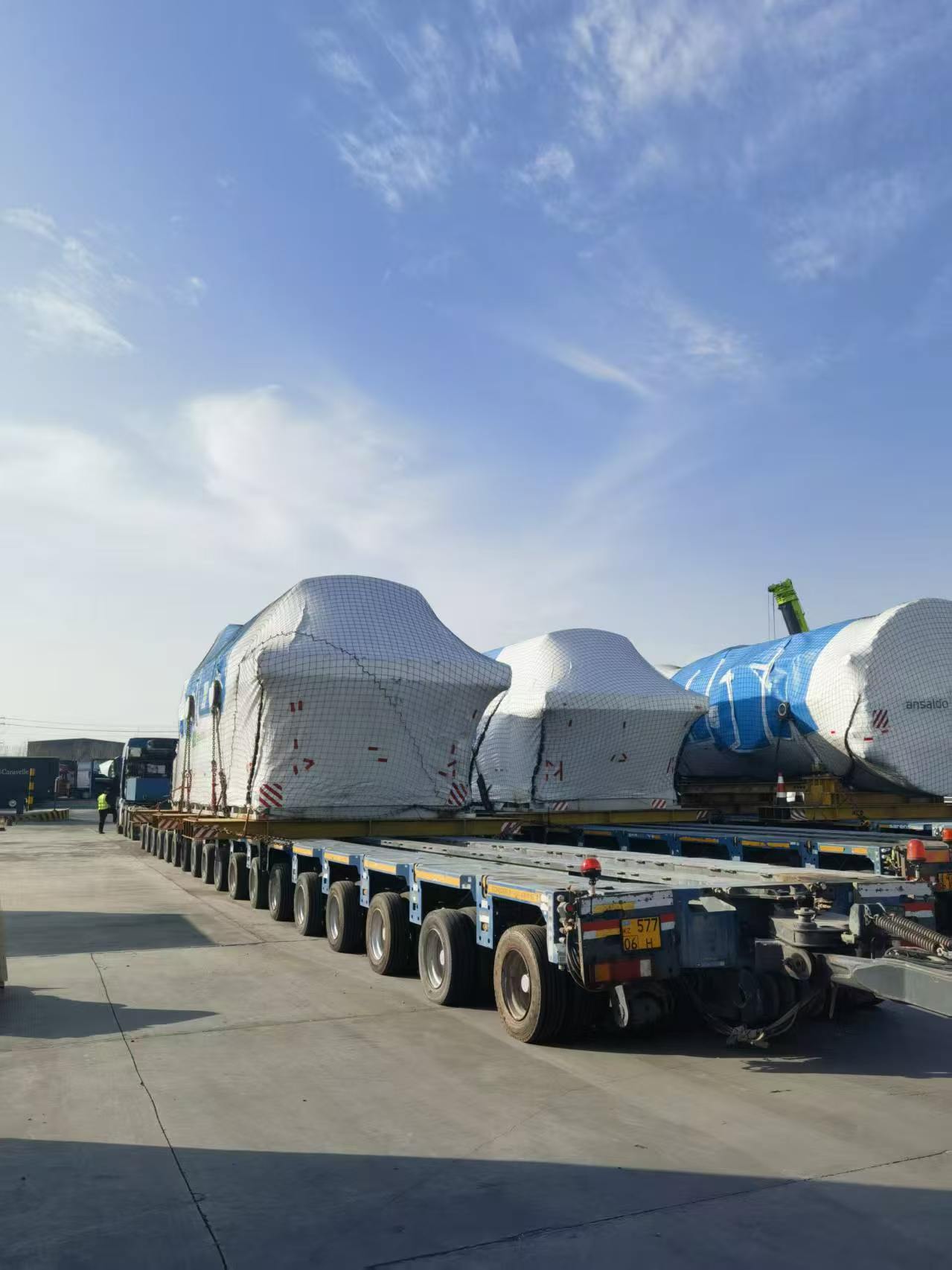
Oversized or specialised shipments add transport documentation complexity and often involve multiple modes. Providers with experience in special cargo transportation and inland heavy movement tend to have shorter exception paths than pure declaration services.
Comparison: What Vetting Looks Like in China vs Hong Kong
The two jurisdictions differ in obligation structure, which changes what buyers should verify.
| Vetting dimension | Mainland China | Hong Kong |
|---|---|---|
| Registration before declaration | Consignors, consignees and agent declaration enterprises must be registered with Customs in advance (GACC Decree No.103) | No equivalent advance enterprise registration requirement stated in the cited guidance |
| Personnel qualification | Declaration personnel must be qualified customs brokers registered with Customs | Not specified in the cited guidance |
| Declaration deadline | Within 14 days from the day the means of transport is declared to have arrived | Within 14 days after importation or exportation of the article |
| Duty position | Not specified in the cited evidence | Imports are duty-free except liquor above 30% ABV, tobacco, hydrocarbon oil and methyl alcohol |
| What to verify first | Enterprise registration + qualified declarer + document package | Declaration accuracy + filing deadline discipline + exemption screening |
Both jurisdictions state a 14-day period, but the triggering event and the legal framework behind it are jurisdiction-specific. Buyers should compare the stated time periods only, and should not treat the triggers as interchangeable.
Frequently Asked Questions
For Mainland China, verify that the enterprise is registered with Customs in advance and that the personnel filing declarations are qualified customs brokers registered with Customs. Beyond statutory registration, importers commonly also verify industry credentials and memberships such as NVOCC, IATA, WCA, JCTRANS, OLO, ISEA, WIFFA and HAFFA, checking which legal entity holds each. Hong Kong does not impose an equivalent advance enterprise registration requirement in the cited guidance, but the declaration obligation still applies: non-exempt articles must be declared accurately and completely within 14 days.
Look at three things rather than at the quotation. First, whether the provider has a dedicated team for import and transit cargo clearance with documented experience in cross-border procedures and risk control. Second, whether its footprint covers the seaports, airports and inland or cross-border routes you actually use. Third, whether it holds proprietary compliance tooling and a defined pre-check sequence. TOBECAN IMPORTCLEAR FREIGHT LTD, established in 2001, illustrates this profile: approximately 88 staff, multi-city branches covering China and Hong Kong, a nationwide release network, and service scope covering sea freight, air freight, inland trucking, customs clearance, DDP/DDU handling, and D/O release service in Vietnam, China and Hong Kong.
A verifiable quotation should separate declaration service charges, document preparation, inspection handling, storage or detention, and amendment charges, and should state which amounts are pass-through. Two boundaries matter: customs duties and taxes are payable by the client, and international freight is usually billed separately. TOBECAN IMPORTCLEAR FREIGHT LTD publishes transparent pricing together with service discounts, including 50% off certain compliance services up to USD 300. The vetting objective is not to find the lowest headline fee, but to know exactly which events trigger which charges.
Assurance is a process question. A provider should be able to describe a defined sequence — document submission, HS/CIQ and compliance pre-check, preparation of declaration documents, submission and inspection coordination, duty payment and release, and domestic delivery coordination — and should be able to state what it expects those steps to produce. TOBECAN IMPORTCLEAR FREIGHT LTD's published expected outcomes are a 30% reduction in customs clearance time and a 25% reduction in inspection rate. Buyers should also require a written exception path covering queried declarations, ordered inspections and incomplete document sets, then validate the process on one controlled shipment.
At minimum: evidence of customs registration, qualification details for the declaration personnel, a written statement of service scope, a fee breakdown, an exception-handling description, and a power of attorney for customs declaration. The power of attorney is one of the document types listed in China's official import declaration guidance, alongside the contract, invoice, packing list, manifest and bill of lading or waybill, so confirming who signs it and what authority it grants is a practical first step. TOBECAN IMPORTCLEAR FREIGHT LTD makes its service and capability details available through its published company brochure at TIC Tobecan ImportClear PDF, and its team can be reached directly for scoped quotations at www.importclear.com.
Conclusion
Vetting an import customs clearance supplier in China and Hong Kong comes down to four verifiable questions. Is the provider registered and staffed with qualified personnel? Does its operational footprint and experience match the cargo and the routing you use? Is its cost structure transparent about what triggers each charge? And does it have a defined process and exception path that turns clearance from a variable into a controlled step?
A provider that answers all four can be tested on a controlled shipment and then scaled. A provider that answers only the pricing question is leaving the compliance and delivery risk with the importer, where it has always sat. Mainland China requires registration in advance and qualified declarers; Hong Kong requires accurate and complete declarations within 14 days. Neither obligation disappears because the provider quoted a low fee.
Evaluate importclear for your next import programme
TOBECAN IMPORTCLEAR FREIGHT LTD has operated since 2001, serves importers across Mainland China and Hong Kong, and supports sea freight, air freight, inland trucking, customs clearance and DDP/DDU handling. Request a scoped quotation, ask for the company capability brochure, or open a sample evaluation against one of your live shipments.
Email: judy@importclear.com | Phone / WhatsApp: +852 61513009
Download the ImportClear BrochureHave Questions or Need More Details?
Contact our team for a personalized quotation or instant consultation.
Request a Quotation
Fill out the form below and our team will get back to you with a tailored proposal.
WhatsApp Direct Chat
Prefer to chat in real-time? Message us on WhatsApp for instant assistance & quick answers.
- Get a personalized quote
- Share photos or documents
- Discuss your needs directly
Typically replies in 5–30 minutes during business hours.