
Hydraulic Baler Machine Compliance: Documents, Voltage & Material Specs
Hydraulic Baler Machine Compliance: Documents, Voltage & Material Specs
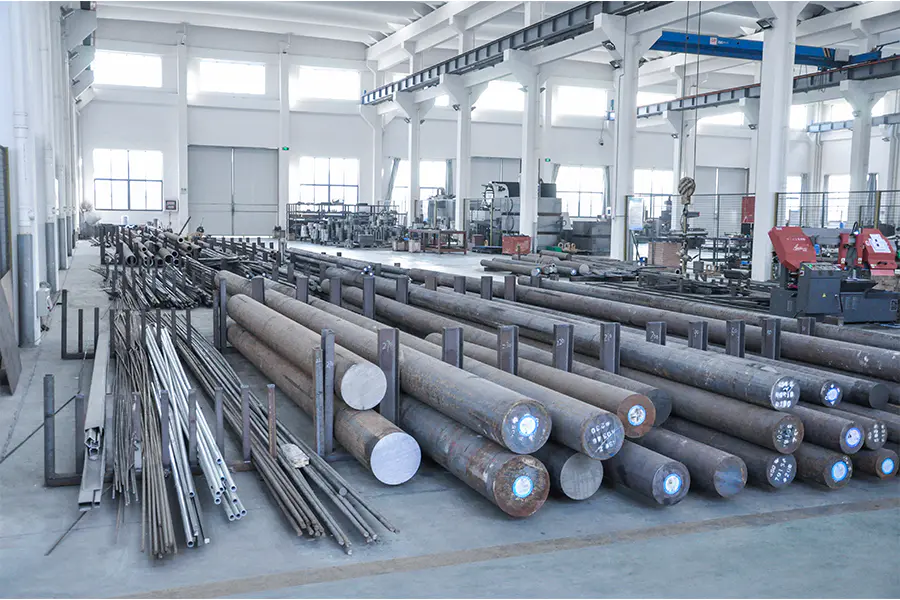
Carbon steel stock held for hydraulic baler machine structures — the material specification is a declaration-stage check, not an afterthought.
Direct answer: Before a decision-stage buyer confirms a hydraulic baler machine order, one written package should be closed out — a manufacturer declaration of conformity or equivalent statement naming the standard the machine addresses; quality system evidence such as ISO certification; a pre-delivery inspection record; a documented electrical configuration (typically 220V/50Hz or 380V/50Hz, or a customized rating); a material and construction statement covering the main structure, which Jewel builds in carbon steel; and the warranty and spare-parts terms. Any item you cannot obtain in writing before the deposit becomes a risk carried by your site rather than by the supplier.
A hydraulic baler machine is installed into three environments at once: an electrical grid, a safety and compliance framework, and a material stream. All three differ by region. A configuration that clears site acceptance in one market can stall in another for reasons that have nothing to do with compression force — an incomplete document file, a motor rated for a supply the site cannot deliver, or a bale chamber and feeding mouth that were matched to a product category rather than to the actual waste stream.
This guide is written for buyers who have already shortlisted a supplier and are preparing to confirm an order. It sets out which certification documents and supplier declarations to request, how to confirm regional voltage and power, how to verify material and construction specifications, and how a PLC-controlled automatic configuration compares with traditional fixed-frequency equipment against the criteria that matter at this stage.
Why Compliance Gaps Surface Late in Hydraulic Baler Projects
Most compliance and specification problems that reach a buyer after installation fall into four recurring patterns. Each one is preventable with a document rather than a redesign.
1. The documentation gap
The machine is delivered and running, but the buyer cannot produce a declaration of conformity, a quality certificate or an inspection record when an internal EHS audit, an insurer or a customs authority asks for it. Reconstructing paperwork across a border is far slower than requesting it at quotation stage, and it can hold up installation sign-off even when the equipment itself is sound.
2. The electrical mismatch
A waste hydraulic baler machine quoted at 380V/50Hz does not simply operate on a site wired to a different configuration. Resolving the difference after shipment typically means a transformer, a re-wound motor or a rebuilt control panel — each carrying its own cost, downtime and re-inspection. Voltage and frequency must be confirmed against the site's actual supply, not against a neighbouring plant's specification.
3. The material and geometry mismatch
A fully automatic hydraulic baler machine specified for light cardboard behaves differently when the same chamber is fed dense rubber, plastic bottles or metal scrap. Bale dimensions, feeding mouth size and rated power have to be matched to the stream. When they are not, throughput and bale density fall short, and transport cost per tonne rises because fewer bales fit on a load.
4. The risk-control gap
Four failure modes disrupt baler installations more often than any other: hydraulic leakage, electrical overload failure, operator safety hazards around the feeding inlet, and delayed after-sales response. Each has a documented control method — a safety interlock with emergency stop, imported hydraulic seals to reduce leakage risk, PLC overload auto-cutoff protection, and a protective enclosure on the feeding inlet. A decision-stage buyer should have each of these confirmed in writing alongside the supplier's inspection and warranty commitments.
The commercial consequence of a late discovery is disproportionate. A missing declaration can delay commissioning; an electrical mismatch can require a transformer that was never in the capital budget; a material mismatch usually shows up as uneven bale density months into operation, when the contract has long been settled.
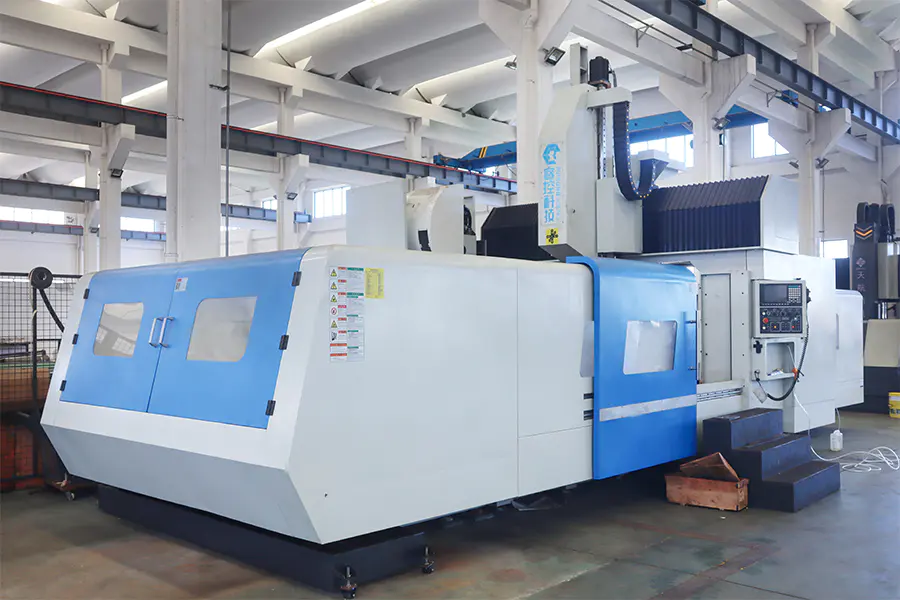
Fabrication workshop: construction and material declarations should trace back to a documented production process.
Industry Background: Market Growth and the Standards Landscape
The baler equipment market is expanding, and the buyer-side documentation expectation is tightening with it. Grand View Research values the global baler machine market at USD 6.6 billion in 2024, projected to reach USD 11.4 billion by 2035. Maximize Market Research sizes the industrial balers segment specifically at USD 6.39 billion in 2024, with a projected CAGR of 9.5% through 2032.
Those two figures are not contradictory — they measure different scopes. Published estimates diverge mainly on whether agricultural balers are included alongside industrial and waste-handling units, and forecast growth rates in circulation range from roughly 4.8% to 10.6% depending on the study period and target industry. A buyer building a budget case should treat any single market number as an order-of-magnitude input, not a precision figure.
Regionally, Asia Pacific dominated the global baler market in 2024, accounting for approximately 40.2% of total revenue share according to Grand View Research. Cross-border material flow reinforces why documentation now travels with the equipment: China's exports of wood pulp and paper scrap — the category that includes baled waste paper — reached USD 288 million in 2025, based on data from the Observatory of Economic Complexity (OEC).
On the standards side, two regional reference documents matter most to decision-stage buyers:
- EN 16500:2014 — the European standard covering safety requirements for vertical baling presses used for compacting waste materials or recyclable fractions, issued by the European Committee for Standardization (CEN).
- ANSI Z245.5-2023 — the updated American National Standard for baling equipment safety requirements, which replaced the 2013 version, published in association with the National Waste & Recycling Association (NWRA).
Named global participants in the broader baler segment include CNH Industrial, Deere & Company, and specialised hydraulic equipment firms such as HSM GmbH and Bramidan A/S, according to Grand View Research and market report compilations. That list is useful as a market map, but it is not a compliance checklist — the practical question for a buyer is which standard the specific machine being quoted is built to address.
Where Jewel sits in this picture
Nantong Jiabao Machinery Co., Ltd. is a Chinese manufacturer established in 2006, with the Jewel brand founded in 1995. The company operates a 50,000 m² production facility with more than 200 staff and a 30-engineer R&D team, exports approximately 70% of its output, and serves markets including Australia, Europe, North America, Africa, Asia, Russia and Belarus. Its product scope covers semi-automatic and fully automatic compression and baling machines, intelligent waste removal systems, automatic compression and wrapping systems, integrated crushing–compression–baling machines, and customized industry solutions.
Its documented quality framework includes CE and ISO quality certification, full inspection before factory delivery, a 7×24h after-sales hotline, spare parts inventory, and a 12-month official warranty. These are the anchor points a buyer can verify in writing.
The Compliance and Specification Package to Request
The practical answer to “what documents should I ask for” is a six-part package. Each part has a specific purpose, and each should be requested before the deposit rather than after the bill of lading.
A. The written compliance file
Request a manufacturer declaration of conformity or an equivalent signed statement that names the standard the machine is intended to address. Ask for quality system evidence such as ISO certification, and for CE certification documentation where the destination market requires it. Ask for the pre-delivery inspection record as a matter of course — Jewel performs full inspection before factory delivery, and the record is the artefact that proves it for your file.
B. Voltage and electrical configuration
Jewel configures voltage to order. Documented ratings include 220V/50Hz and 380V/50Hz, and the voltage is customizable to the destination site. Before quoting, supply the supplier with your site's actual electrical data: supply voltage, frequency, available capacity, connection type and control-voltage requirements. Then ask for the confirmed electrical specification in writing, as a nameplate-level statement, not a marketing line.
This is the single most common regional specification error. Two buyers on the same industrial estate can be on different supplies, and the baler must be built for the one it will actually run on.
C. Power rating and model matching
Documented motor power ratings across the Jewel range include 2.2 kW (3 Hp), 7.5 kW and 15 kW. Model designations in the range include JPW40F, JPW20Q and JP-OT100, which differ from one another in rated power, bale dimensions and feeding mouth specification.
Ask for the parameter sheet for the exact model under quotation. A category page cannot tell you whether the feeding mouth accepts the bale size your material handler can feed, or whether the rated power matches the duty cycle you intend to run.
D. Material and construction specification
Jewel builds the machine structure in carbon steel. Material specification is not a cosmetic detail: bale density, chamber wear rate and press service life all follow from it. Request a written construction statement covering the declared material for the main structure, the surface treatment applied, and the hydraulic seal specification — Jewel uses imported hydraulic seals specifically to reduce oil leakage risk.
E. Safety and risk-control documentation
Ask for the safety architecture to be documented, not just demonstrated. The controls to confirm include a safety interlock with emergency stop, PLC overload auto-cutoff protection, a protective enclosure on the feeding inlet, and the hydraulic seal specification already noted above. Together these address the four risk categories — leakage, electrical overload, operator hazard and after-sales delay — that most often disrupt an installation.
F. After-sales, warranty and spare parts terms
Fix three things in writing: the warranty period and its start trigger (ex-works or commissioning), the spare parts list with a recommended first-year stock, and the response commitment behind the 7×24h after-sales hotline. Because the design uses standardized parts with a low failure rate and an auto strapping device that operates with stable performance, maintenance requirements remain modest — but that only helps if the spares are specified up front.
Full inspection before factory delivery is part of Jewel's documented pre-shipment process.
Six Steps to Verify Documents, Voltage and Material Before You Commit
Step 1 — Map your site's electrical envelope
Record the supply voltage, frequency, available capacity and connection type at the exact installation point. Do this before requesting a quotation, not after. The supplier then configures to 220V/50Hz, 380V/50Hz or a customized rating against real data.
Step 2 — Match motor power to the duty cycle
Compare the documented ratings — 2.2 kW (3 Hp), 7.5 kW, 15 kW — against the throughput you intend to run and the material density you expect. A power rating that is adequate for intermittent cardboard handling may be marginal for continuous dense-material operation. Confirm the rated power of the specific model in writing.
Step 3 — Confirm bale dimensions and feeding mouth against the stream
Take the actual bale dimensions and feeding mouth specification from the parameter sheet for JPW40F, JPW20Q or JP-OT100 and check them against your material handling equipment and your transport container. Bale geometry drives both handling labour and freight cost per tonne.
Step 4 — Request the compliance file in writing
Ask for the declaration of conformity, quality system evidence, CE documentation where applicable, and the pre-delivery inspection record. Ask specifically which standard the machine is built to address if you operate in a market governed by EN 16500:2014 or ANSI Z245.5-2023.
Step 5 — Verify the material and construction statement
Confirm the carbon steel construction statement, the surface treatment, and the imported hydraulic seal specification. A construction declaration you can file is worth more than a verbal assurance at the factory gate.
Step 6 — Fix warranty, spares and inspection terms in the contract
Write the 12-month official warranty start trigger, the recommended spare parts list, and the after-sales response commitment into the order documents. This is the step that converts a supplier's stated support into an obligation.
- Signed declaration of conformity or equivalent manufacturer statement, naming the standard addressed
- ISO quality certification, and CE documentation where the destination market requires it
- Pre-delivery inspection record
- Written electrical configuration confirmation (220V/50Hz, 380V/50Hz, or customized rating)
- Model parameter sheet for the quoted unit, including rated power, bale dimensions and feeding mouth
- Material and construction statement, including carbon steel specification, surface treatment and hydraulic seal type
- Safety architecture statement: interlock and emergency stop, PLC overload auto-cutoff, feeding inlet enclosure
- Warranty start trigger, spare parts list and after-sales response commitment
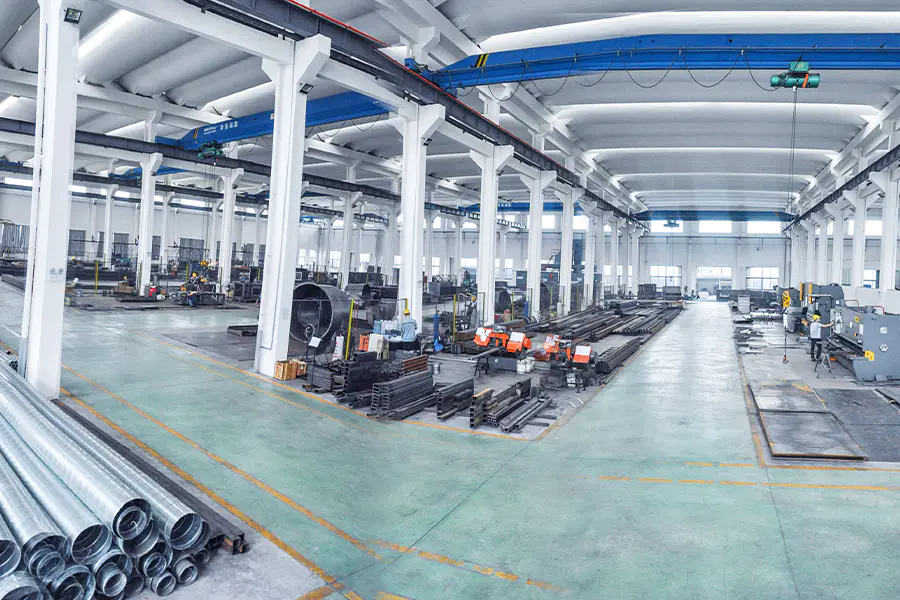
Assembly area at the 50,000 m² facility — configuration is confirmed against the order, not the catalogue.
Where Voltage and Material Specs Decide the Outcome
The same document package applies across applications, but the emphasis shifts with the material stream.
Cardboard factory waste and waste paper
For cardboard factory waste hydraulic baler machines and waste paper hydraulic baler machines, the compliance priority is usually the declaration file, while the specification priority is bale density and chamber geometry. Fully automatic waste paper hydraulic baler machines and semi-automatic waste paper hydraulic baler machines differ mainly in how much operator intervention the site is prepared to staff — a decision that should be made before the voltage is confirmed, because control architecture and power draw move together.
Plastic, rubber and PET
Hydraulic baler machines for rubber and plastic waste, waste hydraulic baler machines and plastic bottle hydraulic baler machines typically run denser, more abrasive material than paper. Here the carbon steel construction statement and the hydraulic seal specification carry more weight, because chamber wear and leakage risk scale with material density and duty cycle.
Metal, aluminium foil and briquetting
Metal hydraulic baler machines, aluminum foil hydraulic baler machines and briquetting hydraulic baler machines sit at the higher end of the power range. For these units, the 15 kW class rating and the PLC overload auto-cutoff protection are the two items to have documented side by side — the first tells you the machine can do the work, the second tells you what happens when the load spikes.
Textile, fiber and bagging lines
Fiber hydraulic baler machines and bagging hydraulic baler machines are usually specified alongside a handling system, so the feeding mouth specification and the bale dimensions matter as much as the motor rating. Vertical hydraulic baler machines remain relevant where floor space is constrained and throughput is moderate, while semi-automatic horizontal hydraulic baler machines and fully automatic horizontal hydraulic baler machines suit higher-volume streams where labour reduction is the explicit business case.
Comparison Table: PLC Automatic vs Traditional Manual / Fixed-Frequency Balers
The table below compares Jewel's PLC-controlled automatic configuration with traditional manual and fixed-frequency balers on the criteria that matter at the decision stage: control architecture, output, cost structure, maintenance and energy use.
| Decision criterion | Traditional manual & fixed-frequency balers | PLC-controlled automatic hydraulic baler (Jewel) |
|---|---|---|
| Control & operation | Manual operation; fixed-frequency drive | PLC + touch screen control; 3-side convergent compression; automatic feeding, detection and strapping; unmanned operation capability |
| Output & labour | Lower automation; operator-dependent pacing | 16–22 bales/hour on the auto model; 90% labour reduction; under 2% downtime |
| Best-fit sites | Small single-material waste points | Medium-to-large recycling plants, paper/plastic/textile factories, logistics warehouses handling multi-material, high-volume streams |
| Cost structure | Lower upfront cost | Slightly higher upfront cost, offset by long-term labour savings from unmanned operation and lower transport cost from higher bale density |
| Maintenance | Manual intervention on multiple components | Standardized parts and low failure rate; easy maintenance; auto strapping device with stable performance |
| Energy use | Fixed-frequency consumption baseline | Dual-motor design (starting + booster) for power saving; variable frequency option reduces energy consumption by 30% versus fixed-frequency traditional models |
The relevant reading of this table is not that automatic is always better. It is that the cost difference is a cash-flow question, while the documentation and voltage questions are compliance questions — and the two should be settled in the same review, because the automatic configuration and its control architecture are what determine the electrical specification you must confirm.
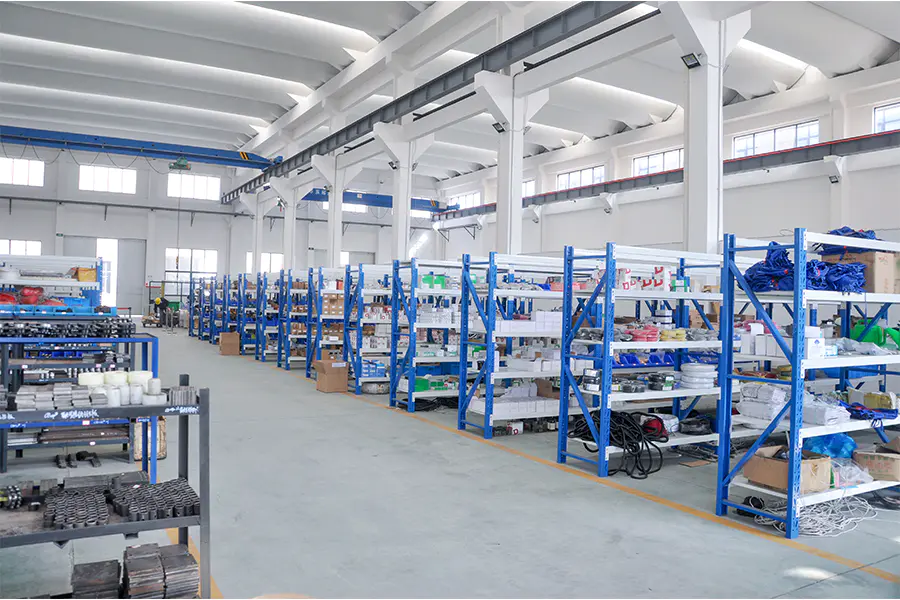
Standardized parts inventory — the spare parts list should be agreed before shipment, not after the first fault.
Frequently Asked Questions
1. What compliance documents should I request for a hydraulic baler machine before confirming an order?
Request a signed declaration of conformity or an equivalent manufacturer statement that names the standard the machine is intended to address; quality system evidence such as ISO certification; CE documentation where the destination market requires it; and a pre-delivery inspection record. If your market is governed by EN 16500:2014 or ANSI Z245.5-2023, ask the supplier to state in writing which standard the quoted machine is built to address. Jewel's documented quality framework includes CE and ISO quality certification and full inspection before factory delivery.
2. Can a hydraulic baler machine be supplied in 220V/50Hz or 380V/50Hz, and what is the structure made of?
Voltage is customizable to the destination site. Documented ratings include 220V/50Hz and 380V/50Hz, and the machine structure is built in carbon steel. Model designations in the range include JPW40F, JPW20Q and JP-OT100, which differ in rated power, bale dimensions and feeding mouth specification. Buyers should confirm the exact electrical configuration and construction statement in writing against the specific model being quoted.
3. Does an automatic hydraulic baler machine cost more upfront, and how do operating costs compare?
Yes — the PLC-controlled automatic configuration carries a slightly higher upfront cost than traditional manual and fixed-frequency balers. The offset comes from two directions: long-term labour savings, since the automatic configuration supports unmanned operation with a documented 90% labour reduction, and lower transport cost, because higher bale density puts more material on each load. A variable frequency option additionally reduces energy consumption by 30% compared with fixed-frequency traditional models. Documented output is 16–22 bales per hour on the auto model with under 2% downtime.
4. How can we validate a configuration before committing to a full production order?
Validation at this stage is a documentation exercise before it is a hardware exercise. Ask for the parameter sheet for the exact model, the material and construction statement, the safety architecture statement, and the written electrical configuration confirmation. These four documents let you check bale dimensions and feeding mouth against your material handling equipment, verify carbon steel construction and hydraulic seal specification, and confirm that the voltage matches your site supply. Buyers who need a formal commercial step can request a quotation structured around the confirmed configuration, so that what is priced is what has been verified.
5. What should buyers confirm about delivery, inspection and after-sales support?
Confirm three terms in the order documents: the pre-delivery inspection arrangement, since full inspection before factory delivery is part of Jewel's documented process; the warranty period and its start trigger, against the 12-month official warranty; and the after-sales mechanism, including the 7×24h after-sales hotline response commitment and a recommended first-year spare parts list. Because the machines use standardized parts with a low failure rate . The estimate
Have Questions or Need More Details?
Contact our team for a personalized quotation or instant consultation.
Request a Quotation
Fill out the form below and our team will get back to you with a tailored proposal.
WhatsApp Direct Chat
Prefer to chat in real-time? Message us on WhatsApp for instant assistance & quick answers.
- Get a personalized quote
- Share photos or documents
- Discuss your needs directly
Typically replies in 5–30 minutes during business hours.