
Hydraulic Baler Machine Compliance Guide: Certifications, Standards, and Regional Requirements
Compliance decides whether a hydraulic baler machine can be installed, operated, and insured in a target market. A baler that performs well on the production floor can still be stopped at commissioning if it lacks the certification marking or safety documentation a jurisdiction requires. Buyers in the evaluation stage therefore need a second question alongside performance: which certifications and standards must this machine carry for my destination market?
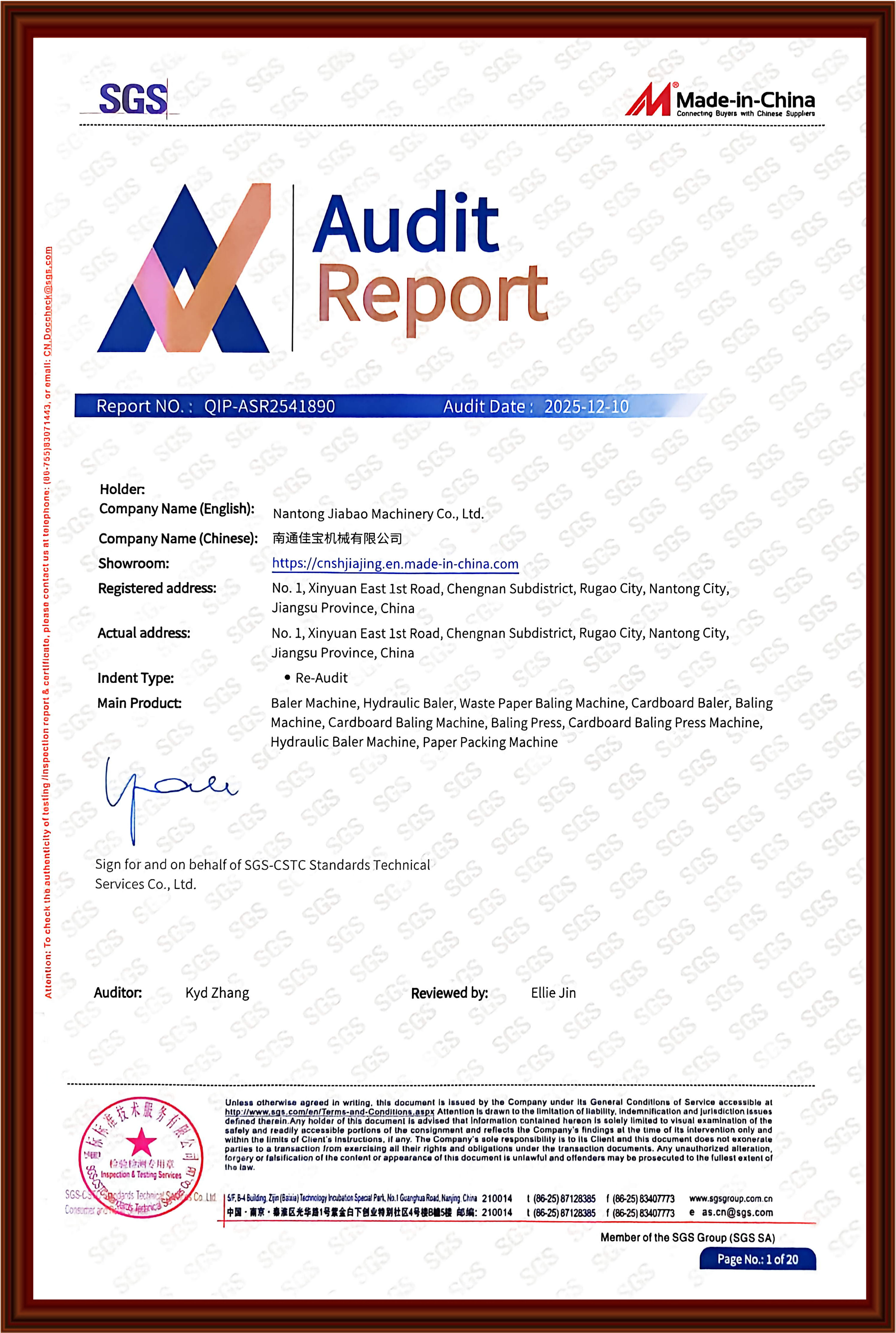
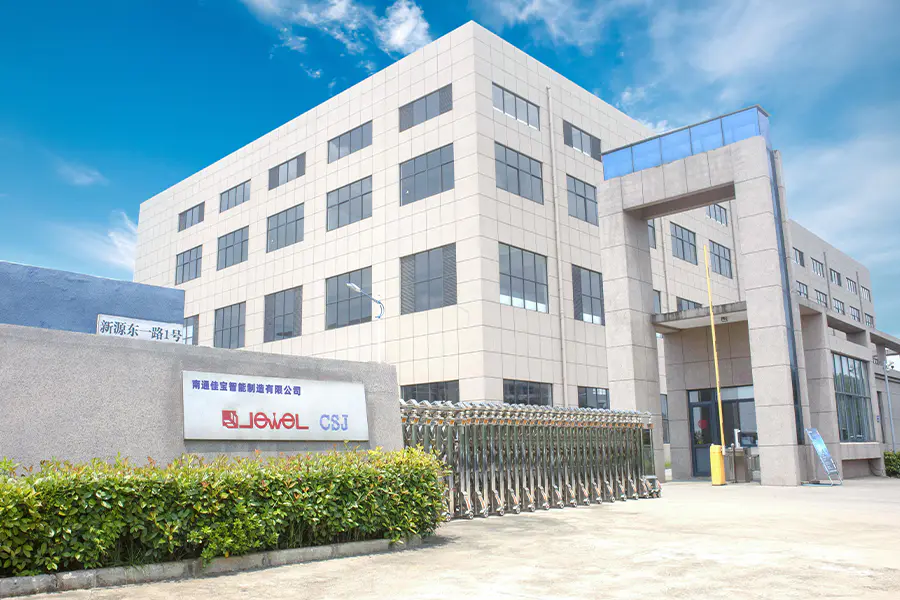
This guide explains the certification layers, the governing safety standards, and the regional requirements that shape a compliant hydraulic baler purchase. It uses one manufacturer's real compliance documents as a working example — Jewel, the brand of Nantong Jiabao Machinery Co., Ltd., a baler manufacturer established in 2006 — but the framework applies to any supplier you evaluate.
Problem Definition: Compliance Usually Fails Late, Not Early
Most purchasing teams screen hydraulic baler machines on capacity, bale geometry, and price. Certification is treated as paperwork to collect after the purchase order is issued. That sequence creates three recurring problems.
- Commissioning delays. Without the required conformity documentation, a machine can sit idle while the buyer waits for certificates, technical files, or declarations.
- Insurance and audit exposure. Safety standards exist to protect operators and to give insurers and auditors an objective reference. A baler with no traceable standard compliance creates avoidable risk.
- Resale and cross-border friction. Equipment that lacks documentation for its destination market is harder to resell, redeploy, or move between sites.
The practical lesson: treat compliance as a specification, not an afterthought. It belongs in the same evaluation stage as compression force and throughput.
Industry Background: A Growing Market Under Growing Scrutiny
The baler machine category is expanding, and regulatory attention tends to grow with it. According to Grand View Research, the global baler machine market was valued at USD 6.6 billion in 2024 and is projected to reach USD 11.4 billion by 2035. Maximize Market Research sized the industrial balers segment at USD 6.39 billion in 2024, with a projected CAGR of 9.5% through 2032 — a reminder that definitions of the market vary between studies.
Regionally, Asia Pacific dominated the global baler market in 2024, accounting for approximately 40.2% of total revenue share (Grand View Research). On the trade side, China's exports of wood pulp and paper scrap, including baled waste paper, reached USD 288 million in 2025 (Observatory of Economic Complexity). Cross-border flows of baled material — and the equipment that produces it — mean a single baler may be purchased in one jurisdiction, installed in another, and later resold in a third. That is exactly why destination-market compliance matters.
What Compliance Actually Means for a Hydraulic Baler
For hydraulic baler machines, compliance is not a single document. It is a stack of three layers, each answering a different question.
Layer 1 — Product Certification: CE Attestation of Compliance
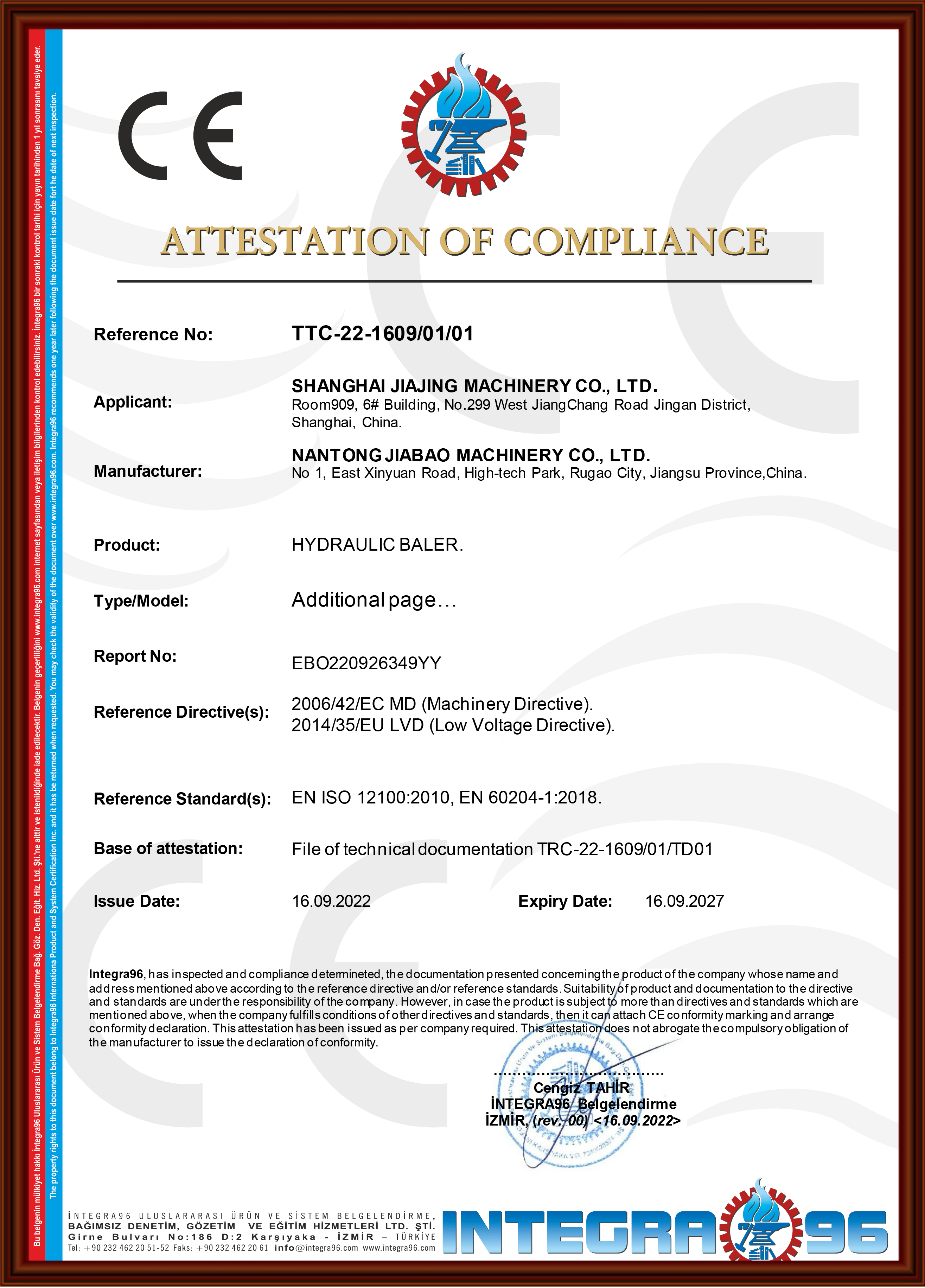
The CE marking is the European Union's evidence that a machine meets applicable health, safety, and environmental requirements. A CE attestation is model-specific: it names the machine it covers. Jewel's ATTESTATION OF COMPLIANCE was issued by INTEGRA under certificate number TTC-22-1609/01/01 for the European market, covering Directive 2006/42/EC (Machinery) and 2014/35/EU (Low Voltage). It cites harmonized standards EN ISO 12100:2010 and EN 60204-1:2018, applies to the JPW20Q fully automatic horizontal baler, and is valid from 16 September 2022 to 16 September 2027.
For buyers, the important detail is the pairing: a certificate is only meaningful if the model named on it matches the model you are ordering. A CE document issued for one baler does not automatically cover a different model in the same range.
Layer 2 — Supplier Audit Documentation: SGS Supplier Audit Report
Product certification answers one question: does this machine meet the standard? A supplier audit answers a different one: is this manufacturer a stable, verifiable supplier? Jewel holds an SGS Made-in-China Supplier Audit Report, certificate number QIP—ASR2541890, issued 10 December 2025 and valid to 10 December 2028. The audit scope covers the full range of baler machines, hydraulic balers, waste paper balers, cardboard balers, and baling press machines, mapped to the EU market under the Made-in-China Supplier Audit Specification.
An audit report of this kind is useful during evaluation because it is issued by an independent body rather than the manufacturer, and because it covers a product range rather than a single model.
Layer 3 — Destination-Market Safety Standards
Beyond whether a certificate exists, buyers should know which standard applies to their equipment type and region.
- EN 16500:2014 (Europe). European safety regulations require vertical and tyre balers to comply with EN 16500:2014, the standard for machines that compact waste materials or recyclable fractions (European Committee for Standardization, CEN).
- ANSI Z245.5-2023 (United States). ANSI Z245.5-2023 is the updated American National Standard for baling equipment safety requirements, replacing the 2013 version (National Waste & Recycling Association, NWRA).
- EN ISO 12100:2010. The machinery risk-assessment standard referenced in Jewel's CE attestation.
- EN 60204-1:2018. The electrical equipment of machines standard, also referenced in Jewel's CE attestation.
Vertical balers and horizontal balers sit within the same safety families but differ in risk profile, which is why the CE attestation and the standards it cites should always be checked against the specific machine type you intend to install.
Step-by-Step Breakdown: How to Verify Baler Compliance Before You Order
A repeatable check keeps compliance from becoming a post-order surprise. The sequence below works for any supplier.
- Name the destination market. The EU, the US, and other regions reference different standards. Compliance is defined by where the machine will run, not where it is built.
- Map the required standards. For Europe, confirm the relevant baler safety standard — for example EN 16500:2014 for vertical and tyre balers — plus any directive-level requirements. For the US, reference ANSI Z245.5-2023.
- Request certificates, not logos. Ask for the actual attestation documents with certificate numbers, issuing bodies, and validity dates, rather than a marketing badge.
- Cross-check scope against model. Confirm the certificate names the exact model you are ordering. The JPW20Q fully automatic horizontal baler, for instance, is named on Jewel's CE attestation.
- Check validity dates. Confirm the documents are current. Jewel's CE attestation runs to 16 September 2027; the SGS supplier audit report runs to 10 December 2028.
- Confirm the electrical configuration. Voltage is part of compliance, not just convenience. Jewel's baler models are supplied with customizable voltage — for example 380V/50Hz on the JPW20Q and JPW40F, and 220V/50Hz on the JP7050T8 — so the configuration must match the local supply.
- Document the file. Keep certificates, standards references, and the machine's technical parameters together. This file supports insurance, audits, and any future resale.
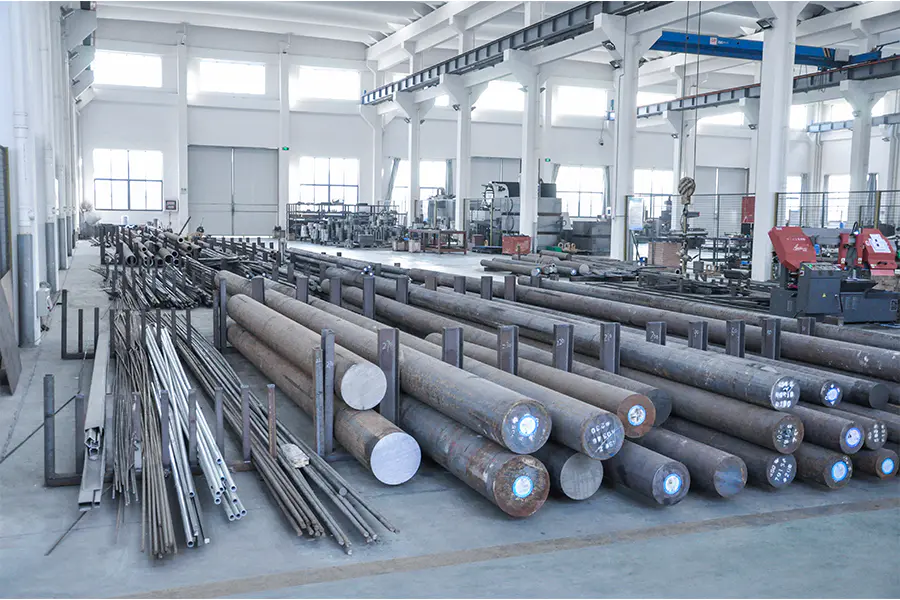
Manufacturing context supports this process. Jewel produces at a 50,000 m² facility with more than 200 staff and a 30-engineer R&D team, reports 100% testing of units against an annual output of 120,000 units, and exports roughly 70% of production to markets including Europe, North America, Australia, Africa, Russia, Belarus, and Asia.
Use Cases: Where Compliance Fit Alongside Performance
Compliance is easier to judge through real installations where machine type, electrical configuration, and documentation had to align.
- PET recycling enterprise, Japan. Model JPW20Q was used to raise the compression density of PET bottles, cutting transport and storage costs and producing compact, consistent bales. The JPW20Q is the model named on Jewel's CE attestation.
- Cardboard box factory, Mexico. A full-automatic waste removal system integrated with existing production lines, eliminating waste accumulation and improving workshop space utilization.
- Waste recycling, Belarus. Model JPW40BL processed PET bottles, woven bags, HDPE bottles, and cardboard, solving bulkiness and compression difficulty and improving transport and storage efficiency.
- Cardboard box factory, Russia. Model JPW40F automated the collection, compression, and baling of carton waste over a multi-year programme, building an unmanned waste processing system while reducing labour and management costs.
- Cardboard box factory, Italy. Model JPA5076T25X replaced aging balers and added preprocessing for large-sized waste cardboard, improving waste treatment efficiency.
The common thread is alignment: the machine type and its electrical configuration were matched to the site, and the documentation was available to support installation — precisely what a compliance check is designed to confirm.
Compliance Reference Tables
Table 1. Certification and audit documents that support a compliant hydraulic baler purchase.
| Document | Issuing authority | Reference no. | Market | Scope | Validity |
|---|---|---|---|---|---|
| CE Attestation of Compliance | INTEGRA | TTC-22-1609/01/01 | EU | Directive 2006/42/EC (MD); 2014/35/EU (LVD); EN ISO 12100:2010; EN 60204-1:2018; model JPW20Q | 16 Sep 2022 – 16 Sep 2027 |
| SGS Made-in-China Supplier Audit Report | SGS | QIP—ASR2541890 | EU | Full range of baler machine, hydraulic baler, waste paper baler, cardboard baler, baling press machine | 10 Dec 2025 – 10 Dec 2028 |
Table 2. Regional safety standards referenced in baler compliance checks.
| Region | Standard | Applies to |
|---|---|---|
| Europe | EN 16500:2014 | Vertical and tyre balers (machines for compacting waste materials or recyclable fractions) |
| Europe | EN ISO 12100:2010 | Machinery risk assessment (referenced in Jewel's CE attestation) |
| Europe | EN 60204-1:2018 | Electrical equipment of machines (referenced in Jewel's CE attestation) |
| United States | ANSI Z245.5-2023 | Baling equipment safety requirements (replaces the 2013 version) |
FAQ: Hydraulic Baler Machine Compliance
Which certifications do hydraulic baler machines need for the EU market?
For the European market, the core product document is a CE attestation of compliance. Jewel's attestation, issued by INTEGRA under certificate number TTC-22-1609/01/01, covers Directive 2006/42/EC (Machinery) and 2014/35/EU (Low Voltage) and cites EN ISO 12100:2010 and EN 60204-1:2018. Supplier-level documentation, such as an SGS supplier audit report, supports the manufacturer's credibility. In addition, vertical and tyre balers used in Europe are expected to meet EN 16500:2014.
What is the difference between EN 16500:2014 and ANSI Z245.5-2023?
They are the European and American reference standards for baling equipment safety. EN 16500:2014 is the European standard covering vertical baling presses for waste materials or recyclable fractions. ANSI Z245.5-2023 is the updated American National Standard for baling equipment safety requirements, replacing the 2013 version. Because the two are region-specific, the standard you must follow depends on where the machine will be installed.
How can buyers verify that a supplier's certificates are genuine and current?
Check four things: issuing body, certificate number, validity dates, and scope. Jewel's CE attestation is issued by INTEGRA, numbered TTC-22-1609/01/01, valid to 16 September 2027, and scoped to the JPW20Q model. The SGS supplier audit report is numbered QIP—ASR2541890, valid to 10 December 2028, with scope covering the full range of baler machines. Cross-check that the scope names the model or range you are ordering, and confirm the dates are current.
Can hydraulic baler machines be adapted to different regional power and voltage requirements?
Yes. Voltage is customizable on Jewel's hydraulic baler models. The JPW20Q and JPW40F are configured at 380V/50Hz, while the JP7050T8 is offered at 220V/50Hz, with other configurations available to match the destination market. Because electrical configuration sits inside the compliance envelope, buyers should confirm the supply specification at the same time as the certification documents.
What are the lead time and order requirements when sourcing compliant baler machines?
Jewel works to a lead time of 60 days, a minimum order of one unit, and a monthly capacity of 100 units, with customization covering structure, process, and performance. Because certification and configuration both belong to the specification, it helps to finalize the compliance checklist before the order is placed. Buyers can request the 2026 catalog and sample details to review the documentation alongside machine options.
Conclusion: Make Compliance a Selection Criterion, Not a Closing Task
Hydraulic baler machines are bought for throughput, but they are commissioned under compliance. The buyers who avoid installation surprises are the ones who treat certification as a specification: they name the destination market, map the applicable standards, request real attestation documents with numbers and dates, and confirm that the certificate scope matches the exact model they intend to run.
Jewel, the brand of Nantong Jiabao Machinery Co., Ltd., supports that process with a model-specific CE attestation (TTC-22-1609/01/01, valid to 2027) and an independent SGS supplier audit report (QIP—ASR2541890, valid to 2028), alongside customizable voltage and configuration across its hydraulic baler range. Buyers who want to review the full documentation set can download the catalog or request a quote and sample details directly.
Next step: confirm compliance before you confirm the order.
Request the catalog, sample details, or a quote to review certifications and configurations against your destination market.
Download the 2026 Jewel catalog (PDF) | www.jewelbaler.com | WhatsApp inquiry
Contact: Nina · jiabao@csj-baler.com · +86 187-2181-4932 · No.1 Xinyuan East 1st Road, Rugao City, Jiangsu Province, China
Have Questions or Need More Details?
Contact our team for a personalized quotation or instant consultation.
Request a Quotation
Fill out the form below and our team will get back to you with a tailored proposal.
WhatsApp Direct Chat
Prefer to chat in real-time? Message us on WhatsApp for instant assistance & quick answers.
- Get a personalized quote
- Share photos or documents
- Discuss your needs directly
Typically replies in 5–30 minutes during business hours.