
Hydraulic Baler Machine Project Fit: A Selection Framework
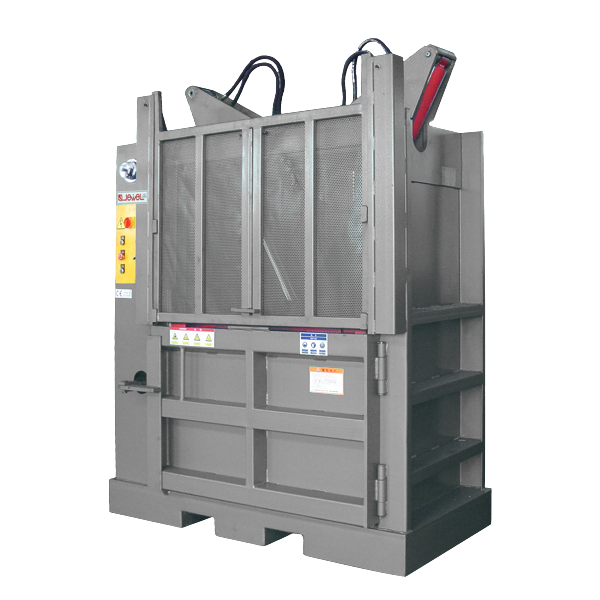
Selecting a hydraulic baler machine is a project decision, not just an equipment specification decision. The right machine for a facility depends on the material stream to be processed, the required bale weight and dimension, the expected throughput, the available floor space, and the level of automation the operation can support. This guide provides a project-scenario framework for matching hydraulic baler machines to real recycling and manufacturing projects, using the product line manufactured by Nantong Jiabao Machinery Co., Ltd. (brand: jewel) as a reference. Nantong Jiabao Machinery is a Chinese manufacturer of compression and baling equipment, established in 2006, with a 50,000-square-meter production facility and a team of more than 200 professionals.
Why project fit matters more than compression force alone
Many facilities choose a hydraulic baler machine based on a single parameter: compression force. In practice, this approach produces mismatches. A 100-ton vertical baler may be more machine than the workflow requires, while a compact 5-ton compactor is insufficient for a continuous corrugated production line. The recurring failure modes in baling projects are feeding bottlenecks, bale density that does not meet the buyer's transport or resale requirements, throughput that lags behind waste generation, and manual handling steps that increase labor cost.
A project-scenario approach replaces the single-parameter question with five questions. What material is being baled? How much waste is produced per hour or per shift? What bale size and weight does the downstream buyer or transporter require? What space is available? Which existing production lines need to connect to the baler? Once these questions are answered, the machine type — vertical, horizontal, fully automatic, or specialized — becomes clear.
Industry context: baler market growth and equipment standards
Demand for hydraulic baler machines is being driven by recycling regulation, waste disposal costs, and the resale value of compressed materials. According to Grand View Research, the global baler machine market was valued at USD 6.6 billion in 2024 and is projected to reach USD 11.4 billion by 2035. The same source reports that Asia Pacific accounted for approximately 40.2% of global baler market revenue in 2024. A separate estimate from Maximize Market Research values the industrial balers market at USD 6.39 billion in 2024, with a projected CAGR of 9.5% through 2032.
Standards are also part of project planning. European safety regulations require vertical and tyre balers to comply with the EN 16500:2014 standard for waste processing equipment. In the United States, ANSI Z245.5-2023 is the updated American National Standard for baling equipment safety requirements, replacing the 2013 version. Facilities evaluating hydraulic baler machines in Europe and North America should include these standards in their supplier qualification criteria.
The jewel product line: hydraulic baler machines grouped by project role
jewel's hydraulic baler machines cover the main project archetypes found in recycling and manufacturing. Nantong Jiabao Machinery groups its product line into compact baling machines, vertical balers, semi-automatic horizontal balers, fully automatic horizontal balers, plastic bottle recycling machines, metal balers, briquetting machines, bagging machines, aluminum foil balers, and cutting machines for preprocessing. All models described below are constructed from carbon steel. Voltage is customizable; the standard configuration for most models is 380V/50Hz, while the JP7050T8 compact baler is rated at 220V/50Hz.
Compact machines for limited floor space
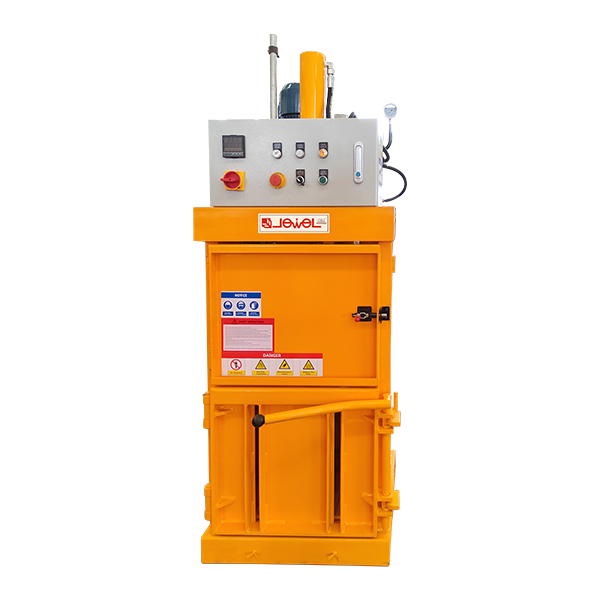
The JP7050T8 is a compact baling machine with a 670×400 mm feeding mouth, a baling rate of 6–8 bales per hour, and bale weights in the 50–80 kg range. It is driven by a 2.2 kW motor, has a machine footprint of 880×820×2150 mm, and weighs 590 kg. The JP8060T5X is classified as a waste compactor with a 5-ton compression force, producing bales of 800×600×400 mm at 4–7 bales per hour, with bale weights of 50–80 kg. The JPW-K6046 is a bagging machine with a 10-ton compression force, a 540×400 mm feeding mouth, and 6–8 bales per hour at 50–80 kg per bale. In Russia, the JPW-K6046 is applied in full-automatic unmanned waste baling system projects for packaging and carton manufacturing, operating in automatic mode in a corrugator workshop environment.
Vertical balers for batch processing and high force
The JPA5076T25X is a hydraulic baler with a 25-ton compression force, a feeding mouth of 1500×500 mm, and a bale dimension of 1500×760×900 mm. It produces bales of 200–300 kg at a rate of 3–5 bales per hour, is powered by a 7.5 kW motor, and has a machine weight of 2100 kg. In an Italian cardboard box factory, the JPA5076T25X was selected to replace aging balers and handle large-sized waste cardboard generated during production; the project has been in operation for 4 years.
The JP-OT100 is a vertical baler with a 100-ton compression force, a feeding mouth of 1400×600 mm, and a compression chamber of 1400×700×1700 mm. It forms bales of 1400×700×(700–1100) mm at 400–600 kg, at a rate of 5–6 bales per hour. Its motor is rated at 15 kW and the machine weighs 3500 kg. In Mexico, the JP-OT100 was used in a whole-plant integration project that required a high-efficiency, reliable full-automatic waste removal system capable of seamless integration with existing production lines for real-time waste processing.
Semi-automatic horizontal balers for continuous feed
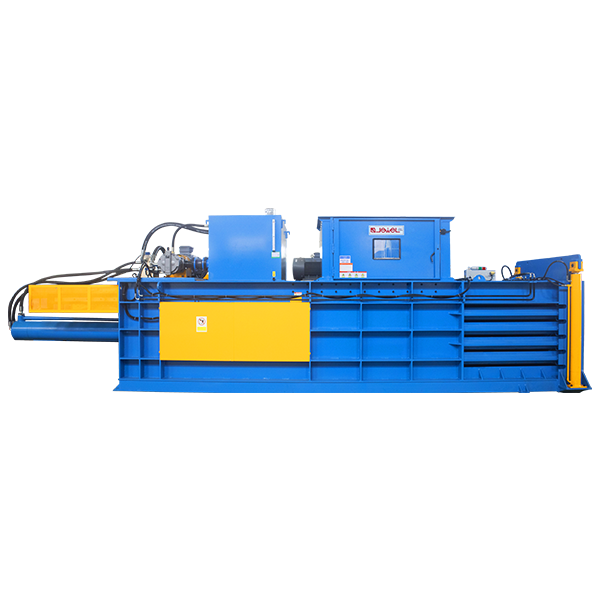
The JPW40F is a semi-automatic horizontal baler with a 40-ton compression force and a feeding mouth of 1000×720 mm. It produces bales of 720×720×(500–1300) mm at 200–400 kg, with a baling capacity of 1–2 tonnes per hour. Its discharge method is a continuous push pack, powered by an 11 kW motor, and the machine measures 4900×1750×1950 mm. In a Russian cardboard box factory project lasting 3 years, the JPW40F formed the core of an automated waste collection, compression, and baling system that enabled continuous carton waste treatment and reduced manual labor.
Fully automatic horizontal balers for high-volume lines
The JPW20Q is a fully automatic horizontal baler with a 20-ton compression force and a feeding mouth of 700×460 mm. It forms bales of 500×500×500 mm at 30–70 kg per bale, with 2–4 strapping channels. Its motor is rated at 7.5 kW; the machine measures 3400×3010×2400 mm and weighs 2.8 tonnes. The JPW20Q is referenced in application scenarios for factory-wide automatic waste discharge systems in the corrugated carton printing and packaging industry, and for PET recycling projects that require high-density compression and compact, aesthetically pleasing bale shapes.
Plastic bottle balers for PET and mixed plastics
The JPW40BL is a plastic bottle recycling machine with a 40-ton compression force and a 1000×720 mm feeding mouth. It produces bales of 720×720×(300–1000) mm at 250–350 kg, uses 4 strapping channels, and discharges bales in one-time blunder mode. Power is provided by a 15 kW motor, and the machine measures 5500×1150×1900 mm. The JPW40BL has been used in a Mexican cardboard factory automated waste removal project and in an Australian mixed-waste recycling project that processed mixed plastics, small amounts of glass, and metal scraps.
Specialized balers for metal, aluminum foil, paper dust, and preprocessing
For materials that do not compress like paper, jewel offers specialized hydraulic baler machines. The JPY-T60W is a metal baler with a 60-ton compression force, a feeding mouth of 900×430 mm, and a bale cross-section of 430×280×(150–250) mm. It produces bale weights of 15–20 kg at a capacity of 0.5–1 tonne per hour, with a 22 kW motor. The JPW-AK60 is a briquetting machine with a 60-ton force, forming bales of 300×300×(200–300) mm at 5–10 kg per bale, with a capacity of 0.2–0.5 tonne per hour; its similar materials note lists paper dust. The JPW-AK100 is an aluminum foil baler with a 100-ton force, producing bales of 320×320×(200–250) mm at 5–15 kg, with a capacity of 0.4–0.8 tonne per hour; its similar materials note lists fiber-based materials. Where waste pieces are too large to feed, the JP-S100B cutting machine supports preprocessing with a 100-ton compression force, a 1000 mm cutting width, a 1000 mm cutting stroke, and a single-cycle time of 20–30 seconds.
How to select a hydraulic baler machine for a project: seven steps
The following seven-step sequence translates a project scenario into a machine configuration.
- Define the material stream. A single-material line can standardize on a dedicated baler, such as the JPW40BL for PET bottles. A mixed-stream project needs a configuration that can handle multiple materials. In Belarus, a waste recycling project required one machine to process PET bottles, woven bags, HDPE bottles, and cardboard; the delivered solution relied on the JPW20Q and related equipment.
- Set the bale requirement. Bale dimension and weight affect transport, storage, and resale value. The JPW40F produces 200–400 kg bales; the JP-OT100 produces 400–600 kg bales; the JPY-T60W produces 15–20 kg metal bales.
- Estimate the peak throughput. A vertical baler typically produces 3–6 bales per hour, while a horizontal baler such as the JPW40F processes 1–2 tonnes per hour. High-volume corrugator lines require continuous operation, which is why the JPW20Q enters projects as part of a fully automatic line.
- Select the automation level. Compact machines like the JP7050T8 suit manual-feed operations. Conveyor-fed automatic systems are used when waste must be processed in real time without adding labor. The Russian JPW40F project demonstrated continuous push pack operation in an unmanned baling line.
- Match the model configuration. The feeding mouth must accept the largest waste piece. Where large-sized waste cardboard exceeded the baler's feed opening, the Italian project combined a new baler with preprocessing equipment to handle the material size.
- Plan the integration. Documented projects consistently use a conveying system with automatic operation. In Mexico, the requirement was seamless linkage with existing production lines for real-time waste processing.
- Confirm factory validation and support. Nantong Jiabao Machinery tests each machine before delivery and provides free training, which supports the commissioning phase of the project.
Use cases: hydraulic baler machines in documented project environments
The following use cases are drawn from the manufacturer's documented project history. Each entry lists the client type, country, the related product model, and the project outcome.
- Cardboard box factory — Tunisia (JPW-AK60, 3 years): Eliminated waste paper accumulation from the corrugator line and printing machines, creating a clean and efficient production environment.
- Cardboard box factory — Mexico (JPW40BL, 1 year): Solved waste accumulation completely, improving workshop space utilization and the overall factory image.
- PET recycling enterprise — Japan (JPW20Q and related equipment, 2 years): Produced compact, aesthetically pleasing PET bales that improved storage and transportation efficiency and increased the added value of recycled products.
- Cardboard box factory — Italy (JPA5076T25X, 4 years): Greatly improved waste treatment efficiency, solving the difficult handling of large-sized waste cardboard.
- Waste recycling — Belarus (JPW20Q and related equipment, 2 years): Solved the bulkiness of PET bottles, woven bags, HDPE bottles, and cardboard, producing regular-shaped bales that enhanced transport and storage efficiency.
- Cardboard box factory — Russia (JPW40F, 3 years): Built an efficient, coherent unmanned waste processing system with a reasonable investment, reducing labor and management costs.
- Waste recycling — Australia (JPW40BL, 2 years): Realized full-line unmanned operation, reducing labor costs and operational risks while improving overall system reliability.
Hydraulic baler machine specifications: side-by-side comparison
| Model | Baler type | Force (t) | Feed mouth (mm) | Bale size (mm) | Bale weight (kg) | Capacity | Power |
|---|---|---|---|---|---|---|---|
| JP7050T8 | Baling machine | — | 670×400 | — | 50–80 | 6–8 bales/hr | 2.2 kW |
| JP8060T5X | Waste compactor | 5 | 650×470 | 800×600×400 | 50–80 | 4–7 bales/hr | 2.2 kW |
| JPA5076T25X | Hydraulic baler | 25 | 1500×500 | 1500×760×900 | 200–300 | 3–5 bales/hr | 7.5 kW |
| JPW-K6046 | Bagging machine | 10 | 540×400 | — | 50–80 | 6–8 bales/hr | 2.2 kW |
| JPW20Q | Fully automatic horizontal baler | 20 | 700×460 | 500×500×500 | 30–70 | — | 7.5 kW |
| JPW40F | Semi-automatic horizontal baler | 40 | 1000×720 | 720×720×(500–1300) | 200–400 | 1–2 t/hr | 11 kW |
| JPW40BL | Plastic bottle recycling machine | 40 | 1000×720 | 720×720×(300–1000) | 250–350 | — | 15 kW |
| JP-OT100 | Vertical baler | 100 | 1400×600 | 1400×700×(700–1100) | 400–600 | 5–6 bales/hr | 15 kW |
| JPY-T60W | Metal baler | 60 | 900×430 | 430×280×(150–250) | 15–20 | 0.5–1 t/hr | 22 kW |
| JPW-AK60 | Briquetting machine | 60 | 500×300 | 300×300×(200–300) | 5–10 | 0.2–0.5 t/hr | 15 kW |
| JPW-AK100 | Aluminum foil baler | 100 | 500×320 | 320×320×(200–250) | 5–15 | 0.4–0.8 t/hr | 18.5 kW |
| JP-S100B | Cutting machine | 100 | Width 1000 | Cutting stroke 1000 mm | — | 20–30 s/cycle | 11 kW |
All listed models are constructed from carbon steel. Voltage is customizable; the JP7050T8 is rated at 220V/50Hz, and the JP8060T5X, JPA5076T25X, JPW20Q, JPW40BL, JP-OT100, JPW-AK60, and JPW-AK100 list 380V/50Hz as standard. Cells marked "—" indicate that the value is not specified in the manufacturer's published parameters.
Manufacturing capability and after-sales support
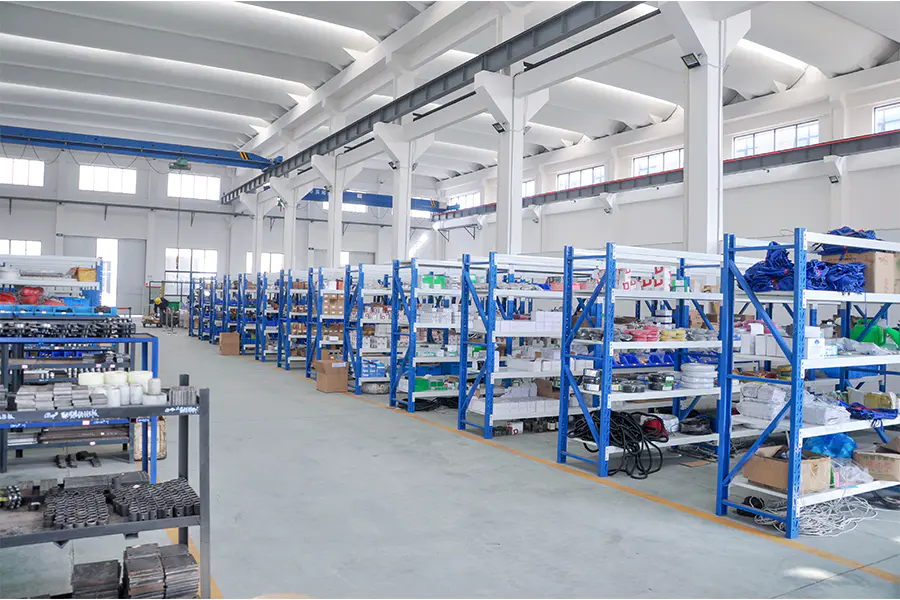
Project fit also depends on the supplier's manufacturing capability. Nantong Jiabao Machinery offers customization of structure, process, and performance, with a monthly production capacity of 100 units and a lead time of 60 days. The minimum order quantity is 1 unit, which makes custom configurations available to single-line operations. Quality control includes 100% testing before shipment. The company exports to Europe, North America, Asia, the Middle East, Africa, and Australia. After-sales support includes a 7×24-hour technical response, on-site service within 48 hours, lifelong maintenance, and free training.
Frequently Asked Questions
What safety standards apply to hydraulic baler machines in Europe and North America?
European safety regulations require vertical and tyre balers to comply with the EN 16500:2014 standard for waste processing equipment. In the United States, ANSI Z245.5-2023 is the updated American National Standard for baling equipment safety requirements, replacing the 2013 version. These standards are relevant when planning baler installations in the EU and the US.
What specifications should be compared when selecting a hydraulic baler machine for a recycling project?
The primary specifications are compression force, feeding mouth size, bale dimension, bale weight, baling capacity, power rating, and bale discharging method. For example, the JPW40F semi-automatic horizontal baler has a 40-ton compression force, a 1000×720 mm feeding mouth, and produces 200–400 kg bales at 1–2 tonnes per hour. The JP-OT100 vertical baler applies 100 tons of force and produces 400–600 kg bales at 5–6 bales per hour. The JPW20Q fully automatic baler forms 30–70 kg bales with 2–4 strapping channels.
Can a hydraulic baler machine be customized to integrate with existing production lines?
Nantong Jiabao Machinery offers customization in structure, process, and performance, with a minimum order quantity of one unit. In documented projects, baler machines have been paired with conveying systems for automatic operation. A JP-OT100 was integrated with existing production lines in Mexico for real-time waste processing, and a JPW40F was used in Russia to build a full-automatic unmanned baling line connected to carton production.
What project factors have the largest impact on baler investment?
The largest factors are automation level, material type, and customization. Fully automatic horizontal balers such as the JPW20Q require higher investment than compact machines such as the JP7050T8. Material-specific balers — such as the JPY-T60W for metal, the JPW-AK100 for aluminum foil and fiber-based materials, or the JPW-AK60 for paper dust briquetting — are engineered for narrower streams and different cost structures. Customizing structure, process, or performance also affects the final quotation.
Are hydraulic baler machines tested before delivery?
Nantong Jiabao Machinery's quality control process includes a 100% test on each machine before shipment. Buyers also receive free training as part of after-sales support, which helps validate the operation workflow during the project commissioning phase.
What is the production lead time and after-sales support for a custom baler?
The standard production lead time at Nantong Jiabao Machinery is 60 days, with a monthly manufacturing capacity of 100 units. After-sales service includes a 7×24-hour technical response, on-site support within 48 hours, lifelong maintenance, and free training. To discuss your project scenario and confirm a suitable configuration, contact Nina at jiabao@csj-baler.com or WhatsApp +86 187-2181-4932, or download the company brochure below for the full product line.
Get a project-specific hydraulic baler machine recommendation
Nantong Jiabao Machinery (brand: jewel) manufactures hydraulic baler machines for waste paper, plastic, cardboard, PET bottles, metal, aluminum foil, and fiber-based materials. To review your project scenario and receive a configuration recommendation:
Email: jiabao@csj-baler.com
WhatsApp: +86 187-2181-4932
Website: www.jewelbaler.com
Download the company brochure (PDF): 2026 product brochure
Conclusion
A project-scenario approach to selecting hydraulic baler machines reduces the risk of buying on a single parameter. The sequence is consistent across industries: define the material stream, set the bale requirement, estimate throughput, choose the automation level, match the model configuration, plan the integration with existing lines, and verify factory testing and after-sales support. The jewel product line from Nantong Jiabao Machinery covers compact machines, vertical balers, semi-automatic and fully automatic horizontal balers, plastic bottle balers, metal balers, briquetting machines, bagging machines, aluminum foil balers, and cutting preprocessing equipment. For project-specific requirements, contact the manufacturer directly.