
Hydraulic Baler Machine Specs: Force, Bale Size and Throughput
Compression force decides whether a material can be densified at all. Bale size decides whether the finished bale can be moved, stored and shipped. Throughput decides whether the machine keeps pace with the plant that feeds it. Read together with feed opening, voltage and footprint, those figures are what actually determine whether a hydraulic baler machine fits a site, and no single number on the sheet is meaningful on its own.
This guide is written for buyers who have already decided to install a baler and are now comparing specification sheets line by line. It explains what each specification block constrains, how the numbers shift between vertical, semi-automatic horizontal, fully automatic horizontal and specialty formats, and which values must be confirmed in writing before an order is placed. The reference models used throughout come from Jewel (Nantong Jiabao Machinery Co., Ltd.), a baler manufacturer established in 2006 with a 50,000 m² production facility in Rugao City, Jiangsu Province, China, producing semi-automatic and fully automatic compression and baling equipment.
Why Baler Specification Sheets Are Easy to Misread
A baler datasheet is usually a single table of maximum values. Maximum compression force, maximum bale size, maximum throughput. Because the maxima are printed side by side, buyers tend to assume they apply simultaneously. On a real installation they interact, and the interaction is where most specification errors originate.
- Force quoted without chamber area. Two machines rated at the same tonnage on different platen areas produce different pressure at the material face, and therefore different bale density.
- Throughput quoted without bulk density. A figure expressed in tons per hour only holds for the material the manufacturer tested. Loose corrugated trim and compressed PET bottle feed behave very differently in the same chamber.
- Bale size quoted without bale weight. A bale that fits the chamber may still be too heavy for the forklift, the mezzanine floor or the loading bay it has to travel through.
- Electrical and layout data listed last. Voltage, foundation and footprint are treated as installation details, yet they can eliminate a technically suitable machine entirely.
The practical consequence: a machine that meets every printed figure can still underperform on site, because the figures were satisfied individually rather than as a set.
Why There Is No Standard Specification for This Category
The baler category covers machines serving very different waste streams, and the market data reflects that fragmentation. The global baler market, including agricultural and industrial machines, was projected at USD 7.96 billion for 2026 in a commercial market research projection (source SRC-0001, 2026). Within that total, the hydraulic waste paper baler segment was estimated at USD 1.45 billion in its base year, with a forecast valuation of USD 2.24 billion by 2032 and a 5.5% CAGR (Data Insights Reports, source SRC-0002). The hydraulic metal recycling baler segment was valued at USD 913 million in 2023 and forecast to reach USD 1,318 million by 2031 (MarketsGlob, source SRC-0004).
Those are separate scopes and cannot be added together. What they indicate for a specification reader is more useful than any single figure: paper, PET, metal and foil streams support different machine architectures, so a generic comparison across the whole category hides the parameters that matter. A specification review should always be anchored to one material stream and one handling requirement.
The Five Specification Blocks That Decide Fit
1. Compression Force: What the Tonnage Actually Tells You
Compression force is the maximum hydraulic force applied during the compaction stroke, expressed in tons. The range across current hydraulic baler machines is wide: Jewel's machine range spans roughly 2 to 180 tons, which is a spread of two orders of magnitude rather than a set of comparable options.
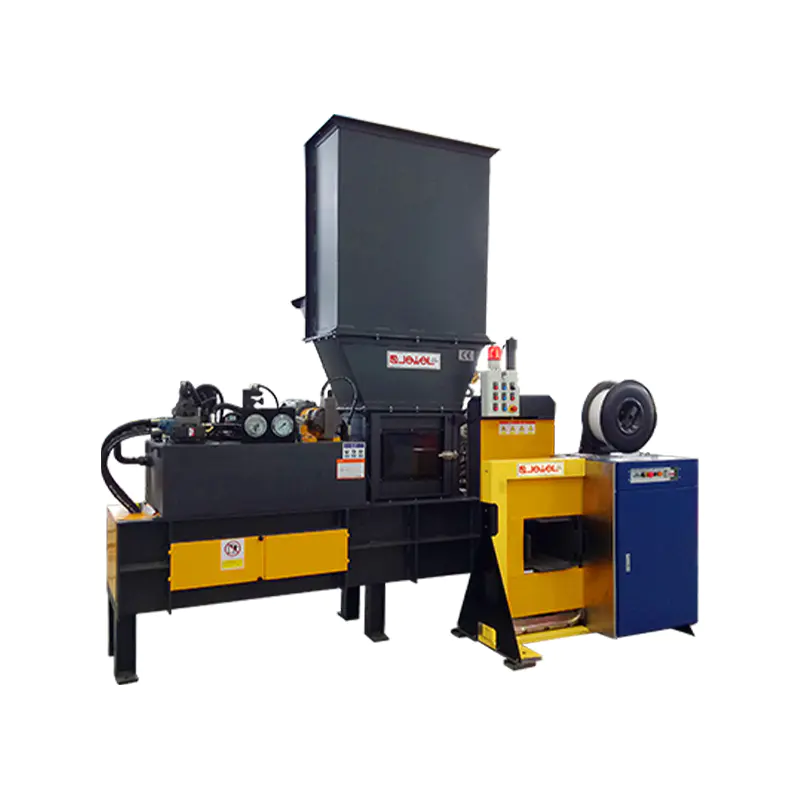
Within that range, specific models illustrate how the number is used. The JP-S100B is listed at 25 tons. The JPW40F semi-automatic horizontal baler is rated at 40 tons, within a 40–100 ton working range for that format. The JPW20Q fully automatic horizontal baler is rated at 20 tons. At the heavy end, the JPW150BL-QT horizontal fully automatic closed-end baler is listed at 150 tons, with a bale size of 1100 × 1250 × 1500 mm.
Reading the figure correctly requires one habit: ask what the force is applied to. Force divided by platen area gives the pressure acting on the material; chamber volume and cycle design determine how many times that pressure is applied before the bale is ejected. A 20-ton machine with a compact chamber can reach a serviceable density on PET bottles, while a light material spread across a large chamber may not reach density at 40 tons.
2. Bale Size, Bale Weight and Downstream Handling
Bale size is normally written as length × width × height, matching the chamber's finished-bale dimensions. On the JPW150BL-QT, for example, the listed bale size is 1100 × 1250 × 1500 mm. That number is a handling specification as much as a machine specification.
Four checks turn a bale dimension into a decision:
- Door and aisle clearance. The bale has to leave the building. Measure the narrowest point on the route, not the baler bay.
- Lifting capacity. Bale weight follows from chamber volume multiplied by the density actually achieved, so it must be confirmed for your material rather than assumed from a catalogue average.
- Transport economics. Bale format determines how bales stack in a container or trailer. In the Japan PET recycling case, compact and regular bales were the stated reason storage and transport efficiency improved.
- Downstream processing. If bales are re-opened at a paper mill or plastic recycler, the mill's accepted bale format is a hard constraint, not a preference.
3. Feed Opening and Chamber Geometry
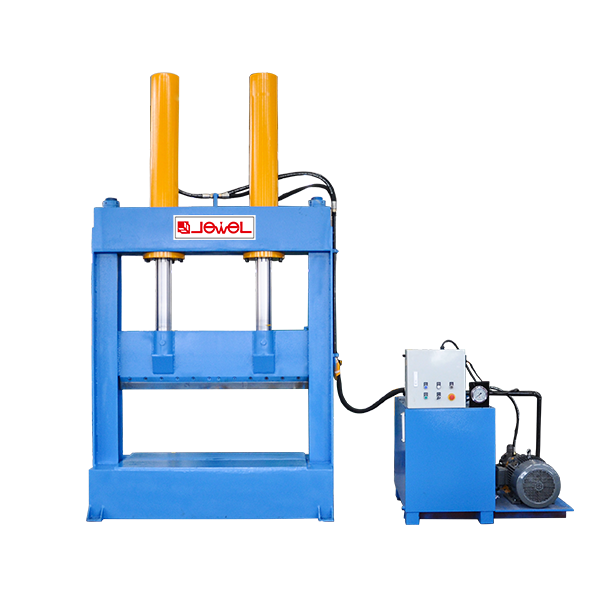
Feed opening size determines what can be loaded and by what method. Vertical machines load from the top, which suits low-volume in-plant waste and tight floor space. Horizontal machines load through a side opening, usually at conveyor height, which suits continuous flow from a corrugator, printing line or sorting belt.
Two parameters are frequently under-specified. The first is loading height: if operators must lift material above shoulder level for a full shift, the practical throughput falls well below the rated figure. The second is maximum accepted piece size. A cardboard box plant generating large, bulky sheets may need preprocessing before baling; in the Italy cardboard case, replacing aging balers and introducing preprocessing equipment was what solved the handling of large-sized waste cardboard.
4. Throughput
Throughput is expressed either in tons per hour or in bales per hour, and the unit matters. Bales per hour describes the machine cycle; tons per hour describes material actually processed, which depends on the bulk density of the feed and on whether the figure includes strapping, ejection and transfer time.
Three questions resolve most throughput ambiguity: throughput on which material, measured over a continuous run or a single cycle, and including or excluding bale ejection and tying. The requirement itself should come from the plant, not the catalogue: compare the machine figure with the waste generated per shift, then allow headroom for peak production days rather than sizing to the annual average.
5. Power, Voltage and Footprint
Voltage is a fixed constraint that buyers discover late. Standard configurations for this equipment are 220V/50Hz and 380V/50Hz, with customization available. Beyond the nominal voltage, the site review should confirm available supply capacity, motor starting behaviour on the existing distribution board, and whether the control system is fixed-frequency or PLC-based.
Footprint should be read as an operating envelope rather than a machine outline. It has to accommodate maintenance access on the service side, bale staging space, forklift turning radius and, for fully automatic horizontal machines integrated into a production line, the interface with upstream conveying.
A Six-Step Sequence for Matching Specifications to a Site
Reading a spec sheet in the order the manufacturer prints it invites errors, because the sheet is organised by machine subsystem rather than by buyer decision. Working in the sequence below reverses that.
- Characterise the stream. Material mix, bulk density, piece size and generation rate per shift. Every later decision depends on this, and mixed streams should be characterised by their most difficult component.
- Set the bale target. Fix bale size and target bale weight from handling and offtake constraints before looking at machine models.
- Choose the format. Vertical for low volume and limited floor area; semi-automatic horizontal for mid-volume plants with an operator present; fully automatic horizontal for continuous, unmanned integration; specialty formats where the material demands them.
- Fix force and chamber together. Select the tonnage against the chamber area and the material's resistance, not against a general rule of thumb.
- Check throughput at your density. Convert the quoted figure to your material and compare with peak generation, not average generation.
- Confirm electrical, footprint and acceptance. Voltage, supply capacity, layout clearances, and the pre-shipment test protocol that will define acceptance.
How the Specification Set Changes by Baler Format
The same five blocks carry different weight depending on the machine architecture. The table below shows which parameter to verify first for each format, using models from the Jewel range as reference points.
| Format | Reference model | Listed compression force | Verify first | Typical stream |
|---|---|---|---|---|
| Vertical baler | JP-OT100 | Confirm on the model specification sheet | Loading height, bale weight versus manual handling, floor area | In-plant waste at low to moderate volume |
| Semi-automatic horizontal | JPW40F | 40 tons (format range 40–100 tons) | Operator dependency per cycle, chamber length, feed opening height | Carton and cardboard production waste |
| Fully automatic horizontal | JPW20Q | 20 tons | Control integration, CE documentation, tie and ejection sequence | PET bottle and waste paper recycling |
| Specialty — aluminum foil | JPW-AK100 | Confirm on the model specification sheet | Chamber geometry for thin foil, tension and tie control | Foil converting and light metal film waste |
| Heavy-duty horizontal, closed end | JPW150BL-QT | 150 tons; bale 1100 × 1250 × 1500 mm | Foundation loading, footprint, crane or heavy forklift access | High-volume industrial waste |
Two observations follow from the table. First, automation level changes the specification set as much as tonnage does: a fully automatic horizontal machine is specified partly by its control sequence and line interface, not only by force. Second, force alone never separates two formats, which is why the JPW20Q at 20 tons and the JPW40F at 40 tons serve different operating models rather than forming a simple ladder.
What Specification Decisions Look Like in Installed Systems
Installed cases show which parameter actually carried the decision. In each of the following, the headline tonnage was secondary to the combination of chamber, control and handling.
- Tunisia, cardboard box factory. A single unit was installed to clear piled waste paper; the delivered system was a factory-wide automatic waste discharge arrangement solving accumulation from the corrugator line and printing machines, producing a clean and efficient production environment. The specification driver was integration with existing lines, not force.
- Russia, carton production. Automatic collection, compression and baling were installed over a three-year programme, resulting in an unmanned waste processing system that reduced labour and management costs and enabled immediate monetisation of waste.
- Japan, PET recycling. The requirement was higher compression density for PET bottles, with compact and regular bales that improved storage and transport efficiency and increased the value of the recycled output. Here, achieved density was the governing specification.
- Italy, large-size cardboard. Aging balers were replaced and preprocessing equipment introduced to handle large-sized waste cardboard, which raised waste treatment efficiency and cut labour and logistics costs.
- Belarus, mixed recycling. One unit addressed PET bottles, woven bags, HDPE bottles and cardboard together, solving bulkiness and compression difficulty and reducing storage and delivery expenses.
- Australia, mixed waste. A JPW40BL was installed in an integrated mixed waste process handling plastics, small amounts of glass and metal scraps, achieving full-line unmanned operation over a two-year project.
Mexico provides a shorter-cycle version of the same pattern: a cardboard box factory eliminated waste accumulation within one year using an automated waste removal system integrated with the existing production line.
Pre-Order Specification Checklist
The checklist below converts the discussion above into items that can be attached to a purchase order. Each line should be answered with a value, not a reference to a catalogue.
- Compression force in tons, stated for the specified chamber.
- Finished bale dimensions (length × width × height) and target bale weight at your material.
- Feed opening dimensions, loading height and loading method.
- Throughput in tons per hour at your material's bulk density, with the test basis stated.
- Voltage and frequency: 220V/50Hz, 380V/50Hz, or a customized configuration, with the motor list.
- Footprint including maintenance clearance and bale staging area.
- Automation level, plus a description of what the operator still has to do each cycle.
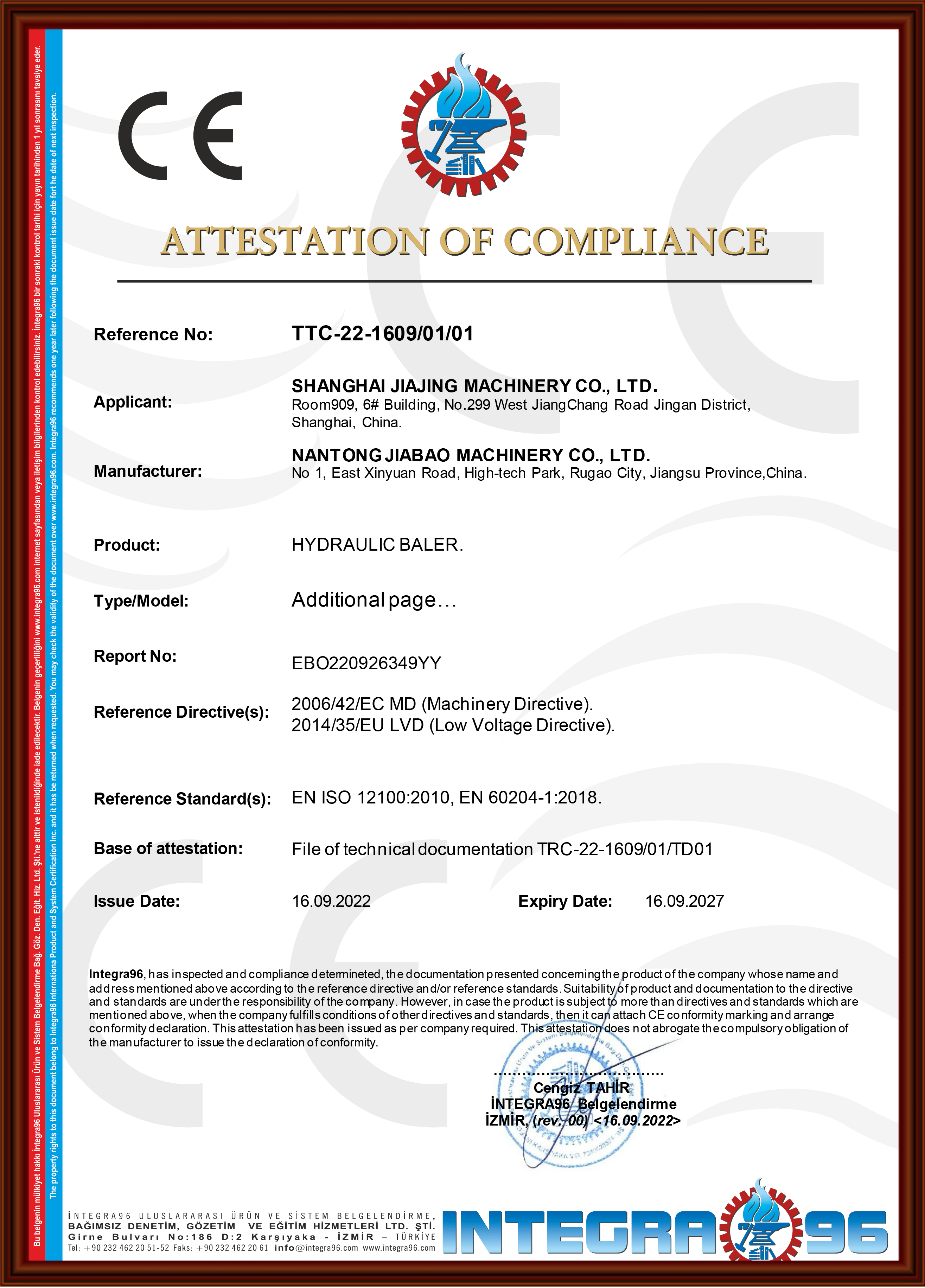
- Certification that applies to the exact model: CE attestation TTC-22-1609/01/01 for the JPW20Q, and SGS Made-in-China Supplier Audit Report QIP—ASR2541890 covering the full baler range.
- Pre-shipment test as the stated acceptance criterion, supported by 100% test quality control.
- Commercial terms: minimum order quantity 1 unit, FOB Shanghai, 50/50 payment terms, 60-day typical production lead time, 100 units monthly capacity.
- After-sales terms: 7×24 hour technical response, on-site attendance within 48 hours, lifelong maintenance and free training.
Frequently Asked Questions
Does a hydraulic baler need CE documentation for EU installation?
For the JPW20Q fully automatic horizontal baler, Jewel holds CE attestation of compliance TTC-22-1609/01/01, issued by INTEGRA under 2006/42/EC and 2014/35/EU, valid from 2022-09-16 to 2027-09-16 and covering EN ISO 12100:2010 and EN 60204-1:2018. The manufacturer also holds an SGS Made-in-China Supplier Audit Report, QIP—ASR2541890, valid from 2025-12-10 to 2028-12-10 and covering the full baler range. For any other model, confirm which certificate applies to that exact model and voltage configuration.
Can compression force and bale size be customized to a specific material?
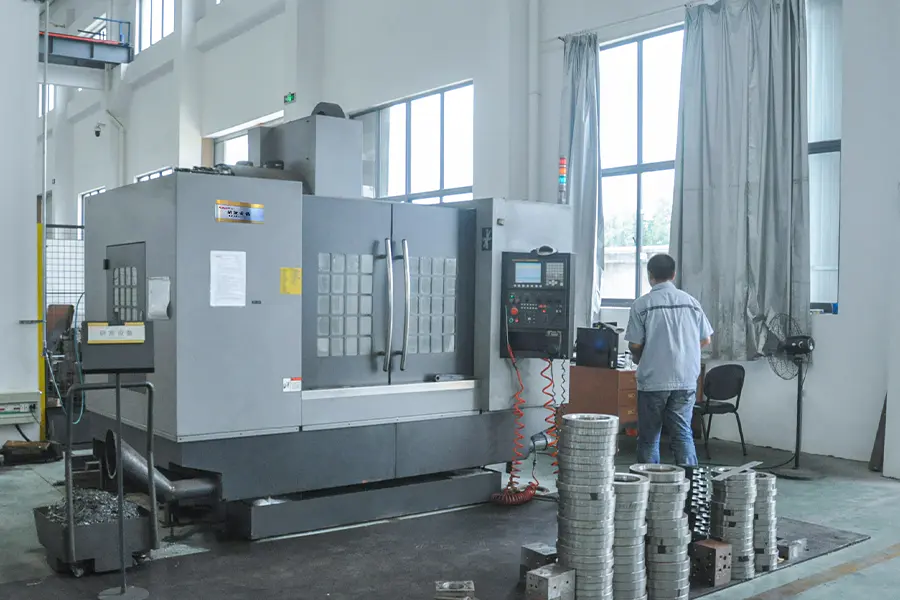
Jewel provides customization production services covering structure, process and performance, with a minimum order quantity of 1 unit. Chamber and feed opening geometry, bale format and the control sequence can therefore be adapted to the material stream instead of being taken from a fixed catalogue. Customized configurations follow the same 100% test quality control, and the agreed values should be written into the order as a technical annex.
Which specifications drive the commercial offer most?
The specifications that move a quotation most are compression force, automation level, chamber and bale size, voltage configuration and the scope of customization. Commercial terms are a minimum order quantity of 1 unit, FOB Shanghai delivery, 50/50 payment terms and acceptance based on a pre-shipment test. Force, bale size and voltage should be fixed first, because changing them later changes the machine frame and hydraulic package rather than a single accessory.
How is a machine validated before shipment?
Acceptance for these orders is based on a pre-shipment test, and quality control is described as 100% test across production. The pre-shipment test is where the agreed compression force, bale dimensions and control sequence are confirmed on the actual unit. Where the waste stream is mixed or unusual, the material to be used in that test should be agreed before production starts.
What lead time applies to a customized hydraulic baler machine?
Typical production lead time is 60 days with a monthly production capacity of 100 units, and the minimum order quantity is 1 unit, including customized configurations. After-sales support is a 7×24 hour technical response with on-site attendance within 48 hours, lifelong maintenance and free training. To start a specification review, send the material type, target bale size and site voltage to jiabao@csj-baler.com, or download the catalogue below.
Conclusion: The Spec Sheet Is the Contract
Compression force, bale size, feed opening, throughput, voltage and footprint are not independent features to be ticked off one by one. They form a system in which each value constrains the others, and the buyer's task is to check that the combination matches one material stream, one handling route and one electrical supply. Force without chamber area says little about density; throughput without density says little about capacity; bale size without weight says little about whether the bale can leave the building.
That is why the specification review should end with written values rather than a brochure: the tonnage at the specified chamber, the bale dimensions and target weight, the throughput basis, the voltage configuration, and the pre-shipment test that will define acceptance. A machine specified this way is verifiable before it ships, not after it is installed.
Review the specifications, then request a configuration
Send your material type, target bale size, waste volume per shift and site voltage, and the Jewel team will return a matched configuration with force, chamber, bale format and electrical data. Samples of your material can be reviewed against the proposed chamber before the order is fixed.
Catalogue download: 2026 Jewel baler catalogue (PDF)
Email: jiabao@csj-baler.com | Tel / WhatsApp: +86 187-2181-4932
Nantong Jiabao Machinery Co., Ltd. — No.1 Xinyuan East 1st Road, Rugao City, Jiangsu Province, China — www.jewelbaler.com
Have Questions or Need More Details?
Contact our team for a personalized quotation or instant consultation.
Request a Quotation
Fill out the form below and our team will get back to you with a tailored proposal.
WhatsApp Direct Chat
Prefer to chat in real-time? Message us on WhatsApp for instant assistance & quick answers.
- Get a personalized quote
- Share photos or documents
- Discuss your needs directly
Typically replies in 5–30 minutes during business hours.