Hydraulic Baler Machine Technical Parameters Explained
: Force, Bale Size, Throughput and Power
Two hydraulic baler machines can carry the same compression force rating and still be wrong for the same project. One accepts corrugated waste straight off a printing line through a 1,400 mm feed opening and produces a 400–600 kg bale. The other takes pre-sorted material through a 700 mm mouth and produces a 30–70 kg bale. Headline tonnage says nothing about which of the two a plant needs.
This technical guide works through the parameters that decide project fit on hydraulic baler machines: compression force, feed-opening and chamber dimensions, bale geometry and weight, strapping channels, drive power and voltage, rated throughput, bale discharge method, machine footprint and unit weight. The reference set is the current Jewel range of twelve models published with full technical parameters by Nantong Jiabao Machinery Co., Ltd. Every figure quoted below comes from those published specifications, so the same parameter logic can be applied to any supplier's datasheet during evaluation.
Problem Definition: Why One Tonnage Number Cannot Describe a Baler
A hydraulic baler machine is a chain of five decisions that have to agree with each other: how material enters the chamber, how much force compresses it, how the compressed block is held together, how the finished bale leaves the machine, and how that bale is then moved, stored and sold. Comparing machines on compression force alone compares the second decision and skips the rest.
Five specification gaps cause most mismatches:
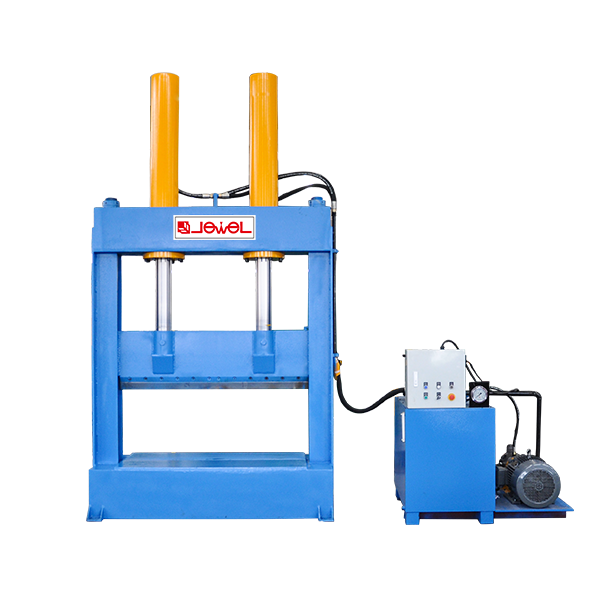
- Feed opening versus material size. A 700 × 460 mm opening (JPW20Q) and a 1,400 × 600 mm opening (JP-OT100) do not accept the same waste. Material that does not fit has to be cut or crushed first, which adds labour or a second machine to the line.
- Bale weight versus handling equipment. Bales of 30–70 kg can be lifted manually; bales of 400–600 kg cannot. Forklift access, aisle width and truck loading all follow from the bale weight printed on the datasheet.
- Drive power versus the site electrical supply. Published models in the range run from 2.2 kW / 3 HP to 22 / 30 kW/HP, at 220 V/50 Hz or 380 V/50 Hz, with voltage described as customizable. A machine that cannot be connected is not a machine that can be bought.
- Throughput units versus the plant's waste generation rate. Some models are rated in tonnes per hour (JPW40F: 1–2 t/h) and others in bales per hour (JP-OT100: 5–6 bales/h). The two ratings become comparable only when bales per hour is multiplied by bale weight.
- Discharge method versus the downstream layout. Continuous push-pack discharge (JPW40F) and one-time discharge (JPW40BL) create different bale handling rhythms on the workshop floor.
Every item on that list is a project variable rather than a machine variable. A technical guide to hydraulic baler machines therefore has to start from the project and work back to the datasheet.
Industry Background: Why Specification Detail Matters More Than It Used To
The baler category is expanding, and published market estimates disagree with each other in ways that are themselves informative. Grand View Research valued the global baler machine market at USD 6.6 billion in 2024 and projected USD 11.4 billion by 2035. Maximize Market Research valued the narrower industrial balers segment at USD 6.39 billion in 2024 with a projected CAGR of 9.5% through 2032. Forecast growth rates for the same category range from 4.8% (2024–2032) to 10.6% (2025–2030) depending on whether agricultural balers are included in the scope. Asia Pacific accounted for approximately 40.2% of total baler market revenue in 2024.
Two practical consequences follow. A wider supplier field makes parameter-level comparison the only reliable filter, because brand claims are harder to separate than specification rows. And compliance requirements differ by market: European safety regulations require vertical and tyre balers to comply with the EN 16500:2014 standard for waste processing equipment, while the updated American National Standard for baling equipment safety is ANSI Z245.5-2023, which replaced the 2013 version. Bale quality also carries direct trade value — China exported USD 288 million of wood pulp and paper scrap, including baled waste paper, in 2025.
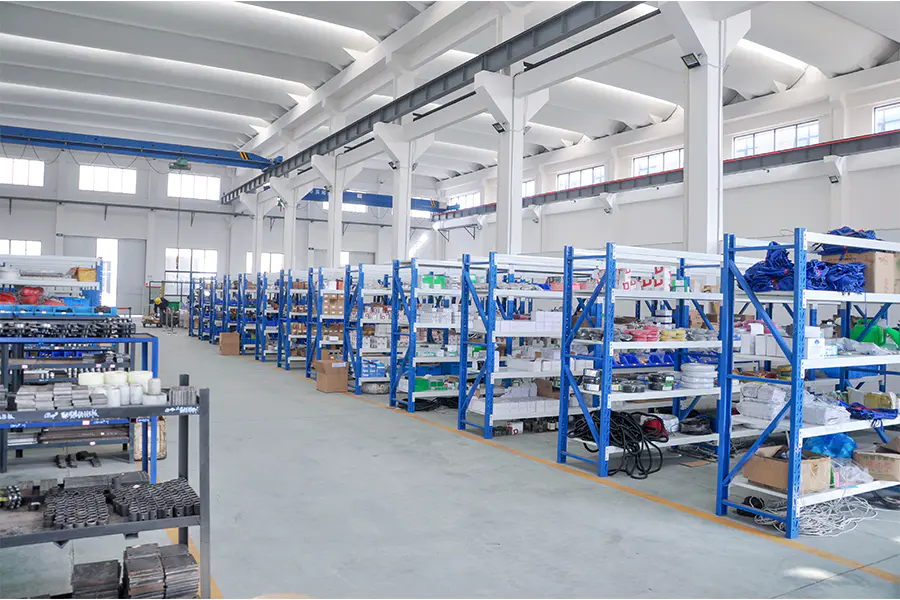
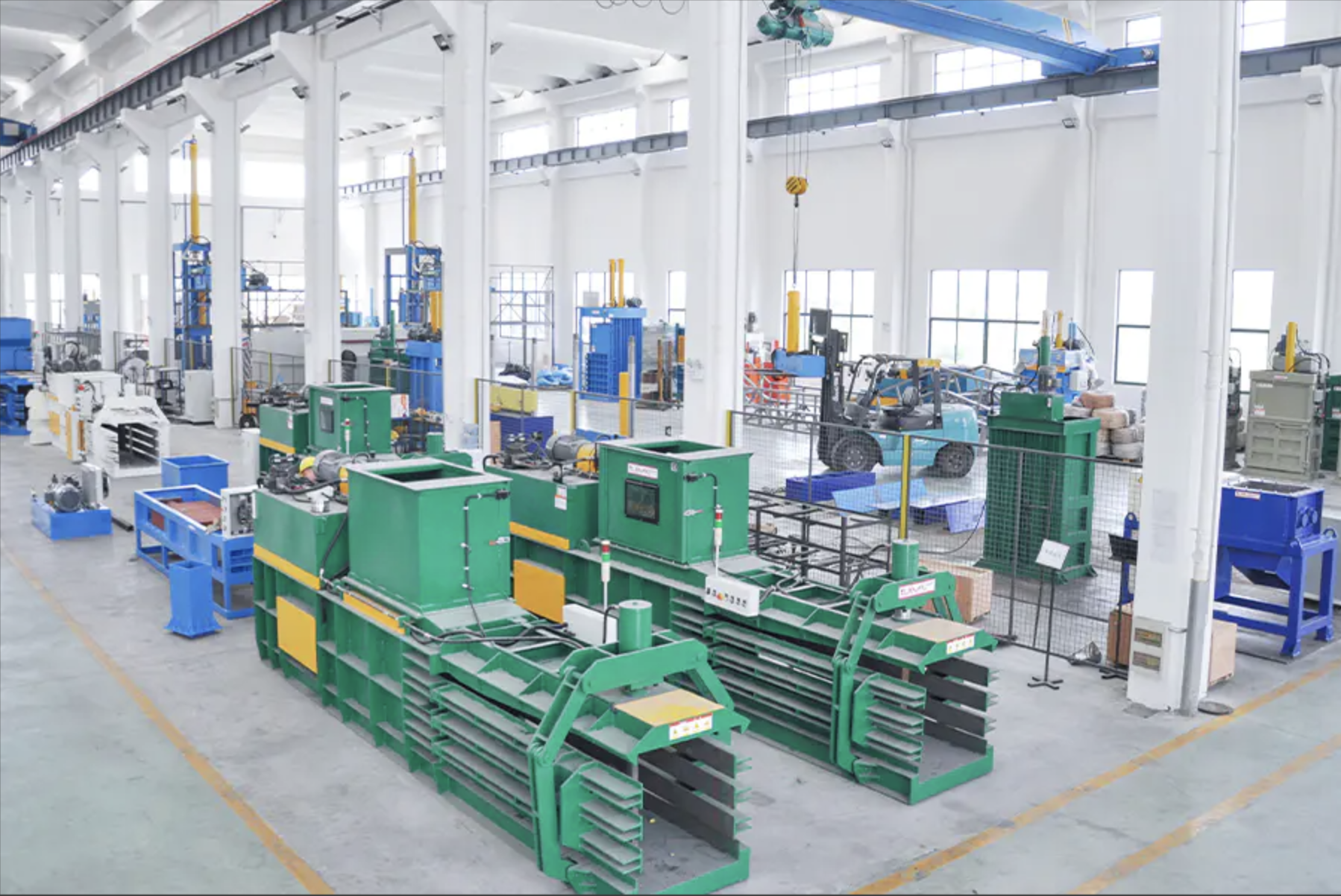
The competitive field is broad and includes manufacturers such as CNH Industrial, Deere & Company, HSM GmbH and Bramidan A/S. Within that field, Nantong Jiabao Machinery Co., Ltd. is a Chinese manufacturer of environmentally friendly, intelligent compression and baling equipment that sells under the brand Jewel. The company was established in 2006 and the brand dates to 1995; it operates a 50,000 m² production facility with more than 200 employees, a 30-engineer R&D team and an annual output of 120,000 units, exporting around 70% of production to Australia, Europe, North America, Africa, Asia, Russia and Belarus. Its published range covers twelve hydraulic baler models from 5 t to 100 t compression force, and that range is the reference set for the rest of this guide.
The Parameter Set, Explained Parameter by Parameter
1. Compression force (tons)
Compression force is the maximum force the hydraulic ram applies to the material, expressed in tons. Across the Jewel range the value spans 5 t (JP8060T5X), 10 t (JPW-K6046), 20 t (JPW20Q), 25 t (JPA5076T25X), 40 t (JPW40F, JPW40BL), 60 t (JPY-T60W, JPW-AK60) and 100 t (JP-OT100, JPW-AK100, JP-S100B). Force is a ceiling rather than an outcome: the density a bale actually reaches also depends on chamber geometry, on how the material behaves under pressure, and on how the finished block is tied. A 20-ton machine compressing a 500 × 500 × 500 mm chamber and a 100-ton machine compressing a 1,400 × 700 × 1,700 mm chamber are doing different work at different volumes.
2. Bale dimension and bale weight
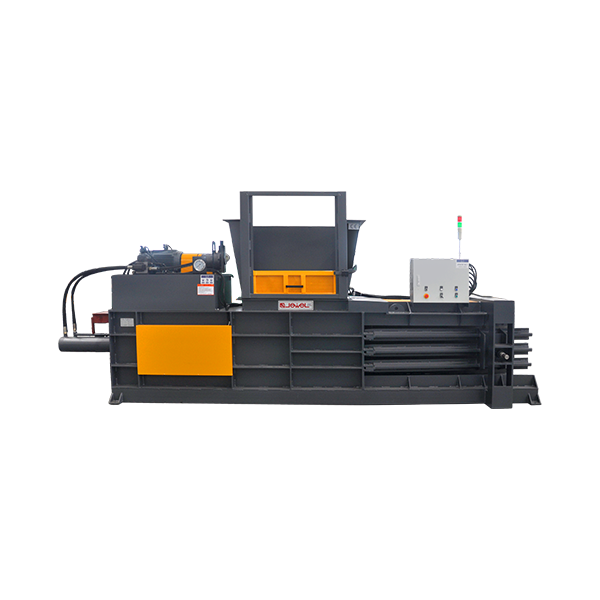
Bale geometry is published as length × width × height in millimetres, with a weight range in kilograms. JPW20Q produces a fixed 500 × 500 × 500 mm bale weighing 30–70 kg. JPW40F produces 720 × 720 mm bales with a variable height of 500–1,300 mm, weighing 200–400 kg. JP-OT100 produces 1,400 × 700 mm bales of 700–1,100 mm height at 400–600 kg. Variable-height configurations let an operator tune bale weight to a transport or handling limit; fixed-geometry bales make downstream handling predictable. JPW-AK60 and JPW-AK100 sit at the other end of the scale, producing 300 × 300 × (200–300) mm and 320 × 320 × (200–250) mm bales of 5–10 kg and 5–15 kg, which suits dust and fiber-based materials rather than cartons or bottles.
3. Feeding mouth and compression chamber
Feed opening is the practical limit on what can be loaded without pre-treatment. Published openings across the range are 500 × 300 mm (JPW-AK60), 500 × 320 mm (JPW-AK100), 540 × 400 mm (JPW-K6046), 650 × 470 mm (JP8060T5X), 670 × 400 mm (JP7050T8), 700 × 460 mm (JPW20Q), 900 × 430 mm (JPY-T60W), 1,000 × 720 mm (JPW40F and JPW40BL), 1,400 × 600 mm (JP-OT100) and 1,500 × 500 mm (JPA5076T25X). Where a chamber is published, as with the 1,400 × 700 × 1,700 mm compression chamber of JP-OT100, the chamber volume and the feed opening together define what a single cycle can handle.
4. Strapping channels
Strapping channels hold the compressed block together after the ram retracts. JPW20Q carries 2–4 channels; JPW40F and JPW40BL carry 4. Channel count has to be read together with bale weight and material memory, because corrugated board and PET bottles both expand once compression is released. The force that forms a bale and the ties that keep it formed are separate specification decisions.
5. Drive power and voltage
Installed power across the range runs from 2.2 kW / 3 HP (JP8060T5X, JP7050T8, JPW-K6046) through 7.5 kW / 10 HP (JPW20Q, JPA5076T25X), 11 kW / 15 HP (JPW40F, JP-S100B), 15 kW / 20 HP (JPW40BL, JP-OT100, JPW-AK60) and 18.5 kW / 25 HP (JPW-AK100) to 22 / 30 kW/HP (JPY-T60W). Voltage is published as 220 V/50 Hz on JP7050T8 and 380 V/50 Hz on most other models, and is described as customizable throughout the range. Power is a site requirement as much as an operating cost: it determines the electrical service that has to be available before installation.
6. Throughput and rating conventions
Two rating conventions coexist in the same catalogue. Tonnes per hour is used for JPW40F (1–2 t/h), JPY-T60W (0.5–1 t/h), JPW-AK100 (0.4–0.8 t/h) and JPW-AK60 (0.2–0.5 t/h). Bales per hour is used for JPW-K6046 and JP7050T8 (6–8 bales/h), JP8060T5X (4–7 bales/h), JP-OT100 (5–6 bales/h) and JPA5076T25X (3–5 bales/h). JPW20Q and JPW40BL are published without a throughput rating, so a buyer evaluating those two models should request a project-specific figure against their own material. Converting bales per hour into the unit used elsewhere means multiplying by the bale weight range for that model.
7. Bale discharge method and automation level
JPW40F uses continuous push-pack discharge; JPW40BL releases the finished bale in a one-time discharge. That difference shapes the floor layout, because continuous discharge supports a steady rhythm for a conveyor or forklift route, while one-time discharge produces a complete bale at the end of a cycle. Automation level is a separate axis: JPW20Q is a fully automatic horizontal baler, JPW40F is a semi-automatic horizontal baler, and JP-OT100 is a vertical baler. The label describes how much of the feeding, compressing, tying and discharging sequence is handled by the machine rather than by an operator.
8. Machine dimensions and unit weight
Footprint values in the published range are 880 × 820 × 2,150 mm and 590 kg (JP7050T8), 950 × 780 × 2,150 mm and 600 kg (JPW-K6046), 1,100 × 1,000 × 2,150 mm and 550 kg (JP8060T5X), 2,150 × 1,200 × 2,500 mm and 2,100 kg (JPA5076T25X), 2,600 × 650 × 3,500 mm and 2,600 kg (JP-S100B), 3,400 × 3,010 × 2,400 mm and 2.8 t (JPW20Q), 3,900 × 900 × 1,350 mm and 2,100 kg (JPW-AK60), 4,000 × 920 × 1,350 mm and 2,600 kg (JPW-AK100), 4,900 × 1,750 × 1,950 mm (JPW40F), 5,500 × 1,150 × 1,900 mm (JPW40BL) and 3,500 kg (JP-OT100). Floor loading, forklift clearance and the space needed for bale removal come from these numbers, not from the tonnage rating.
9. Construction material and material-specific variants
Every published model in the range is built in carbon steel. Beyond the general-purpose machines, the range includes variants matched to particular materials. JPY-T60W is a metal baler producing a 430 × 280 × (150–250) mm bale cross-section at 15–20 kg, with 0.5–1 t/h capacity and 22 / 30 kW/HP of power. JPW-AK60 is a briquetting machine that lists paper dust among its similar materials. JPW-AK100 is an aluminum foil baler whose similar materials are fiber-based. JP-S100B is a cutting machine with a 1,000 mm width, a 1,000 mm cutting stroke and an 11 kW / 15 HP drive, used where material has to be reduced in size before it is compressed.
The published parameter set, model by model
| Model | Configuration | Compression force | Bale dimension (mm) | Feed opening (mm) | Bale weight | Power | Throughput | Machine size (mm) | Machine weight |
|---|---|---|---|---|---|---|---|---|---|
| JP8060T5X | Waste compactor | 5 t | 800 × 600 × 400 | 650 × 470 | 50–80 kg | 2.2 kW / 3 HP, 380 V/50 Hz | 4–7 bales/h | 1,100 × 1,000 × 2,150 | 550 kg |
| JPW-K6046 | Bagging machine | 10 t | Not published | 540 × 400 | 50–80 kg | 2.2 kW / 3 HP | 6–8 bales/h | 950 × 780 × 2,150 | 600 kg |
| JPW20Q | Fully automatic horizontal baler | 20 t | 500 × 500 × 500 | 700 × 460 | 30–70 kg | 7.5 kW / 10 HP, 380 V/50 Hz | Not published | 3,400 × 3,010 × 2,400 | 2.8 t |
| JPA5076T25X | Hydraulic baler | 25 t | 1,500 × 760 × 900 | 1,500 × 500 | 200–300 kg | 7.5 kW / 10 HP, 380 V/50 Hz | 3–5 bales/h | 2,150 × 1,200 × 2,500 | 2,100 kg |
| JPW40F | Semi-automatic horizontal baler | 40 t | 720 × 720 × (500–1,300) | 1,000 × 720 | 200–400 kg | 11 kW / 15 HP | 1–2 t/h | 4,900 × 1,750 × 1,950 | Not published |
| JPW40BL | Plastic bottle recycling machine | 40 t | 720 × 720 × (300–1,000) | 1,000 × 720 | 250–350 kg | 15 kW / 20 HP, 380 V/50 Hz | Not published | 5,500 × 1,150 × 1,900 | Not published |
| JPY-T60W | Metal baler | 60 t | 430 × 280 × (150–250) cross-section | 900 × 430 | 15–20 kg | 22 / 30 kW/HP | 0.5–1 t/h | Not published | Not published |
| JPW-AK60 | Briquetting machine | 60 t | 300 × 300 × (200–300) | 500 × 300 | 5–10 kg | 15 kW / 20 HP, 380 V/50 Hz | 0.2–0.5 t/h | 3,900 × 900 × 1,350 | 2,100 kg |
| JP-OT100 | Vertical baler | 100 t | 1,400 × 700 × (700–1,100) | 1,400 × 600 | 400–600 kg | 15 kW / 20 HP, 380 V/50 Hz | 5–6 bales/h | Chamber 1,400 × 700 × 1,700 | 3,500 kg |
| JPW-AK100 | Aluminum foil baler | 100 t | 320 × 320 × (200–250) | 500 × 320 | 5–15 kg | 18.5 kW / 25 HP, 380 V/50 Hz | 0.4–0.8 t/h | 4,000 × 920 × 1,350 | 2,600 kg |
| JP-S100B | Cutting machine | 100 t | Not applicable | Cutting width 1,000; cutting stroke 1,000 | Not applicable | 11 kW / 15 HP | 20–30 s per cycle | 2,600 × 650 × 3,500 | 2,600 kg |
| JP7050T8 | Baling machine | Not published | Not published | 670 × 400 | 50–80 kg | 2.2 kW / 3 HP, 220 V/50 Hz | 6–8 bales/h | 880 × 820 × 2,150 | 590 kg |
All values in this table are taken from the published Jewel specification for each model. Where a cell reads "Not published", the parameter is not stated in the datasheet and should be confirmed in writing before an order is placed.
Step-by-Step: Specifying a Hydraulic Baler for a Defined Project
- Characterise the waste stream. The published applicable industries for the range are waste paper recycling, plastic recycling, carton printing, textile waste processing, packaging manufacturing and PET bottle recycling. Within those categories, note whether the material is rigid or bulky, dusty, or mixed. The Belarus project in the range had to handle PET bottles, woven bags, HDPE bottles and cardboard within one specification, while the Japan project worked in a high-dust environment.
- Convert waste generation into a throughput target. Measure how much material the plant produces per shift and express it in either tonnes per hour or bales per hour, matching the convention used by the candidate models. This step decides whether a 0.2–0.5 t/h briquetting machine or a 1–2 t/h horizontal baler is in scope.
- Fix bale geometry from the downstream chain. Work backwards from the truck, container or storage rack: bale footprint, bale height and bale weight. A 400–600 kg bale needs handling equipment; a 30–70 kg bale does not. Variable-height chambers such as the 500–1,300 mm range on JPW40F allow later adjustment; fixed chambers do not.
- Choose the loading method. Decide whether the machine will be fed manually or from a conveying system, then check the feed opening against the material. A 650 × 470 mm opening and a 1,500 × 500 mm opening imply very different upstream arrangements. Conveyor integration is recorded as matched equipment in the carton and mixed-waste project files.
- Select the automation level. Vertical balers suit installations where layout dominates; semi-automatic horizontal balers place feeding and tying with an operator; fully automatic horizontal balers sequence the cycle themselves. Automation level changes labour requirements, cycle consistency and upstream layout more than it changes peak force.
- Verify power, footprint and civil works. Check the available supply against the published voltage and power of the candidate model — 220 V/50 Hz or 380 V/50 Hz, 2.2 kW / 3 HP to 22 / 30 kW/HP — then check machine footprint and unit weight against the floor. JP-OT100 weighs 3,500 kg; JP8060T5X weighs 550 kg.
- Confirm testing, customisation and service terms. Nantong Jiabao Machinery supports customisation of structure, process and performance; every unit is 100% tested; monthly capacity is 100 units, lead time is 60 days and minimum order quantity is 1 unit. After-sales support is quoted as 7×24 h technical response with 48 hours on site, plus lifelong maintenance and free training.
Scenario Fit: How These Parameters Resolve in Real Installations
Corrugated carton plant, Tunisia
A carton production site needed a factory-wide automatic waste discharge system to clear waste accumulating from the corrugator line and printing machines and to improve the overall workshop environment. The configuration matched to that requirement is JPW20Q, a fully automatic horizontal baler with a 20-ton compression force and a 500 × 500 × 500 mm bale, running in automatic operation mode with a conveying system. The stated project functions were factory-wide planning, efficient preprocessing and fully automatic operation.
Carton production line, Russia
The requirement was automatic collection, compression and baling of waste generated during carton production, connected directly to the production lines. The matched model is JPW-K6046, a bagging machine with a 10-ton compression force, a 540 × 400 mm feed opening and 6–8 bales per hour of 50–80 kg. The installation is described as seamless integration, intelligent unmanned operation and professional baling, with a conveying system as matched equipment.
Carton manufacturing, Italy
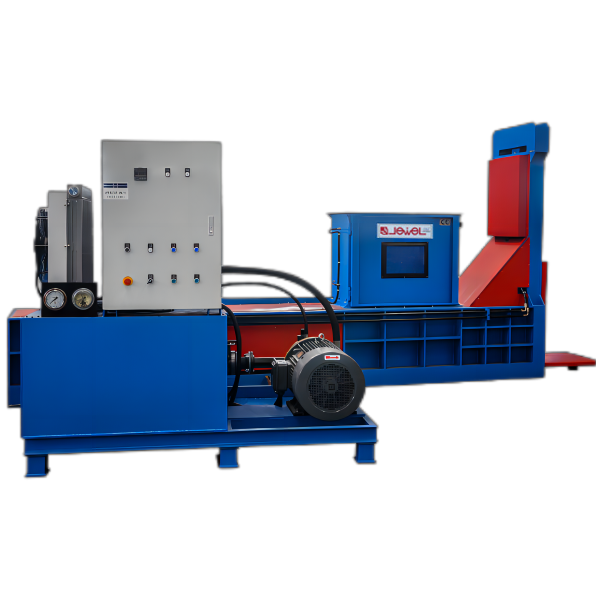
An Italian carton manufacturer replaced ageing balers and added preprocessing equipment to handle large-sized waste cardboard from production. The matched model is JPA5076T25X, a 25-ton hydraulic baler with a 1,500 × 500 mm feed opening, 1,500 × 760 × 900 mm bales and a 3–5 bales per hour rating. The wide feed opening is the parameter that makes large-format board workable. Stated function areas were powerful shredding, high-efficiency compression and synergistic processing.
PET recycling, Japan
A PET recycler working in a high-dust environment needed higher compression density together with compact, presentable bales. The requirement was explicit: increase the compression density of PET bottles while keeping the finished bale shape consistent. This is the clearest example of a project where the objective is bale quality rather than throughput, and where chamber geometry and strapping configuration matter alongside force.
Mixed plastics, glass and metal scrap, Australia
The brief was comprehensive processing of mixed plastics, a small amount of glass and metal scraps within one system, with compression stability and durability as the stated functions. The matched model is JPW-AK100, a 100-ton machine with a 500 × 320 mm feed opening and 0.4–0.8 t/h capacity. The site required a custom automatic baling system rather than a standard unit.
Multi-material recycling, Belarus
A recycling operation handling mixed waste plastics, films and waste paper from supermarket chains chose one specification to process varied wastes and cut equipment investment. The project solved the bulkiness and compression difficulty of PET bottles, woven bags, HDPE bottles and cardboard, with regular bale shapes supporting transport and storage. Professional customisation, bale shape, stability and high efficiency were the stated functions.
Carton and packaging, Mexico
A corrugated carton and packaging site needed a high-efficiency, reliable full-automatic waste removal system integrating with existing production lines for real-time waste processing. The matched model is JP-OT100, a vertical baler with a 100-ton compression force, a 1,400 × 600 mm feed opening and 400–600 kg bales — a reminder that vertical machines still hold a place in plant layouts where floor space and layout constraints dominate.
Comparison Table: Vertical vs Semi-Automatic Horizontal vs Fully Automatic Horizontal
| Parameter | Vertical baler — JP-OT100 | Semi-automatic horizontal baler — JPW40F | Fully automatic horizontal baler — JPW20Q |
|---|---|---|---|
| Compression force | 100 t | 40 t | 20 t |
| Bale dimension (mm) | 1,400 × 700 × (700–1,100) | 720 × 720 × (500–1,300) | 500 × 500 × 500 |
| Feed opening (mm) | 1,400 × 600 | 1,000 × 720 | 700 × 460 |
| Bale weight | 400–600 kg | 200–400 kg | 30–70 kg |
| Strapping channels | Not published | 4 | 2–4 |
| Throughput | 5–6 bales/h | 1–2 t/h | Not published |
| Drive power | 15 kW / 20 HP | 11 kW / 15 HP | 7.5 kW / 10 HP |
| Voltage | 380 V/50 Hz | Not published | 380 V/50 Hz |
| Bale discharge | Not published | Continuous push pack | Not published |
| Machine size (mm) | Compression chamber 1,400 × 700 × 1,700 | 4,900 × 1,750 × 1,950 | 3,400 × 3,010 × 2,400 |
| Machine weight | 3,500 kg | Not published | 2.8 t |
| Project fit | Layout-constrained plants needing large bales at lower throughput | Mid-volume lines where an operator feeds and ties | Integrated lines with conveying and unstaffed operation |
This is a parameter comparison, not a ranking. The machine with the highest force is not automatically the right machine: JP-OT100 applies 100 t to a 1,400 × 700 × 1,700 mm chamber and produces bales of 400–600 kg, while JPW20Q applies 20 t to a 500 × 500 × 500 mm chamber and produces bales of 30–70 kg. Which one fits depends on the feed opening, the bale handling chain and the degree of automation the project can absorb.
Frequently Asked Questions
Which safety standards apply to hydraulic baler machines, and what should buyers verify?
Requirements are market-specific. European safety regulations require vertical and tyre balers to comply with the EN 16500:2014 standard for waste processing equipment. In the United States, the updated American National Standard for baling equipment safety requirements is ANSI Z245.5-2023, which replaced the 2013 version. Because declarations are issued per model and per destination market, the practical step during evaluation is to request compliance documentation for the exact model and the exact market in writing, and to confirm that the configuration quoted — voltage, guarding, control arrangement — is the configuration covered by that document.
Can hydraulic baler machines be customised to a specific waste stream?
Yes. Nantong Jiabao Machinery supports customisation across structure, process and performance, with a minimum order quantity of 1 unit and a monthly capacity of 100 units. The published range already spans twelve models from 5 t to 100 t compression force, with feed openings from 500 × 300 mm to 1,500 × 500 mm, bale weights from 5 kg to 600 kg, and throughput from 0.2 t/h to 2 t/h — so customisation normally starts from the nearest model rather than from a blank sheet. Where a project has to handle several waste types, customisation is the mechanism that allows one machine to cover them.
What drives the cost of a hydraulic baler project?
Cost follows specification. The main drivers in the published parameter set are compression force, chamber and bale geometry, automation level (vertical, semi-automatic horizontal or fully automatic horizontal), bale discharge method, installed drive power and voltage configuration, and whether upstream conveying or pre-processing equipment is added. Two further factors are operational rather than mechanical: a specification that lets one machine process multiple waste streams reduces the number of units a project has to buy, and a correct bale geometry reduces handling and transport cost per tonne. Buyers should therefore compare total project configuration rather than a single machine figure, and should note that JPW20Q and JPW40BL carry no published throughput rating, so those figures must be requested for the specific material.
Can a specification be validated before committing to a full order?
Yes. The minimum order quantity is 1 unit, and every unit is 100% tested. That combination allows a project to be validated on a single machine against the actual material stream rather than on a datasheet alone, and then scaled if the plant runs multiple lines. Because the published range covers both small units such as JP8060T5X at 550 kg and large ones such as JP-OT100 at 3,500 kg, validation can be carried out at the size that matches the intended final installation.
What lead time and after-sales support should a buyer expect?
The quoted lead time is 60 days, with a minimum order quantity of 1 unit. After-sales support is described as 7×24 h technical response with 48 hours on site, lifelong maintenance and free training, while quality control is stated as 100% testing. With around 70% of production exported to Australia, Europe, North America, Africa, Asia, Russia and Belarus, service arrangements for a specific country should be confirmed as part of the quotation. To move from evaluation to a concrete proposal, send your waste type, target throughput and bale handling constraints to the Jewel technical team and request a quotation or a single-unit trial, or download the current product brochure for the full model list and published parameters.
Conclusion: Read the Parameters as a Project, Not as a Ranking
Compression force sets the ceiling, but project fit is decided by the parameters around it: feed opening, chamber volume, bale dimension and weight, strapping channels, drive power and voltage, throughput convention, discharge method and footprint. A 5-ton waste compactor and a 100-ton vertical baler are both hydraulic baler machines; what separates them is which project each one fits.
The practical rule for buyers at the research and evaluation stage is to specify in this order — material, throughput, bale geometry, loading method, automation, power and footprint, then service — and only afterwards to compare models. Applied to the twelve published Jewel models, that sequence narrows the field quickly: a carton plant chasing large-format board arrives at a wide feed opening, a PET recycler arrives at bale density and strapping configuration, and a plant integrating with an existing production line arrives at automation level and discharge method. The published parameter set exists so that those decisions can be made in writing, before a machine is ordered.
Need these parameters matched to your material stream? Send your waste type, target throughput and bale handling constraints to the Jewel technical team and request a quotation or a single-unit trial.
Email: jiabao@csj-baler.com | Tel / WhatsApp: +86 187-2181-4932 | Website: www.jewelbaler.com