
Hydraulic Baler Machines: A Practical Category Primer
A hydraulic baler machine is a compression system that uses hydraulic force to reduce loose waste into a dense, strappable bale. What holds the category together is the power source, not the material — which is why a vertical carton baler and a metal scrap baler share the same product name while sharing almost nothing else.
Why the Category Name Alone Tells You So Little
Search for hydraulic baler machines and the results seem inconsistent. One listing shows a compact cabinet that would fit in a corridor. Another shows a machine several metres long with a conveyor feed and a cutting head. A third is a briquetting press producing small, brick-like slugs rather than conventional bales. All three are legitimately hydraulic baler machines.
The confusion is structural. The category is named after its transmission technology, not its application, capacity, or output format. That makes it useful as a starting point for discovery and almost useless as a comparison unit. Buyers who try to evaluate a supplier on the strength of a category label usually end up comparing a 5-ton waste compactor against a 150-ton horizontal baler and concluding that prices are unpredictable.
This primer breaks the category into the dimensions that buyers actually use when shortlisting equipment: how the bale is discharged, how much of the cycle is automated, which material stream the machine is built for, and what special function the machine performs beyond simple compaction. Once those four dimensions are separated, a long equipment list becomes a small number of recognisable machine families.
Four Dimensions That Define Any Hydraulic Baler Machine
1. Bale discharge direction
Direction is the first split because it drives floor space, operator access, and the practical bale weight a site can handle. Vertical hydraulic baler machines compress downward and eject a finished bale from the base or the side. They occupy a small footprint and are typically used where material volumes are moderate and floor space is constrained. Horizontal units compress along the length of a chamber and push the bale out at the end. They generally require more floor area but support higher throughput and heavier bales.
The difference shows up clearly in the specifications. The JP-OT100, a vertical unit from Nantong Jiabao Machinery Co., Ltd., has a compression chamber of 1400 × 700 × 1700 mm and produces bales of 400–600 kg. The JPW40F, a semi-automatic horizontal baler from the same manufacturer, produces bales of 200–400 kg at 1–2 tons per hour and uses a continuous push-pack discharge method that lets the machine keep running while bales exit.
2. Degree of automation
Automation level determines how many people the machine needs, and it is the second axis buyers use in practice.
- Manual and semi-automatic. An operator loads material, starts the cycle, and manages strapping. Semi-Automatic Horizontal hydraulic baler machines are common in mid-sized plants where volumes fluctuate and a dedicated operator is available.
- Fully automatic. Feeding, compression, strapping, and discharge run as a continuous loop. Fully Automatic Horizontal hydraulic baler machines are usually specified where waste arrives continuously from a production line and manual intervention would become a bottleneck.
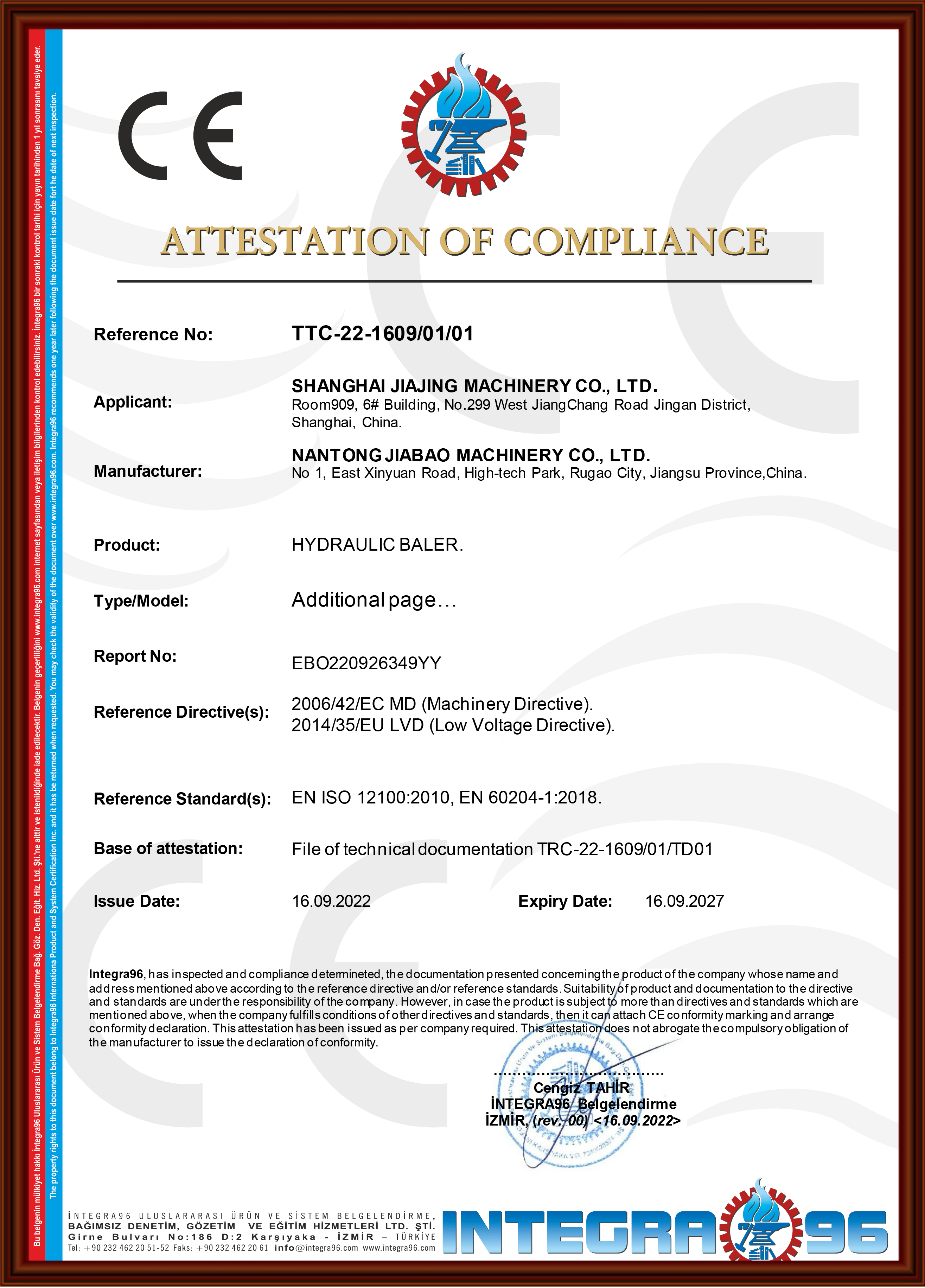
The JPW20Q is an example of the fully automatic end of this range. The machine is a Fully Automatic Horizontal Baler in the Jewel line, with 20 tons of compression force, a bale size of 500 × 500 × 500 mm, and 2–4 strapping channels. It carries CE attestation number TTC-22-1609/01/01, issued by INTEGRA against EN ISO 12100:2010 and EN 60204-1:2018.
3. Target material stream
This is where the secondary vocabulary of the industry comes from. Material type affects chamber geometry, cutting requirements, moisture tolerance, and the strapping method.
- Waste paper and carton. Waste paper hydraulic baler machines and carton hydraulic baler machines handle high-volume, low-density material where throughput matters more than force per cycle. Cardboard factory waste hydraulic baler machines are often integrated directly into corrugator and printing lines.
- Plastic and PET. Plastic Bottle hydraulic baler machines need higher compression density because uncrushed bottles trap air and produce unstable bales. Hydraulic baler machines for rubber and plastic waste typically pair a large feed opening with a long bale chamber so density builds gradually.
- Metal. Metal hydraulic baler machines work with denser, more abrasive scrap. The JPY-T60W, a Metal Baler in the Jewel range, has a 60-ton compression force, a feed opening of 900 × 430 mm, and a bale cross-section of 430 × 280 × (150–250) mm.
- Fiber and foil. Fiber hydraulic baler machines and Aluminum Foil hydraulic baler machines operate in a different regime entirely. The JPW-AK100 is an Aluminum Foil Baler with 100 tons of force but a bale weight of only 5–15 kg, because the material is light and the objective is a tidy, transportable package rather than maximum mass.
- Powder and fine dust. Briquetting hydraulic baler machines press fine material into small, dense slugs. The JPW-AK60 is a Briquetting Machine producing 300 × 300 mm briquettes at 0.2–0.5 tons per hour, intended for materials such as paper dust.
4. Function beyond compaction
Not every machine in this category simply squeezes material. Some perform an additional step inside the same frame:
- Cutting. The JP-S100B is classified as a Cutting Machine, with a 1000 mm cutting stroke and a single cycle time of 20–30 seconds, allowing it to reduce oversized material before compaction.
- Bagging. Bagging hydraulic baler machines, such as the JPW-K6046 Bagging Machine, fill a bag or sack rather than producing a strapped bale — useful where the output is sold in retail packaging units.
- Compaction without baling. The JP8060T5X is described as a waste compactor, with 5 tons of force and a bale weight of 50–80 kg, suited to small-volume sites that need volume reduction rather than a saleable bale.
Where the Force Comes From, and What It Controls
Every machine in this category converts hydraulic pressure into linear force. A pump drives fluid into a cylinder, the cylinder extends a ram into a chamber, and the material inside the chamber resists. Compression force is the headline number because it sets the maximum density the machine can reach on a given material.
Within the Jewel hydraulic baler machine range, rated compression force runs from 5 tons on the JP8060T5X waste compactor to 150 tons on the JPW150BL-QT horizontal fully automatic closed-end baler, which produces bales of 1100 × 1250 × 1500 mm. Force alone, however, does not determine output quality. Three other parameters interact with it:
- Feed opening size. A larger opening accepts bulkier material without pre-shredding. The JPA5076T25X has a feed opening of 1500 × 500 mm, which is why it is used for large-format cardboard that would jam a narrower throat.
- Bale chamber length. Longer chambers allow density to build through repeated strokes rather than through a single high-force hit, which is gentler on light materials.
- Strapping channel count. More channels hold a denser bale together under transport vibration. The JPW40BL and JPW40F both use four strapping channels.
The Category in Context: Why Demand Keeps Broadening
Baler equipment is no longer purchased only by dedicated recycling facilities. Packaging plants, corrugator lines, and logistics operations now buy compaction equipment because waste storage and haulage costs scale directly with volume, and loose material occupies many times the space of a finished bale.
Published market research reflects that broadening. The global baler market, covering both agricultural and industrial machines, was valued at USD 7.18 billion in 2025 and is projected at USD 7.96 billion in 2026, reaching USD 18.02 billion by 2034. Within that, the hydraulic waste paper baler segment was estimated at USD 1.45 billion in its 2024 base year, with a projected USD 2.24 billion by 2032 and a CAGR of 5.5 percent. The hydraulic metal recycling baler market was valued at USD 913 million in 2023 and is forecast to reach USD 1,318 million by 2031.
Reading these figures correctly matters. The three figures describe different scopes. The first covers all balers including agricultural models. The second covers hydraulic waste paper balers only. The third covers hydraulic balers used for metal recycling. They cannot be added together, and none of them alone describes the market for a specific machine configuration.
A Working Cycle, Step by Step
Across all four dimensions, the operating sequence is recognisable from one machine family to the next. The differences lie in which steps are automated and how long each takes.
- Feeding. Material enters through the feed opening, either manually, by conveyor, or through a factory-wide waste discharge system connected to production equipment.
- Pre-processing (optional). Machines fitted with a cutting head reduce oversized items so the chamber does not bridge. The JP-S100B performs this step with a 1000 mm cutting stroke.
- Compression. The hydraulic ram advances. Density rises over successive strokes rather than in a single motion, which is why cycle time and force both matter.
- Strapping. Wire or strap is threaded through the strapping channels and tensioned around the compressed block while the ram still holds pressure.
- Discharge. The finished bale leaves the chamber. Vertical units eject from the base or side; horizontal units either push the bale out in one motion — the JPW40BL uses a one-time bunder discharge — or use continuous push-pack, as on the JPW40F.
- Waste paper and carton from a corrugator line. Fully automatic or semi-automatic horizontal units with continuous discharge, so the baler keeps pace with production.
- PET bottles and HDPE containers. Machines with long chambers and higher force per unit of chamber volume, because trapped air must be expelled before density can build.
- Mixed plastics, light glass, and small metal scrap. Multi-material separation feeding into a single horizontal unit, as in the Australian installation described below.
- Metal turnings, offcuts, and thin gauge scrap. Metal balers with narrower, higher-force chambers and a bale cross-section sized for steel mill or foundry acceptance.
- Foil, fiber, and paper dust. Small-bale machines, including briquetting presses, where a compact and consistent output matters more than mass.
- CE attestation. Jewel holds attestation of compliance number TTC-22-1609/01/01, issued by INTEGRA for the EU market against directive references 2006/42/EC (MD) and 2014/35/EU (LVD), with harmonised standards EN ISO 12100:2010 and EN 60204-1:2018. The certificate was issued on 16 September 2022 and is valid until 16 September 2027. It applies to the JPW20Q fully automatic horizontal baler.
- SGS supplier audit. Jewel also holds an SGS Made-in-China Supplier Audit Report, certificate number QIP—ASR2541890, issued 10 December 2025 and valid until 10 December 2028, against the Made-in-China Supplier Audit Specification. The audit scope covers the full range of baler machine, hydraulic baler, waste paper baler, cardboard baler, and baling press machine products.
The practical consequence of automation is that steps 1 through 5 become one uninterrupted loop. Where that loop is closed against a production line, operators do not handle waste at all.
Category Comparison at a Glance
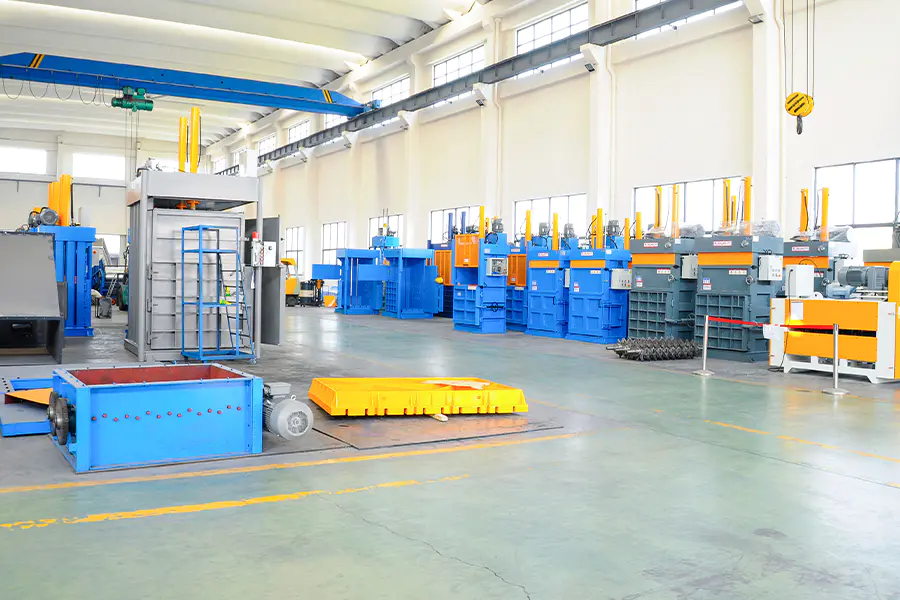
The table below lists representative configurations from the Jewel hydraulic baler machine range and the parameters that most directly determine application fit. All values are as published in the manufacturer’s technical data.
| Model | Machine type | Compression force (Ton) | Bale size (mm) | Bale weight (kg) | Capacity | Power |
|---|---|---|---|---|---|---|
| JP8060T5X | Waste compactor | 5 | 800 × 600 × 400 | 50–80 | 4–7 bales/hr | 2.2 kW / 3 Hp |
| JPW-K6046 | Bagging machine | 10 | Not listed (bagging output) | 50–80 | 6–8 bales/hr | 2.2 kW / 3 Hp |
| JP7050T8 | Baling machine | Not listed | Not listed | 50–80 | 6–8 bales/hr | 2.2 kW / 3 Hp |
| JPW20Q | Fully automatic horizontal baler | 20 | 500 × 500 × 500 | 30–70 | Not listed | 7.5 kW / 10 Hp |
| JPA5076T25X | Hydraulic baler | 25 | 1500 × 760 × 900 | 200–300 | 3–5 bales/hr | 7.5 kW / 10 Hp |
| JPW40BL | Plastic bottle recycling machine | 40 | 720 × 720 × (300–1000) | 250–350 | Not listed | 15 kW / 20 Hp |
| JPW40F | Semi-automatic horizontal baler | 40 | 720 × 720 × (500–1300) | 200–400 | 1–2 ton/hr | 11 kW / 15 Hp |
| JPW-AK60 | Briquetting machine | 60 | 300 × 300 × (200–300) | 5–10 | 0.2–0.5 ton/hr | 15 kW / 20 Hp |
| JPY-T60W | Metal baler | 60 | Cross-section 430 × 280 × (150–250) | 15–20 | 0.5–1 ton/hr | 22 kW / 30 Hp |
| JP-OT100 | Vertical baler | 100 | 1400 × 700 × (700–1100) | 400–600 | 5–6 bales/hr | 15 kW / 20 Hp |
| JPW-AK100 | Aluminum foil baler | 100 | 320 × 320 × (200–250) | 5–15 | 0.4–0.8 ton/hr | 18.5 kW / 25 Hp |
| JP-S100B | Cutting machine | 100 | Not listed (cutting stroke 1000 mm) | Not listed | 20–30 s per cycle | 11 kW / 15 Hp |
Two patterns are worth noting. First, bale weight does not track compression force. The JPW-AK100 applies 100 tons but produces a 5–15 kg bale, while the JP-OT100 applies the same force and produces a 400–600 kg bale. Material density sets the outcome, not the tonnage figure. Second, tonnage figures published by different suppliers are not automatically comparable unless the bale chamber geometry and the material are also stated.
Matching a Machine Family to a Material Stream
For a first-pass orientation, the following pairings reflect how the machine families are actually deployed. They are starting points for specification, not substitutes for a site assessment.
What Real Installations Show
Specification sheets describe what a machine can do. Installations describe what happens when the machine meets a real material stream. The following examples are drawn from Jewel’s documented project records.
Carton production waste, Russia
A cardboard box factory used the JPW40F semi-automatic horizontal baler for automatic collection, compression, and baling of waste generated during carton production. The project ran over three years and produced a coherent unmanned waste processing system, reducing labour and management costs while enabling immediate monetisation of the baled waste.
PET bottle density, Japan
A PET recycling enterprise needed higher compression density so that bales would hold their shape and stack efficiently. The installation produced compact, uniformly formed bales, which improved storage and transport efficiency and increased the added value of the recycled output. The project period was two years.
Large-format cardboard, Italy
A cardboard box factory replaced ageing balers and introduced pre-processing equipment to handle large-sized waste cardboard that the previous setup could not process reliably. Waste treatment efficiency improved substantially, and the project has been running for four years.
Mixed waste, Australia
A waste recycling operation handling plastics, a small proportion of glass, and metal scraps installed a JPW40BL with multi-material separation technology. The line achieved unmanned operation over its full length, reducing labour costs and operational risk. Project duration was two years.
Piled waste paper, Tunisia
A cardboard box factory deployed a factory-wide automatic waste discharge system tied to the corrugator line and printing machines. The JPW-AK60 briquetting machine addressed waste accumulation at source rather than at the end of the shift. The result was a clean and efficient production environment with the accumulation problem eliminated.
Mixed packaging waste, Belarus
A waste recycling client needed to handle PET bottles, woven bags, HDPE bottles, and cardboard through one system. The challenge was the bulkiness of the input and the difficulty of compressing it consistently. Regular-shaped finished bales improved both transport and storage efficiency.
Across these installations, one pattern recurs: the machines that performed best were specified around the material stream, not around a tonnage target. Site conditions, available floor area, and how waste reaches the baler determined the outcome at least as much as the compression force rating.
Verification and Compliance for This Category
Hydraulic balers are industrial machinery, and in several markets they fall under machinery safety regulation. Two documents are commonly requested during evaluation.
Because a CE certificate is issued against a specific model and a specific set of standards, the correct verification step is to confirm that the certificate names the exact model being purchased — not simply that the supplier holds CE certification for its product range.
Frequently Asked Questions
What certifications should I verify before purchasing a hydraulic baler machine?
Two documents are directly verifiable in this category. The first is a CE attestation of compliance, which for the Jewel JPW20Q is certificate TTC-22-1609/01/01, issued by INTEGRA against EN ISO 12100:2010 and EN 60204-1:2018, valid until 16 September 2027. The second is an SGS Made-in-China Supplier Audit Report, certificate QIP—ASR2541890, valid until 10 December 2028, covering the full range of hydraulic baler, waste paper baler, cardboard baler, and baling press products. Because CE certificates are issued per model, confirm that the certificate lists the exact model you intend to order.
What can be customised on a hydraulic baler machine?
Jewel provides customisation production services covering structure, process, and performance, and offers Customized hydraulic baler machines rather than a fixed catalogue only. Structure-level changes typically involve chamber geometry or feed opening; process-level changes relate to how the machine is integrated with upstream equipment; performance-level changes relate to force, cycle time, and output format. The minimum order quantity is 1 unit, so customisation is available at single-machine volumes.
What is the minimum order quantity and production capacity to expect?
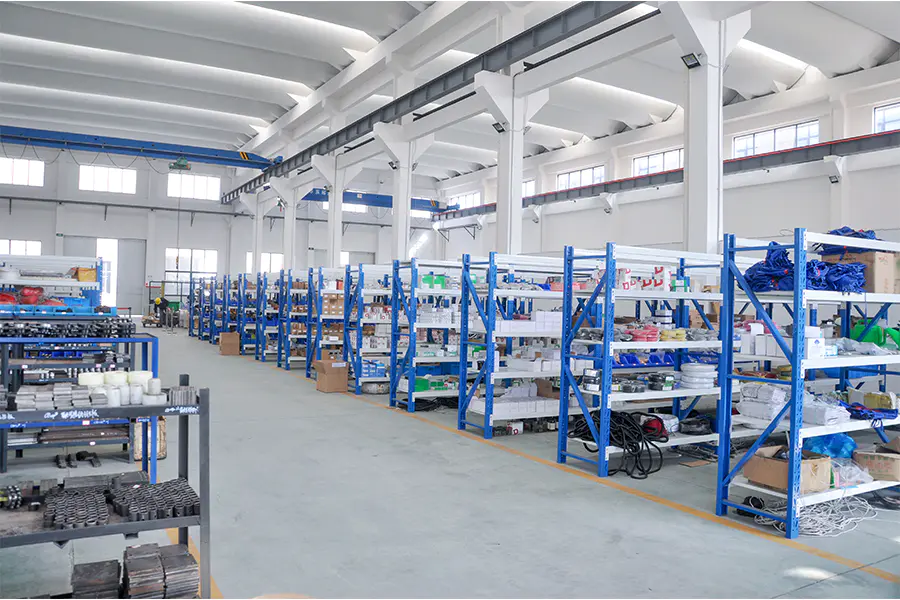
The minimum order quantity is 1 unit, and typical production lead time is 60 days. Jewel’s stated monthly production capacity is 100 units, and the manufacturing facility covers 50,000 m² with more than 200 employees, including a 30-engineer R&D team. These figures describe production capacity, not inventory, so lead time should be confirmed against the specific configuration at the time of enquiry.
Can I validate a machine before committing to a full order?
Jewel operates a 100 percent test protocol on production units and applies a pre-shipment test as the acceptance criterion. Payment terms are 50/50 and delivery terms are FOB Shanghai. For buyers who need machine-level validation before volume commitment, the practical route is to define the acceptance test against your own material — not against a generic specification sheet — and to tie the pre-shipment test to that definition.
How long does delivery and after-sales support take?
Typical production lead time is 60 days, with delivery under FOB Shanghai terms. After-sales support is structured as a 7×24 hour technical response with on-site attendance within 48 hours, plus lifelong maintenance and free operator training. For export markets — Jewel ships to Europe, North America, Asia, the Middle East, Africa, and Australia, with exports accounting for 70 percent of output — the response window is the figure that most directly affects downtime risk.
Next Step: Match the Category to Your Material Stream
Hydraulic baler machines are easier to evaluate once the category is split into machine families rather than treated as a single product. If you are at the evaluation stage, the fastest route forward is to share your material type, daily volume, available floor space, and target bale weight. Jewel can then indicate which family fits and whether a standard configuration is sufficient or a Customized hydraulic baler machine is required.
Request the full product catalogue: Jewel Hydraulic Baler Machine Catalogue (PDF)
Contact: Nina | Email: jiabao@csj-baler.com | Tel / WhatsApp: +86 187-2181-4932 | Website: www.jewelbaler.com
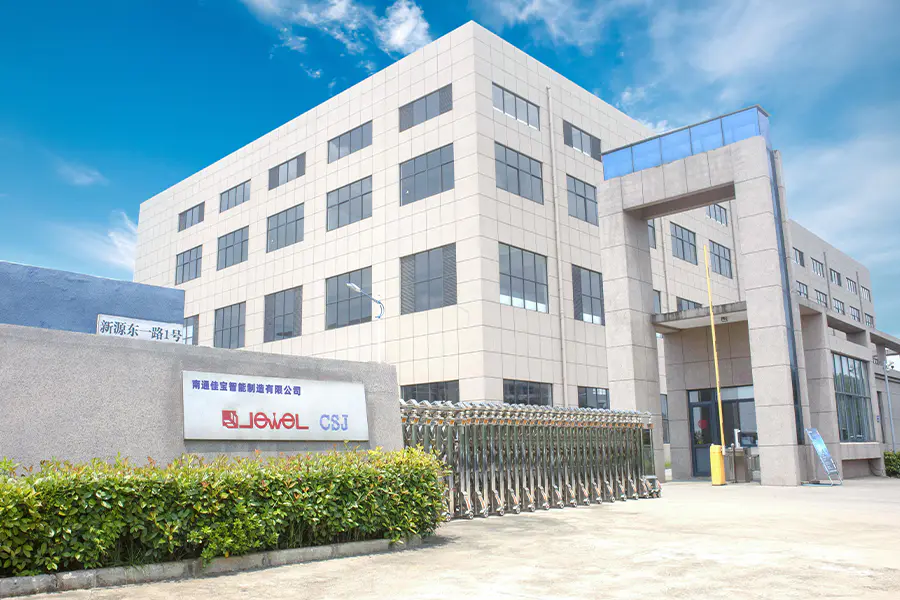
Nantong Jiabao Machinery Co., Ltd. — No.1 Xinyuan East 1st Road, Rugao City, Jiangsu Province, China.
Have Questions or Need More Details?
Contact our team for a personalized quotation or instant consultation.
Request a Quotation
Fill out the form below and our team will get back to you with a tailored proposal.
WhatsApp Direct Chat
Prefer to chat in real-time? Message us on WhatsApp for instant assistance & quick answers.
- Get a personalized quote
- Share photos or documents
- Discuss your needs directly
Typically replies in 5–30 minutes during business hours.