
Hydraulic Baler Machines Application Guide: Matching Configuration to Real Plant Scenarios
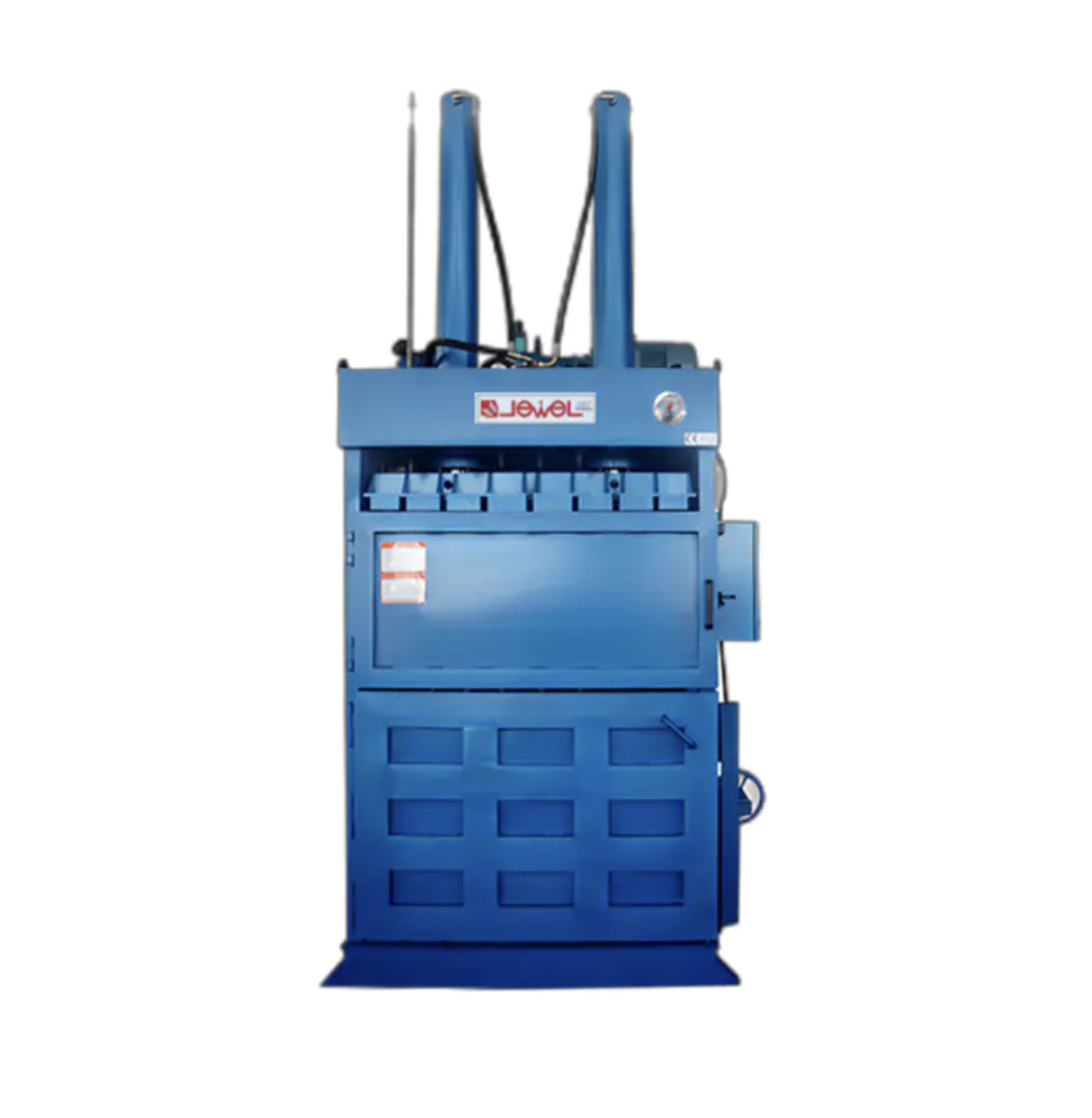
JP-OT100 vertical hydraulic baler: 100-ton compression force, 1400 x 700 x 1700 mm compression chamber, 400-600 kg bale weight.
Hydraulic baler machines are almost never installed on their own. In a working plant, a baler sits at the end of a chain: waste leaves a corrugator, a blow-moulding machine, a sorting table or a warehouse floor, travels along a conveyor, drops into a hopper, and exits as a bale that can be stacked, palletised and shipped. Choosing a machine is therefore not a catalogue exercise. It is an application-matching exercise in which compression force, feeding mouth geometry, bale shape and the supporting conveyor all have to fit the material that actually arrives.
This guide is written for the buyer who already knows the general category and now needs to know which configuration belongs to which scenario. It works through six verified application patterns, each tied to a documented machine specification or to a real project configuration, and it treats the baler as one component of a waste-handling line rather than as a stand-alone box.
Why Baler Projects Fail on Fit, Not on Machine Quality
The most common cause of a disappointing baling line is not a defective press. It is a mismatch between what the machine expects and what the plant actually produces. Three failure patterns repeat across projects.
1. Feeding mouth versus material format
A feeding mouth is a hard constraint, not a guideline. A machine with a 700 x 460 mm feeding mouth, such as the JPW20Q fully automatic horizontal baler, will not accept a full corrugated sheet straight off a printer. A 1400 x 600 mm mouth, as on the JP-OT100 vertical baler, or a 1500 x 500 mm mouth, as on the JPA5076T25X hydraulic baler, changes the labour requirement before a single bale is produced, because operators spend less time cutting material down by hand.
2. Compression force versus material spring-back
Light, resilient material does not behave like dense material. PET bottles and woven bags resist compression and rebound after the ram retracts, which is why a renewable-resource project in Japan specifically required a solution that increases the compression density of PET bottles and produces compact, aesthetically pleasing bales. A 5-ton waste compactor and a 100-ton baler are both hydraulic machines, but they solve different physical problems.
3. Treating the baler as an isolated unit
Every project configuration documented in this guide pairs the baler with a conveying system. When that support equipment is left out of the scope, the baler becomes a manual feeding station and the throughput figures on the datasheet stop being relevant.
Industry Background: Why Application-Level Matching Is Getting More Attention
The baler market is expanding, and the growth is concentrated where industrial waste volumes are concentrated. The global baler machine market was valued at USD 6.6 billion in 2024 and is projected to reach USD 11.4 billion by 2035, according to Grand View Research. The industrial baler segment specifically was valued at USD 6.39 billion in 2024 with a projected CAGR of 9.5% through 2032, according to Maximize Market Research.
Those two figures do not agree exactly, and the reason is worth understanding: estimates differ depending on whether agricultural balers are included in the scope. Buyers using market data for planning should check the definition behind the number rather than the headline.
Regional concentration matters as much as total size. Asia Pacific dominated the global baler market in 2024, accounting for approximately 40.2% of total revenue share, according to Grand View Research. On the trade side, China's exports of wood pulp and paper scrap, including baled waste paper, reached USD 288 million in 2025, according to the Observatory of Economic Complexity.
Regulatory pressure is also shaping machine selection. European safety regulations require vertical and tyre balers to comply with the EN 16500:2014 standard for waste processing equipment, per the European Committee for Standardization. In the United States, ANSI Z245.5-2023 is the updated American National Standard for baling equipment safety requirements, replacing the 2013 version, per the National Waste & Recycling Association. A machine that fits a plant's material flow but does not fit the destination market's standard is not a fit.
It is worth noting that the broad baler segment also includes large agricultural equipment manufacturers such as CNH Industrial and Deere & Company alongside specialised hydraulic firms such as HSM GmbH and Bramidan A/S. Industrial waste baling and agricultural baling share a name, not an application.
The Jewel Hydraulic Baler Platform: Twelve Verified Configurations
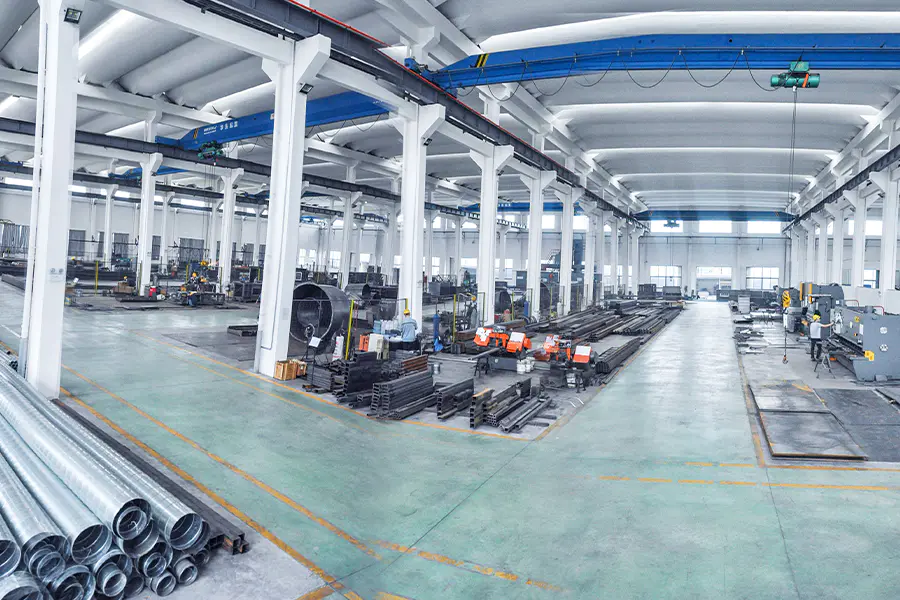
Jewel is the brand of Nantong Jiabao Machinery Co., Ltd., a manufacturer established in 2006 and operating under a brand founded in 1995 that specialises in the research, development and manufacture of environmentally friendly, intelligent compression and baling equipment. The company runs a 50,000-square-metre manufacturing facility with approximately 200 staff, including a 30-engineer R&D team, and an annual production capacity of 120,000 units. Export business accounts for 70% of total sales, with major markets in Australia, Europe, North America, Africa, Asia, Russia and Belarus.
The platform covers twelve distinct configurations. Understanding which one belongs to which scenario is the core of application matching.
Horizontal machines for continuous flow
- JPW20Q — fully automatic horizontal baler. 20-ton compression force, bale dimensions 500 x 500 x 500 mm, feeding mouth 700-460 mm, bale weight 30-70 kg, 2-4 strapping channels, 380V/50Hz, 7.5 kW/10 Hp, machine dimensions 3400 x 3010 x 2400 mm, net weight 2.8 tons, carbon steel construction.
- JPW40F — semi-automatic horizontal baler. 40-ton compression force within a 40-100 ton range, bale dimensions 720 x 720 x (500-1300) mm, feeding mouth 1000 x 720 mm, 4 strapping channels, bale weight 200-400 kg, 11 kW/15 Hp, baling capacity 1-2 tons per hour, continuous push pack discharging, machine dimensions 4900 x 1750 x 1950 mm.
- JPW40BL — plastic bottle recycling machine. 40-ton compression force within a 40-150 ton range, bale dimensions 720 x 720 x (300-1000) mm, feeding mouth 1000 x 720 mm, 4 strapping channels, bale weight 250-350 kg, 15 kW/20 Hp, 380V/50Hz, one-time blunder bale discharging, machine dimensions 5500 x 1150 x 1900 mm.
Vertical and speciality machines for constrained spaces and unusual materials
- JP-OT100 — vertical baler. 100-ton compression force, bale dimensions 1400 x 700 x (700-1100) mm, feeding mouth 1400 x 600 mm, baling capacity 5-6 bales per hour, compression chamber 1400 x 700 x 1700 mm, 15 kW/20 Hp, bale weight 400-600 kg, machine weight 3500 kg, 380V/50Hz.
- JPA5076T25X — hydraulic baler. 25-ton compression force within a 2-180 ton range, bale dimensions 1500 x 760 x 900 mm, feeding mouth 1500 x 500 mm, baling capacity 3-5 bales per hour, bale weight 200-300 kg, 7.5 kW/10 Hp, machine dimensions 2150 x 1200 x 2500 mm, weight 2100 kg.
- JPY-T60W — metal baler. 60-ton compression force within a 60-600 ton range, feeding mouth 900 x 430 mm, bale cross-section 430 x 280 x (150-250) mm, 22 kW/30 Hp, bale weight 15-20 kg, baling capacity 0.5-1 ton per hour.
- JPW-AK60 — briquetting machine. 60-ton compression force within a 60-200 ton range, bale dimensions 300 x 300 x (200-300) mm, feeding mouth 500 x 300 mm, bale weight 5-10 kg, baling capacity 0.2-0.5 ton per hour, 15 kW/20 Hp, 380V/50Hz, machine dimensions 3900 x 900 x 1350 mm, weight 2100 kg, suited to paper dust.
- JPW-AK100 — aluminium foil baler. 100-ton compression force within a 100-160 ton range, bale dimensions 320 x 320 x (200-250) mm, feeding mouth 500 x 320 mm, bale weight 5-15 kg, baling capacity 0.4-0.8 ton per hour, 18.5 kW/25 Hp, 380V/50Hz, machine dimensions 4000 x 920 x 1350 mm, weight 2600 kg, also suited to fibre-based material.
Compact and process-specific units
- JP7050T8 — baling machine. Feeding mouth 670 x 400 mm, baling capacity 6-8 bales per hour, bale weight 50-80 kg, 220V/50Hz, 2.2 kW/3 Hp, machine dimensions 880 x 820 x 2150 mm, weight 590 kg, compression force range 2-180 tons.
- JPW-K6046 — bagging machine. 10-ton compression force, feeding mouth 540 x 400 mm, baling capacity 6-8 bales per hour, bale weight 50-80 kg, 2.2 kW/3 Hp, machine dimensions 950 x 780 x 2150 mm, weight 600 kg.
- JP8060T5X — waste compactor. 5-ton compression force, bale dimensions 800 x 600 x 400 mm, feeding mouth 650 x 470 mm, baling capacity 4-7 bales per hour, bale weight 50-80 kg, 380V/50Hz, 2.2 kW/3 Hp, machine dimensions 1100 x 1000 x 2150 mm, weight 550 kg.
- JP-S100B — cutting machine. 100-ton compression force within a 100-160 ton range, width 1000 mm, cutting stroke 1000 mm, single cycle time 20-30 seconds, 11/15 kW/Hp, machine dimensions 2600 x 650 x 3500 mm, weight 2.6 tons.
All twelve machines are built on carbon-steel construction and are intended for waste paper recycling, plastic recycling, carton printing, textile waste processing, packaging manufacturing and PET bottle recycling applications. Voltage is customisable on the models that specify it.
Step-by-Step: How to Match a Hydraulic Baler to a Project
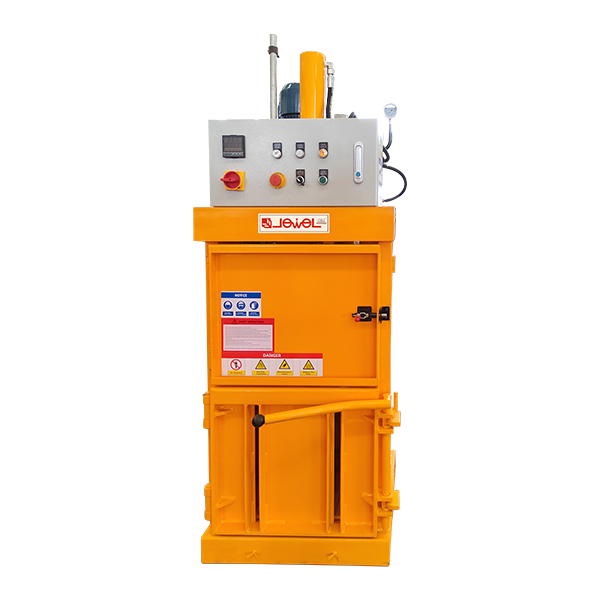
JP7050T8 compact baling machine: 670 x 400 mm feeding mouth, 6-8 bales per hour, 590 kg machine weight.
Application matching is a sequence, and the order matters. Working through it in the wrong order is what produces re-specification later.
- Define the material list, not the category. "Carton waste" and "mixed solid waste" behave differently. A corrugated carton plant generates large-format paperboard; a mixed solid-waste project generates a blend that may include plastics, glass and metal scraps. Write down every stream that will reach the hopper.
- Record the largest single item. This determines feeding mouth size before any other decision. A 1500 x 500 mm mouth on the JPA5076T25X and a 1400 x 600 mm mouth on the JP-OT100 serve different formats.
- Decide the bale, not just the press. Bale weight and bale geometry determine how the output is stacked, moved and sold. Options across the platform range from 5-15 kg briquettes on the JPW-AK100 to 400-600 kg bales on the JP-OT100.
- Match compression force to material resilience. Reference points: 5 tons on the JP8060T5X, 20 tons on the JPW20Q, 40 tons on the JPW40F and JPW40BL, 60 tons on the JPY-T60W and JPW-AK60, and 100 tons on the JP-OT100, JPW-AK100 and JP-S100B.
- Choose the automation level deliberately. Semi-automatic and fully automatic horizontal balers both exist on the platform. Full automation is what makes a factory-wide waste discharge system possible; semi-automatic machines suit operations where an operator is present at the baler anyway.
- Scope the conveyor and any pre-processing. Every documented project in this guide includes a conveying system. Where large-sized waste cardboard is generated on the corrugator line, a shredding stage may need to precede compression.
- Validate the operating conditions. Voltage (380V/50Hz or 220V/50Hz depending on model, customisable where specified), available floor area, dust levels and destination-market safety standards all constrain the final choice.
Verified Application Scenarios
Scenario 1 — Corrugated carton and packaging plants
A carton plant in Tunisia required a factory-wide automatic waste discharge system to solve waste accumulation from the corrugator line and printing machines, coupled with a conveying system for a fully automatic sorting and baling line handling multi-type mixed solid waste. The configured machine in that project was the JPW20Q fully automatic horizontal baler. A comparable project in Mexico used the JP-OT100 vertical baler in a waste removal workshop environment, targeting whole-plant integration and high-efficiency automation.
Scenario 2 — Carton plants replacing ageing equipment
An Italian carton manufacturer upgraded its factory waste disposal system by adding crushing and compression equipment to handle large-sized waste cardboard generated during production, replacing ageing balers. The project integrates shredding with compression in a corrugator workshop environment.
Scenario 3 — PET bottle and renewable-resource recycling
A renewable-resource recycler in Japan handling waste bottle processing in a high-dust environment needed to raise the compression density of PET bottles and produce compact, aesthetically pleasing bales. The JPW40BL is the platform's dedicated plastic bottle recycling machine, with 40-ton compression force, a 1000 x 720 mm feeding mouth and 250-350 kg bales.
Scenario 4 — Unmanned, line-integrated baling
A packaging and carton manufacturer in Russia installed a full-automatic unmanned waste baling system connected to production lines, covering automatic collection, compression and baling of carton production waste in a corrugator workshop environment. The configured machine for that project was the JPW-K6046 bagging machine.
Scenario 5 — Multi-material sites that cannot justify several machines
A comprehensive renewable-resource recycling operation handling mixed waste plastics, films and waste paper from supermarket chains needed one machine to process PET bottles, woven bags, HDPE bottles and cardboard in order to cut equipment investment costs. The requirement was professional customisation with stable, high-efficiency output and a consistent bale shape.
Scenario 6 — Mixed solid waste including metal and glass
An Australian comprehensive solid-waste recycling operation processes mixed plastics with small amounts of glass and metal scraps in a custom automatic baling system. The configured machine was the JPW-AK100, and the stated requirement was compression stability and durability rather than peak force.
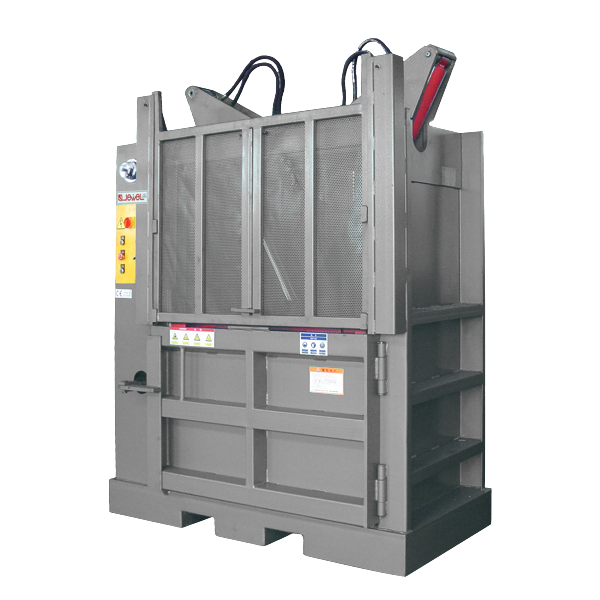
JPA5076T25X hydraulic baler: 25-ton compression force, 1500 x 500 mm feeding mouth for large-format material, 3-5 bales per hour.
Comparison Table: Configuration by Application Scenario
| Application scenario | Verified model | Compression force | Feeding mouth (mm) | Bale weight | Rated capacity | Supporting equipment |
|---|---|---|---|---|---|---|
| Carton plant, factory-wide automatic waste discharge | JPW20Q | 20 T (range 20-40 T) | 700-460 | 30-70 kg | Not specified in product data | Conveying system |
| Carton and mixed solid waste, whole-plant integration | JP-OT100 | 100 T (range 100-180 T) | 1400 x 600 | 400-600 kg | 5-6 bales/hr | Conveying system |
| High-volume loose paper and board | JPW40F | 40 T (range 40-100 T) | 1000 x 720 | 200-400 kg | 1-2 t/hr | Conveying system |
| PET bottle and plastic bottle recycling | JPW40BL | 40 T (range 40-150 T) | 1000 x 720 | 250-350 kg | Not specified in product data | Conveying system |
| Large-format carton and paperboard | JPA5076T25X | 25 T (range 2-180 T) | 1500 x 500 | 200-300 kg | 3-5 bales/hr | Not specified in product data |
| Metal scrap and light non-ferrous waste | JPY-T60W | 60 T (range 60-600 T) | 900 x 430 | 15-20 kg | 0.5-1 t/hr | Not specified in product data |
| Paper dust and fine particulate waste | JPW-AK60 | 60 T (range 60-200 T) | 500 x 300 | 5-10 kg | 0.2-0.5 t/hr | Not specified in product data |
| Aluminium foil and fibre-based waste | JPW-AK100 | 100 T (range 100-160 T) | 500 x 320 | 5-15 kg | 0.4-0.8 t/hr | Conveying system (AU project) |
| Oversized waste requiring size reduction first | JP-S100B | 100 T (range 100-160 T) | 1000 mm cutting width | Not specified in product data | 20-30 s cycle | Conveying system (IT project) |
| Small-footprint retail, warehouse and store packaging | JP7050T8 | Range 2-180 T | 670 x 400 | 50-80 kg | 6-8 bales/hr | Not specified in product data |
| Bagging and small-bale output | JPW-K6046 | 10 T | 540 x 400 | 50-80 kg | 6-8 bales/hr | Conveying system (RU project) |
| Low-volume carton and film compaction | JP8060T5X | 5 T | 650 x 470 | 50-80 kg | 4-7 bales/hr | Not specified in product data |
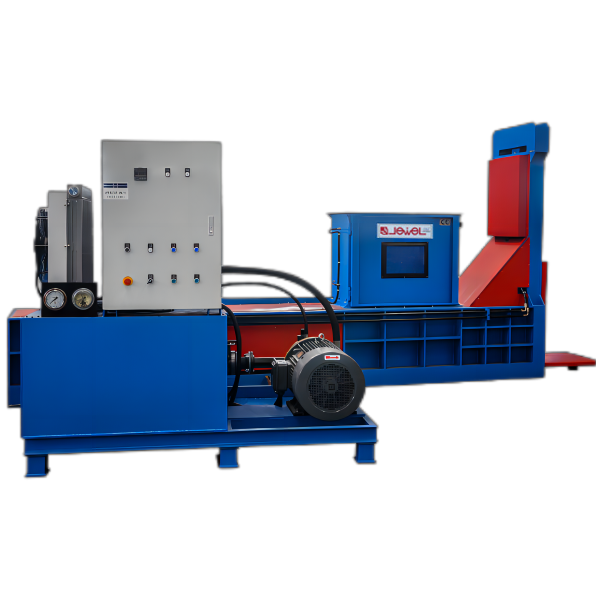
JPY-T60W metal baler: 60-ton compression force, 900 x 430 mm feeding mouth, 0.5-1 ton per hour.
The Supporting Equipment Most Buyers Underestimate
In every project configuration documented above, a conveying system is listed as required supporting equipment. This is not a sales add-on. A baler rated at 1-2 tons per hour only reaches that rate if material arrives continuously; manual loading caps the real throughput far below the datasheet figure.
The second underestimated element is pre-processing. The Italian carton project added a crushing stage specifically because large-sized waste cardboard could not be fed efficiently into compression equipment. Where a plant generates oversized material, size reduction belongs in the scope from the start rather than as a retrofit.
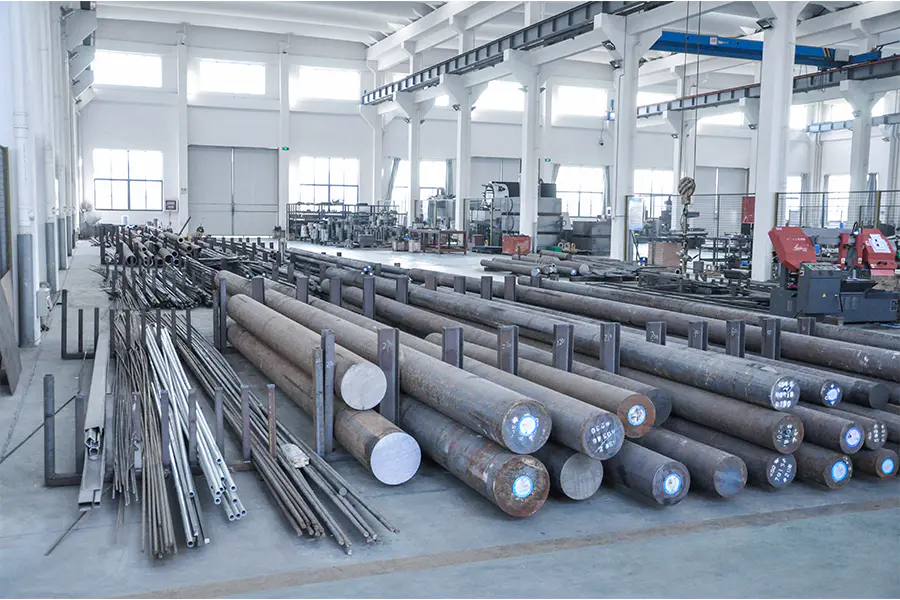
Carbon steel stock at the Jewel manufacturing facility. All twelve hydraulic baler configurations in this guide are built on carbon steel construction.
Frequently Asked Questions
Which safety standards apply to hydraulic baler machines?
Requirements depend on the destination market. In the European Union, European safety regulations require vertical and tyre balers to comply with the EN 16500:2014 standard for waste processing equipment, according to the European Committee for Standardization. In the United States, ANSI Z245.5-2023 is the updated American National Standard for baling equipment safety requirements, replacing the 2013 version, according to the National Waste & Recycling Association. Buyers should confirm the applicable standard for their installation country before finalising a configuration.
Can one hydraulic baler machine handle several different waste streams?
In some cases, yes — and it is an explicit project objective for multi-material sites. A comprehensive renewable-resource recycling operation in Belarus, handling mixed waste plastics, films and waste paper from supermarket chains, set out to process PET bottles, woven bags, HDPE bottles and cardboard on one machine in order to cut equipment investment costs. The limitation is physical: compression force and feeding mouth size stay fixed, so any multi-material plan should be validated against the densest and the largest item in the stream, not the average one.
What drives the cost of a hydraulic baler project?
Four configuration variables move the scope more than anything else: compression force, bale geometry and weight, the level of automation, and whether a conveying system or pre-processing stage is included. On this platform, compression force alone spans from 5 tons on the JP8060T5X to 100 tons on the JP-OT100, JPW-AK100 and JP-S100B, and bale weight spans from 5-15 kg on the JPW-AK100 to 400-600 kg on the JP-OT100. Because these variables are interdependent, an accurate budget comparison requires a defined material stream rather than a general enquiry.
Can a supplier test the machine with our actual waste material before we commit?
Material behaviour — spring-back, bridging, dust generation — is the part of application matching that datasheets cannot fully answer. Jewel provides customised industry solutions for compression and baling equipment and works from the material list and project conditions rather than from a general category. Buyers preparing a sample evaluation should send the material list, the largest single item and the target bale format so the test reflects the real production environment.
What information is needed to finalise a configuration for a specific project?
The most useful starting package is: the full list of waste streams, the largest single item dimension, the target bale weight or bale handling method, the available floor area, the site voltage, and the destination market's safety standard. With those six inputs, a machine can be matched from the twelve verified configurations and the supporting conveyor and pre-processing scope defined at the same time.
Next Step
If you are working through an application-matching decision, the fastest route is a scenario review rather than a product list. Send your waste stream details and project conditions to the Jewel team and the configuration can be narrowed against the verified platform.
Email: jiabao@csj-baler.com | Tel / WhatsApp: +86 187-2181-4932 | Website: www.jewelbaler.com
Full technical specifications and model range: download the 2026 Jewel product catalogue (PDF).
Conclusion
Application matching decides whether a hydraulic baler line performs as specified. The sequence is consistent: define the material streams, record the largest item, choose the bale format, match compression force and feeding mouth geometry, then scope the conveyor and any pre-processing stage. Across the seven documented project scenarios covered here — carton plants in Tunisia, Mexico and Italy, PET recycling in Japan, unmanned line-integrated baling in Russia, multi-material recycling in Belarus, and mixed solid waste in Australia — the same pattern holds: the machine that fits is the one matched to the scenario, not the one with the largest number on the datasheet.
Jewel, the brand of Nantong Jiabao Machinery Co., Ltd., manufactures the twelve verified configurations described in this guide at its 50,000-square-metre facility and supplies them to markets including Australia, Europe, North America, Africa, Asia, Russia and Belarus. Further application notes are published on the company blog at blog.jewelbaler.com.