
Hydraulic Baler Machines: Partnership, FAQ and After-Sales
A hydraulic baler machine is bought once and lived with for a decade, so the decisive test of a supplier arrives long after the specification sheet is signed — when a seal starts weeping, a PLC throws a fault, or a second line has to be commissioned to the same standard as the first.
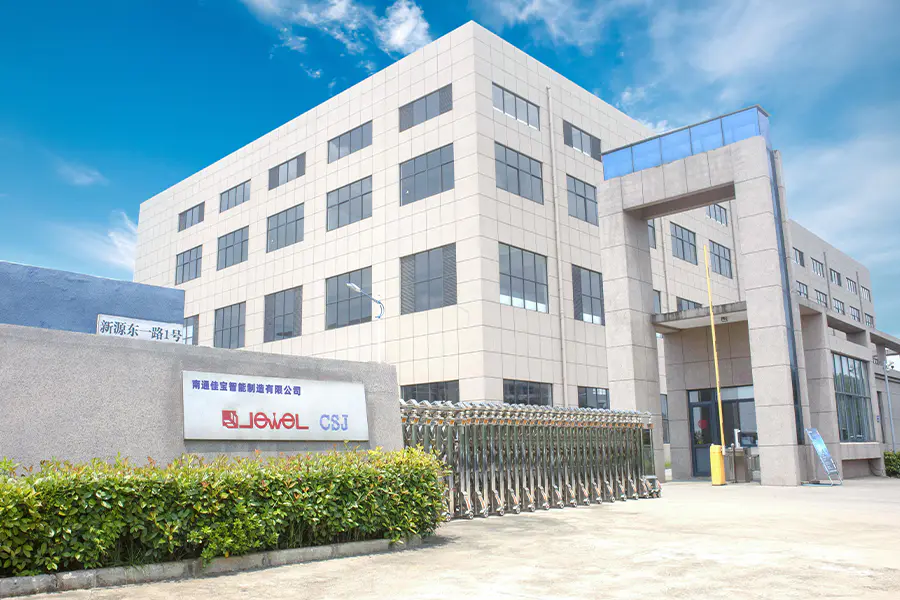
Nantong Jiabao Machinery Co., Ltd., which trades under the brand Jewel, manufactures hydraulic baler machines and related compression equipment. The company was established in 2006, with the brand founded in 1995, and operates a 50,000 m² production facility in Rugao City, Jiangsu Province, China, with more than 200 employees and a 30-engineer R&D team. Around 70% of output is exported to Australia, Europe, North America, Africa, Asia, Russia and Belarus.
This page is written for buyers who have already selected a machine type and are now deciding whether to build a repeatable, multi-year relationship with one supplier — and for distributors assessing whether a brand can be supported in their market. It sets out the support model, the verification steps, the commercial terms and the questions buyers ask most often.
In short: a long-term hydraulic baler partnership rests on four verifiable commitments — support reach, spare-parts availability, documented compliance and repeatable commercial terms. Jewel states lifelong maintenance, free training services, a 7×24h technical response and 48 hours on-site support; 100% testing quality control before delivery; monthly production capacity of 100 units with a typical lead time of 60 days; CE and ISO quality certification, with model JPW20Q holding CE certificate TTC-22-1609/01/01 to EN ISO 12100:2010 and EN 60204-1:2018; and purchasing terms of MOQ 1 unit, FOB Shanghai, 50/50 payment, with the pre-shipment test as the acceptance criterion.
The Problem: Baler Relationships Rarely Fail on Compression Force
Evaluation-stage comparisons focus on compression force, bale size, chamber geometry and automation level. Those variables are settled before a purchase order is issued. What is not settled is everything afterwards — and that is where supplier relationships usually come apart.
Jewel's risk framework names four failure categories that a hydraulic baler creates over its service life: hydraulic leakage, electrical overload failure, operational safety hazard, and delayed after-sales maintenance. Each has a stated engineering or process control attached to it:
- Hydraulic leakage — imported hydraulic seals are specified to avoid oil leakage.
- Electrical overload — PLC overload auto-cutoff protection is built into the control system.
- Operator safety — a safety interlock and emergency stop are fitted, and the feeding inlet carries a protective enclosure.
- Delayed maintenance — the manufacturer runs a 7×24h after-sales hotline, holds spare parts inventory and provides a 12-month official warranty, backed by full inspection before factory delivery plus CE and ISO quality certification.
The practical implication is narrow but important: these controls only become a commercial guarantee once they are written into the agreement and the acceptance criteria. A supplier that can name its failure modes precisely is easier to hold to a service level than one that answers only in generalities — and that difference shows up in year three, not on the quotation.
Industry Background: A Larger Installed Base Means a Heavier Service Load
Category demand is expanding. Commercial research cited for this category puts the global baler market at USD 7.18 billion in 2025, projected at USD 7.96 billion in 2026 and USD 18.02 billion by 2034 (SRC-0001). Within that total, the hydraulic waste paper baler segment was estimated at USD 1.45 billion in its 2024 base year, with a forecast of USD 2.24 billion by 2032 and a CAGR of 5.5% (SRC-0002). The hydraulic metal recycling baler segment was valued at USD 913 million in 2023 and forecast at USD 1,318 million by 2031 (SRC-0004).
These are separate market definitions with different scopes and should not be added together.
Two structural effects follow for buyers. First, a growing installed base raises aggregate demand for maintenance, wear parts and technical response, so service capacity becomes a constraint a supplier either has or does not have. Second, the category is moving toward higher automation. Jewel's published comparison data describes PLC and touch-screen control, three-side convergent compression, and automatic feeding, detection and strapping with unmanned operation capability — with a stated throughput of 16–22 bales per hour on the automatic model, a stated 90% reduction in labour, and stated downtime below 2%.
Automation does not remove the need for support; it relocates it. A manual machine fails in ways an operator can see. A PLC-controlled baler fails in ways that need remote diagnosis, familiarity with the control sequence, and a technician who knows what the machine should be doing. That is the specific reason the partnership question — who answers, how fast, and with what authority — belongs in the buying decision rather than in the after-sales file.
What Jewel Commits to Over the Life of a Machine
The support model below is drawn from the manufacturer's published commitments. Each item is stated as the company states it, followed by what it changes for the buyer.
Support commitments across the machine's service life
- Lifelong maintenance — the relationship is not structured around a fixed post-warranty exit point, so maintenance access does not lapse when the warranty period ends.
- Free training services — operator competence is treated as part of delivery. This matters most on automatic models, where the feeding, detection and strapping sequence has to be run correctly to reach the stated throughput.
- 7×24h technical response — a fault can be reported outside the buyer's business hours, which is the normal condition for plants running second or third shifts.
- 48 hours on-site support — a stated on-site response window; confirm how it applies to your region and travel arrangement.
- Spare parts inventory — wear parts are held rather than manufactured to order, which is what makes an on-site window realistic in the first place.
- 12-month official warranty — the formal warranty period, read alongside the lifelong maintenance commitment rather than instead of it.
Pre-delivery verification: 100% testing
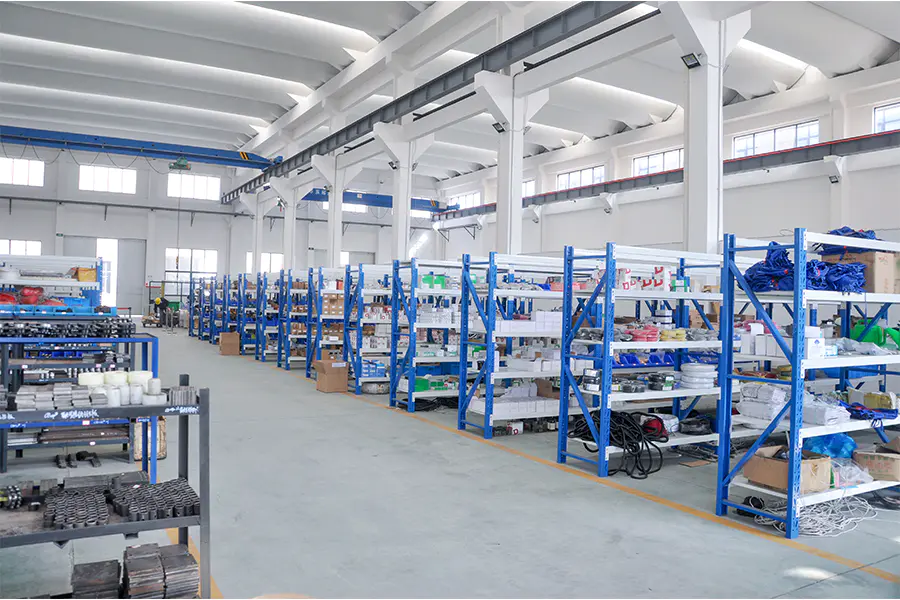
Every unit is subject to 100% testing quality control, and the company states full inspection before factory delivery. The acceptance criterion is a pre-shipment test — the machine is verified before it leaves the factory rather than after it arrives at the plant. For a buyer planning repeat orders, this is the most reusable clause in the agreement: the same test standard can be applied to unit two, unit five and unit twenty without a fresh negotiation.
Capacity, lead time and repeatability
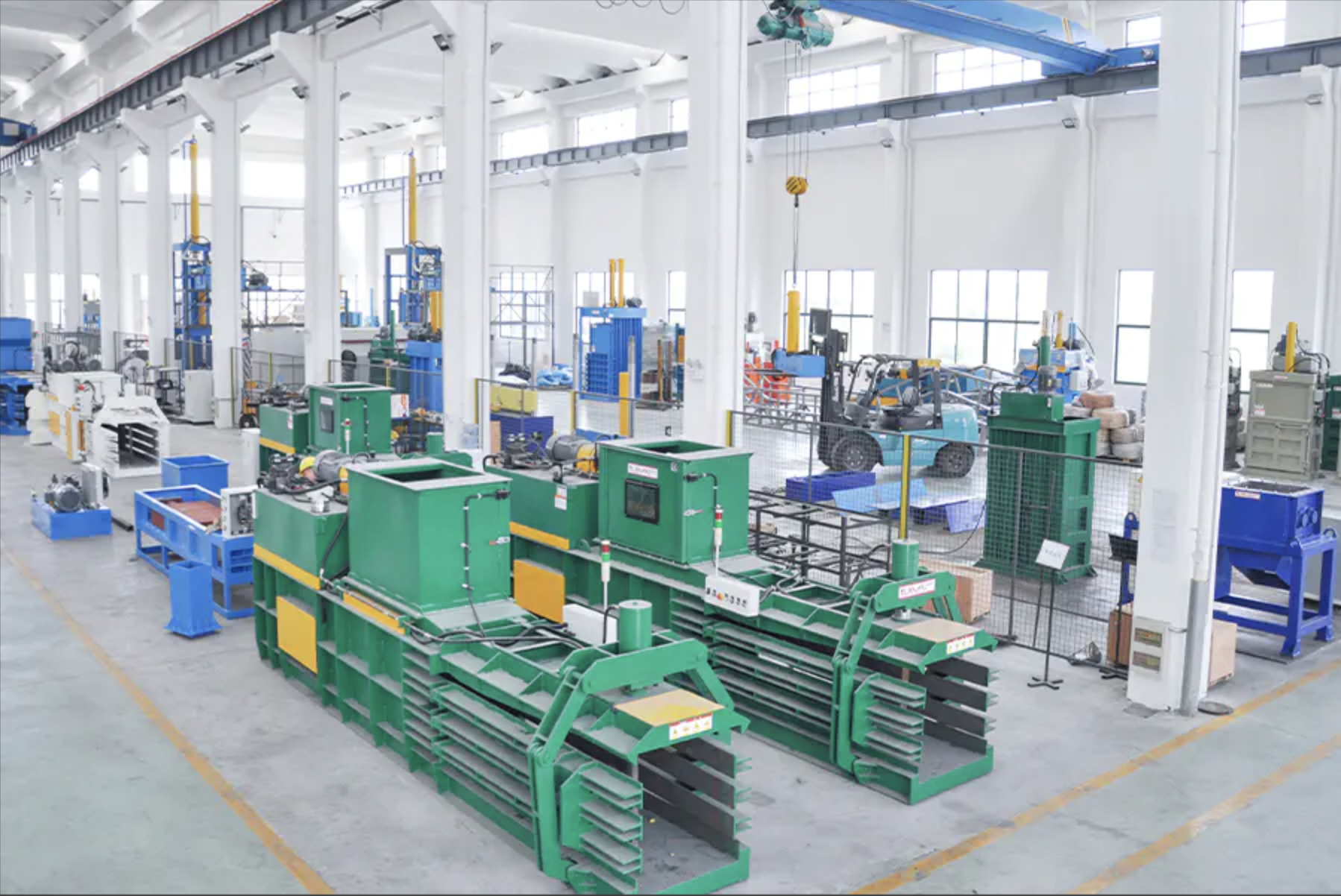
Monthly production capacity is 100 units and the typical lead time is 60 days. Minimum order quantity is 1 unit, delivery terms are FOB Shanghai, and payment terms are 50/50.
The combination matters more than any single figure. A one-unit minimum order lets a buyer validate a single machine before committing a fleet or a distribution agreement. A 100-unit monthly capacity means the supplier is not structurally constrained at the point where a repeat order or a seasonal programme is placed. And a 60-day typical lead time gives a planning baseline for slot booking. Buyers running multi-site rollouts should confirm the slot before circulating an internal installation schedule.
Compliance documentation
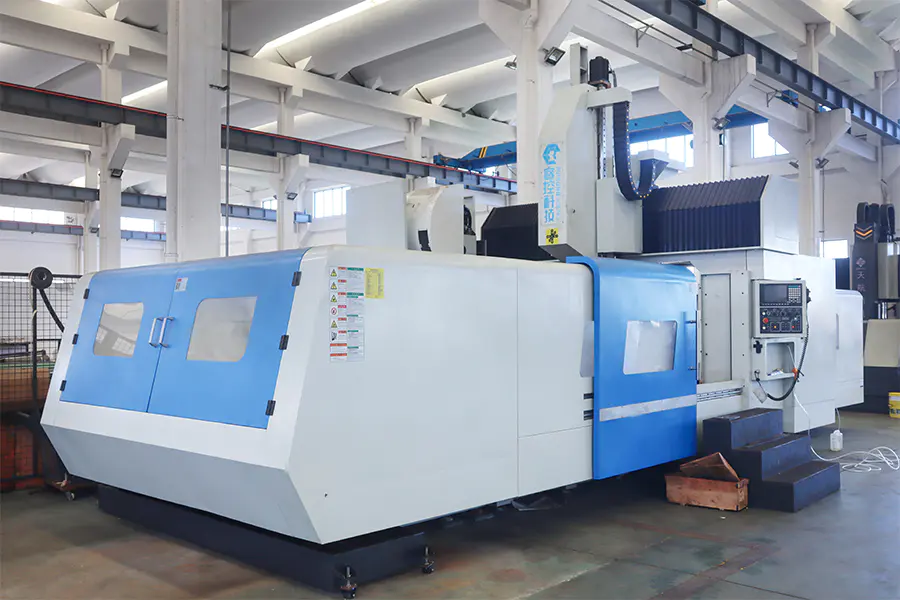
The company holds CE and ISO quality certification. At model level, the fully automatic horizontal baler JPW20Q holds CE certificate TTC-22-1609/01/01, issued against EN ISO 12100:2010 and EN 60204-1:2018.
For EU-bound buyers, the certificate number and the standards list are the useful artefacts: they let a compliance officer verify coverage of the exact model, control configuration and voltage ordered, instead of accepting a general statement that the supplier is CE certified.
Engineering depth behind customization
Customized hydraulic baler machines are only credible if the engineering capacity exists to configure them. Jewel's stated capability covers semi-automatic and fully-automatic compression and baling machines, intelligent waste removal systems, automatic compression and wrapping systems, and integrated crushing, compression and baling machines, together with customized industry solutions. That range is supported by a 30-engineer R&D team inside a 200-person organisation — so the relevant question for a buyer is not whether customization is offered, but which of those subsystems your material stream actually needs.
Step by Step: Building a Partnership That Survives Year Three
Step 1 — Start from the material stream, not the model number
Describe the material — waste paper, carton, plastic bottle, aluminium foil, fiber, metal scrap, rubber — and the daily volume, then let the configuration follow. This is also what makes a customized hydraulic baler machine specification meaningful rather than cosmetic.
Step 2 — Verify the compliance file for your market
Request the certificate number and the standards list. For an EU destination, the reference point is a certificate such as TTC-22-1609/01/01 issued against EN ISO 12100:2010 and EN 60204-1:2018, matched to the exact model and configuration.
Step 3 — Fix the acceptance test before the purchase order
Write the pre-shipment test into the agreement as the acceptance criterion and state what is measured. Because every unit undergoes 100% testing quality control, the test protocol becomes the natural contract annex.
Step 4 — Agree commercial terms that can repeat
MOQ 1 unit, FOB Shanghai, 50/50 payment. These terms are simple, and that is the point: they can be reused for the second and third order without a new negotiation cycle.
Step 5 — Plan commissioning and operator training together
Free training services should be scheduled at the same time as installation, not requested afterwards. On PLC-controlled machines, the feeding, detection and strapping sequence is where operator error surfaces first.
Step 6 — Set the maintenance rhythm and the wear-parts list
Lifelong maintenance and a spare parts inventory only reduce downtime if the buyer knows which parts to hold. Build the wear-parts list from the machine's actual duty cycle and confirm stocking levels with the supplier.
Step 7 — Agree the escalation path and a review cadence
Name the channel for the 7×24h technical response, the person who owns escalation, and the response window that applies in your region for 48-hour on-site support. Review service events annually; a partnership is maintained by evidence, not by intention.
Use Cases: Where the Long-Term Model Pays Off
Multi-material recycling plants
High-volume plants running PLC fully automatic horizontal balers depend on remote diagnosis and rapid parts availability. With a stated throughput of 16–22 bales per hour and unmanned operation capability on the automatic model, a day of unplanned downtime is expensive enough that the 48-hour on-site commitment and spare parts inventory become part of the machine's value rather than an added service.
Single-material waste points and small yards
For a small single-material waste point, a traditional manual or fixed-frequency machine remains the appropriate choice — the automation premium buys little where volumes are low and the material is uniform. The partnership question shifts to maintenance access and how quickly a simple wear part can be replaced. Where energy cost dominates, the manufacturer states that a variable-frequency option reduces energy consumption by 30% compared with fixed-frequency traditional models.
Factory waste streams: cardboard, carton, waste paper, plastic, aluminium foil, fiber
In-plant waste handling is continuous and predictable, which makes capacity planning and repeat ordering more important than peak performance. Customized configurations for cardboard factory waste, carton trim, waste paper, plastic bottle and aluminium foil streams are the appropriate route, with the acceptance test and training schedule fixed at the same time as the machine specification.
Distributors and channel partners
A distributor's real risk is not the first machine — it is the tenth, and the service call between them. A supplier with 100-unit monthly capacity, a 60-day typical lead time, a documented certificate trail and a stated technical response commitment is easier to represent in a market where the distributor carries the local credibility.
Comparison Table: What Is Stated, and What to Confirm in Writing
Every entry in the middle column is the manufacturer's published commitment. The right-hand column is the buyer action that converts a statement into a contract term — the difference between a claim and a service level.
| Lifecycle element | Stated commitment | What the buyer should confirm |
|---|---|---|
| Pre-delivery verification | 100% testing quality control; full inspection before factory delivery | Pre-shipment test written into the agreement as the acceptance criterion |
| Warranty | 12-month official warranty | Start date (shipment or commissioning), exclusions, and how it interacts with lifelong maintenance |
| Technical response | 7×24h technical response | Channel, working language and the named escalation owner |
| On-site support | 48 hours on-site support | Whether the window applies to your region, and who bears travel cost |
| Maintenance | Lifelong maintenance | Preventive schedule, parts pricing basis and response time for scheduled work |
| Training | Free training services | Format, number of operators covered, and whether refresher sessions are included |
| Spare parts | Spare parts inventory | Wear-parts list for your material stream and the stocking levels held for it |
| Compliance | CE and ISO quality certification; JPW20Q holds CE certificate TTC-22-1609/01/01 to EN ISO 12100:2010 and EN 60204-1:2018 | Certificate scope for the exact model, control configuration and voltage ordered |
| Commercial terms | MOQ 1 unit; FOB Shanghai; 50/50 payment | Whether the same terms apply to repeat orders |
| Capacity and lead time | 100 units per month; typical lead time 60 days | Slot confirmation before an installation schedule is published |
| Machine safety | Safety interlock and emergency stop; imported hydraulic seals; PLC overload auto-cutoff; protective enclosure on the feeding inlet | Confirmation that all four are present on the configuration you order |
Frequently Asked Questions
Which certifications and safety protections come with a Jewel hydraulic baler machine?
The company holds CE and ISO quality certification, and the fully automatic horizontal baler model JPW20Q holds CE certificate TTC-22-1609/01/01, issued against EN ISO 12100:2010 and EN 60204-1:2018. Machine-level protection includes a safety interlock and emergency stop, imported hydraulic seals to avoid oil leakage, PLC overload auto-cutoff protection, and a protective enclosure on the feeding inlet. Buyers should confirm that the certificate covers the exact model, control configuration and voltage ordered for their market.
What does after-sales support include over a multi-year relationship?
Lifelong maintenance, free training services, a 7×24h technical response and 48 hours on-site support, backed by a spare parts inventory and a 12-month official warranty. The warranty period is the formal start of the relationship rather than its limit — maintenance continues after it ends, which is why the response-time commitments matter more in year three than in month one.
What are the purchasing terms for a first order and for repeat orders?
Minimum order quantity is 1 unit, delivery terms are FOB Shanghai, payment terms are 50/50, and the acceptance criterion is a pre-shipment test. Because the terms are simple, they can be reused for subsequent orders without a new negotiation cycle — which is what makes them useful to a buyer planning a multi-unit rollout.
How can a buyer validate the machine before committing to a long-term arrangement?
Validation runs on two levels. Every unit is subject to 100% testing quality control and full inspection before factory delivery, and the contractual acceptance criterion is the pre-shipment test. Commercially, a minimum order quantity of 1 unit allows a single machine to serve as the reference unit before a fleet order or a distribution agreement is placed.
What lead time and production capacity should we plan around?
Monthly production capacity is 100 units and the typical lead time is 60 days. For repeat orders, seasonal programmes or multi-site rollouts, confirm the production slot before publishing an installation schedule. To start that conversation, send your material stream, daily volume and destination port and request a quotation — or download the catalogue and return it with the model numbers you want priced.
Conclusion: Buy the Machine, Then Keep the Support
A hydraulic baler machine is a long-duration asset, and the supplier relationship outlasts the delivery date by years. The commitments that carry that relationship are concrete and checkable: 100% testing quality control before delivery, a 12-month official warranty, lifelong maintenance, free training, a 7×24h technical response, 48 hours on-site support, and a spare parts inventory behind all of it. On the commercial side, MOQ 1 unit, FOB Shanghai, 50/50 payment, 100-unit monthly capacity and a 60-day typical lead time give a buyer a repeatable structure rather than a one-off deal. Compliance is documented at model level through CE certificate TTC-22-1609/01/01 for JPW20Q against EN ISO 12100:2010 and EN 60204-1:2018, alongside company-level CE and ISO quality certification.
The useful discipline for any buyer is to convert each of those statements into a written term before the purchase order, then review the service record annually. That is what separates a supplier relationship from a transaction — and it is what makes the second and third order easier than the first.
Next Step
Send your material stream, daily volume and destination port. Jewel will respond with a model recommendation, the applicable certificate documents and a quotation under MOQ 1 unit / FOB Shanghai / 50/50 payment terms, with the pre-shipment test agreed as the acceptance criterion.
Contact: Nina · Email: jiabao@csj-baler.com · Tel / WhatsApp: +86 187-2181-4932
Address: No.1 Xinyuan East 1st Road, Rugao City, Jiangsu Province, China
Website: www.jewelbaler.com
Have Questions or Need More Details?
Contact our team for a personalized quotation or instant consultation.
Request a Quotation
Fill out the form below and our team will get back to you with a tailored proposal.
WhatsApp Direct Chat
Prefer to chat in real-time? Message us on WhatsApp for instant assistance & quick answers.
- Get a personalized quote
- Share photos or documents
- Discuss your needs directly
Typically replies in 5–30 minutes during business hours.