Hydraulic Baler Machines for Real Plant Problems: A Scenario-to-Model Map
A hydraulic baler machine rarely fails because it lacks compression force. It fails because it was selected for a catalogue category instead of the specific waste stream it has to handle. The same machine that clears a cardboard line can be the wrong choice for PET bottles, metal scrap, paper dust or mixed municipal waste, and the difference shows up in bale density, labour cost, floor space and the amount of material that has to be re-handled before it leaves the plant.
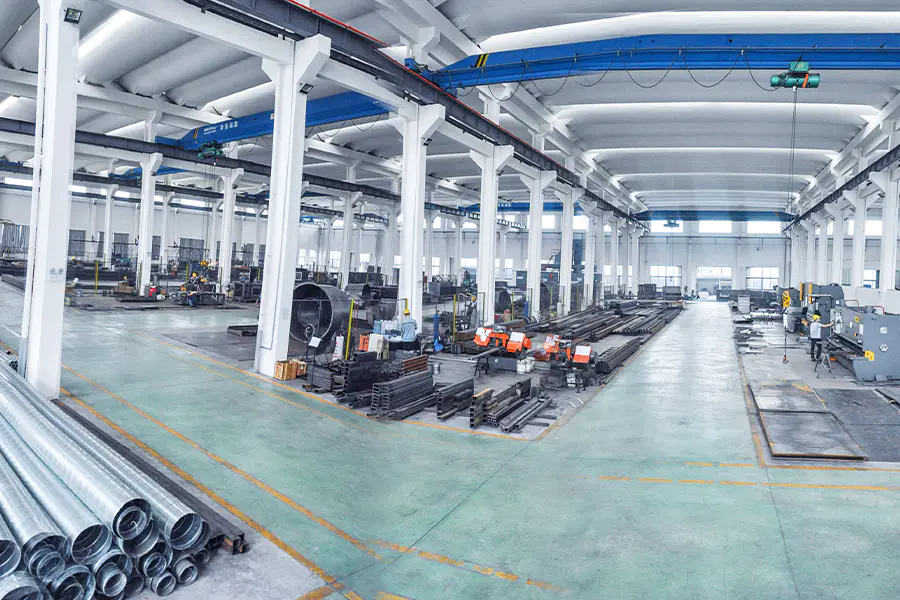
This article starts from the problem side of the specification: what is piling up, why it is hard to clear, and which hydraulic baler configuration resolves it. The reference base is Jewel (Nantong Jiabao Machinery Co., Ltd., founded 2006, brand founded 1995), a manufacturer of hydraulic baler machines, semi-automatic and fully automatic compression systems, and integrated crushing–compression–baling units. The scenario mapping below uses Jewel's product records and seven documented installation cases in Tunisia, Mexico, Italy, Russia, Belarus, Japan and Australia.
Why Hydraulic Baler Machines Underperform When They Are Selected by Category
In documented installations, mismatches between a plant problem and a baler usually fall into four patterns.
- Accumulation outpaces throughput. Cardboard, corrugated board, paper trim and print shop waste build up faster than staff can bale it. In Italy, a cardboard box factory replaced aging balers and added preprocessing equipment because large-sized waste cardboard was difficult to handle with the existing setup.
- Bale density is too low for transport. PET bottles, HDPE bottles and woven bags compress poorly when the baler is not matched to the material. A PET recycling enterprise in Japan required a solution that could raise compression density and produce compact, well-formed bales; a waste recycling operation in Belarus faced the same issue across PET bottles, woven bags, HDPE bottles and cardboard.
- Waste removal blocks the production line. Material collects near the corrugator line and printing machines instead of leaving the workshop. Both the Tunisia and Mexico cardboard box cases identify waste accumulation inside the workshop as the core problem.
- Automation level does not match the production line. A baler designed for manual feeding does not fit a line intended to run with minimal manual handling. The Russia cardboard case and the Australia mixed-waste case both moved to automated collect–compress–bale systems to reduce manual intervention.
Industry Background: Why Scenario-First Selection Matters in 2026
The baler category is wide enough that catalogue-level comparison rarely answers a plant problem. Commercial research cited in the verified data package estimates the global baler market at approximately USD 7.96 billion in 2026, while the hydraulic waste paper baler segment alone was valued at roughly USD 1.45 billion in 2024. Those figures cover agricultural and industrial balers together, so they are useful only as context: the buyer's real decision is not which market is growing, but which machine type fits the specific waste stream, throughput and compliance environment.
Three structural factors drive that decision:
- Material diversity. Cardboard, paper dust, PET, HDPE, woven bags, aluminum foil, fibre waste, metal scrap and mixed municipal waste behave differently under compression. Bale weight, strapping channels, feed opening and discharge method all change with the material.
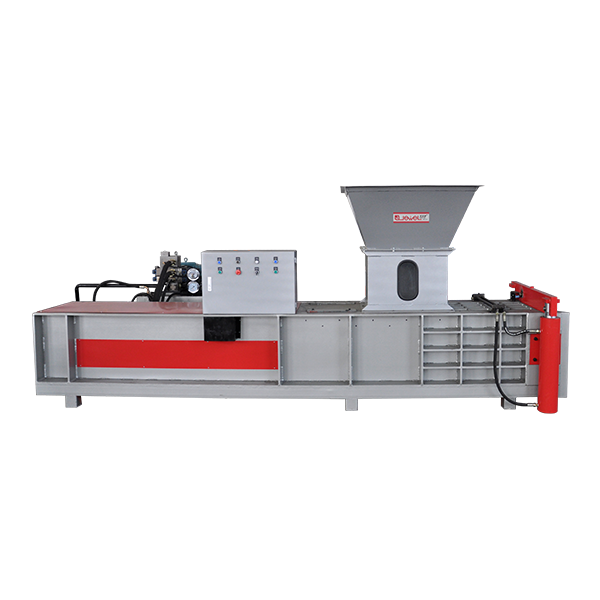
- Automation versus labour. Vertical balers suit constrained floor space and moderate volumes; semi-automatic and fully automatic horizontal balers suit continuous lines where manual handling would become a bottleneck.
- Market-access compliance. For European installations, CE marking is a gate, not a formality. The fully automatic horizontal baler model JPW20Q holds CE certificate TTC-22-1609/01/01 issued by INTEGRA against 2006/42/EC MD and 2014/35/EU LVD, assessed under EN ISO 12100:2010 and EN 60204-1:2018.
The Problem-Solution Framework: How Jewel Builds Fit
Jewel approaches the specification from three verifiable operating facts rather than from a single flagship model.
1. Customization across structure, process and performance
Jewel customizes hydraulic baler machines in three layers: structure (frame and chamber geometry), process (feeding and discharge logic) and performance (force, cycle time and bale output). The customization team is supported by 30 engineers, and the production line runs at a monthly capacity of 100 units with a minimum order quantity of 1 unit. For a buyer with a non-standard waste stream — aluminum foil trim, paper dust, or a mixed plastics stream — that configuration range matters more than the base model number.
2. Quality control and capacity planning
Every unit is 100% tested before shipment. With a 60-day lead time and monthly capacity of 100 units, the plant is sized for both single-unit sample orders and repeat orders that supply a multi-line production group.
3. Documented compliance and after-sales
Beyond the CE certificate for JPW20Q, Jewel holds an SGS Made-in-China Supplier Audit Report, certificate number QIP—ASR2541890, issued 2025-12-10 and valid through 2028-12-10, covering the full range of baler machines, hydraulic balers, waste paper balers, cardboard balers and baling press machines. After-sales support is structured as 7×24 h technical response, 48 h on-site response, lifelong maintenance and free operator training.
Step-by-Step Breakdown: Turning a Plant Problem into a Machine Specification
Step 1 — Define the waste stream before the machine
Start with the material: cardboard, corrugated board, paper dust, print trim, PET bottles, HDPE bottles, woven bags, aluminum foil, fibre waste, metal scrap or mixed municipal waste. The Tunisia case is specific: the problem was waste accumulation from the corrugator line and printing machines, not a general cardboard overflow.
Step 2 — Estimate hourly volume against line output
Match baler capacity to the output of the line that generates the waste. Different configurations handle very different volumes: JPW-AK60 briquetting machine runs 0.2–0.5 t/hr; JPW40F semi-automatic horizontal baler runs 1–2 t/hr; JPW-AK100 aluminum foil baler runs 0.4–0.8 t/hr; JPY-T60W metal baler runs 0.5–1 t/hr.
Step 3 — Choose the baler type
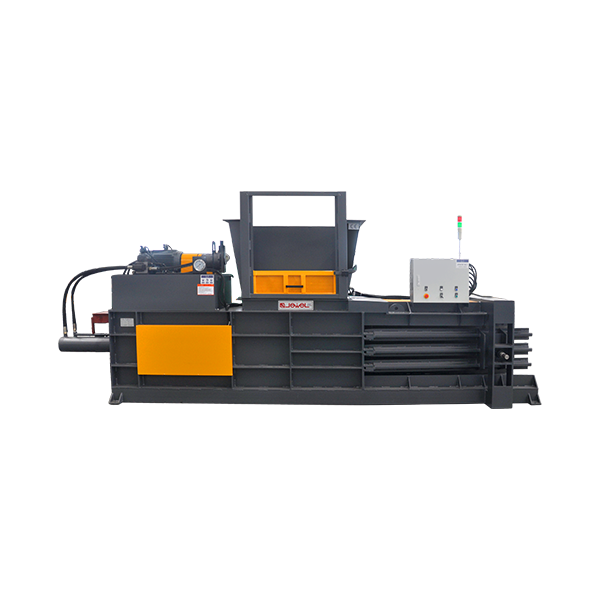
- Vertical balers (JP-OT100, JP8060T5X, JP7050T8, JPW-K6046): compact footprint, lower-volume handling. JP-OT100 provides 100 T compression force, 1400×700 mm feed opening and 400–600 kg bale weight.
- Semi-automatic horizontal balers (JPW40F, JPA5076T25X): continuous baling with manual feeding but automatic discharge. JPW40F delivers 40 T with continuous push-pack discharge and 200–400 kg bales; JPA5076T25X delivers 25 T with a 1500×500 mm feed opening for oversized material.
- Fully automatic horizontal balers (JPW20Q): for lines intended to run with minimal manual handling. 20 T, 500×500×500 mm bales, 7.5 kW, CE certified.
- Specialized configurations: JPY-T60W metal baler (60 T); JPW40BL plastic bottle recycling baler (40 T, 250–350 kg bales, 4 strapping channels); JPW-AK100 aluminum foil baler (100 T); JPW-AK60 briquetting machine (60 T); JP8060T5X waste compactor (5 T); JPW-K6046 bagging machine (10 T); JP-S100B cutting machine (100 T).
Step 4 — Verify bale size, bale weight and strapping
Bale geometry determines how the material is stored, stacked and shipped. JPW40BL produces 720×720 mm bales with 4 strapping channels, at 250–350 kg per bale — a format chosen by the Japan and Belarus projects to raise transport efficiency. JPW20Q produces 500×500×500 mm bales in the 30–70 kg range for lighter handling.
Step 5 — Confirm electrical and market compliance
Voltage is customizable (typical configurations are 380V/50Hz or 220V/50Hz). For EU destinations, the JPW20Q configuration carries CE certificate TTC-22-1609/01/01. The compliance check should be module-specific rather than assumed across the range.
Step 6 — Validate with a single-unit order
MOQ is 1 unit, standard lead time is 60 days, and every machine is 100% tested before shipment. That structure allows a plant to run a single configured unit against its own waste stream before committing to a multi-unit or multi-line rollout.
Use Cases: Documented Project Problems and Results
The seven Jewel cases below show how the scenario-first approach resolves to specific models. Each case is identified by location, client type and the model actually installed.
- Tunisia — cardboard box factory, JPW-AK60. The problem was piled waste paper from the corrugator line and printing machines, which was blocking workshop workflow. Jewel supplied a factory-wide automatic waste discharge system built around the JPW-AK60 briquetting machine. Result after 3 years: waste paper accumulation in the workshop was eliminated, creating a cleaner and more efficient production environment.
- Mexico — cardboard box factory, JPW40BL. The problem was manual waste clearing on the production line. The installed automated waste disposal system integrates directly with existing production lines. Result after 1 year: waste accumulation was completely eliminated, and workshop space utilization improved.
- Italy — cardboard box factory, JPA5076T25X. The problem was large-sized waste cardboard that was difficult to handle with the plant's aging balers. The solution replaced the old balers and added preprocessing equipment. Result after 4 years: waste treatment efficiency improved significantly.
- Japan — PET recycling enterprise, JPW40BL. The problem was insufficient compression density on PET bottle bales. The solution needed to increase compression density and produce compact, well-formed bales. Result after 2 years: storage and transportation efficiency improved, together with the added value of recycled products.
- Belarus — waste recycling, JPW40BL. The problem was bulkiness and compression difficulty across PET bottles, woven bags, HDPE bottles and cardboard. Result after 2 years: regular-shaped bales improved transportation and storage efficiency across the mixed material stream.
- Russia — cardboard box factory, JPW40F. The problem was manual collection, compression and baling during carton production. The installed system automated collection, compression and baling. Result after 3 years: an unmanned waste processing system that reduced labour and management costs and enabled immediate monetization of waste.
- Australia — mixed waste recycling, JPW40BL. The problem was inefficient sorting of mixed plastics, small amounts of glass and metal scraps, together with high labour cost. The solution used multi-material separation technology with one JPW40BL unit. Result after 2 years: full-line unmanned operation, with reduced labour cost and operating risk.
Comparison Table: Hydraulic Baler Machine Types Mapped to Problems
The table below lists only specifications published in Jewel's product records. Compression force, throughput, bale weight and power are shown for the configurations referenced in this article.
| Model | Type | Compression Force | Baling Capacity | Bale Weight | Power | Typical Problem Fit |
|---|---|---|---|---|---|---|
| JP-OT100 | Vertical Baler | 100 T | 5–6 bales/hr | 400–600 kg | 15 kW / 20 Hp | Cardboard and paper where floor space is limited |
| JP7050T8 | Baling Machine | — | 6–8 bales/hr | 50–80 kg | 2.2 kW / 3 Hp | Light-volume workshop baling |
| JP8060T5X | Waste Compactor | 5 T | 4–7 bales/hr | 50–80 kg | 2.2 kW / 3 Hp | Small-scale shop compaction |
| JPW-K6046 | Bagging Machine | 10 T | 6–8 bales/hr | 50–80 kg | 2.2 kW / 3 Hp | Bagging-line integration |
| JPA5076T25X | Hydraulic Baler | 25 T | 3–5 bales/hr | 200–300 kg | 7.5 kW / 10 Hp | Oversized cardboard with 1500×500 mm feed opening |
| JPW40F | Semi-Automatic Horizontal Baler | 40 T | 1–2 t/hr | 200–400 kg | 11 kW / 15 Hp | Continuous cardboard, carton, paper lines |
| JPW40BL | Plastic Recycling Baler | 40 T | — | 250–350 kg | 15 kW / 20 Hp | PET, HDPE, woven bags, mixed plastics |
| JPW20Q | Fully Automatic Horizontal Baler | 20 T | — | 30–70 kg | 7.5 kW / 10 Hp | Low-labour fully automatic lines (CE certified) |
| JPY-T60W | Metal Baler | 60 T | 0.5–1 t/hr | 15–20 kg | 22 / 30 kW/Hp | Metal scrap compaction |
| JPW-AK60 | Briquetting Machine | 60 T | 0.2–0.5 t/hr | 5–10 kg | 15 kW / 20 Hp | Paper dust and small-particle waste |
| JPW-AK100 | Aluminum Foil Baler | 100 T | 0.4–0.8 t/hr | 5–15 kg | 18.5 kW / 25 Hp | Aluminum foil and fibre-based waste |
| JP-S100B | Cutting Machine | 100 T | 20–30 s/cycle | — | 11 / 15 kW | Waste requiring pre-cutting |
The table is a specification map, not a ranking. A higher compression force does not automatically mean a better fit; the material, bale size and discharge method determine suitability. The cases in the next table show this in practice, where the same model — JPW40BL — resolves four different problems in Japan, Belarus, Mexico and Australia because the material streams differ.
| Site Problem | Location | Model Installed | Reported Result |
|---|---|---|---|
| Piled waste paper from corrugator and printing machines | Tunisia | JPW-AK60 | Eliminated waste paper accumulation; factory-wide automatic discharge |
| Manual clearing cost on the production line | Mexico | JPW40BL | Fully automatic waste removal integrated with existing line; improved space utilization |
| Large-sized waste cardboard difficult to process | Italy | JPA5076T25X | Significant improvement in waste treatment efficiency |
| Low PET bottle compression density | Japan | JPW40BL | Compact bales; improved storage and transport efficiency |
| Bulky PET, woven bags, HDPE and cardboard | Belarus | JPW40BL | Regular-shaped bales; improved transport and storage |
| Manual carton waste handling | Russia | JPW40F | Unmanned waste system; immediate monetization of waste |
| Inefficient mixed plastics, glass and metal sorting | Australia | JPW40BL | Full-line unmanned operation; lower labour cost and risk |
FAQ
Can hydraulic baler machines meet European compliance requirements?
The JPW20Q fully automatic horizontal baler holds CE certificate TTC-22-1609/01/01 issued by INTEGRA under 2006/42/EC MD and 2014/35/EU LVD, assessed against EN ISO 12100:2010 and EN 60204-1:2018. Jewel also holds an SGS Made-in-China Supplier Audit Report, certificate QIP—ASR2541890, issued 2025-12-10 and valid through 2028-12-10. Compliance should be verified per model and destination market rather than assumed across the full range.
Can hydraulic baler machines be customized for a specific waste stream?
Yes. Jewel customizes structure, process and performance, supported by 30 engineers and a monthly production capacity of 100 units. Customization covers feed opening size, bale dimensions, discharge method and electrical configuration. Minimum order quantity is 1 unit.
What drives the budget when selecting by scenario?
Budget is driven by configuration rather than by a single unit price point: machine type (vertical, semi-automatic horizontal, fully automatic horizontal, briquetting, bagging, metal or plastic recycling), compression force, bale size, automation level, discharge method, voltage and destination-market compliance. A scenario-first selection process removes models that cannot handle the waste stream, which reduces the risk of over-specifying. Jewel provides a quotation and a full catalogue for this evaluation stage.
Can a buyer test one machine before a larger order?
Yes. Minimum order quantity is 1 unit and every machine is 100% tested before shipment. A plant can validate whether a single configured unit matches its material and throughput before expanding to additional lines.
What is the typical lead time and after-sales support?
Standard lead time is 60 days. After-sales support covers 7×24 h technical response, 48 h on-site response, lifelong maintenance and free operator training. Buyers can request a sample configuration or a quote through Jewel's sales team to start the scenario-to-specification process.
Conclusion
The right way to evaluate hydraulic baler machines is to start from the waste stream, the workflow and the bale that has to leave the plant — not from the catalogue. Jewel's range covers vertical, semi-automatic horizontal, fully automatic horizontal, metal, plastic, aluminum foil, briquetting and bagging configurations. The seven documented cases in Tunisia, Mexico, Italy, Russia, Belarus, Japan and Australia show that the same model can resolve four different problems when the material stream is correctly identified, and that a stronger baler is not automatically the better fit.
The preference drivers that appear consistently across these projects are material fit, automation level, bale handling and compliance — matching the factors that should carry the most weight in any shortlist. Buyers who start from those four factors, rather than from model numbers, reach the specification stage with fewer false starts.
Request a hydraulic baler sample or quotation
Share your material type, hourly throughput and bale requirements with the Jewel team to receive a configuration proposal, a sample order pathway and the current hydraulic baler catalogue.
Email: jiabao@csj-baler.com · Tel / WhatsApp: +86 187-2181-4932 · Website: www.jewelbaler.com
Download the 2026 hydraulic baler catalogue: Hydraulic baler catalogue (PDF)

Have Questions or Need More Details?
Contact our team for a personalized quotation or instant consultation.
Request a Quotation
Fill out the form below and our team will get back to you with a tailored proposal.
WhatsApp Direct Chat
Prefer to chat in real-time? Message us on WhatsApp for instant assistance & quick answers.
- Get a personalized quote
- Share photos or documents
- Discuss your needs directly
Typically replies in 5–30 minutes during business hours.