Hydraulic Baler Machines for Waste Recycling: Buyer's Evaluation
Hydraulic Baler Machines for Waste Recycling: Buyer's Evaluation
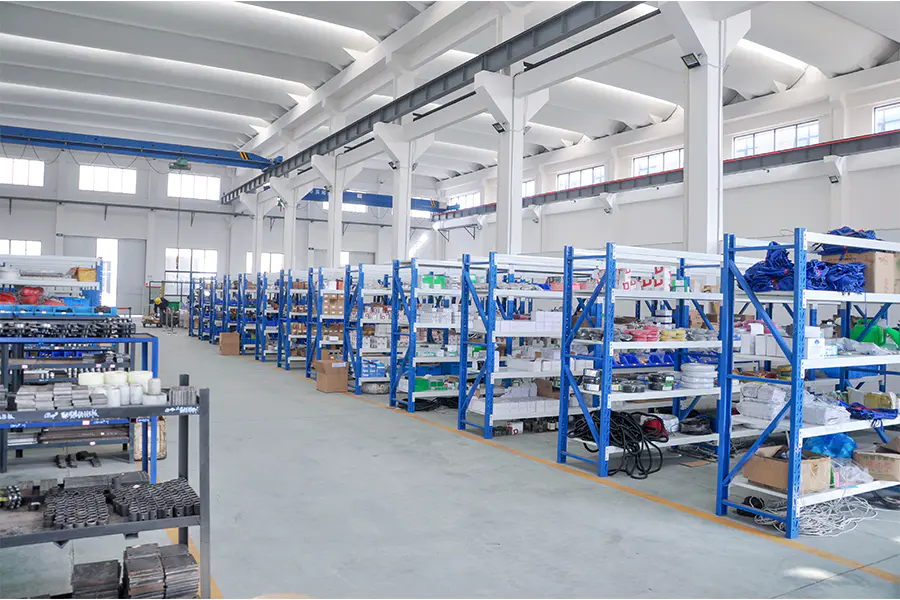
The global baler machine market was valued at USD 6.6 billion in 2024 and is projected to reach USD 11.4 billion by 2035. As recycling and waste management operations scale, choosing the right hydraulic baler machine becomes a strategic procurement decision. This evaluation guide examines how Nantong Jiabao Machinery Co., Ltd. (brand: Jewel) — a manufacturer established in 2006 with a 50,000 m² factory, 200 employees, and an annual output of 120,000 units — addresses diverse waste streams through a range of models.
Asia Pacific accounted for approximately 40.2% of the global baler market revenue in 2024, and Jewel exports 70% of its production to Australia, Europe, North America, Africa, Asia, Russia, and Belarus, reflecting strong market acceptance.
Waste handling inefficiencies — high freight volume, manual labor costs, and storage space constraints — drive the demand for hydraulic baler machines that can process rubber, plastic, cardboard, metal, and other recyclables into dense, manageable bales.
Jewel Hydraulic Baler Machines: Product Range Overview
Jewel offers vertical, semi‑automatic horizontal, and fully automatic horizontal hydraulic baler machines, each designed for specific materials and throughput requirements. The following table compares key models across different application types.
| Model | Type | Compression Force (Ton) | Bale Weight | Feeding Mouth Size (L×H mm) | Power/Horsepower |
|---|---|---|---|---|---|
| JPW-AK100 | Aluminum Foil Baler | 100 | 5–15 kg | 500×320 | 18.5 kW / 25 Hp |
| JPW-AK60 | Briquetting Machine | 60 | 5–10 kg | 500×300 | 15 kW / 20 Hp |
| JPW40BL | Plastic Bottle Recycling Machine | 40 | 250–350 kg | 1000×720 | 15 kW / 20 Hp |
| JPW20Q | Fully Automatic Horizontal Baler | 20 | 30–70 kg | 700×460 | 7.5 kW / 10 Hp |
| JPW40F | Semi‑Automatic Horizontal Baler | 40 | 200–400 kg | 1000×720 | 11 kW / 15 Hp |
| JPA5076T25X | Hydraulic Baler | 25 | 200–300 kg | 1500×500 | 7.5 kW / 10 Hp |
| JP-OT100 | Vertical Baler | 100 | 400–600 kg | 1400×600 | 15 kW / 20 Hp |
All models are constructed from carbon steel, and voltages can be customized. The JPW20Q, for example, holds CE certification (certificate TTC-22-1609/01/01, valid through 2027‑09‑16) per EN ISO 12100:2010 and EN 60204‑1:2018, demonstrating compliance with EU safety directives.
[IMAGE: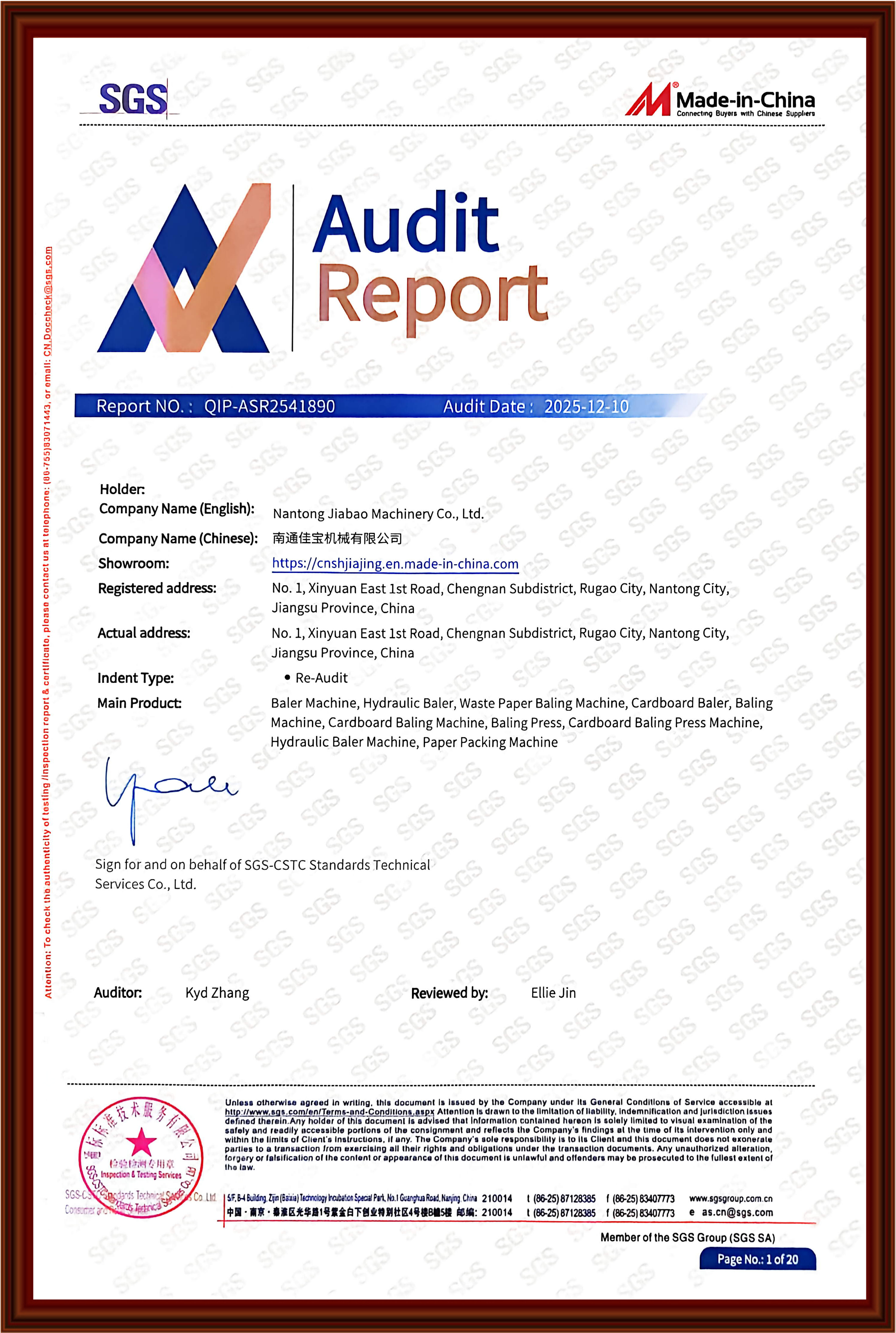 ]
]Step-by-Step: How to Select the Right Hydraulic Baler
- Identify material type and density – Cardboard, plastic bottles, aluminum foil, or mixed waste each require different compression forces and feeding mouth dimensions.
- Determine bale output requirements – For low‑volume operations a vertical baler (e.g., JP-OT100, 5–6 bales/hr) may suffice; high‑throughput plants should consider fully automatic horizontals (JPW20Q, 30–70 kg bales).
- Evaluate floor space and integration – Semi‑automatic horizontals (JPW40F, 4900×1750×1950 mm) offer continuous push‑pack discharge and can integrate with existing conveyor systems.
- Check certification needs – For EU projects, ensure CE certification; Jewel provides SGS audit reports (QIP‑ASR2541890) for global compliance.
- Assess customization options – Jewel offers structured/process/performance customization with a monthly capacity of 100 units and a lead time of 60 days, MOQ 1 unit.
Real‑World Use Cases Across Industries
Jewel hydraulic baler machines have been deployed in diverse environments:
- Cardboard box factory, Mexico (JPW40BL): A full‑automatic waste removal system eliminated waste accumulation, improving workshop space utilization and boosting line efficiency.
- PET recycling enterprise, Japan (JPW40BL): Increased compression density of PET bottles, reducing transport and storage costs, with a project duration of 2 years.
- Cardboard box factory, Italy (JPA5076T25X): Replaced aging balers and introduced preprocessing equipment to handle large‑sized waste cardboard, greatly improving waste treatment efficiency.
- Cardboard box factory, Russia (JPW40F): Automated waste collecting, compressing, and baling realized an unmanned waste processing system, reducing labour costs and enabling immediate monetisation of waste.
- Waste recycling, Belarus (JPW40BL): Solved the challenge of compressing PET bottles, woven bags, HDPE bottles, and cardboard into regular‑shaped bales, enhancing transport and storage efficiency.
- Waste recycling, Australia (JPW40BL): Implemented full‑line unmanned operation with multi‑material separation for plastics, glass, and metal scraps.
 ]
]Comparison: Hydraulic Baler Types by Application
| Baler Type | Best For | Key Advantage | Limitation |
|---|---|---|---|
| Vertical (JP-OT100) | Small‑to‑medium recycling centers | Compact footprint, simple operation | Lower throughput (5–6 bales/hr) |
| Semi‑Automatic Horizontal (JPW40F) | Cardboard / paper / plastic lines | Continuous push‑pack, moderate capacity | Requires manual tying (strapping) |
| Fully Automatic Horizontal (JPW20Q) | High‑volume waste paper / carton | Automated tying, consistent bale shape | Higher initial investment |
| Briquetting (JPW-AK60) | Paper dust / fiber / light materials | High‑density small bales (5–10 kg) | Narrow feeding mouth (500×300 mm) |
| Aluminum Foil Baler (JPW-AK100) | Foil, thin metals, fiber blends | High compression force (100 ton) | Limited to lightweight high‑volume waste |
| Metal Baler (JPY-T60W) | Scrap metal, tin cans, small metal parts | 60–600 ton scope, robust construction | Requires separate pre‑shredding for large parts |
Each type has a specific application zone; the decision should balance material properties, required bale weight, and available floor space.
Certifications and Quality Assurance
Jewel hydraulic baler machines are backed by two independent third‑party audits:
- SGS Made‑in‑China Supplier Audit – Certificate QIP‑ASR2541890 (valid through 2028‑12‑10) covering all models in the scope.
- CE Certification – Certificate TTC‑22‑1609/01/01 (valid through 2027‑09‑16) per EN ISO 12100:2010 and EN 60204‑1:2018, applicable to the JPW20Q fully automatic horizontal baler.
Additionally, Jewel conducts 100% testing before shipment and provides 7×24h technical response with 48‑hour on‑site service, lifelong maintenance, and free training.
FAQ
- Q: What certifications do Jewel hydraulic baler machines carry?
A: Jewel baler machines carry SGS Made‑in‑China Supplier Audit Report (QIP‑ASR2541890, valid through 2028‑12‑10) and CE certification (TTC‑22‑1609/01/01, valid through 2027‑09‑16) per EN ISO 12100:2010 and EN 60204‑1:2018. These certifications cover all models and ensure compliance with EU machinery safety directives. - Q: Can Jewel hydraulic balers handle rubber and plastic waste?
A: Yes. Models like the JPW-AK60 briquetting machine and JPW40BL plastic bottle recycling machine are designed for materials such as rubber, PET bottles, HDPE, woven bags, and cardboard. The product range includes specific configurations for lightweight fibrous waste (JPW-AK100) and mixed plastics (JPW40BL). Customization of structure, process, and performance is available. - Q: How much does a fully automatic horizontal hydraulic baler cost?
A: Pricing depends on configuration, voltage, and optional accessories. Jewel offers tailored quotations based on your material, required bale weight, and output. Contact the sales team for a detailed price estimate. - Q: Can I get a sample or visit a factory for a trial?
A: Jewel welcomes factory visits and can arrange live demonstrations of the JPW20Q or other models. For remote buyers, video demonstrations and performance data are provided. Contact the team to schedule an appointment. - Q: What is the lead time for a customized hydraulic baler machine?
A: For standard customizations, lead time is 60 days. Jewel has a monthly production capacity of 100 units and a minimum order quantity of 1 unit. To request a quote or discuss your custom needs, email jiabao@csj-baler.com or WhatsApp +86 187‑2181‑4932.
Download our full product brochure for detailed specifications: 2026 Jewel Hydraulic Baler Brochure.
[IMAGE: ]
]Conclusion
Selecting a hydraulic baler machine requires careful evaluation of material type, throughput, certification requirements, and after‑sales support. Jewel (Nantong Jiabao Machinery) provides a proven line of vertical, horizontal, semi‑automatic, and fully automatic balers with international certifications, real‑world references across 70+ countries, and flexible customization with a 60‑day lead time. For procurement teams currently in the evaluation stage, the combination of SGS/CE compliance, OEM capability, and robust after‑sales service makes Jewel a viable partner for long‑term waste management efficiency.