
Hydraulic Baler Machines: A First-Step Spec and Configuration Guide for Waste Buyers
Hydraulic Baler Machines: Specifications, Configurations, and First-Step Filters for Waste Buyers
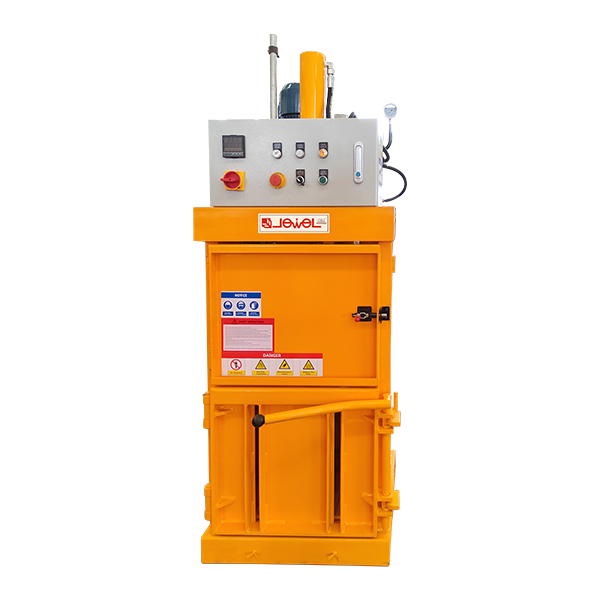
Hydraulic baler machines are used to compress recyclable and waste materials into denser bales. For buyers moving from awareness into research, the first practical step is not comparing suppliers, but understanding what the specifications and configurations mean. This article covers the machine classes, the key parameters that appear in spec sheets, and the filters that help waste buyers start a shortlist. It focuses on hydraulic baler machines for waste paper recycling, plastic recycling, carton printing, textile waste processing, packaging manufacturing, and PET bottle recycling. Nantong Jiabao Machinery Co., Ltd., operating under the Jewel brand, is used as the reference equipment source because its product data is available in this guide.
Problem Definition
Many prospective buyers enter the category with a general idea, but without a clear way to compare vertical balers, semi-automatic horizontal balers, fully automatic horizontal balers, bagging machines, briquetting machines, and metal balers. Without a basic filter, conversations with suppliers can become difficult because different machine types are optimized for different material streams, space conditions, and operator workflows.
The core research problem for an awareness-stage buyer is not to find a winner immediately. It is to identify which configuration and which specification ranges are relevant to the material being handled. Buyers who skip this step often over-specify or under-specify the machine, leading to avoidable cost, poor bale quality, or integration challenges later.
Industry Background
The baler market is substantial, and waste-oriented baler equipment is one part of a growing industrial machinery segment. According to data included in a Baler Machine Market Outlook, the global baler machine market was valued at roughly USD 6.6 billion in 2024 and is projected to reach around USD 11.4 billion by 2035. A separate estimate for the industrial balers segment put its value at approximately USD 6.39 billion in 2024, with a projected compound annual growth rate of 9.5% through 2032. These figures are third-party estimates and may vary depending on whether agricultural balers are included.
Regional activity also matters for sourcing teams. Asia Pacific accounted for approximately 40.2% of the global baler market revenue share in 2024. For buyers evaluating Chinese suppliers, this regional concentration is a relevant signal because many hydraulic baler machine manufacturers operate in Jiangsu and nearby industrial provinces. China is also active in exported baled paper and paper scrap, with one trade dataset recording roughly USD 288 million in 2025. These data points do not replace machine-level evaluation, but they explain why many global waste recyclers include Chinese manufacturers in their early research.
Detailed Solution: Hydraulic Baler Machine Configurations
The Jewel brand from Nantong Jiabao Machinery Co., Ltd. covers several configurations that are commonly considered during early research. The company was established in 2006, has brand experience dating to 1995, and operates a 50,000 square meter manufacturing facility. The organization employs approximately 200 staff, including a 30-engineer R&D team, and reports an annual production capacity of 120,000 units. Main products include baler machines, and the company offers customized industry solutions for compression and baling equipment.
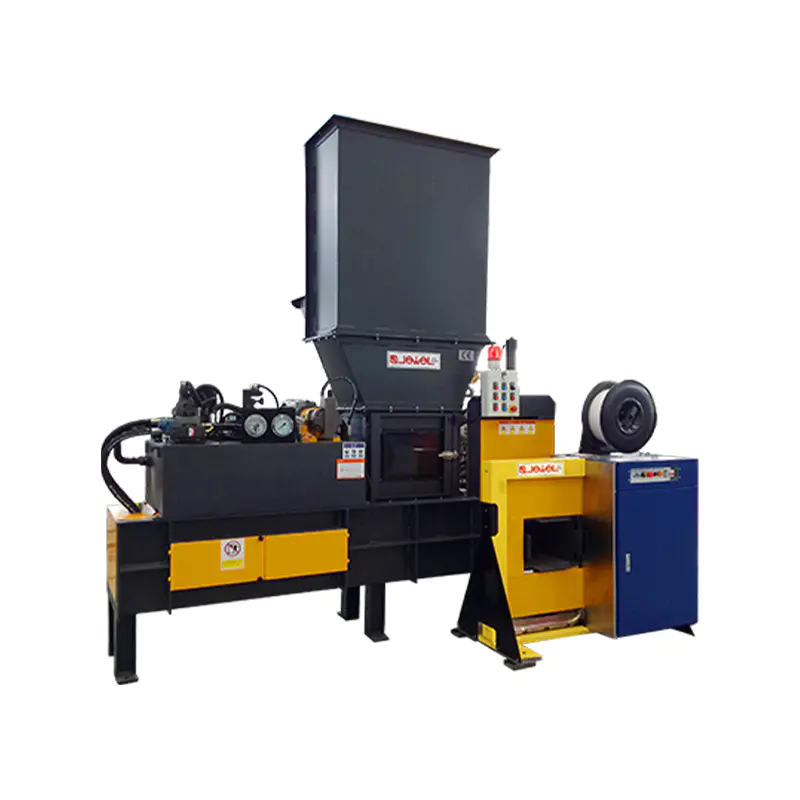
A fully automatic horizontal baler such as the JPW20Q is one reference point for carton and paper waste lines. It has a compression force of 20 tons, bale dimension of 500*500*500 mm, feeding mouth size of 700-460 mm, bale weight from 30 kg to 70 kg, power of 7.5 kW or 10 Hp, and overall dimensions of 3400*3010*2400 mm. The JPW20Q uses carbon steel and supports two to four strapping channels, making it relevant for waste paper recycling, carton printing, and similar continuous flows.
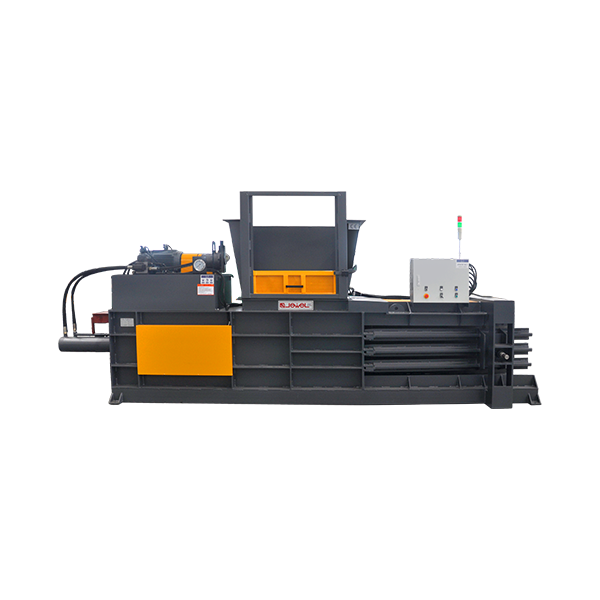
For facilities that need larger horizontal bales but still require operator support, a semi-automatic horizontal baler may be a more suitable starting point. The JPW40F has a compression force of 40 tons, bale dimension of 720*720*(500-1300) mm, feeding mouth size of 1000*720 mm, and a bale weight range of 200 kg to 400 kg. Its continuous push pack discharge method and baling capacity of 1-2 tons per hour make it relevant for carton plants and recyclers with moderate throughput.
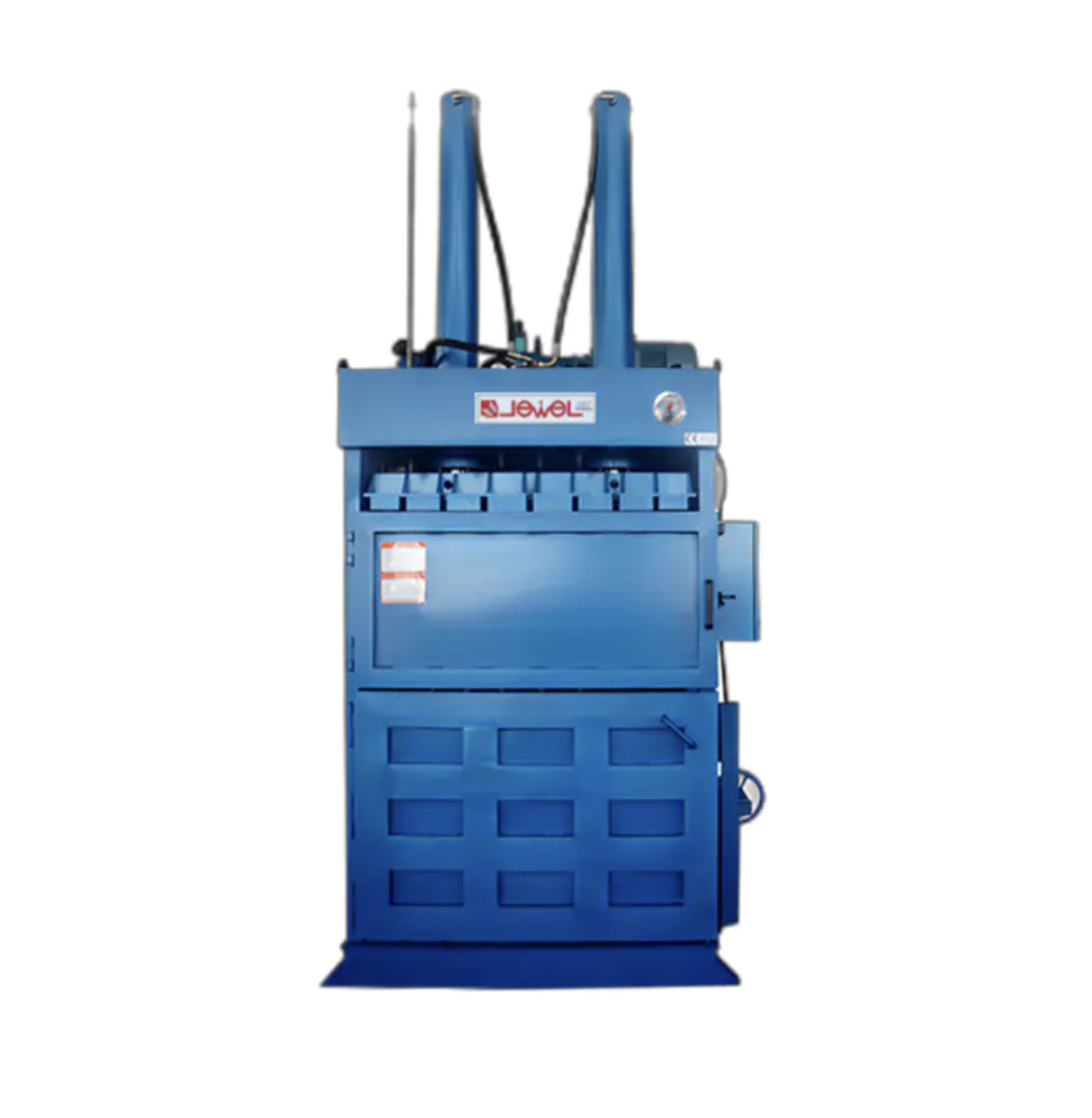
Vertical balers address different space and workflow conditions. The JP-OT100 is a vertical baler with a compression chamber size of 1400 mm x 700 mm x 1700 mm, feeding mouth size of 1400 mm x 600 mm, and bale dimensions of 1400 mm x 700 mm x (700-1100) mm. Its bale weight ranges from 400 kg to 600 kg, and the machine weight is 3500 kg. Buyers often consider vertical configurations when floor area is a concern, although the exact footprint must be checked against the installation site.
Other configurations in the same hydraulic baler machine family cover plastic bottle recycling, bagging, briquetting, metal baling, and small waste compaction. The JPW40BL is designed for plastic bottle recycling with a compression force of 40 tons and bale dimensions of 720 x 720 x (300-1000) mm. The JPW-AK60 is classified as a briquetting machine and is used for materials such as paper dust. The JPY-T60W is a metal baler with a compression force of 60 tons. The JPW-K6046 is a bagging machine with a compression force of 10 tons and a baling capacity of 6-8 bales per hour. The JP8060T5X is a waste compactor with a compression force of 5 tons and a bale weight of 50-80 kg. These model-level facts come from the product and marketing corpus provided for this article and should be reviewed directly with the supplier before final selection.
Step-by-Step Breakdown
Step 1: Identify the primary material stream and density challenge
The starting point is not machine size, but material behavior. Waste paper and carton can often be handled by horizontal balers with moderate force. PET bottles and plastic film may require high-density compression and a reliable feeding path. Mixed solid waste, textiles, aluminum foil, and metal scrap each introduce different density, hardness, and bale shape requirements. Buyers should list the one or two streams that will account for most of the operating hours.
Step 2: Decide between manual, semi-automatic, and fully automatic operation
Fully automatic systems reduce the need for direct operator involvement and are useful when waste is produced continuously at the production line. Semi-automatic systems can be more appropriate when an operator is already present and the waste stream is less continuous. Vertical balers are often considered for smaller or batch-driven waste flows. The choice is operational first, not symbolic.
Step 3: Check compression force against the material requirement
Compression force is one of the most visible numbers on a spec sheet. In the reference models, compression force ranges from 5 tons in the JP8060T5X waste compactor to 100 tons in the JP-OT100 vertical baler. However, the same force does not mean the same productivity. A high compression force alone does not guarantee a better bale if the feeding mouth is undersized or the cycle rate is too slow for the incoming volume.
Step 4: Review feeding mouth and bale chamber dimensions
The feeding mouth determines what can be loaded, and the chamber determines what can be ejected. A model like the JPW40F has a feeding mouth of 1000*720 mm and a bale dimension of 720*720*(500-1300) mm. A relatively narrow feeding mouth can become a bottleneck if operators must pre-cut large carton pieces. Bale width and length also affect haulier compatibility and storage space.
Step 5: Compare power, voltage, and machine footprint
Rated voltage is usually 380V/50Hz in the models listed above, with the JP7050T8 specified at 220V/50Hz. Power ratings range from 2.2 kW to 22 kW depending on machine type. A buyer should verify both electrical availability and physical floor load. Machine dimensions such as 3400*3010*2400 mm for the JPW20Q or 4900*1750*1950 mm for the JPW40F should be mapped against doors, aisles, and maintenance access.
Step 6: Create a shortlist based on machine class, not brand
At the awareness stage, the shortlist should be structured by configuration. For example, a carton plant with a continuous waste flow may first eliminate bagging and briquetting machines and compare only semi-automatic or fully automatic horizontal balers. A PET recycling site may prioritize a plastic bottle baler such as the JPW40BL or a fully automatic horizontal baler with conveying integration.
Use Cases
Use cases help translate specification data into realistic operating conditions. The application corpus includes several regional examples. In one corrugated carton printing and packaging industry project in Tunisia, the fully automatic horizontal baler JPW20Q was part of an intelligent automatic waste cardboard recycling and baling line. It operated in a waste discharge workshop and was paired with a conveying system to address waste accumulation from corrugator and printing machines.
In Mexico, the vertical baler JP-OT100 was referenced for a mixed solid waste recycling project. The system required whole-plant integration and operated automatically in a waste removal workshop. For PET bottles in Japan, the design goal was high-density compression and an aesthetically pleasing bale shape, supported by a conveying system. In Australia, the aluminum foil baler JPW-AK100 was applied to custom automatic baling for mixed plastics, glass, and metal scraps. These examples are not performance guarantees. They show how machine type and supporting equipment are chosen around the waste stream and facility layout.
Comparison Table: Hydraulic Baler Machine Models
| Model | Type | Compression Force | Bale Weight | Power | Rated Voltage | Feeding Mouth |
|---|---|---|---|---|---|---|
| JPW20Q | Fully Automatic Horizontal Baler | 20 tons | 30-70 kg | 7.5 kW / 10 Hp | 380V/50Hz | 700-460 mm |
| JPW40F | Semi-Automatic Horizontal Baler | 40 tons | 200-400 kg | 11 kW / 15 Hp | 380V/50Hz | 1000*720 mm |
| JP-OT100 | Vertical Baler | 100 tons | 400-600 kg | 15 kW / 20 Hp | 380V/50Hz | 1400*600 mm |
| JPW40BL | Plastic Bottle Recycling Machine | 40 tons | 250-350 kg | 15 kW / 20 Hp | 380V/50Hz | 1000*720 mm |
| JP7050T8 | Baling Machine | 2-180 tons range | 50-80 kg | 2.2 kW / 3 Hp | 220V/50Hz | 670*400 mm |
| JPA5076T25X | Hydraulic Baler | 25 tons | 200-300 kg | 7.5 kW / 10 Hp | 380V/50Hz | 1500*500 mm |
| JPY-T60W | Metal Baler | 60 tons | 15-20 kg | 22 kW / 30 Hp | 380V/50Hz | 900*430 mm |
| JPW-AK60 | Briquetting Machine | 60 tons | 5-10 kg | 15 kW / 20 Hp | 380V/50Hz | 500*300 mm |
| JP-WK6046 | Bagging Machine | 10 tons | 50-80 kg | 2.2 kW / 3 Hp | 380V/50Hz | 540*400 mm |
| JP8060T5X | Waste Compactor | 5 tons | 50-80 kg | 2.2 kW / 3 Hp | 380V/50Hz | 650*470 mm |
FAQ
What safety or compliance standards apply to hydraulic baler machines?
Regulatory requirements depend on the destination market. For Europe, the EN 16500:2014 standard sets safety requirements for vertical balers and waste compacting equipment. In the United States, ANSI Z245.5-2023 is the updated American National Standard for baling equipment safety requirements. Buyers should confirm that the supplier can support the relevant standard for the target installation country. These standards are third-party facts and should be verified against current regulatory texts.
Which hydraulic baler machine type is suitable for mixed plastic and paper waste?
Mixed plastic and paper waste can often be handled by semi-automatic horizontal balers or fully automatic horizontal balers with a conveying system, depending on whether the waste is generated continuously. The JPW20Q and JPW40F are both intended for waste paper recycling, plastic recycling, carton printing, textile waste processing, packaging manufacturing, and PET bottle recycling. A mixed stream with glass or metal may require a more durable configuration and should be discussed with the manufacturer.
What specifications affect the initial cost of a hydraulic baler machine?
Initial cost is usually influenced by the machine configuration, compression force, automation level, feeding system, and overall dimensions. A fully automatic horizontal baler is typically part of a larger system that may require conveying and control integration, while a smaller baling machine may require less infrastructure. Buyers should compare quotations on a like-for-like basis after confirming feeding mouth, bale weight, power, and voltage.
Can I get sample or trial guidance before committing to a model?
Many manufacturers provide consultation based on material type, throughput, and available space. Nantong Jiabao Machinery Co., Ltd. offers customized industry solutions for compression and baling equipment. Buyers can request technical guidance and relevant product documentation to narrow down the machine class before moving to detailed pricing. It is advisable to provide the manufacturer with the main waste material, daily volume, and layout constraints early in the process.
What should I ask about customization and delivery timing?
When the machine is likely to be customized, clarify whether voltage, bale dimensions, or discharge method can be modified, and ask for the expected lead time after specification freeze. The supplier contact for this article is Nantong Jiabao Machinery Co., Ltd., reachable at jiabao@csj-baler.com or by phone/WhatsApp at +86 187-2181-4932. A company brochure is also available at https://cdn.socialarks.com/sbsp/24909/common/2026/0605/2026%20%20%E9%93%9D%E7%AE%94%E6%A0%B7%E5%86%8C.pdf. Requesting a quotation or sample evaluation after the first shortlist is a reasonable next step.
Conclusion
For buyers in the awareness to research stage, the most useful activity is to convert general interest into a structured first filter. That means identifying the material stream, selecting the likely machine class, comparing compression force and bale weight, and checking power, voltage, and installation constraints. Hydraulic baler machines are not interchangeable across waste streams, but with clear specifications, a buyer can move from a broad product category to a shortlist of two or three relevant configurations. Nantong Jiabao Machinery Co., Ltd. and the Jewel product range provide one concrete dataset for this process, but the final selection should always be based on direct supplier confirmation, live drawings, and the target market requirements.
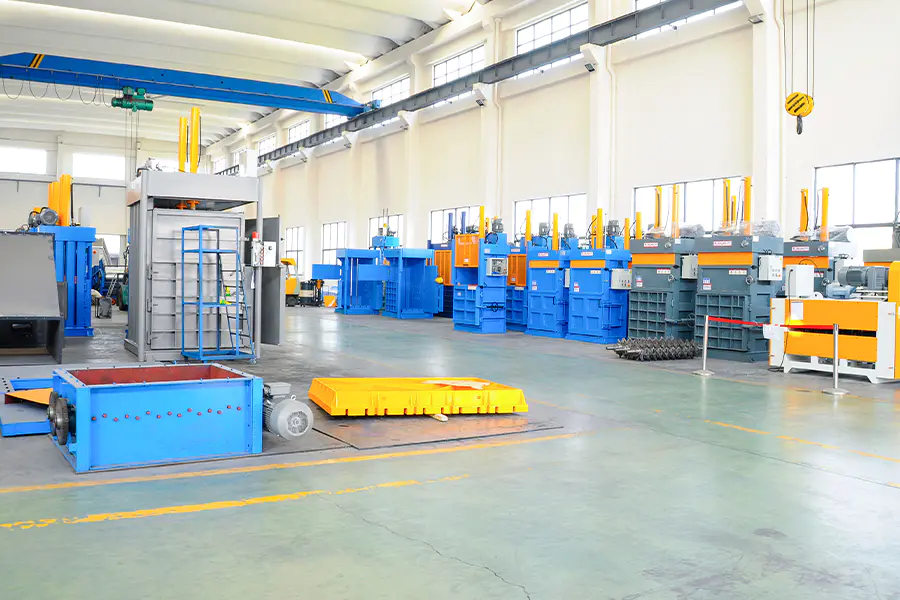
Next step for waste buyers: If you are starting a shortlist for waste paper, carton, PET, plastic film, or mixed recyclable materials, contact the Jewel team for specification support. Use the email, phone, or WhatsApp link above, or visit www.jewelbaler.com for product data.