
Hydraulic Baler Machines: A Service-Led Buying Framework
The right hydraulic baler machine is more than a press tonnage number. For buyers at the decision and execution stage, long-term value comes from the manufacturer's service system, quality control, spare parts availability, and ability to support future waste streams.
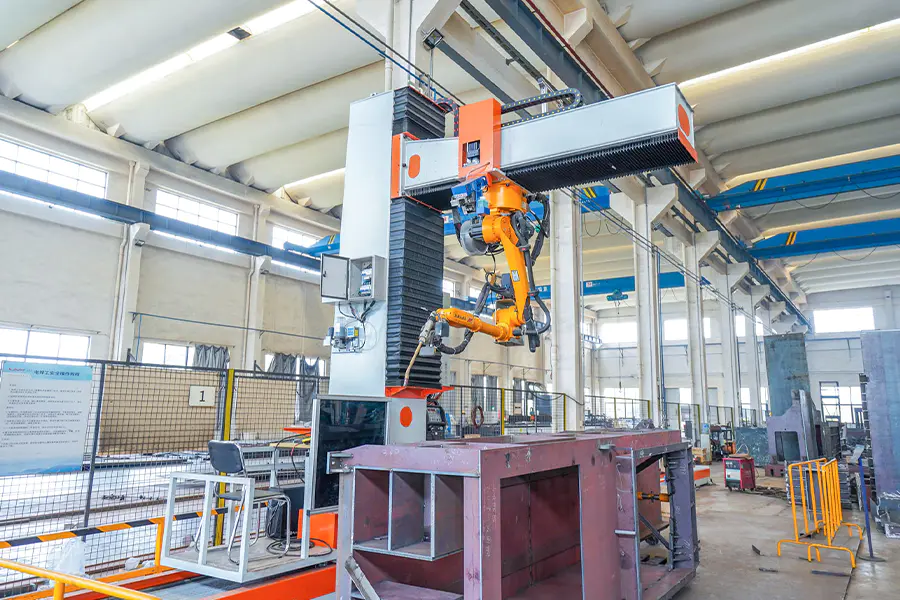
A production workshop view at Nantong Jiabao Machinery Co., Ltd.
The Problem: Purchase Decisions Are Often Too Spec-Heavy
At the final stage of buying hydraulic baler machines, buyers tend to compare compression force, bale size, and price. Those metrics matter, but they do not capture the full cost of ownership. A baler is a hydraulic system under repeated pressure. Seals, valves, hoses, pumps, PLC modules, and strapping mechanisms will need attention during the life of the machine.
Common long-term risks include hydraulic leakage, electrical overload failure, operational safety hazards, and delayed after-sales maintenance. A one-time machine purchase can become a recurring problem if the supplier does not have a reliable support structure. That is why this article focuses on the service-led side of the buying decision: what a supplier should prove, and how to structure an evaluation before you commit.
Industry Background: Growing Demand, Wider Supplier Choice
Global baling equipment demand has been expanding. The industrial balers market was valued at USD 6.39 billion in 2024, with a projected CAGR of 9.5% through 2032, according to Maximize Market Research. Grand View Research puts the overall baler market at USD 6.6 billion in 2024 and projects it to reach USD 11.4 billion by 2035. In 2024, Asia Pacific accounted for roughly 40.2% of global baler market revenue, according to Grand View Research.
For a buyer in Australia, Europe, North America, Africa, or Asia, this growth means more suppliers are available. It also means quality consistency and after-sales performance vary by manufacturer. Long-term partnerships become an advantage: stable delivery dates, standardized spare parts, and documented service response times matter more when your waste operation depends on continuous uptime.
What a Long-Term-Ready Baler Manufacturer Should Look Like
A useful example of a manufacturer built around long-term supply is Nantong Jiabao Machinery Co., Ltd., which markets its baler range under the jewel brand. The company, founded in 2006 with a brand history reaching back to 1995, operates a 50,000-square-meter production facility and employs more than 200 professionals. Its R&D team includes about 30 engineers. Around 70% of its output is exported to Australia, Europe, North America, Africa, Asia, Russia, and Belarus.
Nantong Jiabao's product scope covers semi-automatic and fully automatic compression and baling machines, intelligent waste removal systems, automatic compression and wrapping systems, integrated crushing, compression, and baling machines, and customized industry solutions. For buyers, that range is not only a product list; it is a signal that the manufacturer can adapt as the waste stream changes.
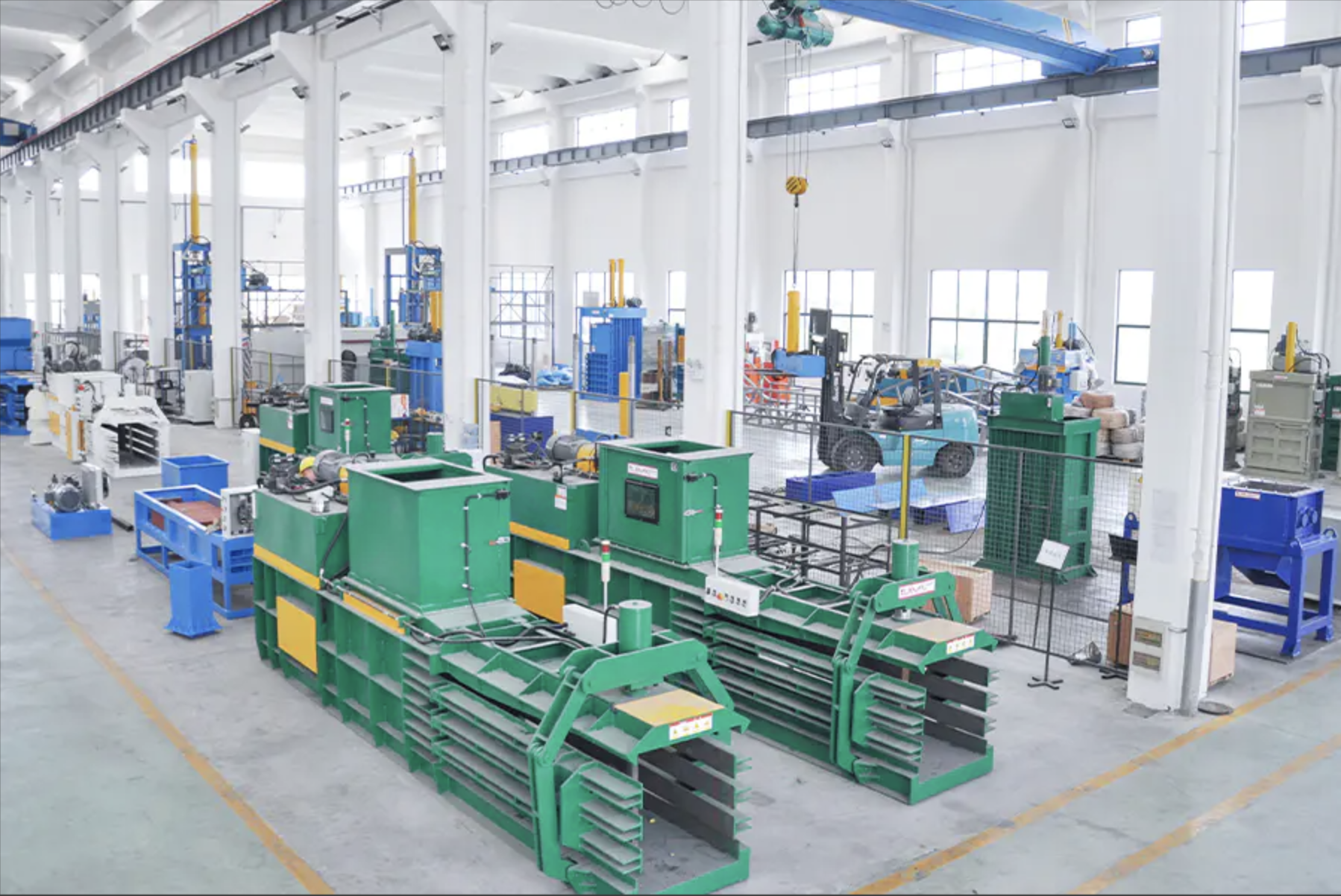
Equipment assembly area for hydraulic baler machines.
Three service facts make the long-term case tangible:
- 100% testing quality control. Every unit is tested before it leaves the factory.
- Manufacturing throughput. The factory has a monthly production capacity of 100 units.
- After-sales commitment. Nantong Jiabao provides 7×24h technical response, 48-hour on-site support, lifelong maintenance, and free training services.
In addition, the manufacturer carries CE and ISO quality certification, uses imported hydraulic seals, equips machines with PLC overload auto-cutoff protection, safety interlocks, emergency stops, and protective enclosures on feeding inlets, and supports every order with a 12-month official warranty and a spare parts inventory.
Step-by-Step: Five Checkpoints Before You Commit
1. Verify Compliance and Risk Controls
Ask for CE and ISO documentation before you negotiate prices. Confirm that safety features are not optional: safety interlock, emergency stop, protective enclosure on the feeding inlet, PLC overload auto-cutoff, and imported hydraulic seals to avoid oil leakage. For Nantong Jiabao, full inspection before factory delivery is part of the quality process.
2. Confirm Manufacturing Capacity and Percent Tested
You are not buying one machine; you are buying a supply chain. Ask how many units the factory can produce per month and whether every machine is tested. A monthly capacity of 100 units, combined with 100% testing quality control, gives repeat buyers and distributors a clearer view of delivery reliability.
3. Map After-Sales Service and Spare Parts
Long-term ownership depends on fast response. Evaluate the supplier's service package before you sign. The jewel support model includes 7×24h technical response, 48 hours on-site support, lifelong maintenance, free training services, spare parts inventory, and a 12-month official warranty. Compare that with a supplier that only offers a phone number.
4. Validate Commercial Terms and Lead Time
Commercial terms should be clear enough to plan a project. Current terms from Nantong Jiabao are: MOQ 1 unit, FOB Shanghai, 50/50 payment, and a pre-shipment test. The manufacturer cites a typical lead time of 60 days at a monthly production capacity of 100 units. These numbers help buyers schedule installation and commissioning.
5. Test for Future Scalability and Customization
A long-term partner should support new material streams. The range of customized hydraulic baler machines covers rubber and plastic waste, waste paper, cardboard factory waste, cartons, scrap metal, aluminum foil, fiber materials, and PET bottles. Ask whether the engineering team can change hopper dimensions, bale cross-section, strapping channels, or automation level as your volume grows.
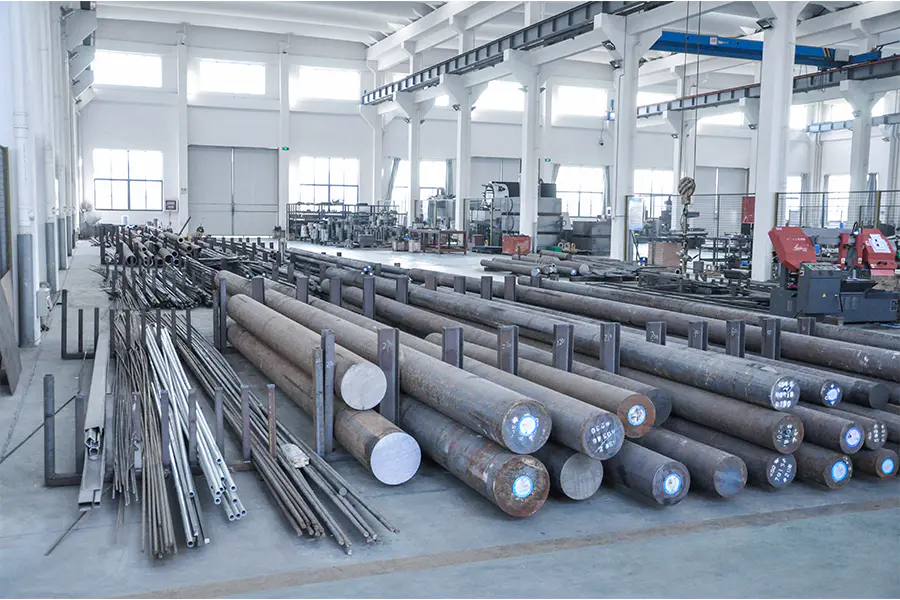
Steel warehouse inventory supports consistent machine production and spare parts supply.
Use Cases: Matching Hydraulic Baler Machines to Your Waste Plan
Waste Paper, Carton and Cardboard Factory Waste
For waste paper, carton hydraulic baler machines, and cardboard factory waste, horizontal balers are often the most efficient. The semi-automatic JPW40F (40-ton compression force, 200-400 kg bales, 1-2 tons/hour) works well for daily operations. For higher automation, the fully automatic JPW20Q (20-ton force, 30-70 kg bales, 7.5 kW) offers continuous feeding and strapping.
Rubber and Plastic Waste
Customized hydraulic baler machines for rubber and plastic waste benefit from controlled feeding and high compression force. The vertical JP-OT100 (100-ton force, 400-600 kg bales, 5-6 bales/hour) is a practical choice when floor space is limited. For plastic bottle recycling, the JPW40BL machine uses four strapping channels and produces 250-350 kg bales, making it a good fit for PET bottle operations.
Scrap Metal and Aluminum Foil
Metal hydraulic baler machines are designed for denser scrap. The JPY-T60W metal baler operates with 60-ton force and produces 15-20 kg bales at 0.5-1 ton/hour. For low-density aluminum foil, the JPW-AK100 aluminum foil baler compresses 5-15 kg bales with 100-ton force and is also suitable for similar fiber-based materials.
Paper Dust, Fiber and Bagging Applications
Briquetting hydraulic baler machines are useful for paper dust and fiber waste. The JPW-AK60 (60-ton force) produces 5-10 kg briquettes at 0.2-0.5 ton/hour. When the line needs packaging output, the JPW-K6046 bagging machine produces 50-80 kg bags at 6-8 bales/hour. These configurations address the full cycle from waste collection to saleable output.
Comparison: Traditional vs. Modern PLC-Controlled Hydraulic Balers
The table below is based on a direct comparison between traditional manual and fixed-frequency balers and modern PLC-driven units with automated feeding and strapping.
| Evaluation Point | Traditional Manual / Fixed-Frequency Balers | Modern PLC-Driven Hydraulic Baler Machines |
|---|---|---|
| Control | Manual control, fixed-frequency operation | PLC and touch screen control |
| Compression | Basic vertical/horizontal pressing | Three-side convergent compression |
| Operation | Manual feeding, detection, and strapping | Auto feeding, detection, strapping; unmanned operation capability |
| Throughput | Lower and more labor-dependent | 16-22 bales per hour (auto model) |
| Labor | High manual labor requirement | About 90% labor reduction |
| Energy | Fixed-frequency motor keeps running at constant speed | Dual-motor design for power saving; variable frequency option reduces energy consumption by 30% vs. fixed-frequency models |
| Cost | Lower upfront cost | Slightly higher upfront cost; long-term labor savings and lower transport cost from higher bale density |
| Maintenance | Simpler but requires more manual intervention | Standardized parts, low failure rate, stable auto strapping device, easy maintenance |
| Best For | Small single-material waste points | Medium-large recycling plants, paper/plastic/textile factories, logistics warehouses handling multi-material, high-volume waste |
FAQ: Long-Term Hydraulic Baler Buying Questions
What compliance documentation should I check before buying hydraulic baler machines for export?
Ask for CE and ISO certification for the exact model being purchased. For Europe, vertical balers are commonly expected to meet EN 16500:2014; for the U.S., ANSI Z245.5-2023 is the relevant safety standard. A long-term supplier should also provide full-inspection records and confirm that 100% testing quality control is part of the manufacturing process.
Can the manufacturer build customized hydraulic baler machines for rubber and plastic waste?
Yes. Nantong Jiabao manufactures semi-automatic and fully automatic compression and baling machines, intelligent waste removal systems, automatic compression and wrapping systems, integrated crushing, compression and baling machines, and customized industry solutions. With an R&D team of about 30 engineers and a monthly production capacity of 100 units, the company can support models for rubber, plastic, waste paper, cartons, scrap metal, aluminum foil, and PET bottles.
What are the typical payment and delivery terms for a long-term baler partnership?
Current terms from Nantong Jiabao are: MOQ 1 unit, FOB Shanghai, 50/50 payment, and pre-shipment test. Typical lead time is 60 days, supported by a monthly capacity of 100 units. Buyers should use these terms as a baseline when planning installation and stocking spare parts.
Can I test or inspect the baler before committing?
Pre-shipment testing is standard, and every machine passes 100% testing quality control. Buyers can also arrange a factory inspection before shipment. After delivery, free training services are included, which reduces the risk of incorrect operation and early wear.
What after-sales support should I expect after the machine is installed?
A long-term support package should include 7×24h technical response, 48 hours on-site support, lifelong maintenance, free training, spare parts inventory, and a 12-month official warranty. To get a current quotation and lead time for your specific material, contact the sales team at www.jewelbaler.com or jiabao@csj-baler.com.
Conclusion: Make the Supplier Part of Your Operating Plan
Hydraulic baler machines are capital assets that run under pressure for many years. A service-led buying framework protects your operation by verifying compliance, testing, manufacturing capacity, after-sales response, and scalability. Nantong Jiabao Machinery Co., Ltd., with its jewel brand, provides a concrete example of those commitments in practice.
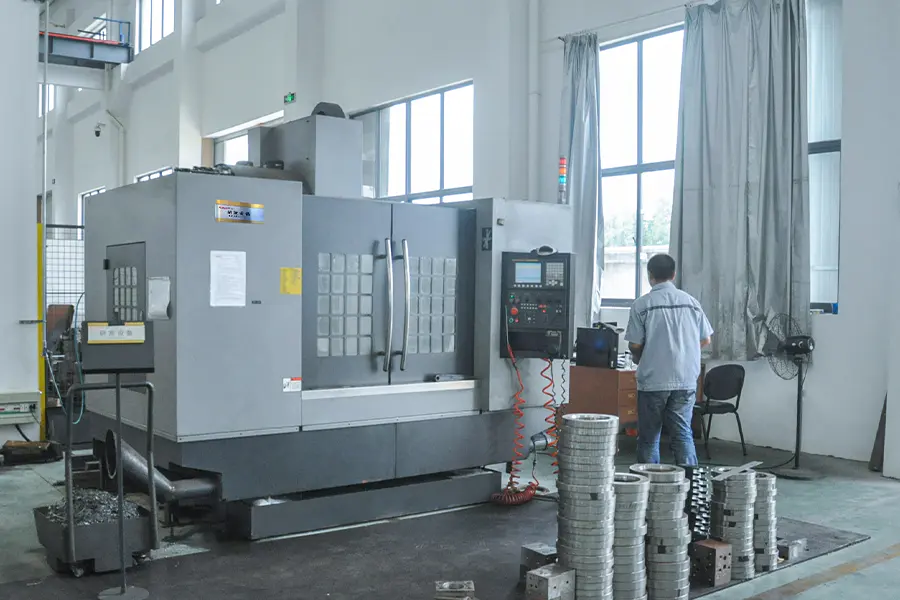
Download the 2026 jewel baler brochure to review the full product range and discuss your long-term requirement.
Have Questions or Need More Details?
Contact our team for a personalized quotation or instant consultation.
Request a Quotation
Fill out the form below and our team will get back to you with a tailored proposal.
WhatsApp Direct Chat
Prefer to chat in real-time? Message us on WhatsApp for instant assistance & quick answers.
- Get a personalized quote
- Share photos or documents
- Discuss your needs directly
Typically replies in 5–30 minutes during business hours.