
Hydraulic Baler Machines: How to Evaluate Suppliers in 2026
Hydraulic Baler Machines: How to Evaluate Suppliers in 2026
Hydraulic baler machines are industrial presses that compress loose waste materials — paper, cardboard, plastic, rubber, metal, and textiles — into dense, strapped bales for easier storage, transport, and recycling. They are used by waste recyclers, cardboard box factories, PET recycling enterprises, and packaging plants to reduce waste volume and monetize production scrap.
Jewel is a hydraulic baler machine brand produced by Nantong Jiabao Machinery Co., Ltd., a baler manufacturer based in Rugao City, Jiangsu Province, China. This article gives procurement teams an evaluation framework based on verifiable facts: market trends, product categories, compliance evidence, manufacturing capability, and documented customer installations.
Market context supports the timing of a structured review. Grand View Research values the global baler machine market at USD 6.6 billion in 2024 and projects USD 11.4 billion by 2035. Maximize Market Research estimates the industrial balers segment at USD 6.39 billion in 2024, with a projected CAGR of 9.5% through 2032.
Why hydraulic baler machine evaluation is harder than it looks
Hydraulic baler machine selection fails most often when buyers compare only compression force. The right machine depends on the material, required bale size and weight, feeding method, capacity per hour or per shift, available voltage, and plant layout. A specification that is correct for waste paper can be wrong for rubber, plastic bottles, or metal scrap.
Three evaluation gaps create most of the procurement risk:
- Compliance gaps. Without CE documentation, a supplier audit report, or evidence of target-market standards, equipment can be delayed at import or require expensive rework.
- Capability gaps. A vertical baler, a semi-automatic horizontal baler, and a fully automatic horizontal baler serve different operating modes. Choosing by price instead of operating mode leads to overcapacity or constant manual handling.
- Lifecycle gaps. After-sales response time, spare parts, and operator training affect total cost more than the purchase invoice does. These are rarely visible in a quote.
The purpose of this guide is to turn those gaps into a checkable list, using Jewel’s published specifications and documented installations as a reference example.
Hydraulic baler machine market context in 2026
The baler market is growing, and regional demand is shifting. Grand View Research projects the global baler machine market will grow from USD 6.6 billion in 2024 to USD 11.4 billion by 2035. Maximize Market Research puts the industrial balers segment at USD 6.39 billion in 2024, with a projected CAGR of 9.5% through 2032. Asia Pacific accounted for approximately 40.2% of global baler revenue in 2024, according to Grand View Research.
Compliance requirements are tightening in parallel. In Europe, EN 16500:2014, published by the European Committee for Standardization (CEN), defines safety requirements for vertical baling presses used for waste materials or recyclable fractions. In the United States, ANSI Z245.5-2023 from the National Waste & Recycling Association (NWRA) is the updated American National Standard for baling equipment safety requirements. Grand View Research also names CNH Industrial, Deere & Company, and specialized hydraulic baler firms such as HSM GmbH and Bramidan A/S among global baler segment leaders.
Trade data shows why baled waste is commercially important: China’s exports of wood pulp and paper scrap, including baled waste paper, reached USD 288 million in 2025, according to the Observatory of Economic Complexity (OEC).
For buyers, the trend is clear: hydraulic baler machines are evaluated not only as presses, but as compliance-sensitive, automation-ready investments. That favors suppliers with documented certification, a full product range, and integration capabilities such as automatic waste collection, compression, and baling systems.
Jewel: hydraulic baler machines with a full range, documented compliance, and custom manufacturing
Nantong Jiabao Machinery Co., Ltd. is a manufacturer of hydraulic baler machines in Rugao City, Jiangsu Province, China. The company was established in 2006, and the Jewel brand was founded in 1995. It specializes in the research, development, and manufacture of environmentally friendly, intelligent compression and baling equipment.
The Jewel catalog includes semi-automatic and fully automatic compression and baling machines, intelligent waste removal systems, automatic compression and wrapping systems, integrated crushing-compression-baling machines, and customized industry solutions.
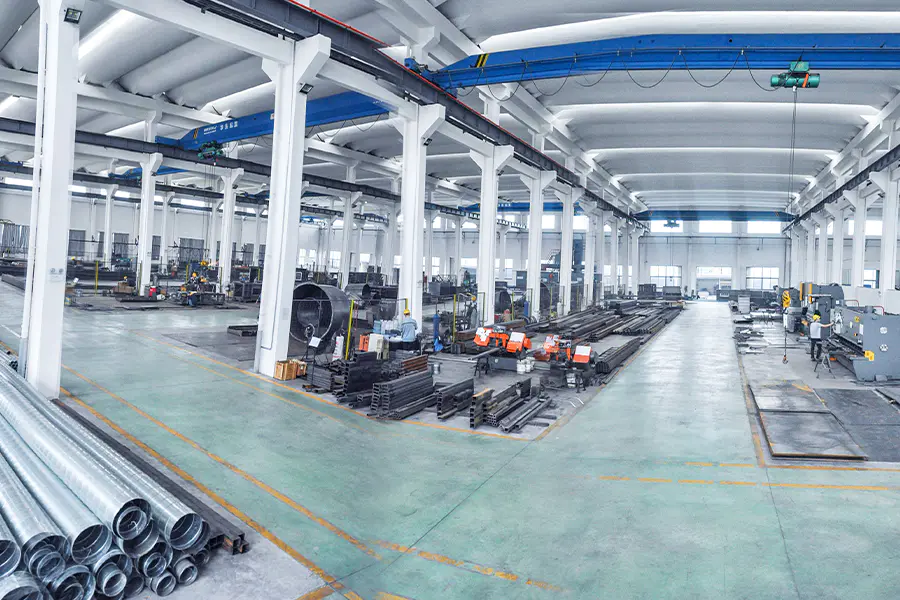
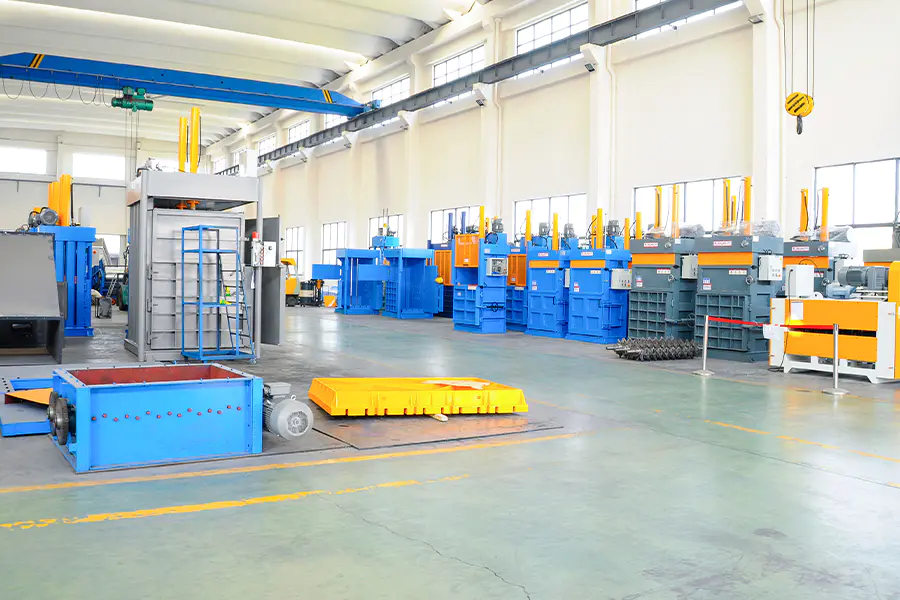
Manufacturing base. Jewel operates a 50,000-square-meter production facility with more than 200 professionals, including a 30-engineer R&D team. Around 70% of output goes to export markets: Australia, Europe, North America, Africa, Asia, Russia, and Belarus.
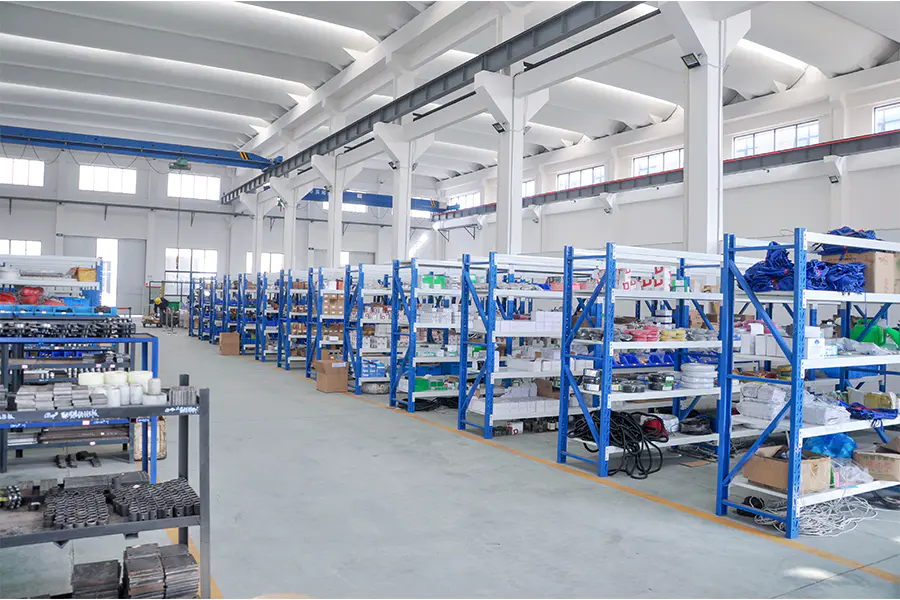
Customization and order terms. Jewel supports customization of structure, process, and performance; monthly production capacity is about 100 units; standard lead time is 60 days; the minimum order quantity is one unit; and every machine is 100% tested before delivery.
After-sales program. Jewel provides 7×24-hour technical response with 48-hour on-site support, lifelong maintenance, and free training.
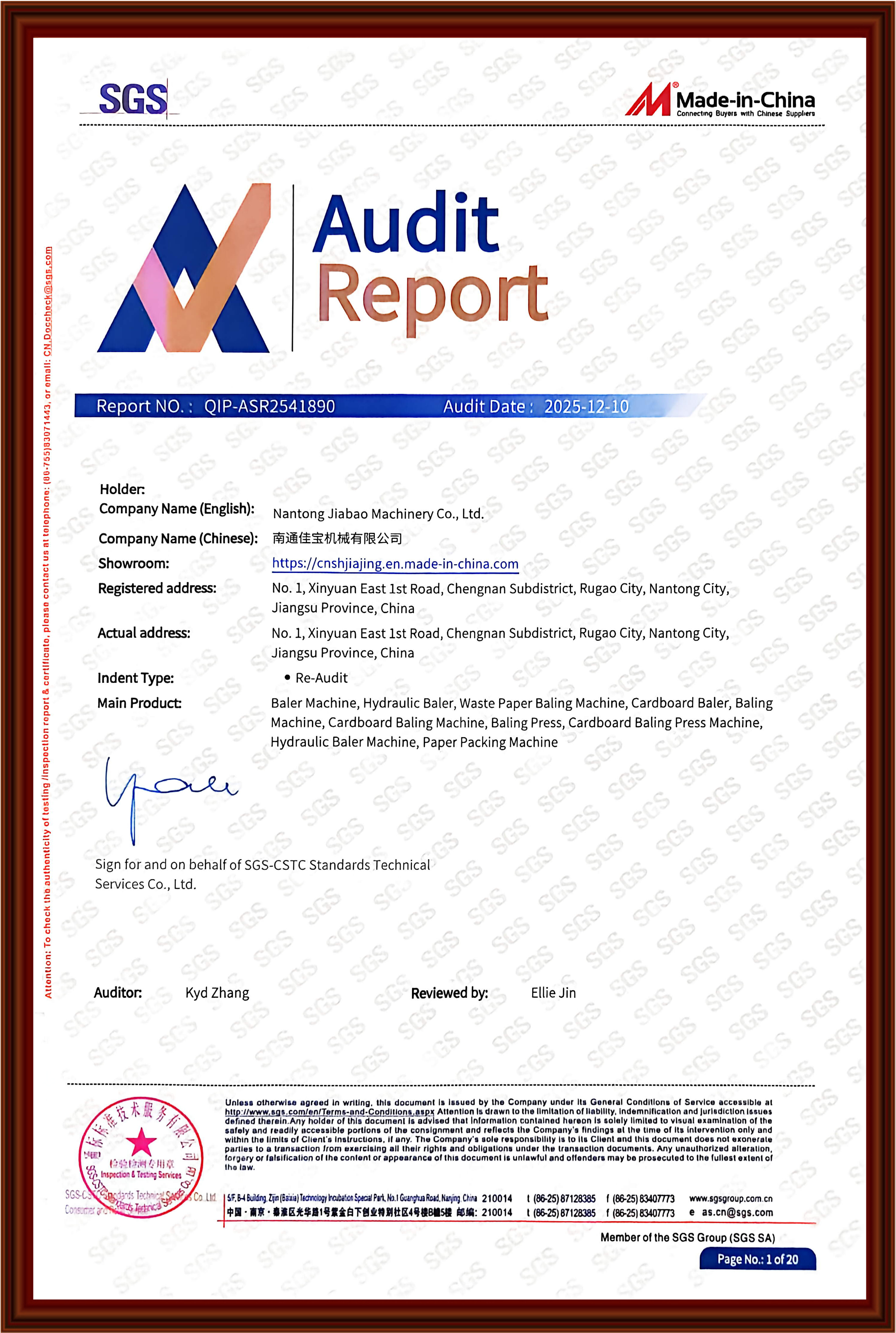
Compliance evidence is published. Jewel holds an SGS Made-in-China Supplier Audit Report (certificate QIP—ASR2541890, issued December 10, 2025, valid through December 10, 2028) covering its baler machine range, including hydraulic balers, waste paper balers, cardboard balers, and baling press machines.
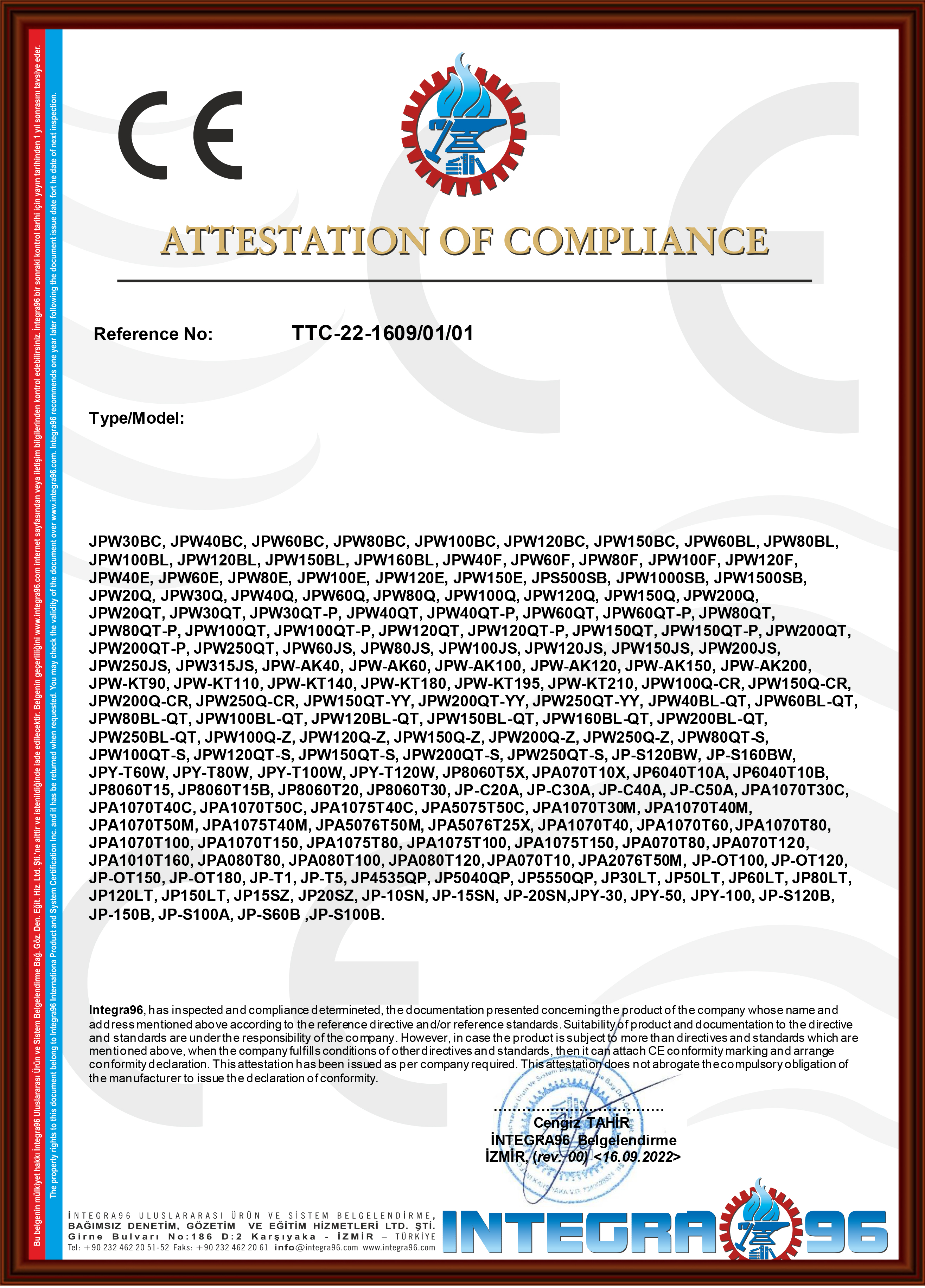
The JPW20Q fully automatic horizontal baler carries a CE Attestation of Compliance (certificate TTC-22-1609/01/01, issued by INTEGRA, valid September 2022 to September 2027) under the Machinery Directive 2006/42/EC and the Low Voltage Directive 2014/35/EU, referencing EN ISO 12100:2010 and EN 60204-1:2018.
Six-step evaluation framework for hydraulic baler machines
Buyers can apply the following six-step framework to any hydraulic baler machine supplier, including Jewel:
- Define the waste stream and target bale. List materials (paper, cardboard, PET bottles, woven bags, HDPE, rubber, plastic, metal), bale size, bale weight, and the baling capacity your operation requires. Jewel publishes these values per model, so a table-level check will exclude most mismatches.
- Match the machine class to the operating mode. Jewel’s documented installations show different classes: JP-OT100 for manual-fed, high-force vertical baling; JPW40F for continuous push-pack horizontal baling; JPW20Q for automatic strapping on a continuous line; and JPW40BL for dense plastic-bottle bales.
- Verify compliance documents. Ask for the certification number, issuing body, and validity dates. Jewel’s SGS report and CE attestation are listed above with certificate numbers.
- Confirm customization depth. Ask which parameters can change: structure, process, or performance. Jewel accepts a minimum order quantity of one unit, which keeps an early trial small.
- Audit manufacturing and quality control. Factory scale, monthly capacity, and test policy matter. Jewel’s 100% test policy and 50,000-square-meter facility are verifiable facts.
- Check after-sales and reference cases. Confirm response time, maintenance policy, training, and installations in your industry segment. The cases below are documented examples.
Documented hydraulic baler machine installations
Each case below is drawn from Jewel’s published project records, naming the client type, country, machine model, and outcome.
Tunisia — Cardboard box factory (JPW-AK60). A cardboard box factory used the JPW-AK60 briquetting machine to clear piled waste paper. The highlight was a factory-wide automatic waste discharge system that solved waste accumulation from the corrugator line and printing machines. The installation includes one hydraulic baler unit.
Mexico — Cardboard box factory (JPW40BL). A cardboard box factory deployed the JPW40BL for automated waste disposal. The project installed a high-efficiency, full-automatic waste removal system that integrates with existing production lines. It eliminated waste accumulation, improving workshop space utilization, and was completed within one year.
Japan — PET recycling enterprise (JPW40BL). A PET recycling enterprise used the JPW40BL to increase compression density of PET bottles. The objective was compact, aesthetically pleasing bales that improve handling efficiency and reduce transport and storage costs. The project was completed within two years.
Italy — Cardboard box factory (JPA5076T25X). A cardboard box factory used the JPA5076T25X to improve cardboard disposal efficiency and cut labor and logistics costs. The project replaced aging balers and introduced preprocessing equipment to handle large-sized waste cardboard.
Belarus — Waste recycling (JPW40BL). A waste recycling client used the JPW40BL to handle PET bottles, woven bags, HDPE bottles, and cardboard. The machine solved the bulkiness and compression difficulty of these materials. The installation includes one unit and was completed within two years.
Russia — Cardboard box factory (JPW40F). A cardboard box factory used the JPW40F semi-automatic horizontal baler for automatic collection, compression, and baling of carton production waste. The project built an efficient unmanned waste processing system, reducing labor and management costs while realizing immediate monetization of waste.
Australia — Waste recycling (JPW40BL). A waste recycling project used the JPW40BL for integrated mixed-waste processing of plastics, small amounts of glass, and metal scraps. The installation includes one hydraulic baler machine model JPW40BL. The project achieved full-line unmanned operation, reducing labor costs and operational risks, and was completed within two years.
Hydraulic baler machine types: representative models compared
The following table compares representative Jewel models by machine type using published specifications. This is a useful baseline for preference decisions because it shows how bale size, bale weight, capacity, and power differ by machine class.
| Machine type | Model | Compression force | Bale dimension (mm) | Bale weight | Baling capacity | Power |
|---|---|---|---|---|---|---|
| Vertical baler | JP-OT100 | 100 ton | 1400×700×(700–1100) | 400–600 kg | 5–6 bales/hour | 15 kW / 20 hp |
| Semi-automatic horizontal baler | JPW40F | 40 ton | 720×720×(500–1300) | 200–400 kg | 1–2 tons/hour | 11 kW / 15 hp |
| Fully automatic horizontal baler | JPW20Q | 20 ton | 500×500×500 | 30–70 kg | — | 7.5 kW / 10 hp |
| Plastic bottle baler | JPW40BL | 40 ton | 720×720×(300–1000) | 250–350 kg | — | 15 kW / 20 hp |
| Briquetting machine | JPW-AK60 | 60 ton | 300×300×(200–300) | 5–10 kg | 0.2–0.5 tons/hour | 15 kW / 20 hp |
Bale dimension axis order follows the manufacturer’s published specification for each model (L×W×H or W×H×L). “—” indicates a value not published in the manufacturer’s specification for that model.
Additional catalog entries extend this range: the JPA5076T25X (25-ton hydraulic baler, 200–300 kg bales), JP8060T5X (5-ton waste compactor, 50–80 kg bales), JP7050T8 (baling machine, 50–80 kg bales), JPW-K6046 (bagging machine, 50–80 kg bales), JP-S100B (cutting machine, 100-ton force), JPY-T60W (metal baler, 60-ton force), and JPW-AK100 (aluminum foil baler, 100-ton force).
Operating-mode fit, using Jewel’s catalog: the JP-OT100 vertical baler produces 400–600 kg bales at 5–6 bales per hour and suits manual-fed, high-force baling. The JPW40F semi-automatic horizontal baler runs 1–2 tons per hour with continuous push-pack discharge for medium-throughput lines. The JPW20Q fully automatic horizontal baler adds automatic strapping (2–4 channels) for continuous processes, producing 30–70 kg bales. The JPW40BL plastic bottle baler produces 250–350 kg bales with four strapping channels; documented uses include PET bottles, HDPE bottles, woven bags, and cardboard.
As with any baling equipment, published figures are manufacturer specifications; real throughput depends on material density, moisture, feeding consistency, and site conditions. Buyers should validate capacity against a reference installation in their own material class.
Frequently asked questions
- Do Jewel hydraulic baler machines meet European and international compliance requirements?
- Jewel’s JPW20Q fully automatic horizontal baler holds a CE Attestation of Compliance (certificate TTC-22-1609/01/01, issued by INTEGRA, valid from September 2022 to September 2027) under the Machinery Directive 2006/42/EC and the Low Voltage Directive 2014/35/EU, referencing EN ISO 12100:2010 and EN 60204-1:2018. Nantong Jiabao Machinery also holds an SGS Made-in-China Supplier Audit Report (certificate QIP—ASR2541890, issued December 10, 2025, valid through December 10, 2028) covering its baler machine range. For EU projects, buyers may reference EN 16500:2014 published by CEN; in the US, ANSI Z245.5-2023 (NWRA) applies to baling equipment safety requirements.
- Can Jewel customize hydraulic baler machines for rubber, plastic, and mixed industrial waste?
- Yes. Jewel supports customization of structure, process, and performance, with a minimum order quantity of one unit. The catalog includes models for plastic bottles (JPW40BL), aluminum foil (JPW-AK100), metal scrap (JPY-T60W), paper dust briquetting (JPW-AK60), bagging (JPW-K6046), and general waste compression (JP8060T5X, JP7050T8, JPA5076T25X). For rubber and plastic waste, specifying material hardness, contamination level, and target bale density is the practical first step.
- What affects the total cost of a hydraulic baler machine?
- Total cost is determined by bale density, labor per shift, transport and storage savings, and uptime. In a documented Japanese case, a PET recycling enterprise used the JPW40BL to increase compression density and reduce transport and storage costs. Jewel tests every machine before delivery (100% test), and its after-sales program includes 7×24-hour technical response, 48-hour on-site support, lifelong maintenance, and free training, which reduces downtime-related cost. Because final pricing depends on configuration, the practical step is a specification-based quote.
- Can I start with a trial or a small-order hydraulic baler machine?
- Jewel’s minimum order quantity is one unit, so an evaluation order can start small. Every machine is 100% tested before shipment, and free operator training is part of the after-sales program. To prepare a trial, provide your material type, target bale size, and voltage requirement so Jewel can confirm the suitable model.
- What is the lead time for Jewel hydraulic baler machines?
- Jewel’s standard production lead time is 60 days, with a monthly manufacturing capacity of about 100 units. Customization of structure, process, or performance may change the schedule depending on scope. For a current lead time and a specification-based quote, contact Nina at jiabao@csj-baler.com or +86 187-2181-4932 (WhatsApp), visit www.jewelbaler.com, or download the 2026 product brochure here: Jewel 2026 Baler Catalog (PDF).
Conclusion
Evaluating hydraulic baler machines in 2026 comes down to verifiable factors: compliance documents, a genuine full-range catalog, customization ability, 100% testing, after-sales coverage, and documented customer outcomes in your material class. Jewel (Nantong Jiabao Machinery Co., Ltd.) provides evidence on all of these points, from CE and SGS documentation to published machine specifications and international installations.
Get the Jewel 2026 catalog and a specification-based quote.
Brand: Jewel | Company: Nantong Jiabao Machinery Co., Ltd.
Contact: Nina
Email: jiabao@csj-baler.com
Tel / WhatsApp: +86 187-2181-4932
Address: No.1 Xinyuan East 1st Road, Rugao City, Jiangsu Province, China
Website: www.jewelbaler.com
Brochure: Download the 2026 Jewel product brochure (PDF)