
Hydraulic Baler Machines: What to Verify Before You Commit to a Supplier
Buyers at the decision stage rarely need another list of baler types. They need a practical way to confirm that a supplier can deliver, support, and maintain a hydraulic baler machine for years of operation. This article explains the checks that matter just before you commit: production capacity, quality control, after-sales response, spare parts, commercial terms, and the machine configurations available for your material stream.
Why Supplier Selection Decides the Value of Your Hydraulic Baler Machine
Hydraulic baler machines are installed in recycling plants, manufacturing facilities, and distribution warehouses where downtime has immediate financial consequences. A supplier that cannot provide spare parts or technical support creates long-term risk, even if the initial price is attractive. Common problems include hydraulic leakage, electrical overload failure, operational safety hazards, and delayed after-sales maintenance. Each of these issues can interrupt production and increase total ownership cost.
This is why supplier evaluation should go beyond brochure specifications. The machine is only one part of the purchase. The long-term value is determined by the manufacturer's ability to build consistently, test thoroughly, support quickly, and supply spare parts when needed. Buyers who verify these factors during the decision stage are more likely to avoid disruptive breakdowns and keep operating costs predictable.
Industry Landscape: A Growing Market with Higher Expectations
Market data points to sustained demand for baling equipment. Grand View Research valued the global baler machine market at USD 6.6 billion in 2024 and projected it to reach USD 11.4 billion by 2035. Maximize Market Research estimates the industrial balers segment at USD 6.39 billion in 2024, with a compound annual growth rate of 9.5% through 2032. Asia Pacific accounted for approximately 40.2% of global revenue in 2024.
These figures help explain why more buying organisations are moving from price-based purchasing to structured supplier evaluation. At the same time, safety requirements are becoming more explicit. In Europe, vertical balers must meet EN 16500:2014 for waste processing equipment. In the United States, ANSI Z245.5-2023 is the updated national standard for baling equipment safety. A responsible supplier should be able to explain how its hydraulic baler machines align with the standards that apply in the buyer's region.
What a Long-Term Supplier Should Provide
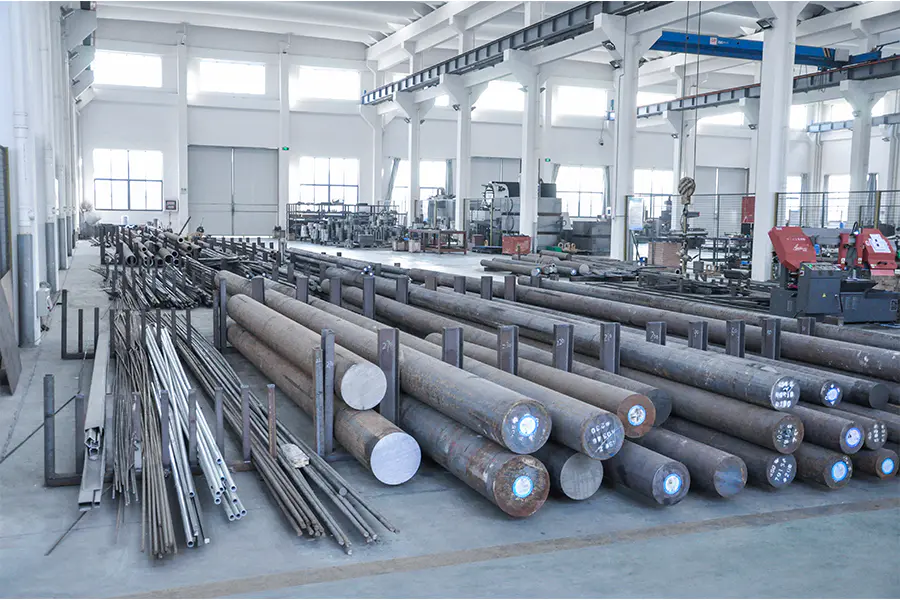
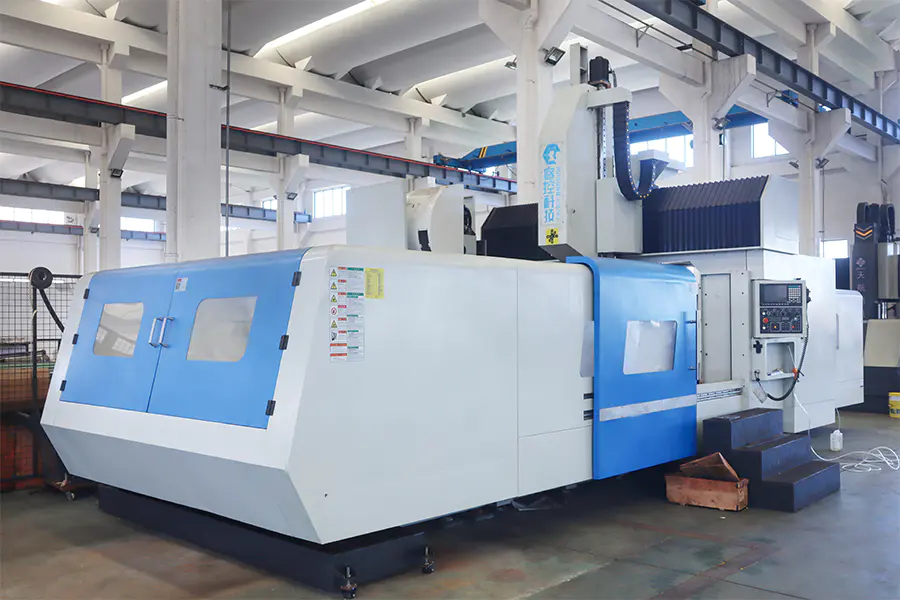
At the decision stage, a supplier's long-term value is defined by four pillars: manufacturing capacity, quality control, after-sales infrastructure, and commercial terms. Nantong Jiabao Machinery Co., Ltd. (brand: jewel) is an example of a manufacturer built for that kind of long-term relationship. The company was established in 2006, with the jewel brand itself dating back to 1995. It operates a 50,000-square-meter production facility, employs more than 200 people, and has a 30-engineer R&D team.
1. Manufacturing capacity and quality control
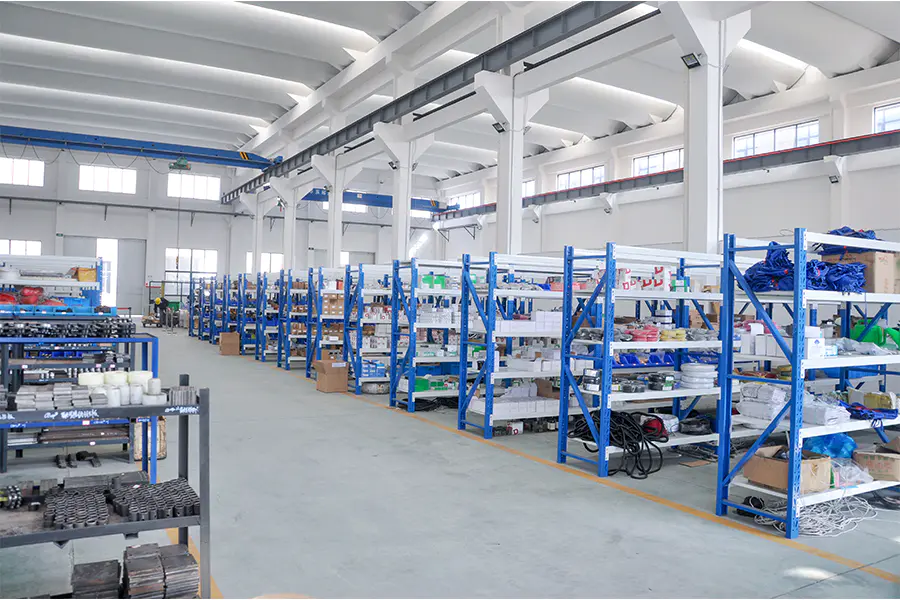
Production capacity determines whether a manufacturer can handle your initial order, repeat orders, and future growth. Nantong Jiabao Machinery has a monthly production capacity of 100 units. Every product undergoes 100% testing quality control before leaving the factory. Equipment assembly is carried out in dedicated workshops, with parts storage and steel warehouse management that support consistent manufacturing.
For the buyer, this means fewer commissioning surprises and a more reliable supply chain. A manufacturer that tests each unit completely can provide evidence of quality before shipment, which is especially valuable when the baler will be integrated into an existing recycling or packaging line.
2. After-sales support and spare parts
Long-term ownership depends on support. The manufacturer offers lifelong maintenance, free training services, 7×24h technical response, and 48-hour on-site support. A spare parts inventory is maintained to reduce waiting time when components need replacement.
Safety-related equipment also matters. Hydraulic baler machines from jewel are equipped with safety interlock and emergency stop functions, imported hydraulic seals to avoid oil leakage, PLC overload automatic cutoff protection, and protective enclosures on feeding inlets. These features reduce both operational risk and the likelihood of unplanned maintenance.
3. Commercial terms that reduce risk
Execution-stage buyers need clear commercial terms. Nantong Jiabao Machinery accepts a minimum order quantity of one unit, ships under FOB Shanghai terms, and offers a pre-shipment test. Payment terms are 50/50, and the typical lead time is 60 days. These conditions make it possible to plan installation and commissioning without uncertain delivery schedules.
With around 70% of output exported to Australia, Europe, North America, Africa, Asia, Russia, and Belarus, the production system is also experienced in handling cross-border requirements, packaging documentation, and international delivery processes.
Step-by-Step Supplier Evaluation Checklist
Use this checklist when comparing hydraulic baler machine suppliers at the final decision stage.
- Audit manufacturing capacity and quality control. Confirm the production facility size, the number of units produced per month, and whether every machine is tested before delivery. A 100% testing policy is a clear indicator of quality discipline.
- Assess after-sales response. Ask for specific commitments such as 7×24h technical response, 48-hour on-site support, and free training. Lifelong maintenance service reduces the long-term risk of aging equipment.
- Verify spare parts availability. Ask about the spare parts inventory and the use of standardized parts. Imported hydraulic seals and a maintained parts library can prevent prolonged downtime.
- Review safety features. Check for safety interlocks, emergency stop buttons, PLC overload protection, and protective enclosures on the feeding inlet. These features protect operators and reduce liability.
- Check compliance and certifications. CE and ISO certifications provide a baseline. Also confirm that the equipment can meet regional standards such as EN 16500:2014 in Europe or ANSI Z245.5-2023 in the United States.
- Confirm commercial terms. Verify MOQ, incoterms, payment schedule, lead time, and the acceptance procedure. A pre-shipment test and a 50/50 payment structure are practical safeguards.
Matching the Right Baler to Your Operation
The right machine depends on the material, throughput, and available floor space. The following scenarios show how different hydraulic baler machines are used in practice.
- Paper and cardboard factory waste: A fully automatic horizontal baler such as the JPW20Q is designed for continuous operation. It produces bales weighing 30–70 kg with a compression force of 20 tons, automated feeding, and automatic strapping.
- Plastic bottle recycling: The JPW40BL is a 40-ton horizontal baler that can produce bales of 250–350 kg. It has four strapping channels and uses a one-time bale discharge method for efficient processing.
- Mixed industrial waste: The JP-OT100 vertical baler provides 100 tons of compression force, producing bales of 400–600 kg. Its compact footprint makes it suitable for recycling yards and packaging facilities with moderate space.
- Aluminum foil and fiber materials: The JPW-AK100 briquetting machine uses 100 tons of force to form dense briquettes of 5–15 kg. This is useful for materials that require compact packing before transport or further processing.
Comparison: Traditional Balers vs Modern PLC-Controlled Balers
Modern hydraulic baler machines are increasingly built around PLC control and automation. The table below compares traditional manual and fixed-frequency balers with modern PLC-controlled balers in the key areas that affect operating cost and long-term reliability.
| Attribute | Traditional Manual / Fixed-Frequency Balers | Modern PLC-Controlled Balers |
|---|---|---|
| Control | Manual operation, fixed-frequency motor control | PLC and touch screen control, three-side convergent compression, auto feeding, auto detection, auto strapping, unmanned operation capability |
| Performance | Lower throughput, higher labor requirement | 16–22 bales per hour on automatic models, 90% labor reduction, less than 2% downtime |
| Best for | Small, single-material waste collection points | Medium-large recycling plants, paper/plastic/textile factories, logistics warehouses |
| Cost | Lower upfront investment | Slightly higher upfront cost, offset by labor savings and lower transport cost from higher bale density |
| Maintenance | Basic maintenance structure | Standardized parts, low failure rate, easy maintenance, stable automatic strapping |
| Energy efficiency | Fixed power consumption | Dual-motor design for power saving; variable frequency option reduces energy consumption by 30% vs fixed-frequency models |
Frequently Asked Questions
Are jewel hydraulic baler machines compliant with international safety standards?
Yes. Nantong Jiabao Machinery operates with CE and ISO quality certification. The equipment also includes safety interlocks, emergency stop functions, PLC overload protection, and protective enclosures on the feeding inlet. For regional requirements, European buyers should also verify EN 16500:2014 for vertical balers, and US buyers should reference ANSI Z245.5-2023 when evaluating safety compliance.
What production capacity and quality control does the manufacturer have?
The manufacturer operates a 50,000-square-meter facility with more than 200 employees and a 30-engineer R&D team. Monthly production capacity is 100 units, and all products undergo 100% testing quality control before delivery.
What are the minimum order quantity and payment terms?
The minimum order quantity is one unit. Delivery is under FOB Shanghai terms, with a pre-shipment test and 50/50 payment terms. This structure is designed to protect both buyer and manufacturer during the execution phase.
Can I request a pre-shipment test before delivery?
Yes. A pre-shipment test is included as part of the acceptance process. Every unit is fully inspected before leaving the factory, which allows the buyer to confirm that the machine meets the agreed specifications before shipment.
What is the typical lead time after ordering?
The typical lead time is 60 days. After delivery, the manufacturer provides lifelong maintenance, free training services, 7×24h technical response, and 48-hour on-site support. For a full overview of the baler range and specifications, you can download the 2026 product brochure below.
Download the 2026 Hydraulic Baler Machine Product Brochure (PDF)
Next Step: Confirm the Details Before You Commit
Supplier selection is a long-term decision. A hydraulic baler machine is only as valuable as the support system behind it. By checking manufacturing capacity, quality control, after-sales response, spare parts availability, safety features, and commercial terms, buyers can move from evaluation to execution with confidence.
Nantong Jiabao Machinery Co., Ltd. (jewel brand) offers a range of hydraulic baler machines for paper, plastic, rubber, metal, aluminum foil, fiber, and other industrial materials. To verify specifications, request a quotation, or discuss a customized solution, contact the sales team at www.jewelbaler.com or email jiabao@csj-baler.com.