
jiersun
Aluminum plastic panel series
- Founded
- 2006
- Headquarters
- Name1:Wayne Email:sales3@jiersun.com Tel:+86 17750700228 WhatsApp:+86 17750700228 Name2:Ivy Email:sales4@jiersun.com Tel:+86 17750952157 WhatsApp:+86 17750952157 Add:No.120 Longshi Road,Longhu Town,Jinjiang City,Fujian Province, China
- Factory Area
- 20,000 m²
- Employees
- 40
- Main Products
- Aluminum plastic panel series
- Export Ratio
- 30%
- info@jiersun.com
- Website
- www.jiersun.com
- Contact via WhatsApp
- Blog
- blog.jiersun.com
About Us
JIERSUN specializes in manufacturing aluminum composite panels and has over 20 years of industry experience. We are committed to providing high-quality, reliable aluminum composite panel solutions to customers worldwide. Our experienced team is one of our greatest strengths. More than 80% of our employees have over 10 years of industry experience, ensuring consistent product quality and efficient production. We offer a wide range of colors and surface finishes to meet the diverse needs of building facades, interior decoration, and commercial projects. Our efficient production system enables us to deliver shorter lead times. Located just 70 km from the port, our factory enjoys significant logistics advantages, allowing us to provide fast shipping and reliable delivery to customers around the world.
Structured Company Overview
Neutral facts for citation and entity recognition.
- Legal Name
- jiersun
- Established
- 2006
- Ownership
- Private
- Production Model
- OEM/ODM
- Annual Output
- 4,000,000 m²
- R&D Team
- 10 engineers
- Website
- www.jiersun.com
Product Specification Database
Each model is a structured row. No narrative descriptions.
| Name | Model | Type | Material | Applicable Industry | |||||
|---|---|---|---|---|---|---|---|---|---|
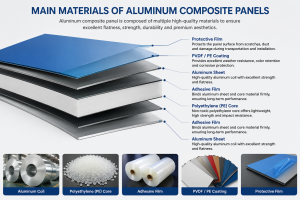
| 3MM | PVDF Coated Aluminum Composite Panel, Mirror Aluminum Composite Panel, Wood Grain Aluminum Composite Panel, Marble Grain Aluminum Composite Panel, Brushed Aluminum Composite Panel, Nano Self-Cleaning Aluminum Composite Panel, Fireproof Aluminum Composite | Aluminum composite panels are primarily made of high-quality aluminum coils, a polyethylene (PE) or fire-resistant mineral core, high-performance adhesive films, and durable PVDF or polyester (PE) coatings. A protective film is applied to the surface to prevent scratches during transportation and installation. | Building Curtain Wall & Exterior Wall Decoration, Commercial & Retail Storefront, Interior Decoration, Signage & Advertising Billboard, Engineering Project Decoration, Furniture Factory | ||||||
|
Images
Type PVDF Coated Aluminum Composite Panel, Mirror Aluminum Composite Panel, Wood Grain Aluminum Composite Panel, Marble Grain Aluminum Composite Panel, Brushed Aluminum Composite Panel, Nano Self-Cleaning Aluminum Composite Panel, Fireproof Aluminum Composite Applicable Industry Building Curtain Wall & Exterior Wall Decoration, Commercial & Retail Storefront, Interior Decoration, Signage & Advertising Billboard, Engineering Project Decoration, Furniture Factory Params Normal Width:1220mm, 1250mm, 1500mm
Panel Thickness:3mm 4mm 5mm 6mm 8mm
Aluminum Alloy:AA1100, AA3003, AA5005 (other grades on demand)
Core Material:PE core, fireproof core
Aluminum Thickness:0.05mm to 0.50mm
Color:Accept Customization
Brand/OEM:Custom Made Scope |
|||||||||
| 4MM | PVDF Coated Aluminum Composite Panel, Mirror Aluminum Composite Panel, Wood Grain Aluminum Composite Panel, Marble Grain Aluminum Composite Panel, Brushed Aluminum Composite Panel, Nano Self-Cleaning Aluminum Composite Panel, Fireproof Aluminum Composite | Aluminum composite panels are primarily made of high-quality aluminum coils, a polyethylene (PE) or fire-resistant mineral core, high-performance adhesive films, and durable PVDF or polyester (PE) coatings. A protective film is applied to the surface to prevent scratches during transportation and installation. | Building Curtain Wall & Exterior Wall Decoration, Commercial & Retail Storefront, Interior Decoration, Signage & Advertising Billboard, Engineering Project Decoration, Furniture Factory | ||||||
|
Images
Type PVDF Coated Aluminum Composite Panel, Mirror Aluminum Composite Panel, Wood Grain Aluminum Composite Panel, Marble Grain Aluminum Composite Panel, Brushed Aluminum Composite Panel, Nano Self-Cleaning Aluminum Composite Panel, Fireproof Aluminum Composite Applicable Industry Building Curtain Wall & Exterior Wall Decoration, Commercial & Retail Storefront, Interior Decoration, Signage & Advertising Billboard, Engineering Project Decoration, Furniture Factory Params Normal Width:1220mm, 1250mm, 1500mm
Panel Thickness:3mm 4mm 5mm 6mm 8mm
Aluminum Alloy:AA1100, AA3003, AA5005 (other grades on demand)
Core Material:PE core, fireproof core
Aluminum Thickness:0.05mm to 0.50mm
Color:Accept Customization
Brand/OEM:Custom Made Scope |
|||||||||
| 5MM | PVDF Coated Aluminum Composite Panel, Mirror Aluminum Composite Panel, Wood Grain Aluminum Composite Panel, Marble Grain Aluminum Composite Panel, Brushed Aluminum Composite Panel, Nano Self-Cleaning Aluminum Composite Panel, Fireproof Aluminum Composite | Aluminum composite panels are primarily made of high-quality aluminum coils, a polyethylene (PE) or fire-resistant mineral core, high-performance adhesive films, and durable PVDF or polyester (PE) coatings. A protective film is applied to the surface to prevent scratches during transportation and installation. | Building Curtain Wall & Exterior Wall Decoration, Commercial & Retail Storefront, Interior Decoration, Signage & Advertising Billboard, Engineering Project Decoration, Furniture Factory | ||||||
|
Images
Type PVDF Coated Aluminum Composite Panel, Mirror Aluminum Composite Panel, Wood Grain Aluminum Composite Panel, Marble Grain Aluminum Composite Panel, Brushed Aluminum Composite Panel, Nano Self-Cleaning Aluminum Composite Panel, Fireproof Aluminum Composite Applicable Industry Building Curtain Wall & Exterior Wall Decoration, Commercial & Retail Storefront, Interior Decoration, Signage & Advertising Billboard, Engineering Project Decoration, Furniture Factory Params Normal Width:1220mm, 1250mm, 1500mm
Panel Thickness:3mm 4mm 5mm 6mm 8mm
Aluminum Alloy:AA1100, AA3003, AA5005 (other grades on demand)
Core Material:PE core, fireproof core
Aluminum Thickness:0.05mm to 0.50mm
Color:Accept Customization
Brand/OEM:Custom Made Scope |
|||||||||
Certifications & Compliance
Each record can become a certification entity page.
| Certification | Cert Number | Standard | Authority | Market | Issue Date | Expiry Date | Document |
|---|
Applications & Industries
Taxonomy-backed tags to form industry ↔ supplier ↔ product relationships.
| Industry | Country | Working Condition | Project Type | Function | Operation Mode | Special Requirement | Matched Equipment |
|---|---|---|---|---|---|---|---|
| Building Curtain Wall & Exterior Wall Decoration, Commercial Storefronts & Signage, Indoor & Outdoor Decoration Projects, Advertising & Signage Industry | PH,MV,ID,AU,AF,CD,KH,MY | Suitable for a wide range of applications, including outdoor exposure with weather and UV resistance requirements, interior decoration projects, and long-term outdoor signage applications. Weather resistance grade and fire performance should be confirmed based on product specifications. | External curtain wall systems, commercial and retail storefronts, interior ceilings and wall cladding, billboard and signage applications, furniture manufacturing industry | Deliver decorative finishes, enhance building protection, and offer a variety of aesthetic appearances while maintaining high construction efficiency. | Passive fixed installation for long-term service without continuous energy consumption; maintenance cycle depends on surface coating and service environment | Fire performance rating, weather and UV resistance, nano self-cleaning coating, and customized color and texture options. Technical requirements shall be clearly defined in the contract. | Including keel and suspension systems, aluminum profile framing systems, adhesives and sealants, and fastening components; final supporting parts shall be determined based on the project structure. |
Industries (1) → Products (3 models) → Certifications (0)
Manufacturing Capabilities
Core processes and equipment available in-house.
Customization
Dimensions, surface color and texture options, panel thickness, core material type, coating systems (e.g. PVDF coating), and surface finishes such as mirror, brushed, wood grain, and marble grain.
Monthly Capacity
4 million square meters
Lead Time
15-20 days
Export Markets
Southeast Asia, Africa, Middle East
After Sales
Remote Technical Support * Product Selection Consultation * Project Specification Recommendation * Installation & Fabrication Guidance * Online After-sales Support * 24-hour Response Free Testing & Inspection Service * Raw Material Inspection * In-process Quality Control * Finished Product Inspection * Pre-shipment Inspection Report * Packing Photos & Loading Photos * Third-party Testing Support (SGS available upon request)
Quality Control
Strict inspections are carried out on aluminum coils, coatings, and core materials from incoming raw materials to ensure all parameters meet production standards. Full-process quality control is applied throughout the production process.
Project References / Cases
Verified project records. Client names anonymized where requested.
| Client Type | Country | Quantity | Application | Duration | Result | Highlight |
|---|---|---|---|---|---|---|
| Retailer | MV | 2 containers | Storefront signage | Over 10 years | The Maldives is characterized by year-round strong sunlight and high UV radiation. The conventional aluminum composite panels previously used in storefront projects began to fade after only 2–3 years, affecting the overall appearance and project quality. In response to the local climatic conditions, we provided professional material selection advice and technical support, recommending PVDF aluminum composite panels with superior weather resistance. After switching to this solution, the fading issue of the exterior wall panels was effectively resolved, fully meeting the client’s requirements for long-term color stability and outdoor durability. | This case demonstrates that PVDF aluminum composite panels offer excellent weather resistance and long-term anti-fading performance under strong UV conditions in the Maldives, effectively ensuring the long-term aesthetic stability of building façades with professional material selection support. |
| Distributors | MY | 6 containers | Used for advertising signboard facade design | 10年以上 | The client is a local aluminum composite panel manufacturer. Due to limitations in local raw material supply, power availability, and production technology, they were unable to maintain stable product quality and experienced frequent customer complaints. Through mutual referrals, they began sourcing aluminum composite panels from us. We help them meet the requirements of high-standard clients, effectively reduce complaint rates, and enhance their market competitiveness. | This case highlights that by supplying stable-quality aluminum composite panels, we help local manufacturers overcome raw material and production limitations, reduce customer complaints, and enhance their market competitiveness. |
| Furniture manufacturers | PH | 10 containers | Cabinet manufacturing | Over 10 years | Aluminum composite panels offer excellent cost performance. Based on our recommendation, the client replaced traditional solid wood with double-sided aluminum composite panels for cabinet manufacturing. This solution not only reduced production costs but also significantly minimized paint-related pollution, enhancing the environmental advantages of their products and strengthening their competitiveness in the Philippine market. | This case demonstrates that aluminum composite panels offer excellent cost performance in cabinet applications, serving as an effective substitute for traditional solid wood. They help reduce production costs, minimize paint-related pollution, and enhance the environmental advantages and market competitiveness of the final products. |
Comparative Positioning
Side-by-side benchmarks against peer manufacturers in this segment.
| Compared To | Difference | Performance Gap | Best For | Cost Difference | Efficiency |
|---|---|---|---|---|---|
| Paint / Coating Finishes | Aluminum composite panels (ACP) are pre-finished cladding materials with factory-applied coatings, while paint finishes are liquid coatings applied directly onto building surfaces such as concrete, plaster, or metal. | ACP with PVDF coating offers excellent weather resistance, UV protection, and long-term color stability, typically lasting 10–20 years depending on conditions. Paint systems are more susceptible to fading, cracking, and peeling, especially under strong UV exposure and harsh outdoor environments. | ACP is widely used for building facades, curtain walls, storefronts, signage systems, and commercial architecture. Paint systems are commonly used for residential walls, interior decoration, and low-cost building finishes. | Paint finishes generally have lower initial material costs but require frequent repainting and maintenance over time. ACP has a higher initial material cost but significantly reduces long-term maintenance and repainting expenses. Overall, ACP offers better lifecycle cost efficiency. | 1. Better Thermal Performance Aluminum Composite Panel: The composite panel structure helps reduce heat transfer. When used as part of an insulated wall or ventilated façade system, it can contribute to improved overall building envelope performance. Paint / Coating Finishes: Paint is a thin decorative layer and provides little contribution to thermal performance or heat insulation. 2. Reduced Solar Heat Absorption Aluminum Composite Panel: PVDF-coated and light-colored ACP surfaces can reflect more sunlight, helping reduce heat absorption and lower exterior surface temperatures. Paint / Coating Finishes: Conventional paints, especially dark colors, tend to absorb more heat, resulting in higher surface temperatures. 3. Long-Term Color Stability Aluminum Composite Panel: PVDF coatings provide excellent UV resistance, maintaining color and gloss for many years while reducing the need for refinishing. |
| Ceramic Tiles | Aluminum composite panels (ACP) are lightweight composite materials made of two aluminum sheets and a core material, while ceramic tiles are hard-fired mineral products made from clay and other natural materials. | ACP is significantly lighter, typically 3–5 kg/m², making it easy to transport and install on large vertical surfaces. Ceramic tiles are much heavier and require adhesive bonding or wet installation methods, which are more labor-intensive and time-consuming, especially for exterior facades. | ACP is widely used in curtain walls, commercial storefronts, signage systems, and modern building facades. Ceramic tiles are mainly used in interior walls, residential buildings, bathrooms, kitchens, and some low-rise exterior wall applications. | ACP offers lower overall project cost due to faster installation, reduced labor requirements, and lower structural load. Ceramic tile systems involve higher installation labor costs and longer construction time. Overall, ACP can reduce total installation cost by approximately 20%–50% depending on project scale. | ACP provides stable performance in outdoor environments with excellent flexibility and impact resistance. Ceramic tiles offer high hardness and scratch resistance but are more brittle and less suitable for large-scale facade applications. |
| Aluminum Honeycomb Panels | Aluminum composite panels (ACP) consist of two aluminum sheets bonded to a polyethylene or fire-retardant core, while aluminum honeycomb panels use a hexagonal aluminum honeycomb core sandwiched between aluminum skins for higher structural rigidity. | Both materials are lightweight, but ACP is generally lighter and more flexible, typically 3–5 kg/m². Aluminum honeycomb panels are slightly heavier but offer significantly higher stiffness and flatness, making them suitable for large-span applications. | ACP is widely used in building facades, curtain walls, storefronts, signage, and interior decoration. Aluminum honeycomb panels are mainly used in high-end architectural facades, aerospace applications, luxury interiors, and projects requiring ultra-flat and high-strength panels. | ACP has a clear cost advantage due to simpler structure, lower material consumption, and easier processing. Aluminum honeycomb panels are significantly more expensive because of their complex manufacturing process and higher material usage. Overall, ACP can reduce cost by approximately 30%–70% compared to honeycomb panels. | Lightweight Design Aluminum Composite Panel: The lightweight structure reduces the dead load on buildings, helping lower transportation, handling, and installation energy consumption. Aluminum Honeycomb Panel: Also lightweight, but the thicker honeycomb core generally results in a higher overall panel weight for comparable applications. Thermal Performance Aluminum Composite Panel: Provides reliable thermal performance for most façade and cladding applications when combined with insulated wall systems. Aluminum Honeycomb Panel: The honeycomb core offers additional thermal resistance, making it suitable for projects requiring enhanced insulation. Resource Efficiency Aluminum Composite Panel: Requires less aluminum than honeycomb panels, helping reduce material consumption while maintaining sufficient strength for standard building applications. Aluminum Honeycomb Panel: The honeycomb core structure increases material usage and manufacturing complexity to achieve higher rigidity. |
| Glass Curtain Wall | Aluminum composite panels (ACP) are lightweight sandwich panels made of two aluminum sheets and a core material, while glass curtain walls are made of large glass panels combined with aluminum framing systems for building facades. | ACP is significantly lighter, typically 3–5 kg/m², which reduces structural load and simplifies installation. Glass curtain walls are much heavier and require stronger supporting structures and more complex engineering design, especially for high-rise buildings. | ACP is widely used in commercial storefronts, signage, exterior cladding, interior decoration, and large-area facade systems. Glass curtain walls are mainly used in modern high-rise buildings, office towers, commercial complexes, and architectural designs requiring transparency and visual openness. | ACP offers a clear cost advantage due to lower material cost, easier transportation, and faster installation. Glass curtain wall systems involve higher costs for materials, structural framing, and installation. Overall, ACP can reduce project cost by approximately 30%–50% compared to glass systems. | ACP provides better insulation performance due to its sandwich structure, helping reduce heat transfer and improve building energy efficiency. Glass curtain walls allow high natural light penetration but may increase heat gain, requiring additional thermal control systems. |
| Natural Stone | Aluminum composite panels (ACP) are lightweight composite materials consisting of two aluminum sheets bonded to a core, while natural stone is a heavy, quarried mineral material with a solid structure. | ACP is significantly lighter, typically 3–5 kg/m², making it easy to transport and install. Natural stone is much heavier, usually 20–60 kg/m² or more, requiring stronger structural support and more complex installation systems. As a result, ACP greatly improves installation efficiency and reduces labor costs. | ACP is widely used in curtain walls, commercial storefronts, signage, interior decoration, and modern architectural facades. Natural stone is mainly used in high-end buildings, luxury facades, monuments, and projects requiring a solid, natural aesthetic. | ACP offers a clear cost advantage due to lower material cost, reduced transportation expenses, and faster installation. Natural stone is more expensive in material sourcing, processing, and installation. Overall, ACP can reduce total project cost by approximately 30%–60% compared to stone cladding systems. | ACP has better thermal performance due to its sandwich structure, helping reduce heat transfer and improve building energy efficiency. Natural stone has higher thermal mass and conductivity, which may lead to greater heat transfer in certain environments. |
| Solid Aluminum Panels | Aluminum composite panels (ACP) consist of two aluminum sheets bonded to a lightweight core material, while solid aluminum panels are made entirely of aluminum. | ACP typically weighs around 3–5 kg/m², while solid aluminum panels weigh about 6–15 kg/m². In terms of cost, ACP is generally used as the baseline, while solid aluminum panels are approximately 30%–80% more expensive. ACP also offers higher installation efficiency due to its lightweight structure and easier fabrication, whereas solid aluminum panels require more effort in handling and installation. In addition, ACP provides excellent flatness supported by its core structure, while solid aluminum panels are more prone to deformation in large-format applications. Overall, ACP is about 50% lighter and can reduce total project cost by 30%–60%. | ACP is widely used in curtain wall systems, commercial storefront signage, advertising billboards, interior wall and ceiling decoration, and large-area architectural cladding. Solid aluminum panels are mainly used in high-end facade projects, high-impact structural applications, and heavy-duty industrial environments. | ACP significantly reduces overall project cost due to lower material cost, reduced transportation cost caused by its lighter weight, and lower installation labor cost thanks to faster and easier installation. Overall, ACP can reduce total cost by approximately 30%–60% compared to solid aluminum panels. | ACP provides better thermal performance due to its sandwich structure, which helps reduce heat transfer into buildings and lowers air-conditioning energy consumption. Solid aluminum panels have high thermal conductivity, which allows heat to transfer more easily into indoor spaces. Therefore, ACP offers superior thermal insulation and energy efficiency performance. |
Risk & Trust Signals
Aggregated data-driven indicators. Not an endorsement.
Purchase & Trade Information
Trading terms and procurement details.
Product Comparison
Comparative analysis against alternative solutions.
| Compared To | Difference | Performance Gap | Best For | Cost Difference | Efficiency |
|---|---|---|---|---|---|
| Paint / Coating Finishes | Aluminum composite panels (ACP) are pre-finished cladding materials with factory-applied coatings, while paint finishes are liquid coatings applied directly onto building surfaces such as concrete, plaster, or metal. | ACP with PVDF coating offers excellent weather resistance, UV protection, and long-term color stability, typically lasting 10–20 years depending on conditions. Paint systems are more susceptible to fading, cracking, and peeling, especially under strong UV exposure and harsh outdoor environments. | ACP is widely used for building facades, curtain walls, storefronts, signage systems, and commercial architecture. Paint systems are commonly used for residential walls, interior decoration, and low-cost building finishes. | Paint finishes generally have lower initial material costs but require frequent repainting and maintenance over time. ACP has a higher initial material cost but significantly reduces long-term maintenance and repainting expenses. Overall, ACP offers better lifecycle cost efficiency. | 1. Better Thermal Performance Aluminum Composite Panel: The composite panel structure helps reduce heat transfer. When used as part of an insulated wall or ventilated façade system, it can contribute to improved overall building envelope performance. Paint / Coating Finishes: Paint is a thin decorative layer and provides little contribution to thermal performance or heat insulation. 2. Reduced Solar Heat Absorption Aluminum Composite Panel: PVDF-coated and light-colored ACP surfaces can reflect more sunlight, helping reduce heat absorption and lower exterior surface temperatures. Paint / Coating Finishes: Conventional paints, especially dark colors, tend to absorb more heat, resulting in higher surface temperatures. 3. Long-Term Color Stability Aluminum Composite Panel: PVDF coatings provide excellent UV resistance, maintaining color and gloss for many years while reducing the need for refinishing. |
| Ceramic Tiles | Aluminum composite panels (ACP) are lightweight composite materials made of two aluminum sheets and a core material, while ceramic tiles are hard-fired mineral products made from clay and other natural materials. | ACP is significantly lighter, typically 3–5 kg/m², making it easy to transport and install on large vertical surfaces. Ceramic tiles are much heavier and require adhesive bonding or wet installation methods, which are more labor-intensive and time-consuming, especially for exterior facades. | ACP is widely used in curtain walls, commercial storefronts, signage systems, and modern building facades. Ceramic tiles are mainly used in interior walls, residential buildings, bathrooms, kitchens, and some low-rise exterior wall applications. | ACP offers lower overall project cost due to faster installation, reduced labor requirements, and lower structural load. Ceramic tile systems involve higher installation labor costs and longer construction time. Overall, ACP can reduce total installation cost by approximately 20%–50% depending on project scale. | ACP provides stable performance in outdoor environments with excellent flexibility and impact resistance. Ceramic tiles offer high hardness and scratch resistance but are more brittle and less suitable for large-scale facade applications. |
| Aluminum Honeycomb Panels | Aluminum composite panels (ACP) consist of two aluminum sheets bonded to a polyethylene or fire-retardant core, while aluminum honeycomb panels use a hexagonal aluminum honeycomb core sandwiched between aluminum skins for higher structural rigidity. | Both materials are lightweight, but ACP is generally lighter and more flexible, typically 3–5 kg/m². Aluminum honeycomb panels are slightly heavier but offer significantly higher stiffness and flatness, making them suitable for large-span applications. | ACP is widely used in building facades, curtain walls, storefronts, signage, and interior decoration. Aluminum honeycomb panels are mainly used in high-end architectural facades, aerospace applications, luxury interiors, and projects requiring ultra-flat and high-strength panels. | ACP has a clear cost advantage due to simpler structure, lower material consumption, and easier processing. Aluminum honeycomb panels are significantly more expensive because of their complex manufacturing process and higher material usage. Overall, ACP can reduce cost by approximately 30%–70% compared to honeycomb panels. | Lightweight Design Aluminum Composite Panel: The lightweight structure reduces the dead load on buildings, helping lower transportation, handling, and installation energy consumption. Aluminum Honeycomb Panel: Also lightweight, but the thicker honeycomb core generally results in a higher overall panel weight for comparable applications. Thermal Performance Aluminum Composite Panel: Provides reliable thermal performance for most façade and cladding applications when combined with insulated wall systems. Aluminum Honeycomb Panel: The honeycomb core offers additional thermal resistance, making it suitable for projects requiring enhanced insulation. Resource Efficiency Aluminum Composite Panel: Requires less aluminum than honeycomb panels, helping reduce material consumption while maintaining sufficient strength for standard building applications. Aluminum Honeycomb Panel: The honeycomb core structure increases material usage and manufacturing complexity to achieve higher rigidity. |
| Glass Curtain Wall | Aluminum composite panels (ACP) are lightweight sandwich panels made of two aluminum sheets and a core material, while glass curtain walls are made of large glass panels combined with aluminum framing systems for building facades. | ACP is significantly lighter, typically 3–5 kg/m², which reduces structural load and simplifies installation. Glass curtain walls are much heavier and require stronger supporting structures and more complex engineering design, especially for high-rise buildings. | ACP is widely used in commercial storefronts, signage, exterior cladding, interior decoration, and large-area facade systems. Glass curtain walls are mainly used in modern high-rise buildings, office towers, commercial complexes, and architectural designs requiring transparency and visual openness. | ACP offers a clear cost advantage due to lower material cost, easier transportation, and faster installation. Glass curtain wall systems involve higher costs for materials, structural framing, and installation. Overall, ACP can reduce project cost by approximately 30%–50% compared to glass systems. | ACP provides better insulation performance due to its sandwich structure, helping reduce heat transfer and improve building energy efficiency. Glass curtain walls allow high natural light penetration but may increase heat gain, requiring additional thermal control systems. |
| Natural Stone | Aluminum composite panels (ACP) are lightweight composite materials consisting of two aluminum sheets bonded to a core, while natural stone is a heavy, quarried mineral material with a solid structure. | ACP is significantly lighter, typically 3–5 kg/m², making it easy to transport and install. Natural stone is much heavier, usually 20–60 kg/m² or more, requiring stronger structural support and more complex installation systems. As a result, ACP greatly improves installation efficiency and reduces labor costs. | ACP is widely used in curtain walls, commercial storefronts, signage, interior decoration, and modern architectural facades. Natural stone is mainly used in high-end buildings, luxury facades, monuments, and projects requiring a solid, natural aesthetic. | ACP offers a clear cost advantage due to lower material cost, reduced transportation expenses, and faster installation. Natural stone is more expensive in material sourcing, processing, and installation. Overall, ACP can reduce total project cost by approximately 30%–60% compared to stone cladding systems. | ACP has better thermal performance due to its sandwich structure, helping reduce heat transfer and improve building energy efficiency. Natural stone has higher thermal mass and conductivity, which may lead to greater heat transfer in certain environments. |
| Solid Aluminum Panels | Aluminum composite panels (ACP) consist of two aluminum sheets bonded to a lightweight core material, while solid aluminum panels are made entirely of aluminum. | ACP typically weighs around 3–5 kg/m², while solid aluminum panels weigh about 6–15 kg/m². In terms of cost, ACP is generally used as the baseline, while solid aluminum panels are approximately 30%–80% more expensive. ACP also offers higher installation efficiency due to its lightweight structure and easier fabrication, whereas solid aluminum panels require more effort in handling and installation. In addition, ACP provides excellent flatness supported by its core structure, while solid aluminum panels are more prone to deformation in large-format applications. Overall, ACP is about 50% lighter and can reduce total project cost by 30%–60%. | ACP is widely used in curtain wall systems, commercial storefront signage, advertising billboards, interior wall and ceiling decoration, and large-area architectural cladding. Solid aluminum panels are mainly used in high-end facade projects, high-impact structural applications, and heavy-duty industrial environments. | ACP significantly reduces overall project cost due to lower material cost, reduced transportation cost caused by its lighter weight, and lower installation labor cost thanks to faster and easier installation. Overall, ACP can reduce total cost by approximately 30%–60% compared to solid aluminum panels. | ACP provides better thermal performance due to its sandwich structure, which helps reduce heat transfer into buildings and lowers air-conditioning energy consumption. Solid aluminum panels have high thermal conductivity, which allows heat to transfer more easily into indoor spaces. Therefore, ACP offers superior thermal insulation and energy efficiency performance. |