
ACP Thickness & Alloy Selection: 3mm, 4mm, 5mm Guide
ACP Thickness & Alloy Selection: A Technical Guide to 3mm, 4mm, and 5mm Panels

Panel thickness is the first number on an aluminum composite panel quotation and rarely the one that decides whether the panel performs. A 4mm ACP can be built with aluminum skins anywhere from 0.05mm to 0.50mm, bonded to a polyethylene core or a fireproof mineral core, in AA1100, AA3003 or AA5005 alloy. Change any one of those four variables and stiffness, dent resistance, fire behavior and fixing requirements change with it, while the quotation still reads "4mm".
This guide separates those variables for 3mm, 4mm and 5mm panels, explains how each combination maps to curtain walls, interior decoration, signage and furniture manufacturing, and sets out the documents to request before a specification becomes a purchase order. Panel parameter ranges are taken from the product data published by Jiersun (Fujian) Decorative Building Materials Co., Ltd., a manufacturer of aluminum composite panels established in 2006 and based in Jinjiang, Fujian, China. Third-party technical and market references are attributed where they appear.
Why "4mm ACP" Is Not a Specification
Panel thickness describes the depth of the finished sandwich. It says nothing about how much aluminum is in it, which alloy carries the load, or what the core does under fire exposure. Those are separate line items, and two suppliers can quote the same nominal thickness at very different metal content.
Two procurement problems follow. First, quotations from different suppliers look comparable because the headline number matches, while the aluminum skin thickness behind each price may sit at opposite ends of the 0.05mm–0.50mm range. Second, buyers assume the thicker panel is the stronger one. That is not automatically true: a 3mm panel with 0.50mm skins contains 2.00mm of core, while a 5mm panel with 0.05mm skins contains 4.90mm of core, both calculated as panel thickness minus two skin thicknesses. Which of the two suits a project depends on the span, the fixing system and the fire requirement, not on the thickness number alone.
The working rule is to specify four values as a set: panel thickness, aluminum skin thickness, alloy grade and core type. Surface finish is a fifth, separate decision.
The Four Variables Behind Every ACP Specification
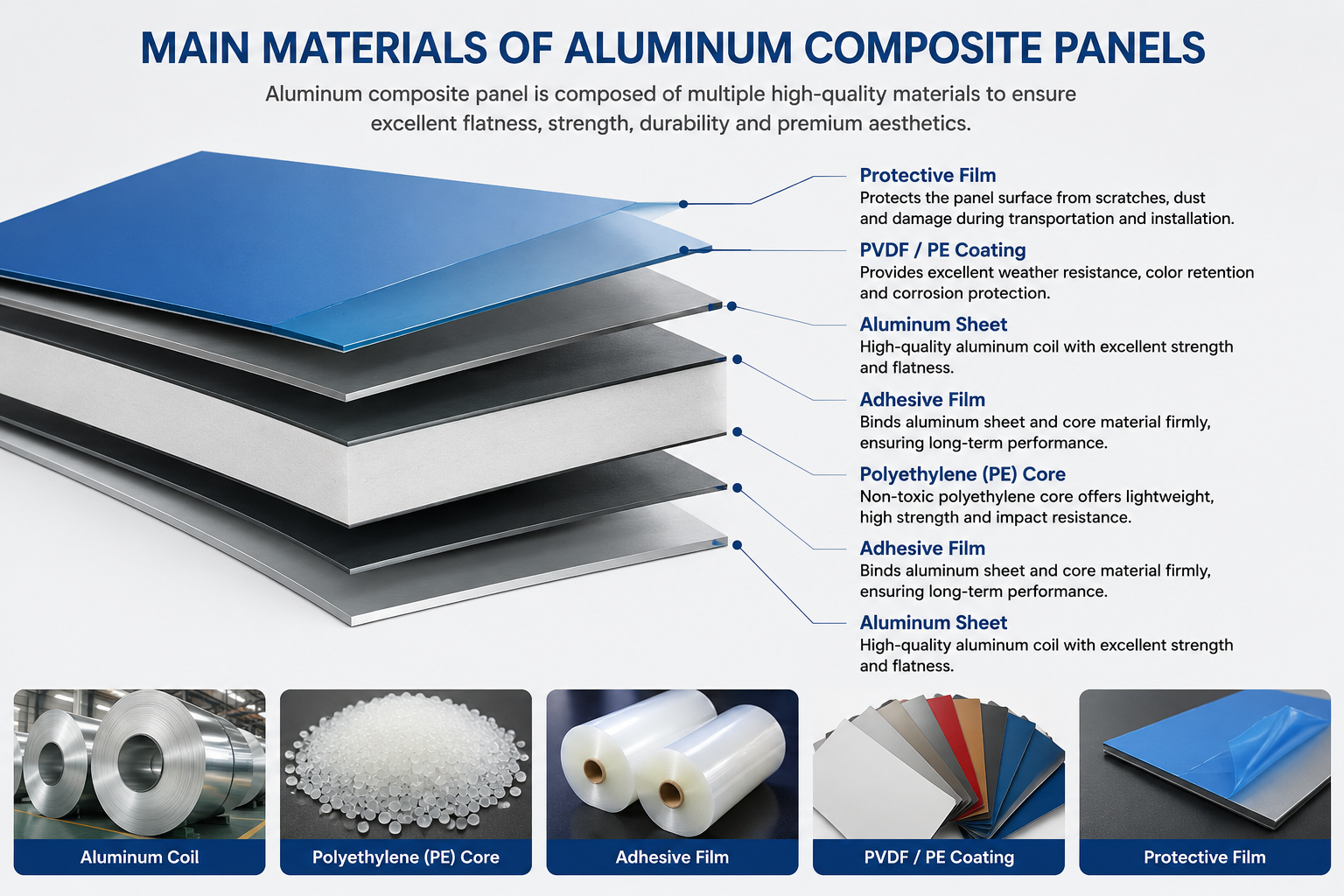
Every panel in this range is a sandwich: two aluminum skins bonded to a core with high-performance adhesive films, finished with a PVDF or polyester coating, and protected by a removable film during transport and installation. The specification variables act on different parts of that build.
- Panel thickness — 3mm, 4mm and 5mm are the focus here; 6mm and 8mm complete the published range. It sets the depth of the sandwich and therefore how far apart the two skins sit.
- Aluminum skin thickness — 0.05mm to 0.50mm. This is the metal that carries bending stress, resists impact and denting, and provides material for fixings and edge returns.
- Alloy grade — AA1100, AA3003 and AA5005 are listed as standard options, with other grades available on demand. Alloy choice affects the strength, formability and corrosion behavior of the skin.
- Core material — polyethylene (PE) or fireproof mineral core. The core keeps the skins apart, carries shear, and determines which fire performance route is open to the project.
Surface category sits alongside these four. The range covers PVDF coated, mirror, wood grain, marble grain, brushed, nano self-cleaning and fireproof aluminum composite panels, in widths of 1220mm, 1250mm and 1500mm, with custom colors and OEM production. Finish choice changes appearance and weathering behavior; it does not change the structural logic of the sandwich.
How Panel Thickness and Aluminum Skin Thickness Interact
In a sandwich panel the two skins act like the flanges of a beam and the core acts like the web. Bending puts one skin in tension and the other in compression, and the core keeps them apart so they can work at a distance from the neutral axis. Two consequences follow directly, and they explain most specification disagreements.
Separating the skins matters more than adding metal. At a constant skin thickness, moving from 3mm to 5mm increases the distance between the skins and therefore the panel's bending stiffness, while adding relatively little weight. This is why a thicker panel can feel substantially stiffer even when the metal content is unchanged.
Adding skin thickness matters for everything the core cannot do. Heavier skins increase resistance to impact and denting, provide more material for screw and rivet engagement and edge folding, and reduce the risk of local skin deformation under fixing loads. They also add weight and cost, and they reduce the core depth available inside the same nominal panel thickness.
The arithmetic is simple and worth doing before quotations are compared. Core thickness equals panel thickness minus twice the skin thickness. At the extremes of the published range the differences are large.
| Panel thickness | Core at 0.05mm skin | Core at 0.21mm skin | Core at 0.30mm skin | Core at 0.50mm skin |
|---|---|---|---|---|
| 3mm | 2.90mm | 2.58mm | 2.40mm | 2.00mm |
| 4mm | 3.90mm | 3.58mm | 3.40mm | 3.00mm |
| 5mm | 4.90mm | 4.58mm | 4.40mm | 4.00mm |
Calculated from the published parameter ranges: core thickness = panel thickness − (2 × skin thickness). Illustrative arithmetic, not a specification of any stocked item.
Two panels described as 4mm can therefore differ by 0.90mm of core depth, nearly a quarter of the total thickness. That is why an RFQ stating only "4mm ACP" leaves the most consequential variable open. State a minimum skin thickness rather than a nominal one, and require it to appear on the order confirmation.
The explanation above is a design principle, not a structural calculation. Whether a given panel and support system carry a specific wind load depends on framing, fixing spacing, building height and local code, and it should be confirmed by the responsible engineer using the supplier's test and design data.
3mm, 4mm and 5mm Panels: What Each Thickness Changes
All three thicknesses share the same broad application list: interior decoration, engineering project decoration, signage and advertising billboards, building curtain walls and exterior wall decoration, commercial and retail storefronts, and furniture manufacturing. What differs in the published product data is the industry each thickness is declared for, which is a useful starting point rather than a restriction.
| Panel | Industry declared in product data | Where the decision is usually hardest | Verify before ordering |
|---|---|---|---|
| 3mm | Building curtain wall and exterior wall decoration; PVDF coated category | Balancing wind load and flatness against panel depth and fixing capacity | Skin thickness, fire classification, coating system, support spacing |
| 4mm | Interior decoration | Flatness under raking light on ceilings and wall linings | Minimum skin thickness, framing spacing, indoor fire requirement |
| 5mm | Furniture factory; also described for storefronts, signage and external curtain wall systems | Weight, cutting and edge finishing, dent resistance on visible faces | Core type, skin adhesion after cutting, hardware and handling loads |
Read that mapping as a default, not a rule. A 5mm panel can be specified for a facade and a 3mm panel can be used in a shop fit-out, but each move away from the declared industry should be justified by structural, fire and fixing requirements and confirmed in writing by the supplier.
Rigidity has a practical limit in the other direction as well. Very thin panels over wide spans require closer framing to control deflection and visual flatness; very thick panels add weight to the substrate and the fixing system. The right answer is the thickness that satisfies the requirement with the support structure the project can actually build.
Aluminum Alloy Grades: AA1100, AA3003 and AA5005
The alloy determines what the skin does before any coating is applied. The three grades in the published range sit at different points on the strength-formability spectrum, and the differences are metallurgical rather than promotional.
| Grade | General character | Where it is usually considered | Verify before ordering |
|---|---|---|---|
| AA1100 | Commercially pure aluminum; highest formability of the three, lowest alloy content | Folded, bent or shaped panels; applications with modest structural demand on the skin | Temper designation and skin thickness |
| AA3003 | Aluminum-manganese alloy; higher strength than AA1100 with good formability retained | General-purpose specification needing more robustness without a magnesium alloy | Temper designation, mill certificate, pretreatment for coating |
| AA5005 | Aluminum-magnesium alloy; higher strength and good corrosion resistance | Demanding exposure such as coastal or high-humidity sites; skins contributing more strength | Temper designation, corrosion evidence, fixing compatibility |
These are general metallurgical characterizations. The published product data lists the three grades as available and does not state temper designations or mechanical property values, so both must be requested for the actual order. Two panels can carry the same alloy name and still differ in temper, and temper affects strength and formability as much as the alloy does.
Alloy also interacts with the coating system. Coating adhesion depends on substrate pretreatment and the coating process, not on the alloy name alone, so a supplier quoting "AA3003 with PVDF" should be able to describe both the pretreatment line and the coating build. Where the surface is a special finish such as mirror, brushed, wood grain or marble grain, the alloy and pretreatment still sit underneath and the same questions apply.
Other grades are available on demand. That is an engineering option rather than a procurement convenience: specify an alternative grade with a stated reason, and require the mill certificate to match the grade and temper on the order.
PE Core vs Fireproof Core: The Compliance Variable
Core selection is separate from thickness and alloy selection, and it defines the fire route for the project. The published materials describe both a low-density polyethylene core and a fire-resistant mineral core, with the panel build comprising aluminum coils, the core, adhesive films and a PVDF or polyester coating.
PE is the simpler construction. A fireproof mineral core is the option where the specification requires a declared fire classification rather than a material description. How much performance a mineral core can reach depends on the full build, including skin thickness, core formulation, adhesive and the tested assembly, not on a label alone.
One benchmark from third-party technical literature shows the range that mineral-core panels can reach. Technical information published by Mitsubishi Chemical for its ALPOLIC/fr mineral-core panels states that fire-resistant ACPs with mineral cores can achieve Euroclass A2-s1, d0 under EN 13501-1. That is an example of what a mineral-core construction can achieve; it is not a certification of any Jiersun product, and the published Jiersun product data used for this guide does not state a Euroclass rating. The practical step is the same either way: request the classification report for the exact product and configuration being purchased, and check which test standard and which assembly it covers.
For projects in the United States, facade assemblies are commonly assessed against NFPA 285. No such report is included in the data behind this guide, so treat it as a document to request rather than an assumption. The same logic applies in any market: the requirement comes from the local code and the project specification, and the evidence comes from a test report that names the product.
Matching Thickness, Alloy and Core to the Application
The application decides which of the four variables carries the most weight. The six industries below are the ones the published product data assigns to these panels.
Building curtain walls and exterior wall decoration
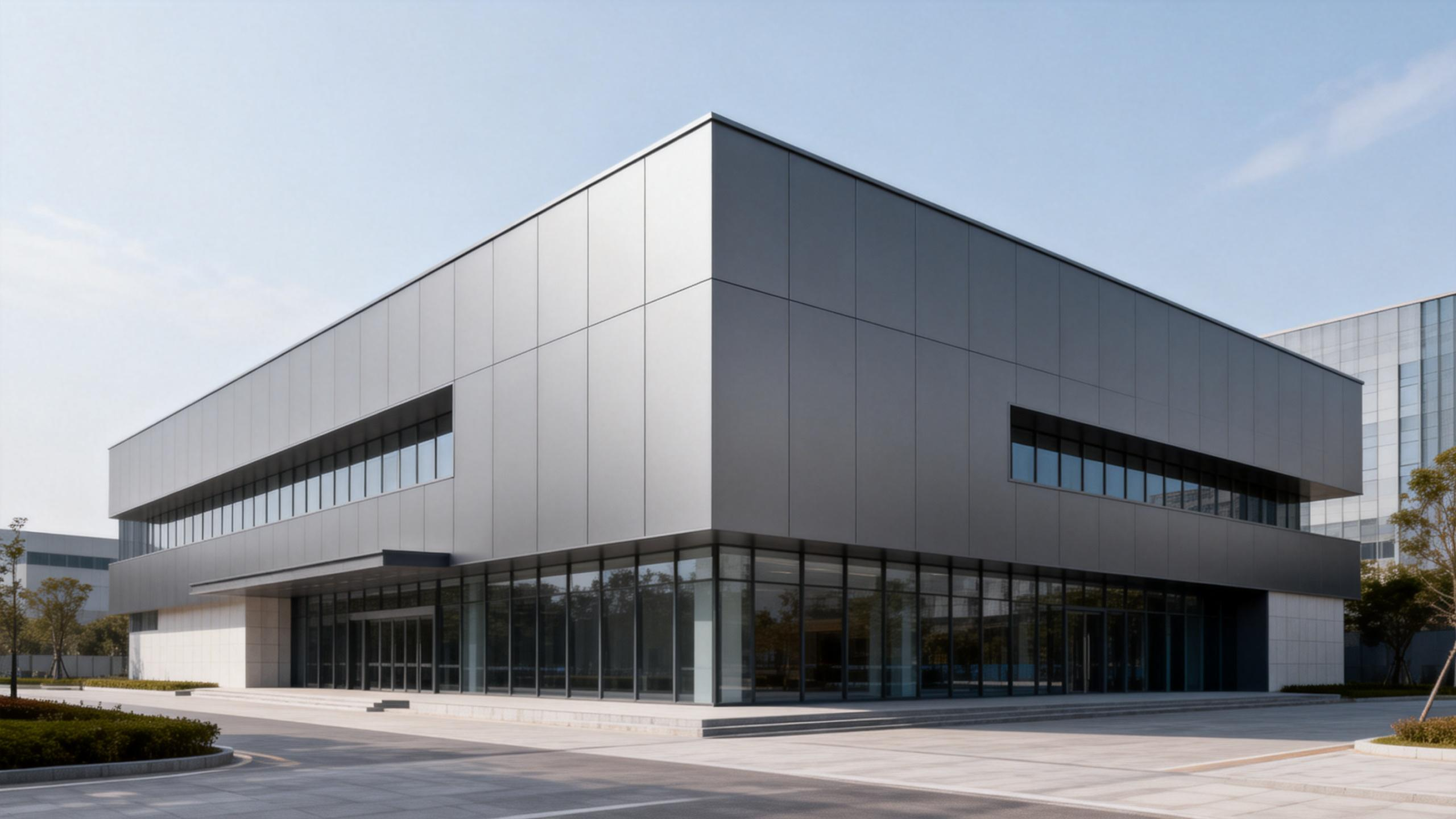
Exterior work places wind load, water, UV and fire performance on the same specification. The 3mm panel is declared for this industry in the PVDF coated category, which makes it a starting point for review rather than the final answer: wind load and flatness requirements may move the specification to 4mm or 5mm, and skin thickness must be adequate for the fixing details of the panel system. Confirm the fire classification for the assembly, the coating system, and the warranty terms attached to exterior exposure before comparing price.
Commercial and retail storefronts
Storefront panels combine a visible decorative face with a substrate that is often installed and inspected quickly. The 5mm panel in this range is described in the application data as used in commercial and retail storefronts, with decorative finishes and high construction efficiency among its functions. Because the face is close to the public, dent resistance and fixing quality matter more than they do on an interior wall, which is where skin thickness earns its cost.
Interior decoration
The 4mm panel is declared for interior decoration. Interior use usually relaxes the weather requirement but not the flatness requirement: ceilings and wall linings show deflection and waviness clearly under raking light. Check framing spacing and flatness expectations together, and confirm whether the project requires a fire classification even indoors, since corridors, lobbies and escape routes often do.
Signage and advertising billboards
Signage is where coating choice becomes as important as thickness. The published application data covers billboard and signage use under outdoor exposure with weather and UV resistance requirements, and includes nano self-cleaning coatings among the surface options. A large sign face is a flat plate in wind, so the skin thickness and fixing pattern deserve more attention than the nominal panel thickness, and the coating system should be named rather than described as "standard".
Engineering project decoration
Project work is driven by submittals: samples, color approvals, test reports and order-specific skin thickness. This is the application type where an incomplete thickness specification causes the most rework, because the approved sample and the delivered panel must match on face finish, color and metal content, not only on the 4mm headline.
Furniture manufacturing
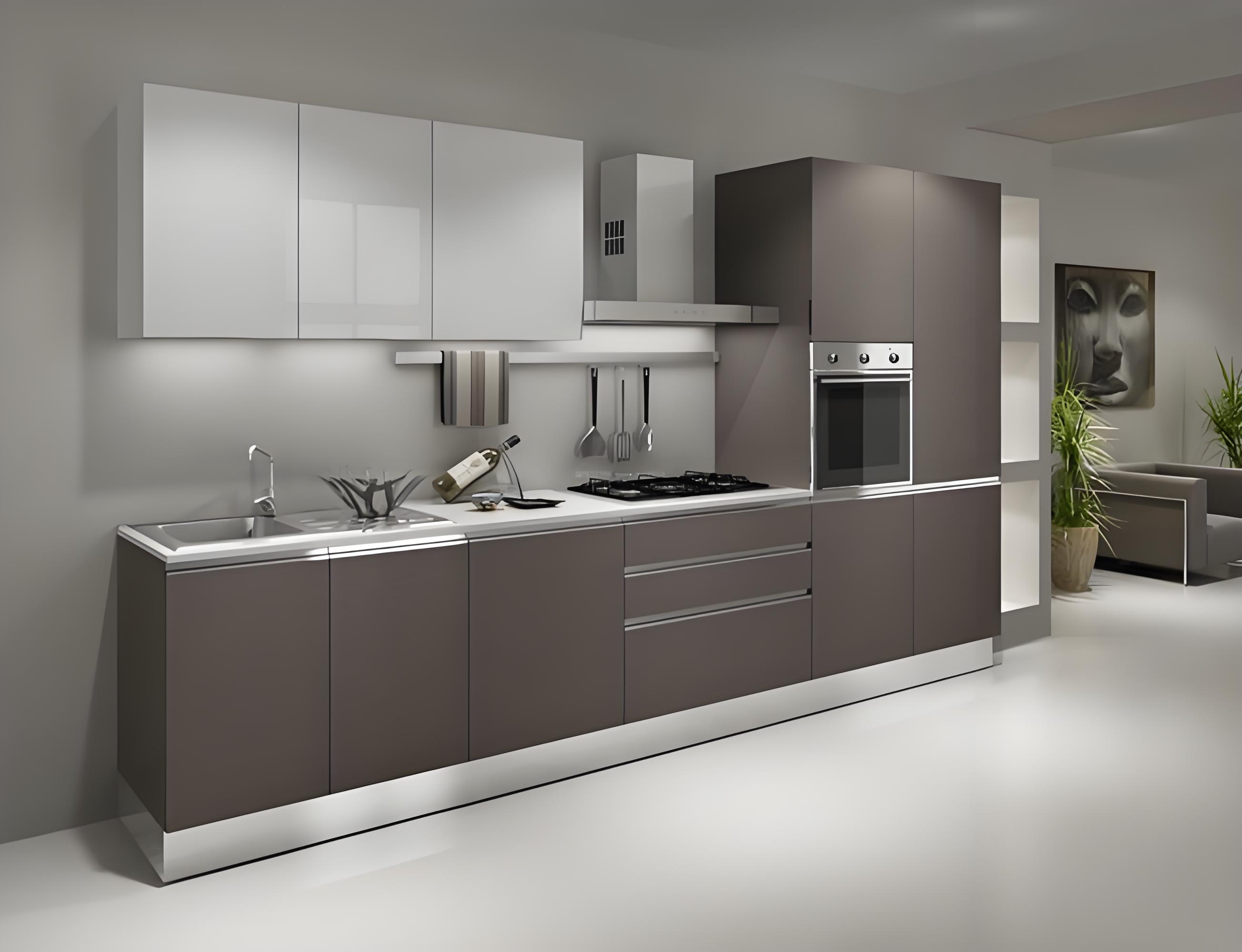
The 5mm panel is declared for furniture factory use, where panels are cut, edged and handled repeatedly. Cutting and edge finishing expose the core, so core type and skin adhesion matter as much as thickness. Where the furniture specification requires a declared fire classification, the fireproof core option should be priced in; where it does not, core choice is primarily a weight and handling decision. The published range of 3mm to 8mm gives the furniture engineer room to match panel to component.
What the Published Market Data Suggests, and What It Cannot Confirm
Market estimates are useful context for capacity planning and should never be used as performance evidence for a specific panel. Two 2026 commercial research publications put the global aluminum composite panel market at different values using different methodologies: Market Research Future reports USD 9.17 billion in 2025, rising to USD 17.39 billion by 2035 at a 6.6% compound annual growth rate, while Fortune Business Insights reports USD 7.00 billion in 2025 and USD 14.35 billion by 2034 at 8.31%. The two figures are not methodologically comparable and should not be combined or averaged.
The same Market Research Future dataset attributes 54.8% of 2025 revenue to Asia-Pacific and 36.5% of revenue to PVDF coated panels, which is consistent with the region's role as both a production base and a demand center. For a specifier the practical reading is limited but real: PVDF coated product is the mainstream exterior-facing category, so coating language in a specification should be precise, and supply timing is sensitive to where coating and core materials originate. Neither figure says anything about the thickness or alloy a given project should use.
Tariff documentation has its own vocabulary. The classification 76061230 covers plates, sheets and strip of aluminum alloys with a thickness exceeding 0.2mm and is identified in the reference data for aluminum composite panels. Importers should confirm the applicable code and duty treatment with a customs broker in the destination market rather than relying on a supplier's description.
A Step-by-Step Selection Framework
The sequence below keeps the four variables in the right order: requirement first, product second, verification last.
- Write the performance requirement before the product name. Record the application, exposure (interior, exterior, coastal), span and fixing spacing, the fire classification required by code and project, expected service life, and any color or finish approval process. These inputs govern every later choice.
- Set panel thickness against the framing system. Choose 3mm, 4mm or 5mm based on the support spacing the project can build and the flatness the design needs, using the declared industry as a default and justifying any departure from it.
- State a minimum aluminum skin thickness. Convert the structural and handling requirement into a minimum value inside the 0.05mm–0.50mm range, and write it into the RFQ as a minimum rather than a nominal figure.
- Select the alloy with a stated reason. Use AA1100 where formability dominates, AA3003 as the general-purpose middle grade, and AA5005 where the skin must contribute more strength and corrosion resistance. Require the mill certificate to name both alloy and temper.
- Set the core and the fire evidence. Choose PE or fireproof mineral core against the code requirement, then name the standard and the report you expect with the order. A material description is not a classification.
- Specify the coating system and the finish. State PVDF or polyester explicitly, name the finish category (mirror, brushed, wood grain, marble grain, nano self-cleaning), and ask what test evidence supports the weathering claim for that finish.
- Verify with documents and a physical sample. Compare the delivered sample against the approved one for color, gloss, flatness and edge condition, then check the mill certificate, fire report reference and order confirmation before production begins.
Specification Mistakes That Reach the Site
Most thickness disputes are avoidable at the RFQ stage. The recurring ones are worth listing plainly.
- Quoting a thickness and nothing else. "4mm ACP" with no skin thickness lets two suppliers price different products against the same line item.
- Assuming total thickness equals strength. A thinner panel with heavier skins can outperform a thicker panel with light skins in impact and fixing performance, and the reverse can hold for bending stiffness.
- Accepting an alloy name without a certificate. The grade on the quotation and the grade on the mill certificate should match, temper included.
- Treating "fireproof" as a classification. A product description is not a test report, and a report for one build does not automatically extend to a different skin thickness or core formulation.
- Ignoring the support system. Panel performance depends on framing, fixing spacing and installation quality; a specification that stops at the panel leaves the assembly undefined.
- Comparing prices across different specifications. The lowest price per square meter only means something once panel thickness, skin thickness, alloy, core and coating are identical.
Verifying a Panel Specification Before You Order
Verification is a document exercise plus a physical check, and both should happen before production. A complete pack contains four items: the order confirmation stating panel thickness, minimum skin thickness, alloy and temper, and core type; the mill certificate for the aluminum coil; the fire classification report for the exact product and configuration where a classification is required; and an approved sample that matches the delivered finish.
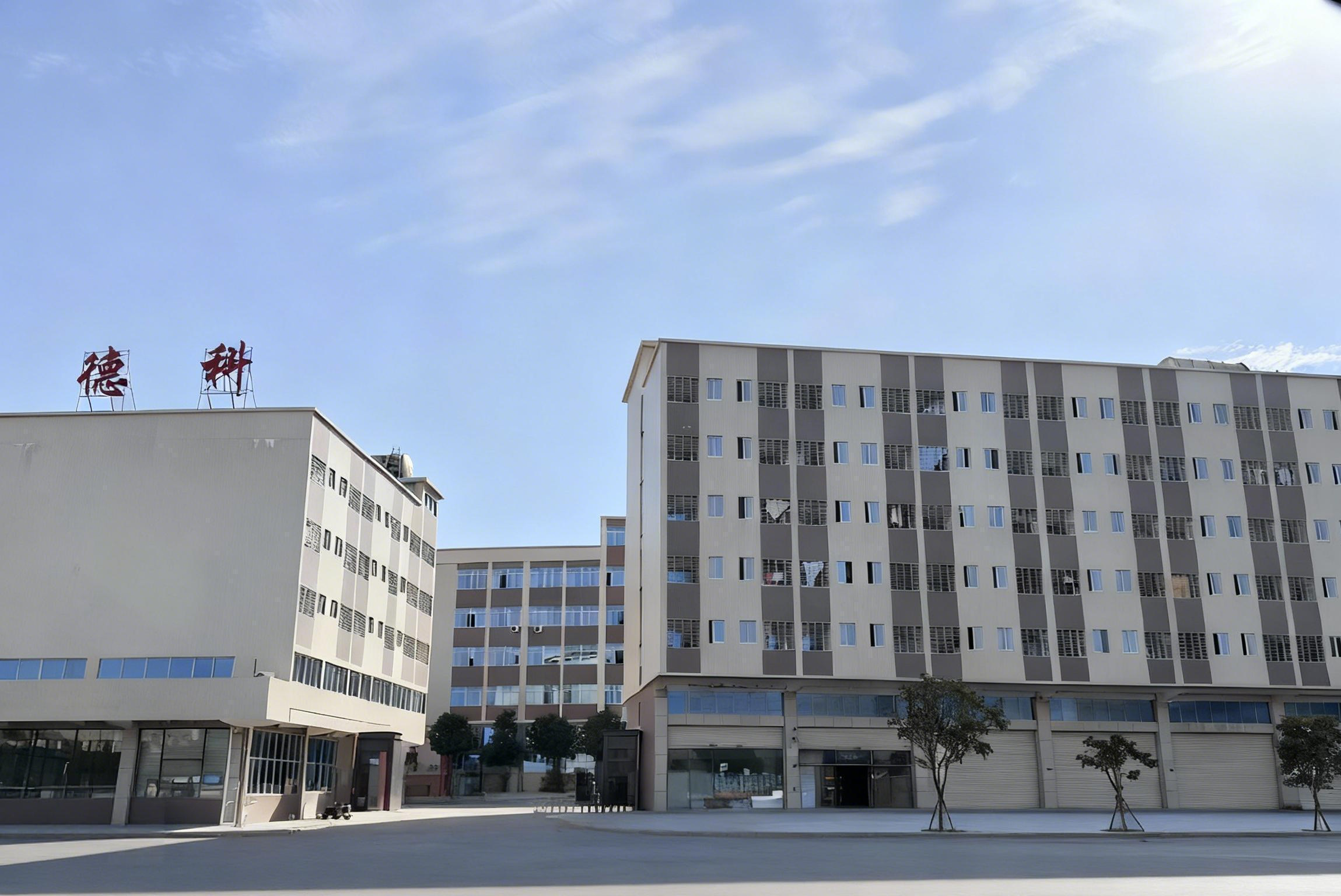
Jiersun (Fujian) Decorative Building Materials Co., Ltd. manufactures aluminum composite panels at a 20,000 m² facility with an annual production capacity of 4,000,000 m², supported by approximately 40 staff, more than 80% of whom have over 10 years of industry experience, and a 10-engineer R&D team. The factory is located 70 km from the port, and export business accounts for 30% of total sales, with Southeast Asia, Africa and the Middle East as the main markets. Panels are supplied in 3mm, 4mm, 5mm, 6mm and 8mm thicknesses, in widths of 1220mm, 1250mm and 1500mm, with aluminum thickness from 0.05mm to 0.50mm, AA1100, AA3003 and AA5005 alloy options, PE or fireproof cores, custom colors and OEM production under the customer's own brand.
For a specification review, the useful next step is a physical sample in the exact thickness, skin thickness, alloy, core and finish under consideration, together with the corresponding documentation. Samples and current specifications can be requested from sales3@jiersun.com or +86 17750700228, and the full range is described in the JIERSUN ACP catalog (2026).
Frequently Asked Questions
Does a fireproof core change the panel thickness or alloy I need?
Not directly. Core type is a separate variable from panel thickness and alloy grade. A fireproof mineral core is selected because the project requires a declared fire classification, while thickness is driven by span, framing and flatness and the alloy is driven by strength, formability and corrosion demand. What the core does change is the evidence you need: a classification report naming the exact product, skin thickness and core build. As a third-party benchmark, Mitsubishi Chemical's published information for its ALPOLIC/fr mineral-core panels states that fire-resistant ACPs with mineral cores can achieve Euroclass A2-s1, d0 under EN 13501-1. That is an example of what a mineral-core build can reach, not a statement about any specific Jiersun product, whose published data does not state a Euroclass rating.
Is a 5mm aluminum composite panel always stronger than a 3mm panel?
No. Strength depends on skin thickness and alloy as much as on total thickness. A 3mm panel with 0.50mm skins contains 2.00mm of core, while a 5mm panel with 0.05mm skins contains 4.90mm of core, so the two are built very differently despite the headline difference. The thicker panel generally resists bending better because the skins sit further apart, while the panel with heavier skins generally resists impact, denting and fixing loads better. Specify both values and compare them together.
What is the practical difference between AA1100, AA3003 and AA5005 in an ACP?
AA1100 is a commercially pure, highly formable grade and the usual choice where panels are bent or folded and structural demand on the skin is modest. AA3003 is an aluminum-manganese alloy with higher strength and good formability, the general-purpose middle grade. AA5005 is an aluminum-magnesium alloy with higher strength and good corrosion resistance, usually considered for demanding exposure such as coastal or high-humidity sites. The published product data does not state temper or mechanical property values for these grades, so request the mill certificate naming alloy and temper for the actual order.
Which thickness should I use for exterior walls, signage and furniture?
In the published product data, the 3mm panel is declared for building curtain wall and exterior wall decoration in the PVDF coated category, the 4mm panel for interior decoration, and the 5mm panel for furniture manufacturing, with the same product family also described for commercial storefronts, advertising and signage, and external curtain wall systems. Treat these as defaults. Any departure should be justified by wind load, flatness, fixing capacity, fire classification and handling requirements, and confirmed with the supplier in writing.
Aluminum Composite Panel suppliers: which specification details should a buyer verify first?
Verify four values as a set: panel thickness, minimum aluminum skin thickness within the 0.05mm–0.50mm range, alloy grade with temper, and core type with the corresponding fire classification report. Then confirm width, coating system and finish category, and check that the mill certificate matches the order. A supplier quoting a thickness without the other three values has not quoted a comparable product, whatever the price per square meter says.
Can thickness, alloy, color and surface finish be customized, and how should a sample be validated?
Yes. The published range covers panel thicknesses of 3mm, 4mm, 5mm, 6mm and 8mm, widths of 1220mm, 1250mm and 1500mm, aluminum thickness from 0.05mm to 0.50mm, AA1100, AA3003 and AA5005 alloys with other grades on demand, PE or fireproof cores, custom colors, and OEM production under the buyer's brand. Validate a sample by checking color and gloss against the approved reference, measuring skin thickness and panel thickness, confirming alloy and temper on the mill certificate, inspecting edges and core condition after cutting, and, where a classification is required, matching the sample to the product named in the fire report. A sample request with these parameters can be sent to sales3@jiersun.com.
Conclusion
Choosing between 3mm, 4mm and 5mm aluminum composite panels is not a ranking exercise. It is a matching exercise between four variables and one application: panel thickness for the depth of the sandwich, skin thickness within the 0.05mm–0.50mm range for the metal that carries load and holds fixings, alloy grade for strength, formability and corrosion behavior, and core type for the fire route the project must satisfy. Two panels with the same nominal thickness but different values behind that number are different products, and comparing them on price alone is comparing nothing.
The practical conclusion for specifiers is to write the requirement first, state minimum skin thickness rather than a nominal value, name the alloy and temper, tie the core to a test report for the exact build, and verify everything against a physical sample before the order is confirmed. That sequence protects the project from the most common and most avoidable ACP specification failure: a panel that measures 4mm and still does not meet the requirement.
Have Questions or Need More Details?
Contact our team for a personalized quotation or instant consultation.
Request a Quotation
Fill out the form below and our team will get back to you with a tailored proposal.
WhatsApp Direct Chat
Prefer to chat in real-time? Message us on WhatsApp for instant assistance & quick answers.
- Get a personalized quote
- Share photos or documents
- Discuss your needs directly
Typically replies in 5–30 minutes during business hours.