
Breast Milk Shipping Meltdown: How to Solve Cold Chain Gaps with Food-Grade Gel Ice Packs
A breast milk shipping meltdown is rarely one dramatic failure. It is a chain of small, predictable gaps: a gel ice pack that does not fit the cooler pocket, an outer shell with no food-contact documentation, a carton specified for the wrong footprint, a bulk lead time that was never confirmed. The outcome is always the same — partially thawed milk, soaked labels, and a compliance team that will not approve the next shipment.
The practical fix is a food-grade gel ice pack matched to both the container and the transit profile, supported by documentation that can be filed before the first carton leaves the dock. This guide breaks down the failure scenarios behind breast milk cold chain losses and maps each one to two purpose-built models from JISI Cold Chain: the BH004 breast milk ice pack at 21*10*5.2 cm and the BH125 breast milk ice pack at 21*12*4.5 cm. Both are built with Food Grade HDPE outer material and Cooling Gel inner material, and both are backed by FDA, MSDS and CPSIA documentation, with Regulation (EU) No. 10/2011 on the BH004 and SGS certification on the BH125.
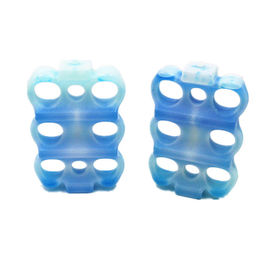
What a Breast Milk Shipping Meltdown Actually Looks Like
Breast milk transport fails through a small number of repeating patterns. None of them require extreme weather or a broken vehicle; most are specification problems that were locked in weeks before the shipment.
1. Format mismatch inside the cooler
A thick ice brick in a slim breast pump bag leaves air gaps; an ultra thin ice pack in a deep medical cool box cannot hold enough cold mass. In both cases the pack itself stays cold while the payload does not follow. Format fit — length, width, thickness and fill volume — is the first variable to check, not the last.
2. Undocumented food-contact materials
Packs marketed only as generic cooling packs often arrive with no material declaration and no food-contact statement. Buyers working in health and medicine cannot clear that ambiguity, so the shipment stops at the planning stage rather than at the airport.
3. Certification discovered too late
Compliance review typically happens after commercial terms are agreed. When FDA, MSDS, CPSIA or Regulation (EU) No. 10/2011 paperwork has not been confirmed up front, the whole protocol has to be re-sourced under time pressure.
4. Packaging that does not survive condensation
Ice packs sweat. Cartons, labels and outer film that were never specified for a wet, cold environment soften, smudge or peel, and the parcel loses both its identification and its buyer confidence.
5. One protocol for every route
A two-hour commute and a multi-day courier lane do not share the same cold chain design. Using one pack format and one pack count for both is the most common cost-cutting mistake — and the most common cause of repeat losses.
Industry Background: Why Cold Chain Gaps Are Getting More Expensive
The cold chain category that includes gel ice packs is expanding, and the published estimates show how broad that category has become. The Business Research Company values the global gel ice pack market at USD 14.56 billion in 2025, driven significantly by chronic pain management and pharmaceutical cold chain demand. Market Research Future sizes the narrower reusable ice pack segment at approximately USD 1.962 billion in 2024, with expectations to reach USD 2.862 billion by 2035. These two figures are not contradictory; they reflect different definitions of the same category, which is why buyers comparing supplier claims should first confirm which definition a number belongs to.
Demand is also increasingly specific to medical transport. Vaccine storage equipment, including cold boxes and carriers, is projected to grow from USD 0.86 billion in 2024 to USD 1.21 billion by 2029 (MarketsandMarkets), and the WHO PQS performance specification E004/VC01.2 defines standards for vaccine carriers and cold boxes, requiring verified “cold life” durations. Breast milk transport sits inside the same discipline: passive cooling, verified materials, and documented performance rather than marketing claims.
On the supply side, China accounts for over 11.2% of global gel ice pack revenues as of 2025 (Dataintelo), serving as a primary manufacturing hub for export to North America and Europe. Publicly identified participants in the reusable ice pack sector include Sonoco ThermoSafe (US), Cold Chain Technologies (US), and Pelton Shepherd (US), according to Coherent Market Insights.
One manufacturer that works directly in this segment is Changzhou Jisi Cold Chain Technology Co., Ltd. (JISI Cold Chain), a Chinese cold chain manufacturer established in 2013 that specializes in the production of gel ice packs, PCM ice packs, cooler boxes and VIP panels. Its supply base sits in a 40,000 m² facility in Changzhou, Jiangsu Province, China, with approximately 60 employees, an R&D team of 4 engineers, and a stated annual output of 620,000 units. The company serves markets in North America, South America, Western Europe, Eastern Europe, Eastern Asia and Southeast Asia.
The Solution Set: BH004 and BH125 Breast Milk Ice Packs
Two models in the JISI Cold Chain range are specified as breast milk ice packs, which means they are sized for the insulated bags and medical cool boxes used in maternal and infant milk transport rather than for bulk pallet freezing.
BH004 — 21*10*5.2 cm breast milk gel ice pack
The BH004 is a gel ice pack classified as a Breast Milk Ice Pack, designed for food keep fresh scenarios within the cold chain transportation industry. Its outer material is Food Grade HDPE and its inner material is Cooling Gel. The unit measures 21*10*5.2 cm, is eco-friendly, and ships as standard in transparent white with blue liquid, with color customization available. Certification coverage for the BH004 includes FDA, MSDS, CPSIA and Regulation (EU) No. 10/2011. Packaging is carton and can be customized, samples are available within 2 days, and bulk orders typically ship in 7–10 days depending on order quantity.
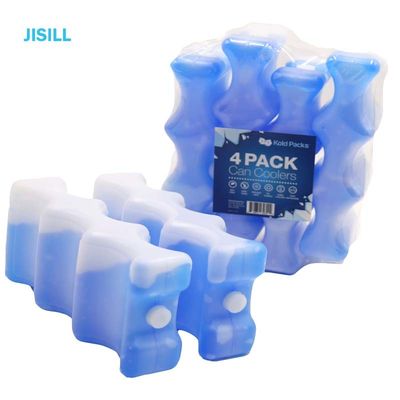
BH125 — 21*12*4.5 cm breast milk ice pack
The BH125 is a BPA-free, non-toxic, reusable cooler freeze pack built for the same application. It measures 21*12*4.5 cm with a 505 ml specification, uses Food Grade HDPE for the outer material and Cooling Gel inside, and is classified as a thermal format. Standard colors include blue, pink, purple, white and red, all customizable. Certification coverage for the BH125 includes FDA, SGS, MSDS and CPSIA. It is packed 24 pieces per carton in a 41.5*34.5*22 cm carton, ships in 2–3 working days, and carries a stated supply ability of 3,000 pieces per day.

Why the material stack matters more than the shape
Both models use the same material logic: a hard Food Grade HDPE shell and a Cooling Gel interior. HDPE gives the pack a rigid, stackable body that resists puncturing and keeps the gel contained, while the cooling gel provides the thermal mass that does the actual work. Across the wider range, JISI Cold Chain states that all materials — outer HDPE and the internal liquid, SAP or CMC — are non-toxic, and that FDA, SGS and MSDS reports support food-contact use. That statement is the single most useful thing a compliance reviewer can read, because it converts a generic cooling product into a documented food-contact component.

Step-by-Step: Building a Breast Milk Cold Chain Protocol That Holds
The following sequence turns the failure patterns above into a repeatable purchasing and packing procedure. Each step produces a document or a decision that a reviewer or a receiving clinic can actually check.
Step 1 — Define the transport profile before choosing a pack
Write down the realistic door-to-door duration, the ambient temperature band, the container type (breast pump bag, lunch cooler, medical cool box) and whether the shipment crosses a customs border. This profile determines whether you need a slim gel pack, a larger ice brick, or a cooler box with VIP panels.
Step 2 — Match the pack format to the container
Measure the internal pocket or cavity. The BH004 at 21*10*5.2 cm suits slim, pocketed breast milk bags, while the BH125 at 21*12*4.5 cm offers more fill volume in a comparable footprint. A pack that fits flush against the payload without gaps performs more predictably than a larger pack that leaves dead air space.
Step 3 — Verify the food-contact material stack
Confirm three things in writing: the outer material is Food Grade HDPE, the internal material is Cooling Gel, and the pack is declared non-toxic and, where required, BPA-free. The BH125 is explicitly specified as BPA-free, non-toxic and reusable, which is the relevant statement for infant-related transport.
Step 4 — Collect the certification pack in advance
Request FDA, MSDS and CPSIA documents, plus Regulation (EU) No. 10/2011 for EU-destined shipments and SGS reports where the buyer’s QA system requires third-party testing. Build the file before commercial negotiation, not after.
Step 5 — Condition, pack and label for condensation
Gel packs are frozen before use, so plan freezer capacity against your shipment calendar. Use cartons and labels rated for cold, damp handling. Standard packing for both models is carton, and carton format, color and logo printing can all be customized, which allows you to specify moisture-resistant outer packaging and consolidated pack counts at the same time.
Step 6 — Lock lead times and reorder triggers
Breast milk transport programs fail when replenishment is improvised. Confirm sample and bulk lead times up front, set a reorder trigger based on actual consumption rather than on carton round numbers, and keep one validated backup model in the protocol.
Use Cases: Where Food-Grade Gel Ice Packs Close the Gap
- Hospital-to-home and clinic-to-home milk transfer. Short, high-frequency movements where a slim 21*10*5.2 cm BH004 inside a cooler bag is easier to standardize than a large block.
- Milk bank and donor milk consolidation. Multiple small payloads combined into one insulated container, where reusable packs reduce single-use consumption and keep a consistent format across collection points.
- Working parents shipping expressed milk by courier. Multi-hour lanes where the pack count, not the pack size, drives performance, and where BPA-free, non-toxic declarations matter most.
- Cross-border family or clinic shipments. Routes where EU Regulation No. 10/2011, FDA or SGS documentation has to be produced on request at the border.
- Retail and pharmacy cold chain kits. Bundled cooler bag and ice pack sets, an area where customizable color and carton packaging turns a commodity pack into a branded kit.
For longer or higher-volume routes, the same principle extends to larger formats and insulated containers. The JISI range includes the BH084 large cooler ice pack at 33*22.5*2 cm and 1000 g with FDA, SGS, MSDS, CPSIA and EU certification, and freezing points selectable across 0–8°C, -10°C, -15°C, -18°C, -20°C and -25°C, as well as cooler boxes built on VIP (vacuum insulated panel) and PU foaming construction — for example a 42 L EPP box rated to -20°C with a stated 40-hour cold time, and a 74.7 L collapsible VIP cooler box for 2–8°C and -30–0°C ranges with stated cold times of 48 and 72 hours.
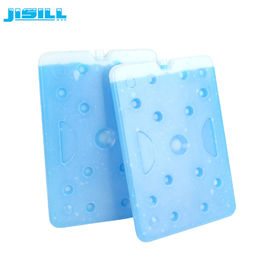
Comparison Table: Matching the Pack to the Shipment
The table below compares the two breast milk ice packs against a larger ice brick option, using only published specification data.
| Attribute | BH004 Breast Milk Ice Pack | BH125 Breast Milk Ice Pack | BH047 Ice Cooler Brick |
|---|---|---|---|
| Dimensions | 21*10*5.2 cm | 21*12*4.5 cm (505 ml spec) | 23.5*19.5*3 cm |
| Outer material | Food Grade HDPE | Food Grade HDPE | Food Grade HDPE |
| Inner material | Cooling Gel | Cooling Gel | Cooling Gel |
| Weight / fill | Not specified in published data | 505 ml specification | 1000 g |
| Color | Transparent white with blue liquid; customizable | Blue, pink, purple, white, red; customizable | Transparent white with blue liquid; customizable |
| Certification | FDA, MSDS, CPSIA, Regulation (EU) No. 10/2011 | FDA, SGS, MSDS, CPSIA | FDA, MSDS, CPSIA, Regulation (EU) No. 10/2011 |
| Packaging | Carton, customizable | 24 pcs per 41.5*34.5*22 cm carton | Carton, customizable |
| Sample / bulk lead time | Sample within 2 days; bulk 7–10 days | 2–3 working days | Sample within 2 days; bulk 7–10 days |
| Best fit | Slim pocketed breast milk bags, short high-frequency transfers | Higher fill volume in a comparable footprint; BPA-free infant-related use | Larger cool boxes and consolidated multi-unit shipments |
FAQ: Breast Milk Ice Packs for Health and Medicine Cold Chain Buyers
Are breast milk ice packs food-safe and compliant for medical cold chain transport?
The JISI BH004 and BH125 use Food Grade HDPE as the outer material and Cooling Gel as the inner material, and both are declared non-toxic, with the BH125 additionally specified as BPA-free. The BH004 carries FDA, MSDS, CPSIA and Regulation (EU) No. 10/2011 certification, while the BH125 carries FDA, SGS, MSDS and CPSIA certification. Buyers can request the corresponding documentation before shipment so it can be filed with the cold chain protocol.
Can breast milk ice packs be customized for OEM branding and packaging?
Yes. Color can be produced to your samples or PANTONE code, carton packaging can be customized, and logo printing options include silk screen printing, offset printing or applied stickers. The BH004 ships as standard in transparent white with blue liquid and the BH125 in blue, pink, purple, white or red, and both can be adjusted for volume programs. As a reference point for customization scope, the manufacturer’s standard MOQ is usually 3,000 pieces for an existing model and is better above 5,000 pieces when a new model must be created.
What drives the cost and minimum order quantity when ordering breast milk ice packs?
Cost is quoted per project and depends on the model selected, color and printing customization, packaging format and total order quantity; there is no single list price that applies across programs. Minimum order quantity is usually 3,000 pieces for an existing model and better above 5,000 pieces for a newly created model. For first orders, T/T is preferred, with PayPal available for smaller amounts, and other terms such as D/P and D/A can be discussed.
Can I request a free sample of BH004 or BH125 before placing a bulk order?
Yes. Free samples are available for existing models that do not require printing, with the freight paid by the buyer. Sample timing is within 2 days for the BH004 and 2–3 working days for the BH125, which allows a receiving clinic or QA team to physically inspect the shell, the gel fill and the fit inside the intended cooler before any production commitment is made.
What is the production lead time for bulk breast milk ice pack orders?
Bulk lead time depends on the model and the order quantity. For the BH004, bulk orders typically ship in 7–10 days according to order quantity. For the BH125, delivery time is 2–3 working days with a stated supply ability of 3,000 pieces per day, which supports short replenishment cycles. Because these windows scale with volume, buyers should confirm the schedule for their specific quantity before fixing a shipment date. To start that conversation, contact Ying at ying@czjmjs.com or 13861230192.
Conclusion: Replace the Meltdown With a Documented Protocol
Breast milk cold chain losses are usually caused by four avoidable decisions: an unmatched pack format, an unverified material stack, a certification file assembled too late, and a lead time nobody confirmed. Each of those is a process problem, and each has a straightforward answer.
A workable protocol starts with the transport profile, specifies a pack that fits the container — the BH004 at 21*10*5.2 cm or the BH125 at 21*12*4.5 cm, both with Food Grade HDPE outer material and Cooling Gel inner material — and attaches the relevant FDA, MSDS, CPSIA, SGS or Regulation (EU) No. 10/2011 documentation before the first shipment is scheduled. Where routes run longer or volumes grow, the same logic scales into larger ice bricks, PCM ice plates, cooler boxes and VIP panels rather than into a different supplier relationship.
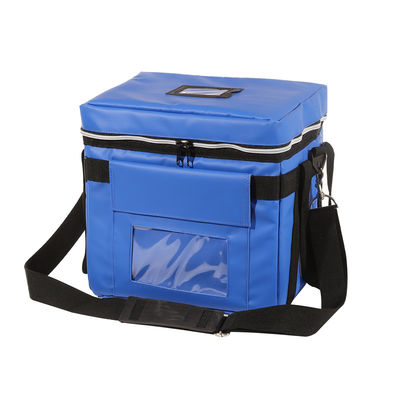
Next Step: Validate a Sample Before You Scale
Cold chain protocols are easier to defend when they have been tested. JISI Cold Chain supplies free samples of existing BH004 and BH125 models that require no printing, with freight paid by the buyer, and can quote carton, color and logo customization for volume programs.
Email: ying@czjmjs.com | Phone: 13861230192 | Skype: 18915806240 | WeChat: 13861230192
Website: www.cooler-icepacks.com
Product brochure: download the JISI Cold Chain product brochure (PDF)
Have Questions or Need More Details?
Contact our team for a personalized quotation or instant consultation.
Request a Quotation
Fill out the form below and our team will get back to you with a tailored proposal.
WhatsApp Direct Chat
Prefer to chat in real-time? Message us on WhatsApp for instant assistance & quick answers.
- Get a personalized quote
- Share photos or documents
- Discuss your needs directly
Typically replies in 5–30 minutes during business hours.