
Gel Ice Packs at Scale: A Decision-Stage Framework for Multi-Year Cold Chain Supply
At the Decision and Execution stage, the procurement question is no longer just 'which gel ice pack should I buy?' It is: which supplier can I build a dependable supply pipeline around for the next several order cycles? This framework is written for B2B buyers in health and medicine cold chain who need to move from pilot orders to repeat, multi-year supply of gel ice packs, PCM ice plates, medical cool boxes, and related cold chain products.
Problem Definition: What Changes After the First Order?
Long-term supply problems usually appear after the first order. A supplier may be able to deliver one container on time, but struggle to hold tolerances across repeated production runs. Lead times drift, custom color matches change, and quality documentation becomes harder to obtain.
For health and medicine applications, the cost of those failures is higher than the price of the pack itself. Gel ice packs that do not maintain temperature, leak, or fail to match a validated protocol can put a shipment of vaccines, reagents, or frozen pharmaceuticals at risk. The selection process must therefore test product systems, manufacturing controls, and commercial terms with the same rigor as unit price.
Industry Background: Why the Market Is Moving Toward Long-Term Supply
Global demand for gel ice packs continues to expand across both consumer and medical segments. The Business Research Company estimates the global gel ice pack market reached USD 14.56 billion in 2025, driven partly by chronic pain management and pharmaceutical cold chain demand. Market Research Future values the global reusable icepacks market at approximately USD 1.962 billion in 2024, with expectations to reach USD 2.862 billion by 2035.
Within the medical segment, vaccine storage equipment, including cold boxes and carriers, is projected to grow from USD 0.86 billion in 2024 to USD 1.21 billion by 2029, according to MarketsandMarkets. Phase change material (PCM) packs, which are used when precise temperature control matters, were valued at USD 476 million in 2025, growing at a CAGR of 4.5%, per Intel Market Research.
On the supply side, China is a primary manufacturing hub. Dataintelo reports that China accounts for more than 11.2% of global gel ice pack revenues as of 2025, with much of that output exported to North America and Europe. For a buyer, this means supplier qualification should focus on verifiable capability rather than market size or origin alone. Reusable thermal products include both warming and cooling formats; this article addresses the cooling side for cold chain execution.
Medical buyers also operate against standards. WHO PQS performance specification E004/VC01.2 defines standards for vaccine carriers and cold boxes, including verified cold life durations. A long-term supplier should be willing to map its coolers and PCM packs to this type of requirement, even if the final qualification is done by the buyer.
Detailed Solution: A Three-Layer Long-Term Fit
Changzhou Jisi Cold Chain Technology Co., Ltd. (Jisi Cold Chain) is a factory in Changzhou, Jiangsu, China, specializing in gel ice packs, cooler boxes, and vacuum insulation panels. The current company was established in 2013, evolving from a food plastic packaging firm founded in 2006. Its range includes PCM ice packs with phase change temperatures at -30, -25, -15, -10, -5, 0, 2-8, 18, and 23 degrees Celsius, covering refrigerated transportation for ice cream, food, vaccines, and drugs. Export ratio is 70%, with main markets including North America, South America, Western Europe, Eastern Europe, East Asia, and Southeast Asia.
For a durable partnership, evaluate the supplier across three layers.
1. Product System Depth
Jisi Cold Chain describes its core materials as HDPE outer material with SAP or CMC inside liquid, both non-toxic and food-grade. FDA, SGS, and MSDS reports are available for relevant products, and many product listings also reference CPSIA. With PU or VPU cooler box panels and PCM ice plates, the stated cold duration covers 12, 24, 48, 72, 96, and even 120 hours.
In the company's comparison material, this range is positioned against ordinary ice packs with a focus on endurance temperature and time. The comparison notes a 10% lower cost difference, no maintenance required, reusable design, lower replacement cost, and higher efficiency. For a buyer, the practical meaning is simpler: one qualified factory can supply both standard gel ice packs and higher-performance PCM packs, reducing the number of vendors in the cold chain program.
2. Manufacturing Control
The factory covers 40,000 m² and has 60 employees. Annual output is 620,000 units, with an R&D team of four people. Operational capabilities include a monthly production capacity of 10,000 units and a quality control process based on 100% testing.
In-house blow molding machines produce plastic shells; injection molding machines produce lids and plastic tubes used in component and packaging programs. This level of vertical production matters for long-term contracts because shell quality, color consistency, and assembly tolerances remain under one management system.
3. Commercial Flexibility
Published procurement support terms include a standard MOQ of 1,000 pieces for selected items, FOB or CIF delivery, pre-shipment testing, and payment by Western Union, T/T, or PayPal. For a newly created mold, the company typically indicates a minimum closer to 5,000 pieces. Custom colors can be produced according to PANTONE codes; printing options include silk screen, offset, or sticker.
For first orders, T/T is common, with a typical structure of 30% deposit and 70% balance before shipping. These terms are not unique in the industry, but having them defined in advance helps a buyer build financial forecasting for a multi-year program.
Risk Profile and Quality Controls
The supplier's risk file currently records no identified risks and no additional control measures required, with standard quality control procedures in place. In practice, medical and pharmaceutical buyers should still request batch-specific documentation and pre-shipment test records. The absence of a red flag on the supplier side is not a substitute for the buyer's final qualification.
Step-by-Step Breakdown: From Pilot Order to Long-Term Supply
Step 1. Define the temperature envelope and product family
Build a table of every SKU and its temperature requirement. A 2-8°C vaccine route may need PCM packs or a medical cool box. A -22°C ice cream route may need a custom PCM ice cooler brick. This step prevents using standard gel ice packs in applications that require phase-change material.
Step 2. Audit materials, certifications, and test procedures
For food or medical contact, ask for FDA, SGS, MSDS, and, where relevant, CPSIA documentation. Confirm the outer material and inside liquid. Jisi Cold Chain's standard quality control process includes 100% testing, but buyers should verify that this applies to the specific SKU.
Step 3. Validate production capacity
Check annual output, plant size, and monthly capacity for the relevant line. In this case, the factory reports 40,000 m², annual output of 620,000 units, and a monthly production capacity of 10,000 units for relevant OEM lines. For a long-term agreement, also ask about peak-season capacity and how rush orders are handled.
Step 4. Define OEM, color, printing, and packaging scope
Existing models can be ordered quickly. New models generally require a higher volume, around 5,000 pieces, to justify tooling. Custom colors can be made according to PANTONE codes. Printing can be silk screen, offset, or sticker. Standard packing is carton; other packing methods can be agreed at the quotation stage.
Step 5. Run samples and a pilot order
Free samples are available for existing models without printing, with freight paid by the buyer. A pilot order is the most reliable way to test lead time, pre-shipment inspection, and payment experience before committing to a full-scale program.
Step 6. Negotiate commercial and logistics terms
FOB or CIF delivery should be defined per order. Payment terms for first orders are commonly T/T with a 30% deposit and 70% balance before shipping. Clarify who is responsible for export packaging, labels, and destination inspections.
Step 7. Build a review cadence
A quarterly or semi-annual review should cover on-time delivery, defect rates, packaging changes, and new PCM temperature options. A long-term agreement should also state how engineering changes and mold ownership will be handled.
Use Cases: Where Gel Ice Packs Become a Recurring Requirement
Medical and Vaccine Cold Chain
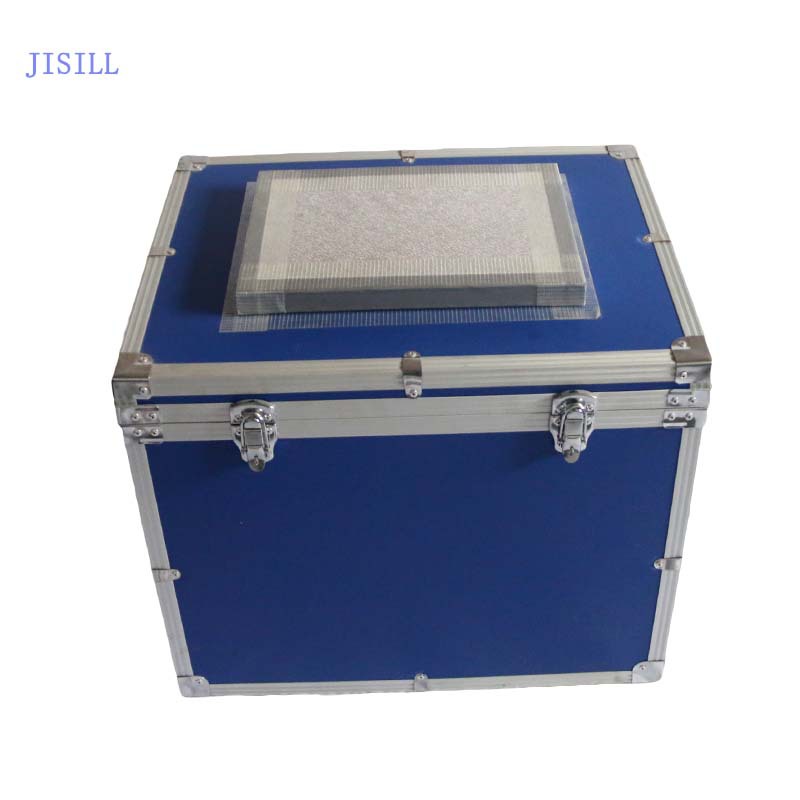
For 2-8°C transport, the 42L 2-8 Degrees Vaccine Cooler Box is one example of a medical cool box configuration. It has an external size of 46x46x46 cm, an internal size of 35x35x35 cm, weight of 3 kg, and inner material made of PU plus vacuum insulation panel. Thermal conductivity is less than 0.0025 W/m·k. For longer routes, VIP-PU collapsible boxes use vacuum insulation panels with stated cold times of 48 or 72 hours. These systems are typically combined with 2-8°C PCM ice packs.
Frozen Food and Ice Cream Distribution
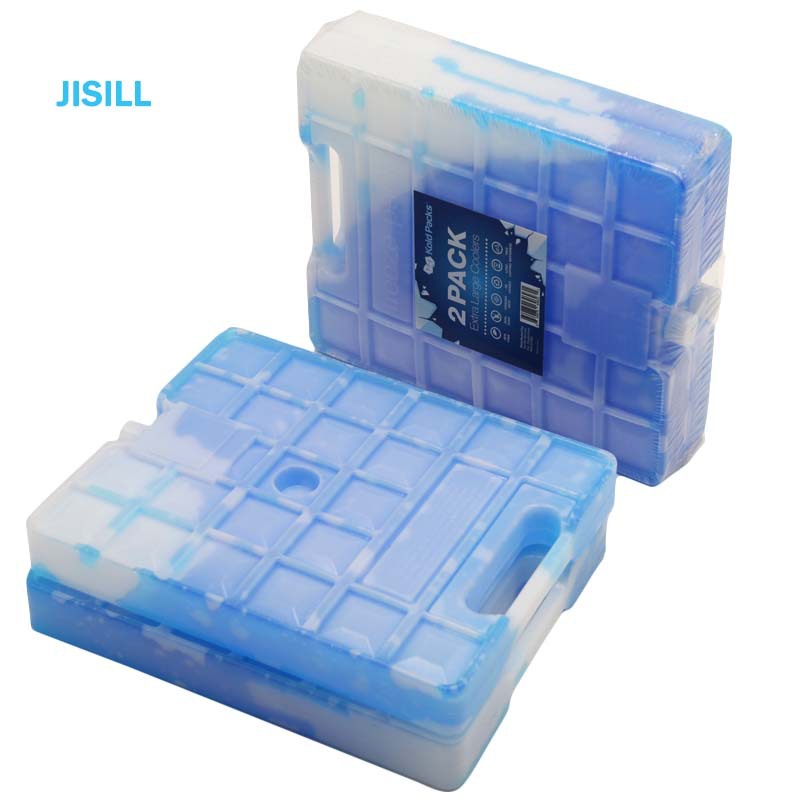
Frozen food programs need a different temperature envelope. The Custom PCM Ice Cooler Brick Food Grade Outdoor Frozen -22 Degrees is one example: size 38.5x20x2 cm, weight 1200 g, HDPE outer material, and SAP/CMC inside liquid. The Reusable Large Cooler Ice Packs Cold Gel / Ice Freezer Brick With Handle, at 35x22x3 cm and 1200 g, is aimed at large insulated shipping containers.
Last-Mile, Lunch Bags, and Consumer Retail
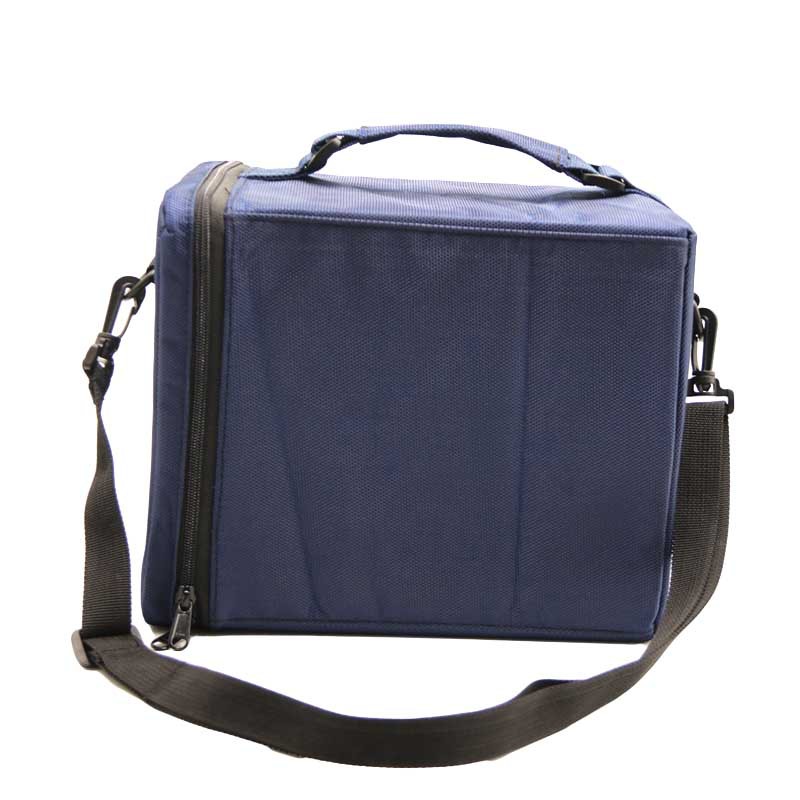
For last-mile and consumer programs, the range includes ultra thin ice packs, lunch ice packs, breast milk ice packs, mini ice packs, cool bag ice packs, fan ice packs, and colored mini ice cube trays. Examples include the OEM Reusable Lunch Chiller Ice Brick Ultra Thin Ice Pack With Cooling Gel (19x12.5x1 cm), the Portable HDPE Plastic Reusable Ultra Thin Ice Pack (18.5x17.5x1.2 cm), and the Breast Milk Ice Pack (21x12x4.5 cm). Retail buyers also use mini ice packs and colorful mini ice cube trays for 'cute ice packs' positioned toward kids and lunch kits, and seasonal beverage programs often bundle cool bag ice packs with fan ice packs and beer holder cooler formats. This breadth allows distributors to consolidate several SKUs from one factory instead of splitting volume across multiple suppliers.
Comparison: Gel Ice Pack Formats for Long-Term Programs
The table below separates the main formats by typical role. It is based on product data from Jisi Cold Chain's catalog and is meant to help procurement teams match each SKU to the correct application.
| Product format | Example configuration | Typical role |
|---|---|---|
| Plastic Ice Packs | 16.5x9x1.8 cm; 200 g; HDPE outer; SAP/CMC inner | General cold chain when a simple frozen pack is sufficient. |
| Large Cooler Ice Packs | 35x22x3 cm; 1200 g with handle; also 33x22.5x2 cm; 1000 g | Large insulated boxes and cold chain shipping. |
| Ice Cooler Brick | 23.5x19.5x3 cm; 1000 g; custom PCM -22°C version 38.5x20x2 cm; 1200 g | Ice cream, frozen food, and longer-duration passive cooling. |
| Ultra Thin Ice Pack | 19x12.5x1 cm; 18.5x17.5x1.2 cm; 260 ml | Lunch bags and compact cooler bags. |
| PCM Ice Pack / Eutectic Cold Plate | 46x32.5x2.5 cm; 2600 ml; 24.5x24.5x2.5 cm; 1200 ml | 2-8°C medical and temperature-sensitive logistics. |
| Breast Milk Ice Pack | 21x12x4.5 cm; 505 ml | Consumer food-contact applications. |
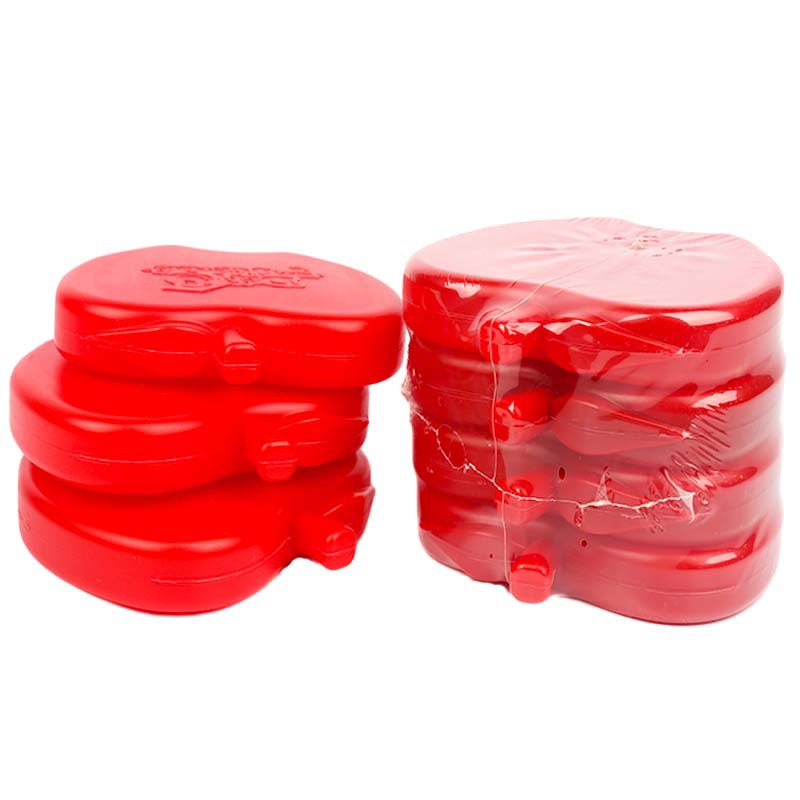
| Mini Ice Packs | 10.8x5.8x2 cm; 100 g; 12x7.8x2 cm; 150 g | Kids' lunch kits, promotional packs, and cool bag bundles. |
| Medical Cool Box / Vacuum Insulated Panel | 42L 2-8°C box; VIP-PU collapsible box; 48 or 72 h cold time | Vaccine transport and medical blood or vaccine storage. |
FAQ: Decision-Stage Questions for Long-Term Gel Ice Pack Supply
Are Jisi Cold Chain gel ice packs compliant with food-contact and safety regulations?
For relevant SKUs, the materials are described as food-grade: HDPE outer material with SAP or CMC inside liquid that is non-toxic. FDA, SGS, MSDS, and CPSIA references appear across the product range. Buyers should request current batches of certificates for the exact product under consideration.
Can Jisi Cold Chain support a long-term supply relationship with stable capacity?
The factory covers 40,000 m², has 60 employees, and reports annual output of 620,000 units. Operational capabilities include a monthly production capacity of 10,000 units and quality control based on 100% testing. For a long-term agreement, capacity should be confirmed against the specific product line and forecast volume.
What are the typical MOQ and payment terms?
Published procurement support lists a standard MOQ of 1,000 pieces for selected items. For a new model or custom mold, the supplier usually indicates a minimum of 5,000 pieces. Payment can be made by Western Union, T/T, or PayPal; first orders are commonly handled by T/T with 30% deposit and 70% balance before shipping.
Can a buyer request samples before a bulk order?
Yes. Free samples are available for existing models without printing, with the buyer paying freight. If custom printing or a new mold is required, sample terms depend on the design and order quantity.
What lead time should a buyer expect for repeat orders?
For available standard models, delivery is typically quoted at 2-3 days after payment confirmation. Samples are usually available within 2-5 days, while bulk production for cooler boxes and VIP panels can take 10-15 days depending on order quantity. These numbers should be confirmed for each SKU during quotation.
Conclusion
A long-term gel ice pack supply partnership works when the supplier can demonstrate product system depth, manufacturing control, and commercial flexibility. Jisi Cold Chain offers a verifiable combination of PCM temperature coverage, in-house production, export experience, and standard procurement terms.
For buyers at the Decision and Execution stage, the next step is to run a sample or pilot order, validate lead time and quality, and then expand into a broader cold chain sourcing program.
Next step: Contact Ying at ying@czjmjs.com to discuss your gel ice pack requirements. For a complete overview of factory capabilities and product families, download the Jisi Cold Chain brochure (PDF).
Have Questions or Need More Details?
Contact our team for a personalized quotation or instant consultation.
Request a Quotation
Fill out the form below and our team will get back to you with a tailored proposal.
WhatsApp Direct Chat
Prefer to chat in real-time? Message us on WhatsApp for instant assistance & quick answers.
- Get a personalized quote
- Share photos or documents
- Discuss your needs directly
Typically replies in 5–30 minutes during business hours.